R+L=J, A Recipe for Ice Dragons

Hey there friends, patrons, and fellow mythical astronomers! It’s a very special day today – it’s the R+L=J episode. It’s fitting that the fandom has come to refer to Jon’s secret parentage with an equation, what might also be called a formula or even a recipe, because Jon’s conception and birth is indeed symbolic of a formula with greater importance for the story – it’s the recipe for making ice dragons! What do I mean by that? Well, we’re going to talk about that today of course, but in short, the ice dragons I’m referring to are the Others, and the last hero – more specifically, the Others and the new last hero figure known as Jon Snow, the frozen version of Azor Ahai reborn.

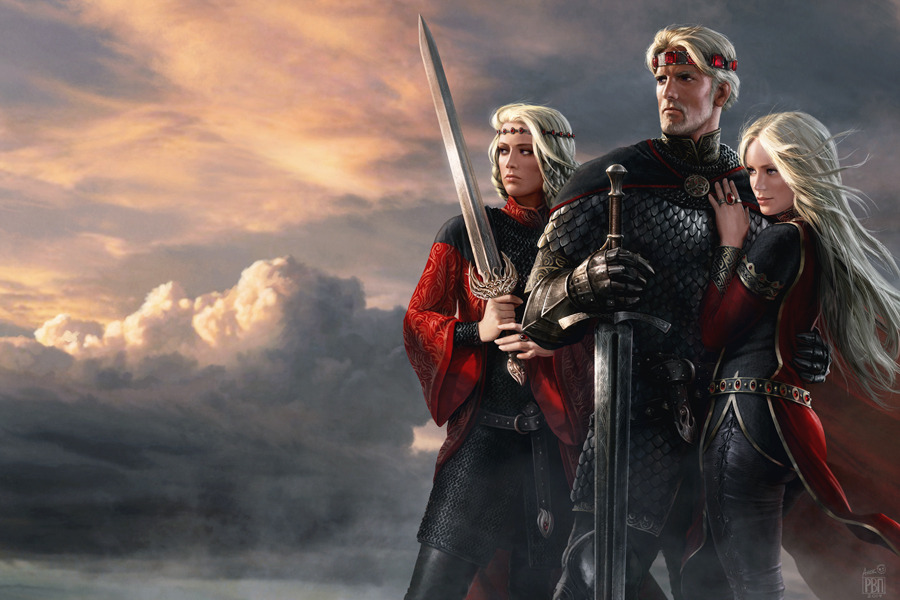
Jon is a symbolic ice dragon by virtue of his parents’ symbolism. Rhaegar is a black dragon figure, and he gives his seed to Lyanna Stark of the blue winter rose. Similarly, the Others are created when Night’s King gives his seed to the moon-pale, ice-cold Night’s Queen. If Night’s King was a blood of the dragon person as I propose, then his creating Others with Night’s Queen expresses the same pattern as R + L = J: a black dragon figure has his fiery seed “frozen” in the cold womb of an ice queen, with Lyanna being a symbolic ice queen and Night’s Queen being a literal one.

This creates a parallel between Jon and the Others, and in the last episode, The Long Night Was His to Rule, we saw that Jon does seem to share some amount of symbolism with the Others, such as his being called Lord Snow, his dreaming of being armored in ice, and then there was that funny line where the Other-like wildlings were crossing through the Wall and it said “Others smiled at him like long- lost kin.” This seems a perplexing mystery at first, but by the end of this episode I think we are going to understand it well.

So in terms of mythical astronomy archetypes, R + L = J translates to “dark solar king (Rhaegar) + icy moon queen (Lyanna) = ice dragon children (Jon).” That’s our recipe, and as with all major symbolic patterns in ASOIAF, it has a celestial companion, a heavenly mirroring of the archetypal drama on the ground. That’s what mythical astronomy as a concept is all about, after all!

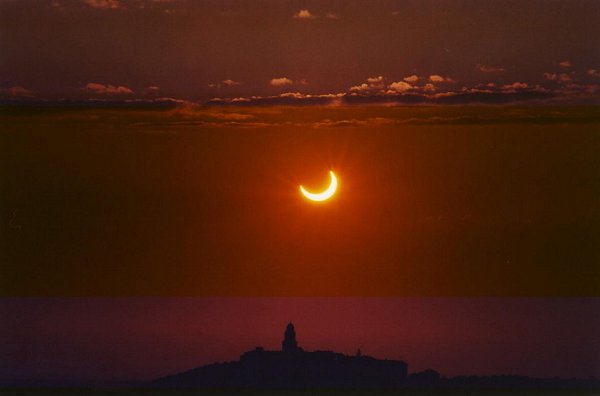
You all know what the dark solar king is by now, I think I’ve repeated it enough times – it’s the darkened sun of the Long Night. The sun is darkened first by the fire moon moving into the Gods Eye eclipse position (wandering too close to the sun, as it says in the Qarthine legend), and then by the dust and debris from the fire moon’s explosion (the waves of night symbolism). In both cases, it is the combination of the fire moon and the sun which creates the “dark sun.” This is basically like saying Azor Ahai become a dark lord after killing his wife, Nissa Nissa. Killing the moon maiden is an evil act, and it transforms the solar king.

So, up in the sky, fire moon appears to combine with the sun, creating the Gods Eye eclipse symbol, then explodes in meteor dragon childbirth to creates the dark sun symbol. These black fire moon meteors can be now seen as the dark solar king’s sword or seed, as I mentioned last time. And in a two moon system, it is inevitable that if one moon exploded, in whole or in part, some of the shrapnel would strike the other moon, which would be the ice moon. When one of those dark solar king star seeds impregnates the nearby ice moon, that is the ice dragon recipe in action, the celestial version of RLJ. It’s the dark solar king – think Rhaegar or Night’s King – giving his star seed to the icy moon queen, who is like Night’s Queen or Lyanna.

In other words, and I just want make this crystal clear, what I’m proposing – this one celestial chain reaction scenario mirrors both the conception of Jon and the creation of the Others. Whether in the sky or on the ground, it’s the same pattern: a night-associated black dragon figure giving his seed to an icy moon figure.

King Bran
Greenseer Kings of Ancient Westeros
Return of the Summer King
The God-on-Earth

End of Ice and Fire
Burn Them All
The Sword in the Tree
The Cold God’s Eye
The Battle of Winterfell

Bloodstone Compendium
Astronomy Explains the Legends of I&F
The Bloodstone Emperor Azor Ahai
Waves of Night & Moon Blood
The Mountain vs. the Viper & the Hammer of the Waters
Tyrion Targaryen
Lucifer means Lightbringer

Sacred Order of Green Zombies A
The Last Hero & the King of Corn
King of Winter, Lord of Death
The Long Night’s Watch

Great Empire of the Dawn
History and Lore of House Dayne
Asshai-by-the-Shadow
The Great Empire of the Dawn
Flight of the Bones

Moons of Ice and Fire
Shadow Heart Mother
Dawn of the Others
Visenya Draconis
The Long Night Was His to Rule
R+L=J, A Recipe for Ice Dragons

The Blood of the Other
Prelude to a Chill
A Baelful Bard & a Promised Prince
The Stark that Brings the Dawn
Eldric Shadowchaser
Prose Eddard
Ice Moon Apocalypse

Weirwood Compendium A
The Grey King & the Sea Dragon
A Burning Brandon
Garth of the Gallows
In a Grove of Ash

Weirwood Goddess
Venus of the Woods
It’s an Arya Thing
The Cat Woman Nissa Nissa

Weirwood Compendium B
To Ride the Green Dragon
The Devil and the Deep Green Sea
Daenerys the Sea Dreamer
A Silver Seahorse

Signs and Portals
Veil of Frozen Tears
Sansa Locked in Ice

Sacred Order of Green Zombies B
The Zodiac Children of Garth the Green
The Great Old Ones
The Horned Lords
Cold Gods and Old Bones

We Should Start Back
AGOT Prologue

Now in PODCAST form!

Click to open in iTunes

This creates two kinds of ice dragon children: the black dragon meteor that strikes the ice moon and becomes trapped in the ice, and the pieces of ice moon that would have been chipped off by the impact. The black dragon locked in the ice moon represents Jon, who is in so many ways depicted as a black dragon or crow lodged in ice and snow. Just to scratch the surface, you may recall the line from Bran’s coma dream about Jon, the one that comes just before Bran set eyes on that terrifying Heart of Winter and its dawn lights of the north: “He saw the Wall shining like blue crystal, and his bastard brother Jon sleeping alone in a cold bed, his skin growing pale and hard as the memory of all warmth fled from him.” Don’t worry, we’ll be expanding on this in detail later today.

As for the Others, they symbolize the pieces of ice moon that would have been chipped off by the impact – ice moon meteor dragons in other words. Hence the cold burning star eyes of the Others, I believe, which signify their status as cold falling star people. As I set out in the very first Moons of Ice and Fire episode, the Others parallel the dragons as symbols of falling stars of the moon meteor variety, with the dragons “coming from the moon” according to legend and the Others coming from a moon-pale icy priestess. They come from this ice moon queen only when Night’s King gives her his dragon seed, mimicking the celestial sequence that has ice moon meteors coming from the ice moon when it is struck by a black meteor.

We can also see that this hypothetical celestial sequence matches the myths about the Others coming for the first time during the Long Night. The fire moon explosion begins the Long Night, and as an immediate consequence, the ice moon is struck and impregnated, yielding up some icy moon meteors. Those ice moon meteors are analogous to the Others, and they would have indeed come shortly after the fall of the Long Night, as the Others did. It’s not really the topic of today’s episode, but according to my theory, one of those ice moon meteors would have been the pale stone from which Dawn was made.

Sometimes, I have to say, I feel like drawing diagrams for this stuff. Martin has his own way of doing this – he describes an eclipse by telling us that the moon wandered too close to the sun, he has Yoren draw pictures in the dirt with a stick, or he uses House Sigils like this one from House Pryor which shows a black moon sliding into eclipse position, or Euron’s Crows Eye sigil which looks a lot like my own eclipse-eye logo. He uses family trees quite a lot. But the very best diagrams of what seems to be happening in space come from the dragon-on-dragon battles. There’s one in particular involving Vhagar the symbolic ice dragon which acts as a perfect visual depiction of this whole dragon locked in ice concept, and I think it will seem less abstract and esoteric if we start with a “diagram,” as it were, as a prelude to RLJ.

As strange as this sounds, this dragon battle will essentially be dramatization of Jon’s conception, I want you to keep that in mind. Of course, it will be simultaneously be showing us the fire moon meteor lodging in the ice moon, because that’s how this works. As above, so below.

Thanks as always to George R. R. Martin for inviting us into his world of Ice and Fire, and a heartfelt thanks to our Patreon sponsors – and that’s “heartfelt” in a ‘you keep the lights on’ kinda way, so cheers – and a very special extra thank you to three stalwart Patrons who have allowed me to spill their blood in front of the heart trees with a sickle shaped blade… in order to be raised as green zombies, and our first three members of the Mythical Astronomy Long Night’s Watch.  The Long Night is coming, and we need twelve brave souls to volunteer – see our Patreon page for details. Or perhaps you can’t stand those with hot blood in their veins, or those green zombie abominations in the Night’s Watch, and you’d prefer to be a white walker of the woods, riding the winds of winter to extinguish all life. Again, details on our Patreon page, which you can find a link to lucifermeanslightbringer.com. As usual, we’ll be having a follow up livestream QnA for this episode, not this upcoming Saturday the 13th, but rather the 20th of January.

Alright, now to a fictional story of an uncle and a nephew using dragons to kill each other over a lake.


Crouching Daemon, Flying Dragon

The section is dedicated to our first three Patrons to volunteer their lives to the Long Night’s Watch: Charon Ice-Eyes, Dread Ferryman of the North, Wielder of the Staff of the Gods; Ser Cletus Yronwood Reborn of the Never-Lazy Eye, wrestler of bulls, and Lady Jane of House Celtigar, Emerald of the Evening and Captain of the Dread Ship Eclipse Wind


The dragon-on-dragon fight that takes place over the Gods Eye lake between Daemon Targaryen riding Caraxes the Bloodwyrm and Aemond One-Eye Targayen riding Vhagar is one of my very favorite pieces of mythical astronomy in the entire series. It’s really tremendous because the Gods Eye concept is spelled out with a sky-ground parallel. The lake correlates to the sun, and the Isle of Faces to the fire moon, and that’s highlighted in the middle of a fight where the fire moon dragon blocks the sun and makes an eclipse, with the end of the fight giving us both dragons falling to the Gods Eye lake, bringing the above and below versions of the metaphor smashing together.

I’ve been saving it for a special occasion, and it seems that the RLJ episode is that occasion.

As you will recall, when Vhagar the “hoary old bitch” dragon is ridden Aemond One-Eye Targaryen, with his blue star sapphire eye, they combine to make the ice dragon symbol, and thus the ice moon symbol (particularly since Vhagar is referred to as a she-dragon). In the last Vhagar dragon battle, we had a red dragon, Meleys the Red Queen, playing the fire moon role, and in this fight we have another red dragon, Caraxes the Bloodwyrm, who I think is also representing the fire moon.

More specifically, Caraxes and Daemon are playing the role of a fiery dragon meteor coming from the fire moon explosion. A star seed of the dark sun, in other words. Daemon Targyen and his black armor adds the black, while the dragon is red with black horns and accents. Most importantly, Daemon wields Dark Sister, a smoke-dark Valyrian steel sword. At the beginning of the fight, we will see Caraxes move into an “eclipse alignment” and divebomb from the direction of the sun, depicting the transformation of a fire moon into a fire moon meteor, or said another way, a dark star seed coming from the dark sun.

Daemon himself is easy to identify as an evil Azor Ahai, dark solar king type. Just as Night’s King was a usurper king whose brother was said to be the Stark King of Winter, Daemon declared himself the “King of the Narrow Sea” when he quarreled with his brother, the rightful king Viserys I, thereby setting himself up as a kind of rival or usurper king. Fantastically, Daemon made his seat on Bloodstone Island in the Stepstones, giving him a great tie to the Bloodstone Emperor, who is kind of the original usurping dark solar king. Daemon also shares his name with his grandson, Daemon Blackfyre, who bore the sword Blackfyre and loved it so much he named his house after it, thus conferring even more dark solar king / black dragon symbolism onto Daemon.

So we have an evil Azor Ahai figure in Daemon, riding a fire moon dragon, Caraxes… and of course they are coming for Vhagar, our ice moon symbol.

I have quoted this scene before, but with the ice moon ideas in mind, it takes on new meaning and deserves another look:

Prince Daemon took Caraxes up swiftly, lashing him with a steel-tipped whip until they disappeared into a bank of clouds. Vhagar, older and much the larger, was also slower, made ponderous by her very size, and ascended more gradually, in ever widening circles that took her and her rider out over the waters of the Gods Eye. The hour was late, the sun was close to setting, and the lake was calm, its surface glimmering like a sheet of beaten copper. Up and up she soared, searching for Caraxes as Alys Rivers watched from atop Kingspyre Tower in Harrenhal below.

The attack came sudden as a thunderbolt. Caraxes dove down upon Vhagar with a piercing shriek that was heard a dozen miles away, cloaked by the glare of the setting sun on Prince Aemond’s blind side. The Blood Wyrm slammed into the older dragon with terrible force. Their roars echoed across the Gods Eye as the two grappled and tore at one another, dark against a blood red sky. So bright did their flames burn that fisherfolk below feared the clouds themselves had caught fire. Locked together, the dragons tumbled toward the lake. The Blood Wyrm’s jaws closed about Vhagar’s neck, her black teeth sinking deep into the flesh of the larger dragon. Even as Vhagar’s claws raked her belly open and Vhagar’s own teeth ripped away a wing, Caraxes bit deeper, worrying at the wound as the lake rushed up below them with terrible speed.

What’s happened here is that the Caraxes and Daemon first create the Gods Eye eclipse alignment by attacking with the setting sun at their back, just as the moon wandered too close to the sun before exploding if fiery dragon meteor childbirth. As if to reflect that alignment, the Gods Eye lake, which is analogous to the sun in the Gods Eye eclipse alignment, shines like beaten copper, which is a solar symbol (think of Drogo’s face like a copper mask, for example). Their red and black dive-bomb attack mimics a fire moon meteor flying from the eclipse alignment, and it lands…

…in the ice moon symbol, Vhagar ridden Aemond One-Eye. The idea of a black meteor embedding in the ice is implied by the Bloodwyrm slamming into Vhagar with terrible force, by Caraxes’ black teeth “sinking deep into the flesh” of the white dragon, and there’s one more thing… that thing which I like to call “the most badass thing anyone ever did in Westeros:”

And it was then, the tales tell us, that Prince Daemon Targaryen swung a leg over his saddle and leapt from one dragon to the other. In his hand was Dark Sister, the sword of Queen Visenya. As Aemond One-Eye looked up in terror, fumbling with the chains that bound him to his saddle, Daemon ripped off his nephew’s helm and drove the sword down into his blind eye, so hard the point came out the back of the young prince’s throat. Half a heartbeat later, the dragons struck the lake, sending up a gout of water so high that it was said to have been as tall as Kingspyre Tower.

Neither man nor dragon could have survived such an impact, the fisherfolk who saw it said. Nor did they. Caraxes lived long enough to crawl back onto the land. Gutted, with one wing torn from his body and the waters of the lake smoking about him, the Blood Wyrm found the strength to drag himself onto the lakeshore, expiring beneath the walls of Harrenhal. Vhagar’s carcass plunged to the lake floor, the hot blood from the gaping wound in her neck bringing the water to a boil over her last resting place. When she was found some years later, after the end of the Dance of the Dragons, Prince Aemond’s armored bones remained chained to her saddle, with Dark Sister thrust hilt-deep through his eye socket.

Talk about a warrior who knew no fear! And talk about mythical astronomy! You could not ask for a better example of a black fire moon meteor – the ones that symbolize Azor Ahai reborn, the black dragon – than Daemon in his black armor, leaping from the red dragon to the hoary white one, like solar king Azor Ahai skipping from one moon to the other. This is followed by a second ice moon impregnation symbol as Daemon jams the dark blade Dark Sister right through the star sapphire in Aemond’s blind eye.

That’s pretty freaking metal if anything is, and it’s also detailed mythical astronomy. Valyrian steel is a prime symbol of a black fire moon meteor, and since the two moons are like sisters, I think ‘Dark Sister’ is an excellent name for a piece of the moon which was burnt black. So that’s a black dragon sword from the dark sister moon, delivered to the ice moon with love by the dark solar king.

Although Visenya isn’t stabbed with Dark Sister, the fact that she is a Night’s Queen figure who carried around Dark Sister in her day creates the same metaphor – the ice moon queen carries a piece of her dark sister around with her. Brienne the Blue is another icy moon maiden, and when she carries Oathkeeper, it’s basically the same as Visenya carrying Dark Sister. Who gave Oathkeeper to Brienne? A solar lion, Jaime Lannister, or we might say it came from Tywin by way of Jaime.

Returning to the dragon-fight at the Gods Eye, I think the fact that Aemond One Eye’s corpse was found years later at the bottom of the lake, still chained to Vhagar, with Dark Sister still lodged in his skill, is an important clue. It speaks of this black moon meteor still being stuck in that ice moon, as I believe it may be still in the current story.

It’s funny to think about, but if we compare this fight between fire and ice moon dragons to the symbolism of Euron’s eyes as the two moons, in the symbolic sense, it’s basically equivalent to Euron’s blood eye attacking his smiling eye. The black and red blood eye / crow’s eye is equivalent to Dameon riding Caraxes, attacking from a solar eclipse position, while Euron’s blue smiling eye would correlate to Aemond-One Eye riding Vhagar, impregnated in violent fashion by black moon meteor symbols Daemon and Dark Sister. I don’t expect Euron to go cross-eyed or anything but I find that making these comparison helps to keep all the symbolism straight in your mind, and sometimes it leads to funny ideas like one of Euron’s eye attacking the other.

As I mentioned at the top, Daemon stabbing Aemond in the Eye with that sword is also equivalent to Night’s King giving his seed and soul to Night’s Queen, or Rhaegar impregnating Lyanna. Be it dragon sword or dragon seed, both depict the black dragon fire moon meteor being planted in an ice moon symbol. As ever, sex and swordplay, the dual metaphor. Daemon, like Night’s King, was an evil Azor Ahai, red dragon / black armor type, and when he jams Dark Sister into the blue star eye, he’s showing us the Night King giving his dragon seed to an icy moon symbol, and yes, as odd as it sounds, Rhaegar putting little baby Jon’s sperm in Lyanna’s womb. She did die giving birth after all, and Rhaegar also dies around the same time.

Accordingly, this fight happens on the same day as the Storming of the Dragonpit, perhaps the most fantastic fire moon death metaphor outside of Dany’s alchemical wedding:

On the twenty-second day of the fifth moon of the year 130 AC, Aemond One-eye and Daemon Targaryen entered their last battle. On that same day, chaos and death seized King’s Landing. Queen Rhaenyra had imprisoned Lord Corlys for helping his grandson, Ser Addam Velaryon, escape arrest when he was accused of treason. Some of the Sea Snake’s sworn swords joined the riotous mob in Cobbler’s Square, and some scaled the walls to try to free the Sea Snake, only to be hanged when they were caught. Queen Helaena then fell to her death, impaled on the spikes surrounding Maegor’s Holdfast—a suicide some said, and others a murder. And that night, the city burned as the Shepherd’s mob marched on the Dragonpit, attempting to slay all the dragons within.

Not only do we get the storming of the Dragonpit as a fire moon death metaphor, but also queen Helaena leaping to her death. Helaena was the grieving wife of the wounded King Aegon II, and thus a Nissa Nissa / fire moon figure, and of course falling to your death work well to depict a moon falling from heaven. If you think back to Weirwood Compendium 3, Garth of the Gallows, you’ll recall our discussion of Elenei – a child of the gods who came down to earth – seems to be based on Helen of Troy, and Helaena seems to fit the mold. Daenerys also seems to draw influence from the Norse goddess Hel, which could be another thing referenced by Helaena’s name.

The reason I point out that Helaena’s death and the storming of the Dragonpit occurred on the same day as Daemon and Aemond’s dragon-fight is the timing of it all. The ice moon is impregnated basically right after the fire moon explodes and the Long Night falls. It was the same with the dragon fight we looked at last time at Rook’s Rest, where Aemond One-Eye was crowned as a symbolic Night’s King after the fire moon dragon and rider were killed and the solar dragon and rider were wounded and hidden.

To finish up with the fight above the gods eye, let’s consider what happens to the combatants and their dragons. Daemon vanishes altogether, while Caraxes crawls from the lake before expiring beneath Harrenhal, which makes sense because Caraxes and Harrenhal are both fire moon meteor symbols. One of my favorite tinfoil theories is that Daemon made it to the Isle of Faces, since that’s a fire moon symbol too, but he probably just sank under the weight of his armor and lies buried in mud at the bottom of the lake.

Vhagar and Aemond One-Eye definitely remain at the bottom of the lake, which makes me think about how the Others voice’s are like the cracking of ice on a winter lake, and about how the Other melt when stabbed with dragonglass (their ice armor also reflects like the surface of a pond). For those of you who know about the symbolism of being under the sea – something we will get to in due time – it’s also significant to find the ice moon under the sea, so to speak. I think being inside the ice moon is essentially like being submerged in a cold lake, and this is hinted at with Varamyr’s death, where the line is “True death came suddenly; he felt a shock of cold, as if he had been plunged into the icy waters of a frozen lake.” That line comes right before Varamyr’s spirit finds itself inside a one-eyed wolf, naturally.

Finally, there is a nice memorial line to Vhagar in The Princess and the Queen that we really should read to do the great she-dragon justice:

Vhagar, the greatest of the Targaryen dragons since the passing of Balerion the Black Dread, had counted one hundred eighty-one years upon the earth. Thus passed the last living creature from the days of Aegon’s Conquest, as dusk and darkness swallowed Black Harren’s accursed seat. 

It’s a poetic line, and I also wanted to include the bit about darkness swallowing Harrenhal at the end of all this.

So, having shown you how two dragons killing each other and falling into a lake symbolizes Jon’s conception – yes, that’s what we just did – let’s get to the main course and talk RLJ.


Dornish Moon Tragedy

This is section is sponsored by our newest Zodiac Patron, Sarah Stark of the Wolfblood, the shining hand of Phaesporia and earthly avatar of the Heavenly House Sagittarius


Rhaegar and Lyanna. RLJ. The dragon and the wolf. The song of ice and fire. But don’t forget about Elia – Rhaegar married her first and they had two children together. We still don’t entirely understand the rationale and motivation for Rhaegar and Lyanna’s actions, but we can understand the symbolic reason for this strange love triangle. It’s the same reason we get the the Aegon – Rhaenys – Visenya triangle: to show us one sun with two moons. Moons of ice and fire.

Dorne is associated with snakes and the fiery sun-spears, so the symbolic children of Rhaegar and Elia would be fiery dragon snakes, a good match for our idea of the fiery moon meteors coming from the coupling of the sun and fire moon. The sigil of House Martell tells the story: it’s a sun pierced by a spear. In other words, it alludes to a dying sun such as the sun of the Long Night, and to things coming from that sun like spears and hammers of the waters’es. Also, those of you who have listened to the Weirwood Compendium series might recognize the Odin / Jesus symbolism of a pierced solar king.

Everything about the Dornish symbolism describes the events of the fire moon exploding in front of the sun and the things which fell from the sky, whic helps identify Elia as the fire moon maiden. There are several ways the Dornish symbolism places an emphasis on the dying sun which throws things are the planet as opposed to simply the sun. We covered a lot of this in Bloodstone Compendium 4: The Mountain vs The Viper and The Hammer of the Waters, so I will just briefly sum up. The word ‘sunspear’ implies a spear coming from the sun, and in the trial-by-combat between Ser Gregor and Oberyn Martell, we saw The Red Viper’s spear point coated in poison that looked like black oil – a perfect symbol of a black moon meteor coming from the sun, since I tend to associate the black meteors and the oily black stone with one another.

In Arianne’s “The Queenmaker” chapter of AFFC, there’s a line about the two weapons of the Dornish:

“The arms of House Martell display the sun and spear, the Dornishman’s two favored weapons,” the Young Dragon had once written in his boastful Conquest of Dorne, “but of the two, the sun is the more deadly.”

The sun is deadly because of the sun rays coming from it, which are like weapons. Later in that chapter this theme is hit on again as it says “The sun was beating down like a fiery hammer, but it did not matter with their journey at its end.” Again, the emphasis is on things coming from the sun like weapons – sun-spears and fiery hammers. This line about the fiery sun hammer is followed almost immediately by Myrcella the fire moon maiden being slashed across the face by Darkstar’s sword, mimicking the “crack across the face of the moon” language of the Azor Ahai legend. The sequence clues us in to the idea that the hammer of the waters was a fiery moon meteor, one which drank the fire of the sun and can therefore be considered a sun-spear or a fiery hammer.

In fact (and this is kind of the overarching point in regards to the symbolism of RLJ as a sun and two moons thing), the collection of Dornish symbolism in its entirety is all about the Hammer of the Waters being a moon meteor impact. This makes a ton of sense, since the Hammer fell on the arm of Dorne. Besides the fiery hammer line and Myrcella the wounded moon maiden, there are the place names by the broken Arm of Dorne, Bloodstone and Sunspear. It’s the story of the dark solar king and his black meteor weapons, just like I’ve been talking about: the Bloodstone Emperor was the dark solar king, and his sun-spears were the black moon meteors.  Again, this compares well to Oberyn the Red Viper as the dark solar king wielding a spear with a blade coated in black oil. Of course we just mentioned Daemon Targaryen the dark solar king who took Bloodstone as his seat, and Daemon symbolically became a sun-spear himself when he leapt from the back of one dragon to the other while attacking from the direction of the setting sun.

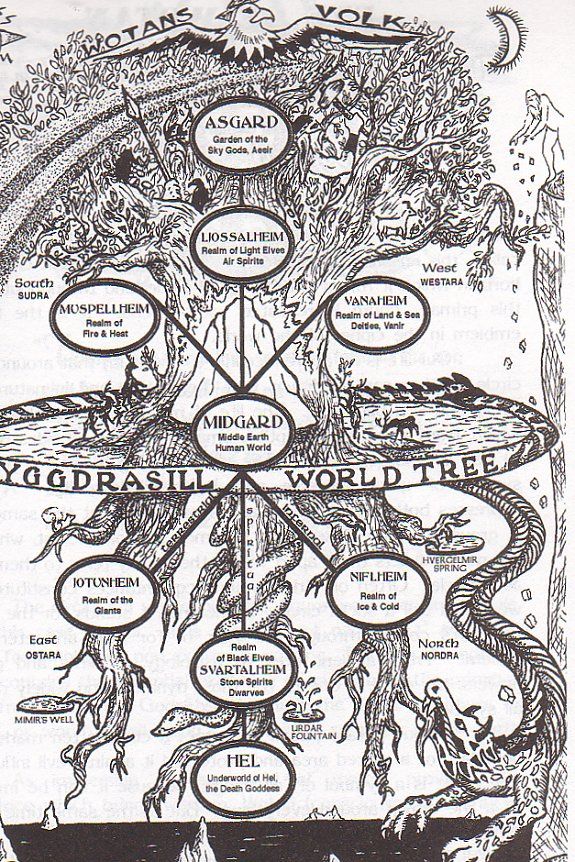
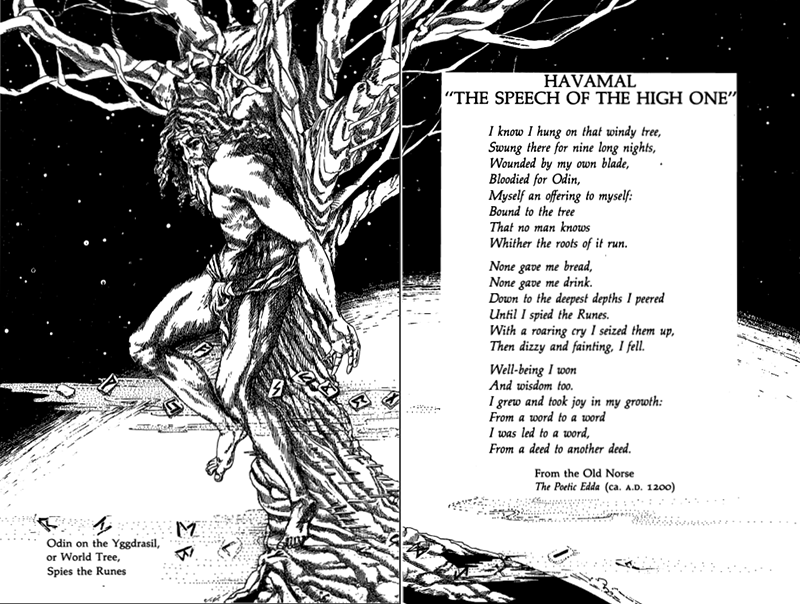
The other named island in the Stepstones is Grey Gallows, which seems like a reference to Yggdrasil, Odin’s gallows tree, as we discussed in Weirwood Compendium 3: Garth of the Gallows. The end result that this is yet another reference to Azor Ahai reaching for the fire of the gods, and complements the Odin-esque symbolism of the pierced sun.

As I like to mention whenever I talk about the Hammer of the Waters, one of the ships that brought moon maiden Myrcella to Dorne was King Robert’s Hammer, yet another reference to the Hammer of the Waters, but this time wrapped in Robert’s Storm King / Thor lightning hammer symbolism. Another galley in that convoy was “Lionstar,” which again gives us the sun-star idea… or in this case, a moon meteor which “drank the fire of the sun.”

There’s a clue about the Dawn meteor falling at the same time as the black meteors that caused the Long Night to be found in the fact that, sailing to Dorne alongside the ships King Robert’s Hammer and Lionstar, we also get one named “Lady Lyanna.” As we are about to see, Lyanna is a signature ice moon maiden, like Night’s Queen, so this may be a clue about the ice moon meteor falling along with the fiery ones. Starfall isn’t far, after all, and talk of Dawn and Arthur Dayne abounds in the Queenmaker chapter, due to Gerold Darkstar Dayne’s presence.

Ok, so I think that’s about as briefly as I can sum up the sun-spear/fiery moon meteor/hammer of the waters ball of symbolism, and I encourage you to check out the Mountain vs The Viper and the Hammer of the Waters episode if you want the rest, which includes significant characters getting struck on the arm (like the Arm of Dorne) at significant times. Point being, all of that and much more points to Dorne as a great symbol for the fire moon and the fiery sun-spears it became.

There’s also the Dorne = fire moon evidence we explored in the Visenya Draconis episode regarding the death of Rhaenys and Meraxes in Dorne at the Hellholt, a place once occupied by Ser Lucifer Dryland and which sits by the Brimstone River. That’s pleasing to me personally, because my fake name is Lucifer and my real world guitar pedal company is called Brimstone Audio (true story, and a complete coincidence, I swear I am not in Satanism or anything). But more importantly, the death of Rhaenys and Meraxes at the Hellholt is an important symbol of the fire moon destruction. Namely, Rhaenys is Aegon’s fire moon bride, and the spearing of Meraxes through the eye calls out the Gods Eye eclipse symbol which represents the death of the fire moon and the darkening of the sun.

Alright. Having set the Dornish stage for Elia of Dorne, let’s consider what we know about the Princess herself. Most of what we know concerns her tragic death, and her children and false children (cough, cough, fAegon). That’s pretty much a mirror for the fire moon, which is defined by its death and meteor childbirthing. We’re going to start with Elia’s death, which is fairly horrible of course, so fair warning.

As we know, Elia was horrifically raped and killed by Ser Gregor Clegane during the sack of King’s Landing. Gregor is called the Mountain that Rides, and his helm bears a stone fist on its crest.  A comet or meteor can surely be thought of as a flying or riding mountain, and the stone fist gives the same idea, especially since we’ve seen fists and hands as depictions of moon meteors and moon-smashing comets. In the fight with Oberyn, he seems to play the moon and moon meteor role, but other times he plays the role of the comet, such as when he puts out Beric Dondarrion’s eye. In this case, since he’s killing someone who seems to symbolize the fire moon (Elia), his mountain-that-rides symbolism would seem to playing the role of comet-that-rides. He’s acting at Lord Tywin’s command, just as the Azor Ahai myth has the comet as the sword held by the sun king. Tywin is wielding Gregor against Elia, in other words, like the sun wielding the comet against the fire moon.

In fact, when Dany discusses her vision of Rhaegar and Elia in the House of the Undying with Jorah, Jorah refers to the murders of Elia and her children as having been done simply “by the Lannisters:”

She nodded. “There was a woman in a bed with a babe at her breast. My brother said the babe was the prince that was promised and told her to name him Aegon.”

“Prince Aegon was Rhaegar’s heir by Elia of Dorne,” Ser Jorah said. “But if he was this prince that was promised, the promise was broken along with his skull when the Lannisters dashed his head against a wall.”

“I remember,” Dany said sadly. “They murdered Rhaegar’s daughter as well, the little princess. Rhaenys, she was named, like Aegon’s sister. There was no Visenya, but he said the dragon has three heads. What is the song of ice and fire?”

An apt question there at the end; it’s the question we are answering today, at least from one angle. The title of the series has many layers of meaning of course, but Jon is the closest thing to a human personification of the song of ice and fire. Setting that aside, you can see that that since Amory Lorch and Gregor were acting at the behest of Tywin, “the Lannisters” did indeed murder Elia, and in terms of symbolism, that equates to the sun killing the fire moon.

Another detailed correlation with Elia’s death and the death of the second moon is the fact that Elia died in the Red Keep.  The Red Keep is a symbol of the sun, so Elia dying in the Red Keep is entirely consistent with the second moon wandering too close to the sun at its time of death. Even better, the reason Elia was in the Red Keep is because Aerys was essentially holding her hostage; Jaime says in ASOS that “The king reminded Lewyn Martell gracelessly that he held Elia and sent him to take command of the ten thousand Dornishmen coming up the kingsroad.” Elia the fire moon is literally a prisoner of one sun king when she is murder by another (Tywin as a symbolic solar king figure of course).

Elia’s children are dead, supposedly, which would be a match for the idea of the black meteors representing dead things, as we saw with dead lizard baby Rhaego or even Ashara Dayne’s stillbirth.  The symbolism continues onto Young Griff, a.k.a. fAegon Blackfyre, who claims to be Elia’s son but seems more likely to be of Blackfyre descent.  We’ve spoken previously about the Blackfyre sigil is and the sword Blackfyre are great symbols of the black moon meteors, and in general terms the black dragon itself is the prime symbol of Azor Ahai reborn.  Many also think that the stone beast breathing “shadow fire” in Dany’s House of the Undying vision may represent fAegon “Blackfyre”, with the thinking being that ‘black fire’ might might be the same thing as shadow fire. You can see how a stone beast breathing shadow fire is a great description of the black meteor dragons which brought the darkness.

The resurrection aspect of Azor Ahai reborn is present in fAegon’s symbolism too, because the idea of fAegon being the real Aegon VI Targaryen, Rhaegar’s son, would be akin to him returning from the dead. Tyrion expresses this thought when he sort of mockingly paraphrases what fAegon might say to Daenerys when he meets her:

‘Good morrow to you, Auntie. I am your nephew, Aegon, returned from the dead. I’ve been hiding on a poleboat all my life, but now I’ve washed the blue dye from my hair and I’d like a dragon, please … and oh, did I mention, my claim to the Iron Throne is stronger than your own?’ “

There’s even a hint about fAegon Blackfyre the black fire moon dragon being lodged in the ice. Buying into the tale that he is really Elia’s son Aegon for a moment, he would have been cast away from the Red Keep at the time of his fire moon mother’s death, and when we first see him, he has disguised himself by dying his hair blue and wearing blue, and that’s kind of like being frozen.

So that’s Elia of Dorne, may she rest in piece. She fits the fire moon pretty well. The one exception, which I do want to acknowledge, is that she doesn’t seem to have the fiery personality as Queen Rhaenys did, and Elia and Rhaegar’s relationship was not the passionate one, as opposed to Rhaenys and Aegon, who did have the passionate relationship. The rest of the symbolism is strong enough to make things clear I think, so it’s okay if this one thing was flip-flopped in my opinion. It’s easy to see that Rheagar and Lyanna’s relationship is likely to turn out to be the passionate one for reasons of plot, and the plot and character-driven narrative always come first of course. I would and do make the case that George has given us enough strong symbolism around Elia and Lyanna to easily identify them.

And just before we move on, let me just slip in an aside regarding the Targaryen family tree. I am primarily looking at this from the RLJ perspective, with Rhaegar as the solar king with lunar wives of ice and fire who conceives Jon with his ice moon queen, Lyanna. But if we want to include Daenerys, we can actually do so by considering Aerys and Rhaella the original solar king and fire moon queen. Dany and Rhaegar, as their children, would then be equivalent to black fire moon meteors, hurtling outward from the fire moon explosion (and you’ll recall that Dany was born during one of the worst storm in Westerosi history, while Rhaegar was born on the day Summerhall burned, both of which match the idea of a fiery moon explosion for a cradle). Rhaegar, however, unlike Dany, is the black meteor that goes on to impregnate the ice moon – Lyanna. In this schema, Dany is the fiery version of Azor Ahai reborn, child of the fire moon queen Rhaella, and Jon is the frozen version of Azor Ahai reborn, child of ice moon queen Lyanna.

Both ways of looking at the family tree work, and of course these patterns tend to repeat endlessly, with Jon going on to play the solar king role and have two symbolic lunar wives of his own, as we saw last time. But I just wanted to point out this other way of thinking about, since it includes Dany and nicely pegs Jon and Dany as ice and fire moon meteor children, with Dany paralleling dragons and Jon paralleling the Others. Hot and cold versions of Azor Ahai reborn – it seems like an intuitive way to think about them anyway, even without all this specific analysis, and that’s how I have long viewed them.

But I am getting ahead of myself – we still need to talk about Lyanna.


A Storm of Rose Petals Blue

This section is brought to you by the Patreon support of The Mystery Knight known only as Rusted Revolver, the Lilith-Walker, Great Dayne-friend and earthly avatar of Heavenly House Pisces; and Ser Dionysus of House Galladon, wielder of the milkglass blade the  Just Maid, earthly avatar of Heavenly House Virgo and Libra


Turning our attention to Lyanna Stark, she of the blue winter rose,  we can observe that she has two important scenes: the Tourney at Harrnehall in the Year of the False Spring, and her death scene at the Tower of Joy. The Harrenhall Tourney is kind of a two-part thing, consisting of the events of the tourney centering around Rhaegar and Lyanna as well as the Knight of the Laughing Tree story, since Lyanna was almost certainly the weirwood-sigil mystery knight in that story. We’ll deal with the Knight of the Laughing Tree another time when we are talking about the weirwood side of ice magic, so right now let’s beginning our Mythical Astronomy ode to Lyanna Stark by quoting the summary of the Harrenhall tourney from the World of Ice and Fire.

And when the triumphant Prince of Dragonstone named Lyanna Stark, daughter of the Lord of Winterfell, the queen of love and beauty, placing a garland of blue roses in her lap with the tip of his lance, the lickspittle lords gathered around the king declared that further proof of his perfidy. Why would the prince have thus given insult to his own wife, the Princess Elia Martell of Dorne (who was present), unless it was to help him gain the Iron Throne? The crowning of the Stark girl, who was by all reports a wild and boyish young thing with none of the Princess Elia’s delicate beauty, could only have been meant to win the allegiance of Winterfell to Prince Rhaegar’s cause, Symond Staunton suggested to the king.

Rhaegar is the dark solar king here, and his black lance penetrating the blue rose garland is symbolic of… well you know. It’s not just a dick joke – the black lance here represents the seed of the sun king, and in the sky, it’s the black meteor hurling towards the ice moon. Lyanna’s garland is called a crown of blue roses, and this event called the crowning of Lyanna, so I think her blue rose crown must equate to the lunar halo, the nimbus of light which seems to surround the moon – just as the points of the golden king’s crown represent the sun’s rays. The circle of the garland is penetrated by the tip of his black lance – again it’s not just a sex symbol, it’s the impregnation of the ice moon by a black meteor. He then lays it in her “lap,” implying more penetration. Recall again the sigil of House Florent: a red fox enclosed within a circle of twelve blue flowers. The red fox is equivalent to Rhaegar’s black lance, becoming “locked” in the ice moon symbol of the ring of blue flowers.

One of our patreon high priests of starry wisdom, Archmaester Aemma, founder of the Maiden Maesters & keeper of the two-headed sphinx, had a good find here. Ned recalls the Tourney of Harrenhal as the moment when all the smiled died when he thinks of it in AGOT:

Ned remembered the moment when all the smiles died, when Prince Rhaegar Targaryen urged his horse past his own wife, the Dornish princess Elia Martell, to lay the queen of beauty’s laurel in Lyanna’s lap. He could see it still: a crown of winter roses, blue as frost.

Now recall the dancing scene at Castle Black when the horn blew to signal Val’s return. The line was “Others had heard it too. The music and the laughter died at once. Dancers froze in place, listening.” I pointed this line out as a clue about the Others being created (frozen in place) in conjunction with a Night’s Queen figure and a horn, and Aerchmaester Aemma pointed out that the language about the laughter dying vs. the moment when the smiles died is very similar, and of course both events are tied to Night’s Queen figures, Val and Lyanna (gotta love the ‘blue as frost’ description of her crown). Dying laughter and dying smiles also remind us of Euron’s blue “smiling eye,” which we eventually see revealed as gleaming with malice, and more generally of the idea of smiling moon crescents dying.

Returning to the summary of the Rhaegar and Lyanna from TWOIAF , the narrative continues with strong parallels to the Long Night, and let me just point out ahead of time that when they talk about the False Spring lasting less than “two turns,” they mean two turns, or cycles, of the moon. Two moons. Here’s the quote:

..with that simple garland of pale blue roses, Rhaegar Targaryen had begun the dance that would rip the Seven Kingdoms apart, bring about his death and a thousand more, and put a welcome new king on the iron throne.

The False Spring of 281 AC lasted less than two turns.

As the year drew to a close, winter returned with a vengeance. On the last day of the year, snow began to fall upon King’s Landing, and a crust of ice formed atop the Blackwater Rush. The snowfall continued off and on for the best part of a fortnight, but which time the Blackwater was hard frozen, and icicles draped the roofs and gutters of every tower it he city.

As cold winds hammered the city, King Aerys II turned to his pyromancers, charging them to drive winter off with their magics.  Huge green fires burned along the walls of the Red Keep for a moon’s turn.  Prince Rhaegar was not in the city to observe them however.  Nor could he be found in Dragonstone with Princess Elia and their young son Aegon.  (. . .) Not ten leagues from Harrenhall, Rhaegar fell upon Lyanna Stark of Winterfell, and carried her off, lighting a fire that would consume his house and his kin and all those he loved – and half the realm besides.

So, there’s a vicious, vengeful winter that sets in and covers everything in snow, complete with the infamous cold winds hammering the city, right after Rhaegar gives Lyanna her frosty blue crown – sounds like Long Night symbolism. It even says Rhaegar “fell upon Lyanna,” like a black meteor landing on the ice moon. Naturally, it is during this Long Night-like time that R + L sneak off to the Tower of Joy to = J.

The all-important black ice motif makes an appearance as the Blackwater Rush freezes solid, something which is mentioned twice. I’ve pointed out before that the Blackwater Rush flowing from the Gods Eye is a wonderful depiction of the waves of night (black water) that flow from the sun / fire moon conjunction (the Gods Eye). But now the Blackwater is frozen solid, so it’s black ice coming from the Gods Eye. As you may know, I think the symbol of “black ice” refers to both Valyrian steel (like Ned’s sword black Ice) and dragonglass (frozen fire which looks like black ice), and both of those are also black meteor symbols. Thus, black ice coming from the Gods Eye during a cold winter is simply talking about black, sword-like moon meteors coming from the sun/fire moon conjunction during the Long Night, which happens to be our favorite topic.

During this cold time, we also have raging fires designed to fight the winter for a “moon’s turn.” The idea of using fire magic to fight the horrible winter definitely seems like an allusion to the Long Night, and reminds us of Melisandre lighting nightfires at the base of the Wall.

Taken as a whole, this tale creates a tremendous parallel. The story of Rhaegar making an ice dragon baby with his icy moon maiden Lyanna during this cold, Long Night-like time mimics the story of Aegon and Visenya creating the white shadow Kingsguard in the wake of the Rhaenys death, during the”Years of the Dragon’s Wroth” which was another ‘dark time’ period (it literally says “it was a black time”) which seems to be a metaphor for the Long Night. One of the most heretical ideas I’ve proposed in this series is that Night’s Queen and King lived during the Long Night and not after, so every time we see a symbolic Night’s Queen & King hookup that occurs during a Long Night metaphor, I am going to make a big deal out of it and make sure you notice. I don’t toss out the accepted canon at the drop of a hat; every time I do so, I try to show that there is a mountain of evidence steering us in that direction. This paragraph takes special care to say that “As cold winds hammered the city…” Rhaegar was absconding with his ice moon bride and conceiving Jon the ice dragon baby.

Now at this point, if you listen to all of my podcasts and have a sharp memory you might be saying to yourself, “wait a minute LmL, in one of the Bloodstone Compendium episodes I think you told us that Lyanna’s death in the tower represents Nissa Nissa’s death and the forging of Lightbringer, but now you’re telling us she’s the ice moon?” Yes, I am. The picture I am seeing is this: both moons share certain common elements, because they are essentially like sisters, but with subtle variations which always reflect the difference between ice and fire.

Think of the solar king forging a Lightbringer with each moon queen – I think that’s what we are being shown. The Nissa Nissa moon-impregnation process is repeated with each moon, and each moon maiden. For example, when and if the ice moon gets impregnated with a comet in The Winds of Winter, I’d expect it to mimic the gods eye eclipse alignment of the past as it gives birth to a fresh batch of meteor dragons.

The moons and moon maidens have a lot of parallel symbolism, in other words, just as ice and fire do. For example, since we are talking about blue roses, let’s consider the flower symbolism of the two moons. In one of those old Bloodstone Compendium episodes, we examined the idea of flowers being associated with the moon – the fire moon, I guess we can call it now. We talked about the heliotropium flower connection, which was pretty cool if you remember: one type of heliotropium plant is called the valerian, and it’s known for its purple flowers. You may have caught your phone auto-correcting to the valerian with an ‘e’ when you werereally trying to talk about dragonlords, if you are the type of person who types into their phones about dragonlords, as I am.

Essentially, this is a clue about the origins of the Valyrians being rooted in the Bloodstone Emperor and the Amethyst Empress: the Amethyst Empress looks like a Valyrian according to Dany’s dream vision, with amethyst eyes and silver hair, while the gem bloodstone is also called heliotrope, a name shared by a purple-flowering heliotropium plant which is also called valerian. At this point, we know that George never chooses any of his names without intention, I think it’s safe to say.  We’ve also seen that he does indeed use the flower theme as a metaphor to tie together a couple of moon and maiden related concepts. Namely, “flowering” as a euphemism for a woman getting her first moon blood, and fire moon’s explosion can be symbolized as a tide of fiery moonblood, a bloody ‘flowering’ of the moon.

But the ice moon has flower symbolism too – those blue-as-frost winter roses. They make a great full moon symbol when in the form of a crown, but they’re used in a slightly different way in the famous Ned dream recall of the Tower of Joy scene, which, not coincidentally, is Lyanna’s biggest scene and the next thing we need to talk about anyway. This iconic passage is from AGOT:

And now it begins,” said Ser Arthur Dayne, the Sword of the Morning. He unsheathed Dawn and held it with both hands. The blade was pale as milkglass, alive with light.

No,” Ned said with sadness in his voice. “Now it ends.” As they came together in a rush of steel and shadow, he could hear Lyanna screaming. “Eddard!” she called. A storm of rose petals blew across a blood-streaked sky, as blue as the eyes of death.

The blue eyes of death are obviously the eyes of the Others, who are the meteor children of the ice moon according to our hypothesis. The blue eyes of the Others in particular are called blue stars – so these blue rose petals that blew across the blood-streaked sky looking like the eyes of the Others would therefore seem to be a representation of ice moon meteors in the sky during the Long Night, a time when the sky was full of moon blood. The blue star eyes of death, streaking through the sky as the ice moon maiden gives birth – it’s poetic mythical astronomy.

This is a really strong symbol, and look – I know that people listen to and read Mythical Astronomy with varying degrees of skepticism. Some people think I’m more or less barking up the right tree on most things, while others buy the main moon meteor theory but might not be too sure about much else, and there are even a few people who even disbelieve most of what I posit but listen anyway because they enjoy the presentation or because the love to hate it or just like my reading voice, who knows. And certainly, I often point out little symbolic patterns which may or may not be intentional, realizing full well some of them are bound to be just coincidence.

But sometimes we get these doses of really, really clear symbolism, and I like to imagine people on the fence about the given hypothesis going “ok, I see it now, LmL is right, she is a damn moon maiden and those blue roses in the sky are some damn moon meteors.” You don’t have to cuss but I hope you are enjoying this entirely new look at the Tower of Joy, one of the most famous scenes in the backstory of ASOIAF, and I hope you are getting the full punch of these sort of banner scenes for mythical astronomy.

Frequently, we can find this kind of A+ astronomy metaphor attached to these sort of odd, yet poetic lines that really stand out of the narrative. It’s easy to understand why Martin would place blue rose petals in the sky in Ned’s dream recall version of the Tower of Joy, but why does he describe them as “blue as the eyes of death,” a phrase which unambiguously calls out to the blue star eyes of the Others?

In this case, it would appear that the answer can only be understood fully by understanding the mythical astronomy. Lyanna is an icy moon maiden, and by placing her blue rose petals in the sky outside her tower and comparing them to the blue star eyes of the Others, the author has effectively labelled the roses as blue stars – falling blue stars, coming from the pregnant moon maiden at the top of the tower. Spectacularly, this same image is also telling us that the Others originate from icy moon maidens – a hint about the primary origin of the Others being rooted in the Night’s Queen story.

Speaking of the Others, they aren’t just staring at us through Lyanna’s flying rose petals, they’re also standing guard outside the Tower of Joy. As we have seen, those kingsguard, with their snow-white, moon pale ghostly armor, can be used to represent white walkers –  I hope I have established that by now. We can imagine these three kingsguard coming out of the Tower to meet Ned and his crew like ice moon meteors coming from the ice moon when it is impregnated with seed of the black dragon, just as the blue roses like the eyes of the Others do.

Dawn is an ice moon meteor symbol too, and of course Ned takes Dawn from the Tower of Joy and returns it to Starfall like an ice moon souvenir. Ned is actually confirming the origins of the Dawn meteor for us, I think – it came from the ice moon. We could interpret Ned carrying Dawn to Starfall as the Dawn meteor falling from the ice moon and landing at Starfall, just as the story suggests, or it could be that the Tower of Joy also serves as the landing site. The Heart of Winter is the other place I think the Dawn meteor could have landed, and it’s an ice moon symbol just like the Tower of Joy. Ned taking the sword from a dead Arthur might be symbolic of making a sword from the pale stone meteorite, after which it might have taken to Starfall.

Lyanna’s bones are also ice moon meteor symbols – the white bones of an ice moon maiden would symbolize pieces of the ice moon, certainly, and they too are taken from the scene by Ned.

The three sigils of the former houses of those Kingsguard actually seem to tell the story. Now, this is one of those patterns which could easily be coincidence, but I am pointing it out to you because it would fit with everything else going on in this scene, and Martin really does love to use people’s sigils to enhance the symbolism of a given scene. So here it goes.

The sigil of House Whent is a black bat on yellow, and they are from Harrenhall, a prime fire moon symbol; but here the black bat plays the fire moon meteor dragon locked in the ice, as it says “Across his white-enameled helm, the black bat of his House spread its wings.” The black bat is locked in ice, in other words. Then we have the “white tower crowned with flame on a smoke grey field” sigil of House Hightower, the former house of the White Bull Gerold Hightower. The burning white tower can be a burning white sword or a burning white tree or a burning white moon, and since Gerold is the White Bull and white bulls are lunar symbols, I’m inclined to say this is showing us one of the moons on fire. Then we have the white falling star and white sword of the Dayne sigil, showing us the ice moon meteor falling to earth.

So, black bat on white shows us the black meteor impregnating the ice moon, the Hightower sigil shows us a moon on fire, then we get the white meteor coming out with the Dayne sigil. I mean, perhaps, you know? I can’t help but make a sequence out of them, as these are all the right ingredients to tell the symbolic story of exactly what is happening here with Jon’s birth. Even if it isn’t a specific sequence, again, these are the right symbols to the meaning of the metaphor of R + L = J: white swords and white shooting stars, burning white towers on a smoke field, and a great dragon locked in ice symbol with the black bat on white.

To sum up, here at this most famous of locations we have three Kingsguard whose symbolism tells the story of the impregnation of the ice moon. We have four excellent symbols of ice moon meteors – the blue death’s eyes roses in the sky, the Kingsguard, Dawn, and the bones of Lyanna – all gathered at the Tower of Joy and then dispersed.

And this entire event was set off by Jon’s conception.


A Dragon Locked in Ice

This section is brought to you by thee members of the Sacred Order of the Black Hand, Mattias Mormont, the Sea-Goat of the Bottomless Depths; Count Magpie the Rude of the shivering hot scream, Hornblower of the Oslofjord, and the one and only Viseryia Sunbreaker


The symbol of the “seed” is key here, because seeds are the catalysts of our various chain reactions, be they in the sky with heavenly bodies, or on the ground, with flesh-and-blood people. Meteors and comets can be thought of as star seeds, and when the original comet hits the fire moon, that is the sun’s seed impregnating the moon. This is the first alchemical wedding, and it results in the moon ‘giving birth’ to baby dragon meteors. Those are in turn new star seeds or dragon seeds however, and while some of them impregnated the earth, one seems to have impregnated the ice moon. Because these black meteors are hurling outward from the sun-darkening explosion of the fire moon, we can regard them as the star seeds of the dark solar king, and that is our ice dragon formula: the dark solar king gives his seed to the ice moon queen to make ice dragon children. This is the second alchemical wedding, the marriage of ice and fire.

When Rhaegar puts on his black armor and gives Lyanna the blue rose crown at the Harrenhall tourney, this is the dark solar king signaling his intent to place his dragon seed in the womb of this icy moon queen. When Rhaegar literally impregnates her, when Jon is conceived, this represents the black dragon seed being locked in ice. That’s why pregnant Lyanna in the Tower of Joy is surrounded by Kingsguard, who are standing in for Others: it illustrates Jon the dragon seed being surrounded by ice.

But as I have painstakingly demonstrated over the course of the last few episodes, Night’s King and Night’s Queen creating Others is a parallel act to Rhaegar and Lyanna conceiving Jon. If Jon is the seed of the dark sun planted in the ice moon, then the Others are bits of ice moon that would have been chipped off – that’s how we originally identified the Others after all, as icy meteor children of an ice moon figure. Jon is like the seed still in the cold womb – that’s why he’s spent five books freezing his ass off at the Wall, preparing himself and training – while the Others have come out of the icy lunar womb and have become cold falling stars.

For what it’s worth, when Jon is resurrected and reborn, I expect him to be a lot paler – his hair, most likely – just as Jon emerged from one of the Winterfell tombs covered in flour as a “pale spirit moaning for blood” to prank the younger siblings. But that’s getting ahead of ourselves – let’s stick with Jon as the seed in the icy womb for now as that is his dominant symbolism up to this point in the story.

I’m about to show you all the ways in which Jon is depicted as the dragon locked in ice – or you can say crow in the snow, if you prefer – but first, consider this: the dragon seed meteor becoming lodged in the ice moon is what creates the ice moon meteors which are analogous to the Others. Similarly, it’s the impregnation of the icy moon woman we like to call Night’s Queen that brings forth the Others – and again, this is why we find Kingsguard directed to guard the Tower of Joy while Lyanna is pregnant with Jon, and why the blue roses in the sky look like the eyes of the Others. But haven’t we all been wondering why the Others have begin to stir after all these centuries of seeming inactivity? I think the answer is right here at the Tower of Joy: it was Jon’s conception.

‘What awakened the Others in the recent past?’ is one of those great riddles in the ASOIAF fandom, one which I’ve never had a strong guess about. But if Jon’s conception is symbolically analogous to the conception of the Others, then perhaps it was the actual birth of Jon Snow the magical ice dragon baby which was the omen that told the Others the end was nigh.

This idea fits well with fan theories about the Others having an equivalent to the Prince That Was Promised prophecy, but of course from their perspective it would be more like a prophecy of doom about this monstrous last hero fellow who is bent on their extinction. But I think you grasp the idea – if Jon is destined to confront the Others, perhaps the Others sense that and have stirred to life to meet their foe. It really would be the best possible match to the mythical astronomy events, which have the black meteor’s impact with the ice moon as the thing which triggered the birth of ice moon meteors.

I mean heck, you could possibly look at this whole thing a lot more simply, and just take the appearance of the blue roses that look like the eyes of the Others at Jon’s birth as a sign that his birth has awakened the Others, couldn’t you?

The big mystery here is why does the same symbolic “formula” create both Others and Jon Snow? What does it mean for the main story? This is kind of an uncomfortable parallel, as I mentioned at the beginning today. Both are children of an icy moon queen, and I’ve called both ice dragons… but unlike the white shadow Others, Jon is heavily associated with the color black. He famously tells Robb that “black was always my color” when he’s leaving for the Wall, and obviously he joins the Night’s Watch and dresses in black from head to heel in almost every scene we see him in. Yet, like the Others, he’s definitely associated with cold things: his name is Snow, his nickname is Lord Snow, he plays the King of Winter role symbolically and will probably be named to that title in actuality, and he dreams of being armored in black ice while defending the Wall.

Consider that last point a moment – armored in ice sounds like the Others, who essentially have ice-everything, including their armor and swords. In fact, in ASOS Daenerys dreams of torching her foes from dragonback, and her foes are strangely wearing ice armor as well – and I think everyone has taken this as a foreshadowing of Dany fighting the  Others with her dragons, presumably near the end of the story. Check it out:

That night she dreamt that she was Rhaegar, riding to the Trident. But she was mounted on a dragon, not a horse. When she saw the Usurper’s rebel host across the river they were armored all in ice, but she bathed them in dragonfire and they melted away like dew and turned the Trident into a torrent. 

It seems simple enough to interpret the possibility this dream is revealing in regards to the primary narrative: Dany’s Battle of the Trident will be her fighting the Others with her dragons. What’s interesting to note is that the Other-like ice warriors melt and turn a river to a torrent – this calls to mind the River Torrentine which flows out to sea at Starfall. The real Others melt when stabbed with dragonglass, including their milkglass bones, so if these icy warriors in Dany’s dream are supposed to be Others, we have melting milkglass bones creating a Torrentine River, the kind of river that flows by the castle that is home to a milkglass sword.

Setting that aside, the main point here is the identical “armored in ice” language which is applied to both Jon and Dany’s foes which clearly seem meant to represent the Others. As you can see, Jon and the Others are both ice-armored children of ice moon queens, but opposite in color – and of course Jon is rather famously dedicated to fighting the Others. Jon is like the good Other, or the black Other, basically!

So now we are going to do that thing where, having proposed a somewhat abstract concept based on flying space rocks which I claim relates to the characters in the story, I will now provide examples of beautifully written metaphorical passages from ASOIAF which demonstrate the hypothesis in action. I’ve said a few times that every single ice moon symbol, be it person, place, or thing, has some sort of symbolic depiction of the dragon locked in ice, but since this is the RLJ essay and Jon is what this pattern is all about, we’re just going to stick with Jon -related examples for now. From here on out in the Moons of Ice and Fire series, we’ll be tracking this symbolism as we visit all of the other ice moon places.

As I began to mention last time, the pattern of Jon being locked in ice begins as soon as the story begins, with Robert making the cryptic remark (see what I did there) about kings under the snow which everyone interprets as a clue about Jon Snow being a King under the Snow, but of course Jon would be a dragon king under the snow – a dragon locked in ice. AGOT doesn’t go more than a few chapters before Jon’s fate of being sent to the Wall is sealed, and Bran sees this represented by the line about Jon “sleeping alone in a cold bed, his skin growing pale and hard as the memory of all warmth fled from him.”

As a matter of fact, almost all of Jon’s examples of locked in ice symbolism revolve around the Wall, which is, conveniently, one of the most important symbols of the ice moon. That means that when Bran sees Jon sleeping at the Wall and losing the memory of warmth, that’s Jon sleeping in the ice moon. So too for all the foreshadowing of Jon’s body being stored in the ice cells of the Wall, which we mentioned last time – it’s Jon sleeping inside an ice moon symbol, awaiting resurrection and rebirth. That’s exactly how we should think about that black fire moon meteor – it’s still trapped up there in the ice moon, waiting for a stray comet to come along and spring it loose. I would love to see the comet return when Jon is resurrected, but that’s a tale for another day.

Castle Black itself the same symbol – a black castle sort of halfway embedded in the ice of the Wall. In fact, check out this quote from Dywen about Bowen Marsh’s plan to seal up the passages through the Wall at CastleBlack and elsewhere:

“And wildlings, and darker things,” said Marsh. “I would not send out hunters, my lord. I would not.”

No. You would close our gates forever and seal them up with stone and ice. Half of Castle Black agreed with the Lord Steward’s views, he knew. The other half heaped scorn on them. “Seal our gates and plant your fat black arses on the Wall, aye, and the free folk’ll come swarming o’er the Bridge o’ Skulls or through some gate you thought you’d sealed five hundred years ago,” the old forester Dywen had declared loudly over supper, two nights past. “We don’t have the men to watch a hundred leagues o’ Wall. Tormund Giantsbutt and the bloody Weeper knows it too. Ever see a duck frozen in a pond, with his feet in the ice? It works the same for crows.” 

That’s pretty tasty, as it gives us that frozen pond motif again which seems tied to the Others, and I’ve been saying the dragon locked in ice can also be thought of as a crow in the snow, since Jon is also a black crow – and here we have that spelled out exactly, a crow locked in the ice of a frozen pond. To be honest I only found this quote at the last minute, long after I had started saying “crow in the snow.”

The tunnels bored through the rock beneath the Wall are called the wormways, which suggests the idea of firewyrms, who are cousins to dragons, tunneling beneath the Wall, and that’s terrific. One of my favorite tinfoil theories is that there is either a greasy black stone foundation or a fused black stone foundation beneath to the Wall, beneath all that ice, which would fit the pattern if true.

Now, to the really important stuff: the scenes with Jon at the Wall which serve as detailed metaphors of Jon’s conception. I’ve visited these scenes before, for different reasons, so forgive me for sounding like I am repeating myself, but I think you know I wouldn’t be going back unless we had new conclusions to draw, and that is indeed the case.  Every single ‘dragon locked in ice’ metaphor represents Jon’s conception, but the ones with Jon at the Wall are the best. The important thing to keep in mind is that the Wall represents the ice moon, as Lyanna does, and so the Wall also stands in for Lyanna herself. We are going to see things embedded in the Wall which represent both little baby sperm Jon in Lyanna’s womb and also the black meteor getting lodged in the ice moon.

Famously, during her House of the Undying vision, Daenerys sees a vision which is generally taken to represent Jon: “A blue flower grew from a chink in a wall of ice, and filled the air with sweetness. . .”  That blue rose would seem to represent Jon as a piece of Lyanna’s legacy blooming at the Wall, since the blue winter rose is primarily Lyanna’s symbol. The thing to notice is its placement in the chink, meaning crack, in the Wall, because in ADWD we see another of Jon’s symbols in the cracks of the Wall. This time it’s a detailed depiction of the sun’s fire being frozen, and about how this signals the time to prepare for the invasion of the Others:

Jon Snow turned away. The last light of the sun had begun to fade. He watched the cracks along the Wall go from red to grey to black, from streaks of fire to rivers of black ice. Down below, Lady Melisandre would be lighting her nightfire and chanting, Lord of Light, defend us, for the night is dark and full of terrors.

“Winter is coming,” Jon said at last, breaking the awkward silence, “and with it the white walkers. The Wall is where we stop them. The Wall was made to stop them … but the Wall must be manned.”

The light of the setting sun reflects like red fire on the meltwater in the cracks of the Wall, but as the last light of the sun fades – as the sun dies if you will – those streaks of red fire transform into rivers of black ice. That’s the sun king turning dark (i.e. setting) and impregnating the ice moon symbol (the Wall) with his red fire that then quenches to black ice, like a burning meteor that freezes to a cold black stone. This is like the freezing of fire, basically, the tempering of a fiery meteor sword in the heart of the ice moon.

This scene draws very strong parallels to the passage we read earlier about Rhaegar giving his seed to Lyanna when the Blackwater Rush that comes from the Gods Eye became iced over – that’s a literal river of black ice at Jon’s conception to match the apparent rivers of black ice here at this symbolic scene at the Wall. Martin is using the same black ice river symbol around Jon’s conception and a scene that symbolizes Jon’s conception, and I don’t think that’s an accident, but rather a clue that the two scenes are meant to be taken in parallel. Black ice isn’t a random symbol either – it’s one of Jon’s personal symbols, as we will see in a moment.

In other words, when Jon sees the dying sun give its red fire to the Wall to be turned into black ice, it’s kind of like Jon is walking in on his parents doing it.  Ha ha – it’s true! I always like to joke about how the RLJ doubters are waiting for some sort of secret Lyanna and Rhaegar sextape that’s never going to come, but this might be the closest thing. And what does Jon say when he sees this? “Winter is coming, and with it the white walkers. The Wall must be manned.” This might allude to what I was saying a moment ago: when the black dragon is lodged in the ice, the Others are coming. When Night King gives his seed to Night’s Queen, the Others are born. When Jon is conceived, the Others begin to stir.

Finishing up with that last quote, take note of Mel’s fires burning “down below”: that’s simply another indication of there being fire injected into the Wall, into the ice moon. Mel is a fire moon queen, so when she comes to the Wall she is like a piece of fire moon going inside the ice moon, similar to how we interpreted Dark Sister as a fire moon meteor when it was jammed into Aemond’s blue star eye. We’re going to talk about this when we cover Sansa, but essentially the female version of the dragon locked in ice symbolism is when a fire moon character like Mel goes to live inside an ice moon symbol. This schema perceives the black meteor coming from the sun-fire moon conjunction as a piece of the damaged fire moon queen which lands in the ice and transforms.

For example, Sansa does fire moon things at Kings Landing, culminating with her helping to turn solar king Joffrey’s solar face dark… but then she turns to a stone (Alayne Stone) and darkens her hair and clothing, then flies from Kings Landing to embed herself in the Eyrie, a supreme ice moon symbol. Similarly, Cersei is a fire moon character who comes to be imprisoned in the Sept of Baelor – literally locked in an ice moon building. Her golden hair is shorn to demonstrate her fire being quenched, perhaps, like Sansa dying her kissed by fire hair and becoming a stone (Cersei is bald like an egg or a stone).

Alright, well, little detour there, but I do like to give you a preview of what is coming down the pipe occasionally. Getting back to Jon, his emblematic red fire / black ice combo appears in one other place, and again the theme is manning the Wall against the Others. This is Jon’s famous Azor Ahai dream I mentioned a moment ago, the one where he mans the Wall alone armored in black ice with Longclaw burning red in his fist. We’ve quoted the whole thing before (understatement), so I’ll just give you the key lines:

Burning shafts hissed upward, trailing tongues of fire. Scarecrow brothers tumbled down, black cloaks ablaze. “Snow,” an eagle cried, as foemen scuttled up the ice like spiders. Jon was armored in black ice, but his blade burned red in his fist. As the dead men reached the top of the Wall he sent them down to die again.

Both of these Jon scenes at the Wall with red fire and black ice show us the dragon encased in ice – Jon is literally encased in black ice armor in this scene, and standing on top of the Wall as well, while the previous scene shows red fire turning to black ice inside the cracks of the Wall. This scene is a strong clue that the black ice and red fire is a combination with specific relevance to Jon, and shows Jon as a character who is successfully uniting ice and fire. That makes sense, since he is the product of the second alchemical wedding, the wedding of ice and fire.

Continuing with metaphorical depictions of Jon’s conception using the Wall as a stand in for Lyanna, it’s time to get freaky. If you’re up to date on Mythical Astronomy essays, you may recall this scene at the Wall from ADWD which indicates Jon as a black shadow embedded in the ice, and it comes amidst talk of Mel and Jon creating shadowbabies, like she did with Stannis:

“The Lord of Light in his wisdom made us male and female, two parts of a greater whole. In our joining there is power. Power to make life. Power to make light. Power to cast shadows.”

“Shadows.” The world seemed darker when he said it.

“Every man who walks the earth casts a shadow on the world. Some are thin and weak, others long and dark. You should look behind you, Lord Snow. The moon has kissed you and etched your shadow upon the ice twenty feet tall.”

Jon glanced over his shoulder. The shadow was there, just as she had said, etched in moonlight against the Wall. 

Fans of Radio Westeros will know that there is a lot of foreshadowing that Jon’s temporarily lifeless corpse will stored in the ice cells, such as when he visits Arnoff Karstark in the ice cells and it says “Jon Snow could see his own reflection dimly inside the icy walls,” and this after the door to the cells was yanked open by Wick Whittlestick, the first man to stab Jon at the end of ADWD. This etching of Jon’s shadow on the ice serves the same purpose, foreshadowing (literally fore-shadowing here) Jon’s corpse being stored in the ice of the Wall.

But in mythical astronomy terms, it’s also the black dragon meteor lodged in the ice motif. The shadowbaby talk here provides extra confirmation, because we already know that there are many parallels between the black shadow brothers of the Night’s Watch and the black shadows Melisandre can give birth to, and that both are black fire moon meteor symbols. The world seems darker when they show up, to be sure.

The mythical astronomy version of the RLJ formula is spelled out here in two parts. First, Melisandre, a fire moon figure, wants to help Jon cast black shadows like she did with Stannis, with both Jon and Stannis playing the dark solar king father role. “Let’s make some black meteors,” she’s saying. Then, to show us the black shadow Jon meteors lodging in the ice, it says that the moon kissed Jon and etched his shadow on the Wall. Jon is the solar king, kissing the fire moon and casting a black shadow meteor child into the ice moon, which becomes… say it with me… the dragon locked in ice. Jon is playing the role of Rhaegar, his father, here, but that’s ok because symbolism is fractal and repeats every generation, as we know.

A bit earlier in ADWD, Mel and Stannis play the casting black shadows on the ice of the Wall game, and this shows the same thing, the dark sun and the fire moon casting black shadow children into the ice:

R’hllor was a jealous deity, ever hungry. So the new god devoured the corpse of the old, and cast gigantic shadows of Stannis and Melisandre upon the Wall, black against the ruddy red reflections on the ice.

The “shadows of Mel and Stannis” are the shadowbabies, the dark children of sun and fire moon, once again being projected upon the Wall, which stands in for the ice moon. This act, in a way, makes the Wall look like it is on fire. This is a reference to the black fire moon meteor lighting up the ice moon with cold fire, or fire which is turned cold. The Wall looks like it is on fire, but it is not. It’s a bit like Stannis’s Lightbringer – it looks like it’s on fire, but it isn’t, and it gives off no heat.

The act of turning fire cold is something I have been kind of working my way to, because it’s one of the most important things to understand about the the creation of the Others and the merging of Night’s King and Queen. The freezing of fire is one of the results of the alchemical wedding of fiery black meteor and cold, icy moon. As such, we’ll now have a quick look at two parallel weddings in the north that depict the freezing of fire. Not to beat a cold, undead horse, but these cold weddings will also symbolize Jon’s conception and the creation of the Others.


The Second Alchemical Wedding

This section is sponsored by two of our newest Priestesses of Starry Wisdom; Nyessa the Water Nymph, Goddess of Pain and Mercy; and Obscured by Klowds, the Mayor of Walrusville, guest of the Yupik, and servant of Bodhi 


The first northern wedding featuring a Night’s Queen figure and the freezing of fire takes place at the Wall and does involve Jon, although the focal point is ac tually Alys Karstark. This is her wedding to Sigorn, the young Magnar of Thenn, from ADWD, and right from the opening of the chapter, you can see that the cold fire theme is front and center:

“R’hllor,” sang Melisandre, her arms upraised against the falling snow, “you are the light in our eyes, the fire in our hearts, the heat in our loins. Yours is the sun that warms our days, yours the stars that guard us in the dark of night.”

“All praise R’hllor, the Lord of Light,” the wedding guests answered in ragged chorus before a gust of ice-cold wind blew their words away. Jon Snow raised the hood of his cloak.

The snowfall was light today, a thin scattering of flakes dancing in the air, but the wind was blowing from the east along the Wall, cold as the breath of the ice dragon in the tales Old Nan used to tell. Even Melisandre’s fire was shivering; the flames huddled down in the ditch, crackling softly as the red priestess sang. Only Ghost seemed not to feel the chill.

Alys Karstark leaned close to Jon. “Snow during a wedding means a cold marriage. My lady mother always said so.”

The wind is blowing off the Wall the like the breath of the ice dragon, equating the Wall with an ice dragon. Of course, the Wall has been directly compared to an ice dragon on other occasion, and both the Wall and Vhagar the symbolic idea dragon seem to represent the ice moon. In any case, this cold ice dragon breath makes the flames shiver and huddle in their ditch, as if they had been turned cold. That’s my whole point – the ice moon is what turns fire into cold fire. It’s the alchemical reaction chamber and the cold forge, the place where fire is transformed into the cold blue star fire mojo that fuels the Others.

Shivering flame is a symbolic motif that will turn up many times in the future, though we don’t have time to list them all now – we already saw a version of it once when I gave you a sample of the symbolism of the Eyrie, where the blue-veined white marble made “even the sunlight looked chilly.” Alys Karstark mentions the idea of a cold marriage, and indeed, she is pretty easy to peg as an ice moon maiden. In fact, Jon calls her out for us:

The girl smiled in a way that reminded Jon so much of his little sister that it almost broke his heart. “Let him be scared of me.” The snowflakes were melting on her cheeks, but her hair was wrapped in a swirl of lace that Satin had found somewhere, and the snow had begun to collect there, giving her a frosty crown. Her cheeks were flushed and red, and her eyes sparkled.

“Winter’s lady.” Jon squeezed her hand.

So there you go, winter’s lady, complete with frosty crown and sparkling eyes. And let’s go back to the idea of a cold marriage for a second, because right after Alys tells Jon that her mother told her that snow during a wedding means a cold marriage, Jon has a really funny line:

He glanced at Queen Selyse. There must have been a blizzard the day she and Stannis wed. Huddled beneath her ermine mantle and surrounded by her ladies, serving girls, and knights, the southron queen seemed a frail, pale, shrunken thing. A strained smile was frozen into place on her thin lips, but her eyes brimmed with reverence.

This is a great Selyse-as-Ice-Queen quote which I somehow missed last time, but the oversight works out rather well, because this cold marriage thing is great for us to focus on right now. Recall that snowstorm that assaulted King’s Landing and froze the Blackwater Rush which came as Rhaegar and Lyanna conceived Jon – it serves the same purpose of signifying Lyanna as an ice queen and their marriage as a symbolically cold one, like Alys and Sigorn’s marriage  or Stannis and Selyse’s marriage. Hopefully this goes without saying, but all of these cold weddings are echoes of Night’s King and Queen, the original cold marriage.

The Karstark sigil is a white sunburst, also called a white star by some characters, on a night black field. The white star symbolism is something that makes us think of Dawn and the white star in the hilt of the Sword of the Morning constellation, which makes sense for Winter’s Lady if indeed Dawn is the “Dawn of the Others” as I suggest. There’s even a possible “others” play on words as Jon gives away his cousin in marriage:

“Who brings this woman to be wed?” asked Melisandre.

“I do,” said Jon. “Now comes Alys of House Karstark, a woman grown and flowered, of noble blood and birth.” He gave her hand one last squeeze and stepped back to join the others.

He stepped back to join the others, from whence winter’s lady came. Could be nothing, but it lines up with everything else so I thought I’d mention the possible wordplay. This is actually the same chapter we looked at last episode where the dancing breaks out with the Night’s Watch, Queen Selyse’s men, and the wildlings, only to be interrupted by the warhorn signaling Val’s return, and we got the line “Others had heard it too. The music and the laughter died at once. Dancers froze in place, listening.” And then back at the beginning of this chapter, when Mel is leading the prayers before the marriage, it says:

“Lord of Light, protect us,” cried Queen Selyse. Other voices echoed the response. Melisandre’s faithful: pallid ladies, shivering serving girls, Ser Axell and Ser Narbert and Ser Lambert, men-at-arms in iron mail and Thenns in bronze, even a few of Jon’s black brothers. “Lord of Light, bless your children.”

Among those “Other voices” we find clues about the Others: pallid shivering ladies, a Florent (with their circle of blue flowers and red fox sigil), and this Ser Lambert fellow, who turns out to be Lambert Whitewater, according the the wiki of ice and fire. We’ve seen the White Knife riven frozen over to create the icy white knife symbol – a reference to Dawn, the original Ice of House Stark, according to my thinking – and Ser Lambert Whitewater is later named as one of the dancers who froze in place. Since the Others are pale white, made of ice, are melt when killed, a frozen dancer made of white water works pretty well. And for those of you who know your old cartoons, Lambert the sheepish lion is a lion who grew up thinking he was a sheep. I would point out that a solar lion becoming a white sheep would be like a solar king turning into an Other, but that would just be completely jumping the shark and so I will refrain.

Getting back to the wedding ceremony, there’s a great sex-and-swordplay line here at the wedding too, as it says “the Magnar of Thenn stood waiting by the fire, clad as if for battle, in fur and leather and bronze scales, a bronze sword at his hip.” I don’t hardly have to say anything other than ‘look, it’s the bajillionth instance of weddings and sexual intercourse described in battle language,’ and that this is of course part of the metaphor of describing meteor and comet impacts as “impregnations.”

Now when Alys weds Sigorn, they modify the Karstark white star-on-black sigil in an interesting way:

Like so much else, heraldry ended at the Wall. The Thenns had no family arms as was customary amongst the nobles of the Seven Kingdoms, so Jon told the stewards to improvise. He thought they had done well. The bride’s cloak Sigorn fastened about Lady Alys’s shoulders showed a bronze disk on a field of white wool, surrounded by flames made with wisps of crimson silk. The echo of the Karstark sunburst was there for those who cared to look, but differenced to make the arms appropriate for House Thenn.

The white field of the Stark sigil is called an ice-white field, so I think the white field of the new Karstark sigil should also be taken as an ice white field, which is appropriate for a House now made up of a Wildling Magnar and an old northern bloodline. So I think what we have here is a bronze and crimson sun, locked in ice. That’s a good match for Alys the Winter Queen as an analog for Night’s Queen, and Sigorn the Magnar of Thenn as a Night’s King analog. It’s exactly where we should see the dragon locked in ice symbolism.

And see it we do – there’s another instance of shadows cast on to the ice of the Wall going on which mirrors the Jon scenes we just looked at:

And Melisandre said, “Let them come forth, who would be joined.” The flames cast her shadow on the Wall behind her, and her ruby gleamed against the paleness of her throat.

As I am sure you all realize, the flames are the sun here, and Mel the fire moon, and the shadow cast into the ice is the black meteor headed for the ice moon. This line actually comes right before Alys is described as Winter’s Lady and the ceremony commences.

In any case, despite Melisandre speaking of Sigorn and Alys warming each other when the night is dark and cold, and of them be joined by fire, Winter’s lady has a cold marriage and an ice dragon turns their wedding fire cold, and that is what I am driving at. In this chapter, there’s also two occurrences of Melisandre being asked what she sees in her fires when she searches for Stannis, with her responding “only snow.” That eventually becomes an upper case “Snow” in Mel’s own POV chapter, but right now it’s telling us that she is literally seeing lower-case snow in her fires – because the ice dragon turned them cold, ha ha!

This is also the chapter where we are told that the black  brothers had taken to using the wormways to get around castle Black because of how cold it has become, and also the same chapter where Jon visits Cregan Karstark and sees his own reflection dimly in the icy walls, and where “Rusted hinges screamed like damned souls when Wick Whittlestick yanked the door wide enough for Jon to slip through.” And as I mentioned a moment ago, this is also the chapter where the “other dancers” of Queen Selyse “froze in place” at the sound of the horn

In other words, it’s one of those chapters with a strong and clear theme that runs through multiple scenes within the chapter, and that theme is turning fire cold. The first five paragraphs of the chapter, which contained that bit about the ice dragon blowing Melisandre’s fiery prayers away, the flames shivering, and Alys’s talk of cold marriage,  really sets a tone that carries through all the way to the end of the chapter where the other dancers freezing in place.

Alys and Sigorn’s wedding parallels the wedding of another ice queen figure in ADWD – Jeyne Poole dressed up as Arya Stark wedding Ramsay Snow / Bolton. Even though the moods of these two weddings are entirely opposite – Alys’s wedding is liberating, while Jeyne’s is an enslavement – they are pretty much the exact same in terms of symbolism. Again we will start with the beginning of the chapter – The Prince in Winterfell, this one is called – and again we can see the theme clearly spelled out right from the jump:

The hearth was caked with cold black ash, the room unheated but for candles. Every time a door opened their flames would sway and shiver. The bride was shivering too. They had dressed her in white lambswool trimmed with lace. Her sleeves and bodice were sewn with freshwater pearls, and on her feet were white doeskin slippers—pretty, but not warm. Her face was pale, bloodless.

A face carved of ice, Theon Greyjoy thought as he draped a fur-trimmed cloak about her shoulders. A corpse buried in the snow.

This is pretty blatant stuff: a face carved of ice, baby pearls to introduce moon symbolism, a corpse queen marrying an evil Azor Ahai figure in Ramsay, and of course shivering flames and a shivering bride. The cold black hearth also emphasizes the idea of cold fire. The language about Jeyne Poole being like a corpse buried in the snow is simply the female version of the fore moon meteor locked in ice again, such as with Sansa at the Eyrie, Cersei at the Sept of Baelor, or Melisandre when she comes to the Wall, and it is enhanced by the fact that Jeyne catches frostbite after escaping Winterfell – so in addition to being buried in the snow, she’s also sinking into the sea of warm milk.

There’s actually a perfect companion line to this at Alys Karstark’s wedding; as she is waiting for Mel to finish her praying, she asks Jon “How much longer, Lord Snow? If I’m to be buried beneath this snow, I’d like to die a woman wed.” So not just buried under the now, but married and dead as well, just like Jeyne Poole the corpse buried in the snow.

Oh and I should mention that the sigil of House Pool is a blue circle on white, meant to represent a pool of course – but it also makes for a nice ice moon symbol, and reminds us of how the Other’s voices are “like the cracking of ice on a winter lake.”

There’s actually a wonderful clue about House Poole symbolism being tied to Lyanna as Ned wakes up from his fever dream of the Tower of Joy. Right after Lyanna screams “Eddard!” as the storm of rose petals blew across the sky, the dreams continues with Lyanna calling Ned’s name again:

“Lord Eddard,” Lyanna called again.

“I promise,” he whispered. “Lya, I promise …”

“Lord Eddard,” a man echoed from the dark.

Groaning, Eddard Stark opened his eyes. Moonlight streamed through the tall windows of the Tower of the Hand.

“Lord Eddard?” A shadow stood over the bed.

“How … how long?” The sheets were tangled, his leg splinted and plastered. A dull throb of pain shot up his side.

“Six days and seven nights.” The voice was Vayon Poole’s.

In other words, Lyanna turned in Vayon Poole, helping confirm Jeyne Poole as an ice moon maiden.

Returning to Ramsay and Jeyne’s wedding, we find Theon is playing the same role that Jon did at Alys’s wedding: a sort of half-Stark giving away the ice queen. I’m not sure what that means yet, but I thought I would point it out as it is a parallel between the two scenes. Theon even thinks about himself as “a Stark at last” in this chapter, which is titled “The Ghost in Winterfell,” a title that partially applies to Theon.

The wedding itself has some great stuff, including mythical astronomy hall-of-fame lines like “Up above the treetops, a crescent moon was floating in a dark sky, half-obscured by mist, like an eye peering through a veil of silk,” and this gem right here, which follows immediately after Jeyne says ‘I do’:

“I take this man,” the bride said in a whisper.

All around them lights glimmered through the mists, a hundred candles pale as shrouded stars. Theon stepped back, and Ramsay and his bride joined hands…

This is our first symbolic depiction of the Others being created, but it’s coming at us from a mythical astronomy perspective – when the Night’s King and Queen figures join, this is the black meteor striking the ice moon, and the next sentence after she accepts the marriage, we are told of a hundred pale, shrouded stars. Those pale, other-like stars are followed up by this passage, which also seems to suggest the presence of the Others:

Once outside the godswood the cold descended on him like a ravening wolf and caught him in its teeth. He lowered his head into the wind and made for the Great Hall, hastening after the long line of candles and torches. Ice crunched beneath his boots, and a sudden gust pushed back his hood, as if a ghost had plucked at him with frozen fingers, hungry to gaze upon his face. Winterfell was full of ghosts for Theon Greyjoy.

Ghosts with frozen fingers sure sound like the Others, and you’ll notice the candles which created the appearance of stars a moment ago are mentioned again here.

Check out this passage, where the black ice makes an appearance:

..a hard white frost gripped Winterfell. The paths were treacherous with black ice, and hoarfrost sparkled in the moonlight on the broken panes of the Glass Gardens. Drifts of dirty snow had piled up against the walls, filling every nook and corner. Some were so high they hid the doors behind them. Under the snow lay grey ash and cinders, and here and there a blackened beam or a pile of bones adorned with scraps of skin and hair.

Broken panes of glass, covered in hoarfrost and sparkling in the moonlight… it kinda reminds of Ser Waymar’s sword, covered in white frost and glimmering in the moonlight before it was shattered. More important is the black ice present here at the Night’s Queen’s wedding, just as with the Blackwater Rush freezing when Rhaegar absconded with Lyanna, or as with the black ice in the cracks of the Wall symbolizing Jon’s conception. More dragon locked in ice symbolism, or we might say fire buried in snow, is found here with the ash and cinders and blackened and burnt wood buried in the snow here.

If we really want to parse the words here, we can observe that a “beam” can also refer to light, as in a beam of light, so a “blackened beam” might be the sort of sunbeam you get from a dark sun, right? “Blackened beam” also seems apt for the black meteors that drank the fire of the sun and now drink the light in general. And you know how I like to call Azor Ahai’s hypothetical black meteor sword “Dark Lightbringer.” There’s actually a great dark Lightbringer clue in this chapter, as a matter of fact, when Theon thinks about Ned and his smoke-dark sword Ice, musing that “the long steel shadow of his greatsword had always been between them.” Since we know that Ned’s sword is compared to the comet and is in many ways symbolic of Lightbringer, this is very like Stannis’s shadowbaby wielding a shadowsword, and both passages refer to the original sword of Azor Ahai, which I am pretty sure we can think of as “dark Lightbringer.”

Speaking of Ned’s sword, there’s an ever better black ice symbol that makes an appearance in one Theon’s later ADWD chapters, and in the same place as the wedding – in the godswood, before the heart tree.  This time it is the cold black pond beneath the heart tree itself that freezes over:

The heart tree stood before him, a pale giant with a carved face and leaves like bloody hands. A thin film of ice covered the surface of the pool beneath the weirwood.

This is the ouroboros of black ice symbolism, where the head eats the tail, because Ned cleaning “black Ice” in this black pond is kind of an iconic image. The first time we saw Ned at Winterfell, we saw him cleaning “black Ice” in the black pond, and when Bran seem Ned through the eyes of the heart tree in his last ADWD chapter, he sees Ned sitting on a rock beside the black pool cleaning Ice. By having the black pond freeze over where Ned dips his sword “black Ice”, Martin is giving us a great clue that we should think of Ned’s black Ice as part of a larger black ice symbol.

There’s a lot more to see and discuss in that scene – Ramsay even has a wheel of “veined cheese,” meaning blue-veined cheese and thus another symbol of the Others, like the blue-veined marble at the Eyrie – but I want to stick with the theme of turning fire cold. I think it’s sufficient to see that at the weddings of these two unmistakable ice queen / Night’s Queen figures, we have the shivering flames symbolism appearing with dragon locked in ice symbolism and ties to the Starks and Winterfell. These two parallel wedding scenes go nicely with Jon’s scenes at the Wall, being representations of the RLJ formula. This is an alchemical wedding of a different sort we’re talking about here: one which transform fire into cold fire and makes ice burn.

And when I say cold fire, I’m talking about the mystery of why the Others have cold-burning blue star eyes, and why Martin is fond of telling us that “nothing burns like the cold.” You’ll recall that at the end of the last episode, I said the understanding how Jon is the living incarnation of the song of ice fire would help us understand the Others, and that’s what we’re about to discuss.


Freezing Fire, Burning Cold

This section is brought to you by two more newly christened Priestesses of Starry Wisdom: Jancylee, Lady of the Waves, Bear-Mama of the Sacred Den, and Lady Shar, Wielder of the Sacred Shard, Ice Priestess of the House of the Unsleeping


The song of ice and fire is more than just ice vs. fire. More than dragons and flaming swords against Others. It’s not just a conflict and a balance bet ween opposite forces – it’s also a song, after all, a harmonization. To that end, I’ve noticed an cool bit of symmetry in ASOIAF while thinking about elemental magic: sure, we have ice and fire, anyone can see that, but we also have both frozen fire (dragonglass) and burning ice (the cold burning blue star eyes of the Others) given to us as important symbols. These ideas, while strange and paradoxical-seeming at first, clearly speak of some sort of a harmonization of ice and fire. We’re going to spend more time on the burning ice idea, so let’s quickly discuss frozen fire in the context of everything we gone over so far.

The dragonglass knives which are becoming more valuable by the minute as the story progresses are also known by the Valyrian phrase meaning “frozen fire,” and this is a fairly literal description: dragonglass is obsidian, and obsidian is cooled magma – literally molten fire that froze and hardened into place under just the right circumstances. Calling obsidian ‘frozen fire’ is therefore apt, but George seems to be using this concept to define its magical properties: obsidian represents a piece of fire magic frozen in place, good for making black knives which kill ice demons.

Fire consumes and ice preserves, Martin tells us, and it seems if you use a freezing action to temper fire, you can fix it in place. If fire magic is a sword without a hilt, the act of freezing fire seems to add the hilt and makes it a weapon anyone can wield against the Others. In other words, it takes a red priest and a lot of pain and sacrifice to be able to wield raw fire magic as Melisandre does, but anyone can use dragonglass to stab white walkers, because it is a fire weapon that has been ‘stabilized’ by ice. It almost seems like it’s a better weapon than raw fire because it contains both an ice and fire nature.

In fact, I wonder if Jon’s Longclaw might be giving us a clue about this – its blade is smoke-dark Valyrian steel, but its hilt is a white wolf’s head with red eyes made from a “pale stone.” The pommel evokes the weirwoods, who share Ghost’s coloring and turn to pale stone if they should die, as well as Dawn, a magic sword made from a pale stone. I’ve long thought that Longclaw was showing an ice and fire unity for this reason, although I think it’s also implying the idea of weirwood as a stabilizing pommel for dragon magic. Said another way, the black blade being swallowed by the white wolf’s head shows Azor Ahai being swallowed by the weirwoodnet and Jon’s spirit being swallowed by his wolf who resembles a weirwood. So too is the black meteor swallowed by the ice moon.

Speaking of Valyrian steel, like dragonglass, it also kills ice demons – at least, in the show we know that is true, and in the books, some characters think this will be the case, and many in the fandom including myself expect that they are right. In a sense, you could think of Valyrian steel (and really all swords) as ‘frozen fire’ in the sense that they are formed in a molten state, then cooled and hardened and fixed into their shape, but there’s an even better clue about Valyrian steel in particular being “frozen fire” in a symbolic sense, and that’s Ned’s smoke-dark Valyrian steel sword named Ice.

Because Ned’s ancestor who wielded Ice was nicknamed “Barth Blacksword,” I think it’s okay to simply call Ned’s very dark grey sword “black,” and thus “black Ice.” It was forged in dragonfire, but now it’s black Ice –  a frozen black dragon sword, essentially, and another symbol of the harmonization of ice and fire. And again, if both Valyrian steel and Dragonglass are black weapons forged in fire that kill the Others, it makes sense to think about them both as frozen fire.

Hopefully this goes without saying, but when the black moon meteors drink the fire of the sun, and then cool to black meteorites (particularly when tempered in the ice of the ice moon), they would also be frozen fire. Presumably, if I am right that Azor Ahai forged his sword from a black meteorite, it would also kill Others, and thus it’s more or less the same as Valyrian steel or dragonglass; they’re all black, frozen fire weapons associated with dragons that kill Others.

We have already identified “black ice” as an important symbol to Jon, a frozen black dragon figure who dreams of being armored in black ice while his sword burns red like Lightbringer. Jon is a man named “Snow” who wears black from head to heel – a black snow, in other words, and that’s almost the same thing as black ice. He often thinks of his father’s sword ‘black Ice,’ even thinking that Ice was the sword he really wanted when Lord Commander Mormont gave him Longclaw. This is one reason I would like to see Jon get his hands on Oathkeeper, but that’s beside the point. Black ice is a symbol which seems to encompass both Jon and his father’s black sword Ice, and I think it also includes dragonglass, a.k.a. frozen fire.

Simply put, dragonglass is black, and it looks like ice, and it can be considered “frozen” due to it’s “frozen fire” description. Thus I tend to see black ice and frozen fire as the same symbol, one which refers to obsidian and Valyrian steel and even frozen black meteors. Comets, in fact, can be described as black ice, because they are made up of rock and ice and metal, and as I have mentioned before, they are coated in an ultra-black tar called “space goo” which is a little bit similar to the char on a barbecue grill. Repeat: comets are literal hunks of black ice and metal that look like flying, fiery swords and dragons.

Thus it should come as no surprise that Jon the black ice dragon is compared to dragonglass, such as when Stannis tells Jon in ADWD that

“..you are the weapon the Lord has given me. I have found you here, as you found the cache of dragonglass beneath the Fist, and I mean to make use of you. Even Azor Ahai did not win his war alone.”  

When Stannis talks of making use of Jon like a piece of frozen fire, he’s speaking of making Jon the Lord of Winterfell, which would make him the rightful owner of Ned’s black Ice, in a sense. When Jon considers the offer, it says:

He wanted it, Jon knew then. He wanted it as much as he had ever wanted anything. I have always wanted it, he thought, guiltily. May the gods forgive me. It was a hunger inside him, sharp as a dragonglass blade.

Finally, when Jon turns down the offer and is elected Lord Commander of the Night’s Watch instead, the token which signifies a vote for Jon is the arrowhead – the line is “The rest was arrowheads, a torrent of arrowheads, a flood of arrowheads, arrowheads enough to drown the last few stones and shells, and all the copper pennies too.” These arrowheads aren’t dragonglass, but gives Jon’s dragonglass symbolism, I think we can read these arrowheads that stand for a vote for Jon as symbolizing dragonglass, and thus we have three scenes revolving around Jon becoming wither Lord of Winterfell or Lord Commander of the Watch which equate Jon with dragonglass.

As the first quote alluded to, Jon, with the help of Ghost, was the one who found the cache of dragonglass by the Fist of the First men. And as Poor Quentyn pointed out on our recent livestream, which you can find on our YouTube channel, the cache of dragonglass was wrapped in a Night’s Watch cloak, as if it were a watchmen made of dragonglass. That’s what Jon is implied as, a black brother who is like dragonglass.

By the way, you gotta love the meteor shower symbolism here – a flood of arrowheads. If they are sort of representing the idea of the dragonglass arrowheads and if dragonglass is meant to be seen as black ice, then we have rivers of black ice here to signify Jon’s promotion, which of course would be highly appropriate! There’s the torrent language again too, and of course Jon has a lot of Sword of the morning symbolism as we have seen before. A torrent of black ice, however, sounds like Valyrian steel being compared to Dawn as an opposite of Dawn, which makes a lot of sense. It’s very similar to this quote from Barristan’s ADWD chapter about a black dawn, which comes only a page after Jon’s death:

He took his last shuddering breath in the bleak black dawn, as cold rain hissed from a dark sky to turn the brick streets of the old city into rivers.

That was actually the opening of the chapter right after John feels “only the cold,” which helps to juxtapose Jon’s death with Quentyn’s, something we’ll explore another time. We’ve talked before about how when Barristan sees a red slash a moment later denoting the sunrise, he compares it to the blood welling from a deep wound even before pain is felt – the exact thing that happened to Jon a page before when Wick Wittlestick slashed his neck.

Now as with torrent of arrowheads quote, the symbolism here applies to Jon and to the black sword that he represents – rivers of cold black rain running through the streets are very close to rivers of black ice we always see when Jon’s conception is metaphorically depicted, and these rivers of cold black rain come during the black dawn after Jon’s death. Think about: Dawn the sword is basically described as white Valyrian steel, so a Valyrian steel sword can be thought of as a “black Dawn.” Dawn the white sword is also the original Ice, and Valyrian steel is also black Ice in a sense. And here in this scene, we see the rivers of cold black rain appearing alongside the black dawn motif. Instead of symbolizing Jon’s conception and birth, I’d say we are talking about Jon’s rebirth here, since he’s just died. The black dawn motif also suggests a dark day, such as we have during the Long Night, so it would seem Jon’s death and rebirth will likely be tied to the new Long Night, where’s he’ll need all the frozen fire weapons he can get: “black Dawn” swords and black ice dragonglass knives, some Valyrian steel armor would be sweet, etc. 

You’ll also notice the cold black rain in this scene “hisses” as it falls, adding a serpentine cast to this whole thing to make us think of dragonglass or dragon-like meteors. 

As I pointed out last time, it’s especially notable that Stannis talks about using Jon like dragonglass in that one quote, and then speaks of Azor Ahai fighting his war. Obviously there’s synergy here as either flaming swords or dragonglass are useful for fighting Others, and Jon’s dream of being armored in black ice also has Oathkeeper burning red. We can see that the black ice and frozen fire symbols, in addition to being tied to Jon, seem to snuggle up with Azor Ahai and the Night’s Watch and the idea of fighting the Others, is what I’m trying to say.

In summation, Jon is the dragon locked in ice, so describing him as frozen fire makes a ton of sense. That’s the whole deal with the dragon seed being planted in the cold womb; it freezes the dragon fire. Hence the red streaks of fire turning to black ice in the cracks of the Wall, and Jon being encased in black ice armor atop the Wall. Jon is the frozen dragon seed, and frozen fire, black ice, dragonglass, and this black Dawn idea are all his personal symbols. 

Speaking beyond the context of Jon, the frozen fire symbol is just what it sounds like – fire frozen solid. It’s a combination of fire and ice which plays on team fire, and it also goes by the name “black Ice.” But before we ever heard of frozen fire, we hear of the burning qualities of ice, and this is from the prologue of AGOT:

“It was the cold,” Gared said with iron certainty. “I saw men freeze last winter, and the one before, when I was half a boy. Everyone talks about snows forty foot deep, and how the ice wind comes howling out of the north, but the real enemy is the cold. It steals up on you quieter than Will, and at first you shiver and your teeth chatter and you stamp your feet and dream of mulled wine and nice hot fires. It burns, it does. Nothing burns like the cold.

Nothing burns like the cold, indeed. This idea is referenced when the first Other is sighted a few pages later:

The Other halted. Will saw its eyes; blue, deeper and bluer than any human eyes, a blue that burned like ice. They fixed on the longsword trembling on high, watched the moonlight running cold along the metal. For a heartbeat he dared to hope.

It’s a vein hope, of course, as Ser Waymar falls to the pale blades of the white walkers, though we can admire his courage to stand against them in the first place. And cold moonlight is always a nice thing to see around the Others when you have a theory about a moon with an affinity for ice… but those eyes. They are “a blue that burned liked ice.” We were just told that nothing burns like the cold, and now that phrase takes on new relevance as we stare into the blue eyes of the Other along with Will and Waymar.

After the Others dispatch Waymar and leave, Will climbs down, only to be confronted with Warmar’s wighted corpse, and once again, Martin makes the point about burning cold:

The right eye was open. The pupil burned blue. It saw.

Three times in one prologue: let’s just say it makes an impression. I’d call it the dominant motif of the entire prologue.

The next time we see a pair of blue star eyes, well, they burn too:

The hooded man lifted his pale moon face, and Jon slashed at it without hesitation. The sword laid the intruder open to the bone, taking off half his nose and opening a gash cheek to cheek under those eyes, eyes, eyes like blue stars burning. Jon knew that face. Othor, he thought, reeling back. Gods, he’s dead, he’s dead, I saw him dead.

Burning blue star eyes, once again, and this time in a moon face too! That would be an ice moon symbol, obviously, and Jon the dark solar figure has used his sword to leave a crack across the face of the moon, if you will. The wight is the black brother formerly known as Othor, which is one letter away from Other, and indeed I think he is symbolizing the Others as a whole with his blue star eyes and slashed moon face. That slash would represent the the mark the black moon meteor made piercing the ice moon, according to the theory, and of course Jon is the right one to deliver that blow. He’s like the Night’s King or Rhaegar with their ice moon queens, except his ice moon queen is a wight and he’s giving it his sword instead of his… “sword.”

Jon recalls the incident later with this line:

He still saw the wight in his dreams, dead Othor with the burning blue eyes and the cold black hands… 

Burning, once again. Cold, and yet burning.

The next occurrence of blue star eyes is when Jon talks to Gilly in ACOK, which we quoted last time. Gilly says Craster gives his male sons to the “cold gods, the white shadows,” then Jon asks “What color are their eyes,” to which she responds “Blue. As bright as blue stars, and as cold.” So again, they are stars – burning things – but they are cold. Of course in terms of flame temperature, blue flame is hotter than orange flame, and in terms of stars, blue ones are the second hottest after white stars. Martin has imagined blue stars as cold, but it’s a burning cold. When he says nothing burns like the cold, he’s almost implying that very cold things are actually the hottest kind of burn out there. Any way you slice it, blue stars seem to be both very cold and very hot at the same time in ASOIAF.

The next sighting of wights or Others comes in Sam’s flashbacks to the Fist of the First Men at the beginning of ASOS. He’s remembering the wighted snow bear:

The bear was dead, pale and rotting, its fur and skin all sloughed off and half its right arm burned to bone, yet still it came on. Only its eyes lived. Bright blue, just as Jon said. They shone like frozen stars.

Like starfire… but turned cold. The phrase “frozen star” even implies a process by which star’s fire is frozen and transformed into cold fire. This process is important; this is Night’s Queen taking the fiery seed and soul of Night’s King to make the Others, the cold burning star people. This is why I started talking about the Others as frozen dragons when I introduced the theory that Night’s King was a blood of the dragon person. As you can see, Martin really seems captivated by this concept of the Others having a cold, internal fire; indeed, I would say that burning cold symbolism is actually what defines  the magic that animates the Others and the wights.

Moving right along… Sam sees a white walker later in this chapter, but it’s eyes are not described. That’s the one Sam kills with a dragonglass dagger. We can observe, however, that frozen fire seems to beat burning ice, unless burning ice has more tricks up its sleeve. I for one would not want to try to wield dragonglass against Dawn, especially Dawn burning with some sort of blue or white fire. Anyway, this is also the scene where we got a look at the pale as milkglass bones of the Others, for what its worth.

Later in ASOS, Sam confronts the wighted corpse of Small Paul, who died fighting the Other with Sam earlier. The burning ice theme features prominently:

Before he could get out his other knife, the steel knife that every brother carried, the wight’s black hands locked beneath his chins. Paul’s fingers were so cold they seemed to burn. They burrowed deep into the soft flesh of Sam’s throat. Run, Gilly, run, he wanted to scream, but when he opened his mouth only a choking sound emerged.

His fumbling fingers finally found the dagger, but when he slammed it up into the wight’s belly the point skidded off the iron links, and the blade went spinning from Sam’s hand. Small Paul’s fingers tightened inexorably, and began to twist. He’s going to rip my head off, Sam thought in despair. His throat felt frozen, his lungs on fire. He punched and pulled at the wight’s wrists, to no avail. He kicked Paul between the legs, uselessly. The world shrank to two blue stars, a terrible crushing pain, and a cold so fierce that his tears froze over his eyes

The wighted Paul has hands so cold they seem to burn, Sam’s throat is frozen, but his lungs are on fire, and then finally the world shrinks to Paul’s face and those blue star eyes. That last bit makes it sound like those blue stars are getting closer to the world – falling from the sky in other words. When stars are rapidly getting bigger, that means they coming towards you, ha ha.

There’s matching line from AGOT during Jon’s fight with the moon-faced and undead Othor in Mormont’s study we need to look at. After Jon slashes his face and his burning blue star eyes are described, we get this:

Dead Othor slammed into him, knocking him off his feet.

Jon’s breath went out of him as the fallen table caught him between his shoulder blades. The sword, where was the sword? He’d lost the damned sword! When he opened his mouth to scream, the wight jammed its black corpse fingers into Jon’s mouth. Gagging, he tried to shove it off, but the dead man was too heavy. Its hand forced itself farther down his throat, icy cold, choking him. Its face was against his own, filling the world. Frost covered its eyes, sparkling blue. 

So, very like the wighted Small Paul, Othor’s cold moon face and burning and sparkling, frosty blue star eyes are filling the world. Now, there are two ways to interpret these two scenes with Sam and Jon confronting wights with expanding faces. It could be the image of pieces of ice moon falling to the earth, as I mentioned, but it could also be the black meteor’s point-of-view as the ice moon swallows it. Othor’s face is pressed against Jon, creating the idea of a collision, and in this sense, Jon is simply paralleling the sword he used to slash Othor’s face.

Sam, like Jon, is a black brother, and his experience describes a “crushing” pain as his body parts begin to freeze. Sam has a moon face on four occasions, one of which gives him a “red moon face,” so I think we can see Sam as a fire moon-turned-black meteor, very like Jon, and in fact all Night’s Watch brothers have the symbolism of black shadows and black meteors. Sam is now being crushed by a cold wight with cold blue star eyes, which could read like the last journal entry of the fire moon meteor before getting trapped in the ice. Sam’s tears freeze in his eyes, giving him ice-eyes, like the statues of the Kings of Winter and a couple Starks and Boltons.

The last mention of blue star eyes that isn’t a reference to the Ice Dragon constellation or the Night’s Queen comes when Bran and company are seeking entrance to Bloodraven’s cave with Coldhands in ADWD. The wights that attack have eyes that “glowed like pale blue stars,” so it’s basically just more of the same.

I think we can observe Martin’s consistency here: I mean, he’s not known for being a disciplined writer, at least in terms of meeting deadlines or using outlines, but he is very disciplined about how he describes the Others and their eyes. They are very cold, the coldest things around – and yet they burn. Martin has chosen the symbol of the blue star to symbolize this all important concept of the burning cold, and we see it consistently wherever Others and wights and Ice Dragons and Corpse Queens are found.


The Black Dot

This final section is sponsored by Patchface of Motley Wisdom, High Priest of the Church of Starry Wisdom, and by Archmaester Aemma, founder of the Maiden Maesters & keeper of the two-headed sphinx


Now we have arrived at the heart of the matter regarding of all the  clues about Night’s King being a blood of the dragon person: his fire was needed to make the burning cold energy that animates the Others. The internal cold fire shown in the eyes of the Others is reflective of their dragon heritage through the Night’s King, who in turn is either linked to Azor Ahai or is himself Azor Ahai. Thus, Azor Ahai’s connection to the Others may run deeper than the idea of him slaying them with his red sword. He is their daddy!

We could have turned this idea around and asked the question “why does the cold associated with the Others always burn? Why do they seem to have cold internal fire, shining out through their blue star eyes?” And now we know, or at least, we have a good theory to provide the answer to that question: because the Night’s Queen transmuted the fire of the blood of the dragon and created the Others.

I mentioned that ice and fire are the yin and yang of the story, and the yin yang expresses a vital truth here: there is no such thing as purity. The white half of the yin yang, the yang side, contains a black dot, the black yin side contains a white dot, and the point is that everything contains an element of its opposite. The dividing line is also not a straight line, but rather an S shape, where one side tapers off into the other. This speaks of cycles, meaning that life and death are part of the one cycle, as are day and night or summer and winter. It’s easy to see how consistent this is with some of the philosophy George has used to define ASOIAF, and that’s because George is an old hippie and old hippies know what’s up with this sort of thing.

Here’s what this means for ice and fire: in addition to fire and ice being inverted parallels of one another like the visual depiction of the yin yang, we know that fire can have a frozen aspect to it when it appears as frozen fire, and ice can have a burning quality, particularly with the blue star eyes of the Others and the wights. Frozen fire still plays on team fire, and the burning cold is definitely on team ice, if you will pardon the sort of overly basic euphemism. The somewhat paradoxical concepts of frozen fire and burning ice are simply George’s creative depiction of this aspect of yin and yang.

In A Storm of Swords, the Daoist philosophy of the yin yang is only thinly disguised as Bran and Meera and Jojen travel the North and the conversation turns deep. Meera says that she both loves and hates the mountains – loving them because they are beautiful, hating them because they are arduous to climb or go around – but Bran objects, saying that it’s impossible to both love and hate something. She responds:

“Why can’t it be both?” Meera reached up to pinch his nose.

“Because they’re different,” he insisted. “Like night and day, or ice and fire.”

“If ice can burn,” said Jojen in his solemn voice, “then love and hate can mate. 

As I was saying, it seems we are being encouraged to think of the concept of burning ice as representing a unity of opposites, a mating of love and hate. Jojen could just as easily have said “if fire can be frozen, then love and hate can mate,” and it would have made the exact same, Daoist point. Martin is showing us that the Others, with their consistently burning blue star eyes, have an element of fire inside them. It may be a cold fire, but it burns nonetheless.

Do you see what I am getting at? The Others look like they swallowed some fire and turned it cold, don’t they? That’s what George has kind of been telling us – they are not just ice, frozen and immobile. Their ice magic is active, it burns like fire. There is a burning aspect to ice, just as fire can be frozen but still retain the magical qualities of fire, as dragonglass does.

I think he does this in part to amp up the power of the ice side of things to be able to rival the force and power of fire and the fire dragons, and in part because it’s just plain fun. That’s why he’s been thinking about ice dragons, or perhaps even a wighted dragon, and showing us the Others with burning blue star eyes. But of course I tend to think Martin does things with a lot of intention, and of course I am suggesting that there’s an important reason why the Others seem to have a cold internal fire: because their creator, the Night’s King, was the blood of the dragon.

Speaking in celestial terms, it’s a two-way street. When the fiery meteor interacts with the ice moon, it’s a wedding of ice and fire. Fire is frozen, and ice is animated with a burning quality. We can think of that black meteor inside the ice moon as filling it with fire energy – fire energy which the ice moon turns cold, just as the cold womb of the Night’s Queen transforms the fire of Night’s King into the burning cold of the Others. It’s worth noting that that meteor in the ice moon would the same breed of magical black meteor worshiped by the Bloodstone Emperor, and which I propose was used to make Azor Ahai’s black sword called Lightbringer – that’s powerful stuff.

You may have noticed this by now, but that black dot on the white half of the yin yang looks an awful lot like a black dragon meteor locked in ice – and indeed, a black meteor in a white moon would look a lot like the white side of the yin yang. It’s not just a visual correlation of course, but a thematic one – the black meteor in the ice moon does indeed represent the fire element to the ice side of things.

People who have watched the show will recognize that the magical ritual they created to explain the origin of their Night King character, who was turned into a blue-eyed white walker king by the act of shoving dragonglass into the heart of a living human, matches the dragon locked in ice pattern to a T, with Night’s King as the Ice moon and the dragonglass as the black meteor that fills things with cold fire. Of course, the show version of Night King doesn’t seem to exist in the books, or may not exist, and the show always simplifies issues of magic from their book canon, but I since I had this theory long before that episode aired, it definitely caught my eye. I’m not basing my theory here on anything in the show, however it was too close a match not to mention it, and at the least, it serves to illustrate the principle I am proposing. And of course it is possible that the show got their idea about stabbing people with magic rocks to make white walkers from something similar in the books we haven’t learned about yet.

I’d like to close this episode with a vision of Rhaegar as Night’s King. Now, I’ve implied a couple of times that Night’s King must have transformed himself in the process of giving his seed and soul to Night’s Queen, and a transformation is also implied in Old Nan’s line about Night’s King: “Night’s King was only a man by light of day, but the night was his to rule.” Jaime gets a glimpse of Rhaegar’s shade in his weirwood stump dream from AFFC, and it seems that George is using the scene as an opportunity to show us transformed, post death Rhaegar as a frozen dragon Night’s King figure:

“..there came two riders on pale horses, men and mounts both armored. The destriers emerged from the blackness at a slow walk. They make no sound, Jaime realized. No splashing, no clink of mail nor clop of hoof. He remembered Eddard Stark, riding the length of Aerys’s throne room wrapped in silence. Only his eyes had spoken; a lord’s eyes, cold and grey and full of judgment.

“Is it you, Stark?” Jaime called. “Come ahead. I never feared you living, I do not fear you dead.”

Brienne touched his arm. “There are more.”

He saw them too. They were armored all in snow, it seemed to him, and ribbons of mist swirled back from their shoulders. The visors of their helms were closed, but Jaime Lannister did not need to look upon their faces to know them. Five had been his brothers. Oswell Whent and Jon Darry. Lewyn Martell, a prince of Dorne. The White Bull, Gerold Hightower. Ser Arthur Dayne, Sword of the Morning. And beside them, crowned in mist and grief with his long hair streaming behind him, rode Rhaegar Targaryen, Prince of Dragonstone and rightful heir to the Iron Throne.

Prince Rhaegar burned with a cold light, now white, now red, now dark. “I left my wife and children in your hands.”

This is actually the one “Kingsguard as Others” quote I somehow forgot to include in Moons of Ice and Fire 2: Dawn of the Others, but I’m glad I saved it. Not only are the Kingsguard described as “pale shades” who are “armored all in snow,” the mist swirling from their shoulders also mimics the Others, whom Tormund describes as “white mists,” saying “how do you fight a mist, crow?” Of course we have the actual Sword of the Morning, Arthur Dayne, present, which is nice, and then to cap it off, we see Rhaegar, burning with a cold light that shifts from white to red to “dark.” You know what I’m going to say here right – it’s dark Lightbringer time again!

For what it’s worth, we might see an echo of this scene if fAegon – the man claiming to be Rhaegar’s son – will eventually be seen with the sword Blackfyre, as seems likely from certain clues about Illyrio, and if, as I predict, he takes Gerold Darkstar Dayne into his kingsguard after Darkstar – again, as I predict – steals Dawn from Starfall. Rhegar and his cold, dark light would parallel fAegon with Blackfyre, and Arthur Dayne with Dawn would be paralleled by Darkstar with Dawn.

When Martin talks about dark light or shadow fire, you can be sure this is more yin and yang style harmonization of opposites creativity. Rhaegar’s color change from red to white to dark implies a draining of light, a la Melisandre pulling from Stannis’s life fires to create the shadowbabies, and “burning with a cold light” is language that really belongs to the Others, as we just saw. But then, here is Rhaegar, leading a crowd of white shadows dressed in snow and mist, so I guess it all makes sense!

The whole thing about Night’s King being a blood of the dragon person is that his fire is transformed into the cold fire of the Others, and that’s what Rhaegar is showing us in this vision. This is an image of Rhaegar after his death, representing post-transformation Night’s King, and he now burns with a cold light which is also turning dark, having created his army or white shadows with his own life fires.

And who stands there, facing him? Two folks with flaming swords – ones which burn with “pale flame” and “silvery blue flame.” Jaime and Brienne both have a certain kind of last hero symbolism, and both were the owners of Oathkeeper, formerly the black Ice of House Stark. We’ll have to unravel this end of the exchange in the dream cave below Casterly Rock another time of course, but the fact that Night’s King Rhaegar and his snowy white shadows are opposed by flaming sword heroes only enhances the War for the Dawn vibe of this scene, and helps to confirm our identification of Rhaegar as the Night’s King figure in this scene.

Now, to preview the next episode, let me point to a question I’ve left hanging. You understand why the Others represent burning ice – because Night’s Queen froze the blood of the dragon to make them. But why does Jon represent frozen fire? If Jon and the Others come from the same “dark solar king impregnates icy moon queen” formula, why isn’t Jon’s symbolism simply that of the Others? Why is Jon instead like an inverted Other, with black ice armor instead of white? Why do both Jon and House Stark in general seem to have a connection to the Others, yet seem sworn to oppose them?

There’s a really, really good answer, and it’s going to be our next big Mythical Astronomy breakthrough discovery, if I do say so myself. Namely, we are going to get down to the nitty gritty of the founding of House Stark and the identity of the last hero. So get ready for that, and for some new characters from the books we haven’t discussed before. As usual, we’ll be doing a livestream QnA to follow up on this episode about a week after this comes out, on whatever that next Saturday is, at 3:30 EST, so be sure to come join in the fun with all of us.

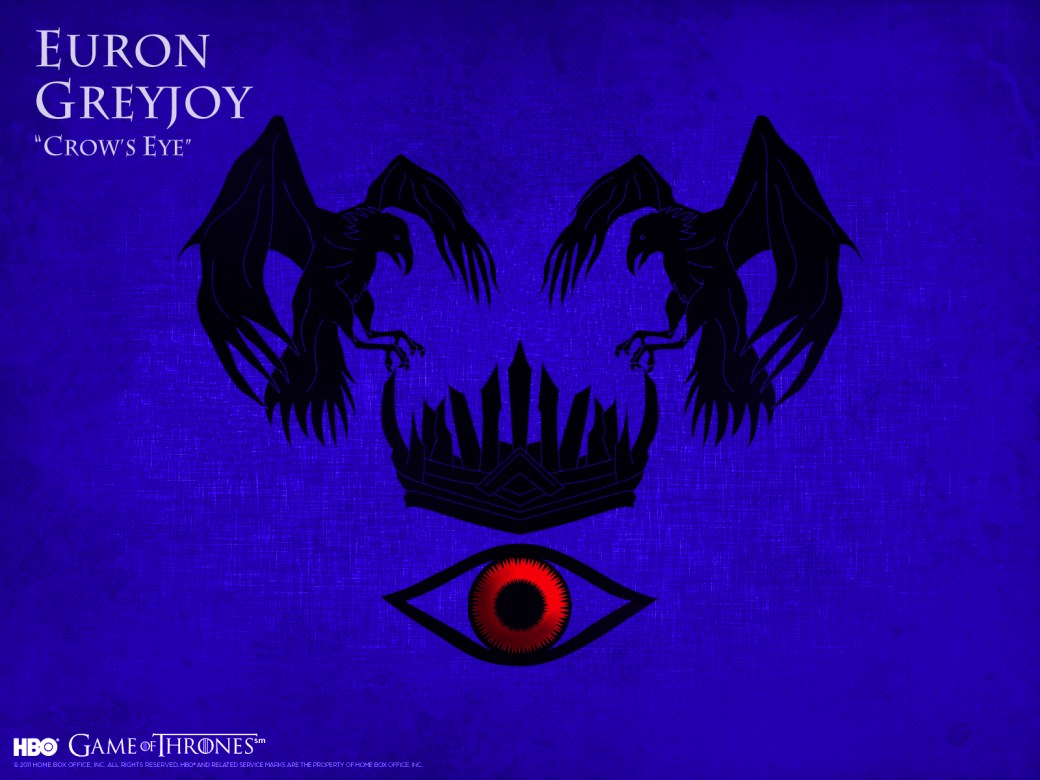
 

The Long Night Was His to Rule

Hey there friends, patrons, and fellow mythical astronomers! It’s your friend LmL, here with another Moons of Ice and Fire episode to chill you to the bone… because it’s time to talk about Night’s King. Last time we hung out with Aegon the Conqueror and his dragon queens of ice and fire, and we essentially led up to the grand hypothesis that that Night’s King seems to have been a blood of the dragon person of the line of Azor Ahai, and that the story of Night’s King and Night’s Queen seems to be the origin story of the Others, as opposed to something which took place some time shortly after the Long Night as is commonly believed. Clearly, I am going to have to back up those assertions, and that’s what we’re here to do today.In terms of archetypes and legends, I suggested that Azor Ahai’s moons of ice and fire love triangle seems to cast Nissa Nissa as his fire moon bride and Night’s Queen as his ice moon bride. At some point in between his two ‘weddings,’ Azor Ahai would have become the Night’s King, seemingly through his use of the profane blood magic which played a part in bringing on the Long Night. As Azor Ahai, he seems to have cracked the moon with a blood magic rite performed with Nissa Nissa, most likely against her will in my opinion… and as Night’s King, he gave his seed and soul to Night’s Queen and produced cold children who were transformed into the first White Walkers through a process we don’t yet entirely understand.

One of the main ways we arrived at this conclusion – or at least the way that I arrived at it, and have hopefully persuaded you to consider it as a plausible hypothesis – is by the discovery of the Other-like symbolism of the Kingsguard and the Warrior’s Sons. Both of them are tied to Visenya, because Visenya created the Kingsguard, and because the Warrior’s Son’s make the Sept of Baelor on Visenya’s hill their home base. This creates an important parallel between Visenya and Night’s Queen as icy moon queens who play the “mother of the Others” role.

The Kingsguard in particular were created to protect King Aegon, who, with his night-black armor, his Blackfyre sword, and his “Black Dread” dragon, makes for the ultimate prototype of the dark solar king. I’ve begun to make the case that “Night’s King” is part of that same dark solar king archetype, highlighting the fact that both Night’s King and Aegon the Conqueror take one of these “mother of the Others” figures to wife. I also highlighted the fact that King Stannis seems to possess fairly clear parallels to both Night’s King and Azor Ahai, and as we’ll see today, he’s not alone in the combination.

Ultimately, it is that thing called RLJ, the combination of Stark and Targaryen which made Jon Snow, is what explains the deepest meaning of this first leg of the Moons of Ice and Fire series. Jon is the Prince That Was Promised, and his song is the “song of ice and fire” in part because of his Stark / Targaryen heritage, so of course this is in many ways going to come to a head with him. Jon is the most important ice dragon in the story! Even if another ice dragon comet comes around, Jon will still be more important. He’s the special snowflake!

But before we can get to RLJ, and before I can begin to draw more conclusions from the theory that Night’s King was a blood of the dragon person, I want to provide more evidence to support my Night’s King theory itself. I also want to show you more moons of ice and fire love triangles to help support my theory that there were two moons in the first place, and that these so-called “love triangles” are symbolizing a sun and two moons.

Here’s the good news: it’s hardly going to be a slow episode. We’ll be starting with our first character to play the Night’s King role, Stannis Baratheon, and finishing up with the most important Night’s King character of the final act of our story, a character many of you have been waiting for me to discuss… and that’s none other than Mr. Pirate Odin on Bad Acid himself, Euron Crow’s Eye. In between we’ll visit some dear friends of mythical astronomy such as Jon, Melisandre, Ygritte, and Gilly; we’ll say hello to some fresh faces too, such as Selyse Baratheon, Val the Wildling ‘Princess’, Craster, Ser Waymar Royce, and Euron; and I’ll even throw a few Targaryens, Starks, and Daynes from ages past. We’ll have some stellar mythical astronomy metaphors, naturally, and an excellent dragon-on-dragon battle featuring Vhagar, and I might even offer you some shade of the evening when the moment is right. And by ‘when the moment is right,’ I mean that we will be visiting the House of the Undying and those shady, blue-lipped warlocks.

Oh and one other note; this episode will contain spoilers for the Forsaken chapter of The Winds of Winter which George has read aloud at a con, and the transcript of which can be found in several places online. History of Westeros also offers a great review of the chapter, by the way. I know a few of you guys and gals are holding off on reading Winds spoiler chapters, however I feel that you can and should make an exception for The Forsaken because George actually did intend for it to be a part of ADWD, only to have it cut for length. It doesn’t reveal any major plot twists; it’s really just taking what we already know about Euron (he’s crazy, uses sorcery, and has delusions of grandeur) and turns the dial up to eleven. The chapter is basically interaction between Aeron Damphair and Euron, interspersed with nightmare visions, so it’s mostly the symbolism in the nightmares I am after as it relates to Euron. Hopefully that’s not a problem for anyone, but fair warning. I don’t think this podcast will lessen anyone’s experience when Winds comes out; if anything, it will give you a hazy, shade of the evening-like glimpse into the horrors that await which will only wet your taste for more. However I did leave that section to the end, so if you really don’t want to be spoiled, you can stop at the Euron section and miss everything I have to say about him.

It’s going to be a very character-driven episode, which everyone seems to like, but the overarching mission will be to discover the nature of the Night’s King. We’ll also continue to explore the ice and fire dichotomy that runs through the story, as will every episode in the Moons of Ice and Fire series, so just sort of keep those ideas in the back of your mind as we go – Night’s King, ice and fire dichotomy. We will flesh out the Night’s King archetype by doing what we usually do – by identifying characters who seem to be playing into that archetype and then examining their symbolism and comparing them to each other, and by thinking about them as metaphors for flying space rocks. As we do all of that, we can compare what we find to what we’ve already learned about Aegon the Conqueror, Rhaegar, Night’s King, and of course, Azor Ahai. .

Stannis is the logical place to begin, since I’ve already cited him as an example of someone who shows us both Azor Ahai and Night’s King Symbolism. So let me quickly say thanks to George R. R. Martin for writing the novels, to John Walsh of the John Walsh Guitar YouTube channel for our theme music, and let’s all welcome back Martin Lewis who has once again given us his amazing vocal performances for the book quotes. Thanks to all of our Patreon supporters, who have gobbled up all the available zodiac slots and most of the guardian of the galaxy slots with their tremendous support, and as a result, I have created some new Patreon reward tiers. You can now join the Long Night’s Watch and be resurrected as a green zombie, you can become an Other and walk the woods as a cold white shadow, or you can even become the envy of every half-mad Targaryen and transform yourself into a dragon. Check out lucifermeanslightbringer.com and click on the patreon tab, and as always that’s also the place to find the matching text to this podcast.


A Blue-Eyed King Raised a Red Sword

This section is sponsored by our newest Guardian of the Galaxy patron, Nienna the Wise, the Persephoenix, Guardian of the Celestial Ice Dragon, whose words are “from sorrow, wisdom”, and by Mnemosyne, the poem on two feet, mother of muses, rider of the dragon Saga, and Guardian of the Celestial Swan


I’ve been mentioning this curious mystery about Stannis in pretty much every Moons of Ice and Fire episode – why is this guy who’s running around with a burning sword and calling himself Azor Ahai reborn acting so much like Night’s King?  You guys are familiar with the basics: Stannis wields a burning sword he calls Lightbringer and did the little faux-Lightbringer forging ritual on Dragonstone, and of course, he’s straight-up named as Azor Ahai Reborn himself by Melisandre. Throughout the entire story, Stannis wears “a crown of red gold with points fashioned in the shape of flames,” and as we saw last time, he dreams of of a man he believes to be himself wearing a crown of actual fire. Both of these are clear allusions to the origin of the golden king’s crown as a symbol of the sun’s rays and of the king wielding the divine authority of the sun god.

As the story progresses, we also find Stannis focused on fighting the Others with a sincerity matched only by Jon Snow and the true brothers of the Night’s Watch, and all of this matches the myths of Azor Ahai as a warrior who fought against the dark.

Stannis Baratheon, by Ertaç Altınöz

On the other hand, Stannis is a rebel king who set himself up at the Wall (at least  according to everyone not loyal to Stannis), just as the Night’s King of legend set himself up as a rebel king at the Nightfort. Stannis, infamously, takes the Nightfort as his seat, just as Night’s King did, and just to make sure we notice the parallels. Legend says Night King’s was thrown down by the Stark of Winterfell and the original Joramun, the first King Beyond the Wall, or said another way, Night’s king was said to have warred against two people, the Lord of Winterfell and the King Beyond the Wall.  And so too does Stannis, though with better results so far. That’s right, Stannis first wars against Mance Raydar when he was King Beyond the Wall, and when last we left him, he was headed south to fight the temporary Lord of Winterfell, Ramsay Bolton.

Most importantly, and this was the subject of Moons of Ice and Fire 1, the succubus-like process by which Melisandre draws from Stannis’s life fires to make the black shadows with burning hearts that we like to call the shadowbabies seems to be a temperature- and color-inverted facsimile of Night’s Queen taking the seed and soul of Night’s King to make white shadow Others.

The most straightforward way to explain Stannis’s blend of Azor Ahai and Night’s King symbolism is that ‘Azor Ahai the guy with the burning sword’ is also Night’s King in some sense. And when I say “in some sense,” I mean of course that it could be a father / son or brother / brother relationship, or they may simply be of the same line and thus share the same archetype. I think the relationship must be very close though, or else it doesn’t make sense to show us characters who manifest both night’s King and Azor Ahai reborn symbolism.

Now, with all this in mind, let’s take a look at the first description of Stannis that we get in the books, from Cressen’s prologue chapter of ACOK:

There was a single chair in the room, carefully positioned in the precise place that Dragonstone occupied off the coast of Westeros, and raised up to give a good view of the tabletop. Seated in the chair was a man in a tight-laced leather jerkin and breeches of roughspun brown wool. When Maester Cressen entered, he glanced up. “I knew you would come, old man, whether I summoned you or no.” There was no hint of warmth in his voice; there seldom was.

Stannis Baratheon, Lord of Dragonstone and by the grace of the gods rightful heir to the Iron Throne of the Seven Kingdoms of Westeros, was broad of shoulder and sinewy of limb, with a tightness to his face and flesh that spoke of leather cured in the sun until it was as tough as steel. Hard was the word men used when they spoke of Stannis, and hard he was. Though he was not yet five-and-thirty, only a fringe of thin black hair remained on his head, circling behind his ears like the shadow of a crown. His brother, the late King Robert, had grown a beard in his final years. Maester Cressen had never seen it, but they said it was a wild thing, thick and fierce. As if in answer, Stannis kept his own whiskers cropped tight and short. They lay like a blue-black shadow across his square jaw and the bony hollows of his cheeks. His eyes were open wounds beneath his heavy brows, a blue as dark as the sea by night.

Despite his solar king status, his voice has no warmth, and despite the red gold crown of twisted flames he likes to wear, we can see here the implication of another crown – the shadow crown of the dark solar king, which is an inversion of the golden sun ray symbol. Stannis has a blue-black shadow on his face, and his eyes are a blue as dark as a sea by night – again, this is all implying darkness and night, and there’s a companion line a few chapters later when Stannis and Mel burn the Seven that says “Stannis watched impassively, his jaw hard as stone under the blue-black shadow of his tight-cropped beard.”

The description of Stannis’s blue eyes as open wounds implies blue blood, and blue blood reminds us of the Others. The combination of all this shadow talk with the color blue also reminds us of the Others, absolutely, and so we can see that Stannis’s Night King symbolism was there right from the beginning, even before Melisandre called him Azor Ahai reborn and had him draw a sword from the fire.

The other noticeable thing is the description of Stannis as hard; his skin is like steel and his jaw as hard as stone. I think the description of Stannis’s fake Lightbringer from ADWD actually encapsulates Stannis’s personal symbolism nicely:

Stannis Baratheon drew Lightbringer.

The sword glowed red and yellow and orange, alive with light. Jon had seen the show before … but not like this, never before like this. Lightbringer was the sun made steel.

We know what it means for the sun to be made into steel – that’s when the moon drinks the fire of the sun gives birth to the sun’s fiery meteor sword children. Since those black Lightbringer meteor are the children of the sun and moon, they can be thought of a transformed or reborn sun, and thus, the sun made into steel and stone. This is why the “second sun / son” symbolic motif works so well – the Lightbringer meteors light up the sky like a second sun, and on a symbolic level, they represent the son of the sun. The sun made steel.

The description of the Red Temple in Volantis complements this idea perfectly:

Three blocks later the street opened up before them onto a huge torchlit plaza, and there it stood. Seven save me, that’s got to be three times the size of the Great Sept of Baelor. An enormity of pillars, steps, buttresses, bridges, domes, and towers flowing into one another as if they had all been chiseled from one colossal rock, the Temple of the Lord of Light loomed like Aegon’s High Hill. A hundred hues of red, yellow, gold, and orange met and melded in the temple walls, dissolving one into the other like clouds at sunset. Its slender towers twisted ever upward, frozen flames dancing as they reached for the sky. Fire turned to stone.

Fire turned to stone – it’s basically another way of saying “the sun made steel,” and obviously it makes sense to see these descriptions pinned on Stannis’s Lightbringer and the Red Temple, since those two things define a large part of who Stannis has become. Stannis is a reborn solar king turned hard as stone and steel – but as we’ve said many times, the reborn sun is a dark sun – the dark solar king figure. That’s who Stannis is. His incarnation of the archetype emphasizes the solar king’s turn towards darkness.

As we discussed at the beginning of the last episode, the dark sun or night sun symbolizes two related things: the dark, sunless sky, and the black moon meteors which brought the darkness of the Long Night. If the regular sun wields Lightbinger the comet as his sword, then the dark sun can be thought of as wielding the black moon meteors as his sword. But you can also think of black sun and black meteor as the same person, since sword and swordsman are one in the same.

In regards to Stannis, the symbolic descriptions of his being like stone and iron and steel basically make him the black meteor version of the dark, reborn sun. Imagine his crown of fire and shining sword as the ring of fire that engulfs a falling meteor, essentially. His shadow crown and the other shadow language, meanwhile, tells us the truth about the meteors as darkness bringers.

Something that we will learn today is that one of the main features of the combined Azor Ahai / Night’s King figures is that they tend to combine ice and fire symbolism, and Stannis certainly does this. We just saw that Stannis pairs the flaming sword and fiery crown symbols with blue blood and blue shadow symbols that remind us of the Others, and then we have Dany’s vision of Stannis from the House of the Undying:

Glowing like sunset, a red sword was raised in the hand of a blue-eyed king who cast no shadow.

Glowing red swords and red  sunsets are recognizable Azor Ahai symbols, while blue eyes can only remind us of the Others. And yes, Stannis’s eyes are a natural blue, but people’s appearances in dreams and visions are usually defined by their personal symbolism. The blue-eyed king with a red sword is a kind of archetype, and it is vaguely suggestive of an Other wielding Lightbringer. It might compare to Jon dreaming of being armored in black ice with a sword that burns red. Both visions combine ice and fire in a tantalizing way that we don’t quite understand yet. But we will certainly try to figure it out!

Whatever it means, we can at least see that once again, Stannis likes to pair Azor Ahai / dark solar king symbolism (sunset and the red sword) with Night’s King / Other symbolism (blue eyes, ‘shadowless’ from creating magical shadow children), and again I will say that I think the reason is that it was the guy with the burning red sword whom we think of as Azor Ahai who was also responsible for creating the Others.

Now, ask yourself, does Stannis do anything that might symbolize the creation of the Others?

Well, as we’ve said many times, his creation of the shadowbabies with Mel is a temperature and color-inverted version of making the Others. But if you’ve read the Weirwood Compendium series, you know that there is at least one more depiction of Stannis making the Others. It happens during the Battle for Deepwood Motte, when Stannis attacks Asha’s Ironborn with the warriors of the Mountain Clans of the North. Those mountain clan warriors dressed up like trees, and this caused Asha to serve up the all important line about the “tale she had heard as a child, about the children of the forest and their battles with the First Men, when the greenseers turned the trees to warriors.” This is a legend which might be part of the origin story of the Others, one which refers to the weirwood / children of the forest part of the equation of creating Others, as we’ve mentioned before.

When Asha encountered her final Northmen, his axe “shivered” her shield, if you recall, as if the axe were made of ice. That Northman turned out to be Morgan Liddle, whose house sigil is a green treeline on a snow white background with three pine cones. The sigil’s combination of snow and trees complements the idea of “turning the trees into warriors” as a description of making the Others, since it associates Morgan of the chilly axe with both trees and snow. Taken together, the impression is created that Stannis has turned the trees into cold northern warriors, like the Night King creating the Others. These cold northern tree-warriors fight for the blue-eyed king with the red sword, sending us the message that is was indeed Azor Ahai who played a part in the creation of the Others.

Alright, now let’s have a look at Stannis’s lunar queens of ice and fire, and it’s not hard to tell who is who. Naturally, Melisandre serves as his fire moon queen, which makes Selyse his ice moon queen, and indeed, the symbolism agrees with this. The following line is from Asha’s ADWD chapter titled “The King’s Prize:

Asha would have called them king’s men, but the other stormlanders and crownlands men named them queen’s men … though the queen they followed was the red one at Castle Black, not the wife that Stannis Baratheon had left behind at Eastwatch-by-the-Sea.

Melisandre is Stannis’s red queen – that seems straightforward. And there’s a matching passage from Jon Snow in ADWD:

Lady Melisandre wore no crown, but every man there knew that she was Stannis Baratheon’s real queen, not the homely woman he had left to shiver at Eastwatch-by-the-Sea. Talk was, the king did not mean to send for Queen Selyse and their daughter until the Nightfort was ready for habitation. Jon felt sorry for them. The Wall offered few of the comforts that southron ladies and little highborn girls were used to, and the Nightfort offered none. That was a grim place, even at the best of times.

As you can see here, Stannis is thought of as having two queens, and Mel is the red one who is obviously associated with fire. As I mentioned, Selyse is not happy being left behind to “shiver” at Eastwatch and wants to move on to the Nightfort, Stannis’s official seat, as quickly as she can. That’s a good start for Selyse’s icy Night’s Queen symbolism, and of course it goes further.

The sigil of House Florent, which is the House of Selyse’s birth, is certainly noteworthy: “A red fox in a circle of blue flowers on ermine.” Blue flowers obviously remind us of Lyanna’s blue winter roses, and they are even in a ring or crown shape like Lyanna’s blue rose crown, helping to reinforce the identification of Selyse as Stannis’s ice moon queen. We also notice that it’s a circle of a dozen blue flowers, to be specific, representing, perhaps, the first group of 12 Others? The red fox would be for the Night’s King Azor Ahai (Stannis in this case), since red and black are the colors of Azor Ahai and the black dragon archetype. Consider this to be like when Rhaegar had Lyanna’s wreath of blue roses on the end of his black lance… it’s the same image, except swapping black for red. One blue rose crown is penetrated by a red fox, one by a black lance, in other words.

In ADWD, when the wildlings come through the Wall, there is a feast and a bit of a dance breaks out. I think this is one of those occasions where George is slyly making  a double entendre of the word “others” to talk about the white walkers. Check it out, see what you think:

Between courses, Ser Axell Florent led Queen Selyse out onto the floor to dance. Others followed—the queen’s knights first, partnered with her ladies. Ser Brus gave Princess Shireen her first dance, then took a turn with her mother. Ser Narbert danced with each of Selyse’s lady companions in turn.

Ice Queen Selyse goes on to the floor to dance, and “others followed,” those others being her knights. A moment later, Axel Florent is pressing Jon about the whereabouts of Val, as this is the period of time when she is gone, north of the Wall.

Florent’s face grew flushed with anger. “So it is true. You mean to keep her for yourself, I see it now. The bastard wants his father’s seat.”

The bastard refused his father’s seat. If the bastard had wanted Val, all he had to do was ask for her. “You must excuse me, ser,” he said. “I need a breath of fresh air.” It stinks in here. His head turned. “That was a horn.”

Others had heard it too. The music and the laughter died at once. Dancers froze in place, listening. Even Ghost pricked up his ears. “Did you hear that?” Queen Selyse asked her knights.

Others heard it too – the dancers that froze in place, that is. Recall the dancing language is used when Ser Waymar fights the Others in the prologue of AGOT. That horn blast is the one which heralds the return of Val, who as we are about to see is another ice queen (spoiler alert), so naturally it makes everyone freeze.

The point is that Selyse’s knights should stand in for the Others, so the potential “others” double entendres here are highly suspicious. The fact that her “Queen’s Men” worship R’hllor, but are ‘the others’ who ‘froze in place,’ might be intended as a clue about the Others having a fiery heritage, as I have been suggesting.

In ACOK, when Axell Florent’s brother Alester is imprisoned beneath Dragonstone, he asks for the help of ice queen Selyse and the Others in the same breath, and we get more clues about the symbolism of House Florent:

“Axell,” the prisoner said desperately, “for the love you bear me, unhand me! You cannot do this, I’m no traitor.” He was an older man, tall and slender, with silvery grey hair, a pointed beard, and a long elegant face twisted in fear. “Where is Selyse, where is the queen? I demand to see her. The Others take you all! Release me!”  

The long, elegant silvery-grey Alester Florent of the dozen blue flowers sigil is asking for the ice queen to save him, and then, failing that, he’s asking the Others to strike down his enemies. That actually makes perfect sense, according to our theory about the icy Corpse Queen making the Others.

When Jon and Val go to see Seylse in her temporary chambers at Castle Black, Jon notes the commander of Selyse’s guard:

Commanding them was Ser Patrek of King’s Mountain, clad in his knightly raiment of white and blue and silver, his cloak a spatter of five-pointed stars.

Ser Patrek is apparently symbolizing an Other, with his white and blue and silver coloring – the three colors of the ice moon, essentially – and his blue star decorations. They are even “spattered,” like blood – blue blood, that would be, like the Others have.  That means that his standing guard outside of Selyse’s chambers is roughly equivalent to the Kingsguard outside the Tower of Joy, guarding their ice moon queen Lyanna. Ser Patrek is immediately besotted with Val, which is understandable, as she is, like Selyse, a Night’s Queen figure. Check the next lines about this:

 When presented to Val, the knight sank to one knee to kiss her glove. “You are even lovelier than I was told, princess,” he declared. “The queen has told me much and more of your beauty.” 

“How odd, when she has never seen me.” Val patted Ser Patrek on the head. “Up with you now, ser kneeler. Up, up.” She sounded as if she were talking to a dog.

The Others are something like the dogs of the Night’s Queen – perhaps the wolves of the Night’s Queen is more apt – and so Val is treating this Other-like knight as her dog, to hilarious effect. Jon has to try hard not to laugh, as a matter of fact.

Anyway, that’s the deal with Stannis’s two queens, Melisandre and Selyse. One is very hot, and one very cold. Stannis himself is a dark solar king, showing us both Azor Ahai reborn and Night’s King symbolism, and he fits the pattern of a solar king with lunar queens of ice and fire. He wields Lightbringer and creates the Others in different symbolic ways. He starts of ruling at Dragonstone, symbol of the fire moon and former seat of dragonlords, then later takes the Nightfort as his seat, the first castle on the Wall whose oldest history is the story of Night’s King.

Based on what we have learned of how Martin uses his archetypes and how he creates echoes of the past in the characters and events of the present, Stannis’s symbolism seems to be leading us toward the conclusion that there is some serious overlap between Night’s King and Azor Ahai, particularly the death-associated, post-transformation Azor Ahai.  That’s the same conclusion we drew from the parallels between Aegon the Conqueror and Night’s King, and we’re only going to find more evidence for this as we go. That’s especially true with our next Azor Ahai reborn / Night’s King figure, who is literally a blood of the dragon person.


Mayhaps His Name Was Azor

This section is brought to you through by the Patreon support of two of our zodiac patrons: Lord Leobold the Victorious, the Firelion of Lancasterly Rock and Earthly Avatar of the Celestial House Leo, and BlueRaven of the lightning peck, earthly avatar of Heavenly House Gemini, whose words are “the way must be tried”


Now before you throw down your headphones and say “the Night’s King was a Stark! Mayhaps his name was Brandon, you idiot!” …yes, I agree. I suspect that just as Jon is both Stark and blood of the dragon, so was the Night King. Even Stannis has a little dragon blood, for that matter, and in fact, if we consider further, House Baratheon was formed when a blood of the dragon person from Valyria, Aegon’s probably bastard brother Orys Baratheon, joined up with a First Man house from the Dawn Age, that of Durrandon. The Starks may a similar tale, one that combines the blood of the dragon with the blood of the ancient First Men.

Just like Stannis, Jon is a dark solar king (black was always his color) who combines the symbolism of Azor Ahai and Night’s King, and he too has a pair of symbolic lunar wives of ice and fire. We’re going to consider Jon as the product of Rhaegar and Lyanna in the next episode, but right now we are just going to think about Jon on his own.

First off, Jon’s Azor Ahai reborn bona fides are well established in what has come to be called his “Azor Ahai dream” from ADWD:

Burning shafts hissed upward, trailing tongues of fire. Scarecrow brothers tumbled down, black cloaks ablaze. “Snow,” an eagle cried, as foemen scuttled up the ice like spiders. Jon was armored in black ice, but his blade burned red in his fist. As the dead men reached the top of the Wall he sent them down to die again. 

It’s not just the simple fact that he dreams of wielding a burning red sword; it’s the fact that he dreams about slaying his love Ygitte with that burning sword; about being a Night’s Watchman defending the Wall with that burning red sword, and defending it against foes who need to be killed “again” (like the wights) and who “scuttle up the ice like spiders” like Others climbing the Wall with their ice spiders. When a guy with a hero’s journey arc like Jon dreams of something like this, I think you can take it at face value: it’s an indication of Jon’s destiny as one of the primary heroes of the story, and more specifically, that he’s the mostly likely candidate to wield a true Lightbringer sword before the story is over, if anyone is.

Then we have the clue about Melisandre seeking glimpses of Azor Ahai reborn in her fires – thinking that that is Stannis – but seeing only Jon Snow instead. It’s a pretty clear hint to Melisandre (and us readers) that Jon Snow is indeed R’hllor’s chosen, Azor Ahai reborn. As always, I’ll add the caveat that the same applies to Dany of course, as I see them as the two most important Azor Ahai reborn people in the story. Maester Aemon seems to sense it about Jon as well, encouraging Jon to read the passages of Colloquo Votar’s Jade Compendium which speak of Azor Ahai.

Prophecy aside, there’s the simple reality that Jon is the number one person concerned with stopping the Others and fighting the Long Night. Whatever you think of prophecies, visions, and the hunches of old blind men, Jon is simply the man in charge of the Wall and the Watch… at least he was until he was murdered by his brothers.

We haven’t seen Jon’s resurrection in the books yet, but you can be sure it’s going to be packed with Azor Ahai reborn symbolism. That’s one of those scenes from Winds of Winter which we mythical astronomers will be extra jazzed to read, knowing what kinds of things to look for. I bet as you read it, you’ll be hearing my voice in the back of your head… “oh, there’s the burning black blood to indicate fire transformation, and there’s the second sun symbolism…” that sort of thing.

As for Jon playing the Night’s King role, well, he’s the Lord Commander of the Watch, which is a good start, and he arguably breaks many of his vows throughout his plot arc – specifically the one about not taking a wife (and please don’t disrespect Ygritte’s memory by saying Jon didn’t take her as a wife, because he did). Yes, that’s right, Jon and Night’s King are both commanders who are notoriously bad at not falling in love with women they find north of the Wall. As Jon muses to himself in ACOK, “It was easy to lose your way beyond the Wall. Jon did not know that he could tell honor from shame anymore, or right from wrong.”

Cersei also declares Jon a rebel to the throne, and although that’s obviously a political move on Cersei’s part, it still matches the Night’s King story of a rebellious Lord Commander of the Watch. And if you ask the mutineers who killed Jon, he was breaking the vows in spirit by letting the wildlings through the Wall and by planning to take them to attack Winterfell.

Moving right along, we know that Night’s King made white shadows with Night’s Queen; Aegon the Conqueror was followed around by his white shadow kingsguard which Visenya made for him; and Jon too is followed around by a white shadow – his direwolf Ghost, who is called a “white shadow” or “pale shadow” on several occasions. Ghost has some important differences from the Others – notably, red eyes and not blue – but he is nevertheless a white shadow guardian of Jon the black-clad solar king. That’s a match for Night’s King as well as Aegon and Rhaegar and all the other Targaryen kings, all of whom liked to be surrounded by white shadows.

Jon’s Night King symbolism really kicks into gear in this passage from ASOS when Jon is sent North of the Wall against his will to try to kill Mance Raydar:

The wind was blowing wild from the east, so strong the heavy cage would rock whenever a gust got it in its teeth. It skirled along the Wall, shivering off the ice, making Jon’s cloak flap against the bars. The sky was slate grey, the sun no more than a faint patch of brightness behind the clouds. Across the killing ground, he could see the glimmer of a thousand campfires burning, but their lights seemed small and powerless against such gloom and cold.

A grim day. Jon Snow wrapped gloved hands around the bars and held tight as the wind hammered at the cage once more. When he looked straight down past his feet, the ground was lost in shadow, as if he were being lowered into some bottomless pit. Well, death is a bottomless pit of sorts, he reflected, and when this day’s work is done my name will be shadowed forever.

Bastard children were born from lust and lies, men said; their nature was wanton and treacherous. Once Jon had meant to prove them wrong, to show his lord father that he could be as good and true a son as Robb. I made a botch of that. Robb had become a hero king; if Jon was remembered at all, it would be as a turncloak, an oathbreaker, and a murderer. He was glad that Lord Eddard was not alive to see his shame.

Turncloak, oathbreaker, murderer, wanton and treacherous, name forever shadowed: this could be the Night’s King we are talking about as Jon is lowered into the abyss. His inner monologue of shame and regret may have even fit well in the mouth of Night’s King at some point.

As for Jon’s brother Robb, not only is he a hero king, he is specifically the King in the North / King of Winter. Once again I will remind you that according to legend, Night’s King also had a brother who was the King of Winter, Brandon the Breaker, one of the two men who brought down Night’s King. I would say it could just as easily be a father / son relationship between Night’s King and Brandon the Breaker as brother / brother, but the safe bet is that there is some sort of blood relation there, and the point is that having a brother who is a Stark King is another parallel between Jon and Night’s King.

The other person to help throw down Night’s King was of course Joramun the King Beyond the Wall, and the person Jon is on his way to try to murder while he thinks of his brother the King in the North is.. Mance Raydar, the King Beyond the Wall. Mance, incidentally, is a bit of father figure to Jon for a time, and famously shares some amount of symbolism with Rhaegar, Jon’s biological father. Down, tinfoil, down. Shush. Sit.

Actually, there’s an even more clear match to the Night’s King myth than that – Jon does the same thing as Stannis in that he actually fights or plans to fight both the King Beyond the Wall and the Lord of Winterfell. In ASOS, Jon is among those leading the defense of the Wall against the wildling army of King Beyond the Wall Mance Raydar. This is where he is first told “the Wall is yours, Jon Snow” by Aemon Targaryen, in fact, so even though he isn’t Lord Commander yet, he’s effectively the acting Lord Commander during this battle against the King Beyond the Wall, who, by the way, claims to have the same horn that Joramun carried.

As for fighting the Lord of Winterfell, well, you will probably remember that right before he was mutinied, Jon was trying to lead a force against Winterfell and the impostor King in the North, Ramsay Bolton, as Stannis did before him – so there you go. During his ‘armored in black ice / Azor Ahai dream,’ Jon also sees himself decapitating Robb and declaring himself the Lord of Winterfell, which again places Jon as a Night’s Watch commander warring against the Stark in Winterfell.

Now, check out this angle. Of Night’s King it is said that “with strange sorceries he bound his Sworn Brothers to his will,” so we have to think, does this apply to Jon, or Stannis for that matter? Well, ask yourself, do either of them use any kind of magic to win the loyalty of their followers?

Actually… yes, they both do, although neither is, you know, using mind control or something like the myth seems to imply. However, Stannis is quite obviously using magic to not only impress, but to motivate his followers, who see his struggle for the throne as an existential one where the ultimate players are gods and demons and the fate of the world hangs in the balance. Stannis, with his magic sword and magic red priestess, has convinced his followers that he is not only the rightful king and a good commander and all that, but that he is in fact the “Lord’s chosen,” the man to fight the darkness and the Others with a magic sword, and even dragons, if they could just perform the right kind of horrible blood magic sacrifice to wake them from stone.

As you can see, Stannis could certainly be said to using sorcery to bind his followers to him and to establish his authority. Then we have Jon, who won the election for Lord Commander when a talking raven flew out of a kettle and landed on his shoulder and basically declared him the winner. Everyone knows he’s a warg, and wise rangers like Qhorin Halfhand and Lord Commander Mormont are quick to encourage or even make use of Jon’s gifts. He’s a warg descended of an ancient, magical bloodline with a giant magical white wolf and a magical black sword – don’t forget all Valyrian steel swords are made with sorcery and are therefore ‘magic swords’ –  and you better believe all of that plays into everyone else looking at Jon as the logical one to lead the watch.

So, it’s somewhat similar in both cases, though Stannis is more obvious – both Jon and Stannis use magical powers and magical artifacts to establish their authority. This is certainly the kind of thing that could, hundreds and even a few thousand years later, be remembered in myth as “binding their brothers to their will with strange sorceries.”

Alright, so let’s talk about Jon’s ladies, the lunar queens. As a proper solar king, dark though he may be, Jon does have two lady loves that fit the love triangles of ice and fire pattern. The fire moon bride would be Ygritte of course, with her kissed by fire hair and tragic death via an arrow to the heart, which is similar to Nissa Nissa taking Lightbringer to the heart, and you’ll recall that although it wasn’t Jon’s arrow that killed her, in his nightmares it was. Of course I just mentioned that Jon kills her with a flaming red sword in his Azor Ahai dream, reinforcing the message.

You will also recall the scene in the Frostfangs from ACOK where Jon first met Ygritte; her campfire with the wildlings in the pass looked like a “red star” to Jon and company at the base of the mountain. When he climbed to meet the red star, he did a bunch of Lightbringer forging stuff with Ygritte; namely, he came very close to executing her with Longclaw, but instead did something that was later interpreted as stealing Ygritte and thus implying his intent to marry or partner with her. That’s the sex and swordplay dual-edged Lightbringer motif that we have been pointing out since episode one, so I assume everyone is well familiar with it.

We’re actually going to talk a bit more about Ygritte’s death in the future when we are thinking about weirwoods again, but for now we can stick with only a brief mention of her as we have covered her several times before. She is Jon’s first love, she’s only described as kissed by fire a thousand and one times, and she is Jon’s fire moon queen.

Jon’s ice moon bride is not as obvious, but consider that when Stannis offers Jon the chance to become legitimized as Jon Stark, Lord of Winterfell, he is offered Val’s hand in marriage. And Val is an obvious winter queen, as we see in ADWD:

Then Ghost emerged from between two trees, with Val beside him.

They look as though they belong together. Val was clad all in white; white woolen breeches tucked into high boots of bleached white leather, white bearskin cloak pinned at the shoulder with a carved weirwood face, white tunic with bone fastenings. Her breath was white as well … but her eyes were blue, her long braid the color of dark honey, her cheeks flushed red from the cold. It had been a long while since Jon Snow had seen a sight so lovely.

“Have you been trying to steal my wolf?” he asked her.

Jon just asked Val the ice moon queen if she was trying to steal his ghost – his wolf is named Ghost after all. That’s a very Night’s Queen sort of thing to do, since it is said that Night’s King gave her his soul when he gave her his seed. I don’t know about you, but I thought that was a really clever one by George.

Val really does make for a stunning ice queen – she has blue eyes, and the rest of her is white except for her hair, including the white polar bear skin she wears. The weirwood broach is a nice touch, and seems a clue about Night’s Queen and weirwood magic, which I definitely think is a thing.

Consider what’s happening here: Jon is the Lord Commander, as Night’s King was, and although Jon didn’t spy Val from atop the Wall, he is standing right in front of the Wall when he sees this lovely, pale woman with blue eyes who might have designs on stealing his ghost. That’s a pretty good Night’s King reenactment!

Now that last description of Val came when she was returning from a journey to find Tormund and the surviving Wildlings from the battle with Stannis north of the Wall, and when she sets out on that journey a couple of weeks earlier, there is more icy moon maiden symbolism, and preceded by a mention of an ice dragon!

The road beneath the Wall was as dark and cold as the belly of an ice dragon and as twisty as a serpent. Dolorous Edd led them through with a torch in hand. Mully had the keys for the three gates, where bars of black iron as thick as a man’s arm closed off the passage. Spearmen at each gate knuckled their foreheads at Jon Snow but stared openly at Val and her garron.

When they emerged north of the Wall, through a thick door made of freshly hewn green wood, the wildling princess paused for a moment to gaze out across the snow-covered field where King Stannis had won his battle. Beyond, the haunted forest waited, dark and silent. The light of the half-moon turned Val’s honey-blond hair a pale silver and left her cheeks as white as snow. She took a deep breath. “The air tastes sweet.”

“My tongue is too numb to tell. All I can taste is cold.”

“Cold?” Val laughed lightly. “No. When it is cold it will hurt to breathe. When the Others come …”

Night’s Queen had “skin as white as the moon and eyes like blue stars,” and also “skin as cold as ice.” Shuffle the words around ever so slightly, and we have these descriptions of Val, whose cheeks are white as snow in the moonlight. Both ladies have skin compared the moon and to snow and ice, in other words, and Val even talks about the Others in this scene – and only a few lines after the mention of the ice dragon in Jon’s inner monologue, no less! The implication of Val being impervious to cold is interesting, and it continues a few lines later as Val rides off. This is Dolorous Edd speaking:

“I don’t care what she says,” muttered Dolorous Edd, as Val vanished behind a stand of soldier pines. “The air is so cold it hurts to breathe. I would stop, but that would hurt worse.” He rubbed his hands together. “This is going to end badly.”

‘So cold it hurts to breathe’ is the signature language of the presence of the Others. Val uses the phrase here to describe the presence of the Others, that phrase is used when Sam and Gilly are attacked by wights, and Tormund uses it to describe fighting the Others, which he says is like fighting “Shadows with teeth… air so cold it hurts to breathe, like a knife inside your chest..” Edd is saying it is already this cold, and that this portends Val failing in her mission, but Val is unperturbed and in fact returns successful from the mission. She’s less affected by the cold than the rangers, and she also seems to be able to wander the Haunted Forest and the lands beyond the Wall with relative ease and safety, that’s kind of the picture being painted here.

Now if you’re picking up on the patterns here, you might see that Jon has this excellent winter queen / Night’s Queen figure in Val and wonder, “does Jon do anything with Val that symbolizes the creation of the Others, like Stannis does with the Northmen dressed like trees in the Wolfswood?” Oh man. Boy does he ever. It’s pretty well hidden, so don’t feel bad if it’s not leaping to mind…  …alright I’ll tell you.

So Val has these two scenes playing the Night’s Queen role, both revolving around this deal Jon wants to make with the wildlings to let them through the Wall. The thing is… when these wildlings actually do come through the Wall, there is a megaton of symbolism implying some of the wildlings  as the Others. I mean, it’s actually really over the top – just the way we like it. First, Jon observes the hostages – 100 boys between eight and sixteen:

The boys were going to a place that none had ever been before, to serve an order that had been the enemy of their kith and kin for thousands of years, yet Jon saw no tears, heard no wailing mothers. These are winter’s people, he reminded himself. Tears freeze upon your cheeks where they come from. Not a single hostage balked or tried to slink away when his turn came to enter that gloomy tunnel. Almost all the boys were thin, some past the point of gauntness, with spindly shanks and arms like twigs.

Alright, so winter’s people, with frozen tears and no fear. We see the trees-turned-into-Others motif as winter’s people have “spindly shanks and arms like twigs.” Then begins the parade of double entendres with the word “other”:

Other lads had bear- paws on their boots and walked on top of the same drifts, never sinking through the crust.

That part about not sinking through the crust of the snow is noteworthy because, as Coldhands says, “The white walkers go lightly on the snow, you’ll find no prints to mark their passage.” We’ll see this again in a moment.

Other hostages were named as sons of Howd Wanderer, of Brogg, of Devyn Sealskinner, Kyleg of the Wooden Ear, Morna White Mask, the Great Walrus … “The Great Walrus? Truly?” 

“They have queer names along the Frozen Shore.” 

The other hostages were from the frozen shore, and TWOIAF tells us that the wildlings of the frozen shore worship “gods of snow and ice,” which sounds like white walker worship, perhaps along the lines of what we see with Craster. Thus it makes sense to label their children as ‘Others,’ just as the Craster’s wives call the Others Craster’s Sons. Notice also that these are the sons of at least two people with names that allude to weirwoods or tree-people: Morna Whitemask, who wears a white weirwood mask, and Kyleg of the Wooden Ear, with a wooden ear kind of implying a wooden face. We actually see the rest of the folk from the Frozen Shore a moment later, and again we have an others double entendre:

After the riders came the men of the Frozen Shore. Jon watched a dozen of their big bone chariots roll past him one by one, clattering like Rattleshirt. Half still rolled as before; others had replaced their wheels with runners. They slid across the snowdrifts smoothly, where the wheeled chariots were foundering and sinking. The dogs that drew the chariots were fearsome beasts, as big as direwolves.

Once again we see it is the chariots labelled as the others which go lightly on the snow, without breaking the surface, like the Others. The implication of direwolves pulling the chariots of the Others is pretty cool, perhaps implying a link between Starks and the Others, which is like, tell me something I don’t know, right? I’ll also mention that Rattleshirt, whom the bone chariots are compared to, seems to symbolize a white walker himself, and one of the people he’s with when Jon meets him threatens to make a cloak out of Jon’s white shadow wolf, just so, you know, he can dress us like a white shadow for Halloween.

The next Others wordplay again mentions Rattleshirt:

A few were clad in stolen steel, dinted oddments of armor looted from the corpses of fallen rangers. Others had armored themselves in bones, like Rattleshirt. All wore fur and leather.

This is all from the same chapter, let me remind you. The next one is, frankly, disturbing:

Amongst the stream of warriors were the fathers of many of Jon’s hostages. Some stared with cold dead eyes as they went by, fingering their sword hilts. Others smiled at him like long- lost kin, though a few of those smiles discomfited Jon Snow more than any glare. None knelt, but many gave him their oaths.

Weird, Jon and the Others are long-lost kin? Well, yeah, if there is any sort of connection between House Stark and the Others, then yes, Jon and the Others are like long lost kin. In fact I’d call this line a pretty good clue about the others having a blood tie to House Stark… and we are going to do an entire episode on how I think that happened very soon, as a matter of fact, so start getting hyped for that.

If you’re keeping count, that’s five ‘Other’ double entendres with strong supporting clues around them. Here are number 6 and 7:

By afternoon the sun had gone, and the day turned grey and gusty. “A snow sky,” Tormund announced grimly. Others had seen the same omen in those flat white clouds. It seemed to spur them on to haste. Tempers began to fray. One man was stabbed when he tried to slip in ahead of others who had been hours in the column. Toregg wrenched the knife away from his attacker, dragged both men from the press, and sent them back to the wildling camp to start again.

The second others line – One man was stabbed when he tried to slip in ahead of others – simply labels the wildlings in line as the symbolizing the Others, which we have already established anyway. The first one is especially creepy – while Jon and Tormund are looking at a “snow sky,” we are told that “Others had seen the same omen in those flat white clouds.” You bet the Others see a snow sky as a time to attack! There might be a clue about Jon’s birth triggering the awakening of the Others – they see a grey “snow sky” as an omen which spurs them on to haste. Well, relative haste. Like hasty for a glacier. Anyway.

Snow sky aside, just think about what we are seeing here: Jon Snow making a deal through Val the Night’s Queen that enabled all these symbolic Others to pass through the Wall! And isn’t that what I am claiming about the Night’s King and Queen? Not only that they made Others, but they made the Others that invaded during the Long Night, the ones who white-walked all over the armies of men like we are told.

I believe that is the importance of this unbelievable Others wordplay in this chapter: Jon is the rebellious Lord Commander Night’s King, and through a pact negotiated with a Night’s Queen figure, he has facilitated the Others’ invasion of the lands of the living. Not only that, but Martin specifically set up Val as Jon’s Night’s Queen in the two scenes that lead up to this one where Jon lets the Other-like wildlings pass the Wall, and he had Val be the one that Jon gives his offer to.

Alright! I bet you didn’t expect Jon and Val’s symbolism to run that deep, did you? Well neither did I! You never know what you’ll find when you go digging into ASOIAF symbolism. In this case, we found more evidence for our theory about the Night’s King and Queen making Others during the Long Night, which is nice.

Just to sort of put a bow on Jon’s two lunar ladies, here’s a nice passage where Jon compares them to one another:

The outside air seemed even colder than before. Across the castle, he could see candlelight shining from the windows of the King’s Tower. Val stood on the tower roof, gazing up at the Wall. Stannis kept her closely penned in rooms above his own, but he did allow her to walk the battlements for exercise. She looks lonely, Jon thought. Lonely, and lovely. Ygritte had been pretty in her own way, with her red hair kissed by fire, but it was her smile that made her face come alive. Val did not need to smile; she would have turned men’s heads in any court in the wide world.

There you have it, Jon’s two queens. It’s especially cool to see ice queen Val staring up at the Wall, since the Wall is, like Val, an analog of the ice moon. Notice also the theme of Val being locked away in a castle at the Wall by a Night’s King – Stannis in this scene, and earlier Axell Florent accused Jon of locking Val away for his own purposes. Remember the words of the Night’s King legend: “fearing nothing, he chased her and caught her and loved her,” and then “brought her back to the Nightfort and proclaimed her a queen.” That is absolutely what happens with Val – she is taken captive by Stannis and declared “the wildling princess” by Stannis’s men, even though the wildlings don’t have anything resembling Westerosi concepts of royalty and Jon thinks to himself that he told Stannis half a hundred times that she wasn’t a princess. They even slap a bronze crown on Val’s head! The line is “They had crowned her with a simple circlet of dark bronze, yet she looked more regal in bronze than Stannis did in gold.” Stannis quite literally took her captive and declared her a princess, which is very close to declaring her a queen.

Alright, so I think you can see that Jon, like Stannis, has distinct lunar queens of ice and fire. Like Stannis, Jon has some pretty outstanding Night’s King parallels, and he’s combining those with trademark flaming sword Azor Ahai reborn symbolism. As I pointed out in Bloodstone Compendium 2, the Bloodstone Emperor Azor Ahai, Jon also has several clear parallels to the Bloodstone Emperor myth, and that too sends us the same message: the Bloodstone Emperor, Night’s King, and the reborn version of Azor Ahai are all part of one archetype, the dark solar king, and this is why we see all of them expressed in Jon.

Let’s wrap us this Jon as Night’s King section by talking about the mythical astronomy of Night’s King for a moment. Like I said at the top, the dark solar king has two components: the eclipsed and darkened sun, and the black meteors which are like the dark sun’s sword or seed or child. Jon and Stannis, as very important dark solar king / Night’s King figures, play both of these roles. In the Stannis section, we saw that Stannis described as stone and hard rock several times (and there are more I didn’t list), which is Stannis playing the role of the black meteors. Jon does this too, as we’ll see in a minute, but first check out this awesome passage from Melisandre which compares Stannis and Jon to each other as eclipsed people standing in someone else’s shadow – just like the sun was eclipsed to start the Long Night:

They crossed the yard together, just the two of them. The snow fell all around them. She walked as close to Jon Snow as she dared, close enough to feel the mistrust pouring off him like a black fog. He does not love me, will never love me, but he will make use of me. Well and good. Melisandre had danced the same dance with Stannis Baratheon, back in the beginning. In truth, the young lord commander and her king had more in common than either one would ever be willing to admit. Stannis had been a younger son living in the shadow of his elder brother, just as Jon Snow, bastard-born, had always been eclipsed by his trueborn sibling, the fallen hero men had called the Young Wolf. Both men were unbelievers by nature, mistrustful, suspicious. The only gods they truly worshiped were honor and duty.

It’s fun to think about Jon walking around with black fog just rolling off of him and following him around, like a black ice version of the white mist that follows the Others… but the serious point to make here is that Jon and Stannis are both eclipsed, shadowed people. They are both solar kings, but their symbolism is telling us about the eclipsed sun, the darkened sun of the Long Night.

Also notable is the fact that Melisandre is looking to form the same sort of relationship with Jon she has with Stannis, and in another scene, suggests making a shadowbaby with Jon. That’s Night’s Queen, succubus behavior, and it again places Jon in the Night’s King role. In that scene where she propositions Jon, the light of the moon kisses Jon and casts his shadow huge and black against the ice. Casting shadows and making shadowbabies with a sorceress at the Wall? That’s a definite Night’s King parallel, and we will break down those scenes at the Wall with Jon and Mel in more detail in the RLJ episode.

Alright, so Stannis and Jon are both eclipsed solar kings. Stannis’s stone and iron descriptions show us Stannis as meteor, and Jon has something similar going on. Meteors can be referred to as the hearts of fallen stars, and course meteorites can be thought of a stones, so it’s interesting to see that Sam actually implies a connection between Jon and Lady Stoneheart in this line from AFFC:

He could not blame Gilly for her grief. Instead, he blamed Jon Snow and wondered when Jon’s heart had turned to stone. Once he asked Maester Aemon that very question, when Gilly was down at the canal fetching water for them. “When you raised him up to be the lord commander,” the old man answered.

Perhaps it’s just a turn of phrase to indicate Jon’ hardening himself for command with no double meaning, but comparing Jon to Stoneheart does make a lot sense if Jon is to resurrected via fire magic. Catelyn has bone-white hair and eyes like “two red pits burning in the shadows,” and that’s just how I think Jon might come out of his resurrection – white hair and red eyes, bone and blood, the coloring of his wolf and of the weirwoods.White hair would also make him look more like a Targaryen, too.

Burning stone hearts are also potential meteor-talk, as I mentioned, however it’s not stone Jon is most often compared to, but dragonglass. It happens several times, most notably in ASOS when Stannis tells Jon

“You may lack your father’s honor, or your brother’s skill in arms. But you are the weapon the Lord has given me. I have found you here, as you found the cache of dragonglass beneath the Fist, and I mean to make use of you. Even Azor Ahai did not win his war alone.”

So not only is Jon compared to a dragonglass knife, he’s made analogous to a weapon that should be used in the fight against the Others by a would-be Azor Ahai figure. In this scene, Stannis plays the part of the dark sun, with Jon as the dark sun’s black meteor sword, but as I said sword and swordsman are both part of the same “dark solar king” figure, so what we have is two dark solar kings forming like Voltron to create the entire picture.

This is going to important when we get to the RLJ: A Recipie for Making Ice Dragons episode, which is all about the dragon locked in ice motif. The Night’s King is like that black fire moon meteor dragon flying away from the explosion that darkened the sun – specifically, it’s the one which strikes the ice moon and embeds itself in the ice, or you might say that it impregnates the ice moon, since the ice moon is analogous to the Night’s Queen. As I mentioned in Dawn of the Others, this black meteor dragon impacting the ice moon is what creates ice moon meteors – which are analogous to the Others – just as the Night’s King giving his seed to Night’s Queen created the real Others.

That’s why Night’s King people like Stannis and Jon are often described in language that suggests them as stone, steel, dragonglass, and as knives or swords, all of which end up frozen or lodged in ice somehow: it’s a symbol of Night’s King giving his seed to Night’s Queen. That, I believe, is the explanation for Martin describing Stannis with all the blue shadow and blue-black language when we first see him; it reflects the reborn dark solar king being frozen. Jon expresses this in many ways, such as by being armored in black ice in his Azor Ahai dream, by going to live at the Wall at the very beginning of the story, or by his appearance in Bran’s coma dream flyby of the known world, which ends with Jon, the Wall, and then the Heart of Winter:

He saw the Wall shining like blue crystal, and his bastard brother Jon sleeping alone in a cold bed, his skin growing pale and hard as the memory of all warmth fled from him.

Even Robert and Ned’s famous AGOT clue about Jon’s royal heritage – “kings are a rare sight in the north” / “more likely they were hiding under the snow” – places Jon as a dragon king hidden under the snow. This is the dragon locked in ice motif, and it runs through Jon’s entire storyline.

I said at the beginning that the Night’s King figures have some sort of ice and fire unity thing going on, and now you can start to see what that means: he’s a fiery guy who gave his soul to an icy sorceress and became a bit frozen in the process.


Dancing Dragons Teach Astronomy

This section is sponsored by Queen Cameron, lady of the twilight, keeper of the astral cats, earthly avatar of Heavenly House Aries, and by Ash Rose, Queen of Sevens, Mistress of Mythology, earthly avatar of Heavenly House Taurus


Our search for more Night’s King figures and more love triangles of ice and fire leads us to a peculiar place: hundreds of feet above the ground, and in great peril. Yes, that’s right, it’s time for another dragon-on-dragon battle from the Targaryen civil war known as the Dance of the Dragons. These things are always full of mythical astronomy, and I try to slip them in when it fits the topic of discussion. This dragon fight will support the general two moons hypothesis by giving us a pretty great two moons diagram, and it will end with the crowning of the Night’s King; so after much thought, I’ve decided that this is the place for it. I almost crammed it into the last episode, Visenya Draconis, because it will involve hoary old Vhagar, but that episode had a lot going on already and it fits better here.

Vhagar, in this dragon dance, will be ridden by Aemond One-Eye, he of the blue star-sapphire eye. That pairing creates a smashingly good ice dragon symbol, if you recall, by virtue of Aemon’s blue star eyes and the fact that the “hoary” descriptor implies Vhagar as a snow-white or frosty white dragon. The other two dragons in this fight are surprisingly easy to identify, so it’s primed for mythical astronomy. As you probably guessed by now, this isn’t going to be so much of a love triangle as it will be a triangle of dragon carnage, but it works basically the same way.

The fight takes place at Rook’s Rest in the Stormlands, where the Lord of House Staunton, who is loyal to Rhaenyra and the blacks, is besiged by the armies of Ser Criston Cole, who is loyal to the greens, which is the side of King Aegon II and his brother Aemond One-Eye. Lord Staunton’s requests for support arrive in the form of a dragon and dragonlord:

Nine days after Lord Staunton dispatched his plea for help, the sound of leathern wings was heard across the sea, and the dragon Meleys appeared above Rook’s Rest. The Red Queen, she was called, for the scarlet scales that covered her. The membranes of her wings were pink, her crest, horns, and claws bright as copper. And on her back, in steel and copper armor that flashed in the sun, rode Rhaenys Targaryen, the Queen Who Never Was.

Ser Criston Cole was not dismayed. Aegon’s Hand had expected this, counted on it. Drums beat out a command, and archers rushed forward, longbowmen and crossbowmen both, filling the air with arrows and quarrels. Scorpions were cranked upwards to loose iron bolts of the sort that had once felled Meraxes in Dorne. Meleys suffered a score of hits, but the arrows only served to make her angry. She swept down, spitting fire to right and left. Knights burned in their saddles as the hair and hide and harness of their horses went up in flames. Men-at-arms dropped their spears and scattered. Some tried to hide behind their shields, but neither oak nor iron could withstand dragon’s breath. Ser Criston sat on his white horse shouting, “Aim for the rider,” through the smoke and flame. Meleys roared, smoke swirling from her nostrils, a stallion kicking in her jaws as tongues of fire engulfed him.

Here we have a red dragon whose name, Meleys, has the same phonetic root as Melisandre, and Melisandre is of course one of our most important and vivid fire moon queens. Meleys the red dragon’s nickname, the Red Queen, has also been applied to Melisandre, who is called Stannis’s red queen by his soldiers. Meleys is also compared to Meraxes, the dragon of Queen Rhaenys, who are both fire moon symbols. Don’t look now, but the rider of Meleys the Red Queen is… another Rhaenys, so we are right back to fire moon symbolism once again. All in all, I’d say the fire moon identification for Rhaenys the Queen Who Never Was and Meleys the Red Queen is fairly ironclad. Let’s see what happens next:

Then came an answering roar. Two more winged shapes appeared: the king astride Sunfyre the Golden, and his brother Aemond upon Vhagar. Criston Cole had sprung his trap, and Rhaenys had come snatching at the bait. Now the teeth closed round her.

At the risk of stating the obvious, the King is riding the dragon named after the sun, making him the solar king. Aemond Blue Star Eye on Vhagar is an ice dragon symbol, so he’s the ice moon. The gang is all here: fire moon, solar king, ice moon. Then, the action heats up:

Princess Rhaenys made no attempt to flee. With a glad cry and a crack of her whip, she turned Meleys toward the foe. Against Vhagar alone she might have had some chance, for the Red Queen was old and cunning, and no stranger to battle. Against Vhagar and Sunfyre together, doom was certain. The dragons met violently a thousand feet above the field of battle, as balls of fire burst and blossomed, so bright that men swore later that the sky was full of suns.

The crimson jaws of Meleys closed round Sunfyre’s golden neck for a moment, till Vhagar fell upon them from above. All three beasts went spinning toward the ground. They struck so hard that stones fell from the battlements of Rook’s Rest half a league away.

Cutting in briefly, notice that the fire moon dragon and the sun dragon collide first, and the sky is full of suns – this is the second suns symbolism again. That’s Azor Ahai and Nissa Nissa, copulating to make dragon children, little Azor Ahai rebornlings, the sons of the sun.

Those closest to the dragons did not live to tell the tale. Those farther off could not see, for the flame and smoke. It was hours before the fires guttered out. But from those ashes, only Vhagar rose unharmed. Meleys was dead, broken by the fall and ripped to pieces upon the ground. And Sunfyre, that splendid golden beast, had one wing half torn from his body, whilst his royal rider had suffered broken ribs, a broken hip, and burns that covered half his body. His left arm was the worst. The dragonflame had burned so hot that the king’s armor had melted into his flesh.

The fire moon dragon and rider die, which is sad in terms of the story but appropriate in terms of symbolism, since the fire moon seems to have been destroyed. The sun dragon and rider are gravely wounded and weakened – that is the darkening and dimming of the sun during the Long Night. Check out the description of Sunfyre when he later turns up at Dragonstone:

Sunfyre’s scales still shone like beaten gold in the sunlight, but as he sprawled across the fused black Valyrian stone of the yard, it was plain to see that he was a broken thing, he who had been the most magnificent dragon ever to fly the skies of Westeros. The wing all but torn from his body by Meleys jutted from his body at an awkward angle, whilst fresh scars along his back still smoked and bled when he moved. Sunfyre was coiled in a ball when the queen and her party first beheld him. As he stirred and raised his head, huge wounds were visible along his neck, where another dragon had torn chunks from his flesh. On his belly were places where scabs had replaced scales, and where his right eye should have been was only an empty hole, crusted with black blood.

Don’t look now, but it’s more one-eye symbolism for a solar dragon figure – this time an actual dragon. It’s kind of the dragon equivalent to our one-eyed friends Beric and Bloodraven, essentially. He’s broken, but still deadly – this does seem to be one aspect of the transformed Azor Ahai character. That might also describe Jon Snow when he comes back from resurrection, and Jon is also a one-eyed figure, because he has that eagle-claw wound across one eye (though his eye wasn’t actually lost). Even weirder, Sunfyre’s wounds actually match the wounds that Jon takes at his assassination nearly perfectly, save for the fact that Jon doesn’t have wings. Call it the Jon Snow stigmata!

Here’s what I mean, and this will be a tiny sidebar to the dragon battle, which we are not quite finished with. So, Jon already has the scar across his eye to match Sunfyre’s wounded eye. Sunfyre has a neck wound, which matches Jon’s first knife wound during the mutiny, the neck wound that almost certainly struck his jugular vein:

When Wick Whittlestick slashed at his throat, the word turned into a grunt. Jon twisted from the knife, just enough so it barely grazed his skin. He cut me. When he put his hand to the side of his neck, blood welled between his fingers..

Sunfyre’s wounds across the belly are a match for Jon’s next wound:

Then Bowen Marsh stood there before him, tears running down his cheeks. “For the Watch.” He punched Jon in the belly. When he pulled his hand away, the dagger stayed where he had buried it.

Sunfyre has smoking and bleeding wounds across his back, and that’s a match for Jon’s third knife wound, and check out Jon’s blood smoking like a dragon’s here:

Jon fell to his knees. He found the dagger’s hilt and wrenched it free. In the cold night air the wound was smoking. “Ghost,” he whispered. Pain washed over him. Stick them with the pointy end. When the third dagger took him between the shoulder blades, he gave a grunt and fell face-first into the snow. 

Sunfyre’s wounded eye socket is described as “crusted with black blood,” and of course Jon and all Night’s Watchmen are euphemistically said to bleed black blood. You guys know that hot, smoking black blood is the hallmark of one who has undergone fire transformation, as the solar king does when he turns into the dark solar king or is reborn as the dark solar king. In other words, both Jon and Sunfyre, with their identical wounds, are described as having hot, smoking black blood, as dark solar king dragons should.

It’s worth noting the timing implied here with both Jon and Sunfyre as it concerns the fall of the Long Night. Sunfyre received his “Jon Snow stigmata” wounds when he killed the fire moon dragon, Meleys, an act which symbolizes the beginning of the Long Night. Jon was assassinated just as winter falls, and just as the Others are poised to begin their invasion. I know they’ve been “poised to begin their invasion” for years now, but the next book is called Winds of Winter, so I assume it will actually be happening in short order. Consider also that Jon is killed as a direct result of his letting those Other-like wildlings through the Wall, which also symbolized the invasion of the Others. It’s the same message: the solar king transforms when the Long Night falls.

But as I said at the end of the last section, the Night’s King version of the dark solar king seems destined to become locked in the ice and frozen, and we all remember the last line of this chapter concerning the last knife wound Jon took:

He never felt the fourth knife. Only the cold …

Jon’s dead body seems foreshadowed to be placed in the ice cells – this is a depiction of the sun being frozen and hidden during the Long Night. There’s a line in  one of Jon’s wolf dreams in ADWD which refers to the sun hiding in a “cave of night” when it isn’t in the sky, and that’s a good way to think about the reborn sun becoming lodged in the ice. Recall that Jon thinks of the tunnel through the ice at castle Black as being “as dark and cold as the belly of an ice dragon,” and the ice cells are very similar. Essentially, the Wall is a symbol of the ice moon, so being inside the Wall or inside the belly of the ice dragon is like being trapped inside the ice moon, and this is where Jon’s corpse is symbolically headed… into one of those ice cells in the Wall. Why? Because he represents that black meteor that lands in the ice moon. Hopefully this is beginning to make sense to you. He’s the crow in the snow.

Returning the dragon battle at Rook’s Rest, we find that Sunfyre and his rider, King Aegon II, each mimic Jon being frozen and hidden in their own way. Sunfyre is literally hidden – everyone believed he was dead, actually, though it later turned out he has been hiding out on the far side of Dragonstone. And say… since Dragonstone is a symbol of the fire moon, Sunfyre being on the far side of Dragonstone is basically like being eclipsed by Dragonstone… anyway. As for King Aegon, he loses himself in pain and milk of the poppy:

King Aegon II did not die, though his burns brought him such pain that some say he prayed for death. Carried back to King’s Landing in a closed litter to hide the extent of his injuries, His Grace did not rise from his bed for the rest of the year. Septons prayed for him, maesters attended him with potions and milk of the poppy, but Aegon slept nine hours out of every ten, waking only long enough to take some meagre nourishment before he slept again. None was allowed to disturb his rest, save his mother the Queen Dowager and his Hand, Ser Criston Cole. His wife never so much as made the attempt, so lost was Helaena in her own grief and madness.

The description of dying of hypothermia is given to us in the prologue of AGOT: it’s “like sinking into a sea of warm milk,” Gared says. So, sinking into a sustained milk of the poppy dream state could serve as a good metaphor for a solar king being frozen. Note also the bit about Aegon II being “carried back to King’s Landing in a closed litter to hide the extent of his injuries” – it’s a clear implication of the the sun being hidden and weakened.

So, what happens when the fire moon dies and the sun is weakened and hidden? What happens when the Long Night falls, according to my developing theory? The Night’s King should take power, right?

And indeed, the only ones to rise unharmed from the ashes of the impact zone are Vhagar and Aemond One-Eye. The ice dragon and its rider. Not only does Aemond rise unharmed – he takes the place of his brother, the wounded solar king:

“You must rule the realm now, until your brother is strong enough to take the crown again,” the King’s Hand told Prince Aemond. Nor did Ser Criston need to say it twice. And so one-eyed Aemond the Kinslayer took up the iron-and-ruby crown of Aegon the Conquerer. “It looks better on me than it ever did on him,” the prince proclaimed. Yet Aemond did not assume the style of king, but named himself only Protector of the Realm and Prince Regent. Ser Criston Cole remained Hand of the King.

That’s right, the hand of the King was also a white shadow Kingsguard. Of course he thought the rider of the ice dragon should wear the crown! Kidding aside, here’s what’s going on. Sometimes we see one character transform from a bright solar figure to a dark one, but Aegon and Aemond are actually combining to show us the bright solar king and dark solar king duality. Aegon, rider of Sunfyre the golden dragon, represents the bright solar king, and Aemond, who just so happens to wear “night black armor chased with gold,” represents the dark solar king, the Lion of Night or Night’s King.

If you’ve ever heard me talk about the actual Great Empire of the Dawn dual Pantheon of the Maiden Made of Light, who turned her back on the world and hid during the Long Night, and the Lion of Night who ravaged the earth during the Long Night, you will know that I interpret this pair in exactly the same way as Aegon and Aemond. The Maiden Made of Light is the bright face of the sun, and her disappearance during the Long Night represents the disappearance of the sun, while the Lion of Night inverts the usual solar lion symbolism and thus speaks of a dark sun and it’s black meteor children – exactly the ones who ravaged the earth during the Long Night.

So, just as the Maiden hides when the Amethyst Empress is killed and the Lion of Night and Bloodstone Emperor take power, Aegon the bright solar king is wounded and hidden and sinks into a sea of warm milk of the poppy when Rhaenys and Meleys are killed and Aemond One-Eye of the night-black armor takes up the black crown. All hail King Ice Dragon!

So Aemond is the Night’s King, and he’s riding the ice dragon. What does this mean? Well, simple. Vhagar is playing the ice moon role, and when black-armored Aemond rides Vhagar, that can be seen as the black dragon meteor becoming lodged in the ice. It’s the same thing as Night’s King joining with Night’s Queen – and this is when Night’s King declared himself King, when chased and caught her and made her his queen.

We can see this timing spelled out by the fact that Aemond One Eye originally lost his eye – the one later filled with a blue star sapphire – on the same day he claimed Vhagar the ice dragon. Again, Aemond riding Vhagar is like Night’s King giving his seed to Night’s Queen, so this sequence is like Night’s King’s eyes turning blue when he copulates with Night’s Queen, essentially. It’s not hard to interpret that symbolism: Night’s King transformed himself when he gave his seed and soul to Night’s Queen.

Remember Mel’s line about Jon and Stannis both being eclipsed in the shadow of the elder brothers? Well, add Aemond to the mix, as he’s another second son who takes up his brother’s crown (Stannis declares himself king after Robert dies, and Jon will eventually be the King of Winter like his older brother Robb). There’s also a kinslaying motif here – Aemond One-Eye is also called Aemond The Kinslayer, because he killed his nephew Lucerys Velaryon at the start of the Dance of the Dragons. Stannis killed his brother Renly through the use of the shadowbaby, and Jon has a fainter echo of this in that he dreams of killing his brother Robb, though of course Jon is not a kinslayer in real life… yet. If he comes back to life and murders any of his Night’s Watch “brothers,” perhaps that counts.

That leads to our next Night’s King figure, and to a whole lot of eye-gouging talk. That’s right, it’s time for another one-eyed kinslayer, Euron Crow’s Eye. What, you didn’t expect Euron Crow’s Eye to run up on our Moons of Ice and Fire? Well, he’s a pirate, and pirates don’t ask permission and surprise is kind of their thing. They’re like the Spanish Inquisition – nobody expects them, and amongst their weaponry are such diverse elements as fear and surprise.


The Face of the Dark God

This section owes a debt of gratitude to Ser Cletus Yronwood reborn of the Never-Lazy Eye, wrestler of bulls and Guardian of the Celestial Stallion and the Horned Lord, and to Ser Morris Mayberry the Upright, climber of Jacob’s Ladder and Guardian of the Celestial Ghost, whose words are “I drink, and tweet things”


As we’ve discussed while referencing Horus mythology, the Egyptians saw the sky as the face of Horus, and the sun and moon his eyes. George is playing on this idea with his idea of a “Gods Eye” which is a conjunction of sun and fire moon that looks like a great eye… one which is then blinded by the comet. You may recall that line a Catleyn chapter of ACOK where she saw that “the comet traced a path across the deep blue sky like a long scratch across the face of god,” with the face of god obviously being the sky itself, and of course there are several great quotes about the moon being like an eye or even the R’llorists’ perception of the sun as the fiery eye of R’hlllor.

But the Lion of Night / dark solar king is also like Horus – his face is the sky too, but specifically the nighttime sky, and his eyes would presumably be the two moons when they both existed. The shadowcat, whose name is basically another way of saying “lion or cat of night,” shows this exact mythical astronomy diagram to Jon in ACOK:

Off in the darkness a shadowcat screamed in fury, its voice bouncing off the rocks so it see med as though a dozen other ‘cats were giving answer. Once Jon thought he saw a pair of glowing eyes on a ledge overhead, as big as harvest moons.

This shadowcat is like a Night’s King cat – a dozen “other” cats are created when the shadowcat’s voice bounces of the rocks. Jon does not see the body of the shadowcat, only the eyes which are like a pair of moons – this is exactly how I am describing the sky face of the Lion of Night of dark solar king, the night sky with the two moons for eyes. It’s also like the representation of the Stranger of the Faith of the Seven that Catelyn sees in a Riverlands Sept before Renly’s murder:  “a black oval, a shadow with stars for eyes.” The Stranger is clearly labelled as a death god, so he’s certainly an equivalent figure to the Lion of Night, and his “wanderer from far places” moniker implies him as a comet, a wandering star from far off places.

I’ll also mention the only other character with eyes like a pair of moons – Roose Bolton, who has “eyes as pale and strange as two white moons” which are also called “two chips of dirty ice,” “pale cold eyes,” or simply eyes that “were ice.” That’s ice moon talk, for sure! Roose and his son Ramsay are both Night’s King / evil Azor Ahai figures, and though we don’t have time for the Boltons in this episode, Roose’s moon eyes help me make an important point: Night’s King and other dark solar king figures (like the shadowcat or the Stranger) are the right ones to have eyes like the two moons, because their face is the night sky – it’s the face of the dark god, in other words. Night’s King is associated with the ice moon, and that’s why Roose’s eyes are like strange moons and also like ice.

It’s one thing to have eyes like a pair of moons, but where things really get interesting is with the one-eyed Night’s King people. These folks have the opportunity to tell us about each moon individually, should Martin choose to do that sort of thing. chuckles to self

So look again upon the face of King Ice Dragon, Aemond One Eye.

The blue star gemstone in his right eye would stand for the ice moon and the Others, of course, while his left eye is traditional purple of Targaryen eyes and would therefore seem to stand for the fire moon which was the birthplace of dragons. If that’s the case, the story of Aemond gaining a blue star eye when he claimed the symbolic ice moon dragon, Vhagar, also tells us something about the ice moon. It tells us that it was “awakened” or “activated” when it was “ridden” by the Night’s King, and yeah, insert your dirty jokes here. But the picture really is clear… Vhagar and Aemond’s blue eye both represent the ice moon, so the story actually tells us about the impregnation of the ice moon from two angles. Aemond’s ice moon eye is transforming into a blue star eye depicts the ‘activation’ of the ice moon, as does the very act of his riding the symbolic ice dragon Vhagar, and of course they both happen at more or less the same time.

There are two other characters in the story whose eyes tell the story of the two moons: Ser Waymar Royce and Euron Greyjoy, and they will be lending support to our analysis of Aemond One-Eye (or else I wouldn’t have included them, naturally). We’re going to spend more time on Euron, so let’s talk about Waymar first. Euron is a definite Night’s King figure, while Waymar is more of a last hero type, journeying into the frozen lands and confronting the Others by himself, with his sword breaking like the last hero’s. Of course some believe that the last hero and Night’s King are one in the same, but I plan to dive into that question in a different episode, so for now we simply observe that Waymar’s face is doing a sky-map thing which matches Aemond One-Eye and Euron.

Ser Waymar Royce can only be found in the prologue of AGOT, of course, and although his tale is surprisingly tragic in retrospect, it does do a fabulous job depicting the awakening of the Others after the fire moon was destroyed. First, Waymar’s sword snaps against the parry of the Other, and loses his eye:

When the blades touched, the steel shattered.

A scream echoed through the forest night, and the longsword shivered into a hundred brittle pieces, the shards scattering like a rain of needles. Royce went to his knees, shrieking, and covered his eyes. Blood welled between his fingers.

Arya could tell you that needles can be swords, so this rain of needles is really a storm of swords, a recognizable moon meteor shower symbol. A moment earlier when the Other draws first blood, it says that Waymar’s blood “steamed in the cold, and the droplets seemed red as fire where they touched the snow.” In other words, when he is first wounded and then when his eyes are struck by one of the needles from his shattered sword, this is a fire and blood event, and therefore represents the destruction of the fire moon.

We find out later when Waymar rises that only one eye was put out by the sword-needles:

Will rose. Ser Waymar Royce stood over him.

His fine clothes were a tatter, his face a ruin. A shard from his sword transfixed the blind white pupil of his left eye.

But his other eye…

The right eye was open. The pupil burned blue. It saw.

So, the left eye would be the fire moon, put out with a sword needle when Waymar’s blood was still like fire. The other eye, the right eye, would represent the ice moon, and indeed it opens burning blue when the first moon eye is put out. By the way, I really think Martin chooses his wording very precisely here – Waymar’s “other eye” is the blue one, just like the Qarthine tale speaks of the moon which wasn’t destroyed as “the other moon” which “will one day kiss the sun too.” The ice moon is the Other moon, dig?

Clever wording aside, we can see how the eyes once again show us a sequence:  the fire moon eye is blinded and bloodied by the broken sword needles, and shortly after, his other eye lights up with that cold blue star fire. It’s almost like the activation of the other moon is a part of the fallout of the fire moon incident, just as the Others came in the darkness created by the fire moon meteors impacting on the Planetos… and just as Aemond gained the black crown after the fire moon dragon and fire moon queen were killed at Rook’s Rest, and just as Aemond’s eye turned into a blue star when he claimed the ice moon dragon Vhagar. And let’s not forget Stannis – he claimed the crown only after his brother, Robert the Summer King, was sliced open and killed.

It’s much the same with Euron Crow’s Eye. I covered some of this in the “Caverns of Dragonglass” YouTube video with History of Westeros, so again I will refer you to that, but Euron’s face is an even better sky-map than Waymar’s, and it shows this same sequence.

First of all, Euron is easily established as a moon character in a line from the Forsaken chapter of TWOW, where Aeron Damphair recalls that “he had seen the moon floating on a black wine sea with a leering face that reminded him of Euron.” As it turns out, the name Euron seems likely to have been derived from Europa, who is both a Greek moon goddess and the name of one of the most famous moons of Jupiter. As it happens, ‘Europa the real moon of Jupiter’ – what scholarly people would call a Jovian moon –  is a real ice moon, as I will talk about in more detail in a future episode. Long story short, it’s a moon covered in very cold water and ice – and that’s what Euron is named after. Roose Bolton has eyes like icy moons, and now we know that Euron is literally named for an ice moon. Indeed, his face seems to tell the tale of the two moons.

His right eye is blue, so we know which moon that is, and his left eye is his ‘crows eye,’ although it is also called his “blood eye.” That’s the one he keeps covered with a patch, and as we’re about to see, that’s definitely the fire moon eye. You’ll notice Waymar’s blue eye was also his right one, and the same goes for Aemond One Eye. Not sure if that’s intentional or an accident, but I thought I would point. If it’s intentional, it may be alluding to certain occult beliefs about magic having a “left-hand path” and the “right-hand path,” with fire magic seeming to be aligned with the left-hand path. I know of at least one fantasy author – Raymond Feist – who makes overt use of this concept, so it could be that Martin is doing something similar, but with more subtlety.

Or it could be coincidence, who knows.

What I am more convinced of is the idea that the eyes of these three folks are showing us the two moons, and though the theory doesn’t depend on the right and left eyes being consistently associated with specific moons, it does seem to work out that way, for these three at least.

In any case, let’s talk about Euron’s eyes. The patches Euron wears over his ‘crows eye’ / ‘blood eye’ are either black or red, and the eye itself is implied as being either black or red in a couple of ways. It’s implied as a black eye because the eyes of real crows are black; because Theon thinks of Euron’s crowseye as “a black eye shining with malice,” and because Moqorro sees Euron’s shadow in a dream as “a tall and twisted thing with one black eye and ten long arms, sailing on a sea of blood.” Meanwhile in that Forsaken chapter, it says that Euron “showed the world his blood eye now, dark and terrible.” That last line could be implying dark red blood or black blood, and either works well.

As you can see, the symbolism of his left eye is red and black, crows and blood. This is the familiar waves of night and blood symbolism which represents the waves of darkness, bleeding stars, and metaphorical moon blood that comes from the fire moon when it wanders into Gods Eye eclipse position and cracks open. We see this waves of night and blood symbolism most strongly in Oathkeeper and Widow’s Wail and Melisandre’s visions of a black and bloody tide sweeping over towers by the sea, and fittingly, this theme is echoed elsewhere in Euron’s symbolism. Not even echoed, really, so much as dripping from all of his pores.

Euron sometimes appears accompanied by the waves of blood motif, such as that line from Moqorro about Euron’s black-eyed, squid-like shadow sailing on a sea of blood (literally ocean waves of blood there), or such as in the Forsaken chapter when Aeron has a nightmare vision of Euron and sees “the longships of the Ironborn adrift and burning on a boiling blood­-red sea” (again, oceans of blood). This vision occurs moments after Euron appears wearing a blood-red cape and a red leather eye patch. And let’s not forget Euron’s ship, the Silence, of which Aeron thinks “The decks of Euron’s ship were painted red, to better hide the blood that soaked them.” 

I think you’d agree; Euron has waves upon waves of waves of blood symbolism. How about the waves of night? Well, for starters, Euron drinks liquid darkness – the Shade of the Evening wine of the warlocks, which is bluish-black in color. In the quote where the moon leered with Euron’s face, it “floated on a black wine sea” – so again, not only waves of darkness, but oceans of darkness. He likes to wear that black sable coat of Baelor Blacktyde – and of course a black tide brings us right back to ocean waves of darkness. His black hair is also described as “black as a midnight sea” – ocean waves of darkness, yet again. Also… midnight sea.. midnight sea… where have we heard that phrase before?

Stannis kept his own whiskers cropped tight and short. They lay like a blue-black shadow across his square jaw and the bony hollows of his cheeks. His eyes were open wounds beneath his heavy brows, a blue as dark as the sea by night.

That’s right. See what I mean about Stannis and Euron sharing this blue-black shadow symbolism? Here you can see how close it is, with copious references to a midnight sea or nighttime sea and the colors black and dark blue. And since Stannis’s nighttime-sea-blue eyes are described as “wounds,” thereby implying blue blood as we mentioned earlier, there is also the suggestion of a dark blue blood ocean here.

Stannis comparisons aside, all of Euron’s waves of blood and night eye symbolism  comes together with Euron’s sigil, which Sam sees as he sails near to Oldtown, asking:

“Who would be so mad as to raid this close to Oldtown?”

Xhondo pointed at a half-sunken longship in the shallows. The remnants of a banner drooped from her stern, smoke-stained and ragged. The charge was one Sam had never seen before: a red eye with a black pupil, beneath a black iron crown supported by two crows. “Whose banner is that?” Sam asked. Xhondo only shrugged.

Look Familiar? It’s the Crows Eye Sigil… but it looks a lot like my logo, doesn’t it? like a black, eclipsing moon wandering in front of a red sun?

The red eye with the black pupil is the gods eye symbol, with the black pupil being the fire moon which turns into a black hole in the sky and the red iris being the sun. That is of course the image I use for all of my logos, an image I assembled simply by visualizing what the myth implies when it says the moon wandered too close to the sun, and by thinking about the sun and moon as the eyes of god – and that was before I found the Crows Eye sigil, at which point I was like “hot damn! There it is! A diagram!”

Most importantly, it’s not just a matching image, but the right surrounding symbolism –  the standard Sam sees is smoke-stained, further implying the Long Night events, and the black crown symbol is featured prominently on the standard. Stannis has that fringe of hair that looks like a shadow crown, Aemond One-Eye wears the black crown of Aegon the Conqueror, and Waymar actually has a different sort of black crown, as implied by the line from the prologue which says “His cloak was his crowning glory; sable, thick and black and soft as sin.” A sinful black crown, that’s excellent! Euron is also spotted with a black crown in the Forsaken chapter, fittingly:

When Euron came again, his hair was swept straight back from his brow, and his lips were so blue that they were almost black. He had put aside his driftwood crown. In its place, he wore an iron crown whose points were made from the teeth of sharks.

Let that be the next replica item from Valyrian Steel, a black iron crown with sharks teeth. Okay okay, shark’s teeth with little laser beams on them, fine. Get on it Valyrian Steel. And I am still waiting for my complimentary book-accurate Damascus steel Oathkeeper with the fashionable waves-of-night-and-blood coloring to the blade. It might be worth lots of free advertising on a certain podcast, just saying.

The Crow’s Eye banner also makes an appearance in the Forsaken chapter:

And so, Aeron Damphair returned to the salt sea. A dozen longships were drawn up at the wharf below the castle, and twice as many beached along the strand. Familiar banners streamed from their masts: the Greyjoy kraken, the bloody moon of Wynch, the warhorn of the Goodbrothers. But from their sterns flew a flag the priest had never seen before: a red eye with a black pupil beneath an iron crown supported by two crows.

Well, the gang is all here: the bloody moon sigil, connected to the word “Wynch” (“winch”) implies pulling down the moon and bringing on the waves of moon blood, while the warhorn of Goodbroother which looks just like Euron’s dragonbinder horn and evokes things like the binding of meteor dragons, waking giants in the earth, and the hammer of the waters event which in my opinion involved meteor dragons waking giants in the earth by causing land collapse at the Arm of Dorne. The kraken is a thing which pulls things down into the darkness of the sea, which compliments the Wynch bloody moon sigil. And above, we have a picture of the Gods Eye eclipse, wrought it the colors of blood and night.

There is a developing pattern of Euron hiding his crow’s eye / blood eye in the waking world showing it when he appears in dreams and visions. We already mentioned how Moqorro sees Euron in a fire vision as a squid-like shadow with one black eye, and this is continued in the two shade of the evening-induced nightmares Aeron Damphair has in the Forsaken chapter. In the first, Euron appears thusly:

When he laughed, his face sloughed off, and the priest saw that it was not Urri but Euron, the smiling eye hidden. He showed the world his blood eye now, dark and terrible. Clad head to heel in scale as dark as onyx, he sat upon a mound of blackened skulls as dwarfs capered around his feet and a forest burned behind him. 

This is the first time we’ve seen what’s under Euron’s eye patch in any sense, and though we don’t learn much, we now know that it’s a dark and terrible blood eye, whatever that means. Wait! We know what that means – waves of blood and night, coming from the Gods Eye eclipse. Euron even mentions the comet in the next paragraph, saying that “The bleeding star bespoke the end.”

In Aeron’s second nightmare, it goes like this:

The dreams were even worse the second time. He saw the longships of the Ironborn adrift and burning on a boiling blood­-red sea. He saw his brother on the Iron Throne again, but Euron was no longer human. He seemed more squid than man, a monster fathered by a kraken of the deep, his face a mass of writhing tentacles.

This is basically Euron’s Cthulhu face, and it’s very similar to Moqorro’s visions of a the one-eyed black squid shadow. Given that his face is like a leering moon earlier in this chapter, we are given the image of a moon which has turned into a vortex of black tentacles. This is a slightly more aggressive depiction of the waves of night (the black clouds of smoke and debris) which would spread outward from the Gods Eye eclipse in the sky when the moon explodes. Imagine the smoke spreading outward like black tentacles, and think that’s how the moon turns into a black eye and a black squid.

In summary, Euron’s crows eye sigil looks like an eclipse, and it is a mirror image of the Gods Eye lake and the Isle of Faces. The gods eye symbolizes the eclipse which occurred when the fire moon exploded, and thus it corresponds with Euron’s left eye, which is either his crows eye or his blood eye and which is covered by either a black or red patch. This is really vivid mythical astronomy folks, I hope you are digging this. Martin is basically giving us a detailed diagram here between Euron’s sigil and his crow’s eye.

And then we have his other eye, which is called his smiling eye. I would tend to think the smiling thing refers to a smiling Cheshire Cat moon, but it’s hard to say for sure. It’s described by Victarion in AFFC as “blue as a summer sky,” which is kind of a confounding description because summer is almost always symbolized by gold and green. There’s another line about Euron having “seduced them with his glib tongue and smiling eye and bound them to his cause with the plunder of half a hundred distant lands,” and of course Vic often repeats that “all Euron’s gifts are poisoned,” so perhaps the idea of the smiling blue eye being compared to summer is that of a false promise or poisoned gift? One thinks of summer snows, or simply of the idea that winter is coming but it isn’t here yet. Funny that Lyanna’s blue winter roses in the sky are “as blue as the eyes of death,” while Euron’s deadly, seductive blue eye is like a summer sky.

Labeling the blue eye as the blue of a summer sky might also be a continuation of the blue star / cold sun / burning cold imagery. In two other scenes, Euron’s smiling eye is “glittering,” which is a word that kind of makes us think of gems and starlight. In the Forsaken, there’s a line which says “His brother’s smiling eye glittered in the lantern light, blue and bold and full of malice.” Full of malice – that’s more like it. I told you the smiling eye thing was bullshit! Anyway, the point is the glittering, and it also happens when Victarion sees Euron before the Kingsmoot in AFFC:

“As it happens I have oft sat upon the Seastone Chair of late. It raises no objections.” His smiling eye was glittering. “Who knows more of gods than I? Horse gods and fire gods, gods made of gold with gemstone eyes, gods carved of cedar wood, gods chiseled into mountains, gods of empty air . . . I know them all.”

This encourages us to see his glittering blue eye as a gem – like a sapphire, or better yet a star sapphire, like our friend King Ice Dragon Aemond One-Eye. Euron seems set up to parallel the Bloodstone Emperor – which we are about to discuss – so the reference to golden gods with gemstone eyes here is notable (because they sound like idols from the Great Empire of the Dawn). Euron’s blood-and-black crow’s eye makes us think of the Bloodstone Emperor anyway since the Bloodstone Emperor was remembered as having caused the Long Night, and thus triggering the waves of blood and night, the storm of bleeding stars which bespoke the end.

We know that the Others came during the Long Night, and I am proposing that ‘Bloodstone Emperor Azor Ahai’ became the Night’s King in some sense, and I think that’s why we keep seeing the blue star eye symbol paired with a destroyed fire moon eye symbol. Waymar has a blue star eye, Aemond One-Eye has a blue star sapphire eye, and now Euron has a blue smiling eye that ‘glitters,’ like a gem or a star, and in the same paragraph that he speaks of golden gods with gemstone eyes.


The Bloodstone Emperor Reborn

This section is brought ot you by the Patreonsupport of two members of the Sacred Order of the Black Hand: Ser Dale the Winged Fist, the last scion of House Mudd and captain of the dread ship Black Squirrel, and Ser Stoyles of Long Branch, Seeker of Paleblood


Much to my great delight, more and more people are coming to think of Euron as either a would-be Night’s King figure or a would-be Bloodstone Emperor figure – and I think he’s both, of course. Let’s consider the obvious parallels Euron has to the story of the Bloodstone Emperor, starting with the simple fact that he’s seeking after Daenerys, who parallels the Amethyst Empress. Euron is actually the one to refer to Daenerys in language that cats her in this role, calling her “the fairest woman in the world” whose “hair is silver-gold, and her eyes are amethysts.” Like the Bloodstone Emperor stealing the throne of his sister (and probably sister-wife) the Amethyst Empress, it’s safe to assume Euron is mostly interested in stealing Dany’s power and Dany’s dragons.

It’s certainly clear Euron thinks he is the type of dude who can ride a dragon. He brags of having been to Valyria, and has the magic horn to lend credence to his claim. In the Forsaken chapter, he even appears with a suit of Valyrian steel armor, and by all means you should be reading this as a vision of the Bloodstone Emperor Azor Ahai, the pirate lord from Asshai, sailing to Westeros:

Euron Crow’s Eye stood upon the deck of Silence, clad in a suit of black scale armor like nothing Aeron had ever seen before. Dark as smoke it was, but Euron wore it as easily as if it was the thinnest silk. The scales were edged in red gold, and gleamed and shimmered when they moved. Patterns could be seen within the metal, whorls and glyphs and arcane symbols folded into the steel.

Valyrian steel, the Damphair knew. His armor is Valyrian steel. In all the Seven Kingdoms, no man owned a suit of Valyrian steel. Such things had been known 400 years ago, in the days before the Doom, but even then, they would’ve cost a kingdom.

Euron did not lie. He has been to Valyria. No wonder he was mad.

Like I said, there is no question Euron thinks of himself as one who can ride a dragon. “Delusions of grandeur” doesn’t even begin to describe Euron’s monumental ambition, really, as Euron aims to make himself a new god-on-earth, just as the first emperor of the Great Empire of the Dawn was called the God-on-Earth and the Yi-Tish continue to use this title in imitation of their ancestors of the Great Empire of the Dawn. This next bit is from Aeron’s first nightmare, when he saw Euron showing his blood eye and sitting atop a pile of blackened skulls:

“The bleeding star bespoke the end,” he said to Aeron. “These are the last days, when the world shall be broken and remade. A new god shall be born from the graves and charnel pits.”

Then Euron lifted a great horn to his lips and blew, and dragons and krakens and sphinxes came at his command and bowed before him. “Kneel, brother,” the Crow’s Eye commanded. “I am your king, I am your god. Worship me, and I will raise you up to be my priest.”

This is basically the darkest version of Azor Ahai reborn we’ve seen yet, the new god who’s born from the grave when the bleeding star remakes the world. This is Euron’s true ambition – not just the Iron Throne, but some sort of twisted, yet deified state. This is a match for the most important aspect of the Azor Ahai character – the Luciferian action of challenging the gods and seeking to become like god by stealing the fire of the gods. Euron is the very personification of this, as you can see. He’s quite open about it – about as open as his bathrobe when he’s being all creepy and shit with his brother Victarion:

The Crow’s Eye had taken Lord Hewett’s bedchamber along with his bastard daughter. When he entered, the girl was sprawled naked on the bed, snoring softly. Euron stood by the window, drinking from a silver cup. He wore the sable cloak he took from Blacktyde, his red leather eye patch, and nothing else. “When I was a boy, I dreamt that I could fly,” he announced. “When I woke, I couldn’t . . . or so the maester said. But what if he lied?”

Victarion could smell the sea through the open window, though the room stank of wine and blood and sex. The cold salt air helped to clear his head. “What do you mean?”

Euron turned to face him, his bruised blue lips curled in a half smile. “Perhaps we can fly. All of us. How will we ever know unless we leap from some tall tower?” The wind came gusting through the window and stirred his sable cloak. There was something obscene and disturbing about his nakedness. “No man ever truly knows what he can do unless he dares to leap.”
“There is the window. Leap.” Victarion had no patience for this. His wounded hand was troubling him. “What do you want?”

“The world.” Firelight glimmered in Euron’s eye. His smiling eye. “Will you take a cup of Lord Hewett’s wine? There’s no wine half so sweet as wine taken from a beaten foe.”

“No.” Victarion glanced away. “Cover yourself.”

That scene doesn’t need a lot of breakdown; it’s a pretty visceral example of Euron, drunk on warlock wine and lust for power. Victarion’s not-at-all-amused routine provides a humorous counterpoint to Euron’s lewdness, which is what keeps this scene grounded in Martin’s signature “realistic fantasy” style. Euron’s own brother isn’t even sure whether or not to take this sort of “visionary” talk seriously at this point. Victarion thinks he can “steal” Daenerys from Euron, but I think everyone knows Euron is thinking several steps ahead and that Victarion double crosses Euron at his own peril.

Some people also think that Euron will have something to do with triggering the new Long Night, if such a thing is possible. Like, you know, he’ll drink so much shade of the evening that he’ll actually bring on the Long Night or something. At the least, it definitely seems clear that he is set to be primary human villain of the third act of the story, which will soon be moving into the Long Night. But there are clues about him having some more direct connection to the new Long Night, beginning with these parallels to the Bloodstone Emperor, who was credited in the far east with bringing on the Long Night with dark magic. There’s also that excellent little nightmare monologue about the bleeding star and the world breaking and the end of days, plus his tooting on the horn and being able to command dragons, krakens, and sphinxes.

I for one tend to think that dragonbinder horn is the most important horn in the story, despite the allure of Sam’s old broken horn being the true horn. I’m curious to see if dragonbinder really binds dragons, or whether it might be for some other purpose, or both. But one thing is for sure. If Euron, as a one-blue-eyed Night’s King figure, were to steal a dragon, there’s only one dragon it can be: Viserion, the whitish-colored dragon. He’d be essentially emulating ice dragon king Aemond One-Eye riding Vhagar, which would be pretty sweet, you have to admit. At that point, Night’s King figures riding dragons would be a pattern one could easily point to (and don’t forget Stannis has been trying to figure out the way to hatch a stone dragon). The other leading contender to ride a dragon would be Jon, another Azor Ahai / Night’s King figure, so… it really seems like Night’s King – the original one – being a dragon person is being implied from many directions.

I really would not be surprised if Euron actually gets Viserion – call it an official prediction, if you will, and expect other parallels to be drawn to Aemond One-Eye if that happens.

Even without a dragon, Euron seems set to attack Oldtown in TWOW. That’s an important potential echo of the dragonlords from Asshai, led by the Bloodstone Emperor Azor Ahai, attacking Oldtown and Battle Isle during the Long Night, or perhaps just before. This battle would of course be the long-lost battle which gave Battle Isle its name before vanishing from the historical record, a mystery alluded to by the maesters in TWOIAF. It’s especially important because this is where the rubber meets the road, where east meets west, where the flaming sword dragon hero from the east intersects with the Westerosi events of the Long Night.

The fused stone fortress on Battle Isle is the oldest structure at Oldtown’s location, and perhaps the oldest surviving structure in all of Westeros. And as we all know, fused stone can only be created by dragonlords using sorcery and controlled dragonfire, so we can conclude that the fused stone fortress at Battle Isle was built by dragonlords who came to Westeros before the Long Night. This would be the logical place to begin invasion from, and we have a couple historical parallels that suggest it besides Euron’s attack.

..Such as these three, and this is from TWOIAF:

As Oldtown grew wealthy and powerful, neighboring lords and petty kings turned covetous eyes upon its riches, and pirates and reavers from beyond the seas heard tales of its splendors as well. Thrice in the space of a single century the city was taken and sacked, once by the Dornish king Samwell Dayne (the Starfire), once by Qhored the Cruel and his ironmen, and once by Gyles I Gardener (the Woe), who reportedly sold three-quarters of the city’s inhabitants into slavery, but was unable to breach the defenses of the Hightower on Battle Isle.

Notice how the idea of pirates attacking Oldtown is kind of a thing. I’ve half-jokingly called Azor Ahai and his crew “pirates from Asshai,” for the simple fact that they came from Asshai and seem to have attacked Westeros. Euron isn’t from Asshai of course, but it’s easy to see how his having sailed to Asshai and then to Westeros to conquer, beginning with an attack on Oldtown and the Reach, serves as a great plot echo of the “pirates from Asshai” invasion of Azor Ahai.

As for these three named here, it’s easy to see how Samwell “Starfire” Dayne could be an Azor Ahai figure, since Daynes seem to descend from those ancient dragonlords from Asshai and the “Starfire” Dayne sounds especially like a meteor landing. Qhored the Cruel is another pirate, and he’s of the “black blooded” line of House Hoare – and of course the Ironborn are another civilization with strong clues about a far-eastern, non-First Men origin.  Gyles “the Woe” Gardener might not be obvious at first unless you’re familiar with the Sacred order of Green Zombies series, in which case you will know that House Gardener, descended of Garth’s firstborn son, implies the stag man symbolism, and a Gardener named “the Woe” who sacked Oldtown and sold of three-quarters of its population into slavery would be some kind of evil stag man, which is part of Azor Ahai’s back story.

There’s also an odd little bit of Oldtown lore involving the Isle of ravens, which is the oldest part of the citadel – you might remember Sam going here to meet Archmaester Walgrave and his white ravens. Alleras the  Sphinx tells Sam that “In the Age of Heroes it was supposedly the stronghold of a pirate lord who sat here robbing ships as they came down the river.” It’s not quite the same thing as a pirate attacking Oldtown, but it’s possible Azor Ahai ruled there for a time, and that this legend is a garbled account of that. The other “pirate lords” we have in the series tend to set themselves up in the Stepstones, with its Bloodstone Island, the place Daemon Targaryen took as his seat when he declared himself “the King of the Narrow Sea,” which is really a glorified pirate lord.

Finally, Obara Sand, one Oberyn Martell’s “sand snake” daughters, suggests burning Oldtown, something Lady Nym characterizes as Obara wanting to “make Oldtown our father’s funeral pyre.” And yes, you should be thinking of Drogo’s  funeral pyre, because Drogo and Oberyn are both wicked Azor Ahai / dark solar king figures. Making Oldtown Oberyn’s pyre makes Oberyn sound like a falling sunspear landing on Oldtown and setting it on fire, much like Samwell Starfyre Dayne – and like the Bloodstone Emperor, the guy named after a bleeding star (the one that bespoke the end, to be sure). So, little bit of a detour there, but the point is that if and when Euron attacks and / or burns Oldtown, he will probably be echoing the actions of the Bloodstone Emperor version of Azor Ahai during the Long Night.


Warlock Walker

This final section is brought to you by four members of the Priesthood of Starry Wisdom: Black-Eyed Lily, the Dark Phoenix; The Orange Man; The Venus of Astghik, starry lady of the dragon stones; and Lady Danelle Bulwer, the Soaring Bat of BlackJack Mountain


The other thing which suggests Euron may be connected to the fall of a new Long Night is his implied connection to the Others. Implied connection to the Others, you ask? Yes. Behold these quotes about Euron, the first one from his first on-page appearance in AFFC as he banters with Victarion before the Kingsmoot:

“On that we can agree.” Euron lifted two fingers to the patch that covered his left eye, and took his leave. The others followed at his heels like mongrel dogs. 

The others followed Euron, aye? Very interesting. This next one is from a bit later in AFFC, after the Ironborn have won a sea battle, and this is Victarion musing:

Aye, he thought, a great victory for the Crow’s Eye and his wizards. The other captains would shout his brother’s name anew when the tidings reached Oakenshield.

The other captains, huh? Then we have this line from Theon in ADWD, speaking of Victarion and then Euron:

“The kingswood crowned his brother Euron, and the Crow’s Eye has other wars to fight.”

Yes, the Crow’s Eye has other wars to fight. Very interesting, Sounds like good material for The Winds of Winter or A Dream of Spring.

It happens again when Tristifer Botley sneaks away from Euron’s fleet in ADWD. After saying that Tris lacked the courage (or madness) to “defy Euron to his face,” it says that

When the Crow’s Eye took the fleet to sea Tris had simply lagged behind, changing course only when the other ships were lost to sight. 

Well hot damn. Or rather, cold damn. Euron’s fleet of other ships rears it’s ugly head again. And what about the crew of Euron’s ship, Silence?

The men upon the shore had spied their sails. Shouts echoed across the bay as friends and kin called out greetings. But not from Silence. On her decks a motley crew of mutes and mongrels spoke no word as the Iron Victory drew nigh. Men black as tar stared out at him, and others squat and hairy as the apes of Sothoros. Monsters, Victarion thought.

There are Others on Euron’s ship – Others who are monsters. What was the name of Gilly’s baby who was supposed to be turned into an Other? That’s right, Monster.

There are other examples of this kind of language around the Ironborn, though Euron isn’t specifically on hand. This is from Aeron Greyjoy’s “The Prophet” chapter of AFFC as he comes ashore from praying in the ocean as he is wont to do and is greeted by one of the soft, mainlander Ironborn who were only ever sprinkled with a few drops of saltwater and not actually drowned and resuscitated like a real fanatic.

“Such tidings as we bear are for your ears alone, Damphair,” the Sparr said. “These are not matters I would speak of here before these others.”

These others are my drowned men, god’s servants, just as I am. I have no secrets from them, nor from our god, beside whose holy sea I stand.”

It’s pretty great how they repeat it twice – these others are the drowned men. Obviously the baptism-like ritual of drowning and resuscitating that makes one a drowned man is a kind of transformation which might stand in for the process of turning a human or human baby into an Other, and eventually we’ll talk about the symbolism of cold lakes and ponds and seas and what that has to do with the Others. There are actually a whole slew of quotes like this casting the drowned men as the Others, in this chapter especially – I was playing coy with you, to be honest. I’m saving those for our discussion of aquatic symbolism, but take my word for it that the drowned men are often used to symbolize the Others.

Now like I said, Euron isn’t here, but he basically inherits all of the Ironborn, including most of the drowned men, once he consolidates his power. In another sense, all Ironborn are drowned men in that they are all at least ritually baptized, even if they aren’t actually drowned.

So look – I don’t know what actual, literal connection Euron might have with the Others. Feel free to speculate – the one thing that he has that I could see being involved in some sort of magic ritual that help bring on the new Long Night is that horn, like I said – but what I can tell you is that I think there must be an inherent connection to the Others will all the people who portray this Bloodstone Emperor / Night’s King / evil Azor Ahai archetype. That connection could be my theory about Night’s King – that he was Azor Ahai or his son or brother, and that he created the Others with Night’s Queen.

Here’s what I will say: look for Euron and the invasion of the Others to interact with each other in some kind of meaningful way, or look for Euron to commit some act which enables the invasion of the Others, either intentionally or accidentally.

The final thing – and it’s a pretty big thing – that we need to speak about in regards to Euron is something that both ties him to the Others and the Bloodstone Emperor and Night’s King archetypes, and that’s his connection to the warlocks and the shade of the evening they brew up.

Right off the bat, we know a few things about shade of the evening: its name implies nighttime and darkness, it’s very dark in color, and it famously stains the lips of those who drink it blue. Euron’s lips are described as “blue and bruised,” and all the warlocks we see, as well as the Undying themselves, have dark blue lips. On the most basic level, it makes sense to associate blue lips with cold and ice, since staying out in the cold too long does indeed turn your lips blue. Blue has also been pretty consistently associated with the Others and icy symbolism – the Others basically have two colors, white and blue.

There’s a creepy clue about warlocks and ice symbolism in a dream that Dany has of Hizdahr as a warlock in ADWD, the night before she is to wed him. Some think this dream foreshadows Dany hooking up with Euron:

Beneath her coverlets she tossed and turned, dreaming that Hizdahr was kissing her … but his lips were blue and bruised, and when he thrust himself inside her, his manhood was cold as ice. She sat up with her hair disheveled and the bedclothes atangle.

It’s not clear why Dany’s subconscious merges Hizdahr with the warlocks – perhaps they are both simply threats to her a the moment – but whatever the reason, we see that there is an implied connection between warlocks and ice. If this is meant as a foreshadowing of Euron, it sounds as creepy as one might imagine a romantic encounter with Euron would be, so for Dany’s sake I’ll hope this isn’t the case. But if it is, it simply adds to Euron’s ice and darkness symbolism which he shares with the warlocks anyway.

We actually find a lot more evidence encouraging us to associate the warlocks and their warlock wine with the icy side of things when Dany marches straight in to the middle of their dusty-ass temple with Drogon and burns the place down.

When Daenerys finally gets to the center of the maze, she finds that the “Undying” of Qarth are basically blue shadows. This is from ACOK:

Through the narrow door she passed, into a chamber awash in gloom.
A long stone table filled this room. Above it floated a human heart, swollen and blue with corruption, yet still alive. It beat, a deep ponderous throb of sound, and each pulse sent out a wash of indigo light. The figures around the table were no more than blue shadows. As Dany walked to the empty chair at the foot of the table, they did not stir, nor speak, nor turn to face her. There was no sound but the slow, deep beat of the rotting heart.

Blue shadows aren’t quite white shadows, but they’re close – very ancient shadow beings associated with blue, and as it turns out, cold. This is later in the scene, after Dany sees a series of visions from them, ending with her foreseeing the freed slaves reaching their hands up to her…

They wanted her, needed her, the fire, the life, and Dany gasped and opened her arms to give herself to them … But then black wings buffeted her round the head, and a scream of fury cut the indigo air, and suddenly the visions were gone, ripped away, and Dany’s gasp turned to horror. The Undying were all around her, blue and cold, whispering as they reached for her, pulling, stroking, tugging at her clothes, touching her with their dry cold hands, twining their fingers through her hair. All the strength had left her limbs. She could not move. Even her heart had ceased to beat. She felt a hand on her bare breast, twisting her nipple. Teeth found the soft skin of her throat. A mouth descended on one eye, licking, sucking, biting … Then indigo turned to orange, and whispers turned to screams. Her heart was pounding, racing, the hands and mouths were gone, heat washed over her skin, and Dany blinked at a sudden glare. Perched above her, the dragon spread his wings and tore at the terrible dark heart, ripping the rotten flesh to ribbons, and when his head snapped forward, fire flew from his open jaws, bright and hot.

It’s easy to perceive this dark, cold blue heart as an analog to the Heart of Winter, and these cold blue shadows as the Others… and so it makes a certain amount of sense to see Drogon torching them. They are like a little bit of practice for the real fight for young Drogon here. Looks like his instincts are pretty good.. cold blue shadows = dracarys. 

So, considering Dany’s experience with the Undying as a whole, there are several things to take note of. First, you can see that the symbolism of the Undying and the warlocks and their wine seem to be associated with icy symbolism and, obviously, darkness and evening and shade, and thus Euron’s blue lips and his taste in wine further aligns him with icy symbolism and Long Night symbolism. Both Euron and the Undying in the dusty warlock temple want to steal Dany’s dragon and Dany’s power, and very possible her life – definitely so in the Warlocks’ case, and possibly so in Euron’s case. Given Euron’s delusions of grandeur, use of blood magic, and knowledge of ancient legend, he very well might see Daenerys not only as an Amethyst-eyed empress worthy of one such as himself, but as a Nissa Nissa to use in a blood magic ritual.

One other thought: take a look at the warlock temple itself:

In this city of splendors, Dany had expected the House of the Undying Ones to be the most splendid of all, but she emerged from her palanquin to behold a grey and ancient ruin.

Long and low, without towers or windows, it coiled like a stone serpent through a grove of black-barked trees whose inky blue leaves made the stuff of the sorcerous drink the Qartheen called shade of the evening. No other buildings stood near. Black tiles covered the palace roof, many fallen or broken; the mortar between the stones was dry and crumbling. She understood now why Xaro Xhoan Daxos called it the Palace of Dust. Even Drogon seemed disquieted by the sight of it. The black dragon hissed, smoke seeping out between his sharp teeth.

“Blood of my blood,” Jhogo said in Dothraki, “this is an evil place, a haunt of ghosts and maegi. See how it drinks the morning sun? Let us go before it drinks us as well.”

A stone serpent – especially a dark grey one which drinks the light – seems like an obvious black meteor symbol. Everything else which drinks the light is associated with those black meteors, like Ned’s sword and the oily black stone of Asshai, but inside are blue shadows and that cold blue heart. I believe the message is simple: this building is indeed a black meteor symbol, and it’s showing us that the Others were created by one of these becoming frozen. The ice moon meteors that the Others symbolize came from the ice moon when a black meteor lodged inside it, in other words, the same message we are seeing everywhere else.

Another place we see that pattern is when moon faced Euron… drinks shade of the evening! That’s a pale, icy moon face, drinking liquid darkness. Euron’s transformation into a blue, magical being seeking after a kind of immortality evokes the creation of the Others, as symbols of the ice moon swallowing a black meteor should.

Thinking further on the warlock’s beating blue heart, there’s another possible ramification. If that blue shadow heart in this black meteor temple represents the Heart of Winter, is the message that a black meteor lies at the Heart of Winter? If the Heart of Winter parallels the ice moon, as I believe it does, then it too might have a black dragon lodged in its ice, just like the ice moon. I’ve proposed this idea before, and I think it’s a definite possibility. It’s also possible the pale meteor Dawn was made from comes from the Heart of Winter, though I don’t think it can be both. But as we go forward and develop the dragon locked in ice motif, you’re going to see that pretty much every ice moon symbol has a black meteor symbol embedded inside it, so if the Temple of the Others deep in the Heart of Winter has a big black meteor obelisk in the center of it, I won’t be the least be surprised. It will be surrounded by cold shadows, just as the blue heart in the House of the Undying is, and hopefully, Dany will march in and start setting things on fire, as she did at the House of the Undying.

Alright, so you might be asking: does Euron have two wive? Well, I think so, yes. His fire moon bride is represented by the iron maiden on the prow of his ship, Silence, and this quote is from Victarion’s “The Iron Captain” chapter of AFFC:

And then he saw her: a single-masted galley, lean and low, with a dark red hull. Her sails, now furled, were black as a starless sky. Even at anchor Silence looked both cruel and fast. On her prow was a black iron maiden with one arm outstretched. Her waist was slender, her breasts high and proud, her legs long and shapely. A windblown mane of black iron hair streamed from her head, and her eyes were mother-of-pearl, but she had no mouth.

Mother-of-pearl and regular old pearls are both widely recognized moon symbols, suggesting this iron maiden as some kind of moon maiden. Her black iron body and the blood red ship she sails on (with black sails like a starless sky, no less) would seem to align her with the waves of blood and night that come from the fire moon’s death. I also think that the mouthless iron maiden implies that the women Euron mutilates by removing their tongue work as parallel symbols of this slain fire moon, and indeed, in the Forsaken chapter, Euron ties one such victim, Falia Flowers, to the prow of the Silence next to the iron maiden. Even more horrifically, Falia Flowers was Euron’s “girlfriend” for a short time, and she is pregnant with Euron’s child when she is tied to the prow of the ship. it’s really dark stuff, for sure, and in terms of symbolism, you can see what’s going on: a pregnant moon, blood magic, and fire moon death. 

As for Euron’s ice moon bride, well, he doesn’t have her yet. I believe we will see it in two forms: Viserion the whitish dragon, whom I think Euron might steal with the horn, and the “hands of white fire lady” from the Forsaken chapter. Aeron Damphair catches a glimpse of dream Euron on the iron throne, and it says “Beside him stood a shadow in woman’s form, long and tall and terrible, her hands alive with pale white fire. “ I don’t know who this shadow woman with white fire hands is, but I know that white fire can be associated with the idea of cold fire, and the woman next to a Night’s King figure like Euron should be a Night’s Queen figure. So whoever she is, expect her to have some sort of white dragon / ice dragon symbolism.

Heck, it could be that this white fire hands lady is a representation of Viserion – wouldn’t that be strange. Some have suggested that it could be Cersei, which makes a certain amount of sense (she actually has a couple of instances of icy symbolism I have been perplexed about, such as being carved of ice or having eyes of ice). I favor the idea that it will be Malora Hightower, known as the Mad Maid, who is reportedly studying the Hightower family books of spells with her father Lord Leyton atop their Hightower. She’s not a character we’ve heard anything else of other than that, but the Hightower’s white tower crowned with flame sigil and possible dragon heritage gives them a kind of white dragon symbolism which could fit the bill. Malora is already a magic user, it would seem, and her name even sounds like Mel’s name.

Euron, however, has different ideas about who his queen will be of course. This line is from Falia Flowers, before Euron turns on her, as she fills in  the imprisoned Damphair a bit of news concerning the whereabouts of Victarion and the iron fleet:

“East,” she said, “with all his ships. He’s to bring the dragon queen to Westeros. I’m to be Euron’s salt wife, but he must have a rock wife too, a queen to rule all Westeros at his side.They say she’s the most beautiful woman in the world, and she has dragons. The two of us will be as close as sisters!”

Now, is it possible for Daenerys to transform from a fiery moon queen into an ice moon queen? Yes, absolutely, and we will find that seems to be what Sansa does when we cover Sansa and the Eyrie in an upcoming episode. I don’t think Dany will be Euron’s queen, for what it’s worth, but the line here about Falia being Euron’s salt wife and someone else being his rock wife, and them being like sisters, is noteworthy. It implies Euron as having wives who are sisters, like Aegon, and it highlights the fact that the Ironborn actually have an ancient tradition of a kings with multiple wives that dates back thousands of years!

Overall, I think Euron’s clearest two moons symbolism, after his eyes of course which are amazingly detailed, will turn out to be the black ship Silence and the white dragon Viserion, but we will just have to wait and see who hands-of-white-fire lady is and whether or not Euron gets a dragon. We’ll also have to wait and see what the horn actually does, and whether Euron has any sort of greenseer ability and/or was some sort of failed Bloodraven pupil as some theorize, and of course we’ll have to wait to see what these apparent clues linking Euron to the Others actually mean in practice. There’s no question Euron is one of the characters people are more excited to see more from in the Winds of Winter.

And now, thanks to our analysis of him in the context of an evil Azor Ahai / Night’s King figure, you will have an idea what his actions and symbols mean when you read his new chapters in Winds!

Alright, so what have we learned today? A lot, think, and more than anything, I think we have greatly strengthened the conclusions laid out in Visenya Draconis about the Night’s King and Queen; namely, that there is a direct link between Azor Ahai and Night’s King; Night’s King reigned during the Long Night and not afterward, and Night’s King and Night’s Queen created the Others during the Long Night. I honestly did not have a strong gut opinion on any of these issues before analyzing the symbolism, but I think the symbolic clues are pretty clear, and pretty consistent, and they seem to point to those conclusions.

In the next episode, “RLJ: A Recipie for Making Ice Dragons,” we’ll be drilling down to the deepest level of meaning of Jon as the song of ice and fire . We’ve seen today that Jon has some strong ties to the Others, and indeed, we have to understand why Jon is the Song of Ice and Fire in order to grasp the true nature of the Others.

Visenya Draconis

Hey there friends, patrons, and fellow mythical astronomers! Strap on your bear-paws and throw on an extra wolf-skin, because we are going further into the frozen lands of icy symbolism. In the first Moons of Ice and Fire episode, Mother of Shadows, we compared Melisandre to the Night’s Queen, contrasting them as lunar queens of fire and ice, respectively. We picked up on the pattern of black shadows coming from fire-associated moon figures and moon symbols, and we saw that the moon-pale  Night’s Queen with her chilly flesh and cold blue star eyes seems to have been a white shadow factory, the original mother of the Others. In Moons of Ice and Fire 2: Dawn of the Others, we observed that fire dragons play the role of fiery moon children, while the starry-eyed Others play the role of icy moon children. We saw that the “comets, dragons, and flaming swords” motif also applies to the icy side of things, with the colors and temperatures inverted. In particular, we saw that while ice dragon symbolism can apply to actual ice dragons, it can also can refer to the idea of cold falling stars or blue stars, to the Others themselves (because they are like an invasion of cold burning stars), and to Dawn, the ancestral sword of House Dayne, which is both made from a meteorite and associated with ice magic in some sense.

In fact, we talked quite a lot about Dawn, which I believe to have originally been called Ice and originally wielded by a Stark. We saw how the white sword symbol is part of the icy body of symbolism, just as the black sword symbol ties to fire dragons and fiery black moon meteors. We saw that Dawn shares a ton of symbolic language with the Others: Dawn is pale as milkglass and alive with light, while the Others are “milky white” and “sword-slim,” have bones as pale as milkglass, and carry pale glowing swords which are “alive with moonlight.” We also saw that the Wall, a magical structure made of ice, is also “alive with light,” is compared to a snake and a sword and an ice dragon, all of which encourages us to think of Dawn as a magical icy sword in some sense.

We also took a look at clues lurking around Robb and Jon, who are both King of Winter figures, as well as Longclaw and the swords made from Ned’s Ice, and we saw that morning light symbolism abounds. Jon has an interesting experience with the Sword of the Morning Constellation while North of the Wall, as well as that wonderful scene when Jon finds that “the magic north of the Wall” is a cold dawn which encases everything in coats of glassy ice, which turns out to be a great backdrop for talking about turning humans in Others with Gilly. Then we saw that the curtain of light which guards the terrifying  Heart of Winter is the Aurora Borealis, a Latin phrase which translates to “dawn of the north.” I hope you guys were as tickled about that one as I was – talk about hidden in plain sight.

Finally, at the end of the last episode, I unloaded the symbolism bomb of the Kingsguard – they’ve been posing as Others all this time and nobody noticed. They are like the poor folks at the Halloween party that went just a little too subtle on the costume, and now they’re pissed because nobody knows what they are supposed to be. “I’m supposed to be a white walker! Can’t you see my snow white armor? I specifically asked for “moon pale” lacquer so it would be authentic. Look, I even wrote on my name tag: ‘white shadow.’ God. Morons. Nice Jon Snow costume. Oh who are you supposed to be, Daenerys? Oh, ‘Khaleesi,’ right. That’s great.”

Kidding aside, the descriptions of the Kingsguard we are given throughout the series do seem to match the descriptions of the Others to a stunning degree. Now that we’ve uncovered this connection, it’s time to take the knowledge we’ve accumulated regarding the white shadows and apply it. It’s one thing to realize that the Kingsguard symbolize the Others, but we have to ask, what does it mean for the story?

We will answer this question by discussing the first of the steamy love triangles of ice and fire: Aegon, Rhaenys, and Visenya. When I say ‘steamy love triangle,’ I am of course referring to the moons of ice and fire love triangle: the ‘solar king with two lunar queens.’ The two most important ones seem to be Aegon, Rhaenys, and Visenya, and of course Rhaegar, Elia, and Lyanna… but there are several others we will talk about as well. These triangles are some of the best examples of mythical astronomy that suggests that we did indeed once have a sun with moons of ice and fire, and we will start with Aegon the Conqueror and his two lunar queens, with a little extra attention for Visenya Targaryen, rider of the dragon Vhagar and wielder of the Valyrian steel blade Dark Sister.

Ultimately, what we are leading up to is a dramatic revelation about Night’s King and the creation of the Others, one which is fundamental to understanding the nature of the Others. The answer lies in the story of the creation of the Kingsguard, and in the mythical astronomy. To set that up, let’s go to King’s Landing, where a pair of hills named after a famous pair of sisters tell the story of the moons of ice and fire.

King Bran
Greenseer Kings of Ancient Westeros
Return of the Summer King
The God-on-Earth

End of Ice and Fire
Burn Them All
The Sword in the Tree
The Cold God’s Eye
The Battle of Winterfell

Bloodstone Compendium
Astronomy Explains the Legends of I&F
The Bloodstone Emperor Azor Ahai
Waves of Night & Moon Blood
The Mountain vs. the Viper & the Hammer of the Waters
Tyrion Targaryen
Lucifer means Lightbringer

Sacred Order of Green Zombies A
The Last Hero & the King of Corn
King of Winter, Lord of Death
The Long Night’s Watch

Great Empire of the Dawn
History and Lore of House Dayne
Asshai-by-the-Shadow
The Great Empire of the Dawn
Flight of the Bones

Moons of Ice and Fire
Shadow Heart Mother
Dawn of the Others
Visenya Draconis
The Long Night Was His to Rule
R+L=J, A Recipe for Ice Dragons

The Blood of the Other
Prelude to a Chill
A Baelful Bard & a Promised Prince
The Stark that Brings the Dawn
Eldric Shadowchaser
Prose Eddard
Ice Moon Apocalypse

Weirwood Compendium A
The Grey King & the Sea Dragon
A Burning Brandon
Garth of the Gallows
In a Grove of Ash

Weirwood Goddess
Venus of the Woods
It’s an Arya Thing
The Cat Woman Nissa Nissa

Weirwood Compendium B
To Ride the Green Dragon
The Devil and the Deep Green Sea
Daenerys the Sea Dreamer
A Silver Seahorse

Signs and Portals
Veil of Frozen Tears
Sansa Locked in Ice

Sacred Order of Green Zombies B
The Zodiac Children of Garth the Green
The Great Old Ones
The Horned Lords
Cold Gods and Old Bones

We Should Start Back
AGOT Prologue

Now in PODCAST form!

Click to open in iTunes

Thanks as always to all of our Patreon supporters, without whom Mythical Astronomy of Ice and Fire would not exist, and of course, thanks to George R. R. Martin for inviting us into his imagination.


A Tale of Two Hills

This section is brought to you by our newest Zodiac Patron, Searing Abyss, Tavernkeep of the Winespring Inn, server of Crowfood, and earthly avatar of the Heavenly House Sagittarius, and by our first ever Zodiac Patron, who is Direliz, the Alpha Patron, descendant of Gilbert of the Vines and Garth the Green and earthly avatar of Aquarius the Water-Bearer


The official topic for today is Aegon, Rhaenys, and Visenya, but you folks know how this works by now – we’re really always talking about archetypes at the most fundamental level. The real topic is the solar king or dark solar king with two lunar queens, so although we’ll be focusing on the three Targaryens who unified and conquered Westeros, we’ll also be looking to establish the general relationship between these three archetypal characters in our grand drama. Since RLJ is the other primary love triangle of ice and fire, I’ll be occasionally making references to Rhaegar, Elia, and Lyanna so we can begin to find the commonalities they share with Aegon, Rhaenys, and Visenya. The common symbols between similar characters are what define the archetype, after all.

Since we’ll be focusing primarily on the queens today, let’s first have a quick word about his majesty the solar king… or more accurately, the dark solar king. That’s a concept which represents, on a celestial level, the darkened sun of the Long Night, and in terms of people on the ground, it refers the corruption of the Bloodstone Emperor Azor Ahai who broke the moon and brought on the Long Night (according to theory, of course, heh heh). The dark solar who rules during the Long Night is parallel tot he darkened sun of the Long Night, in other words. We took a good look at this “dark solar king” archetype in the Bloodstone Compendium, and we saw that it can manifest as a “Lion of Night” or a black dragon or even a black shadow with two stars for eyes like the Stranger. You may recall the entertaining symbolism of the black cat of Rhaegar’s daughter princess Rhaenys, who was named  Balerion – a black cat is a lion of night symbol, and Balerion is a black dragon. They’re the same figure! The “real king of the castle,” as Syrio Forel later says to Arya.

Anyway, both Rhaegar and Aegon the Conqueror are black dragon figures: they both had that fabulous night black armor, Aegon had the sword Blackfyre and the black dragon Balerion, and Rhaegar had a black-as-night stallion and the black lance from the Tourney at Harrenhall. If these black dragon and lion of night figures represent the idea of a darkened sun, then the black weapons they hold represent that darkened sun wielding the black moon meteors like swords.

Of course, both  Aegon and Rhaegar took two “wives,” and that’s ultimately my point: these wives symbolize the idea of two moons.

By the way, when I say wives in this context, it means the same as “lady love” or “mistress” – for symbolism’s sake, the technicalities of legal matrimony matter not, just as chastity matters not.  I don’t know if Rhaegar and Lyanna said vows in front of heart tree or not, and for our purposes here it doesn’t really matter all that much. Similarly, Rhaegar was never officially the king, but he’s a dark solar king figure, nevertheless. That’s right, save your angry youtube comments. I know he wasn’t actually king, ha ha.

At a glance, it’s easy to see the fire and ice symbolism of Rhaegar’s two lady loves, Elia and Lyanna – Dorne is the hottest and southernmost kingdom in Westeros, and it has serpent and sun and desert symbolism, while Lyanna is a Stark of the line of the Kings of Winter and the Kings in the North, and is identified with the blue winter rose. Although you have to dig a little deeper with Aegon, Rhaenys and Visenya, it’s definitely, definitely there, and that’s what we will explore today.

I mentioned at the very beginning  of this series that, in addition to the love triangles of ice and fire and the comparison of dragons and Others as ice and fire children of the two moons, we also find the moons of ice and fire pattern with physical locations that mirror my hypothesis about the two moons. The tale of Aegon, Rhaenys, and Visenya gives us a fair helping of this physical location symbolism as well, because of course Rhaenys and Visenya are not only Targaryen queens and sisters, they are also famous hills in Kings Landing!  It is with these hills that we will start comparing the symbolism of these dragon sisters, because I think the hills probably have the most easily recognizable symbolism.

Official Map of King’s Landing for George RR Martin’s series A Song of Ice and Fire, showing all major locations from the Red Keep to the Dragon Pit and the Great Sept of Baelor.

Consider Kings Landing, a city built on three hills. The Red Keep, essentially the royal palace, is on Aegon’s Hill; the Hill of Rhaenys has the Dragonpit, a blackened and destroyed stone amphitheater with a broken dome which used to be a home of dragons, and the Hill of Visenya has the Sept of Baelor, with its white marble and crystal dome that reminds us a bit of the Temple of the Moonsingers in Braavos. The Red Keep would represent the sun, since it’s the home of the king, the Dragonpit on the Hill of Rhaenys serves as a good analog to the destroyed fire moon, the former home of the meteor dragons, and the unspoiled, snow-white marble and crystal and glass domes of the Sept of Baelor can serve as an analog to the theoretical ice moon, which still hangs in the sky. Let’s see if it works out!

The story of the Dragonpit is quite insightful. Here’s what happened: during the the Targaryen civil war known as the Dance of the Dragons, an angry mob led by a mad prophet called The Shepherd descended on the Dragonpit and the four dragons kept there at that time. Somehow, they had gotten the notion that an unruly mob of peasants should try to kill four dragons in their lairs. Like I said… those mad prophets. They come along at the absolute worst times.

Anyway, the results were as follows: thousands of people and all four dragons died, the Dragonpit was engulfed in blood and fire, and then to cap it off, the stone dome collapsed when one of the dragons inside flew up and smashed into the roof, desperate to escape its stony prison. I mean… it doesn’t get much more specific than that – dragons trying to break out of a stone dome like a hatchling breaking out of the shell of its egg amidst a wash of blood and flame. The Dragonpit is now a burnt-out and blackened ruin which used to be the home of dragons, and this is a perfect match for the moon which wandered too close to the sun and cracked open to pour fourth fiery dragons. That would the fire moon, according to the hypothesis.

The actual description of the Storming of the Dragonpit from The Princess and the Queen has some choice mythical astronomy, beginning with the end of the recorded speech of the Shepherd:

“The Stranger comes, he comes, he comes, to scourge us for our sins. Prayers cannot stay his wroth, no more than tears can quench the flame of dragons. Only blood can do that. Your blood, my blood, their blood.” Then he raised the stump of his right arm, and pointed at Rhaenys’s Hill behind him, at the Dragonpit black against the stars. “There the demons dwell, up there. This is their city. If you would make it yours, first must you destroy them! If you would cleanse yourself of sin, first must you bathe in dragon’s blood! For only blood can quench the fires of hell!”

The Dragonpit is black against the stars, reminding us of when the moon is said become “a black hole in the sky” in ADWD, and of the idea of black moons or dark moons in general. The demons dwell “up there,” and boy is that ever true – up there, in the moon, that’s where demons and moon dragons live.

As the mob reaches the Dragonpit, we have an appearance of the fiery meteor shower:

High atop Aegon’s High Hill across the city, the Queen watched the attack unfold from the roof of Maegor’s Holdfast with her sons and members of her court. The night was black and overcast, the torches so numerous that it was as if all the stars had come down from the sky to storm the Dragonpit.

A storm of fiery stars at the Dragonpit – that’s pretty on the money, and reminds us of scenes at Dragonstone where the meteor shower was depicted in similar terms. The night is black and overcast, which works well as an allusion to the Long Night. Queen Rhaenyra, watching from Maegor’s Holdfast on Aegon’s Hill, shows us the “moon wandering too close to the sun” eclipse alignment symbolism, because Rhaenyra, like Rhaenys, seems to be a fire moon figure, and she is on the king’s hill in the king’s palace.

When the madness at the Dragonpit commences, there is a ton of mythical astronomy going on, such as this passage:

Trapped within the pit, hemmed in by walls and dome and bound by heavy chains, the dragons could not fly away, or use their wings to evade attacks and swoop down on their foes.  Instead they fought with horns and claws and teeth, turning this way and that like bulls from a Flea Bottom rat pit… but these bulls could breathe fire.  The dragonpit was transformed into a fiery hell where burning men staggered screaming through the smoke, the flesh sloughing from their blackened bones…

This one is nice because we get a link between dragons, which come from the moon of course, and bulls, which are often used to symbolize the moon, most notably in the Mithras story of slaying the white lunar bull. A fiery bull dragon does a good job of depicting a monstrous moon which has drank the fire of the sun and is now reigning down death, I would say.

The key line here for our inquiry is the transformation of the Dragonpit into fiery hell, the type of place where Azor Ahai reborn and his dragon might call home. The line about the burning men which appear at this moment would seem to be a reference to Azor Ahai reborn, who is a burning man, a man transformed by fire, especially since right after one of the dragons flies into the ceiling and breaks the dome of the Dragonpit, Azor Ahai reborn’s crown of fire makes an appearance:

A thousand shrieks and shouts echoed across the city, mingling with the dragon’s roar. Atop the Hill of Rhaenys, the Dragonpit wore a crown of yellow fire, burning so bright it seemed as if the sun were rising.

Azor Ahai Reborn is the son of the sun, a second sun, as we’ve talked about many times. In astronomy terms, the meteor children of the sun light up the sky like a second sun, and of course in classical mythology the morningstar is often the sun of the sun god but also a reborn solar figure at the same time – such is the case with Jesus, for example, and so too with Azor Ahai reborn. Here in this scene, we have the symbol of the cracked open second moon (the Dragonpit) transforming into Azor Ahai reborn with his crown of fire, who is like a second sun and a burning man and a fiery bull dragon. Essentially, the fire moon is the mother of Azor Ahai reborn, and that’s why we see his fiery crown here during the destruction of the Dragonpit.

The fiery crown calls to mind the visions Stannis had in the flames concerning the cost of taking on the mantle of Azor Ahai reborn and using Melisandre’s fire and shadow magic, which comes to us in ASOS:

“I know the cost! Last night, gazing into that hearth, I saw things in the flames as well. I saw a king, a crown of fire on his brows, burning . . . burning, Davos. His own crown consumed his flesh and turned him into ash. Do you think I need Melisandre to tell me what that means? Or you?” The king moved, so his shadow fell upon King’s Landing. “If Joffrey should die . . . what is the life of one bastard boy against a kingdom?”

When it says “his shadow fell on King’s Landing,” it’s implying the use of a shadow baby assassin, or perhaps even a dragon woken from stone using the blood sacrifice of Edric Storm, who would be the “one bastard boy” Stannis is referring to. All of this is talking about the death transformation and rebirth of the solar king Azor Ahai, which happens when the moon “wanders too close to the sun and cracks from the heat,” as it is said, just like the dome of the Dragonpit cracking open amidst blood and fire. That’s the eclipse alignment – and indeed, a perfect eclipse with a complete solar ring is called a ring of fire eclipse. That’s why we see the crown of fire symbol in these two places: in Stannis’s vision of his own fate as a would-be Azor Ahai reborn figure, and then at the dragonpit when its dome collapses and the dragonflame lights up the sky like a second sun.

Second Moon Wandering Too Close to the Sun, by Michael Klarfeld

So that’s your Dragonpit and Hill of Rhaenys. There actually used to be a sept on that hill before they built the Dragonpit, and you’ll never guess what happened to that:

On the thirtieth day since the trial of seven, the king awoke with the sunrise and walked out onto the walls. Thousands cheered—though not at the Sept of Remembrance, where hundreds of the Warrior’s Sons had gathered for their morning prayers. Then Maegor mounted Balerion and flew from Aegon’s High Hill to the Hill of Rhaenys and, without warning, unleashed the Black Dread’s fire. As the Sept of Remembrance was set alight, some tried to flee, only to be cut down by the archers and spearmen that Maegor had made ready. The screams of the burning and dying men were said to echo throughout the city, and scholars claim that a pall hung over King’s Landing for seven days.

That was from TWOIAF, and it’s a similar tale to the Dragonpit. Burning men, dragonfire, and the union of the dark solar king, Maegor the Cruel, and the fire moon, which would be the Hill of Rhaenys. A pall hanging over the city seems like a nod to the smoke and darkness of the Long Night, which should immediately follow the destruction of the fire moon.

As you can see, the Hill of Rhaenys has a ton of recognizable fiery moon death / birth of dragons / rebirth of Azor Ahai symbolism going on. And we didn’t even talk about that one time during Year of the Spring Sickness when Bloodraven had all the corpses stacked up ten feet high in the Dragonpit and burned!

But here’s the thing: it’s not just the Dragonpit. The symbolism found at the Dragonpit matches every other place which was at some point a home for dragons. Valyria, like the Dragonpit, is a blackened, burnt, collapsed, and cursed former home of dragons.  Then we have Asshai, where the first Dragonlords seem to have originated from and where demons and dragons make their lairs in the heart of the Shadowlands according to TWOIAF – Asshai is very similar to Valyria as a blackened, cursed, and probably burnt city. Valyria is obviously volcanic, while the Shadowlands may also be volcanic, as dragonglass is said to be among their natural resources there… and of course the dragons making their lairs there increases the odds of it being volcanic.

Valyrian cities were made largely with black fused stone, while Asshai is built from light-drinking greasy black stone, both of which are excellent moon meteor symbols (and some of the greasy black stone may even been meteorite stone or earth stone burnt black by a meteor impact in the shadowlands). During the Doom of Valyria, it also rained down “dragonglass and the black blood of demons,” which is more moon meteor symbolism – the black blood in particular gives us moon blood and bleeding stars symbolism to go along with black dragon knives falling from the sky.

Another fire moon analog is Dragonstone, of course. We mentioned it in the last episode when we were talking about examples of the meteor shower / fallen stars motif, which appears at Dragonstone a couple of times. Dragonstone, original Westerosi seat of House Targaryen, makes for a great fire moon symbol because of its volcanism and stockpiles of dragonglass; the fact that its stone has been bathed in dragonfire, burnt black, and turned into stone dragons; and because it’s a home of dragons from which dragons invade. Of course that’s a place where Stannis and Mel do the Lightbringer forging reenactment, so it makes sense to see it as a symbol of the fire moon and its destruction.

But you know what would make Dragonstone a really terrific analog to the destroyed fire moon?  Some kind of volcanic eruption, right?  Stay on the look out for that – I could definitely see that happening. Remember, if Dragonstone blows its top, you heard it here first. Unless someone else already predicted that, in which case you heard it here also.

Another way that the moon disaster is symbolized at Dragonstone – one that has happened already – is through the unbelievably fierce storm that ripped at the island when Daenerys was born, which destroyed the Targaryen fleet and bestowed  upon Dany the ‘Stormborn’ nickname.

More broadly speaking, Dragonstone is the place from which the dragons invaded Westeros, just as the fire moon was the place from which meteor dragons invaded Westeros and the rest of the world. Dragonlords invaded all of Essos from Valyria, and the first dragonlords seem to have come from Asshai.

Asshai, Valyria, Dragonstone, and the Dragonpit on the Hill of Rhaenys – all former homes of dragons built of black stone and / or stone bathed in dragonfire. The Dragonpit fits right in with those others, and again – it had a stone dome which collapsed when the dragons inside tried to fly out, like a dragon hatching from an egg, and when it did, the hill of Rhaenys wore Azor Ahai’s crown of fire, and it looked as though “all the stars had come down from the sky.”


Sept of the Snowman

This section is brought by the Patreon support of Ser Imriel Jordayne, spinner of the great wheel and Sword of the Morning, earthly avatar of Heavenly House Orion, and by the support of The Black Maester Azizal of the History of Westeros Podcast, Lord of the Feasible and Keeper of the Records, whose rod and mask and ring smell of coffee


As for the Great Sept of Baelor the Blessed on Visenya’s Hill, it’s essentially set up as an opposite of the Hill of Rhaenys and the Dragonpit, and this is encapsulated nicely in this quote from a Catelyn chapter of AGOT:

Visenya’s hill was crowned by the Great Sept of Baelor with its seven crystal towers. Across the city on the hill of Rhaenys stood the blackened walls of the Dragonpit, its huge dome collapsing into ruin, its bronze doors closed now for a century. The Street of the Sisters ran between them, straight as an arrow.

As for that Sept of Baelor, it’s built of white marble – Cersei, a bit sarcastically, thinks of the Sept as “a magnificence of marble,” which kind of gets the point across, and as she begins her walk of shame at the Sept, she calls the floors “cold marble.” Marble is the obvious stone to use if you want to build a city to parallel the moon – we saw that at the Temple of the Moonsingers in Braavos, and we will see it again at the Eyrie and White Harbor, places which seem like home runs for ice moon cities. To show you what I mean about marble, here is a preview of the symbolism of the Eyrie, which is so extensive that it will require its own episode, I am thinking. This is courtesy of a Sansa chapter of ASOS:

Sansa walked down the blue silk carpet between rows of fluted pillars slim as lances. The floors and walls of the High Hall were made of milk-white marble veined with blue. Shafts of pale daylight slanted down through narrow arched windows along the eastern wall. Between the windows were torches, mounted in high iron sconces, but none of them was lit. Her footsteps fell softly on the carpet. Outside the wind blew cold and lonely. Amidst so much white marble even the sunlight looked chilly, somehow … though not half so chilly as her aunt. Lady Lysa had dressed in a gown of cream-colored velvet and a necklace of sapphires and moon-stones.

Holy shitballs is that a loaded paragraph. Shafts of pale, chilly sunlight give us the cold sun symbolism of the Others blue star eyes, milky white marble with blue veins suggests the blue blood of the Others, and sitting on a weirwood throne, we find a chilly sort of moon maiden, dressed in a cream-colored (or should we say moon-colored) gown, with sapphires and moon stones to drive the point home.

We are just going to have so much fun at the Eyrie. Wait till we get to Alyssa’s tears and the Giant’s Lance, and Sansa making “snow knights” and snow castles. That scene actually comes earlier in this same chapter, as it happens. The thing to take away for now is that we are seeing all the familiar icy symbols: milk, cream, blue blood, a cold sun, moon-stones, sapphires, and of course, white marble. Of course the sigil of House Arryn is a blue field with a cream-colored crescent moon and falcon, and that’s kind of the give-away here as to what we are talking about. The Eyrie is dripping with moon symbolism, but it’s all snow and ice, blue and white, with a cold, blue-eyed lady to cap it off.

The crescent moon on the Arryn sigil calls to mind the discussion we had based around the temple of the moonsingers and the fact that Bran’s last ADWD chapter labels the crescent moon “as thin and sharp as the blade of a knife.”  Here’s the description of the Moonsingers’ Temple one more time, just to refresh your memory: “a mighty mass of snow-white marble topped by a huge silvered dome whose milk-glass windows showed all the phases of the moon.” Some of those milkglass moon windows would be crescents, and thus milkglass moon-knives, if you recall. That’s also how I see the Arryn moon crescent, given the blue field and icy nature of the Eyrie – as some sort of cold moon knife symbol. The white falcon works equally well as a white meteor symbol, for what its worth. The seven white marble towers of the Eyrie are described as being “like white daggers thrust into the belly of the sky,” giving us the white knife / white sword symbolism once again.

So, the Eyrie is a great ice moon symbol, as is the Temple of the Moonsingers, and both of them combine white marble with icy descriptors like “snow-white” or “milk-white” and “veined with blue.” Thus, it’s easy to see how the Sept of Baelor being built of white marble is a good start for ice moon symbolism. I must also point out the famous white marble statue of old Baelor Targaryen himself in front of the sept. That’s a white dragon statue, in other words, and if the marble is supposed to be associated with ice and snow, then this would essentially be an ice dragon statue. Call him Baelor the snowman! But we can’t call him the abominable snowman, since he’s all super-pious… the un-abominable snowman?

Now over at White Harbor, the pattern continues: the city walls and palace are made of whitewashed stone, while white marble mermaids flank the entrance of the “New Palace.” White Harbor is a city by a river called the White Knife, mind you, so as with all our other ice moon places, we have white sword symbolism.

Best of all, at White Harbor we find a little old place called “the Sept of the Snows,” a domed and presumably white building that compares well to the snow-white and silver-domed Temple of the Moonsingers, and more importantly, to the Sept of Baelor, the main subject of our ice moon temple conversation. Baelor’s Sept, that magnificence of cold white marble guarded by an ice dragon scultpure, also happens to have a dome of glass, gold, and crystal.

So many domes! Domes are an obvious way to symbolize a moon or a sun (Sunspear has a golden dome, for example), and the domes at The Temple of the Moonsingers, Sept of the Snows, and Sept of Baelor are paired with icy symbolism. Besides having white marble, the Sept of Baelor has crystal in its dome, as well as seven crystal towers, which would seem to parallel the seven white dagger towers at the Eyrie.

Crystal is an important symbol. As we saw in the last episode and will see again when we go back to study the Wall in detail, the word crystal is often used to describe ice. The Wall shines like blue crystal, the Others have crystal swords, and Jon’s “so there is magic north of the Wall” scene uses the word crystal to describe the ice which the cold morning air has encased everything in. Therefore, the crystal dome of the Sept and their general fondness for crystal would seem to be strong ice moon symbolism.

Keeping in mind that the seven white towers at the Eyrie are compared to white daggers, and also that the Palestone Sword tower at Starfall and the White Sword Tower in King’s Landing unite tower and sword imagery, the seven crystal towers of Baelor’s Sept could been seen as symbols of crystal knives or swords, which again suggests the Others and their crystal swords.

Sept of Baelor by Marc Simonetti

The High Septon also wears a crown made largely of crystal, and even better, carries a weirwood staff topped with a crystal orb – that is basically a perfect analog for an icy moon sphere, and a home run for symbolism. We are still putting off the weirwood symbolism for now, but off course we know that the weirwoods are often compared to moons, and we know they are George’s version of the cosmic world tree. Previously, we have compared the red, hand-shaped leaves and black ravens that we find in the weirwood’s branches to fiery moon meteor symbols, so an icy crystal orb atop the weirwood staff really does scream “ice moon.” Or maybe it screams “ice cream,” since we all scream for… well you know.

Alright, so the Dragonpit and other fire moon symbols all used to contain dragons – that’s kind of the defining thing for a fire moon symbol, it has to parallel the second moon which cracked from the sun’s heat and gave birth to a thousand thousand drgaons. Ice moon symbols should therefore contain things which symbolize the Others, right? Since Others are ice moon meteor symbols?

I present to you the beginning of Cersei’s walk of shame, from AFFC, which begins inside the Sept of Baelor:

The tower bells were singing, summoning the city to bear witness to her shame. The Great Sept of Baelor was crowded with faithful come for the dawn service, the sound of their prayers echoing off the dome overhead, but when the queen’s procession made its appearance a sudden silence fell and a thousand eyes turned to follow her as she made her way down the aisle, past the place where her lord father had lain in state after his murder. Cersei swept by them, looking neither right nor left. Her bare feet slapped against the cold marble floor. She could feel the eyes. Behind their altars, the Seven seemed to watch as well.

In the Hall of Lamps, a dozen Warrior’s Sons awaited her coming. Rainbow cloaks hung down their backs, and the crystals that crested their greathelms glittered in the lamplight. Their armor was silver plate polished to a mirror sheen, but underneath, she knew, every man of them wore a hair shirt. Their kite shields all bore the same device: a crystal sword shining in the darkness, the ancient badge of those the smallfolk called Swords.

Did you spot those Others coming, or did you let them sneak up on you? I kid, but these Warrior’s Sons do seem to be symbols of the Others. They wear silver armor polished to reflect like mirrors – very like the reflective ice armor of the Others, ah ha. Next we have those crystal crests on their helms – crystal is symbolically interchangeable with ice, so the Warrior’s Sons effectively have icy moon crest helmets! But the real giveaway is that sigil: a crystal sword, shining in the darkness…

…which compares quite well to the swords of the Others, which are “translucent, a shard of crystal so thin that it seemed almost to vanish when seen edge-on.” And since we only see the Others and their crystal swords at night, the “crystal sword shining in the darkness” sigil of the Warrior’s Sons is a picture-perfect match for the swords of the Others. It’s one of those things where you ask yourself how you didn’t see it before, once you find it… I mean, crystal swords, mirror-like armor…

Oh, and, there are a dozen of the Warriors Sons in this scene. Which, you’ll notice, occurs at dawn, during the “dawn service” as it says. The Sword of the Morning symbolism doesn’t stop there, however: the actual, physical swords of the Warrior’s Son’s have star-shaped crystals in their pommel. Right off the bat, that reminds us very distinctly of the Sword of the Morning constellation, which has that bright white star in its hilt blazing like a diamond in the dawn. The stars in the hilt also implies these crystal swords as star sword or meteor sword symbols, like Dawn. And because the stars are made of crystal and crystal plays on team ice, they’d actually be symbolic of icy meteor swords – which lines up well with the theory that Dawn was once the original Ice of House Stark.

We’ve also seen that the moon-pale, snowy-cloaked, white shadow Kingsguard express the Sword of the Morning line of symbolism when Ned sees their banners at the Hand’s Tourney in AGOT, which are described as “the pure white blazons of the Kingsguard, shining like the dawn.” And just as the Kingsguard are called “the white swords” and the “Sword of the Morning” is a person named after a sword, the Warriors Sons are nicknamed “the Swords.”

Here’s the point: every time we seen Dawn symbolism placed on someone who also symbolizes the Others, as we do here with the Warrior’s sons and the Kingsguard, it strengthens our hypothesis that Dawn is tied to the Others and ice magic.

Here’s the other point, regarding our hypothesis that the Sept of Baelor on Visenya’s Hill is a symbolic representation of the ice moon: look inside, and we find knights who remind us so strongly of the Others. The Others are like an invasion of cold burning stars, and they come from a cold, moon-pale queen, so the idea of the Warrior’s Sons issuing forth from the domed Sept of Baelor with crystal star sword symbolism makes a damn lot of sense… if indeed the Sept of Baelor is meant as an icy moon symbol as I suggest. Or I guess it could all be coincidence… you’ll have to be the judge.

In my opinion, one of the main purposes for this seeming parallel between the Others and the Warrior’s Sons is to help us see the Sept of Baelor on Visenya’s Hill as a parallel for the ice moon, and by extension, Visenya herself as a symbol of the icy moon. Just as the Dragonpit on the Hill of Rhaenys holds dragons, Baelor’s Sept of the Hill of Visenya contains knights who symbolize Others.

As for the white shadow Kingsguard and the White Sword Tower where they come from… we’ll talk about that in a bit.

Ok, to wrap up this section, I’ll show you a little Easter egg I think I found in TWOIAF. It’s not really central to proving my hypothesis, but it seems to line up with everything else we’ve seen concerning the hills of Visenya and Rhaenys. It’s a funny little tale full of mythical astronomy, just a weird little sidebar to the Dance of the Dragons civil war – and I mean that it’s literally a sidebar section in TWOIAF in the part where they recount the history of the civil war. I give you the story of the moon of the three kings:

Madness gripped the city after Rhaenyra fled, and it showed itself in many ways. Strangest of all was the rise of two pretender kings who reigned during the time remembered as the Moon of the Three Kings.

The first was Trystane Truefyre, a squire to a disreputable hedge knight named Ser Perkin the Flea, who Ser Perkin declared was the natural son of Viserys I. After the storming of the Dragonpit and Rhaenyra’s flight, the Shepherd and his mob ruled much of the city, but Ser Perkin installed Trystane in the abandoned Red Keep and began to issue edicts. When Aegon II eventually retook the city, Trystane begged the boon of knighthood before he was executed, and this he received.

Okay, so right after the Dragonpit is “stormed” and collapsed – an event which represents fire moon death – we see a dark solar king occupy the Red Keep. Trystane Truefyre claimes to be a bastard dragon, the son of the dead king, and the bit about him being ‘knighted’ and then killed makes him a dead dragon associated with night and darkness (he was turned into a night, get it…).

Like the storming of the Dragonpit, the other event mentioned in the paragraph with Trystane Truefyre represent fire moon death as well. Rhaenyra’s “flight” from the city is a parallel symbol to the storming of the Dragonpit, because this Targaryen civil war was sometimes referred to as “blacks vs. greens,” with Rhaenyra’s side being the “blacks” – the black dragons. They fled like the meteor dragons when the Dragonpit collapsed, and when Trystane Trufyre enjoyed his short reign. Finally, there’s one more link to the Hill of Rhaenys with Trystane Trufyre, which is the guy who crowned him, Perkin the Flea – the name reminds us of Flea Bottom, which is on the Hill of Rhaenys.

Then we hear of the the “Other King:”

The other king was curiouser still—a child who became known as Gaemon Palehair. The son of a whore, this four-year-old boy was claimed to be a bastard of Aegon II (which was not improbable, given the king’s bawdy ways in his youth). From his seat in the House of Kisses atop Visenya’s Hill, he gathered followers by the thousands and issued a series of edicts. His mother later was hanged, having confessed he was the son of a silverhaired oarsman from Lys, but Gaemon was spared and taken into the king’s household. In time he befriended Aegon III, becoming his constant companion and food taster for some years, before dying of poison that might have been intended for the king himself.

Tystane Truefyre was associated with the color black via his link to the dragonpit and his being “knighted” (“nighted”), while Gaemon’s story uses words that suggest a bright, unspoiled moon (he’s called “Palehair” and born of a “silverhaired oarsman from Lys”). Most importantly, Gaemon is installed as the ‘Other King’ atop Visenya’s Hill, with all its ice moon associations. The ice moon symbols generally outlive the fire moon counterparts – that’s the case with Lyanna, who outlives Elia, if only slightly, and with Visenya, who outlives Rhaenys by many years – and that’s the case here with Gaemon Palehair as well. I’d  also suggest that being a food taster who die s to save the king is not too far from a Kingsguard, whose role is also to sacrifice himself for the King. Boros Blount of the Kingsguard is even made Tommen’s food taster after Joffrey’s death, so maybe it’s not a stretch after all.

That’s a fun little bit from TWOIAF, huh? George can really do a lot of work in a small space, and this story of the “Moon of the Three Kings” compliments the ice and fire moon symbolism of Visenya and Rhaenys.

Having set the stage with their two hills, let’s move closer to the queens themselves.


Vhagar is also Great, and Would Suffice

This next section is brought to you by two newly created Priestess of Starry Wisdom: Priestess Manami of the Jade Sea, the Merry Deviant, Keeper of Winter Roses, and Priestess Hey Big Lady, Royal Seamstress of House Arryn


I have to say that in general, I do not talk very much about the personalities of characters when speaking of symbolism, because I think one of the main ways in which Martin disguises the fact that he has so many characters with similar symbolism is to give them different personalities. When George wants to use someone’s personality to reinforce their symbolism, I have observed that he will do it with the descriptor words used for a person, and that’s the case with Visenya and Rhaenys and their relationships with Aegon. TWOIAF will be our source for this information, and it tells us that:

By tradition, he was expected to wed only his older sister, Visenya; the inclusion of Rhaenys as a second wife was unusual, though not without precedent. It was said by some that Aegon wed Visenya out of duty and Rhaenys out of desire.

George R. R. Martin often cites a famous poem by Robert Frost as the partial inspiration for the title of the series, and as it’s very short, I’ll just quickly read it to you:

Some say the world will end in fire,
Some say in ice.
From what I’ve tasted of desire
I hold with those who favor fire.
But if it had to perish twice,
I think I know enough of hate
To say that for destruction ice
Is also great
And would suffice. 

In other words, desire is aligned with fire, for obvious reasons, and thus it seems meaningful that Rhaenys was wed for desire. This poem is also a good insight into the motivation of the Others, by the way – it has to do with old hated and old grudges, I would think.

Martin puts a shout-out to the famous Robert Frost poem in the mouth of Lady Catleyn as she foreshadows her Lady Stoneheart identity in ACOK:

“Send my daughters back unharmed?” Catelyn smiled sadly. “There is a sweet innocence about you, child. I could wish . . . but no. Robb will avenge his brothers. Ice can kill as dead as fire. Ice was Ned’s greatsword. Valyrian steel, marked with the ripples of a thousand foldings, so sharp I feared to touch it. Robb’s blade is dull as a cudgel compared to Ice.” 

Ice can kill as dead as fire – that’s basically a paraphrasing of Frost. Even better that she speaks of Ned’s Ice, which was forged in dragonfire, as that’s kind of a symbol of both ice and fire.

Returning to Visenya and Rhaenys, TWOIAF gives us a full description of the personalities of the two queens, and it generally holds with the pattern:

Visenya, eldest of the three siblings, was as much a warrior as Aegon himself, as comfortable in ringmail as in silk. She carried the Valyrian longsword Dark Sister, and was skilled in its use, having trained beside her brother since childhood. Though possessed of the silver-gold hair and purple eyes of Valyria, hers was a harsh, austere beauty. Even those who loved her best found Visenya stern, serious, unforgiving, and some said that she played with poisons and dabbled in dark sorceries.

Although it isn’t a hard and fast rule, I have noticed that many of the ice moon queens are warrior women: Visenya, Lyanna (who was almost certainly the Knight of the Laughing Tree), Brienne the Blue of the Sapphire Isle, or even Val the Wildling, although to be fair, all wildling women are basically warrior women.

In any case, it’s not hard to see that Visenya’s personality is a bit cold. I mean, “harsh, austere, stern, serious, unforgiving” – are we talking about the Starks and the Northmen here, or Visenya?

There’s an interesting line about Visenya in the new Sons of the Dragon short story that just came out recently, which is as follows:

On Dragonstone, the Dowager Queen Visenya had grown thin and haggard, the flesh melting from her bones.

This is just before she dies, and of course the obvious thing of note here being the flesh melting idea, as if she were an Other stabbed with dragonglass. That’s even suggested by the wording here – “on dragonstone, the Dowager Queen Visenya…” as if she impaled on dragonstone, with dragonstone implying dragonglass. You might say it like this: ‘Impaled on the dragonglass, the Other queen grew thin and haggard, the flesh melting from her bones.’ It could also be an innocuous use of the phrase “melting from her bones,” but it does line up with everything else, so I’m inclined to believe it’s clever wordplay.

Moving from descriptions of Visenya to descriptions of her relationship with Aegon, TWOIAF also tells us that “In their later years, their relationship—never a warm one to begin with—had grown even more distant.” So there you have it. Not a warm relationship. Sons of the Dragon also gives us this tidbit about the building of the Red Keep:

To oversee the design and construction of the new castle, he named the King’s Hand, Lord Alyn Stokeworth (Ser Osmund Strong had died the previous year), and Queen Visenya. (A jape went about the court that King Aegon had given Visenya charge of building the Red Keep so he would not have to endure her presence on Dragonstone.)

That kind of gives you the idea, I think. True or not, it typifies the way people viewed their relationship.

Then we get the description of Rhaenys and her relationship with Aegon, which is essentially just the opposite:

Rhaenys, youngest of the three Targaryens, was all her sister was not: playful, curious, impulsive, given to flights of fancy. No true warrior, Rhaenys loved music, dancing, and poetry, and supported many a singer, mummer, and puppeteer. Yet it was said that Rhaenys spent more time on dragonback than her brother and sister combined, for above all things she loved to fly. She once was heard to say that before she died she meant to fly Meraxes across the Sunset Sea to see what lay upon its western shores. Whilst no one ever questioned Visenya’s fidelity to her brother/husband, Rhaenys surrounded herself with comely young men, and (it was whispered) even entertained some in her bedchambers on the nights when Aegon was with her elder sister. Yet despite these rumors, observers at court could not fail to note that the king spent ten nights with Rhaenys for every night with Visenya.

I think this bit about Rhaenys being with Aegon far more often is indicative of the fact that it was the sun / fire moon eclipse alignment which occurred when the Long Night fell – the ice moon is sort of standing off to the side or something, while the sun and fire moon get their groove on. It’s similar to Trystane Truefyre, the fire moon king in the Moon of Three Kings story, setting up shop in the Red Keep, while Gaemon Palehair occupied the Hill of Visenya. Speaking in more literal terms, you can see that the passion between Aegon and Rhaenys is real, a seeming diametric opposite to Visenya and Aegon. Aegon and Rhaenys are hot for each other, I think it’s safe to say!

Aegon and His Sisters by Amok

When we consider a dragonrider queen, we must also consider her dragon of course, as the dragon is simply an extension of the rider in the same way that a sword is the extension of a swordsman… or swordswoman, in Brienne’s case. As you might have guessed, the dragons Aegon’s two queens ride tell the moons of ice and fire story as well. Aegon rides the black dragon, indicative of his dark solar king status, while the dragons ridden by the two queens have coloring that is suggestive of lunar symbolism. Rhaenys rides “Meraxes of the golden eyes and silver scales,” with silver being a moon color and gold typically a color for sun and fire – a good mix for the fire moon which drank the fire of the sun. Vhagar’s color takes a bit of work to figure out, but the key is this description of Vhagar from the Princess and the Queen, George’s short story which catalogs the Targaryen civil war known as the Dance of the Dragons in more detail that TWOIAF:

No living dragon could match Vhagar for size or ferocity, but Jace reasoned that if Vermax, Syrax, and Caraxes were to descend on King’s Landing all at once, even “that hoary old bitch” would be unable to withstand them. 

Hoary means “greyish white,” or “white with age,” and its synonyms include “snowy” and “frosty.” Thus we can probably assume that Vhagar is a white or greyish white dragon, and most tellingly, the word “hoary” carries with it the connotation of snow and ice. Thus, Vhagar is a highly suitable mount for Visenya the ice queen.

Better still – and this is one of my favorite bits of symbolism, actually – we find that 120 years later during the Dance of the Dragons, Vhagar is ridden by Aemond One Eye Targaryen, who has replaced his wounded eye with a blue star sapphire. Thus, if Vhagar is indeed a hoary white dragon, Aemond’s blue star eye makes this pair an perfect analog of the ice dragon constellation, which is described thusly in ACOK:

“Osha,” Bran asked as they crossed the yard. “Do you know the way north? To the Wall and . . . and even past?”

“The way’s easy. Look for the Ice Dragon, and chase the blue star in the rider’s eye.” 

Pretty cool, right? I’m not one to believe that George would place a rider with a blue star eye on top of the hoary white dragon w ithout intending us to think of the ice dragon in some sense. I mean, it’s just too perfect – Aemond One Eye literally has a blue star sapphire in his eye. That makes Vhagar the ice dragon, at least in a sense, and Vhagar was first the mount of Queen Visenya. You can see how this stuff starts to stack up – this is a major clue indicating we should associate Visenya and Vhagar with ice, at least in the symbolic sense.

It’s also worth noting that Dany’s dragon named Viserion is the cream-colored one, which is basically close enough to say “white dragon.” Viserion, the whitish dragon, and Visenya, who rode a whitish dragon.

And unless you’ve been living under a rock and not going on the internet, like ever, you know that the HBO show chose to have the their version of “Night King” transform Viserion into some kind of blend between a wighted dragon and an ice dragon. I don’t know if that will happen in the books, and I’m not really here to discuss the show vs. book canon dynamic, but at the very least, we can say that making the white-colored dragon the “wighted dragon” or “ice dragon” makes a lot of sense.

It may be that George derived the name “Vhagar” from the name of the star Vega, which is the fifth brightest star in the sky. Vega is classified as “blue-tinged white main sequence star,” and it appears in the northern sky – in 12,000 BCE, it was actually the pole star, and eventually it will be again, due to the cycle of the precession of the equinoxes. Thus, it makes for a good contender to be not only the inspiration for Vhagar, but also part of the inspiration for the blue star which is the eye of the rider of the ice dragon constellation.

It seems pretty clear that the primary inspiration for the ice dragon blue star would be another occasional pole star, Alpha Draconis, which means “head of the serpent.” It’s a blue-white supergiant located in the head of the constellation Draco which was the pole star from 3940 BCE to 1790 BCE. It’s easy to conclude that Draco itself is the Ice Dragon constellation, particularly with that blue star in its head, but I think George might have drawn from Vega as well.

I’ll also note that Vega is part of the constellation Lyra, the lyre – which is basically a harp. It’s often thought of as the harp of Orpheus, a sad guy who wandered around playing his harp, kinda like Rhaegar. Perhaps Lyanna, who shed a tear for Rhaegar’s harping and singing, has a name drawn from “Lyra.”


The Conquest

This section is brought to you by the support of Grin of Long Lake, the Smiling Ranger, Freezer of the White Knife and Priest of the Church of Starry Wisdom, and by Tom Cruise sitting on a couch drinking a diet coke next to a little picture of Winston Churchill 


The conquest, for which Aegon the Conqueror is named, provides more clues about Rhaenys and Visenya as avatars of the fire moon and ice moon. We’ll again be pulling from the section of TWOIAF called “The Conquest,” which is specifically known to be written by George in its entirety. That’s also where we got the descriptions of the two queens that we quoted a moment ago. This comes right after Aegon and his sisters have taken a few castles around what would become King’s Landing and after Aegon had declared his intent to conquer the Seven Kingdoms:

Within days of his coronation, Aegon’s armies were on the march again. The greater part of his host crossed the Blackwater Rush, making south for Storm’s End under the command of Orys Baratheon. Queen Rhaenys accompanied him, astride Meraxes of the golden eyes and silver scales. The Targaryen fleet, under Daemon Velaryon, left Blackwater Bay and turned north, for Gulltown and the Vale. With them went Queen Visenya and Vhagar. The king himself marched northeast, to the Gods Eye and Harrenhal, the gargantuan fortress that was the pride and obsession of King Harren the Black and which he had completed and occupied on the very day Aegon landed in what would one day become King’s Landing. 

Naturally, when Aegon and his sisters divide and conquer with their dragons, it is Visenya who goes to the Vale, with all its icy lunar symbolism – not once, but twice, actually. Rhaenys and Meraxes stick with King Aegon – that’s more fire moon / sun eclipse alignment of course – and then they head to the Gods Eye, which represents the eclipse. Harrenhall, a castle built of black stone and then burnt and melted in dragonfire, is another obvious fire moon symbol. In a perfect world, it would be built on the Isle of Faces, as the Isle of Faces corresponds to the moon, but being built on the shore of the Gods Eye works too.

While Aegon and Rhaenys were fighting around the Gods Eye, they fought a battle called “the Wailing Willows,” evoking Nissa Nissa’s “widow’s wail,” her cry of anguish and ecstasy which was said to leave a crack across the face of the moon. On the other hand, Visenya’s naval forces were met by the fleet of House Arryn, which was augmented by a dozen Braavosi warships. Ironically, these were both Targaryen defeats, if only temporary:

Such defeats proved no more than setbacks, however, and in the end, Aegon’s enemies had no answer for his dragons. The men of the Vale sank a third of the Targaryen ships and captured near as many, but when Queen Visenya descended upon them from the sky, their own ships burned. Lords Errol, Fell, and Buckler hid in their familiar forests until Queen Rhaenys unleashed Meraxes and a wall of fire swept through the woods, turning the trees to torches. And the victors at the Wailing Willows, returning across the lake to Harrenhal, were ill prepared when Balerion fell upon them out of the morning sky. Harren’s longboats burned. So did Harren’s sons.

The burning tree is an important symbol that anyone who has read or listened to the Weirwood Compendium will recognize, and it is quite appropriately linked to the fire moon, as played by Rhaenys and Meraxes. And remember when I said Harrenhal would be even better if it was built on an island in the Gods Eye lake? Well, here his ‘sons’ are crossing the lake when they are burnt by dragonfire.

We must take a moment for the burning of Harrenhal itself, which is described to us here in loving detail by our author. After telling Harren the Black that “when the sun sets, your line will end,” the battle begins with yet more dying sun language:

As the last light of the sun faded, Black Harren’s men stared into the gathering darkness, clutching their spears and crossbows. When no dragon appeared, some may have thought that Aegon’s threats had been hollow. But Aegon Targaryen took Balerion up high, through the clouds, up and up until the dragon was no bigger than a fly upon the moon. Only then did he descend, well inside the castle walls. On wings as black as pitch, Balerion plunged through the night, and when the great towers of Harrenhal appeared beneath him, the dragon roared his fury and bathed them in black fire, shot through with swirls of red.

Oh man. So epic. Black fire shot through with red, wings as black as pitch, and the Balerion the Black Dread like a fly upon the moon before making his descent… like a black dragon coming from the moon. The narrative continues:

Stone does not burn, Harren had boasted, but his castle was not made of stone alone. Wood and wool, hemp and straw, bread and salted beef and grain, all took fire. Nor were Harren’s ironmen made of stone. Smoking, screaming, shrouded in flames, they ran across the yards and tumbled from the wallwalks to die upon the ground below. And even stone will crack and melt if a fire is hot enough. The riverlords outside the castle walls said later that the towers of Harrenhal glowed red against the night, like five great candles…and like candles, they began to twist and melt, as runnels of molten stone ran down their sides.

As I sometimes like to say, that’s pretty freaking metal. What we are seeing here is one half of the fused stone-making process… all Aegon needed here were a few fire sorcerers to shape the stone as he melts it and then fix it in place. Without the requisite magicians,  however, it’s just the straight-up ruination of the largest castle ever built in Westeros.

We recognize the stone cracking, burning man, and flaming shroud symbols, and there is also an unmistakable call-out to glass candles here, as the black stone towers of Harrenhall glow like twisted candles. The description of the glass candle we see in Marwyn the Mage’s chambers is described as “three feet tall and slender as a sword, ridged and twisted, glittering black.”

Interestingly, this is also the beginning of Aegon collecting the swords of his foes to make the iron thone with. It says  “When the ashes had cooled enough to allow men to enter the castle safely, the swords of the fallen, many shattered or melted or twisted into ribbons of steel by dragonfire, were gathered up and sent back to the Aegonfort in wagons.” As a matter of fact, it’s possible that Aegon first got the idea for the iron throne when he saw these melted swords here at Harrenhal. He was like “hmm, you know what would be really freaking metal…” and so he called for the wagons. Or maybe he’s just into the whole reuse / recyle thing, who knows.

There’s also a quote from a Jaime chapter of AFFC which describes Harrenhal like a grasping black hand:

 Across the pewter waters of the lake the towers of Black Harren’s folly appeared at last, five twisted fingers of black, misshapen stone grasping for the sky. 

When Harrehal’s black hand of a castle glowed red on the night of its destruction, this is essentially the flaming hand / fiery sock puppet symbol that we see often as a symbol of the exploding moon. Remember this legendary quote from ADWD with Benerro, the High Priest of R’hllor?

Benerro jabbed a finger at the moon, made a fist, spread his hands wide. When his voice rose in a crescendo, flames leapt from his fingers with a sudden whoosh and made the crowd gasp. The priest could trace fiery letters in the air as well. Valyrian glyphs. Tyrion recognized perhaps two in ten; one was Doom, the other Darkness.

In case you don’t remember the sock puppet metaphor, the moon is like the empty sock puppet, and the sun’s fire that the moon drinks is the fiery hand animating the sock puppet. Thus, the burning hand symbol can be used to represent the burning moon, as it would seem to do here with Harrenhal. It’s the same with the red leaves of the weirwood which are usually described as looking like bloody hands, because they are also called “a blaze of flame amongst the green” by Theon. Blood and fire hands, that’s the idea, and you may remember Jon Snow feeding the ravens with Maester Aemon shortly after he burned one of his hands – his burned hand got bloody up the elbow.

As a final note on Harrenhal, I’ll mention that Arya recalls Old Nan telling her that “fiery spirits still haunted the blackened towers” of Harrenhal, the victims of Balerion’s fires. This is yet another clue tying Harrenhal to our archetype of the fire moon, since we know that Azor Ahai and quite possibly Nissa Nissa are reborn as fiery spirits following the initial “forging of Lightbringer” blood magic ritual, whatever that turns out to have been in the specifics. The fiery Harrenhal ghosts also remind us a bit of Melisande’s shadowbabies, the “shadows with burning hearts” which symbolize the dark and deathly children of the fire moon.

So as you can see, all of the symbolism works together here in this first phase of the conquest – Harrenhal and the Gods Eye symbolize the fire moon wandering too close to the sun, and Aegon and Rhaenys go there with their dragons. The Vale represents the ice moon, and so Visenya and Vhagar go there. This pattern continues later in the conquest, after the Field of Fire where all three dragons came together to roast the combined armies of the Reach and the Westerlands, as alluded to here:

Now once again Aegon Targaryen and his queens parted company. Aegon turned south once more, marching toward Oldtown, whilst his two sisters mounted their dragons—Visenya for a second attempt at the Vale of Arryn, and Rhaenys for Sunspear and the deserts of Dorne.

Ah ha. The Vale of Arryn and the icy Eyrie once again for Visenya and Vhagar, and it’s to be Sunspear and the deserts of Dorne for Rhaenys and Meraxes. Dorne is of course the home of Elia Martell, Rhaegar’s fire moon bride, so that’s again an excellent fit for the larger pattern.

After describing the many fortifications and preparations made by Sharra Arryn and the Valemen, it says

All these defenses proved useless against Visenya Targaryen, who rode Vhagar’s leathery wings above them all and landed in the Eyrie’s inner courtyard. When the regent of the Vale rushed out to confront her, with a dozen guards at her back, she found Visenya with Ronnel Arryn seated on her knee, staring at the dragon, wonderstruck. “Mother, can I go flying with the lady?” the boy king asked. No threats were spoken, no angry words exchanged. The two queens smiled at one another and exchanged courtesies instead. Then Lady Sharra sent for the three crowns (her own regent’s coronet, her son’s small crown, and the Falcon Crown of Mountain and Vale that the Arryn kings had worn for a thousand years), and surrendered them to Queen Visenya, along with the swords of her garrison. And it was said afterward that the little king flew thrice about the summit of the Giant’s Lance and landed to find himself a little lord. Thus did Visenya Targaryen bring the Vale of Arryn into her brother’s realm.

It’s a cute little story, for sure, but the noteworthy thing is Visenya receiving the crown and swords of the Vale; these are the accouterments of an icy monarch given the symbolism of the Eyrie and the Arryn sigil. Also notable is the name Sharra – you may recall the Dothraki naming the red comet shierak qiya, the ‘bleeding star.’ Shierak means star, and any time someone has a name like Sharra or Shiera, you should think of comets and stars. Shiera Sea-Star, for example, a Targaryen royal bastard, lover of Bloodraven, and maybe just maybe the mother of Melisandre. Shekhqoyi is the name for a total solar eclipse by the way, and you can see it’s made up of similar phoenetic roots.

In other words, Sharra Arryn of the Eyrie is an icy star queen in an icy castle, but one who recognizes her true monarch, Visenya the ice queen, rider of Vhagar the symbolic ice dragon.

Visenya also gets an A+ for strategy here; a bloodless conquest wherein you still manage to demonstrate your ability to use overwhelming force is about as good as it gets in terms of battle outcomes.

As for Rhaenys in Dorne, the narrative continues by telling us that “Rhaenys Targaryen had no such easy conquest.” The Dornish basically ran and hid when she came by, offering no soldiers to burn and stymieing the Targaryen attempt to make them submit. She eventually found an extremely aged Princess Meria Martell, the so-called “Yellow Toad of Dorne,” who basically told her to take her dragon and shove it where the sun don’t shine (see what I did there). The exchange is recorded as follows:

“I will not fight you,” Princess Meria told Rhaenys, “nor will I kneel to you. Dorne has no king. Tell your brother that.”

“I shall,” Rhaenys replied, “but we will come again, Princess, and the next time we shall come with fire and blood.”

“Your words,” said Princess Meria. “Ours are Unbowed, Unbent, Unbroken. You may burn us, my lady…but you will not bend us, break us, or make us bow. This is Dorne. You are not wanted here. Return at your peril.”

When she returned later with more Targaryen forces and Aegon himself, it was essentially a quagmire of cat-and-mouse battles across the Dornish deserts and mountains. At one point Aegon and Rhaenys “took control” of Sunspear and declared Dorne conquered, but all the forces they left in various places to hold Dorne succumbed soon after the dragons left. I hardly have to point out that Aegon and Rhaenys appearing together in Dorne is another metaphorical depiction of the fiery moon wandering too close to the sun.

Although the rest of Westeros was essentially conquered shortly after this point, with Aegon being anointed King by the High Septon in Oldtown around this time, Dorne remains the lone excpetion to this for some hundred years or so. The Targaryens continue to try to bring Dorne to heel after the Conquest, and the conflict really comes to a head in 10 AC with the death of Rhaenys in Dorne.

Death of Meraxes by Chase Stone

Rhaenys, as the fire moon maiden, dies before Visenya, and the manner of her death attests to her fire moon nature. Not only does she die in Dorne, but she specifically dies at a place called the Hellholt. The story is that her gold and silver dragon, Meraxes, was shot through the eye with a scorpion bolt. This is a mimicking of the the idea of the Gods Eye being put out – and this is where I remind you that if you haven’t watched the “Caverns of Dragonglass” video that I did with History of Westeros, you’re missing out on an important mythical astronomy concept known as the god’s eye, so be sure to check that out if you haven’t already. We put a lot of work into that one and I am really happy with the way it turned out, so go to my youtube channel and look under the “collaborations with History of Westros” playlist.

Gods Eye eclipse, by Michael Klarfeld

If you didn’t see it, the very basic theory is when the fire moon wandered too close to the sun, it made an eclipse, which looks very like a great celestial eye. The sun and moon are sometimes seen as the eyes of god in various world mythologies, and I believe that Martin is playing on this concept with the implied eclipse alignment looking like the eye of god.. which is then blinded by the comet. There are many quotes about the moon being like an eye, and one of our moons got poked by the comet, then you see how an eye-gouging works well to symbolize the destruction of the moon.

The Gods Eye lake has the Isle of Faces in the middle, which would correlate to the moon, and the lake to the sun, and these correlations are, as always, well supported by symbolic language in the books about the lake being on fire and things of that nature. The main point here is that a dragon or fiery person loosing one eye usually symbolizes the destruction of the fire moon, and that would seem to be the case here with the death of Meraxes and Rhaenys in Dorne, where Meraxes is speared through the eye.

There’s also brief mention of this “dragon speared through the eye” idea during the storming of the Dragonpit, which is a parallel event to the death of Rhaenys and Meraxes:

Unable to flee, Dreamfyre returned to the attack, savaging her tormenters until the sands of the pit were strewn with charred corpses, and the very air was thick with smoke and the smell of burned flesh, yet still the spears and arrows flew. The end came when a crossbow bolt nicked one of the dragon’s eyes. Half-blind, and maddened by a dozen lesser wounds, Dreamfyre spread her wings and flew straight up at the great dome above in a last desperate attempt to break into the open sky. Already weakened by blasts of dragonflame, the dome cracked under the force of impact, and a moment later half of it came tumbling down, crushing both dragon and dragonslayers under tons of broken stone and rubble.

If you’ve read or listened to the Weirwood Compendium series, you’ll know that there is some serious greenseer dragon stuff going on here with the one-eyed dragon whose name includes the word dream and who broke the fire moon symbol. It’s very similar to seeing one-eyed Beric sitting in a weirwood throne in a weirwood cave, but resurrected through fire magic and wielding a burning sword.

Setting that aside, the main point is that the reborn solar king, who is often a dragon figure since this is basically Azor Ahai reborn we are talking about here, is often shown with one eye, and this is both a reference to Odin symbolism and to the “sun wandering too close to the moon” eclipse which looks like a great celestial eye. We see it at the Dragonpit, and we see it at the Death of Rhaenys at the Hellholt in Dorne, because both of these events and places symbolize the fire moon’s destruction – according to my theory of course.

Wrapping up with Rhaenys and the Hellholt, we read that Rhaenys was either killed in the fall, or else wounded and then taken to the dungeons of the Hellholt to die a horrible death. Either of these endings kind of sends the same message, which is that Rhaenys went to hell. The years following the death of Rhaenys are called the “Years of the Dragons Wroth,” and that’s what we are going to talk about next.

This will actually be the clincher for Rhaenys and Visenya’s fire and ice moon symbolism, and the punchline to the riddle of “what is George saying by having the Kingsguard parallel the Others. It’s this: just as Visenya’s Hill contains the Other-like Warrior’s Sons, Visenya the icy moon queen created the Other-like Kingsguard.


Azor Ahai’s Other Queen

This final section brought to you by the loyal Patreon support of the Starry Wisdom Priest known as Sir Cozmo of House Astor, whose House Words are We Walk at Dawn, and by Starry Wisdom Priestess Cinxia ,Queen of the Summer Snows and Burner of Winter’s Wick


Visenya’s creation of the Kingsguard is a terrific parallel to the Night’s Queen creating the Others, I hope that is readily apparent; and of course, the same applies to the Warrior’s Son’s living in the Sept of Baelor on the Hill of Visenya. Linking these two orders of knights who impersonate the Others to Visenya implies Visenya as a white shadow factory, just like the Night’s Queen. I’ll give you a moment to let that soak in.

If you’ve been skeptical about my suggestion that Visenya parallels to the ice moon and the Night’s Queen, this is where the correlations should become too much to explain by coincidence, in my opinion. All of the symbolism of the hill, Visenya herself, Vhagar, the Conquest – but this is really the point, right here. George really wants us to understand that the Others come from the Night’s Queen. She is their creator – their original creator, I believe, despite the fact that most people think Night’s King and Queen did their thing after the Long Night. I disagree, as I have proposed before, or at least I will say that the symbolism indicates that Night’s King and Night’s Queen were the creators of the Others.

Consider the story of the formation of the Kingsguard, taken from TWOIAF, and I’m quoting the passage at length because it’s just really good ASOIAF history to know, and a great example of why everyone should read TWOIAF, as is the section on the Conquest.

Yet despite a reign covered in glory, the First Dornish War stood out as Aegon’s one great defeat. The First Dornish War began boldly in 4 AC, and ended in 13 AC after years of tragedy and spilled blood. Many were the calamities of that war. The death of Rhaenys, the years of the Dragon’s Wroth, the murdered lords, the would-be assassins in King’s Landing and the Red Keep itself; it was a black time.

But out of all the tragedy was born one glorious thing: the Sworn Brotherhood of the Kingsguard.

I’m going to cut in here to point out the obvious: Rhaenys’s death represents the fire moon cracking event which precipitated the Long Night, and these “the years of the Dragon’s Wroth,” which the narrative here describes as “a black time,” serves as a metaphor for the Long Night falling after the death of the fire moon. This is when the Others – the Kingsguard – were created by Visenya, who stands in for the Night’s Queen. This correlates to what Old Nan says about the Long Night, that “in that darkness, the Others came for the first time..”  

The story continues:

When Aegon and Visenya placed prices on the heads of the Dornish lords, many were murdered, and in retaliation the Dornishmen hired their own catspaws and killers. On one occasion in 10 AC, Aegon and Visenyawere both attacked in the streets of King’s Landing, and if not for Visenya and Dark Sister, the king might not have survived. Despite this, the king still believed that his guards were sufficient to his defense; Visenya convinced him otherwise. (It is recorded that when Aegon pointed out his guardsmen, Visenya drew Dark Sister and cut his cheek before his guards could react. “Your guards are slow and lazy,” Visenya is reported to have said, and the king was forced to agree.)

This little bloody object lesson from Visenya is a depiction of Night’s Queen taking the blood of Night’s King to create the Others. The legend says Night’s King gave her his seed and soul, and blood can serve as a symbol of both of those things, such as when someone says they are of the same blood as their relative, or when blood is shown to be a powerful fuel for darker kinds of magic. This drawing of Aegon’s blood is what causes him to agree to let her create the white sword brotherhood.

As for the Dornish assassins and catspaws who were sent to try to kill Aegon and Visenya, they were triggered as part of the fallout of Rhaenys’s death in Dorne, so they would seem to represent the black meteor dragons that came from the fire moon explosion, the ones which darkened the sun (meaning they killed or tried to kill the sun) and potentially struck the ice moon. The narrative continues:

It was Visenya, not Aegon, who decided the nature of the Kingsguard. Seven champions for the Lord of the Seven Kingdoms, who would all be knights. She modeled their vows upon those of the Night’s Watch, so that they would forfeit all things save their duty to the king. And when Aegon spoke of a grand tourney to choose the first Kingsguard, Visenya dissuaded him, saying he needed more than skill in arms to protect him; he also needed unwavering loyalty. The king entrusted Visenya with selecting the first members of the order, and history shows he was wise to do so: two died defending him, and all served to the end of their days with honor. 

First and foremost, you can see that in every way possible, Visenya created the Kingsguard, who are white shadows with snowy, moon pale armor. The kingsguard, who are beautiful but unnatural white steel swords that look ghostly in the moonlight… and they were created by Visenya, who likes white temples built of marble and crystal, white marble statues of dragon people, snowy white dragons, and long flights around the snow-white castles with blue moon banners on the back of her snowy white dragon. She likes making white shadows too – who woulda thought.

The bit about modelling their vows after the Night’s Watch is instructive, since the Others and Black Brothers are in many senses a pair of opposites, or even like long lost brothers… the black sword brothers and the white sword brothers. Night’s King was said to be a Night’s Watchman, yet his sons are Others, so that sort of makes sense.

So, to quickly sum up, Visenya, rider of the implied ice dragon Vhagar, mirrors the white shadow factory role of the Night’s Queen by creating the Kingsguard, who symbolize the Others, and because Visenya’s Hill is home to the Warrior’s Sons, who symbolize the Others. Both of these orders of Other-impersonator knights who are linked to Visenya also have ties to dawn symbolism.

What does this tell us tell us? Well, it really solidifies the identification of Visenya as the ice moon queen, opposite Rhaenys as the fire moon queen. It sets up Visenya as a parallel to the Night’s Queen, the creators of white shadows and crystal sword knights. I think it also implies that Night’s Queen and King were the first to make white shadows, as I mentioned.. although I do want to stress that I think we are still missing a big piece of the puzzle in regards to how exactly a Night’s Queen baby becomes an White Walker, and that’s something we will come to understand better when we start talking about the connection between the Others and the weirwoods.

The other really important thing about Visenya being tied to knights who symbolize the Others is that it also sets up Aegon to parallel the Night’s King. King Aegon and Night’s King are both warrior kings who knew no fear (I mean think about the cahones it takes to think you are the right guy to conquer a medium sized continent that has never been unified under a single ruler – Aegon was indeed fearless). Aegon and Night’s King both have a demonstrated and consistent fondness for wearing black, and of course both married ice moon queens, Visenya and Night’s Queen, respectively.

Put simply, Night’s Queen was making white shadows with the Night’s King, just as Visenya created the Kingsguard with Aegon the Conqueror.

More specifically, we can observe that Visenya created the Other-like Kingsguard to serve the black dragon king, Aegon Targaryen, the wielder of Blackfyre and rider of Balerion the Black Dread – a signature dark solar Azor Ahai reborn figure. So… this would seem to be a parallel between a black dragon Azor Ahai figure and Night’s King. Is Night’s King part of the dark solar king archetype?

This is where I remind you that we already identified Stannis Baratheon as playing the role of both dark Azor Ahai figure and Night’s King. His flaming sword, residence on Dragonstone, and Azor Ahai reborn moniker all make him an Azor Ahai reborn figure, and his taking of the Nightfort as a seat, setting himself up as a rebel king at the Wall, and the fact that his relationship with Mel the succubus is like a temperature-inverted parallel of Night’s King and Corpse Queen make Stannis a Night’s King figure.

The obvious implication is that Azor Ahai and Night’s King might have been the same person in some sense. I’ve suggested this before, and let me say it now for the record: I believe that Azor Ahai eventually became the Night’s King. Either that, or his son became the Night’s King, which is symbolically almost the same thing. Night’s King was the blood of the dragon, in other words, perhaps that’s the most important way to think about it. That’s doesn’t preclude him also being a “Stark” as well, and we’ll address this in a little bit.

The idea of Night’s King being a version of the dark solar king archetype should not be a surprise – it’s right there in the name, really. He’s a king, which is almost always associated with the sun, but word night replaces the sun with the image of a black sky. That’s more or less the exact idea behind the “Lion of Night,” whose statue in the House of Black and White is “a man with a lion’s head seated on a throne, carved of ebony.” The legend of the Great Empire of the Dawn says that when the sun hid its face during the Long Night, the Lion of Night came forth in all his wroth etc. etc., which helps clue us in to the idea that the Lion of Night represents the absence of the sun or the inversion of the sun. During the Long Night, when the sun was hidden, the Lion of Night punished mankind – and so too did the Bloodstone Emperor, whom I believe to be the man who broke the moon, Azor Ahai, since the moon breaking seems to be the cause of the Long Night. That makes the Bloodstone Emperor and potentially Azor Ahai the “king of the Long Night,” kind of like the earthly avatar of the Lion of Night, if you will.

Compare that to what Old Nan says about Night’s King, as remembered by Bran while staying at the Nightfort:

Night’s King was only a man by light of day, Old Nan would always say, but the night was his to rule. And it’s getting dark.

A man who transformed into something more during the night? He’s either some kind of werewolf, or this is really talking about a man who transformed himself into a powerful figure at the fall of the Long Night – and we know who that is. Azor Ahai, who underwent some kind of transformation or death transformation to become Azor Ahai reborn, the dark solar king and possible zombie. It’s also the Bloodstone Emperor, who seized power through dark magic at the fall of the Long Night.

I have always proposed that Azor Ahai / the Bloodstone Emperor came to Westeros during the Long Night – or else who cares, right? – plus the fused stone fortress and the dragonsteel of the last hero – so it seems possible that whatever magical deeds were done to provoke the Long Night by Azor the moon breaker may have been performed in Westeros. Perhaps on the Isle of Faces? That’s probably a topic for another time though. The point is that the idea of Azor Ahai coming to Westeros in some capacity provides the “conveyor-belt of plausibility” by which he or his son or brother can become the Night’s King.

What I am saying is that these three – Night’s King, Azor Ahai, and the Bloodstone Emperor – are at the very least, the same “king of night” archetype, and indeed, they may all be the same person or members of the same family.

Let’s consider how some of these parallels line up. Night’s King has the Corpse Queen for an icy moon bride, Aegon the Conqueror has Visenya for an icy moon bride, and Rhaegar the black dragon figure has Lyanna Stark of the Blue Winter Rose for his icy moon bride. It’s a similar pattern every time. Night’s Queen makes white shadow Others with Night’s King; Visenya makes white shadow Kingsguard with Aegon the black dragon, and Lyanna makes Jon Snow the ice dragon that was promised with Rhaegar, with the three Kingsguard outside the Tower of Joy at Jon’s birth adding to the Others / white shadow symbolism, and of course the presence of Dawn the white sword does the same thing.

That is one of the purposes of Martin creating symbolic parallels throughout his writing; it allows him to tell a story that rhymes, a story that has synergy and balance and rhythm. It also provides him a great way to hide the clues needed to solve the various delightful mysteries in the books!

Obviously, if Azor Ahai was also the Night’s King in some sense, then we can see a new and most important of love triangles emerge: Nissa Nissa was Azor Ahai’s fiery moon bride, and Night’s Queen was his icy moon bride, his Other Queen. He called forth dragon meteors with his fire moon bride (and he almost certainly made some little dragon babies with her as well, babies that could grow up to be last heroes or founders of certain great houses), and he made the Others with Night’s Queen.

Alternately, as I said, we might have a father-son duo or a pair or brothers playing these roles – I don’t think the signs are clear enough to draw those conclusions in any kind of firm way, as of yet. But again, the important hypothesis I want you to consider is that the Others were created when a blood of the dragon person of the Azor Ahai lineage placed his dragon seed in the cold womb of the Corpse Queen, also known as Night’s Queen.

The Others can therefore be thought of as frozen dragons, and not just in the sense that they symbolize cold meteors and thus “ice dragons.” I mean that if Night’s King was the blood of the dragon – Azor Ahai or his son or relative – the Others are kind of like frozen dragon-spawn. Perhaps that’s where the “burning cold” of the Others comes from, a twisting of the affinity for fire which flows in the blood of the dragon into an icy medium.

I’ll have much more on this to come very soon, but consider again that white marble statue of Baelor… a symbol of an ice dragon statue, whose temple holds the knights with mirror armor and crystal star swords. Or think of Ser Barristan in his white enameled plate armor “hard as ice and bright as new-fallen snow,” which is at times completed by his white, dragon-winged helm. Barristan is simultaneously a white shadow and an ice dragon person, in other words – and in service to an Azor Ahai reborn figure with a black dragon, Daenerys Targaryen.

The white dragon is a symbol well need to spend time unraveling, but we can see at a glance that it can certainly imply some combination of dragon symbolism and Others symbolism. I would explain this and other such correlations we’ll be talking about in the next few episodes as expressing the idea of a blood of the dragon person Night’s King creating the Others with his ice priestess Night’s Queen.

I’ve actually seen a couple of versions of the “Others are frozen dragonlords” theory in the fandom here and there, and yes, I think that’s what’s going on here. That seems to be one of the primary implications of this grand symbolic puzzle of the Kingsguard serving as analogs of the Others. The Kingsguard were created by a black dragon and an ice queen, and the same is true for the Others. I think! That’s my theory anyway.

And for those of you who are fans of the show, yeah, it makes a lot of sense to me to see their version of the Night King riding a wighted, icy dragon. The show Night King is definitely not book canon, of course, but if Azor Ahai ‘making the Others’ is book canon, then it may well be that George passed along something to that effect to Dave and Dan, the producers of the HBO show.

So now picture King Aegon after the death of Rhaenys and the creation of the Kingsguard as an archetypal scene of Night’s King and Queen. Picture Aegon, sitting the Iron Throne in his black armor, as the Night King, surrounded by white shadows in snow white armor that do his bidding, with Night Queen Visenya at his side. Rhaenys the fiery moon queen is dead, but her shadow haunts the solar king, just as the fire moon’s death turned the sun dark, and just as Azor Ahai was transformed by whatever horrible blood magic he did with Nissa Nissa.

The point is, with both Aegon and Night’s King, we see a dark solar king surrounded by white shadows and accompanied by an ice moon queen.

Consider the very end of the “The Conquest” section of TWOIAF, which I withheld from you earlier, and we see the same pattern, minus Visenya. Aegon goes to Oldtown and ends up being crowned by the High Septon, with all the Other-like Warrior’s Son’s in attendance pledging their allegiance to Aegon as their king. It creates the same image – a dark solar king with Other-like knights to carry out his orders.

It’s interesting to note that Aegon’s sons, Aenys and especially Maegor, would come into conflict and eventually war with those same Warrior’s Sons… shades of Azor Ahai’s son as the last hero fighting the Others, perhaps? That’s definitely a topic we’ll return to soon when we explore some of the other love triangles of ice and fire in a lead up to our RLJ: A Recipie for Making Ice Dragons episode. That episode will be called “The Night was his to rule,” and it is there that we will further develop this idea of Night King as a blood of the dragon person.

So thanks again for joining us everyone, and we’ll see you next time for more Mythical Astronomy of Ice and Fire. If you’d like to support the show, you can click on the Patreon link at lucifermeanslightbringer.com, and you also help us get the word out by giving our podcast a nice review on iTunes, by subscribing to the lucifermeanslightbringer YouTube channel, and especially by sharing our main Long Night video that is at the top of all of my pages. So long for now…

Shadow Heart Mother

Hello there fellow mythical astronomers!  This is your tour guide of fake ancient history, Lucifer means Lightbringer. It’s time to address the idea of there having once been two moons in the sky.  That issue being, ‘was there really a second moon?”  The story of the second moon comes from a Daenerys chapter of A Game of Thrones, and though you’ve heard many times before, take a listen one more time, because Qarthine myth ages even better than Qarthine wine:

“A trader from Qarth once told me that dragons came from the moon,” blond Doreah said as she warmed a towel over the fire ….

Silvery-wet hair tumbled across her eyes as Dany turned her head, curious. “The moon?”

“He told me the moon was an egg, Khaleesi,” the Lysene girl said.  “Once there were two moons in the sky, but one wandered too close to the sun and cracked from the heat.  A thousand thousand dragons poured forth, and drank the fire of the sun.  That is why dragons breathe flame.  One day the other moon will kiss the sun too, and then it will crack and the dragons will return.”

The two Dothraki girls giggled and laughed. “You are foolish strawhead slave,” Irri said. “Moon is no egg.  Moon is god, woman wife of sun.  It is known.”

I have a fairly high degree of confidence in the general idea that there was some kind of moon collision event in the sky in the ancient past, and that resulting meteor impacts on the planet were the cause of the Long Night, but were there actually two moons?  After all, it’s possible that there has only ever been one moon, and that this one moon took a comet impact in the Dawn Age and cracked off enough moon material to shower the planet with meteor dragons and cause the Long Night and all the rest.  Perhaps the explosion was so catastrophic for ancient humans in this region that they later figured it must have been an entirely separate moon which perished and is no more, and thus wrote of there having been two moons.  To be honest, I can’t dismiss this possibility, even though I favor the two moons scenario.

My main focus on this podcast is to reveal Martin’s internal mythology and analyze it, and to try to solve these various symbolic puzzles and interpret them as best we can. Sometimes I feel confident enough to come to a moderately definitive conclusion, and other times it seems more appropriate to present you all with a range of potential interpretations.  This moon question is somewhere in between the two.  I have a pretty strong theory supporting the idea that were in fact two moons that functioned like a pair of opposites, but I can also see the arguments for one changing moon or a moon with two halves.

Essentially, what I am seeing is the ice and fire dichotomy manifesting in the lunar symbolism of the story – for example, some moon maidens seem to be associated with ice, and some with fire .  I believe the best interpretation of this is a two-moon system, just as the Qarthine myth suggests, with one moon being associated with ice, and one with fire.  But it’s also possible that we are really talking about one moon with both an ice and fire nature, either as two stages in a transformation cycle or as two halves of a whole.  The icy and fiery moon maidens might be showing us different aspects of one moon, in other words.  The symbolism for either scenario would be very similar.

So here’s what I am going to do: having given you that caveat, I’m going to present the two moons theory to you like I normally would.  Although I will primarily be planting my flag on the two moons theory, I’ll occasionally reference the question of one moon or two moons as we go along.  You guys can form your own conclusions, and I look forward to hearing your comments and ideas.

The main part of the two moons hypothesis is as follows.  One moon is associated with fire and fire magic, and the other with ice and ice magic. Just as comets and meteor and volcanoes and strange white trees are all sources or conduits of magic in this fantasy story, I would suspect that our hypothetical moons of ice and fire are inherently magical in nature as well, and may even be sources of magic people can tap into.

King Bran
Greenseer Kings of Ancient Westeros
Return of the Summer King
The God-on-Earth

End of Ice and Fire
Burn Them All
The Sword in the Tree
The Cold God’s Eye
The Battle of Winterfell

Bloodstone Compendium
Astronomy Explains the Legends of I&F
The Bloodstone Emperor Azor Ahai
Waves of Night & Moon Blood
The Mountain vs. the Viper & the Hammer of the Waters
Tyrion Targaryen
Lucifer means Lightbringer

Sacred Order of Green Zombies A
The Last Hero & the King of Corn
King of Winter, Lord of Death
The Long Night’s Watch

Great Empire of the Dawn
History and Lore of House Dayne
Asshai-by-the-Shadow
The Great Empire of the Dawn
Flight of the Bones

Moons of Ice and Fire
Shadow Heart Mother
Dawn of the Others
Visenya Draconis
The Long Night Was His to Rule
R+L=J, A Recipe for Ice Dragons

The Blood of the Other
Prelude to a Chill
A Baelful Bard & a Promised Prince
The Stark that Brings the Dawn
Eldric Shadowchaser
Prose Eddard
Ice Moon Apocalypse

Weirwood Compendium A
The Grey King & the Sea Dragon
A Burning Brandon
Garth of the Gallows
In a Grove of Ash

Weirwood Goddess
Venus of the Woods
It’s an Arya Thing
The Cat Woman Nissa Nissa

Weirwood Compendium B
To Ride the Green Dragon
The Devil and the Deep Green Sea
Daenerys the Sea Dreamer
A Silver Seahorse

Signs and Portals
Veil of Frozen Tears
Sansa Locked in Ice

Sacred Order of Green Zombies B
The Zodiac Children of Garth the Green
The Great Old Ones
The Horned Lords
Cold Gods and Old Bones

We Should Start Back
AGOT Prologue

Now in PODCAST form!

Click to open in iTunes

The moon which was destroyed in the Dawn Age and gave birth to fiery dragons would have been the ‘fire moon,’ and the one that remains and inspires the Others to victory would be the ‘ice moon.’  I’d also like to add that I have seen some indications that the ice moon may have taken a bit of shrapnel from the fire moon explosion, just as the Planetos did.  More on this to come.

By now we have gotten a general idea of how Martin is using mythical astronomy – he uses the characters in various scenes to play the roles of sun and moon and comet and then has them do the celestial tango.  If Martin is in fact thinking about a fire moon / ice moon scenario, you know that he will certainly embed that pattern all over the place, in many of the Lightbringer forging scenes that we know and love.  As you might have guessed by the fact that I have made this two moons idea the subject of a series of podcasts, Martin does seem to be doing this very thing: showing us repeated examples of moon things which are associated with either fire or ice, and often paired together.  The moons of ice and fire series will dig into these examples, which seem to come in three forms:

  1. Opposite types of moon maidens: icy ones and fiery ones.  Daenerys and Melisandre are the epitome of fiery lunar queens, and we’ve also got Cersei, Lady Catelyn, Sansa, Ygritte, and many others.  For icy queens we will start with the Night’s Queen and Lyanna Stark, but there is also Val the wildling “princess,” Jeyne Pool, Alys Karstark, and more.
  2. Opposite types of places, buildings or cities which seem to serve as proxies of the ice and fire moons.  Places like Asshai, Dragonstone, Valyria, and the Dragonpit in King’s Landing for the fire moon, and for the ice moon, places like the Eyrie, White Harbor, and of course the Wall.
  3. Opposite kinds of monstrous moon children: dragons, who serve as the symbolic children of the fire moon, and the Others, who seem to serve the same role for the ice moon, as you will see.

As an extension of the opposite types of moon maidens, we often find solar kings with two lunar wives (and even a couple of solar queens with two lunar husbands, just to mix things up).  If you think about it, there are a lot of instances of someone having two wives or two lady loves, and I have found that many of them seem to be showing us an ice moon maiden / fire moon maiden pattern. The really obvious one is Rhaegar, who first has children with Elia of Dorne – a fire moon maiden, if you will – and then with Lyanna Stark, she of the blue winter roses.  Aegon the Conqueror has a similar thing going with Rhaenys and Visenya, though their fire moon / ice moon symbolism isn’t quite as obvious at first – however, it’s quite compelling when you dig into it.

Essentially, we are going to use the two moons idea as a vehicle to explore the dichotomy of ice and fire that runs through all the magical elements of the story. Ice and fire are the yin and yang of this tale, and having gotten to know the fiery side of things quite well, it’s time to turn our attention to the icy affairs of the North. It’s going to be a lot of fun, and we’ll see if we can’t eventually get down to the core of what George is saying with his overarching theme of ice and fire.  In this first installment, we will start by examining the prototype of all icy lunar queens, the Night’s King’s Corpse Queen, sometimes known as the Night’s Queen.  We’ll compare her to Melisandre, as I think this is the perhaps the clearest example of ice and fire moon symbolism.

I believe that these ice and fire pairings are indicative of a two moon scenario, but here’s the thing: whether the correct answer is two moons or one moon with two halves, everything that we will be exploring will still be quite worthwhile. To be honest I am sure most of you are more interested in the Others in general than whether or not there used to be two moons, but again, the two moons question is simply the mythical astronomy backdrop for our exploration of the Others. No matter how many moons there are, the ice and fire dichotomy is one of the central themes of the story, and the two moons hypothesis is really just a unifying framework within which to analyze all the various examples of ice and fire symbolism. All of these examinations will bear enjoyable fruit to eat, because we’ll be talking about the how the Others were made and what really went down at the Nightfort, about why exactly Asshai is the way it is and what exactly the deal is with the oily and greasy black stone, about Night’s King and his Corpse Queen, Rhaegar and Lyanna, Stannis and Melisandre, Aegon, Rhaenys, and Visenya; about ice dragons and shadowbinders and the true meaning of Jon Snow’s name… and of course, about Dawn and Lightbringer.

At some point in this series, we’ll also get into metatextual clues which simply pertain to the idea of there being two moons – phrasing about the moon having a twin or about there having been eight celestial wanderers instead of seven, and a few other random things which might point to there having been a second moon.  We’ll even ponder the faces of Euron Crow’s Eye and Ser Waymar Royce as sky-maps of the heavens, won’t that be fun!

Now, a bit of housekeeping. I am doing a teensy weensy experiment with format with this new series, in that I am going to make shorter episodes more often instead of the two-and-a-half hour monstrosities I’ve been wheeling out so far. I’ve already written a good amount of this series, and the symbolism is quite dense, so I have found that breaking things up a bit more helps to keep the ideas more clearly defined. This first episode will be around an hour, the next one will be around and hour and half, and I think that’s about the range we will be in. Let me know what you think!

As ever, I find myself brimming with gratitude, so I must first thank our Patreon supporters, without whom I’d just be some guy in a dark cave eating weirwood paste with no one to talk to.  We will be creating some new slots on Patreon very soon, so check that out at lucifermeanslightbringer.com. That is also where you can find the matching text for this episode if you prefer to read and listen or bounce back and forth. Thanks to martin lewis of the Echoes of Ice and Fire Blog for his fine vocal acting, and thanks to the Amethyst Koala for her vocal performances as well, and thanks to John Walsh for out custom theme music. Check out his YouTube channel John Walsh Guitar for more of his work.

But let’s dig into some juicy book quotes, shall we? We’ll start with the basics – moon maidens, or lunar queens we might say since not all are, strictly speaking, maidens.  Astronomy isn’t concerned with chastity though, thank god, so if I use the term moon maiden a little loosely, you’ll understand what I mean.


An Other Type of Moon Maiden  

This section is brought to you by the support of three mighty patrons:  Mattias Mormont, the Sea-Goat of the Bottomless Depths, earthly avatar of Heavenly House Capricorn; by Viseryia Sunbreaker of the Sacred Order of the Black Hand, and Patchface of Motley Wisdom, priest of the Church of Starry Wisdom.


So far, we have spent basically all of our time together on these podcasts drenched in fire and blood.  We’ve spent all of this time talking about fire moon and its dragon meteor children, and we have found that Daenerys and Melisandre are probably the most unambiguous avatars of this moon.  Daenerys reenacted the burning of the moon in the sun’s fire and the birthing of moon dragons in the scene I have nicknamed “the alchemical wedding,” and Melisandre does the same in the scene beneath Storm’s End where the shadowbaby was born.  We broke down the alchemical wedding scene in detail at the end of our first episode, so we don’t need to quote that here.  We’ve quoted from shadowbaby scene a couple of times as well, but I would like to pull a couple of the relevant lines so they are fresh in our minds.  It’s important to understand that Melisandre’s shadow babies are equivalent to the black meteors remembered as moon dragons.

There was no answer but a soft rustling. And then a light bloomed amidst the darkness.
. . .
Her eyes were hot coals, and the sweat that dappled her skin seemed to glow with a light of its own. Melisandre shone.

The last two lines show her glowing like the moon as it exploded in meteor childbirth, the light in the darkness.  But this glow is momentary, and next we see the transformation and birth of Lightbringer process:

Blood ran down her thighs, black as ink. Her cry might have been agony or ecstasy or both. And Davos saw the crown of the child’s head push its way out of her. Two arms wriggled free, grasping, black fingers coiling around Melisandre’s straining thighs, pushing, until the whole of the shadow slid out into the world and rose taller than Davos, tall as the tunnel, towering above the boat. He had only an instant to look at it before it was gone, twisting between the bars of the portcullis and racing across the surface of the water, but that instant was long enough. He knew that shadow.  As he knew the man who’d cast it.

There’s the black blood indicating fire transformation, as well as the cry of agony or ecstasy for Nissa Nissa’s cry of anguish and ecstasy. As for the shadow child, we have the implication of a shadow crown, black fingers coiling like snakes, and the “shadow sliding out into the world” language, all of which makes us think of shadow emerging from the fire moon and covering the world when the meteors fell.

We also have confirmation that this was indeed Stannis’s shadow – this is essentially a shadow version of Stannis. Stannis is of course a prime Azor Ahai symbol, what with the flaming sword and the Azor Ahai reborn moniker. He’s impregnated Melisandre the fiery moon woman with his fiery seed, only to birth black shadow versions of himself.  All of this fits the symbolism of Lightbringer’s forging in the heart of the second moon which we have followed so far in these essays, and all of these symbols appear in Dany’s fire transformation experiences as well.

George has given us further clues about black dragons and black shadows being related symbols.  Mel’s fire vision in A Dance with Dragons is a great example, where she refers to dragons as shadows:

Through curtains of fire, great winged shadows wheeled against a hard blue sky.

Drogon’s official nickname is actually “The Winged Shadow,” and as we examined in previous episodes, he has a habit of blotting out the sun with his wings, just as the black moon meteors did.  In other words, Daenerys birthed a winged shadow dragon and Melisandre birthed a black shadow assassin, and both of them symbolize Lightbringer and the moon meteors that brought the darkness of the Long Night.

And my god, check out the descriptions of the dragon skulls! This is from A Game of Thrones as Tyrion remembers his encounter with the dragon skulls in the dark chamber below the Red Keep:

He had expected to find them impressive, perhaps even frightening. He had not thought to find them beautiful. Yet they were. As black as onyx, polished smooth, so the bone seemed to shimmer in the light of his torch. They liked the fire, he sensed. He’d thrust the torch into the mouth of one of the larger skulls and made the shadows leap and dance on the wall behind him. The teeth were long, curving knives of black diamond.

In A Storm of Swords, Tyrion makes love to Shae in this chamber and notes that the black teeth of one of the skulls are almost as tall as Shae, meaning those knives are actually more like swords.  Arya has two scenes in this chamber as well, and the language is basically the same:

Another skull loomed ahead, the biggest monster of all, but Arya did not even slow. She leapt over a ridge of black teeth as tall as swords, dashed through hungry jaws, and threw herself against the door.

Dragon’s teeth = black swords, that’s simple enough. When she returns to the dragon skull chamber later in AGOT, she calls one of the teeth “a dagger made of darkness” and refers to the teeth collectively as “jagged shadows.” This is similar language to the scene where the shadowbaby version of Stannis killed Renly; in that scene the shadowbaby carries a sword described as “the shadowsword,” and then “the shadow of a blade that was not there,” tying this shadowsword to Stannis’s Lightbringer. Azor Ahai’s shadow has a shadow sword, in other words, and the dragon’s teeth are like swords and daggers made of darkness and shadow.

Thus, Mel’s black shadow assassins are a parallel symbols to the fire-breathing dragons, and Melisandre and Daenerys are parallel symbols of the fiery moon that gives birth to them.

Two other familiar symbols of the black meteors are the Night’s Watch brothers, men in black who call themselves swords (the sword in the darkness) and who are compared to black shadows; and then the we have the “smoke dark” Valyrian steel swords. You guys should all be familiar with their symbolism and how it matches that of dragons and Mel’s shadowbabies – smoke, darkness, and shadow. Black swords, dragons, Azor Ahai. These things go together.

Now, this whole mythical astronomy thing really started with drawing a parallel between the moon and the women we refer to as moon maidens. So if we are going to start talking about the ice moon, we need to find some icy moon maidens.  Nobody fits this description more so than the corpse bride of the Night’s King.  The fandom usually refers to her as “the Night’s Queen” , although this phrase never appears in any A Song of Ice and Fire material. Nevertheless, if she was Night King’s queen, she was the Night’s Queen, for all intents and purposes, so both terms work in my mind, and I will use both interchangeably. The phrase “weirwoodnet” is of course not found in the books either, but it’s a useful term, so whatever.

In A Storm of Swords, we hear of the story of the Night’s King and his corpse queen from Bran while his little company takes shelter at the Nightfort, searching for a way through the Wall:

As the sun began to set the shadows of the towers lengthened and the wind blew harder, sending gusts of dry dead leaves rattling through the yards. The gathering gloom put Bran in mind of another of Old Nan’s stories, the tale of Night’s King. He had been the thirteenth man to lead the Night’s Watch, she said; a warrior who knew no fear. “And that was the fault in him,” she would add, “for all men must know fear.” A woman was his downfall; a woman glimpsed from atop the Wall, with skin as white as the moon and eyes like blue stars. Fearing nothing, he chased her and caught her and loved her, though her skin was cold as ice, and when he gave his seed to her he gave his soul as well.

He brought her back to the Nightfort and proclaimed her a queen and himself her king, and with strange sorceries he bound his Sworn Brothers to his will. For thirteen years they had ruled, Night’s King and his corpse queen, till finally the Stark of Winterfell and Joramun of the wildlings had joined to free the Watch from bondage. After his fall, when it was found he had been sacrificing to the Others, all records of Night’s King had been destroyed, his very name forbidden.

The corpse queen has skin as pale as the moon as eyes like blue stars – in other words, she combines the symbolism of the moon and the Others. It’s pretty easy to call her a moon woman since it’s right in her description, but she doesn’t seem anything like the fiery moon maidens who give birth to dragons. I don’t know what else to call her except an “icy moon maiden,” and I don’t see how she can be symbolizing the same thing as Melisandre or Daenerys, who both have the fire inside them, who both have such a clear affinity for heat, and who are both “fire made flesh” in a sense. I can only interpret her as symbolizing some sort of… ice moon.

So, who was this Night’s Queen? Actually, the right question to ask is more “what was she?” That is really the key here – we need to understand her nature. What truth lies behind this legend of the moon-pale maiden with skin as cold as ice?

In order to determine what she might have been, it’s helpful to first say what she was not.  Even though she is remembered as a corpse queen, I do not think she was a wight.  Why?  Well, let me ask you  – have you seen any wights that anyone could fall in love with?  Any that would appreciate a nice romantic dinner out on the town?  No, of course not, the cold wights are basically zombies – they may have some tiny remnant of memory of their former lives (the wighted versions of Jafer Flowers and Othor knew where to find Mormont’s chambers, for example), but they seem to be under the total control of the Others or whatever icy presence animates them.  They are completely without mercy, showing no hesitation in killing their former friends and brothers.  They have literally no interest in anything other than killing.  So I think we can rule out the idea of the corpse queen being a wight in the sense that we are familiar with.

Coldhands is a wight who seems to have independent thought, but he very significantly does not have the blue star eyes, while the Corpse Queen does, so I don’t know if that helps us.  Also, Coldhands, like other wights, does not have pumping blood or and sort of vital processes like digestion or breathing, which wouldn’t make Corpse Queen much of a bride.  As we’ll discuss in a moment, I believe there’s evidence that the Night’s King sired offspring with the Corpse Queen, which would be difficult if she was any kind of ice-wight.  But who knows, perhaps the offspring were entirely magical and not really babies at all.
Neither do I think she can be an Other, at least not like the Others we have seen.  We’ve never seen a distinctly female Other – in fact, we don’t even know if the Others have a gender.  If anything they are probably male, since we’ve heard Craster’s wives refer to the wights as “brothers” and “sons,” an idea we’ll come back to in a moment.

The Night’s King was said to have made sweet love to his Corpse Queen, and I do not think this would be possible if she were an Other.  From what we’ve seen of the Others, they are so cold that one can scarcely breathe when near them.

When Sam sees the Other in A Storm of Swords:

 He was so scared he might have pissed himself all over again, but the cold was in him, a cold so savage that his bladder felt frozen solid. 

And here’s Will and Ser Waymar in the prologue of A Game of Thrones:

“Will, where are you?” Ser Waymar called up. “Can you see anything?” He was turning in a slow circle, suddenly wary, his sword in hand. He must have felt them, as Will felt them. There was nothing to see. “Answer me! Why is it so cold?” It was cold. Shivering, Will clung more tightly to his perch. His face pressed hard against the trunk of the sentinel. 

Ser Waymar’s blade actually turns white with frost before shattering from the cold, just as the Last Hero’s sword was said to snap from the cold when he journeyed into the frozen dead lands.  Of course Sam tells us that based on his research in the Night’s Watch annals, it seems that “the Others come when it is cold,” or “else it gets cold when they come.”  Tormund gives us the real low down in A Dance with Dragons:

Tormund turned back. “You know nothing. You killed a dead man, aye, I heard. Mance killed a hundred. A man can fight the dead, but when their masters come, when the white mists rise up … how do you fight a mist, crow? Shadows with teeth … air so cold it hurts to breathe, like a knife inside your chest … you do not know, you cannot know … can your sword cut cold?”

So – raise your hands if you think a human could have sex with an Other and live.  I doubt it.  If they can freeze steel so cold that it shatters, a penis has no chance, surely. The shrinkage would be merciless, even if one were to eat enough viagra to get that priopism thing happening. Now I know the tales speak of wildling women laying with the Others to produce hybrid offspring, but I think this is only partly true.  There were hybrids created, but not by Others having sex with humans.  Rather, I think what we are talking about are transformations.


The Cold Was Inside Her

This section sponsored through Patreon by The Mystery Knight known only as Rusted Revolver, the Lilith-Walker, Great Dayne-friend and earthly avatar of Heavenly House Pisces, as well as Ser Dionysus of House Galladon, wielder of the Just Maid, a Valyrian steel sword with a milkglass pommel in the shape of a fair maiden, Earthly Avatar of Heavenly House Virgo and Libra


The corpse queen with moon pale skin and blue star eyes is probably more like an icy version of Melisandre, a kind of winter priestess.  Here I will refer you to an essay by my very good friend Durran Durrandon of Westeros.org entitled “One God, Two Gods, Red God, Blue God: Melisandre and the Night’s Queen.” I am in pretty much total agreement with Durran’s analysis on this one, and he does a more thorough comparison between the two than I will here, so I recommend checking that out as well as the great comment thread that follows.  This was a ground-breaking essay in my mind and much of what you’re about to hear is based on his work, so, you know, all glory and fame to him and his house.

The crux of the idea is this: the corpse queen is a moon woman who has blue star eyes and cold, pale flesh.  Melisandre is a moon woman who has red star eyes and warm, pale flesh, as we see in these quotes from A Dance with Dragons:

After the warmth of the king’s solar, the turnpike stair felt bone-chillingly cold. “Wind’s  rising, m’lady,” the serjeant warned Melisandre as he handed Jon back his weapons. “You might want a warmer cloak.”

“I have my faith to warm me.” The red woman walked beside Jon down the steps.
. . .
Jon could feel her heat, even through his wool and boiled leather.  The sight of them arm in arm was drawing curious looks.

 And then a bit later, when Jon sees Mel and momentarily thinks he is seeing Ygritte, there are more signs of Mel’s internal heat:

He did not understand how he could have taken her for Ygritte. She was taller, thinner, older, though the moonlight washed years from her face. Mist rose from her nostrils, and from pale hands naked to the night. “You will freeze your fingers off,” Jon warned.

“If that is the will of R’hllor. Night’s powers cannot touch one whose heart is bathed in god’s holy fire.”

Mist rising from Mel’s hands indicate that they are very warm, like a person’s warm breath.  And then after Mel successfully calls Ghost over to her:

Jon let out a white breath. “He is not always so …”

“… warm? Warmth calls to warmth, Jon Snow.” Her eyes were two red stars, shining in the dark. At her throat, her ruby gleamed, a third eye glowing brighter than the others. Jon had seen Ghost’s eyes blazing red the same way, when they caught the light just right.
. . .

He turned back to the red priestess. Jon could feel her warmth.

Davos feels it too in A Clash of Kings – he actually feels her warmth before he is aware of her presence:

Then one night as he was finishing his supper, Davos felt a queer flush come over him. He glanced up through the bars, and there she stood in shimmering scarlet with her great ruby at her throat, her red eyes gleaming as bright as the torch that bathed her. “Melisandre,” he said, with a calm he did not feel.
. . .

Her red eyes blazed like twin fires, and seemed to stare deep into his soul. 

I think it’s clear than Melisandre actually generates heat in a manner that is above and beyond normal warm-blooded people, just as the corpse queen had skin as cold as ice.  Mel isn’t so hot that you can’t touch her, however and I suspect the same would be true for the corpse queen – cold, but not hundreds of degrees below zero cold like the Others and the wights.

As for those red star eyes, I think they are meant to be more than the red eyes of an albino. They could be the result of Melisandre’s illusion magic, certainly, or even a legacy of possible father, Bloodraven, but I favor the notion that they are a primarily a reflection of some kind of internal fire, the same one which makes her skin so warm to the touch and makes her impervious to cold.

The question is: how did Melisandre become this way?  Through fire transformation, of course, as we have discussed.

The red priestess shuddered. Blood trickled down her thigh, black and smoking. The fire was inside her, an agony, an ecstasy, filling her, searing her, transforming her. Shimmers of heat traced patterns on her skin, insistent as a lover’s hand.
. . .
She was weeping, and her tears were flame. And still she drank it in.

We’ve talked about fire transformation in a symbolic sense as representing the burning of the second moon and the transformation of its moon rock into black “bloodstone” meteors, and we’ve seen it pop up in several forms, always associated with burning blood and black blood. Dany dreams of having her her blood boil, the black dragons have burning black blood, and people speak of the more metaphorical “black blood” of the Night’s Watch.  But I want to speak in literal terms here about Mel’s specific fire transformation process.

Beric was definitely killed and resurrected, but I do not believe Mel to have been resurrected.  She doesn’t seem to have the loss of memory, will, or sense of self that Beric does, nor does she have any of the death symbols which are draped all over Beric like a starry cloak.  I believe that the “transforming her” phrase is key – it indicates a gradual process.  This seems to be corroborated by Mel’s inner monologue on her lack of need for sleep, which also indicates a gradual process taking place:

Some nights she drowsed, but never for more than an hour. One day, Melisandre prayed, she would not sleep at all. One day she would be free of dreams. 

Mel apparently does not need to eat either, although she can:

“Does my lady wish to break her fast?” asked Devan. Food. Yes, I should eat. Some days she forgot. R’hllor provided her with all the nourishment her body needed, but that was something best concealed from mortal men.

R’hllor gives her all the nourishment she needs – in other words, her body runs on fire magic.  She places “mortal men” in a separate category from herself – and what does this make her, then?  I think it’s clear that Mel is something more than human – she is becoming a creature of fire, “fire made flesh,” so to speak.  And this is how I think we should think about the corpse bride of the Night’s King – an ice priestess.  A Winter queen.  Ice made flesh.  A sorceress who was transformed by ice magic.

Mel “has the fire inside her” in her transformation scene, just as Dany does when she walks into Drogo’s pyre and wakes the dragons, another scene symbolizing fire transformation.  Interestingly, Martin may also be hinting at a similar, parallel process with ice in the prologue of A Game of Thrones when Gared is talking about frostbite. Take a look:

“I saw men freeze last winter, and the one before, when I was half a boy. Everyone talks about snows forty foot deep, and how the ice wind comes howling out of the north, but the real enemy is the cold. It steals up on you quieter than Will, and at first you shiver and your teeth chatter and you stamp your feet and dream of mulled wine and nice hot fires. It burns, it does. Nothing burns like the cold. But only for a while. Then it gets inside you and starts to fill you up, and after a while you don’t have the strength to fight it. It’s easier just to sit down or go to sleep. They say you don’t feel any pain toward the end. First you go weak and drowsy, and everything starts to fade, and then it’s like sinking into a sea of warm milk. Peaceful, like.”

“Such eloquence, Gared,” Ser Waymar observed. “I never suspected you had it in you.”

“I’ve had the cold in me too, lordling.” Gared pulled back his hood, giving Ser Waymar a good long look at the stumps where his ears had been. “Two ears, three toes, and the little finger off my left hand. I got off light. We found my brother frozen at his watch, with a smile on his face.” 

Here we have two lines here describing frostbite as ‘having the cold get inside you.’ Frostbite is of course a kind of cold transformation process that leaves you frozen and dead, and thus I think it serves as a good metaphor for magical ice transformation in general, whether we are speaking of creating Others or wights or icy people like the Night’s Queen.  I do not think it’s a coincidence that this talk of having the cold inside you is used in proximity to both Others and humans becoming wights.  At the end of this chapter Waymar and Will both end up ‘with the cold inside them,’ in the sense that they are transformed by cold magic into wights with blue star eyes.  Gared escapes only to be beheaded by Ned’s sword, Ice, which is like having the cold inside you, and Craster even later directly compares Ned’s Ice to frostbite, joking about how “the ‘bite” took Gared’s head as well as his ears. So we can see that all three of these black brothers “had the cold inside them” in one way or another.

Waymar and Gared were both killed with icy swords for that matter – the sword of the Other was made of ice, and Ned’s sword is called ice.  Now that’s ‘having the cold inside you.’

We saw the same language earlier when Sam was in close proximity to the Other.  The line was “the cold was in him, a cold so savage that his bladder felt frozen solid.”  Earlier in that chapter, as Sam is sleep walking with snow piled up on his back and caked about his feet and legs – it’s even described as a pair of white greaves, meaning snow armor – there’s a line which says “and the cold was in him.” When I look for repeated phrases like “having the cold inside you,” I look to see if they occur in close proximity to the the subject of their symbolism.  Here we see the “cold inside you” wording next to an Other (ice made flesh), and there’s the suggestion of Sam being transformed – his bladder feels frozen solid.  Earlier, Ser Waymar and Gared talked of having the cold inside you, and that too came right before an encounter with the Others.

I believe all of this implies the existence of a cold transformation akin to what Melisandre is undergoing with fire transformation.  Further corroboration of this may be found in the fact that the Others possess human qualities, like bones and blood, as well as behavior like speech, laughter, coordinated movements and attacks, and their use of armor, horses, and sword.  These are all indications that the Others may have once been human in some sense, and if that’s the case… they’ve clearly undergone some kind of icy transformation. I mean it’s actually really basic: unless the Others were always like that, then they have undergone an icy transformation, so we know such a process exists.

I think a great way to  demonstrate the idea of icy transformation is to take some of the lines from Mel’s fire transformation paragraph and switch the language from fire to ice.  It comes out like this:

Through curtains of snow and mist, white shadows stirred against a cold black sky.

The blue priestess shuddered. Pale blood trickled down her thigh, blue and steaming.   The cold was inside her, an agony, an ecstasy, filling her, freezing her, transforming her. Shimmers of ice traced patterns on her skin, insistent as a lover’s hand.

She was weeping, and her tears froze on her cheeks. And still she drank it in.

As you can see, all you have to do is flip fire for ice and Melisandre becomes Night’s Queen.  The terms “white shadows” and “pale blue blood” are taken from descriptions of the Others, who are many times referred to as white shadows  and apparently bleed pale blue blood, as we saw in the scene where Sam kills one with a dragonglass dagger.

In his tremendous essay, Durran Durrandon brings up one of Martin’s short stories, a children’s novel called the Ice Dragon.  The protagonist is a young girl named Adara who has a special relationship with winter and with an ice dragon whose description matches the ice dragons in The World of Ice and Fire exactly – transparent wings, pale blue eyes, made of living ice, and larger than fire dragons.  Adara is marked by winter as winter’s own child when the cold steals into her mother’s birthing bed, “creeping” into the blankets and into her womb itself.  Adara came out with cold skin and blue eyes, much like the bride of the Night’s King. She’s more like what Durran Durrandon and I are envisioning – not a corpse, and not an Other, but human being transformed by cold magic.

Supposedly, the Ice Dragon story is not set in Westeros, strictly speaking, and Martin actually wrote the first version of it before he wrote A Game of Thrones. I like to think of it as one of Old Nan’s tales, a Westerosi fable most children would know… they have an Ice Dragon constellation, after all, and TWOIAF tell us that there are legends of ice dragons which match the description of the one in Adara’s story. Jon compares the tunnel beneath the Wall to being inside the belly of an ice dragon, so he’s heard about it in some fashion.

What is important to observe is that Martin has clearly been thinking for a while now about ice transformations which leave one with blue eyes and cold skin and maybe even a connection to ice dragons. Martin likes to develop his concepts over time, and many elements of ASOIAF first appeared in an earlier form in some of his short stories that he wrote before ASOIAF. The Ice Dragon is one of those concepts, as is the notion of a person who is transformed by ice magic. It’s actually more central to his thinking than fire breathing dragons, whom he almost didn’t include in ASOIAF, if you can believe that (it’s true). So when you consider that ice transformation concept and compare it with Melisandre’s state of being as a fire-transformed person, we can see that they are essentially mirror-images of one another, and I think we can begin to see what he is doing with this moon-pale, blue-star-eyed corpse queen. Imagine Adara all grown up, and there’s your moon-pale maiden with eyes like blue stars and magical abilities that work through the medium of ice and cold.


Shadow Factory  

This section is brought to you by the Patreon support of The Cinder of the Citadel, Wielder of the Burning Weirwood Spear, Guardian of the Celestial Sow, as well as the loyal support of Archmaester Aemma, founder of the Maiden Maesters, keeper of the two-headed sphinx, and High Priestess of the Church of Starry Wisdom


So what did the Night’s King and his corpse queen do at the Nightfort?  They made icy love together, but it wasn’t an even exchange: remember that “when he gave his seed to her he gave his soul as well.”  That’s pretty much exactly what happens with Mel and Stannis, as a matter of fact, and this is a key point in drawing a comparison between Melisandre and Night’s Queen:

“Is the brave Ser Onions so frightened of a passing shadow? Take heart, then. Shadows only live when given birth by light, and the king’s fires burn so low I dare not draw off any more to make another son. It might well kill him.” Melisandre moved closer. “With another man, though … a man whose flames still burn hot and high … if you truly wish to serve your king’s cause, come to my chamber one night. I could give you pleasure such as you have never known, and with your life-fire I could make …”

“… a horror.” Davos retreated from her. “I want no part of you, my lady. Or your god. May the Seven protect me.”

The idea of light giving birth to shadows equates nicely to our model of a solar king impregnating a moon with fiery seed, only to produce black shadow killers remembered as the moon dragons.  It’s remarked upon many times how drawn and haggard Stannis looks after each one of the shadow babies are created, and that symbolizes the sun being turned dark by producing the black meteors with the fire moon.

Speaking in terrestrial terms, we can see the toll the shadowbaby creation takes on Stannis and understand that he is giving Melisandre more than his seed.  Mel is drawing off of his “life fires” and leaving him reduced and corpse-like in return. That is essentially a mirror-image to Night’s King giving his seed and soul to a moon woman, save for the ice and fire difference.

Dany sees a figure who is almost certainly Stannis in her House of the Undying vision, and he gives us a clue about his reduced nature:

…Glowing like a sunset, a red sword was raised in the hands of a blue-eyed king who cast no shadow.

Most people have interpreted this shadowless blue-eyed king as Stannis, with the idea being that he has no shadow because Melisandre has peeled off shadows from Stannis’s life essence – he’s now “shadow-less.”  We’ve seen that a person’s shadow is something of their alter ego, the other part of themselves – psychologists would call this the id, the “shadow self.”  Some part of Stannis himself is actually in that tent along with his shadowbaby, murdering Renly, because Stannis later confesses that he actually has repeated dreams of the event, as if he’d been there.  I’m not sure exactly where Martin is drawing a delineation between a person’s shadow, their life-fires, or their soul, but it is clear that Melisandre is drawing from Stannis’s very life essence to make the black shadows, just as the corpse queen took the seed and soul of Night’s King to make… white shadows?

The Others?

Yes, that’s exactly what I believe to be at the heart of the Night’s King / corpse queen story.  They were said to have been sacrificing to the Others – and we know what that probably means, because we have seen someone else sacrifice to the Others in A Clash of Kings:

“My lord,” Jon said quietly as the wood closed in around them once more. “Craster has no sheep. Nor any sons.”

Mormont made no answer.

“At Winterfell one of the serving women told us stories,” Jon went on. “She used to say that there were wildlings who would lay with the Others to birth half-human children.”

“Hearth tales. Does Craster seem less than human to you?”

In half a hundred ways. “He gives his sons to the wood.”

A long silence. Then: “Yes.” And “Yes,” the raven muttered, strutting. “Yes, yes, yes.”

“You knew?”

“Smallwood told me. Long ago. All the rangers know, though few will talk of it.”

“Did my uncle know?”

“All the rangers,” Mormont repeated. “You think I ought to stop him. Kill him if need be.” The Old Bear sighed. “Were it only that he wished to rid himself of some mouths, I’d gladly send Yoren or Conwys to collect the boys. We could raise them to the black and the Watch would be that much the stronger. But the wildlings serve crueler gods than you or I. These boys are Craster’s offerings. His prayers, if you will.”

Craster taunts the Night’s Watch about fearing the Others and the wights, saying that a godly man has no reason to fear and that you best get right with the gods, etc.  In case there was any doubt about which gods he was referring to, or what he means by “getting right with the gods,” here’s Jon Snow talking to Gilly a little earlier in this same chapter:

“He gives the boys to the gods. Come the white cold, he does, and of late it comes more often.”

“What gods?” Jon was remembering that they’d seen no boys in Craster’s Keep, nor men either, save Craster himself.

“The cold gods,” she said. “The ones in the night. The white shadows.”

“What color are their eyes?” he asked her. 

“Blue, as bright as blue stars, and as cold.”

The final piece to the puzzle is the question of what the Others do with Craster’s boys, and the answer comes in A Storm of Swords right after the mutiny at Craster’s keep.  Gilly’s mother is urging Sam to take Gilly and her son and leave:

“You said you’d help her. Do what Ferny says, boy. Take the girl and be quick about it.”

“Quick,” the raven said. “Quick quick quick.”

“Where?” asked Sam, puzzled. “Where should I take her?”

“Someplace warm,” the two old women said as one.

Gilly was crying. “Me and the babe. Please. I’ll be your wife, like I was Craster’s. Please, ser crow. He’s a boy, just like Nella said he’d be. If you don’t take him, they will.”

“They?” said Sam, and the raven cocked its black head and echoed, “They. They. They.”

“The boy’s brothers,” said the old woman on the left. “Craster’s sons. The white cold’s rising out there, crow. I can feel it in my bones. These poor old bones don’t lie. They’ll be here soon, the sons.”

The ones who take Craster’s sons are the white shadows with blue star eyes – those are the Others.  They are also Craster’s sons themselves, as well as the boy’s brothers.  There’s really not much wiggle room here – Craster’s sons are almost certainly being turned into Others. The TV show shows this right out, but of course we cannot rely on the TV show to clarify what is in the books. The show is a distinct entity from the books, and they often simplify and pare down issues relating to magic to be more suitable to the TV show format.  In this case, the books do in fact give us enough information to draw this conclusion without the show, so we can consider the show as being accurate to the books in the broad sense.

And there you have it.  Craster “sacrifices to the Others,” and what that means is that he gives his male children to the Others, who then transform those sons into more Others.  More white shadows.

So when we hear that Night’s King and his corpse queen were ‘sacrificing to the Others,’ what it probably means is that they were in fact creating Others.  This is actually a fairly widely-held view on fan forums – I’m not breaking any ground here, but rather summing up.  I’d also like to add that I’m not alone in thinking that the dude named “Night’s King” probably reigned during the Long Night, and if so, the Others he made with his corpse bride might have been the very first Others ever created.  By the time he was caught, it might have looked like he was sacrificing to pre-existent Others, when perhaps he actually had created the first one 13 years prior, at the beginning of his reign.  Old Nan says the Others first came in the cold of the Long Night, implying that it was a new thing, the first time they came. I’m not saying this is definitely what happened, merely that it’s both possible and plausible.

There’s a forum friend of mine who goes by the name “Voice of the First Men” or just “Voice,” and he’s got a couple of really great theories about the Others, such as his excellent “Hierarchy of the Others” essay over on the Last Hearth forum. His thinking on the Others shaped mine somewhat early on in my career of ASOIAF analysis, so I’ll mention him a couple of times in this series. One of his ideas is that the Night’s King may have used the black gate – that strange living weirwood door down in the well below the Nightfort –  to deliver his offerings to the Others, or perhaps that he compelled his black brothers to make the deliveries, binding them with those “strange sorceries” he was said to have used.  I think something like this makes a lot of sense, myself.  Gilly’s baby, who was supposed to be given to the Others, went through the black gate, going from North of the Wall to the Nightfort – so perhaps the children of the Night’s King and corpse queen did the opposite.  We know George likes to create those sort of plot echoes.

Now, a few important caveats to this “Night’s King and Queen making Others” theory:

  1. We do not know if the Night’s King and corpse queen were the first to make Others in this way, as I mentioned. Craster is doing it again now – how many before or after the Night’s King and corpse queen?  One reason to suspect that the corpse queen might have been the original mother of the Others is that none of Craster’s wives are an ice sorceress.  Perhaps we needed a woman to do the ice transformation first before anyone can make white shadows.
  2. We don’t know what else is involved in the transformation.  We can only surmise that the Others take the sons and somehow turn them into more Others.  We don’t know how long it takes or what other steps may be involved.
  3. There are a lot of clues connecting the Others, who are called “the white walkers of the woods,” to the weirwood trees as well as greenseers and children of the forest, indicating there is more to the story.  Full theory forthcoming, but as we go, watch for clues about trees and Others.

I didn’t want you to think we had just solved the mystery of where the Others come from as simple as that, and these are important caveats.  In any case, we can see that this idea of the corpse queen taking the seed and soul of the Night’s King to make white shadows is basically an inverted, icy parallel of Melisandre taking Stannis’s life fires to make black shadows.  The important difference is that the black shadows of Mel and Stannis seem to dissipate after their purpose is done, whereas the white shadows just won’t go away.  It could be a matter of fire consumes and ice preserves, or it could be that the white shadows are shadow-bound to their icy bodies in some way that Mel’s shadowbabies are not.  Regardless, fire moon queens birth black shadows, and at least one icy moon queens seems to produce white shadows.

Besides the “making shadow children with a succubus” thing that Night’s King and Stannis have in common, there are a few other parallels, and these have been remarked on by many others.  Stannis is a kind of rebel king who sets himself up at the Wall, just as Night’s King did.  Even better,

Melisandre smiled. “Necromancy animates these wights, yet they are still only dead flesh. Steel and fire will serve for them. The ones you call the Others are something more.”

“Demons made of snow and ice and cold,” said Stannis Baratheon. “The ancient enemy. The only enemy that matters.” He considered Sam again. “I am told that you and this wildling girl passed beneath the Wall, through some magic gate.”

“The B-black Gate,” Sam stammered. “Below the Nightfort.”

“The Nightfort is the largest and oldest of the castles on the Wall,” the king said. “That is where I intend to make my seat, whilst I fight this war. You will show me this gate.”

Stannis actually plans to take the Nightfort, the first castle on the Wall and the place where Night’s King did his thing, for his seat!  I’d almost call that heavy-handed, but instead we’ll just say that it seems as though George has set up Stannis to parallel Night’s King to a certain extent, which I believe strengthens the idea that Melisandre is set up to parallel the Corpse Queen. It’s basically a sneaky way for Martin to tell us about the Corpse Queen and the Night’s King through Melisandre and Stannis.  For our purposes here, we’re seeking to learn about this icy moon maiden of fable, and I believe that we can look to Melisandre for a basic idea of who she is, so long as we translate from fire to ice.

At the very least, the appearance of these opposite types of moon women suggests the possibility of moons of ice and fire, do they not? We’d love to hear your thoughts on this, so be sure to let us know what you think.

Now, to be honest, this was really just an introduction to the Moons of Ice and Fire series. In Moons of Ice and Fire 2: Dawn of the Others, we are going to really get down to business. So get ready, cuz winter is coming, and he has a big white sword.

The Cat Woman Nissa Nissa

Hey there friends, patrons of the starry host, and fellow mythical astronomers! Welcome to another round of holographic dance inside the funhouse of fractal symbolism that is ASOIAF. We are picking up right where we left off in the first two Weirwood Goddess episodes, so it’s highly recommended that you read the series in order. I would also highly recommended that you read or listen to the Weirwood Compendium in its entirety before the Weirwood Goddess series, but I don’t want to get all bossy or anything.

Before we begin, I want to let you know that, in case you weren’t aware, I have been finding ways to produce more content outside of this podcast feed and the matching essays on LucifermeansLightbringer.com by collaborating with some of the awesome ASOIAF content creators on YouTube, and these can be found on my Youtube channel in a playlist labelled ‘collaborations.’

I did another collaboration with History of Westeros – you’ll recall the House Dayne, Asshai, and Great Empire of the Dawn episodes we did together last year – and this time it was about the cave images we saw in the recent season of Game of Thrones… although we really just used that as a jumping off point to talk about the symbolic idea of the Gods Eye, which is actually a concept I have been meaning to release a full episode on for a long time now. I highly recommend that you check that out, because the Gods Eye concept is a big piece of the Mythical Astronomy puzzle that you will not want to miss out on – plus Aziz and Ashaya are great folks and we had a ton of fun throwing some 36 slides of various images up on the screen as we live-casted.

I did a collaboration with Quinn from Ideas of Ice and Fire talking about the cave paintings and the Gods Eye, though we quickly got into a free-form discussion of some of the deepest mysteries in ASOIAF. If you aren’t familiar with the Ideas of Ice and Fire YouTube channel, Quinn has uber-nerd cred and a deep knowledge of important ASOIAF influences like Dune and H.P. Lovecraft, and most of his videos are frightening yet intellectual forays into these darker areas of the book series – but flavored with a great sense of humor.  His video about the Others as icy versions of the sidhe from Irish folklore is one of my favorite things anyone has made about ASOIAF, so check that out on his youtube channel.

I have found that the most prevalent symbolism indicating that Nissa Nissa was an elf-woman is that of a cat-woman. The Meliai-like children of the forest – including our favorite, the one named Ash – have those distinctive slitted cat’s eyes… and you know who else has cat’s eyes? Cat. As in Lady Cat – she has Cat’s eyes. *chuckles* Sansa too – Petyr tells her that she “has her mother’s eyes.” She has Cat’s eyes!

I kid, but Sansa and Cat are both red-headed weirwood maidens, and Cat in particular seems singularly devoted to expressing the weirwood goddess symbolism in the catspaw scene and the red wedding scene, as well as through her Lady Stoneheart identity. And… she is a cat! A Nissa Nissa weirwood maiden with cat’s eyes… I mean it’s all right there! Good night everyone, thanks for coming. It’s the shortest mythical astronomy podcast ever!

As Lady Stoneheart, our beloved Lady Cat even lives in a weirwood cave, as the children of the forest do. Our attention is actually drawn to the ‘cat’s eyes’ pun in Cat’s name during that scene down in the weirwood cave where Brienne finds Stoneheart staring at the ruby eyes of Oathkeeper’s lion’s head pommel. Stoneheart’s burning ‘eyes like red pits’ mirror the red ruby eyes of the cat on Oathkeeper’s hilt, encouraging us to get the joke. The exact line was “the woman in grey had eyes only for the pommel: a golden lion’s head, with ruby eyes that shone like two red stars.” By comparing the glowing red eyes of Stoneheart to the red star eyes of the Cat’s head pommel, we are encouraged to think of Cat’s eyes as feline eyes and… ok you get the joke already.

King Bran
Greenseer Kings of Ancient Westeros
Return of the Summer King
The God-on-Earth

End of Ice and Fire
Burn Them All
The Sword in the Tree
The Cold God’s Eye
The Battle of Winterfell

Bloodstone Compendium
Astronomy Explains the Legends of I&F
The Bloodstone Emperor Azor Ahai
Waves of Night & Moon Blood
The Mountain vs. the Viper & the Hammer of the Waters
Tyrion Targaryen
Lucifer means Lightbringer

Sacred Order of Green Zombies A
The Last Hero & the King of Corn
King of Winter, Lord of Death
The Long Night’s Watch

Great Empire of the Dawn
History and Lore of House Dayne
Asshai-by-the-Shadow
The Great Empire of the Dawn
Flight of the Bones

Moons of Ice and Fire
Shadow Heart Mother
Dawn of the Others
Visenya Draconis
The Long Night Was His to Rule
R+L=J, A Recipe for Ice Dragons

The Blood of the Other
Prelude to a Chill
A Baelful Bard & a Promised Prince
The Stark that Brings the Dawn
Eldric Shadowchaser
Prose Eddard
Ice Moon Apocalypse

Weirwood Compendium A
The Grey King & the Sea Dragon
A Burning Brandon
Garth of the Gallows
In a Grove of Ash

Weirwood Goddess
Venus of the Woods
It’s an Arya Thing
The Cat Woman Nissa Nissa

Weirwood Compendium B
To Ride the Green Dragon
The Devil and the Deep Green Sea
Daenerys the Sea Dreamer
A Silver Seahorse

Signs and Portals
Veil of Frozen Tears
Sansa Locked in Ice

Sacred Order of Green Zombies B
The Zodiac Children of Garth the Green
The Great Old Ones
The Horned Lords
Cold Gods and Old Bones

We Should Start Back
AGOT Prologue

Now in PODCAST form!

Click to open in iTunes

Consider also the description of Stoneheart that we get we she finally lowers her hood:

Lady Stoneheart lowered her hood and unwound the grey wool scarf from her face. Her hair was dry and brittle, white as bone. Her brow was mottled green and grey, spotted with the brown blooms of decay. The flesh of her face clung in ragged strips from her eyes down to her jaw. Some of the rips were crusted with dried blood, but others gaped open to reveal the skull beneath.

Last time we talked about the symbolism of dappled skin, because the skin of the children of the forest is described as being “dappled like a deer’s with paler spots.” The word “spotted” works as well as dappled to imply children symbolism, and today we will see some Nissa Nissa types find ways to become “spotted” or even freckled. It means the same thing as dappled, as it does here with Lady Stoneheart being spotted with blooms of decay. It’s a deathly version of the dappled symbolism, appropriate for Stoneheart as an undead, ghostly Nissa Nissa figure.

I don’t know if Beric and Stoneheart’s cave full of weirwood roots is under the High Heart or not, or if that’s even logistically possible, but I think Stoneheart and the Ghost of High Heart are nevertheless very similar figures, being ghostly figures who haunt the weirwoods, as we discussed last time. I mean, I called a lot of people “ghostly emanations of the weirwood” in the last episode, but these two are really hitting the nail on the head. Stoneheart is literally a reanimated shade, while the Ghost is simply very old and crone-like and only appears at the weirwood circle in the dead of night, and is therefore called a “ghost.”

Fittingly, our Crone’s Lantern patron, Lady Jane of House Celtigar, has lifted her shining lamp of wisdom and shared with us a good observation regarding these two magical crones, the Ghost of High Heart and Lady Stoneheart. Both are treated like wise women by the Brotherhood Without Banners, with the Brotherhood following Stoneheart as their leader and seeking out the Ghost of High Heart for guidance, advice, and glimpses of the future.

Most interestingly, Lady Jane observes that although they are very similar characters who play into the same ghostly Nissa Nissa archetype, Lady Stoneheart is animated by fire magic, while the Ghost of High Heart worships the Old Gods and receives visions from the Old Gods. Both fire magic and greenseer magic were key ingredients in the alchemical transformation of Azor Ahai and Nissa Nissa, and so what I think we are seeing here is that each Crone character is emphasizing a different element of the larger Nissa Nissa archetype. The Ghost of High Heart emphasizes the greenseer magic component, while Stoneheart highlights the fire magic element.

However, they are ultimately both playing into the same archetypal role, and so even though Stoneheart is animated by fire, we find living in the weirwood cave, and we find her on the receiving end of two vivid depictions of the weirwood stigmata symbolism. As for the Ghost of High Heart who is so obviously tied to the old gods and the weirwoods, we recall from the last episode that she was forever changed by the dragon bonfire that was Summerhall. The Ghost also seems to be the same person who prophesied that the Prince That Was Promised would be born of Aerys and Rhaella’s line, so she’s been involved with all things fire and blood for a while now.

This is a good example of how Martin can take the same archetype with the same set of symbols and spin off two similar-but-different characters: the Ghost of High Heart and Lady Stoneheart. By putting them back together, we can get a better picture of the overall archetype, which in this case seems to be the afterlife of Nissa Nissa, a ghostly figure who most likely inhabited the weirwoodnet after her death. And, as we saw in the last episode, her link to the weirwoods seems to be partly based on her being a cat-eyed child of the forest!

In that episode, It’s an Arya Thing, I told you that all the burning tree moon maidens that we first examined in Venus of the Woods have some kind of child of the forest symbolism, and as it turns out, this cat-woman symbolism is a pretty popular form of it. It’s not just Lady Cat. Arya has a boat load of it, which we will get into in a bit; two of my favorite ash tree moon maidens, Asha Greyjoy and Osha the Wildling, both have it; and the wildlings spearwives Ygritte and Thistle both have it too. We’ll also take a good look at one more very important fiery moon maiden who we haven’t really discussed yet in any detail, one who has obvious cat-woman symbolism… and that would be Cersei Lannister, of course. Hopefully we will further our understanding of Nissa Nissa in the process, as we did last time.

Now as we have seen, Asha Greyjoy and Osha the Wildling both already have good Meliai symbolism going on, starting with the names which sound like the words ash and continuing with their highly metaphorical scenes involving trees and sacrifice that we have examined previously. Both play into the all-important shy maiden symbolism, and it turns out that both of them do indeed have a bit of cat-woman symbolism as well.

Asha Greyjoy is of course well established as a moon maiden, particularly in her Wayward Bride chapter of ADWD where she is symbolically sacrificed to a tree by a Northmen dressed as a tree who chops her with an axe, with visions of burning stags in a golden wood dancing through her head as she loses consciousness. Her cat-woman quote, however, is from ACOK, as Lord Balon is deploying his forces against the North:

“Asha my daughter,” Lord Balon went on, and Theon turned to see that his sister had slipped in silently, “you shall take thirty longships of picked men round Sea Dragon Point. Land upon the tidal flats north of Deepwood Motte. March quickly, and the castle may fall before they even know you are upon them.”

Asha smiled like a cat in cream. “I’ve always wanted a castle,” she said sweetly.

Asha is a smiling cat, and the cream makes for a good milky moon reference, just as Melisandre’s skin like pale cream does. And after all, what is one name for a crescent moon? A cheshire cat moon, of course, and that’s probably what we should think of with smiling cat moon maidens like Asha here. She’s also “slipping” in silently, language that may be intended to evoke slipping of skins and the silent weirwoods.

What I find to be telling is that castle she wants to take, Deepwood Motte, happens to be made of logs – a wooden fort, in other words, or a castle made of trees, and in the “deep wood.” Thus, Deepwood Motte makes for a great symbol of the weirwoodnet, and essentially what Balon just told Asha to do is go there by way of Sea Dragon Point. Sea Dragon Point itself has weirwood circles, while the so-called “bones of Nagga the Sea Dragon” are petrified weirwood, so what Balon is saying, translated in symbolic terms, is that the cat-like ash tree moon maiden should use the weirwoods as an entrance to the weirwoodnet, that she use the “living fire” of the sea dragon to inhabit the wooden fortress of the weirwoodnet.

House Glover, who rules Deepwood Motte, actually may have weirwood symbolism in their sigil: it’s an upraised silver fist on red, reminiscent of the rising smoke and ash cloud symbol which is sometimes depicted as a rising fist, such as at Storm’s End and the Fist of the First Men. You’ll recall that that rising ash cloud doubles as a symbol of a burning ash tree, and so perhaps we can see the silver fist as the rising ash tree and the surrounding red as the surrounding canopy of blood-red weirwood leaves. I probably should have mentioned the idea of a mushroom cloud by now, because that’s really the thing to picture here with this rising smoke and ash column that I keep talking about – a mushroom cloud looks like both a smoky, burning tree and an upraised fist. So while it’s not really that important, the silver fist on red Glover sigil may well be that silver smoke column that can represent the weirwood trees, which really just reinforces the ideas of the wooden fort in the deep woods as the inside of the weirwoodnet.

Sure enough, the one other place Asha talks about living besides Deepwood Motte is the aforementioned Sea Dragon Point, with its weirwood circles and sea dragon symbolism. Of course Asha would want to go live there – then she would be Asha the ash-tree nymph as well as Asha the smiling cheshire cat moon maiden.

Alright, so now that we are thinking of Asha’s symbolism in light of Nissa Nissa being a child of the forest, let’s think back to her major scenes… starting with that one in the Wayward Bride chapter where she is backed up against a tree as a Northman dressed as a tree hits her in the head with an axe. We’ve always looked at it as Nissa Nissa being sacrificed to a tree, so picturing her as a child of the forest there makes it a very similar scene to Arya in the godswood at Harrenhall, backed up against the heart tree by Jaqen. Jaqen was like one of the trees in that scene, just like the Northman attacking Asha who was camouflaged in boughs and branches and leaves.

Asha was ultimately taken prisoner by Stannis the Storm Lord, an obvious undead Azor Ahai figure, just as Arya was taken to Beric the Lightning Lord, who is an obvious undead Azor Ahai figure. In fact, one of Asha’s chapters in captivity is called “The King’s Prize,” with Asha calling herself that very thing in the chapter – that compares well to Arya as the golden squirrel of uncommon value who must be taken to the lightning lord. The man taking Arya to Beric was Greenbeard; the guy who captured Asha Greyjoy was Morgan Liddle, a Northman dressed as a tree whose house sigil is a green tree-line on white with three pinecones. In other words, both scenes have a green tree man taking our Nissa Nissa elf maiden to an undead Azor Ahai character.

Here’s another thought about Asha as a Nissa Nissa elf woman – her ship is called “Black Wind.” That call to mind my idea that Arya is like the weirwood wind, particularly at the Ghost of High Heart scene, or when Mel’s has visions of a girl she thought was Arya who was  as grey as ash and blew away in a dusty wind. The Black Wind is just another way of talking the waves of night symbol, because the ‘waves of night’ were, in actuality, clouds of dust and ash and debris which blotted out the sun. That black wind comes from the moon, so Asha’s ship is perfectly named – she is like an ashy wind that blacks out the sky. Or you could say that she is the burning tree woman and the burning moon woman, and the black wind is the smoke coming from her conflagration. Think once again of Mel’s shadow babies, because that’s the same idea of smoke and darkness coming from the burning weirwood moon woman.

Now you may recall in the last episode that we discussed the possibility of Theon being executed in front of the heart tree that grows on one of the wooded islands on the frozen lake where Stannis has made his camp, a few miles from Winterfell. We get a glimpse of that weirwood from Asha’s point of view in ADWD, and it’s worth quoting, if for nothing else because it has what passes for a theological argument in ASOIAF:

“Aye,” said Big Bucket Wull. “Red Rahloo means nothing here. You will only make the old gods angry. They are watching from their island.”

The crofter’s village stood between two lakes, the larger dotted with small wooded islands that punched up through the ice like the frozen fists of some drowned giant. From one such island rose a weirwood gnarled and ancient, its bole and branches white as the surrounding snows. Eight days ago Asha had walked out with Aly Mormont to have a closer look at its slitted red eyes and bloody mouth. It is only sap, she’d told herself, the red sap that flows inside these weirwoods. But her eyes were unconvinced; seeing was believing, and what they saw was frozen blood.

“You northmen brought these snows upon us,” insisted Corliss Penny. “You and your demon trees. R’hllor will save us.”

The wooded islands have the upthrust fist symbolism, and the idea of it being a giant’s fist reminds us of when Ser Gregor’s rising fist rose up to blot out the face of the sun, a.k.a. Obery Martell’s face. These fists represents both the ash cloud and the symbolic ash tree, the weirwoods which are like “pale giants frozen in time.” On two occasions, we’ve seen the rising ash glimpsed in a fire vision turn to falling snow, and the weirwood here is as white as snow, so this is like a frozen version of the usual ash tree symbolism. I would guess this is some sort of later stage in the transformation process, and we’ll get into that more when we start talking about the Others. Which will be very very soon!

But the really great thing here – and all credit to Ravenous Reader, the poetess, for this catch – the weirwood has slitted eyes, like the slitted cat’s eyes of the children of the forest. Children of the Forest are not giants, but they can slip the skin of the weirwood giants, and it’s also possible that the seemingly-taller green men may have similar slitted golden eyes.

More than anything, I would take this as yet another clue about cat-woman living inside the weirwoodnet, ready to drink Azor Ahai’s sacrificed blood – in this case, the blood of Theon, who is a Grey King figure in these scenes.

Next up, we have Osha the wildling’s cat-woman and Meliai symbolism. We’ve already seen that all the wildling spearwives seem to be in part drawn from Meliai symbolism, and we’ve also seen the six with Mance symbolize children of the forest more specifically. Osha herself is a spearwife in the truest sense, in that she actually fights with a spear several times. She is in general very knowledgeable about the old gods and the children of the forest, introducing Bran early on to the concept of the rustling weirwood leavings being the communication of the Old Gods, something which turns out to be quite true.

In other words, before Bran meets any children of the forest or Bloodraven or even Jojen to advise him, he has Osha, giving him good advice about the children and weirwoods. We also saw her mercy-kill Luwin before Winterfell’s heart tree in a scene which seems to parallel many others which are suggestive of Azor Ahai being sacrificed to the heart tree by a woman with weirwood symbolism.

Osha’s cat symbolism comes in AGOT:

Bran lifted his head. Osha stood across the pool, beneath an ancient oak, her face shadowed by leaves. Even in irons, the Wildling moved quiet as a cat. Summer circled the pool, sniffed at her. The tall woman flinched.

Not only a cat, but a shadow cat! as her face is shadowed by the leaves of the oak tree. Said another way, she is made into a shadow cat by the oak tree. You could also call Lady Stoneheart a shadow-Cat, for that matter, since the thing we call Stoneheart is basically Cat’s shade, shadow-bound to her own corpse. A shadow-Cat!

In any case, I would say that Osha’s being cat quick “despite being in irons” signifies that she is trapped inside the weirwoodnet, as with Mance in the cage. The “beneath an ancient oak” language may imply the same thing – think of a greenseer living beneath a tree.

The idea of Osha as a Nissa Nissa shadow cat stuck in the weirwoodnet was also expressed in her awesome scene down in the crypts – in the underworld portion of the stone tree labyrinth which is Winterfell, that is. I’m talking about the scene where the candle flame she lights causes the shadows of 13 statues of dead Starks seem to come to life – this is another example of the weirwood goddess resurrecting the last hero’s group of Azor Ahai people.  The idea of Osha doing this from inside the crypts – which are like the root zone of the stone tree labyrinth of Winterfell – is again suggestive of Nissa Nissa being a ghost inside the weirwoodnet who can send shadows out into the world or enable resurrections. The crypts couldn’t be any more “the realm of the dead” if they painted the Stark statues in Dia de los Muertos makeup, and so again we a strong representation of ghostly Nissa Nissa as the Crone, opening death’s door and letting shadows and dead things back into the living world.

It turns out that Osha is not the only wildling spearwife who is a shadowcat.  Take Thistle for example. Right in the middle of that horrific moment in ADWD when Thistle and Varamyr are fighting for control of her body, it says:

The spearwife twisted violently, shrieking. His shadowcat used to fight him wildly, and the snow bear had gone half-mad for a time, snapping at trees and rocks and empty air, but this was worse.

By itself, this comparison of Thistle to a shadowcat might seem innocuous, but considering that it comes in the heat of her weirwood stigmata, and considering all the other weirwood moon maidens with cat symbolism, I would say it’s likely intentional.

While we’re talking about Varamyr, and this is yet another catch by ravenous Reader, the Poetess, we should consider the reason that Varamyr is dying and desperate enough to try to steal Thistle’s body in the first place. From the prologue of ADWD:

Varamyr might have been amongst them if only he’d been stronger. The sea was grey and cold and far away, though, and he knew that he would never live to see it. He was nine times dead and dying, and this would be his true death. squirrel-skin cloak, he remembered, he knifed me for a squirrel-skin cloak.

Its owner had been dead, the back of her head smashed into red pulp flecked with bits of bone, but her cloak looked warm and thick.

The ‘he’ Varamyr is referring to was the child of the dead woman Varamyr had been taking the squirrel-skin cloak off of. That woman had had the “back of her head smashed into red pulp flecked with bits of bone,” giving her the blood-and bone symbolism of the weirwoods, whose red and white coloring are often described as “blood and bone,” and even the word pulp is a word which evokes wood.

In other words, this is another squirrel-woman weirwood dryad, sacrificed to the naughty greenseer so he might slip her skin and steal her power. The squirrel-skin is an unmistakable symbol – stealing that to wear is akin to stealing the skin of a child of the forest. It’s very like Mance Rayder wearing the six skins of the wildling spearwives for a cloak… and of course, very like the end of this prologue where Varamyr attempts to steal the body of Thistle while she manifests the weirwood stigmata. Stealing the squirrel-skin cloak also reminds us of Arya the skinny squirrel at Acorn Hall being ‘flayed’ by the bathmaids, dressed up like an oak tree, and then taken to the Lightning Lord.

As for that vengeful child who knifes Varamyr, well, that seems like the child version of Azor Ahai reborn / Nissa Nissa reborn, coming back to avenge his dead moon mother. In fact, that’s pretty much the whole Azor Ahai last hero drama in a nutshell right there – Varamyr stealing Nissa Nissa’s skin is the transformed version of Azor Ahai reborn, which would be the father figure, while the vengeful child of Nissa Nissa is Azor Ahai reborn as a vengeful child… and of course, we can also call this child Nissa Nissa reborn. The father-son or father-daughter conflict might be what is at the heart of the last hero, Night’s King, and Azor Ahai stories.


Crows and Shadowcats

This section is brought to you by our newest Guardian of the Galaxy Patron, Ser Morris Mayberry the Upright, climber of Jacob’s Ladder and Guardian of the Ghost, whose words are “I drink, and tweet things,” and by our new Priestess of Starry Wisdom, Lady Danelle Bulwer, the Soaring Bat of BlackJack Mountain


We are going to keep talking about cat woman figures, but I want to zero in on the idea of ‘the shadowcat,’ which I think we need to consider as a symbol or archetype. If Nissa Nissa was a child of the forest, a cat woman, then a shadow-cat would make for a good description of a ghostly or undead Nissa Nissa, and this is exactly what I think it represents, at least in part. It fits very well with Arya’s two major lines of symbolism, which we saw juxtaposed again and again – child of the forest symbolism and death goddess symbolism.

The shadowcat seems to have clear lunar symbolism, as we see in this quote from ACOK as Jon climbs the Frostfangs towards Ygritte:

Off in the darkness a shadowcat screamed in fury, its voice bouncing off the rocks so it seemed as though a dozen other ‘cats were giving answer. Once Jon thought he saw a pair of glowing eyes on a ledge overhead, as big as harvest moons.

There are two good ways to think about the shadowcat representing the moon. The Egyptian god Horus’s face was perceived as the sky, with the sun and moon his eyes, so perhaps we can think of the shadowcat’s face as the night sky with these two harvest moons for eyes – because Planetos used to have two moons, of course. This is exactly what Jon sees here – the shadowcat’s face is invisible, part of the surrounding nighttime darkness, but its eyes glow like a pair of moons. Harvest moons, of course, adding the implication of reaping, death, and preparation for winter.

When the shadowcat springs into action, however, leaping down from above, I think it represents the moon reborn as black meteors. This is the all-important merged sun and moon character, symbolized by the moon meteors which drank the fire of the sun. In people terms, this is the child of Azor Ahai and Nissa Nissa, who can be seen as Azor Ahai reborn or Nissa Nissa reborn. The Night’s Watch brothers are perhaps the most important representation of the black moon meteors as people, and we will see in a moment that they are implied as shadowcats too. That means last hero math we see with the shadowcats here – one cat with a dozen echoes – makes perfect sense.

Whatever the gender, shadowcats seem to represent the idea of the reborn sun-and-moon character, which is why the we see some of our Nissa Nissa reborn characters as shadowcats, such as Osha, Thistle, and Lady Stoneheart. Arya too, by the way. To be clear: when I saw “reborn sun-and-moon character,” I am simply saying “Azor Ahai rebnorn” in gender-neutral terms. It’s the same thing as saying that Azor Ahai reborn can be a woman, which she definitely can be. I mean I don’t know if you’ve heard about Dany’s dragons or anything, but they are pretty convincing in person I am told.

On a basic symbolism level, this whole thing is a cat-astrophe. The sun is commonly depicted as a lion, and therefore a cat. But George seems to have made Nissa Nissa a cat woman by way of making her a child of the forest – and there’s still a lot more evidence to come about this – so the “shadow-cat” works very well as a symbol of the undead, merged sun-and-moon figure. If living Nissa Nissa is a cat, when Azor Ahai invades her and merges with her to create a new, transformed being, that being is the shadowcat.

Think of Varamyr the naughty, invasive greenseer when he steals a squirrel-skin from a blood and bone weirwood woman, symbolically wearing her skin, or when he wears the skin of Thistle as she receives the weirwood stigmata. In terms of symbolism, they both say the same thing: it’s Azor Ahai the naughty greenseer invading Nissa Nissa and invading the weirwood tree, which seem to be either closely related or even the same thing. But Varamyr also wears the skin of a shadowcat, as we mentioned, and I think the shadowcat is indeed also part of the greater reborn Nissa Nissa archetype.

We see a similar thing when Tyrion claims a shadowskin cloak from the singer that accompanies Cat and Tyrion to the Eyrie in AGOT. That’s Tyrion, a reborn Azor Ahai figure, claiming the shadowskin cloak of a singer. It was male singer, but the singer symbolism still applies.

Lady Stoneheart is a shadow-cat, as I was saying earlier, and she follows the same pattern. Stoneheart was created when Beric, an Azor Ahai figure, breathed fire into her corpse and passed the flame of life on to her, with Beric dying in the process. It’s as if he invaded her skin with his fire, animating her, like Varamyr’s spirit jumping into Thistle. Beric passing his fire into Stoneheart is a great depiction of the idea that the invading greenseer symbolically sets the weirwood on fire by slipping its skin.

In that same Jon chapter in the Frostfangs from ACOK, there’s another great description of the shadowcat which falls right in line with our interpretation of them as the black meteors – smoking black meteors, to be specific. As you read this, think of two other important symbol of the black meteors – Valyrian steel swords, which are “smoke dark,” and Robb’s wolf Grey Wind, whose name implies dark smoke and who is described as “smoke dark.” This comes as Jon ascends the mountain with his fellow ranger, Stonesnake:

Once he had watched a shadowcat stalk a ram, flowing down the mountainside like liquid smoke until it was ready to pounce.

Now it is our turn to pounce. He wished he could move as sure and silent as that shadowcat, and kill as quickly. Longclaw was sheathed across his back, but he might not have room to use it. He carried dirk and dagger for closer work. They will have weapons as well, and I am not armored. He wondered who would prove the shadowcat by night’s end, and who the ram. 

The Night’s Watch brothers are black shadows of course, and represent black meteors as well, so this is all pretty consistent. All the symbols which involve smoke and shadow are associated with those black meteors which bright the darkness, and Jon’s smoke dark Valyrian steel sword is even mentioned in the same breath to help us draw the association. As we see here, shadowcats fit the description too: creatures of shadow that flow like liquid smoke. This is the smoke and shadow that comes from the moon and its moon meteor children, as the shadowcat’s eyes like hunter’s moon testify. Again we think of cat-woman Asha Greyjoy’s Black Wind – that’s more smoke and darkness coming from the moon.

There’s even a funny line in AGOT about Night’s Watch brothers being equivalent to shadowcats: where Catelyn and Tyrion’s group has to leave a few dead bodies behind on the journey to the Eyrie, and this is referred to as “leaving them for the crows and shadowcats,” as both animals are scavengers and eaters of the dead. Reborn Night’s Watch crows don’t eat the dead, but they do kill the walking dead. In fact, I think that is essentially the deeper symbolic meaning of George choosing to nickname the black brothers after a carrion-eating bird like a crow: because the original purpose of the Night’s Watch was to kill the dead.

Back in ACOK, we find these lines:

Jon did not think the shadowcats would attack living men, not unless they were starving, but he loosened Longclaw in its scabbard even so.

A wind-carved arch of grey stone marked the highest point of the pass. Here the way broadened as it began its long descent toward the valley of the Milkwater. Qhorin decreed that they would rest here until the shadows began to grow again. “Shadows are friends to men in black,” he said.

Shadowcats don’t usually attack living men – they eat the dead ones though, just as the Night’s Watch kill the living dead. Shadows are friends to men in black, because men in black are black shadows themselves. When Jon and Qhorin climbed the mountain, it said “up they went, up and up, black shadows creeping across the moonlit wall of rock,” and from there, they stalked the wildlings and leapt down from the ledge, just like a shadowcat. Jon’s sword Longclaw is a wolf-sword, of course, but it too has the black-and-white thing going on, it should be noted.

I should also mention that when Jon wonders about who will be the shadowcat (the killer) and who will be the ram (the sacrifice), he’s actually talking about the the wildlings in the Skirling Pass – one of whom is the red-headed moon maiden spearwife named Ygritte. She might be a shadowcat, indeed, because she’s a red-headed weirwood maiden. I neglected to mention last time that her name breaks dow into Ygg-rite, as in a ritual or rite of Ygg-drasil. (That find comes from one of our priestesses of Starry Wisdom, namely, Archmaester Aemma, founder of the Maiden Maesters & keeper of the two-headed sphinx – thanks Aemma!)

Yggdrasil in ASOIAF is the weirwood tree, and that’s what Ygritte is, a weirwood dryad. One thinks of her cutting  the throat of the old man beneath the apple tree at Queenscrown after Jon had balked at the Magnar’s command, then throwing the bloody knife at his feet. That’s yet another weirwood maiden cutting the throat of a sacrifice before a tree, then yielding up a bloody blade, a pattern we saw repeatedly in Venus of the Woods. It’s an Ygg-rite!

Ygritte was even a shy maid down in the caves with Jon, and looking back, her suggestion that they stay down there forever sounds like Nissa Nissa trapping Azor Ahai in the weirwoodnet again. That idea keeps popping up! It’s worth noting that Jon first “steals” Ygritte before she tries to trap him, so once again it seems like Nissa Nissa is the first sacrifice, and only after that is Azor Ahai is trapped by her in the weirwoodnet. It’s similar to Varamyr and the squirrel-skin cloak: the woman with cloak dies first, then wears her squirrel-skin and at the same time takes an ultimately mortal wound, which in turn leads to Varamyr invading Thistle, then the weirwood tree, and then being trapped in the one-eyed wolf.

So, Ygritte, the lover of an Azor Ahai figure who might be a shadowcat, is a red headed spearwife and a weirwood dryad. She even hunts with a weirwood bow, reminding us of the Meliai making spears from their own ash trees. The arrow that kills her during the wildling attack on castle Black strikes her in the chest, in true Nissa Nissa fashion. And since we always make a big deal out of everyone’s eyes, I will point out that in this same Jon chapter, Ygritte sees Jon playing with his direwolf and we get the line “he saw Ygritte watching with eyes as wide and white as hen’s eggs.” The moon was an egg, Khaleesi, and so like the shadowcat Jon saw earlier, her eyes represent two moons.

There are two other mentions of hen’s eggs in the series – in the Mystery Knight, Bloodraven is disguised as Maynard Plumm and he has that moonstone brooch that looked like a single eye, which was “as big as a hen’s egg,” and when Dunk sees a dragon’s egg later in that same story, he thinks that “it was much bigger than a hen’s egg.” Moonstones and dragons – the moon was an egg Khaleesi, and one day it wandered too close to the sun and cracked from the heat, and a whole lotta dragons were born.

I’d like to close this shadowcat section by expanding on the gender inversions and gender-bending we’ve been talking about with the merged sun-and-moon character, the Prince or Princess That Was Promised if you will. Upon closer inspection, I have found that many of our Azor Ahai reborn and Nissa Nissa reborn characters play gender games. Take Jon Snow for example.

That’s right, Jon Snow, man maid – Ygitte calls him a maid after taking his virginity, and earlier when Ygritte gives him some good innuendo, he wonders why he feels like a blushing maid… and then there’s the hilarious scene where Jon meets his first giant, and Tormund tells Jon the giant had asked him if that was his daughter riding there beside him, with those smooth pink cheeks, meaning Jon. And when Jon first saw Ygritte, “buried beneath a great mound of skins,” no less, he mistook her for a man.

Consider Tyrion – Oberyn tells him that one of the rumors about him when he was born was that between Tyrions legs were “a girl’s privates as well as a boy’s.” Oberyn himself was a fantastic Azor Ahai in his fight with the Mountain, and he is of course bisexual, which implies a certain amount of androgyny. Some of Oberyn’s daughters, the Sand Snakes, are trained in martial combat, with Obara in particular being described as having “an angry, mannish look to her,” and she wears man’s breaches. .

Jaqen H’Ghar, whom we saw played the role of a weirwood assassin character, is somewhat feminized with descriptions like “slender” and “fine-featured;” his skin smells “clean and soapy” and even his hair is scented, he also leaves behind a faint whiff of ginger and cloves in one scene, which is interesting because Melisandre is described as smelling like cloves (and anise and nutmeg). He makes for a fitting contrast to the tomboyish Arya, who probably does more gender flipping than anyone, from posing as a boy, taking on boy’s names, joining the Night’s Watch, and of course her fundamental rejection of the standard life of a noblewoman in Westerosi society.

Consider for a moment the gender games being played with the Knight of the Laughing Tree, who is taken for a man, but is almost certainly Lyanna, a she-wolf with the wolf blood like Arya, and of course most people can see the clear parallels that are drawn between Arya and Lyanna. We also saw parallels drawn between the Knight of the Laughing Tree, a woman in disguise, and Jaquen, who both appearing looking like trees immediately following someone else praying to the weirwoods for help.

One of the clues about the Knight of the Laughing Tree being female, despite the voice that booms from her helm, is the scene where Lady Cat observes the end of the melee at Bitterbridge where Brienne of Tarth defeats Ser Loras Tyrell – Brienne’s voice is muffled by the helm and does not betray her gender to Cat. Voice aside, Brienne is yet another Nissa Nissa reborn figure. She’s a moon maiden turned to an Evenstar or Morningstar, who happens to wield the single best symbol of Lightbringer in the books, Oathkeeper (with it’s cat’s head pommel) – and she obviously engages in a lot of gender flipping. Pod Payne, memorably, cannot ever decide whether to call Brienne “Ser” or “My Lady,” while person after annoying person comments on Brienne wearing “a man’s armor.”

Cersei, whom we are about to dig into, has some terrific gender bending lines, such as the famous “by all rights, you ought to be in skirts and me in mail,” which made it to the TV show as “I should wear the armor, and you the gown.”

Then there’s the one where Cersei is mocking Jaime as a cripple in AFFC and says “A pity Lord Tywin Lannister never had a son. I could have been the heir he wanted, but I lacked the cock.” These turns of phrase emphasize a theme which runs throughout Cersei’s story, which is the struggle of a woman in feudal society who wants to take power. In terms of archetype, she is a Nissa Nissa or Nissa Nissa reborn figure who is trying to become “King” herself.

The most important thing to consider here might have to Barth’s words about dragons, that they are neither male nor female, but rather “changeable as flame.” And how about those androgynous Targaryens! This is getting close to the what I believe to be the source of inspiration for all this gender blending, something I have referred to before as part of the inspiration for the Azor Ahai archetype: the hemaphroditic baphomet, also known as the sabbatic goat.

One of the defining elements of baphomet is that it represents the sum total of the universe and expresses both sides of a lot of binary symbolism – day and night, good and evil, above and below, and of course, male and female. You could call it a much more creative and overwrought expression of the idea behind yin and yang, what is called Daoist philosophy, but the point is that their common theme of integration, balance, and harmony of opposites seems to be one of the major themes of ASOIAF. In fact, it’s right there in the title – the song of ice and fire is a harmonization of opposites, by definition.

As it happens, the clearest expression of this idea comes in the Bran chapter with the story of the Knight of the Laughing Tree. Just before Meera tells the story, Jojen gives that famous speech about “if ice can burn, then love and hate can mate,” and that in response to Bran saying love and hate are irreconcilably different, like night and day, or ice and fire. I don’t want to get lost in Daoist philosphy, but it’s a big part of Arya’s arc – think of the House of Black and White, which we will discuss at the end – and I think it applies most to our resurrected heroes who transcend death. That is the context in which I see the gender-bending coming in, as one further aspect of the harmonization of opposites.

And that brings us back to the shadowcat, a merged sun and moon archetype who can manifest as a boy or a girl. Consider the fur of the shadowcat ,”thick black fur slashed by stripes of white.” It’s showing us more dualism, more harmonization of opposites. I have a feeling this shadowcat with moon eyes whose howl is echoed by a dozen other unseen cats essentially means that the last hero is a shadowcat figure. Even those stripes of white which “slash” the black fur could be imagined as glowing swords in the darkness, like a line of black brothers with swords of white fire.

It should come as no surprise to you that I don’t think a female last hero is out of the question by any means, or at the very least, females in the last hero’s party. With all the gender inversion with the Azor Ahai reborn figures, I think it’s pretty much up for grabs. I mean, after all, the most clear manifestation of Azor Ahai reborn in the story is a woman, Queen-Mother of Dragons Khaleesi Chain-Breaker Daenerys Targaryen. Also, the Wonder Woman movie was awesome, am I right? Therefore, we have to keep in mind that the actual gender of the last hero and his thirteen is undetermined.

Ok, we have one more cat-woman to go before we get to get into Arya and The House of Black and White, where we will actually develop the shadowcat archetype even further. This last cat woman is a really fine example of the, ‘breed,’ shall we say, and she’s another character I have probably neglected for too long.


The Lioness and the Widow

This section is sponsored by two of our longtime Zodiac Patrons, Lord Leobold the Victorious, the Firelion of Lancasterly Rock and Earthly Avatar of the Celestial House Leo, and BlueRaven of the lightning peck, earthly avatar of Heavenly House Gemini, whose words are “the way must be tried”


I’m talking, of course, about Cersei Lannister – and even a few of her ancestors. Cersei is a fiery moon maiden / Nissa Nissa reborn figure, as we have mentioned in A Burning Brandon and Garth of the Gallows. Obviously she has cat symbolism by virtue of her being a Lannister lion, and she is often called a lioness or described as doing something “like a cat.” She definitely qualifies as a cat woman, if anyone does.

Cersei also has bright green eyes, as do some of the children of the forest who are gifted with one of the various green gifts – you’ll call that the standard color for the eyes of children is gold, and those born with skinchanger or greenseer abilities have eyes that are red or green. Her father Tywin’s eyes are a better match for children of the forest eyes: green, flecked with gold, and “almost luminous” as Cersei describes them in AFFC. Cersei, like all Lannisters, pairs her green eyes with golden hair, and this is also her most common choice in attire. And then there’s this line from ACOK as Tyrion catches sight of Cersei on horseback in King’s Landing:

Mounted on her white palfrey, Cersei towered high above him, a goddess in green.

A green cat goddess… that sounds like the right idea. There’s a great scene Ravenous Reader spotted where Jaime is talking to Cersei, and in his inner monologue, he thinks “I prefer you dappled in sunlight, with water beading on your naked skin.” She’s a dappled green lion goddess, one who marries a stag man extraordinaire, Robert, who is like “a horned god” when mounted on horseback and wearing his antlered helm. A green goddess and a horned god… they made a better symbolic pairing than they did an actual couple.

Cersei would appear to be named after a goddess – the Greek goddess Circe, the daughter of the sun god, Helios, which obviously works well for Cersei Lannister, daughter of Tywin. The Greek Circe is a goddess of magic, who appears alternately as a nymph, an enchantress, a sorceress, or a witch, or some combination of those. She is mostly famous for luring people to her island and turning men into animals, preferably pigs. She’s definitely a feminist, in other words, but obviously the main thing here is the idea of a goddess who creates ‘human-animal hybrids,’ if you will. This would seem to be more a clue about Nissa Nissa than Cersei Lannister, but I think we have consistently seen that the names and nicknames of the various Nissa Nissa figures have been chosen to help describe the Nissa Nissa archetype, such as Asha, Osha, Rowan, Melisandre, Catelyn, Arya, and Ygritte.

One other interesting note on Circe the Greek goddess – she is thought to live in a house in the middle of a clearing in the woods… almost like a heart tree in the center of a godswood. And as I said, this is on an island, so now were are thinking about a godswood on an Island, like the Isle of Faces. When you combine that with the human-animal transformation ideas and the idea of Circe as a temptress who will trap you on her island, we are starting to see a lot of parallels with our weirwood goddess figure who seems to have trapped Azor Ahai in the weirwoodnet and also to have aided his resurrection and reemergence from the weirwoodnet. Just as a reminder, this is simply the “tree-as-womb-and-tomb” idea we have seen reflected with Yggdrasil myth, where the last survivors of Ragnarok hid from the cataclysm inside the tree, only to be reborn afterwards as the new Adam and Eve to repopulate the world.

Circe does have some obvious parallels to Cersei Lannister though – besides the goddess Circe being the daughter of Helios, she is frequently depicted with tame or sleeping lions and wolves around her, and the legend is that she used her magic to make the wolves and lions sleepy. We can also see that even without the magic and sorcery, Queen Cersei is definitely a temptress figure who uses guile and seduction to control men and usually send them to their doom.

Queen Cersei marries a man with pig symbolism, Robert, and it’s even noted that “Cersei had become very fond of boar since Robert’s death,” since, as you will recall, Robert was killed by a boar which he also slew, and just as Robert commanded, the boar was eaten after his death. That “black devil” of a boar which Robert believes was sent by the gods to punish him is also implied as a transformed person, oddly, in this line from Stannis in ACOK, where he says “If someone said I had magicked myself into a boar to kill Robert, likely they would believe that as well.” Cersei, by her own admission, also made Robert into a stag man in a different sense when she got pregnant by Jaime, telling him “I want him horned.”

Moving on to the symbolism of House Lannister in general, there are some decent skinchanging clues lurking in the shadows, which may be indicative of a past link to such. In ADWD, the child of the forest named Leaf listed “the great lions of the western hills” in with other magical beasts such as direwolves and unicorns, implying that they were once a magical animal that skinchangers probably bonded with as they do direwolves, or even with snow-bears and shadowcats as Varamyr does. That’s perhaps our best evidence of literal lion skinchanging… but then we have Lann the Clever.

TWOIAF suggests that some believe Lann the Clever, the great ancestor of House Lannister, was descended of Garth the Green, and there may be cryptic skinchanger symbolism in the tales of Lann slipping inside Casterly Rock. In one tale, recounted to us in TWOIAF, “Lann uses the cleft to fill the Rock with mice, rats, and other vermin, thereby driving out the Casterlys,” which paints Lann as some kind of beast master, and in another tale, “he smuggles a pride of lions inside, and Lord Casterly and his sons are all devoured, after which Lann claims his lordship’s wife and daughters for himself,” which is more of the same. How does one “smuggle” a pride of lions anywhere, or control their movements in any way? Obviously this fable needn’t be literal, but like I said, it might hint at Lann being a lion skinchanger.

All of this runs through my head when we read that as a child, Cersei was brave enough to put her hand through the bars of the lion cage and touch a lion, even letting it lick her hand (while Jaime was not). It’s probably neither here nor there, but just maybe there’s an echo of the magical lion tamer here, and it also seems like an echo of the Greek Circe using her magic to calm and tame the lions.

Last note on Lann: another tale has him coating himself with butter and slipping in through the cleft, whereby he set about to “work his mischief, whispering threats in the ears of sleeping Casterlys, howling from the darkness like a demon,” and in generally sewing strife. It’s the whispering and the demon howling that has our attention though, reminding us of the demon trees that whisper on the wind. Casterly Rock does have a weirwood in its godswood, for what its worth, in the aptly named “Stone Garden.”

As I mentioned, there are some child of the forest clues in the Lannister family tree, and this next bit actually started with a catch by Reddit user LLCoolSand. Indeed, Cersei’s lineage involves two women with symbolic ties to burning trees, ash trees, and rowan trees. Her grandmother (Tywin’s mommy) was Lady Jeyne of House Marbrand – they of the burning tree sigil and the castle named Ashemark and the red-headed Ser Addam Marbrand who has last hero symbolism we will get around to mentioning one time. Jeyne Marbrand is therefore a burning ash tree woman… who became a cat woman by marrying into House Lannister. ‘Jeyne,’ by the way, is a Hebrew name and means “god is gracious,” so this is a tree woman burning with the fire of the gods, which is something we knew already.

Cersei’s great grandmother was one Lady Rohanne Webber, who became Rohanne Lannister when she married Gerold “The Golden” Lannister. This is the so-called ‘Red Widow’ from the second Dunk and Egg novella, the Sword Sword. “Rohanne” sounds like a slightly modified version of rowan, as in the tree, and indeed, the Red Widow fits the bill. House Rowan of Goldengrove in the Reach, descended from Garth the Green, is the overlord of both Lady Rohanne’s House Webber as well as House Osgrey, which is the other house in that story. The current Lord Rowan at that time is even specifically mentioned in the story as being recent kin to Lady Rohanne, just to help us get the rowan tree reference in her name.

Lady Rohanne is called “the red widow” because of her strawberry red hair, which is usually worn in a long, kissed-by-fire braid. In one scene, it “lay coiled in her lap, like a sleeping cat.” A sleeping kissed-by-fire cat, who is also a rowan tree woman!  She also has “a light spray of freckles across her cheeks,” which I believe may be another version of the dappled skin symbolism, since dappled means spotted. When she appears in armor, she wears

..a suit of green enamel scale chased with gold and silver. It fit her figure like a glove, and made her look as if she were garbed in summer leaves.

That’s pretty much checking all of the boxes – she has basically every kind of weirwood goddess symbolism you could want. ‘Garbed in summer leaves’ is trademark children of the forest language, and since this green armor fits Rohanne Webber like a glove, the idea of a green hand is clearly implied, and of course that makes sense because we already think there is a strong link between the children of the forest and Garth and his horned folk. We are also reminded of Rohanne’s descendent, Cersei the green goddess who marries the Garth-like Robert Baratheon, or of the Garth-like Greenbeard threatening to marry Arya in the green  acorn dress.

We haven’t even mentioned the symbolism of webs and spiders and weaving – since her last name is Webber –  all of which ties into the weirwoods… but those are topics for another day. I will quickly point out that a spiderweb functions much like a fishing weir: they are both trapping barriers stretched across a place that their intended prey use as a thoroughfare. Oh and by the way, the entire plot of the Sworn Sword revolves around the Red Widow damning up a stream. Building a weir, in other words, and in ASOIAF terms, that means a trap for greenseers.

There’s actually a scene from the Sworn Sword I want to quote, because it’s all about Lady Rohanne trapping sword heroes inside the burning wood. The main part of the scene is a dream Dunk has of the Red Widow, and the scene starts off with Dunk describing the contents of his mind:

Dunk’s head was full of dragons, red and black . . . full of chequy lions, old shields, battered boots . . . full of streams and moats and dams, and papers stamped with the king’s great seal that he could not read. And she was there as well, the Red Widow, Rohanne of the Coldmoat. He could see her freckled face, her slender arms, her long red braid.

Those chequy lions of House Osgrey are green and gold by the way, and indeed, I think House Osgrey is playing the solar role in this drama. Since Dunk is his sworn sword, Dunk would be the comet, sent by the sun to penetrate the castle of the moon woman, whose red braid and freckles are highlighted. Dunk also thinks to himself “she is too small, too clever, and much too dangerous,” which might be a good description of Nissa Nissa, at least in her vengeful form. Notice that Dunk has dragons on the brain, which makes sense because he’s about to try forge a Lightbringer… but he’s going to do that in his dreams:

Drowsing at long last, Dunk dreamed. He was running through a glade in the heart of Wat’s Wood, running toward Rohanne, and she was shooting arrows at him. Each shaft she loosed flew true, and pierced him through the chest, yet the pain was strangely sweet. He should have turned and fled, but he ran toward her instead, running slowly as you always did in dreams, as if the very air had turned to honey. Another arrow came, and yet another. Her quiver seemed to have no end of shafts. Her eyes were gray and green and full of mischief. Your gown brings out the color of your eyes, he meant to say to her, but she was not wearing any gown, or any clothes at all. Across her small breasts was a faint spray of freckles, and her nipples were red and hard as little berries. The arrows made him look like some great porcupine as he went stumbling to her feet, but somehow he still found the strength to grab her braid.

With one hard yank he pulled her down on top of him and kissed her.

The line about the air turning to honey is a reference to ash tree folklore – both Greek and Norse mythology associates honey-sap with the ash tree, most notably with Yggdrasil and the Meliai – the Meliai nourished baby Zeus with their honey sap, if you recall. In the dream, we find Rohanne with her breast bared like Nissa Nissa, and her eyes are full of mischief, calling to mind the “mischievous elf” translation of “Nissa” and building on the line about her being too dangerous for Dunk. Those mischievous eyes of Lady Rohanne are grey and green, which reminds us of the “green boys and greybeards” symbolism that refers to greenseers and Grey Kings, and is often associated with the deep woods.

As Dunk runs to her, Rohanne is firing her moon meteor arrows, which is the spitting image of the Greek moon goddess Artemis, the Huntress, who is famous for her skill with the bow and arrow. The arrows also serve to make Dunk a sacrifice, and like Robb Stark at the Red Wedding “sprouting quarrels,” he looks like a tree now, with lots of little wooden branches. He’s sacrificing himself to the tree, just like the hanged man on his Gallows Knight shield that he carries for a time. He’s like a falling star about to set the tree on fire, just like the shooting star and elm sigil on his other shield (the one which Brienne recreates in AFFC).

Just as Dunk reaches her and ‘pulls her down,’ he wakes, and the next lines are:

He woke suddenly, at the sound of a shout. In the darkened cellar, all was confusion. Curses and complaints echoed back and forth, and men were stumbling over one another as they fumbled for their spears or breeches. No one knew what was happening. Egg found the tallow candle and got it lit, to shed some light upon the scene. Dunk was the first one up the steps. He almost collided with Sam Stoops rushing down, puffing like a bellows and babbling incoherently. Dunk had to hold him by both shoulders to keep him from falling. “Sam, what’s wrong?”

“The sky,” the old man whimpered. “The sky !”

First off, this is a weirwood portal for Dunk – as he reaches and join with the weirwood moon maiden, pulling her down on top of him, he suddenly finds hgimself in a dark cellar, like a weirwood cave or an underworld, death realm. Notice that we have a fellow named Sam huffing like a bellows – just like Sam Tarly coming out the well at the Nightfort, puffing like a blacksmith’s bellows. It is indeed sword forging time, which is why a dragon named Egg is lighting a candle and people are terrified of whatever is happening in the sky. Which turns out to be the rising of a ‘wrong’ sun which is really a burning wood:

The sun was rising in the west.

It was a long moment before Dunk realized what that meant. “Wat’s Wood is afire,” he said in a hushed voice. (. . . ) They were too far away to make out flames, but the red glow engulfed half the western horizon, and above the light the stars were vanishing. The King’s Crown was half gone already, obscured behind a veil of the rising smoke.

Fire and sword, she said.

As I said, it’s a ‘wrong’ sun, the reborn Azor Ahai figure, and that’s why the King’s Crown is disappearing behind the obscuring veil of burning tree smoke, the notorious black wind we’ve been mentioning. This is, yet again, the lunar revenge of Nissa Nissa, the moon meteor smoke which darkens and transforms the sun.  This new ‘wrong’ sun needs a fiery sword, of course, and so Dunk says “fire and sword.”

Let’s take a peek at the fire itself:

The fire burned until morning. No one in Standfast slept that night. Before long they could smell the smoke, and see flames dancing in the distance like girls in scarlet skirts. They all wondered if the fire would engulf them. Dunk stood behind the parapets, his eyes burning, watching for riders in the night.

Once again, Dunk is playing the role of transformed greenseer here, engulfed in fire, with eyes burning. Notice that he’s now a watcher on the walls, too, like our green zombie Night’s Watch brothers. The flames like dancing girls are the familiar fiery dancers, confirming that this is indeed a ground zero Lightbringer bonfire. Where we find Lightbringer bonfires, we find the ember in the ashes symbolism, and that’s the case here when Dunk and Ser Eustace go to survey the damage to the wood:

Where Wat’s Wood had stood they found a smoking wasteland. The fire had largely burned itself out by the time they reached the wood, but here and there a few patches were still burning, fiery islands in a sea of ash and cinders. Elsewhere the trunks of burned trees thrust like blackened spears into the sky. Other trees had fallen and lay athwart the west way with limbs charred and broken, dull red fires smoldering inside their hollow hearts. There were hot spots on the forest floor as well, and places where the smoke hung in the air like a hot gray haze.

Red fires smoldering in the hearts of hollow trees is exactly what the idea of Azor Ahai as the ember in the ashes represents. The fiery islands in a sea of ash is exactly the same motif, and I can’t help but think of the Isle of Faces, and Island of symbolic burning ash trees. And did you notice that some of trees in this sea of ash became spears? That’s another Meliai reference, I have to think, since they famously made spears from their ash trees.

So let’s put this sequence together – Dunk dreams and goes into the wood, searching for the weirwood moon goddess, ends up simultaneously sacrificing himself and pulling her down, whereupon Dunk finds himself in a dark cavern-like cellar while the woods themselves catch fire. I believe that was our favorite naughty greenseer pulling down the moon, setting the tree on fire, and entering the weirwoodnet to possess the fire of the gods – hence Dunk’s burning eyes and the talk of “fire and sword” which indicate that he now possess fire. As the smoke darkens the sky and the world is covered in ash, he emerges from the symbolic weirwood cave below, eyes burning, to become a watcher on the walls, connecting the transformed naughty greenseer to the Night’s Watch as we have seen many times.

Pretty good stuff right? Again, this is Cersei’s great-grandmother. At the conclusion of the Sworn Sword, Lady Rohanne ends up marrying old Mr. Chequy Lion himself, Ser Eustace Osgrey, in order to retain possession of her lands. But being old, he dies too (like all her previous husbands), and eventually she marries Gerold the Golden Lannister. That’s how she contributes her excellent weirwood dryad, burning ash tree, and cat-woman symbolism to House Lannister, a terrific complement to Cersei’s grandmother, Jeyne Marbrand of Ashemark.

Because these things are like bottomless wells, I will also point out that there was a Rohanne Tarbeck, who was a child at the time of Tywin’s destruction of House Tarbeck and House Reyne. What is noteworthy here is that there is a rumor that Tywin tore out the tongue of Rohanne Tarbeck and her sister before sending them to the Silent Sisters – that’s weirwood stigmata symbolism and silent sister symbolism, consistent with our other ash tree women. And… and… there’s also one more Rohanne in ASOIAF, and she wed Daemon Blackfyre, the black dragon who is a primo uno symbol of Azor Ahai as a dark lord, thus placing Rohanne of Tyrosh in the Nissa Nissa role.

At the end of the day, the extent of the ash tree / rowan tree symbolism in ASOIAF might be one of the most irrefutable examples of intentional symbolism that there is. I mean good lord. That’s all I have to say – good lord.

So that gives you an idea of all the symbolism leading up to the notorious Cersei Lannister. She is a Nissa Nissa, cat-woman figure descended of Garth the Green and a bunch of burning tree women… and she even passes it on to her daughter, Myrcella. We are about to break down an important Cersei scene to see what we can learn about Nissa Nissa from Cersei, but before we move on, let us briefly consider Myrcella. It’s kind of like background information for Cersei’s symbolism, except instead of being her ancestor, Myrcella is her daughter. But since Myrcella herself is not a big part of the story, while Cersei is an important character with lots of POV chapters, it works the same way. Myrcella’s symbolism is complementary to Cersei’s.

The main thing Myrcella does is get shipped off to Dorne to be betrothed to Trystane Martell, followed by her role in Arianne Martell’s plot to crown Myrcella (and herself) and rebel against the Iron Throne. Of course, Myrcella is tragically wounded by the scoundrel knight Darkstar Gerold Dayne, being sliced across the face and losing an ear. That’s pretty obvious “scratch across the face of the moon maiden” symbolism, with Darkstar Dayne making for a good dark Azor Ahai character.

Now before this incident, Darkstar had been telling Arianne that really, she should kill Myrcella instead of crowning her, with Doran Martell later saying that crowning her would have amounted to killing her, and that is what happens when the moon receives the fiery crown of solar eclipse right before it is killed, as you can see demonstrated in Michael Klarfeld’s wonderful animation that he did for my first video, which I am sure all of you have watched and shared many times by now. Also, the place Arianne wanted to crown Myrcella was the Hellholt, which is simply another way of implying her death coming with her crowning. She’s going to hell to become queen, in other words.  The words “gold shall be their crowns, and gold their shrouds” come to mind.

I’ve pointed out before that Myrcella is taken down to Dorne by a ship named King Robert’s Hammer, which is escorted by one named Lionstar, both of which imply a fiery falling star that was the hammer of the waters landing in Dorne. Myrcella is a moon maiden, so, you know the drill – this falling star like a hammer was a piece of moon. Another of the ships escorting Myrcella was named Lady Lyanna, a moon maiden in her own right, and the last ship was called Bold Wind, giving us the ashy wind of darkness that comes from the moon explosion and moon meteor impacts, the one which blotted out the sun. So, the convey bringing Mycella to Dorne basically tells the whole story. From moon to falling star that drank the fire of the sun to hammer that struck the earth and threw up hell winds of smoke and ash.

Myrcella has a really cool link to the children of the forest symbolism, and that comes from her spots. George has the people of Westeros calling chickenpox “redspots,” and when Arianne plots to sneak Myrcella out of Dorne, she does it by putting out word that Myrcella has redspots to keep visitors away, then dressing a blond haired handmaid of Myrcella’s from Lannisport as Myrcella, complete with maester’s salve on her face, which is apparently the treatment for redspots. As I mentioned with the freckles of the red Widow Lady Rohanne Webber, being spotted works the same as being dappled, so this whole subterfuge with Myrcella and the redspots is basically a sneaky way to work the dappled / spotted symbolism into Myrcella the cat woman moon maiden.

As it happens, Myrcella was hanging out with another spotted cat on her way to be crowned at the Hellholt – spotted Sylva of House Santagar of Spottswood. House Santagar’s sigil is an actual spotted cat – a leopard, which is standing up and holding a battle axe, set against a field of blue and white. The name ‘Sylva’ is an obvious variation of the word sylvan, which is just another type of dryad creature, a wood spirit. As punishment for her part in Arianne Martell’s conspiracy, Spotted Sylva is sent to live on an island called ‘Greenstone’ to marry the elderly Lord Eldon Estermont. Oh, and, in addition to being the heir to Spottswood, her “spotted” nickname comes from the fact that she has freckles, like Lady Rohanne Webber-turned-Rohanne Lannister.

Now look. I know this episode is called cat-woman. But I mentioned earlier that the shadowcat can be a reborn Nissa Nissa woman or a Night’s Watch brother, and how the figure of “Azor Ahai reborn” can just as well be considered Nissa Nissa reborn. So while we are talking about spotted cats, I have a spotted cat-man to tell you about:

“Ah,” said Hizdahr, pleased. “Now comes the Spotted Cat. See how he moves, my queen. A poem on two feet.”

The foe Hizdahr had found for the walking poem was as tall as Goghor and as broad as Belwas, but slow. They were fighting six feet from Dany’s box when the Spotted Cat hamstrung him. As the man stumbled to his knees, the Cat put a foot on his back and a hand around his head and opened his throat from ear to ear. The red sands drank his blood, the wind his final words. The crowd screamed its approval.

A poem on two feet is very like the idea of Arya as a song, with both being deadly assassins. The idea of being spotted is basically the same as dappled; dappled means spotted. So what we have is a dappled cat person, who is fighter, and who kills his opponent in the manner of a ritual sacrifice, giving him a red smile. And look, his victim is a giant, just as the weirwoods are called pale giants. Thus, we get both an implication of sacrifice and giving a giant tree a face, complete with red smile. The sands “drink his blood,” just as Bran tastes the blood of the sacrificial victim in his vision through the pond beneath the heart tree. The wind drinks his words, which speaks of our sacrifice being swallowed up by the black wind of the moon and the burning tree.

Sorry for that little deviation from Cersei, but you know we are really talking about the Nissa Nissa archetype, and in that context, the spotted cats are all related. But let’s do get down to business and burn down the Tower of the Hand.


A Pack of Gleeful Ghouls

The section has been delivered to you by Ser Brian the Returned, Knight of the Last House, Wielder of the Valyrian Steel blade Red Song, and earthly avatar of Heavenly House Ophiuchus the Serpent-Bearer, and by Black-Eyed Lily, the dark phoenix, Priestess of the Church of Starry Wisdom


As you might expect, when Cersei burns the tower of the hand, there is a lot of fantastic symbolism going on. We are eventually going to do a whole section on wildfire in the future, so don’t expect me to get to in-depth with the wildfire as a symbol right now, though it is surely important (spoiler alert, is has to do with the intersection of fire magic and greenseer magic). There is a lot that fits in with our line of inquiry today regarding Nissa Nissa, the cat woman, and that’s what we will be focusing on. Check out this passage where Jaime recalls the burning of the Tower of the Hand after the fact, from AFFC:

Jaime knew the look in his sister’s eyes. He had seen it before, most recently on the night of Tommen’s wedding, when she burned the Tower of the Hand. The green light of the wildfire had bathed the face of the watchers, so they looked like nothing so much as rotting corpses, a pack of gleeful ghouls, but some of the corpses were prettier than others. Even in the baleful glow, Cersei had been beautiful to look upon. She’d stood with one hand on her breast, her lips parted, her green eyes shining. She is crying, Jaime had realized, but whether it was from grief or ecstasy he could not have said.

Green zombie alert! The walking green corpses are even called “watchers,” like the watchers on the Wall who were the original green zombies, according to my theory, and of course we just saw Dunk go through a fiery greenseer transformation to become a fiery watcher on the wall.

As for Cersei, we see the agony and ecstasy death cry symbolism of Nissa Nissa put in an appearance as Jaime sees Cersei crying from either grief or ecstasy. Appropriate to this moment of symbolic death, Cersei appears as a corpse here. She’s even got one hand on her breast, as if she’s just been stabbed there like Nissa Nissa, and her “parted lips” add a layer of sexual innuendo. This sure sounds like Nissa Nissa reborn as a green zombie, doesn’t it? Undead, green skinned cat-woman Cersei is very comparable to green (and grey) skinned and undead Lady Stoneheart, though obviously Cersei, being only a symbolic zombie, is a bit better looking (meaning no offense to Lady Cat).

As a compliment to the idea of Cersei as resurrected corpse, we see in ASOS that on one of the nights that Jaime stands vigil over Tywin’s corpse, Jaime dreams of his and Cersei’s mother, Joanna Lannister, but mistakes her for Cersei at first.

That night he dreamt that he was back in the Great Sept of Baelor, still standing vigil over his father’s corpse. The sept was still and dark, until a woman emerged from the shadows and walked slowly to the bier. “Sister?” he said.

But it was not Cersei. She was all in grey, a silent sister. A hood and veil concealed her features, but he could see the candles burning in the green pools of her eyes.

Joanna, as a Lannister, can be seen as a cat woman, and she is a ghost emerging from the shadows, so I am tempted to see her as a shadowcat. She’s got the silent sister symbolism, like Stoneheart, another ghost of a cat woman. The line that really grabs my attention is the one about candles burning in the green pools of her eyes. Cersei’s eyes are described as being like wildfire by Sansa during the Battle of the Blackwater, and that’s what a candle in a green pool makes me think of, such as in a Season 6 episode of the HBO Game of Thrones – don’t worry, no spoilers for those avoiding the show – where a burning candle in a pool of wildfire was used as a kind of timed fuse. Point being, Joanna’s ghost and cersei both have wildfire eyes after a fashion, and in the scene at the Tower of the Hand where Jaime saw her as a green ghoul, her eyes were shining with the reflected wildfire.

Earlier in the story, in that very same sept of Baelor, when it was Joffrey’s corpse laying there instead of Tywin’s, we get a scene that is a companion the one we just looked at. You may recall Jaime “giving Cersei the sword” while her moon blood was on her, with Cersei on the altar of the maiden like a sacrifice. This is from ASOS:

He kissed her again, kissed her silent, kissed her until she moaned. Then he knocked the candles aside and lifted her up onto the Mother’s altar, pushing up her skirts and the silken shift beneath. She pounded on his chest with feeble fists, murmuring about the risk, the danger, about their father, about the septons, about the wrath of gods. He never heard her. He undid his breeches and climbed up and pushed her bare white legs apart. One hand slid up her thigh and underneath her smallclothes. When he tore them away, he saw that her moon’s blood was on her, but it made no difference.

This is such great Nissa Nissa sacrifice symbolism, with the sex and swordplay theme on full frontal display (sorry). The moon blood and altar imply moon maiden sacrifice, and the sex implies… sex. It is sex! The best part and the reason I pulled the quote here instead of summarizing is that bit about the wrath of the gods. Yikes! Of course that is a perfect fit for the idea of killing Nissa Nissa as an abomination of blood magic which did indeed invoke the wrath of the gods. The falling candles knocked off the alter by the solar king Jaime represent the fire of the gods falling from the heavens. Also, pro tip, when Arya is fleeing the Red Keep in AGOT, she swipes two candles form the sept, thinking to her self that “the gods would never miss two,” which is Arya stealing the fire of the gods.

Arya aside, I think these two Cersei scenes in the Sept of Baelor are linked, with the earlier scene with Jaime and Cersei depicting sex and cat-woman sacrifice, and the scene with Joanna’s burning-eyed ghost that Jaime mistakes for Cersei showing us the lingering ghost of Nissa Nissa, again like Cat or the Ghost of High Heart.

As for the burning of Tower of the Hand itself, it’s easy to see the basics of what’s going on here – a green burning tower is just another way of showing us a burning tree symbol, while emphasizing its green component. Consider also that in The Mountain vs The Viper and the Hammer of the Waters, I posited that the Tower of the Hand represents the burned moon, and of course we have seen that things which symbolize the burning moon also symbolize the burning tree. It’s consistent, in other words – the Tower of the Hand symbolizes the burning moon and the burning tree both, as do all the weirwood moon goddesses.

The Tower of the Hand is burned after Tommen and Margarey’s wedding, and in that chapter, Jaime talks about searching the secret passages in the tower:

Some of the secret crawlways had turned out to be so small that Jaime had needed pages and stableboys to explore them. A passage to the black cells had been found, and a stone well that seemed to have no bottom. They had found a chamber full of skulls and yellowed bones, and four sacks of tarnished silver coins from the reign of the first King Viserys.

In other words, only children can get through some of these tunnels, helping us to think about the tower as a burning tree symbol inhabited by children of the forest. The bottomless well they find is a pretty likely reference to the bottomless wells at the root of Yggdrasil, just like the well at the Nightfort. Lots of bones, like Bloodraven’s cave, and sacks of silver coins means silver stags in bags, a bit of dead-and-buried-stag-man symbolism that we saw with the catspaw burying a leather sack of stags in the stables at Winterfell.

Cersei is convinced Tyrion might be hiding in there, and hopes “the fire will smoke him out.” Tyrion is like Azor Ahai as the ember in the ashes, hiding in the weirwoodnet.

When we first see the Tower of the Hand earlier in this chapter, it says

When Cersei looked up she saw the tower’s crenellated battlements gnawing at a hunter’s moon, and wondered for a moment how many Hands of how many kings had made their home there over the past three centuries. 

Because of the ambiguous wording, the sentence can also be read as if the Hands of the Kinds are making their home in the moon – when she says how many hands had made their home there, the there could be either the moon or the Tower of the Hand. That’s because symbolically, they are the same. Earlier Jamie called it a hollowed out shell, a nice moon as an eggshell reference.

The star of the show however is the tower’s battlements gnawing at the moon, which strongly reminds us of the trees of the wolfswood shutting out the moon and stars and scratching at the face of the moon, or the Nightfort weirwood reaching for the moon to pull it down into the well. We’ve also seen another tower playing this role – the one at the Hammerhorn Keep of House Goodbrother, where Aeron Damphair finds “the spiky iron battlements of the Hammerhorn clawing at the crescent moon.” Because we know that the moon meteors in some sense set fire to the tree, a la the Storm God thunderbolt burning tree myth, what we are seeing is the weirwood pulling the moon meteors down and into itself, whereupon the moon meteors become part of the burning tree. This can be seen as either Azor Ahai reborn or Nissa Nissa reborn entering the weirwoodnet through death transformation.

On a basic level, the moon being clawed at is there to clue us into the idea that this scene is going to be about lunar sacrifice and the forging of Lightbringer.

If the Tower of the Hand is a burning tree symbol and a burning moon symbol as I suggest, then consider how this scene compares to other significant Lightbringer bonfires, such as Dany’s alchemical wedding or Melisandre burning the wooden statues of the Seven on Dragonstone or burning the weirwood at Storm’s End. Melisandre is a burning tree woman, and thus parallels the burning wooden gods and the burning weirwood; Dany the burning moon woman parallels the bonfire and becomes one with the fire and gets the fire inside her and all that; and accordingly, Cersei actually parallels the the burning Tower of the Hand. I mentioned a moment ago that Cersei’s green eyes are called “eyes of wildfire,” and Jaime compares her personality to wildfire in AFFC, a comparison that many in the fandom have latched onto.

During the burning itself, there’s a passage which reminds of both Dany and Mel’s blood burning transformation experiences:

Cersei felt too alive for sleep. The wildfire was cleansing her, burning away all her rage and fear, filling her with resolve. “The flames are so pretty. I want to watch them for a while.”

That language is almost identical the Dany’s alchemical wedding, where she thought the flames were “lovely, so lovely,” and the fire was burning and cleansing her as well. The burning tower itself is alive with this fire, in parallel to Cersei who is too alive for sleep:

The tower went up with a whoosh. In half a heartbeat its interior was alive with light, red, yellow, orange . . . and green, an ominous dark green, the color of bile and jade and pyromancer’s piss. 

Only a handful of very important things get the famous “alive with light” description, such as Dawn, Stannis’s fake Lightbringer, Renly’s magical castle of a green tent in his sacrifice scene, and a couple others, so this really stands out. It makes a lot of sense if the green burning tower is indeed intended as a burning tree symbol, since the burning tree is a symbol of Lightbringer and the fire of the gods, as are Stannis’s sword and the ancestral sword of House Dayne. I should also note that the pyromancers lit the “candle,” as Cersei calls it, with twelve flaming arrows.

The shy maiden makes an appearance here as well, I was pleased to discover. You will recall that the flames which look like shy maidens are always the first flames to spring from the fire, and with that in mind…

Some of the ladies gasped when the first flames appeared in the windows, licking up the outer walls like long green tongues.  

The ladies are gasping from fright – they are being shy, in other words, just as the “first flames” appear in the windows. They’re accompanied by the tongues of fire, Holy Spirit symbol that we have seen attached to the burning tree a few times, such as at the burning library tower at Winterfell during the catspaw scene. Ravenous Reader also points out that inside the tower, Cersei has placed “the greater part of the worldly possessions of a dwarf named Tyrion Lannister,” and knowing Tyrion, that means books – burning books, now, and of course the burning book / burning library as a burning tree symbol was ravenous Reader’s discovery as well. It’s another good link to the burning library scene at Winterfell, as well as Arya’s burning books and burning parchment scenes at Kingspyre tower, another ground zero bonfire / burning tree symbol.

So, to sum up what we’ve seen so far, this is a fiery rebirth scene for Cersei involving the burning tree that compares well to many other weirwood maiden / burning tree scenes. The green ghoul / walking corpse symbolism in the earlier quote from Jaime emphasizes the death aspect and encourages us to think of green resurrection, and of course the burning tree symbol does too. That covers Nissa Nissa reborn as a zombie, and what’s really cool is that the burning tower is also twice compared to Cersei’s children, giving us the idea of Nissa Nissa being reborn in her offspring. While the tower is burning, she thinks to herself:

It is beautiful, she thought, as beautiful as Joffrey, when they laid him in my arms. No man had ever made her feel as good as she had felt when he took her nipple in his mouth to nurse.

In other words, even as Cersei appears corpse-like and has the fire cleanse and transform her, indicating death transformation, she is showing us childbirth symbolism, just as the moon died giving birth to fiery meteors. In this next quote, the flames are compared to Cersei’s other son, Tommen, which emphasizes the point that this green tower represents both undead Cersei and her children. We will also see the collapse of the tower, which reminds us again of the alchemical wedding and shows us the landing of those moon meteors.

The Tower of the Hand gave out a sudden groan, so loud that all the conversation stopped abruptly. Stone cracked and split, and part of the upper battlements fell away and landed with a crash that shook the hill, sending up a cloud of dust and smoke. As fresh air rushed in through the broken masonry, the fire surged upward. Green flames leapt into the sky and whirled around each other. Tommen shied away, till Margaery took his hand and said, “Look, the flames are dancing. Just as we did, my love.”

“They are.” His voice was filled with wonder. “Mother, look, they’re dancing.”

The cracking and splitting stone sounds a lot like the dragon’s eggs hatching, and the dancing flames give us our familiar fiery dancer symbol which seems to be more or less the same thing as the shy maiden. We usually find those fiery dancers with fiery sorcerers as well, and that role is played here by the pyromancers who light the tower on fire for Cersei. We see the trademark rising cloud of dust and smoke rising, and the impact that shook the hill brings in the suggestion of the moon meteor impact that set the tree on fire.

This is a full-fledged ground zero lightbringer bonfire, it’s safe to say, and that’s why it’s so important to note that the flames are compared to Cersei’s children – Tommen in this scene and Joffrey in the previous one – but they’re also compared to an undead or burning Cersei. As I have said many times, the rebirth of Azor Ahai or Nissa Nissa can take the form of a reanimated corpse or a new child carrying on the legacy or curse of their parents… and here we see both.

Alright, well, I think we can feel confident that Cersei is indeed another one of our burning tree Nissa Nissa reborn figures, and thus her cat woman symbolism is meaningful for our quest to learn the truth about Nissa Nissa and the children of the forest. Cersei shows us a vengeful, violent version of this figure, and this lines up well with the vengence and death symbolism of Lady Stoneheart and Arya. Oh yeah, and probably with the return of Daenerys Targaryen to Westeros, although who knows, maybe she’ll do more planting trees than burning them. And maybe my podcasts will get shorter!!

Ok, so let’s finish this one up with Arya’s cat-woman symbolism. Most of that goes down in Braavos, so that means it’s also time to talk about the House of Black and White.


The House of the Shadowcat

This section can only be sponsored by our Shadowcat Patron, Ser Harrison of House Casterly, the Noontide Sun, whose words are “Deeper than did Ever Plummet Sound,” and I’d also like to thank The Venus of Astghik, starry lady of the dragon stones and Priestess of the Church of Starry Wisdom


Now when it comes to cat woman symbolism, Arya’s really is the best of anyone. It’s one thing to be named Cat or to come from a house with a lion sigil, but there’s nothing quite like skinchanging a cat, which Arya does in one of her chapters at the House of Black and White in A Dance with Dragons. She also goes by the name “Cat of the Canals,” which was the title of one of her chapters in AFFC. It’s no surprise to find Arya playing the cat woman role, since her child of the forest symbolism is so extensive.

My dear friend and frequent contributor to the podcast Ravenous Reader informs me that the name “Aria,” in addition to being a song sung by one person in an opera, also has another very interesting meaning. If you look up the meaning on the name Aria, the first thing you will see is that it is a Hebrew girls name that means “lioness.” It is also  variant on the Hebrew Ariel, which means “lion of god.” That seems relevant, huh?

Arya is indeed a cat woman in service to a god: the god of many faces. The god of death. Accordingly, she is a shadowcat figure and a killer, as we saw in her Harrenhall chapters, and she comes and goes from the House of Black and White, the temple of the Faceless Men.

As I mentioned when we discussed Jaqen H’ghar in It’s an Arya Thing, the House of Black and White is a lot like a weirwood tree. Specifically, it brings the “realm of the dead” aspect of the weirwoodnet to the fore. As Arya is sailing into the harbor of Braavos, she touches upon this idea. After the captain mentioned to her that the Seven of Westeros have a sept here, she thinks to herself that the Seven were her mother’s gods, not hers, and she also blames the Seven for the Red Wedding. Her thoughts then turn to the old gods:

The old gods are dead, she told herself, with Mother and Father and Robb and Bran and Rickon, all dead. A long time ago, she remembered her father saying that when the cold winds blow the lone wolf dies and the pack survives. He had it all backwards. Arya, the lone wolf, still lived, but the wolves of the pack had been taken and slain and skinned.

Of course we know the Old Gods aren’t completely dead – the Old gods seems to be some sort of collective consciousness made up of the spirits of dead greenseers and earth singers, as Jojen explains in ADWD:

“Maesters will tell you that the weirwoods are sacred to the old gods. The singers believe they are the old gods. When singers die they become part of that godhood.

So, dead, but not quite dead. In fact I think the weirwoods are meant to be seen as half-dead trees, symbolically speaking – wight trees, instead of white trees, if you will. The weirwoods are being animated and possessed like a wight’s body is possessed, and they are flesh eaters like a true zombie. Quite frankly I sometimes wonder if there is any tree consciousness at all in there, or if it’s really just the collective mind of the greenseers living off of the weirwoodnet like a parasite living inside a host body.

In any case, the weirwoods represent a doorway to the realm of the dead, as we gave discussed. They are like the veil of tears, the barrier between life and death. The weirwood door beneath the Nightfort served this purpose symbolically, with Coldhands as the psychopomp escorting Gilly and Sam back from the Other side, trading them for Bran’s company and in turn taking them to Bloodraven’s cave. Think of the moon door in the Eyrie, carved of weirwood – it’s a doorway to death as well. A method of execution.

That brings us to the doors of the House of Black and White, and our first obvious clue that it symbolizes the realm of death inside the weirwood:

At the top she found a set of carved wooden doors twelve feet high. The left-hand door was made of weirwood pale as bone, the right of gleaming ebony. In their center was a carved moon face; ebony on the weirwood side, weirwood on the ebony. The look of it reminded her somehow of the heart tree in the godswood at Winterfell. The doors are watching me, she thought. She pushed upon both doors at once with the flat of her gloved hands, but neither one would budge. Locked and barred. “Let me in, you stupid,” she said. “I crossed the narrow sea.” She made a fist and pounded. “Jaqen told me to come. I have the iron coin.” She pulled it from her pouch and held it up. “See? Valar morghulis.”

The doors made no reply, except to open.

The moon-faced weirwood and ebony doors watching her like the heart tree in Winterfell, a definite clue that about the symbolic link between weirwoods and the House of Black and White. We notice that in order to gain entrance, she has to recite the Valyrian oath which means “all men must die,” emphasizing this place as the realm of the dead.

Another terrific death-and-weirwood clue comes when the Kindly Man shows himself to Arya after she enters the temple:

“Do you fear death?”

She bit her lip. “No.”

“Let us see.” The priest lowered his cowl. Beneath he had no face; only a yellowed skull with a few scraps of skin still clinging to the cheeks, and a white worm wriggling from one empty eye socket. “Kiss me, child,” he croaked, in a voice as dry and husky as a death rattle.

Does he think to scare me? Arya kissed him where his nose should be and plucked the grave worm from his eye to eat it, but it melted like a shadow in her hand.

This seems like an obvious nod to Bloodraven, whose skull gets the following description in ADWD: “A little skin remained, stretched across his face, tight and hard as white leather, but even that was fraying, and here and there the brown and yellow bone beneath was poking through.” Bran also notices “the white wooden worm that grew from the socket where one eye had been,” and that’s kind of the clincher. The voice like a death rattle also reminds us of the voice of Lady Stoneheart, whose voice is labelled a death rattle, and of the voice of Coldhands, which rattles in his throat. Stoneheart symbolizes a kind of weirwood zombie, and Coldhands IS a weirwood zombie if my theory about him is correct.

So, a lot of things here at the House of Black and White remind us of greenseer and Bloodraven’s cave, and when we go back to Bloodraven’s cave, we see that it returns the favor by reminding us of the House of Black and White:

The roots were everywhere, twisting through earth and stone, closing off some passages and holding up the roofs of others. All the color is gone, Bran realized suddenly. The world was black soil and white wood.

There’s also a black pool inside the House of Black White, which reminds us of the black pond in front of Winterfell’s heart tree, and of the black river that flows underground in Bloodraven’s cave. These are all presumably references to the wells at the roots of Yggdrasil.

You will probably also remember the chairs on the House of Black and White – they have white weirwood chairs with ebony faces and black ebony chairs with white weirwood faces. This black and white symbolism suggests a reconciling or reintegration of polar opposites, as we discussed when when we looked at the Knight of the Laughing Tree and I mentioned the baphomet and yin and yang.

Not by coincidence, this black and white symbolism is also matched by the coat of the shadowcat, with its black fur striped with white. In fact, I think we should basically think of Arya as the shadowcat, particularly in these scenes in Braavos where she wears the name Cat and comes and goes from the House of Black and White in service to the god of death. She even gets a black and white robe, her version of the shadowskin cloak. The Kindly Man says Braavos “crawls with cats,” but Arya is a cat of another stripe – a death cat or a dead cat. Samwell Tarly actually comes across Arya while she is disguised as Cat of the Canals, and there’s an interesting line as Arya helps Sam deal with a couple of bravos looking to mess with him:

“Don’t do that either,” said the barrow girl, “or else they’ll ask for your boots next, and before long you’ll be naked.”

“Little cats who howl too loud get drowned in the canals,” warned the fair-haired bravo.

“Not if they have claws.” And suddenly there was a knife in the girl’s left hand, a blade as skinny as she was. The one called Terro said something to his fair-haired friend and the two of them moved off, chuckling at one another.

Did you catch that? Arya the cat woman is called “the barrow girl” – a dead thing, in other words. A spirit of the barrow, like the Nisse of Scandinavian folklore. Like I said, a dead cat, or better yet, an undead cat or a shadowcat. She has claws, for a certainty, and note that skinny Arya is compared directly to the skinny blade of her knife, as if she is a blade herself, just as the Night’s Watch brothers are themselves swords, the “swords in the darkness.” Indeed, one of my favorite lines from her Cat of the Canals chapter in AFFC has Arya leading a last hero’s dozen and riding a dragon:

Cats liked the smell of Cat. Some days she would have a dozen trailing after her before the sun went down. From time to time the girl would throw an oyster at them and watch to see who came away with it. The biggest toms would seldom win, she noticed; oft as not, the prize went to some smaller, quicker animal, thin and mean and hungry. Like me, she told herself. Her favorite was a scrawny old tom with a chewed ear who reminded her of a cat that she’d once chased all around the Red Keep. No, that was some other girl, not me.

That one-eared black tom is the notorious black cat of Princess Rhaenys, daughter of Rhaegar who was killed in the sack of King’s Landing during Robert’s Rebellion. That cat was named Balerion, after Aegon the Conqueror’s black dragon, and thus we have cat woman Arya with last hero math and a fondness for the cat that reminds her of a black dragon symbol. This reminds us of how Night’s Watch brothers can be shadowcats, and of that fact that Arya was posing as a Night’s Watch recruit for a while. In fact, this scene with Arya the shadow Cat and a dozen cat followers is a great match to Jon’s scene in the Frostfangs and of the shadowcat with moon eyes and a dozen other cats giving answer in the echoes of his screams.

As Arya the barrow girl warned the bravos, she’s a cat with claws, a servant of the god of death, and the first time we see her use those claws to send someone to the grave is in this same Cat of the Canals chapter, where she enforces Westerosi law on Dareon, the singer and Nights Watch oathbreaker – he came to Braavos with Sam and then turned his cloak and betrayed his oath, if you recall. Arya is mimicking her father here by executing a runaway black brother, it should be noted, just as Ned did back in AGOT when he executed a runaway Night’s Watch brother.

I love this scene because of how subtle and cold blooded it is. Arya as Cat of the Canals leaves the Happy Port with Daeron after a long day selling oysters, cockles, and clams, and it says:

The swollen red sun hung in the sky behind the row of masts when Cat took her leave of the Happy Port, with a plump purse of coins and a barrow empty but for salt and seaweed. Dareon was leaving too.

Dareon talks and brags of how he is moving up in the world and will soon being singing for the most famous courtesans and even the Sealord himself, oblivious to the call of the grave coming from Arya’s barrow, and this line comes right smack in the middle of his boasting about his singing: 

Cat’s empty barrow clattered over the cobblestones, making its own sort of rattling music. 

That is the rattling music of the grave, leading Dareon home. But first, Arya has to confirm his guilt:

“What happened to your brother?” Cat asked. “The fat one. Did he ever find a ship to Oldtown? He said he was supposed to sail on the Lady Ushanora.”

“We all were. Lord Snow’s command. I told Sam, leave the old man, but the fat fool would not listen.” The last light of the setting sun shone in his hair. “Well, it’s too late now.”

“Just so,” said Cat as they stepped into the gloom of a twisty little alley.

And then the next line has Cat plopping the dead Dareon’s boots down on the table at Brusco’s, the deed already done off-page. It’s just cold, as is Arya’s confession to the Kindly Man later that night. But we are always looking for the symbolism, and I believe we were just given two solar death symbolisms in rapid succession. First a swollen red sun hung behind a row of masts – and we know masts are made of tree trunks and serve as tree symbols, so this is a solar sacrifice by hanging on a tree, a la Odin. Then the last light of the setting sun shines in Daeron’s hair, marking him for death and solar sacrifice – right as he says “it’s too late now.” Just so! He just told Jon Snow’s little sister that he took a shit all over Jon Snow’s command and his Night’s Watch vows, so… yeah, it’s too late. He sealed his fate already.

The solar sacrifice symbolism continues with Arya’s super understated confession to the Kindly Man, where she reports the killing of the singer in a detached, third person fashion upon being asked what new thing she learned that day:

This time she did not hesitate. “Dareon is dead. The black singer who was sleeping at the Happy Port. He was really a deserter from the Night’s Watch. Someone slit his throat and pushed him into a canal, but they kept his boots.”

“Good boots are hard to find.”

“Just so.” She tried to keep her face still.

“Who could have done this thing, I wonder?”

“Arya of House Stark.”

Dareon was given a red smile by the barrow girl, like someone sacrificed to a weirwood. In fact, Arya is basically like the grim reaper in this scene, or like the person pushing the plague cart in that one scene in Monty Python and the Holy Grail: “bring ouchya dead!” Here I will also give a plug to my friend sweetsunray’s tremendous essay on Arya as a Valkyrie figure, which you can find right here. The Valkyries were death goddess figures of Norse mythology, and all of Sweetsunray’s analysis along these lines kind of confirms what we are finding here. Valkyrie means “chooser of the slain,” so you can immediately get the idea. Arya is, after all, the servant of the many faced god, the god of death. But is she merely a servant? Hold that thought.

There’s another nice clue about Arya being a dead cat, and it’s tied to this ‘northern justice’ that Arya doles out. As you’ll recall, this is Arya’s last chapter in AFFC, and it ends with the Kindly Man serving her up the milk which leaves her temporarily blind, though at the time we didn’t know whether it was temporary or not. In ADWD, she continues her training while blind, in order to sharpen her other senses, and she reflects upon her decision to kill Daeron:

Most days, she spent more time with the dead than with the living. She missed the friends she’d had when she was Cat of the Canals; Old Brusco with his bad back, his daughters Talea and Brea, the mummers from the Ship, Merry and her whores at the Happy Port, all the other rogues and wharfside scum. She missed Cat herself the most of all, even more than she missed her eyes. She had liked being Cat, more than she had ever liked being Salty or Squab or Weasel or Arry. I killed Cat when I killed that singer. The kindly man had told her that they would have taken her eyes from her anyway, to help her to learn to use her other senses, but not for half a year. Blind acolytes were common in the House of Black and White, but few as young as she. The girl was not sorry, though. Dareon had been a deserter from the Night’s Watch; he had deserved to die.

She had said as much to the kindly man. “And are you a god, to decide who should live and who should die?” he asked her.

Yes, she is a god – the weirwood goddess. The goddess of death. This is punctuated at the end of the conversation:

His hand closed around her arm, gently but firmly. “All men must die. We are but death’s instruments, not death himself. When you slew the singer, you took god’s powers on yourself. We kill men, but we do not presume to judge them. Do you understand?”

No, she thought. “Yes,” she said.

“You lie. And that is why you must now walk in darkness until you see the way. Unless you wish to leave us. You need only ask, and you may have your eyes back.”
Here’s a prediction for you: Arya will leave the House of Black and White without ever learning this lesson. She will indeed continue to take god’s powers on herself, she will continue to judge men, and she will continue to kill those who deserve to die – and there are a lot of men who deserve to die.

Arya is not death’s instrument; she is death itself. She’s unlike anything the House of Black and White has ever seen, and they probably should never have trained her – shades of Anakin Skywalker, perhaps. But that’s not what happened, is it? Arya has been empowered with certain… skills.. and it seems she is eventually going to be turned loose on Westeros. What I like about this exchange is that it fairly explicitly implies Arya as a goddess, or as one who takes the powers of a god on themselves. That is essentially what bran is learning in his parallel house of death experience in Bloodraven’s cave.

But let me pose this.. kind of dark question regarding death cults and assassin cults: if we are operating under the premise that some people are intended to be death’s instrument on the earth, who’s to say the Faceless Men’s system of determining who should be killed is the right one? I mean it seems pretty good, always demanding an extremely high price relative to a person’s wealth so as to ensure people don’t go willy-nilly hiring Faceless Men left and right. But Arya might simply be anointed by the gods, so to speak, to choose who lives and dies. For that matter, killing Daeron was technically just and in accordance with Westerosi law. The law says that an oathbreaking Night’s Watchmen is condemned to death, but as far as we know, doesn’t really specify who can carry it out. I think anyone can. You are basically marked for death as an oathbreaker, so I think Arya’s killing of Daeron is defensible… but it also shows that she is still Arya and not no one.

One other note: Arya reflects that when she killed Daeron, she killed Cat as well. That is of course a nod to the mutual death sequence of Azor Ahai and Nissa Nissa, of sun and moon. And because Cat of the Canals was only a disguise being worn by Arya, a false identity that has now been effectively “killed” and made useless, you could view this as Nissa Nissa dying and leaving her skin behind to cross the veil of tears and live inside in the realm of death, represented by the temple of the Faceless Men.

Now, aside from the weirwood doors with faces on them, the biggest clue about the House of Black and White and the Faceless Men functioning as a symbol of the weirwoods and the greenseers is the skinchanging connection. The greenseers change skins by essentially invading the consciousness of animals or even people, while the faceless men actually wear the skins of dead people as disguises, presumably with the aid of magic that we do not understand. Both are skinchanging, but the faceless men take it a bit more literally. Compare Bran and Arya: Bran goes into Bloodraven’s cave and the weirwoodnet itself to learn how to change his skin, and Arya goes to the House of Black and White to… well, learn to chang her skin. In fact, the symbolism of the House of Black and White and the Old Gods is so similar you almost cannot describe one without sounding like you are talking about the other. Here is Lady Cat thinking about the Old Gods while narrating our first glimpse at a weirwood tree in ASOIAF:

 “..the blood of the First Men still flowed in the veins of the Starks, and his own gods were the old ones, the nameless, faceless gods of the greenwood they shared with the vanished children of the forest.”

And yet these faceless gods can wear the skins of man and beast, just as the Faceless Men can wear the skins of others. The weirwoodnet seems to be able to send out shadowy assassin figures, as we have seen in countless scenes, and that’s just what the Faceless Men are, shadowy assassin figures. To help us make the connection, George even gave us Jaqen the Faceless Man assassin appearing like a tree in the Harrenhal godswood after Arya prayed to the old gods for help. That scene parallels the story of the Knight of the Laughing Tree, and although no actual Faceless Men are involved, the fact that the identity of the weirwood sigil knight is unknown implies the same idea. The Knight of the Lauging tree is faceless and nameless, like the old gods of the greenwood Cat is talking about in that quote.

All the Nissa Nissa shadowcat figures are showing us this weirwood assassin figure, the vengeful undead tree spirit, and of course the idea of green zombie Night’s Watch brothers is similar, dead greenseers and skinchangers reanimated through the weirwoodnet somehow. That is because both the shadowcat undead Nissa Nissa figure and the hypothetical green zombie Night’s Watch brothers are a version of Azor Ahai / Nissa Nissa reborn.

That’s why I called this section House of the Shadowcat – the shadowcat represents the shadowy, merged sun-and-moon characters who come back out of the weirwoodnet, and Arya is a shadowy killer cat that comes and goes from the House of Black and White, a symbol of the weirwoodnet.

I do need to add a small caveat, and that would be that “ghostly assassins bent on revenge that emanate from the weirwoodnet” might also be a 100% accurate description of the Others, who are white shadows instead of black shadows like the black brothers – as I have mentioned before, the Night’s Watch and the Others are like opposite long lost brothers. I might also mention that the word “dappled” is used in the description of the Others in the prologue of AGOT… hmmm. In all seriousness, I have consulted the wise folks in the starry host – that’s our patreon community, by the way – and they seem to be of the opinion that we should go ahead and do our next podcast about the others. We still have more weirwood episodes to do – both Weirwood Compendium and Weirwood Goddess episodes – but I think we can bounce between those episodes and ones about the Others, which will come in the “Moons of Ice and Fire” series we will start next time.

Returning the skinchanging connection between the greenseers and the Faceless men, let’s have a look at the scene where Arya experiences… whatever you call the face-wearing or face-swapping procedure the Faceless Men do. I feel like I will hardly even need to explain the symbolism here, as it’s practically leaping of the page like a cat sitting on a book when the vacuum cleaner is turned on. I should mention that Arya had been reprising her Cat of the Canals role in the days leading up to this moment, while she had been scouting out the man she was to kill. This is from ADWD, right after the Kindly Man ask Arya to close her eyes and prepare for pain:

Still as stone, she thought. She sat unmoving. The cut was quick, the blade sharp. By rights the metal should have been cold against her flesh, but it felt warm instead. She could feel the blood washing down her face, a rippling red curtain falling across her brow and cheeks and chin, and she understood why the priest had made her close her eyes. When it reached her lips the taste was salt and copper. She licked at it and shivered.

“Bring me the face,” said the kindly man. The waif made no answer, but she could hear her slippers whispering over the stone floor. To the girl he said, “Drink this,” and pressed a cup into her hand. She drank it down at once. It was very tart, like biting into a lemon. A thousand years ago, she had known a girl who loved lemon cakes. No, that was not me, that was only Arya.

The kindly Man then explains that what they are doing goes deeper than a glamour and that sort of thing, and then…

Then came a tug and a soft rustling as the new face was pulled down over the old. The leather scraped across her brow, dry and stiff, but as her blood soaked into it, it softened and turned supple. Her cheeks grew warm, flushed. She could feel her heart fluttering beneath her breast, and for one long moment she could not catch her breath. Hands closed around her throat, hard as stone, choking her. Her own hands shot up to claw at the arms of her attacker, but there was no one there. A terrible sense of fear filled her, and she heard a noise, a hideous crunching noise, accompanied by blinding pain. A face floated in front of her, fat, bearded, brutal, his mouth twisted with rage. She heard the priest say, “Breathe, child. Breathe out the fear. Shake off the shadows. He is dead. She is dead. Her pain is gone. Breathe.”

The girl took a deep shuddering breath, and realized it was true. No one was choking her, no one was hitting her. Even so, her hand was shaking as she raised it to her face. Flakes of dried blood crumbled at the touch of her fingertips, black in the lantern light.

That’s right, everyone is dead – Azor Ahai, Nissa Nissa, they’re all dead. They are just shadows. You caught the Nissa Nissa stuff, right? With Arya shuddering and her heart fluttering “beneath her breast,” like Nissa Nissa baring her breast to Lightbringer’s blade. You’ll notice Arya thinks the blade feels warm instead of cold – ‘warm’ isn’t quite “white hot from the forge,” but it’s something. She’s got black blood too, the hallmark of death transformation. Then we get the crunching noise of the comet impacting the moon, the one that left a crack across it’s face – and remember, it all starts with Arya saying to herself “still as stone.” Now here’s the description of Arya’s false face:

“To other eyes, your nose and jaw are broken,” said the waif. “One side of your face is caved in where your cheekbone shattered, and half your teeth are missing.”

A crack across the face of the stone moon maiden in other words, but simultaneously a cat woman who is like a weirwood being given its face, having its face carved. This is a great example of what I proposed out in the Venus of the Woods, Nissa Nissa was equivalent to the weirwood and the moon, and that the moon being struck by the comet is a parallel event to the weirwood being given a face. Arya has been given a new face and undergone a death transformation, because she has literally become a person who has already died by assuming the identity of a dead girl. This is both Nissa Nissa inside the weirwood tree and the undead moon figure, again with the crushed face of the dead girl Arya is posing as symbolizing the crushed moon face.

And what does she do with this false face? Why, she runs out and kills someone. The weirwood assassin and the shadowcat, doing her thing. There’s even a line which implies this ugly girl figure as a reincarnation of Cat of the Canals: “Cat of the Canals had known these alleys, and the ugly girl remembered.” It’s as if Cat of the Canals is a person the ugly girl used to be – and remember, Arya was indeed posing as Cat right up to the moment she was given the ugly girl’s face. This is a reborn Nissa Nissa figure, it would seem, an undead cat woman.

Best of all, the man she is supposed to kill has Others symbolism:

The old man’s hands were the worst thing about him, Cat decided the next day, as she watched him from behind her barrow. His fingers were long and bony, always moving, scratching at his beard, tugging at an ear, drumming on a table, twitching, twitching, twitching. He has hands like two white spiders. The more she watched his hands, the more she came to hate them.

“He moves his hands too much,” she told them at the temple. “He must be full of fear. The gift will bring him peace.”

Like two white spiders huh? Hard to interpret that as anything other than a reference to the Others and their infamous ice spiders, who are also called “white spiders” by Old Nan. And it makes sense in the context of the overall picture if Arya and the shadowcat archetype is aligned with the Night’s Watch. We will actually come back to this scene in the future when we talk about the Others, so I don’t want to go into it further, but it is noteworthy that Arya seems to be playing for the right team, and it’s consistent with Arya’s loyalty to the watch and her brother Jon Snow. Technically they are cousins because of RLJ, but they were raised as siblings and that is what counts.

At the beginning of this section, I said that Arya’s cat-woman symbolism is the best of anyone because she actually skinchanges a cat, so let’s have a look at that scene. It happens first while she is temporarily blinded as part of her faceless man training as she sits in Pynto’s tavern, eavesdropping. A tomcat came and sat in her lap, and Arya thinks that cats aren’t fooled by mummer’s costumes and that they still remembered her from when she posed as Cat of the Canals. Three Lyseni sailors who were part of the slaver crew that kidnapped many wildlings from Hardhome draw her attention:

The Lyseni took the table nearest to the fire and spoke quietly over cups of black tar rum, keeping their voices low so no one could overhear. But she was no one and she heard most every word. And for a time it seemed that she could see them too, through the slitted yellow eyes of the tomcat purring in her lap. One was old and one was young and one had lost an ear, but all three had the white-blond hair and smooth fair skin of Lys, where the blood of the old Freehold still ran strong.

The first thing to note is simply the use of her skinchanger powers to see through the slitted yellow eyes of the cat – that point kind of makes itself, there’s not a lot else to say about it since we’ve been talking about it for two episodes. Nissa Nissa is a cat-woman and a skinchnager. Arya skinchanges the cat again inside the House of Black and White, using the cat’s vision to finally strike the Kindly Man in their stick sword routine, which Arya had been unable to do while blinded. But there’s not even a ton to say about that scene, other than to observe this vengeful Nissa Nissa character using skinchanger magic as a weapon. We can also observe that a skinchanger Faceless Man is going to be pretty freakin deadly – Arya is beginning to surpass her master, just as Bran shows signs of being a more powerful greenseer than Bloodraven.

There is one next level observation to make about Arya’s skinchanging of the cat, having to do with what Arya sees through the cat’s eyes in this scene in the tavern – people with Valyrian blood, the blood of the dragon! By that I am referring to those sailors / slave-traders from Lys who just came from hardhome, whose Valyrian blood is noted in the quote. And they’re not not just any dragon-blooded people – they are dragon-blooded people who have sailed to Westeros!

Here I will remind you of a tidbit from our Great Empire of the Dawn episode with History of Westeros; namely, a little maesterly speculation about the mysterious Dawn Age seafarers who came to Battle Isle, the eventual site of the Hightower of Oldtown. The operative question is ‘why did they come to Westeros,’ and they suggest that they came to “barter with the elder races,” which would probably mean the children of the forest, as they would be easier to barter with than giants or the Others, I would think.

A bit further on, Maester Yandel (who “wrote” TWOIAF) talks about the possibility of dragonlords coming to Westeros before the First Men, as suggested by the enigmatic fused stone fortress on Battle Isle. He asks, “did they come seeking trade? Were they slavers, mayhaps seeking after giants? Did they seek to learn the magic of the children of the forest?”

Those three Lyseni were indeed slavers, so perhaps the maester is correct here. But how about that last suggestion – Dragonlords learning the magic of the children of the forest? That might be EXACTLY what the story of Azor Ahai coming to Westeros and wedding Nissa Nissa might be all about. I mean that’s essentially what all the symbolic depictions of Azor Ahai going into the weirwoods dictates, that Azor Ahai came to Westeros and entered the weirwoodnet. Since Nissa Nissa seems to have some sort of symbolic overlap with the weirwoods, a dryad figure with an intrinsic bond to the weirwoods, it figures she might have been a Westerosi figure. If she was a child of the forest, or a female green man, or a hybrid of one of those, then it’s very possible her blood and her magic was a key part of Azor Ahai choosing her for his blood magic magic ritual.

At the end of this five hour examination of all this evidence that suggests Nissa Nissa as some kind of elf woman that we have gone through over the last two podcasts, I think that is kind of the central point – the reason for Nissa Nissa to be a child of the forest or a hybrid or a female green man is because she would have a magical connection to the weirwoods. Azor Ahai definitely seems to come from the east, but we can surmise that he came to Westeros, both from the evidence we have reviewed previously and the simple fact that the narrative dictates that something as prominently featured in the story as the myth of Azor Ahai and Lightbringer must have some connection to Westeros. One thinks of the story of the Daynes, who I theorize to have descended from the Great Empire of the Dawn, and how they followed the track of a falling star to Starfall, and perhaps to Westeros. These Dawn Age dragonlords form the east probably brought the technology and the cruel intent needed to forge Lightbringer, but the key to it all may been Nissa Nissa, a child of the forest woman from Westeros.


Bonus Section: Tiger Woman

This special bonus section is brought to you by two of our Priests of Starry Wisdom: the Notorious JRK, hacker of brambles, the Godfinger-on-Earth, and Bjorn Berserker of the Bear Shirt, Bishop of the Kurmaraja and host of the Super Geeky Play Date podcast. And because this is a bonus section, I’ll also thank Shiera Luin Elen, the Blue Star of Heaven and resident linguist of the podcast.


We have one last cat-woman clue, which is a bit more off the beaten path, yet relates to the discussion of Azor Ahai coming to Westeros. And that would be notorious Tiger Woman of eastern legend. The Bloodstone Emperor was said to have taken a “tiger woman” for his bride, which could certainly be a description of a child of the forest or some other sort of elvish woman due to their slitted cat’s eyes, as we mentioned in our episodes with History of Westeros about the Great Empire of the Dawn. We also mentioned a related clue having to do with the Isle of Leng, which has been ruled by a God Empress going back to remote history, with the exception of a period of Yi Tish occupation. The Bloodstone Emperor was the last of the God-Emperors of the Great Empire of the Dawn, so the God Empress seems like a logical match. Leng happens to be associated with tigers, making a tiger association for a Lengii empress possible. TWOIAF says Leng is home to “ten thousand tigers and ten million monkeys,” and a couple of times in the main books we hear about tiger skins from Leng (Illyrio trades in them for example). Perhaps more interesting is the description of the native Lengi, also from TWOIAF:

The native Lengii are perhaps the tallest of all the known races of mankind, with many men amongst them reaching seven feet in height, and some as tall as eight. Long-legged and slender, with flesh the color of oiled teak, they have large golden eyes and can supposedly see farther and better than other men, especially at night. Though formidably tall, the women of the Lengii are famously lithe and lovely, of surpassing beauty.

This mystery is deepened by the rumors of haunted subterranean stone cities in the jungles of Leng in which “the Old Ones” live, whomever they are. The Empress was said sometimes to “have congress with the Old Ones, gods who lived deep below the ruined subterranean cities, and from time to time the Old Ones told her to put all the strangers on the island to death.” We don’t have time to solve the mystery of the Old Ones right now, but what has our attention is the idea these Lengi are associated with tigers and have golden eyes which see in the dark, as the children do, and golden-brown skin coloring, like the children… but they are so tall. It’s hard to say exactly what is going on here, but the signs of some sort of magical race present on the island simply add to the mystery. Plus, Leng is close to Asshai and was supposedly a part of the Great Empire of the Dawn. For now, the takeaway is simply that the Bloodstone Emperor’s Tiger Woman could have been a Lengii God Empress, and this could still lead us back to Nissa Nissa as some kind of elf woman.

We will actually be following up on some of these ideas soon, and here I’ll give a shout-out to one of our Patreon priests of Starry Wisdom, Patchface of Motley Wisdom, who’s an accomplished theory-crafter in his own right on Reddit, as we’ve been comparing notes on Leng and the Old Ones of late. Another episode in the on-deck circle.

Alright, well, this episode has reached its limit. Thanks for joining us, and if you’d like to help the podcast grow, please share our LMLTV: The Long Night video, maybe gives us a nice rating on iTunes, subscribe to our YouTube channel if you haven’t already, and of course if you have the means to become a Patreon sponsor, that is what keeps the lights on and we really appreciate that. Happy Labor Day, and I’d like to dedicate this podcast to the memory of my grandfather, Robert Cleve Beers, a life-long Navy man and veteran ball-buster. R.I.P. Poppop.

It’s an Arya Thing

Hey everyone, LmL here. You might be wondering why this episode is called “Weirwood Goddess 2,” when you’ve never heard of Weirwood Goddess 1. Well, the last episode was Venus of the Woods, and I called it Weirwood Compendium 5. But I realized as I was writing this new episode that all of this weirwood goddess stuff was really a side-branch off of the Odin related thread we were on in the Weirwood Compendium. Also, I consulted our marketing department – which is just a different part of my brain – and they said it was a good idea to spin it off into a proper series of its own. So, Venus of the Woods has been changed to Weirwood Goddess 1 instead of Weirwood Compendium 5. Today’s episode will be Weirwood Goddess 2, and actually, this was going to be another overly large hour episode, but I went ahead and split it up. That means you’ll be getting another episode hot on the heels of this one – Weirwood Goddess 3 – and really, they are meant to be read together.

Final bit of housekeeping: please look up lucifer means lightbringer on youtube and subscribe to our channel, because very soon we will be releasing the first video episode of Mythical Astronomy, which I am calling LmLTV, and I promise that you won’t want to miss that. In fact we are going to need you to share it with all your friends so they can get a taste of the Mythical Astronomy that doesn’t require sitting down for a two hour podcast or equally long essay.

Now let’s get down to business.

When we talk about the main characters in ASOIAF playing into various archetypal roles and carrying around their own personal symbolism, there’s really nothing quite so stunning and clear as Arya. Sure, it’s easy to spot Jon as an Azor Ahai reborn type when he dreams of wielding a burning red sword, and it wasn’t too hard to figure out that Daenerys transitions from a moon maiden to an Azor Ahai reborn figure when she walks into Drogo’s pyre and wakes the dragons; and sure, George calls the antler-helmed Robert “a horned God” right out in the open in A Game of Thrones. But one of the most obvious symbolic associations in the whole series, one which is basically ‘hidden in plain view,’ is the idea of Arya symbolizing a child of the forest.

There are a lot of subtle clues about Arya symbolizing a child of the forest in the first four books, which we will discuss throughout this episode, but Martin really cuts to the chase when Bran finally lays eyes on a child in ADWD as the company fights off the wights to gain entrance to Bloodraven’s cave:

A cloud of ravens was pouring from the cave, and he saw a little girl with a torch in hand, darting this way and that. For a moment Bran thought it was his sister Arya … madly, for he knew his little sister was a thousand leagues away, or dead. And yet there she was, whirling, a scrawny thing, ragged, wild, her hair atangle.

Lest we think this an offhand remark, the comparison is carried on through the next section, which also doubles as our first detailed, in-person description of those who sing the song of earth, whom we can call “earth singers” for shorthand:

The next he knew, he was lying on a bed of pine needles beneath a dark stone roof. The cave. I’m in the cave. His mouth still tasted of blood where he’d bitten his tongue, but a fire was burning to his right, the heat washing over his face, and he had never felt anything so good. Summer was there, sniffing round him, and Hodor, soaking wet. Meera cradled Jojen’s head in her lap. And the Arya thing stood over them, clutching her torch.

“The snow,” Bran said. “It fell on me. Buried me.”

“Hid you. I pulled you out.” Meera nodded at the girl. “It was her who saved us, though. The torch … fire kills them.”

“Fire burns them. Fire is always hungry.”

That was not Arya’s voice, nor any child’s. It was a woman’s voice, high and sweet, with a strange music in it like none that he had ever heard and a sadness that he thought might break his heart. Bran squinted, to see her better. It was a girl, but smaller than Arya, her skin dappled like a doe’s beneath a cloak of leaves. Her eyes were queer—large and liquid, gold and green, slitted like a cat’s eyes. No one has eyes like that. Her hair was a tangle of brown and red and gold, autumn colors, with vines and twigs and withered flowers woven through it.

“Who are you?” Meera Reed was asking.

King Bran
Greenseer Kings of Ancient Westeros
Return of the Summer King
The God-on-Earth

End of Ice and Fire
Burn Them All
The Sword in the Tree
The Cold God’s Eye
The Battle of Winterfell

Bloodstone Compendium
Astronomy Explains the Legends of I&F
The Bloodstone Emperor Azor Ahai
Waves of Night & Moon Blood
The Mountain vs. the Viper & the Hammer of the Waters
Tyrion Targaryen
Lucifer means Lightbringer

Sacred Order of Green Zombies A
The Last Hero & the King of Corn
King of Winter, Lord of Death
The Long Night’s Watch

Great Empire of the Dawn
History and Lore of House Dayne
Asshai-by-the-Shadow
The Great Empire of the Dawn
Flight of the Bones

Moons of Ice and Fire
Shadow Heart Mother
Dawn of the Others
Visenya Draconis
The Long Night Was His to Rule
R+L=J, A Recipe for Ice Dragons

The Blood of the Other
Prelude to a Chill
A Baelful Bard & a Promised Prince
The Stark that Brings the Dawn
Eldric Shadowchaser
Prose Eddard
Ice Moon Apocalypse

Weirwood Compendium A
The Grey King & the Sea Dragon
A Burning Brandon
Garth of the Gallows
In a Grove of Ash

Weirwood Goddess
Venus of the Woods
It’s an Arya Thing
The Cat Woman Nissa Nissa

Weirwood Compendium B
To Ride the Green Dragon
The Devil and the Deep Green Sea
Daenerys the Sea Dreamer
A Silver Seahorse

Signs and Portals
Veil of Frozen Tears
Sansa Locked in Ice

Sacred Order of Green Zombies B
The Zodiac Children of Garth the Green
The Great Old Ones
The Horned Lords
Cold Gods and Old Bones

We Should Start Back
AGOT Prologue

Now in PODCAST form!

Click to open in iTunes

No one has eyes like that – get it? Arya is “no one,” famously, so that’s one extra sneaky Arya reference to go along with the more straightforward ones that Bran draws. We are also presented with two lines of animal symbolism for the earth singers – they have dappled skin like a deer (think of the white spots on a faun), and they have slitted golden eyes like a cat. As we will soon see, these are both very important, and not by coincidence, Arya possesses both cat symbolism – such as when she goes by “Cat of the Canals” or skinchanges a cat at the House of Black and White – and a bit of slightly more cryptic deer / dappled skin symbolism.

courtesy HBO

The other line of animal symbolism that the children of the forest have comes in the very next lines after the last quote, where Meera asked “who are you?” upon seeing the singer they would come to call Leaf:

Bran knew. “She’s a child. A child of the forest.” He shivered, as much from wonderment as cold. They had fallen into one of Old Nan’s tales.

“The First Men named us children,” the little woman said. “The giants called us woh dak nag gran, the squirrel people, because we were small and quick and fond of trees, but we are no squirrels, no children. Our name in the True Tongue means those who sing the song of earth. Before your Old Tongue was ever spoken, we had sung our songs ten thousand years.”

I probably don’t even have to remind you that Arya is called “skinny squirrel” several times – three to be exact, and all by a person named Greenbeard, whom we’ll talk about more in a little bit.

So that’s where it starts. The child of the forest that Bran sees is compared to Arya, and the three lines of animal symbolism possessed by the children – squirrels, deer, and cats – are also possessed by Arya. You’ll also notice the bit about the children being fond of trees; Old Nan actually tells us that they used to live in “secret tree towns,” and we will see Arya dip into this line of arboreal symbolism as well. She climbs trees like a squirrel, in other words, and when she does, ‘the symbolism’ happens, if you know what I mean. We’re going to cover all this and more today, but before we go further with children of the forest symbolism, I need to say a word about Arya’s other major character archetype, as we will be tripping all over it as we go.

That other symbolic archetype would be what we might call “death goddess.” Specifically, she is the Nissa Nissa reborn character – the female version of Azor Ahai reborn, the dark solar king. These are really the same figure – in terms of mythical astronomy, Azor Ahai reborn and Nissa Nissa reborn both represent the infamous black moon meteors, the dark children of the sun and moon. The death messengers, the shadow swords, that sort of thing. Arya has this symbolism in spades.

The Ghost of High Heart calls Arya “dark heart” and “blood child,” while Jaqen H’ghar calls her “evil child.” For a time she thinks of herself as “the Ghost in Harrenhall” as she has Jaqen carry out assassinations at her behest, with Arya herself slinking about her deadly mischief whispering her suitably ghost-like mantra “quiet as a shadow.” Arya also thinks of herself as the Nightwolf, because at night when she dreams, she frequently sees through the eyes of her wild direwolf, Nymeria, as she and her great pack ravage man and beast and bloody mummer alike in the Riverlands.

Of course, a major part of her story so far involves Arya becoming a faceless man in training, where she endeavors to become “no one.” This is the culmination of the theme of identity erasure which saturates Arya’s character arc, even to the point of gender erasure. More obviously, the faceless men are the world’s foremost assassins,  and Arya is training to become one of them, an instrument of Him of Many Faces, the God of Death.

image courtesy HBO

It’s quite the list of alter-egos: dark heart, blood child, evil child, ghost in harrenhall, Nightwolf, wolf girl, faceless man. Even the more innocent-sounding “water-dancer” identity that she aspires to is just a fancy name for a certain type of sword fighter – it still comes down to sticking them with the pointy end, or as Syrio puts it, “All men are made of water, do you know this? When you pierce them, the water leaks out and they die.” So, it’s just another killer identity for Arya, and thus you see what I mean about her being a death goddess figure many times over.

More specifically – and I just want to re-emphasize this – she is a death goddess version of Azor Ahai reborn, at least in many scenes. This lines up with what we expect her plot arc to involve in the last two books… namely, a lot of killing. Freys and Boltons, preferably, but really, the sky is the limit.

One of my favorite lines about Arya as a female Azor Ahai reborn figure comes in ASOS, after Gendry tells Arya of Thoros bravely climbing the walls of Pyke during King Robert’s attack, wielding his signature flaming sword, “setting ironmen afire with every slash.” Arya replies,

“I wish I had a flaming sword.” Arya could think of lots of people she’d like to set on fire.

A vengeful death goddess with a flaming sword, now we’re talking! Again we see the foreshadowing of Arya leaving a trail of corpses behind her as she comes into her power.

Now before Arya transforms into this death goddess, she shows us distinct Nissa Nissa symbolism, and that’s the final thing we need to set up in this intro. Just as Daenerys transforms from moon goddess to vengeful dragon, Arya does something similar in a couple different scenes in AGOT.

By way of example, let’s use the scene where Arya receives her last lesson from Syrio Forel, which takes place right before the Goldcloaks and Kingsguard come to seize her as the Lannisters take control of the throne:

“Left,” Syrio sang out. “Low.” His sword was a blur, and the Small Hall echoed to the clack clack clack . “Left. Left. High. Left. Right. Left. Low. Left!”

The wooden blade caught her high in the breast, a sudden stinging blow that hurt all the more because it came from the wrong side.

A blow to the breast, just as Lightbringer plunged into Nissa Nissa’s breast, and it’s a blow whose hurt went beyond the physical pain, because it felt like a betrayal. This calls to mind our theory that Azor Ahai’s murder of Nissa Nissa was the same event as the Blood Betrayal of the Amethyst Empress by the nefarious Bloodstone Emperor, and ties into the larger idea that the moon breaking was a sin, a wrong blow.

“Ow,” she cried out. She would have a fresh bruise there by the time she went to sleep, somewhere out at sea. A bruise is a lesson, she told herself, and each lesson makes us better.

Syrio stepped back. “You are dead now.”

Arya made a face. “You cheated,” she said hotly. “You said left and you went right.”

“Just so. And now you are a dead girl.”

“But you lied! ”

“My words lied. My eyes and my arm shouted out the truth, but you were not seeing.”

“I was so,” Arya said. “I watched you every second!”

“Watching is not seeing, dead girl. The water dancer sees. Come, put down the sword, it is time for listening now.”

Syrio is symbolizing the deceptive, lying Azor Ahai, with his “wrong” blow to the breast of Arya, who must be the moon maiden. She is now a dead girl, and that’s the idea – the moon is ‘killed’ and then reborn in the form of those killer black meteors, which can be seen as death messengers or undead shadow figures, in line with all of Arya’s death goddess symbolism. This is Arya playing the role of Nissa Nissa moon maiden – struck in the breast and killed, and thereby transformed into a living dead thing.

courtesy HBO

Arya also speaks “hotly,” which gives her a bit of fire symbolism in her moment of sword death. We mentioned that Arya calls herself the Ghost in Harrenhall, and it happens that the ghosts which are said to haunt Harrenhall are fiery in nature as well:

Arya was remembering the stories Old Nan used to tell of Harrenhal. Evil King Harren had walled himself up inside, so Aegon unleashed his dragons and turned the castle into a pyre. Nan said that fiery spirits still haunted the blackened towers. Sometimes men went to sleep safe in their beds and were found dead in the morning, all burnt up.

Arya is the Ghost in Harrenhal, so perhaps we are meant to think of her death goddess form as being of a fiery nature, and that fits pretty well with all the fiery tree spirit / burning tree woman / shy maiden symbolism we saw in the Nissa Nissa figures in the last episode. We’ll go back to Harrenhall for some of Arya’s scenes there and dive into this ghost symbolism a bit deeper.

So, that’s Arya in a nutshell. A skinny squirrel… in a nutshell. Ha HA! The thing we have to consider is the mixture of child of the forest symbolism, Nissa Nissa symbolism, and all this death goddess stuff. What’s the meaning of this? We’ll consider that question throughout this episode as gather more information, but right away we can put our finger on the general idea being suggested here: Nissa Nissa may have been a child of the forest before she was sacrificed, or at least a human / child of the forest hybrid, and she may have had some sort of life after death as a vengeful tree spirit or perhaps even a zombie or something like that.

I’ve teased these ideas before, particularly the idea of Nissa Nissa as a child of the forest or elf woman, and today we are going to present all the evidence for it. If the unofficial subtitle of the last episode was “Nissa Nissa was a weirwood tree,” you could call this one “Nissa Nissa was a child of the forest,” although I want to add the caveat that she could also have been a female of the “green man” race, if there is such a thing. The topic is more Nissa Nissa than Arya, essentially, though it will have a ton of Arya in it. The title of this one gives it away – It’s an Arya Thing, as in ‘look at that elf woman, it’s an Arya thing!’ Ultimately the point is Nissa Nissa and the children of the forest.

As it happens, there are many, many clues about Nissa Nissa being some sort of “elf woman” to be found with pretty much all of our Nissa Nissa moon maidens, including all the ones we examined in the Venus of the Woods, plus a few more. Arya has some of the best clues in this regard, so I couldn’t really do “Nissa Nissa was an elf” episode without diving into her symbolism pretty heavily. In fact, I’ve actually been saving Arya for this episode, knowing that it was coming at some point.

So here’s how this is going to go. Before we focus on Arya primarily, I want to establish the link between Nissa Nissa and the children of the forest, which is a very strong connection in its own right, irrespective of Arya’s symbolism. We are going to do this by picking up right where we left off in Venus of the Woods, talking about some of those fiery moon women who are tied to weirwood trees. Weirwood goddesses, I called them, or “burning ash tree women,” since the ash symbolism seems to be the most identifiable part of this archetype. That archetype also includes the shy maiden character, the ash tree maiden who combines fire, tree, and moon symbolism and who always wakes from a ground-zero Lightbringer bonfire. Among the weirwood goddesses we examined were, Lady Catelyn Stark and Lady Stoneheart, Masha Heddle, Brienne of Tarth, Melisandre of Asshai, Asha Greyjoy, the wildling spearwives Osha, Ygritte, Rowan, and Thistle, and even the petrified weirwood bones of the sea dragon Nagga.

We saw this weirwood goddess figure in many scenes, always sacrificing stag people to themselves or to actual heart trees, and frequently manifesting the weirwood stigmata – the acquisition of bloody hands, a bloody mouth or ‘red smile’ as they say, tears or bloody tears, and so on. Now we are going to examine a whole new line of symbolism – several, actually –  which suggest that this Nissa Nissa weirwood goddess archetype has something to do with elves; by which I mean the children of the forest and green men, both of whom we already know are tied to the weirwood trees.

If any of that recap was foggy for you, it might be a good idea go back and re-read or re-listen to Venus of the Woods, as we are going to pretty much grab the baton and run here. If you’re skipping around and reading or listening out of order because you like Arya and you saw Arya in the title, may R’hllor have mercy on your soul, because some of this sh*t will make very little sense (although I’m quite grateful to have here!) You will definitely want to read at least Venus of the Woods before this one, take my word for it.

So now that we have introduced Arya’s major symbolism, we will also be able to weave her freely into our study of Nissa Nissa reborn weirwood moon goddesses. We’ll start with a few of the women we discussed last time, and then get in to some Arya’s best scenes and see what is going on. Throughout all of it, we will see a constant juxtaposition of children of the forest symbolism and death goddess symbolism, and getting to the bottom of that is the mission of this episode and the next.

I should also mention that there are a couple of other characters and places making their Mythical Astronomy debut in this episode besides Arya: The Ghost of High Heart, Jenny of Oldstones, Mance Raydar, Jaquen H’ghar, and Lyanna Stark a.k.a. the Knight of the Laughing Tree (although we’ve mentioned Lyanna a tiny bit in the past). In the next episode, we’ll get our first real dose of Cersei Lannister, the House of Black and White, and even the Red Widow of the Dunk and Egg novella The Sworn Sword, so you’ve got those to look forward to… plus there will be another nice helping of Arya material.


Weirwood Dryad

This section is brought to you by our new Guardian of the Galaxy Patron, who searns out eternal gratitude for stepping up from the Zodiac patron level – Ser Cletus Yronwood reborn of the Never-Lazy Eye, wrestler of bulls and Guardian of the Stallion and the Horned Lord. 


Last time, I told you that Nissa Nissa was some kind of tree-woman, and now I am saying she’s an elf woman, apparently because I like to jerk you around and tell you lies. Ha! I jest. The idea of Nissa Nissa as a tree woman and Nissa Nissa as an elf woman aren’t really in conflict. The thing to think of is a dryad – a female spirit of a tree, who is essentially part elf and part tree.

At the beginning of Venus of the Woods, I mentioned the ash tree nymphs of Greek mythology called the Meliai, who are basically dryads, and they’re going to be right at the center of the revelry today. I mentioned the Meliai when we talked about the spearwives Osha, Rowan, Ygritte, and poor Thistle, because those Meliai like to dole out spears of ash wood to their children. We’ve seen that weirwoods function as symbolic ash trees due to their connection the great ash tree Yggdrasil, so spearwives who worship weirwoods are somewhat similar to Meliai – and George even named one of the spearwives Rowan, and of course rowan trees are also called “mountain ash,” making this a clue about spearwives as ash tree maidens. Osha, another spearwife with ash tree symbolism, was a further clue in this direction.

courtesy HBO

We also talked about how the “shy maiden” or “Asshai maiden” archetype is heavily based on the Meliai ash tree maidens. If you recall, the shy maiden is a burning moon maiden figure tied to the weirwoods, the symbolic burning ash trees. The shy maiden is dryad for a burning tree, if you will. Melisandre of Asshai is the captain of the shy maiden club, and I mentioned that “Meliai” sounds a bit like “Mel from Asshai” or like Mel’s true name, “Melony.”

In other words, we’ve already seen that the Meliai have been a big influence on the greater Nissa Nissa archetype, particularly with Melisandre and the spearwives and all the shy maiden stuff. Now I am suggesting that the Meliai influence on the Nissa Nissa archetype may extend to Nissa Nissa being a child of the forest.  After all, there’s not a ton of difference between a “tree-nymph” or dryad or an elf, and a child of the forest. They are all related ideas, different ways of getting at the basic idea of an elf or nature spirit which is tied to a magical or sentient tree.

We get our first direct look at some of the children of the forest in A Dance with Dragons – the ones that Bran and company meet at Bloodraven’s cave. There are six of them, and Bran and Jojen and Meera think of nicknames for each. There’s Leaf, the one whom Bran calls “the Arya thing” at first, with the name presumably taken from the cloak of leaves the children wear; then we have Blacknife, who is almost certainly named for the black dragonglass knives the children carry; Snowylocks, who obviously has white hair; Coals, who is probably named for the children’s bright, liquid gold eyes; Scales, which, quite frankly, is a name that simply raises more questions than it answers… do the children have partially scaled flesh, like a reptile? egads… and shoutout to James of Thrones and his mom’s cool “the children of the forest are lizard people” theory, which you should totally watch.

And finally, there’s one more child of the forest, and that would be the one they name Ash, for reasons unknown.

That’s right, one of the singers is named Ash. This is significant because we just spent a whole episode talking about how the Nissa Nissa weirwood moon maidens have all this ash tree symbolism, and here we find a child of the forest named Ash. A child of the forest named Ash is a dead ringer for a Meliai reference – it’s almost overkill, really, since the weirwoods are so closely tied to the ash tree Yggdrasil, and the children are elves tied to magic trees just like the Meliai. Naming the child Ash just kind of hits us over the head with “these are ash tree elves!”

Just as the Meliai tree elves make spears from their ash trees and give them to their children, who are the “bronze race” of man, the children of the forest make weapons out of weirwood – bows and arrows at the least, and it’s not hard to imagine them making a weirwood spear. The Magnar of Thenn has a weirwood spear, by the way, and I can’t help but notice that he’s heavily associated with bronze as well, like the ‘Bronze Race’ born of the Meliai.

Bottom line, the children of the forest, who are tied to weirwoods, have a lot in common with the Meliai, who are tied to ash trees. When we see that George has named one of these Meliai-like singers “Ash,” we can feel confident that George is indeed drawing from this Meliai mythology, and pointing us towards it. Since so many of the Nissa Nissa figures in the story seem to have ash tree woman symbolism rooted in Meliai folklore, we can only look at the bigger picture and wonder if message is: “Nissa Nissa was a elf.”

children of the forest by iron-hearted (Mattie Goad)

This is not a new idea if you’ve been reading or listening to Mythical Astronomy. You may recall from our very first episode that in Scandinavian countries, the word nissa or nisse is synonymous with a certain kind of elf/gnome-like creature – it’s translated as either ‘helpful elf’ or ‘mischievous elf.’ There’s a fairly common tradition of “the nisse man,” also called a “tomte,” who is a little garden gnome-like being associated with farms – sometimes they were thought to be associated with the burial mound of the original farmer who cleared the land, or perhaps the ancestors of the farmers living there. The belief is that if you leave a bit of food out for him – especially around Yule – he would act as a benevolent protector of the farmstead and even help with the work when you weren’t looking. However, the Nisse can be easily offended, and then they might cause trouble or kill livestock. That’s when this elf turned from helpful to mischievous.

Nisse Man by Johan Egerkrans

Best of all, some legends have the Nisse with four fingers and glow-in-the-dark cat eyes! So while the gender is wrong, the rest fits, and the tradition is definitely something Martin would be aware of, with his deep knowledge of Norse myth. All you have to do is flip the gender and we have a miniature elf woman named Nissa who has four fingers and cat eyes and who is a potentially vengeful nature spirit.

That’s a pretty solid start for pegging Nissa Nissa as a child of the forest or something similar, but of course you know that if George wants us to think of her that way, he will leave an abundance of clues for us to find. As I mentioned, all of the weirwood maidens we looked at (and many that we haven’t) have child of the forest / elf woman symbolism. As you will see, ‘vengeful nature spirit’ is going to be a theme that pops up again and again with many of these characters, Arya above all.

In this section, we’ll discuss Melisandre of Asshai, the six spearwives that come to Winterfell with Mance Raydar in ADWD, and Mance Raydar himself, as they all have a lot of interlocking scenes and symbolism. After that, it’s on to the Ghost of High Heart and then a whole lot of Arya, with the rest of the weirwood goddesses from Venus of the Woods showing us their child of the forest symbolism in the next episode, which will be called “Cat Woman.”

In Venus of the Woods, we saw that Melisandre is one of the very best burning tree weirwood goddesses, with her blood-and-fire-red hair and eyes and clothes, her heart-shaped face, her love of entrapping stag men, and all the rest. She is of course also one of the most clear Nissa Nissa characters, possibly the most symbolically vivid after Daenerys. Mel doesn’t seem much like a child of the forest at first, however.. though she might compare better to the tall, long-lived sort of elves we find in Lord of the Rings, as Mel seems to be at least a couple of centuries old and appears to be ageless, with an alien and sometimes terrible kind of beauty.

More crucially, Melisandre is tied to the Meliai through her name and all her shy maiden / Asshai maiden symbolism.

I should also mention that Melisandre happens to have a habit of singing during magic ceremonies, and her voice is “flavored with the music of the jade sea.” Both of those things make us think of those who sing the song of earth, they who were said to use song and dance along with ritual sacrifice to call down the Hammer of the Waters and whose voices are full of music to Bran’s ears. The “flavored with music of the jade sea” line even implies music that is green, like jade, suggestive of earth singers who are greenseers. And do you remember that weird scene in ADWD where Mel successfully calls Ghost away from Jon? It says that “Melisandre made the word a song,” which gives us the idea of Melisandre using singing magic to communicate or influence a direwolf, like an earth singer who is a skinchanger.

Keep in mind that I am not meaning to address the literal possibility that Melisandre may be tapping into skinchanger or greenseer abilities inherited from her hypothesized father, Bloodraven, though this scene is surely suggestive of that very thing and I do consider it a possibility. My point here rather is the magical song symbolism of Melisandre and how that contributes to the picture we are constructing of the Nissa Nissa archetype. Nissa Nissa may have been one who sang magical songs and who communicated with magical beasts… at least when she wasn’t giving birth to Azor Ahai’s shadow children.

Now before I caught on to any of that, I spotted a weird detail in one of Melisandre’s scenes that, together with the ‘Nissa means helpful elf’ thing that I stumbled on right at the beginning, has always had me wondering whether Nissa Nissa might have been some kind of elf.  So let us return for a moment to that cave beneath Storm’s End where Melisandre is birthing the shadowbaby and crying out in agony and ecstasy, a familiar scene which seems more and more significant every time we revisit it.  There’s a curious line…

Her eyes were hot coals, and the sweat that dappled her skin seemed to glow with a light of its own. Melisandre shone.

This entire shadow baby birthing scene is one of the strongest examples of Mel expressing Nissa Nissa symbolism, and right in the middle of it, we find this dappled skin language. Any time I see the world dappled, I think of that description of the children of the forest as having dappled skin. We will see this dappled descriptor hung on many of our weirwood maidens, so I’m inclined to interpret them as intentional references to the children of the forest. Again, when I first noticed Melisandre being dappled here, I pretty much just filed it away for consideration – but now that we have learned that Melisandre represents a burning heart tree with a heart face and has all that Meliai symbolism, her dappled skin seems like merely another log on the fire.

Notice too that Melisandre’s eyes are like hot coals here – and as we just saw, one of the children of the forest is nicknamed ‘Coals,’ presumably for those golden glowing eyes that they have. So now Mel is a burning weirwood maiden with dappled skin and eyes like coals in an enchanted cave beneath a great weirwood tree and a magical castle built by a horned lord. Playing the role of Nissa Nissa and bringing forth the children of a Lightbringer-wielding stag man, children which are shadows with burning hearts that parallel resurrected Night’s watch brothers. And scene!

It’s fun to say it all at once like that, but I do want to remind you of the correlation between the Night’s Watch and the shadowbabies that we talked about last time, because it’s going to be of central importance today. Just as my green zombie theory calls for the original Night’s Watch, who I believe to be the last hero’s twelve dead companions, to be resurrected in front of a heart tree in the original version of the Night’s Watch vow ceremony, Mel is acting as the burning weirwood tree, giving the black shadows their un-life. We’ll come back to this idea many times today, as resurrecting fiery shadows seems to be one of the central roles of the weirwood goddess Nissa Nissa archetype. This is actually a twisted version the moon goddess resurrecting the horned god, as we’ll discuss.

Melisandre has one spectacular weirwood burning scene which I have been saving, and which has a lot to say about our quest today. That would be the burning of the fake horn of Joramun and fake Mance Raydar (it was the Lord of Bones glamored to look like Mance Raydar, if you recall), followed by the wildlings being made to burn pieces of weirwood as they pass through the Wall and into the refuge of the Seven Kingdoms. To set that up, though, we need to talk about Mance Raydar and the wildling spearwives first – namely, the six spearwives who come to Winterfell with Mance Raydar disguised as washerwomen in A Dance with Dragons.

Think about those Meliai ash tree dryads and their spears of ash wood, and how the wildling spearwives play into this symbolism by praying to the weirwoods, which are like magical ash trees. Now check out the names of the six spearwives: Holly, Rowan, Myrtle, Willow Witch-eye, Squirrel, and Frenya. The first four are named after trees – Holly, Rowan, Myrtle, and Willow Witch-eye – directly implying them as tree women or dryads. Another is called ‘Squirrel’ to remind us of the children of the forest, and as it happens, Squirrel is the one who takes fake Arya’s place during the rescue, because Squirrel is the only one who can escape out the window by climbing down the outside of the tower. That’s simply a very clever way of reinforcing the idea that, even when it’s just fake Arya, or someone pretending to be fake Arya, Arya is still a squirrel person.

There’s a strong whiff of Odin lurking about these spearwives, I have to say. The name “Frenya” is one letter away from the Norse fertility goddess Freya, who is the wife of Odin. Frenya is notable for her “enormous breasts” (George’s wording), so it seems the Freya reference is intentional. That’s also why Walder Frey and the entire House Frey is so damnably fertile, by the way; it’s Freya mythology. In any case, the one named Holly reminds us of the Holly King / winter king figure, of which Odin is one variation, and Willow Witch-Eye sounds like a female Odin type, a one-eyed seeress. ‘Willow’ was also the name of the girl running the Inn at the Crossroads in AFFC (that would be the one called “The Gallows Inn” that seems to symbolize a weirwood tree, and which also happens to be an inn full of children).

Most notable in this group is the red-headed spearwife known as Rowan, who is the one we talked about a bit last time – recall that she threatens to spill Theon’s blood before the heart tree, with Theon graphically visualizing his blood feeding the weirwood like the sacrificed captive in Bran’s very last weirwood vision in ADWD. Because rowan trees are also called mountain ash, Rowan is an especially vivid ash tree spear maiden as well – that’s straight Meliai material right there, on top of the general spearwife thing. I’d say the red-headed spearwife named Rowan is a great counterpart to the child of the forest named Ash, in fact. They both lead us to the idea of the ash tree dryad, or in ASOIAF terms, the weirwood dryad.

Consider: there are six spear-wives with Mance, and six named children of the forest in the cave with Bloodraven; they both have a woman named after an ash tree (Rowan and Ash). One group has a woman named squirrel, the other group are squirrel people. One group is largely named after trees, the other lives in and under trees. One group has a woman with a witch-eye, the other serves a greenseer with a witch eye. So what I am saying is… it seems that spearwives are being used to symbolize children of the forest. Just in case I wasn’t making that clear. 🙂

Here’s why that’s important. You will recall that in the notorious “pink letter,” Ramsay (or whomever wrote that friggin thing) claims that Ramsay holds Mance Raydar prisoner in a cold cage, and has made him a grisly sort of cloak from the skins of the six spearwives, whom he claims to have killed. I certainly hope this isn’t true, but the symbolism certainly demands our attention – any time we’re talking about skinning someone, we might be dealing with skinchanger symbolism, and if those spearwives are playing the role of the children… this seems like a significant scene.

We can’t really understand what it’s saying, however, without having a basic grasp on what symbolic role Mance is playing.


Burning Mance with Song and Dance

This section is brought to you by the Patreon support of our newest Priest of Starry Wisdom, Ser Stoyles of Long Branch, Seeker of Paleblood and Knight of the Sacred Order of the Black Hand, as well as faithful Starry Wisdom acolyte Ser Therion Black, The Justiciar, bearer of the Valyrian steel sword Altarage


I have to admit to having neglected Mance Raydar shamefully thus far – apologies, apologies. Mance and his King Beyond the Wall archetype aren’t hard to peg though – the he’s a stag man Azor Ahai of a certain flavor, very similar to the King of Winter. For starters, Mance has that black cloak slashed with red silk from Asshai, which is suggestive of, well, basically everything related to Azor Ahai and dragons, especially since the red came from Asshai. Then there’s his tent, whose “peaked roof was crowned with a huge set of antlers from one of the giant elks that had once roamed freely throughout the Seven Kingdoms, in the times of the First Men.”

The story of how he got the red in his black cloak reinforces Mance as a stag man, as we learn in ACOK:

“The black wool cloak of a Sworn Brother of the Night’s Watch,” said the King-beyond-the-Wall. “One day on a ranging we brought down a fine big elk. We were skinning it when the smell of blood drew a shadow-cat out of its lair. I drove it off, but not before it shredded my cloak to ribbons. Do you see? Here, here, and here?” He chuckled. “It shredded my arm and back as well, and I bled worse than the elk.”

Bleeding Mance is like the bleeding elk, in other words. That’s the same message communicated by him skinning an elk – it implies skinchanging a stag, and thus a stag man skinchanger or greenseer. Remember that the stag’s antlers and trees branches are symbolically interchangeable, and “skinning or skinchanging a stag” can simply be a metaphor for a greenseer skinchanging a weirwood. As we’ve been shown again and again, stag man types have to bleed in order to enter the bleeding trees, and that is why Mance’s bleeding is compared to that of the elk.

The rest of the story goes that a woodswoman stitched up his wounds, and also stitched up his cloak with the red silk from Asshai. Then when Mance returned to Eastwatch, Denys Mallister demanded he get rid of the black and red cloak, saying it was “fit for burning,” which is kind of a give-away. He’s a burning stag man, and that’s going to be reinforced in the scene with Melisandre burning Rattleshirt-glamored-as-Mance.

Mance also has many symbolic parallels to Rhaegar, which have led a few people to think that Mance is actually Rhaegar. I’m pretty sure Rhaegar is dead guys, but the symbolism he shares with Mance does exist, and I believe it exists in order to cast Mance in the Azor Ahai archetype, of which Rhaegar is a prime example. As for those connections, well… one is a father figure to Jon, one is Jon’s father; one sings of the Dornishman’s wife, and one has a Dornishwoman for a wife; both play the harp; both lose to Baratheons in battle; the red and black thing; and the Bael the Bard connection – Mance plays the Bael role when he sneaks into Winterfell to abduct fake Arya, and Rhaegar does something similar in his supposed abduction of Lyanna. But guys – Rhaegar is dead. That’s the point of Rhaegar as a character, in my view – he’s the typical “Prince Charming” fantasy hero, but George killed him twenty years before the story began. It’s George’s sense of humor.

Mance Rayder KING beyond the wall
by 1oshuart on DeviantArt

So, Mance (and the King Beyond the Wall archetype) is a burning stag man, similar to the King of Winter and Azor Ahai. Therefore, the implication of Mance in a cage wearing the skins of those six spearwives, whether true or not, is of an Azor Ahai-type person as a skinchanger – more specifically, Azor Ahai reborn using the sacrifice of children of the forest to gain the ability to skinchange, or more probably, to gain access to the weirwoodnet. This might well have something to do with the blood magic killing of Nissa Nissa, if indeed Nissa Nissa was some kind of child of the forest or child-human hybrid.

Notice that because there are six spearwives, Mance would be wearing six skins, reminding us of Varamyr Sixskins and all of his superb naughty greenseer symbolism. Just as Varamyr attempts to enter weirwood maiden Thistle and kills her in the process, Mance symbolically becomes a skinchanger here through sacrifice of the spearwives who stand in for children of the forest… while he’s in a cage. The cage is the big clue here. It implies the idea of Azor Ahai the naughty greenseer stuck in the weirwood prison, I believe – think of Stannis’s black stag appearing “imprisoned” in the flames, and the etymology around fish garths and fishing weirs that implies the weirwoods garth-trees or traps for garth people.

That brings us the burning of fake Mance Raydar, which will corroborate my assertion that George is showing us skinchanger-Mance in a cage as a symbol of Azor Ahai in the weirwoodnet prison, and showing us that Nissa Nissa’s death plays key part in getting him in there. This is actually a burning King of Winter scene which nearly made it into the green zombie series. In fact, at the end of the Green Zombies series, I posed a trivia question, saying there was one other really strong King of Winter character that I hadn’t mentioned. The answer, as a few of you guessed, was Mance.

As far as I can tell, the “King beyond the Wall” archetype and the “King of Winter” archetype are either the same, or a twin pair (like brother archetypes or something), as we are about to see fake Mance do all the King of Winter things. You may recall that the tale of Bael the Bard, a king Beyond the Wall whom Mance is like an echo of, has Bael putting his “King Beyond the Wall” genetics into the line of House Stark, so it makes sense these archetypes are related to one another.

The scene begins with Rattleshirt-as-Mance being led out with a noose about his neck, and then put into a cage, with this cage being a more explicit symbol of the weirwoodnet as a prison, as it’s made of “the trees of the haunted forest, from saplings and supple branches, pine boughs sticky with sap, and the bone-white fingers of the weirwood.” In other words, for this death transformation scene, we have an Odin-hung-on-Yggdrasil symbol in the noose, combined with the weirwood which draws so much from Odin and Yggdrasil. Fake Mance’s noose isn’t tied to a tree, but rather a horse – specifically, it’s tied to the “saddle horn” of Godrey Farring’s horse. Of course Yggdrasil can be a horse, ridden by shamanic horned lords such as Odin by way of being hung upon it, so the noose tied to the horse’s saddle horn works to imply him as a horned lord hung from a tree.

Not wanting to die, Rattleshirt-disguised-as-Mance resists and has to be dragged into the cage by a dozen men, bloodied. Next, Melisandre raises her “pale white hands,” which, coming only one paragraph away from the line about bone white fingers of weirwood, serves to highlight Melisandre’s status as a symbol of a burning weirwood goddess. She’s a parallel to the burning weirwood cage – she swallows stag men like Stannis, and the burning weirwood cage swallows fake Mance Raydar, a horned lord figure. We saw that same parallel between Mel and her bonfire when she burned the wooden statues of the Seven on Dragonstone, which, as burning wooden gods, stand in for the weirwood trees that carry the fire of the gods.

Mel then sets fire to the supposedly fake of horn of Joramun which looks almost exactly like Euron’s Valyrian dragonbinder horn, calling it the “Horn of Darkness” as it is set afire and tossed into the pit beneath fake Mance, reinforcing Mance’s fiery horned lord symbolism. We will eventually do an episode on the magical horns and try to figure out what role they play, but for now we can observe that the fiery hellhorn symbol seems to pop up near the beginning of the Lightbringer forging sequence, and I should also add that Odin is rarely seen without his drinking horn, from which he imbibes the mead of poetry. Then we see a bit of Odin-esque ‘shamanic ecstasy’ take hold:

Inside his cage, Mance Rayder clawed at the noose about his neck with bound hands and screamed incoherently of treachery and witchery, denying his kingship, denying his people, denying his name, denying all that he had ever been. He shrieked for mercy and cursed the red woman and began to laugh hysterically.

The shamanic ecstasy symbolism continues two paragraphs later:

The horn crashed amongst the logs and leaves and kindling. Within three heartbeats the whole pit was aflame. Clutching the bars of his cage with bound hands, Mance sobbed and begged. When the fire reached him he did a little dance. His screams became one long, wordless shriek of fear and pain. Within his cage, he fluttered like a burning leaf, a moth caught in a candle flame.

The burning leaf symbol is familiar to us, as the red leaves of the weirwood canopy can also appear as leaves which are ablaze with red fire. This singing horned lord is laughing and crying and dancing as he burns inside a partially weirwood cage, becoming one with the symbolic burning tree, turning into a burning leaf. He’s also becoming one of our trademark ground zero fiery dancers, such as we saw at the alchemical wedding and the burning of the wooden gods on Dragonstone, and he’s showing us that those fiery dancers come from burning the stag man, the King of Winter figure, that they are the King of Winter, transformed by fire.

After Jon and Garth Greyfeather and two other Night’s Watch brothers put fake Mance out of his suffering with arrows, and it says “A woman’s sobs echoed off the Wall as the wildling king slid bonelessly to the floor of his cage, wreathed in fire.” Wreathed in fire is trademark burning King of Winter symbolism, as we saw in the Green Zombies episodes.

Also, I think the “boneless” description might be a joke – this is literally Rattleshirt, the Lord of Bones, without his bone shirt and armor. He’s… boneless.

So, what happens after Melisandre burns a horned lord in a weirwood cage? The same thing that happens at Dragonstone after she burns the Seven:

Stannis Baratheon drew Lightbringer.

Oh right… of course. That’s the whole point – Lightbringer and the symbolically burning weirwood tree are the two forms of the fire of the gods. Lightbringer’s forging goes hand in hand with setting the tree ablaze. This is the fiery death transformation of Azor Ahai, an event which is also Azor Ahai going into the weirwoodnet. That’s what Mance in a cage is all about – the weirwoodnet as a fiery prison for naughty greenseers like Azor Ahai, just the same as with Stannis’s black stag imprisoned in the burning red heart.

We’ve seen Azor Ahai in a fiery cage like this one before, and it too occurred amidst heavy weirwood symbolism mixed with Lightbringer symbolism. It’s a line from Beric’s fight with the Hound in ASOS:

“The flames swirled about his sword and left red and yellow ghosts to mark its passage. Each move Lord Beric made fanned them and made them burn the brighter, until it seemed as though the lightning lord stood within a cage of fire.” 

A cage made of fire and ghosts for Azor Ahai, and down in a weirwood cave – I’m sure you see the similarity to fake Mance in the burning weirwood cage while Stannis draws Lightbringer.

Facilitating Mance’s symbolic entrance into the weirwoodnet – and this is the part central to today’s topic – is a burning weirwood woman, Melisandre. In fact, right before Stannis draws Lightbringer, we get the line “tall yellow flames danced from her fingertips like claws.” That has to remind us of the children of the forest, who have clawed fingers, and to the idea of clawed animals in general like dragons and cats. Mance, too, clawed at the weirwood cage, and this is that pattern of weirwood sacrifice and weirwood goddess taking on the same symbolism in the moment of transformation, as the horned lord figure enters the weirwood.

Claw symbolism aside, the main thing here is the gatekeeper role Nissa Nissa plays. We’ve seen that gatekeeper role played by many weirwood goddesses: by Lady Catleyn cutting the throat of Jinglebell as she dies of weirwood stigmata, by Stoneheart as the hangwoman who facilitates hanging death transformations for as many people as possible; by Masha Heddle when Tywin hangs and ‘weirwood stigmatas’ her to gain entrance to her gallows inn; and by Melisandre in the poison wine scene with Cressen. We’ve also seen that gatekeeper of the weirwood role played by Osha the Wildling when she gives the gift of Mercy to Luwin beneath Winterfell’s heart tree; by Rowan when she threatens to sacrifice Theon-as-the-Grey-King to the heart tree; and by Thistle when she is most unfortunately used by Varamyr as an entrance to the weirwoodnet. Even Beric in his fiery cage – the only reason he is fighting the Hound is because Arya was the one to make a specific accusation of murder against the Hound. He was, in a sense, fighting as her champion.

At Winterfell, it was the death of spearwives who symbolize children of the forest that symbolically transferred the skinchanger / greenseer gifts to Mance as he went into the cage – again we see Nissa Nissa dying and facilitating the horned lord’s entrance to the weirwoodnet.

At the scene at the Wall, Mel plays the gatekeeper for fake Mance’s fiery entrance to the weirwoodnet by bestowing upon him the fire of the red god while he’s in the weirwood cage, symbolically triggering his death transformation. The idea of Mance being reborn, by the way, is carried out by the simple fact that real Mance didn’t die, and appears to Jon later disguised as Rattleshirt.

No weirwood women or children are sacrificed at fake Mance’s death, but we do get something like that when Mance is captured by Stannis, which leads directly to his burning in the weirwood cage. During the battle at the Wall where Stannis defeats the Wildlings, Mance Raydar’s wife, Dalla, tragically dies giving birth to Mance’s son in trademark Nissa Nissa fashion. That’s why the child is eventually named Aemon Battleborn, with Aemon being a suitably dragon-inspired name for a last hero, child of Azor Ahai and Nissa Nissa figure like Mance and Dalla’s son.

Here’s the point though: Nissa Nissa dying in childbirth is really the same symbolic pattern as Nissa Nissa dying to facilitate Azor Ahai’s rebirth into the weirwoodnet. Resurrected Azor Ahai and the child of Azor Ahai are both Azor Ahai reborn, as you’re probably tired of hearing me say.

Returning to the scene at the Wall after Mance’s burning, we find the wildlings being lectured about the one true god and the night being dark and all the rest, upon which time Stannis and Melisandre and Jon let them through – but the price of entry is setting fire to a piece of weirwood. Burning fake Mance in a weirwood cage was also part of the price of admission, and that is more of the same symbolically. The burning weirwood again seems to be an entrance or a portal to another realm, one which is opened by Nissa Nissa. Here’s the passage:

Queen’s men in studded jacks and halfhelms handed each passing man, woman, or child a piece of white weirwood: a stick, a splintered branch as pale as broken bone, a spray of blood-red leaves. A piece of the old gods to feed the new. Jon flexed the fingers of his sword hand.

That reoccurring “Jon flexed the fingers of his sword hand” line is essentially a foreshadowing of his death, when he won’t be able to grab his sword in time. Jon’s death is the other thing besides burning Mance and burning weirwood that is implied as the price of admittance for the wildlings, as you may recall from the green zombie series. Jon is a corn king and lets the wildlings through in part so they won’t starve, then is murdered for it. Jon and Mance have similar King of Winter symbolism, so that’s all fairly copacetic; the King of Winter is sacrificed like Jesus to save the masses. But what about that line about a piece of the old gods to feed the new? This idea is emphasized two paragraphs later:

They came on, clutching their scraps of wood until the time came to feed them to the flames. R’hllor was a jealous deity, ever hungry. So the new god devoured the corpse of the old, and cast gigantic shadows of Stannis and Melisandre upon the Wall, black against the ruddy red reflections on the ice.

Again we see the new fire god devouring the old gods of the weirwoods. But here’s the thing – the new god is really the combination of the fire and the weirwood tree. The burning tree is the symbol of the fire of the gods come down to man, and that is created when the tree is ‘set ablaze.’ However, in terms of symbolism, the burning weirwood is like Moses’s burning bush, and like dragonglass, and like Daenerys in the pyre: it burns without being consumed. Accordingly, the old gods are dead but not gone.

It’s even true in a literal sense, as we know that the wildlings continue to carve faces on trees south of the Wall, even after this sham weirwood burning ceremony Mel puts them through. Consider also the weirwood stumps of the High Heart, where the Ghost says that the old gods linger still… those old gods are hard to kill, because they are already dead. What is dead can never die, after all.

In any case, this new god is the burning weirwood, and it is casting gigantic black shadows of Stannis and Melisandre onto the Ice. This is actually another fabulous paralleling of the shadowbabies to the Night’s Watch brothers, specifically the original undead Night’s Watch. Consider: the idea of Mel and Stannis casting black shadows seems like a clear allusion to creating the shadowbabies, while the idea of ‘black shadows on the ice’ of the Wall would seem to suggest the Night’s Watch brothers, who are black shadows that man the Wall – black shadows on the ice. 

But these black shadows are cast by the burning weirwood, and that’s what makes them undead greenseer Night’s Watch brothers. They have been resurrected, or cast, by the burning weirwood, with a little help from Azor Ahai and Nissa Nissa as played by Stannis and Melisandre. Is this more foreshadowing of Melisandre resurrecting Jon and making him into an undead Night’s Watch brother, a black shadow in the Ice? She may or may not use burning weirwood in this hypothetical ceremony, but we do expect Ghost, who looks like a walking weirwood tree, to be involved. Mel and Ghost might combine to cast the shadow of Jon in other words, just as the burning weirwood and Mel and Stannis make the shadows on the Ice here.

Notice also the language which makes the new god a burning corpse: the fire “devours” the “corpse of the old gods,” which is made up of splintered branches “as pale as broken bone,” and “sprays” of “blood-red leaves.” But it’s set on fire, so now it’s a burning corpse, right? Well that’s the King of Winter, and that’s what Jon will be if he is resurrected with fire. That’s Azor Ahai reborn, basically – a burning corpse.

There’s a reason why I’ve been using the phrase weirwood goddess: the idea of Nissa Nissa as a weirwood which facilitates the resurrection of Azor Ahai or the group of people remembered as Azor Ahai is a reference to classic horned god mythology. The horned god is a solar deity who is sacrificed and resurrected, and the lunar mother goddess is the one who typically does the resurrecting in the springtime. What we are seeing with all these Nissa Nissa weirwood goddess scenes is Nissa Nissa both killing and resurrecting Azor Ahai figures, and of course this plays into the idea of death transformation experiences which lead to a rebirth. That’s what’s going on with the ritual of the black brothers giving their oaths to the weirwoods – it simulates a death and resurrection process facilitated by the weirwood… or we might say, by the weirwood goddess.

I suspect that what we are talking about here is that Nissa Nissa’s blood magic killing somehow paved the way for Azor Ahai or Azor Ahai and his group to enter the weirwoodnet, but it’s likely some part of Nissa Nissa went in too, and had something further to say on the ensuing events. In fact, here is our official hypothesis so far: Nissa Nissa was killed, and went into the tree first, so that when Azor Ahai weds the tree, he’s wedding Nissa Nissa.

This type of scenario makes more sense with Nissa Nissa as a child of the forest or a human / child hybrid – a weirwood dryad, if you will – as she would already have a connection to the weirwoods for Azor Ahai to work his dark sorcery on. That might be part of why Azor Ahai needed her in the first place, and it’s the obvious significance of Nissa Nissa being a child of the forest – she would have greenseer magic in her blood and a connection to the weirwood trees.

If Nissa Nissa was an elf first, and then a spirit inside of the tree, it explains why we have found our sacrificed Nissa Nissa characters playing the role of both weirwood trees and children of the forest. It also explains how Azor Ahai can kill Nissa Nissa, but then have Nissa Nissa both receive his ensuing sacrificial blood and then resurrect him. She’s doing it from inside the net.

Finally, consider how I have been saying that Lightbringer the burning sword and the symbolically burning weirwood tree are twin forms of the fire of the gods, or, if you prefer, Lightbringer the burning sword and Lightbringer the burning tree. The duality of the sea dragon symbolism. Now recall the words which memorializes the last bit of Nissa Nissa’s essence: “her blood and her soul and her strength and her courage all went into the steel.” Nissa Nissa went into Lightbringer and became part of it, and the the weirwood trees are a form of Lightbringer. Think of Beric’s cage of fire, created the by the fiery “ghosts” left behind by his flaming sword: those would symbolize Nissa Nissa’s ghosts, since they are coming from “Lightbringer” and they are encaging Azor Ahai. That’s the same idea as the burning weirwood which imprisons Mance, or the burning heart which swallows’s Stannis’s black stag. It’s Azor Ahai in a burning weirwood prison, with Nissa Nissa as the prison guard.


Weirwind at the High Heart

This section is brought to you by our newest Patreon Priest of Starry Wisdom, the mysterious JRK, the Faceless Maester and Hacker of the Weirwoodnet, as well as our faithful Starry Wisdom acolyte, Silas the Red Beard, Chief of the Redsmiths


As it happens, one of the best clues about the ghost of Nissa Nissa, elf woman, lingering on inside the weirwoods for a time, is our next weirwood dryad figure, the Ghost of High Heart. She’s a dead ringer for both a child of the forest woman and a ghost who is tied to weirwoods. I brought her up very briefly in Venus of the Woods to compare her to Lady Stoneheart, calling them both a kind of tree ghost, like a deathly version of a weirwood dryad. With Lady Stoneheart, it’s implied by her being a zombie with burning red eyes who lives in a weirwood cave, but with the Ghost of High Heart, it’s much more obvious. Here’s her description, and this comes from ASOS:

Beside the embers of their campfire, she saw Tom, Lem, and Greenbeard talking to a tiny little woman, a foot shorter than Arya and older than Old Nan, all stooped and wrinkled and leaning on a gnarled black cane. Her white hair was so long it came almost to the ground. When the wind gusted it blew about her head in a fine cloud. Her flesh was whiter, the color of milk, and it seemed to Arya that her eyes were red, though it was hard to tell from the bushes. “The old gods stir and will not let me sleep,” she heard the woman say. “I dreamt I saw a shadow with a burning heart butchering a golden stag, aye.”

Before we talk about the Ghost, say hello to our friend the black shadow with the burning heart who looks like he’s murdering the solar stag man. “We were just talking about you, man!”

artwork by Patrick McEvoy for Fantasy Flight Games

In any case, the Ghost of High Heart has a few other visions too, but they are beside the point – let’s talk about the Ghost herself. After seeing her, Arya asks Tom Sevenstrings if the children of the forest still live here, or if she might have been a ghost, and both are more or less true. Of course, most people in the fandom believe the Ghost is part child of the forest, and I would tend to think this is the case. The red eyes are likely the red eyes of one born with the green gifts – remember that children of the forest with greenseer ability can have either green or red eyes. We will also see the Ghost of High Heart get the ‘eyes like hot coals’ description in a moment – the same one we saw with Melisandre, Ghost, and the child of the forest names coals. And like all of our weirwood moon maidens, the Ghost of High Heart has a nice bit of moon symbolism, with her milk white flesh and hair like a cloud suggesting the familiar beauty of a moon veiled in clouds.

The main point I want to make about her is that she is essentially the ghost of a weirwood tree, a depiction of a ghostly, transformed Nissa Nissa moon maiden who is part child of the forest and now lingers on inside the wierwoodnet.

So how did she become a ghost? To get the answer, let’s bring Arya into the discussion.. you may recall the Ghost of High Heart fairly over-the-top reaction to Arya’s presence:

The dwarf woman studied her with dim red eyes. “I see you,” she whispered. “I see you, wolf child. Blood child. I thought it was the lord who smelled of death . . .” She began to sob, her little body shaking. “You are cruel to come to my hill, cruel. I gorged on grief at Summerhall, I need none of yours. Begone from here, dark heart. Begone!”

unattributed art from Pintrest (let me know if you know the artist please!)

This is a pretty clear indication of Arya’s death goddess status – she smells of death even worse than Beric, who is literally the walking dead. But the main thing I want to point out is Summerhall, because it’s the place where the Ghost gorged on grief and essentially became the ghost that she is. And what is Summerhall? A huge magical bonfire intended to wake dragons in which multiple dragon people were burned –  that’s a ground zero bonfire for sure.

Also dying in that fire was Jenny of Oldstones, with flowers in her hair like a child of the forest or a maiden at a spring festival. That’s a pretty strong representation of Nissa Nissa as a child of the forest who dies in the Lightbringer bonfire. Don’t forget that Jenny married a Targaryen, which again is a match for Nissa Nissa marrying Azor Ahai, whom we believe to be a dragon-blooded person. Both Jenny and her Targaryen prince, Prince Duncan, died at Summerhall, just as Azor Ahai and Nissa Nissa both seem to have died and gone into the weirwoods.

And ever since Nissa Nissa the elf woman symbolically died at Summerhall, the Ghost of High Heart has haunted the weirwood stumps of the High Heart, which I would say is showing us the ghost of Nissa Nissa the helpful elf haunting the weirwoodnet. If you think about it, the simple fact that Beric’s band has to come inside the weirwood circle to find the Ghost would seem to imply that Nissa Nissa’s ghost is in some sense lingering inside the weirwoodnet, waiting to be found.. perhaps by someone like Bran.

On the other hand, when the Ghost tells Arya to begone, I believe this is akin to the Nissa Nissa presence inside the tree sending out a shadow killer, as Melisandre the weirwood moon maiden sends out the shadow babies. Arya and the Ghost are both Nissa Nissa reborn figures, but different: the crone-esque Ghost of High Heart is like the dead spirit inside the tree, while Arya is like Nissa Nissa reborn back into the real world as a killer shadow. This is, of course, the same figure as the shadowbabies and my hypothesized resurrected Night’s Watch brothers. That’s one reason why I think George has Arya posing to join the Night’s Watch – she is playing on the same shadow killer archetype. Those black shadow killers are emanations from the weirwoodnet, and they are in some sense coming from Nissa Nissa. She is their mother, after all.

That brings me to the Crone. Lem addresses the Ghost of High Heart as “Crone” a couple of times, and I think this is probably a clue that the resurrected, undead Nissa Nissa figure is the same thing as the Crone archetype. The Crone of the Faith of the Seven has two bits of known lore, both of which seem to apply here. The first one was brought to my attention by Ravenous Reader, the Poetess, so hat-tip to her. Catelyn’s inner monologue in ASOS informs us that the Crone is thought of as having “let the first raven into the world when she peered through the door of death.” Since ravens and crows are much the same in terms of symbolism, this is probably just another way of talking about the weirwood goddess, the crone-like ghost of Nissa Nissa, returning the first Night’s Watch crows from the realm of the dead.

Peering through the door of death also speaks of being able to cross the veil of tears between life and death – the Crone peered through death’s door and then let a bit of death out into the living world, symbolized by the first raven. Of course ravens also act as the messengers of the Old Gods – another nod to Odin – and thus a means of communicating with the dead. The Crone is said to be wise, and nobody stores more wisdom that the Old Gods – but to get that wisdom, you have to essentially commune with the dead. Mormont says that the children of the forest were supposed to have been able to to talk to the dead, and the Ghost of High Heart does this by receiving visions and dreams from the collective mind of the dead greenseers, known as the Old Gods.

In other words, whether its helping dead thing return to the living world, or carrying the knowledge of the dead to the living world – both which are symbolized by the Crone opening the door of death and letting the in the first raven – the Crone is a psychopomp figure who crosses the threshold of life and death. That fits in very nicely with everything we are seeing about the ghost of Nissa Nissa being able to resurrect people from inside the weirwoodnet. It also acts as a great depiction of Nissa Nissa as a gatekeeper, as we have been seeing a lot today.

The other bit of Crone lore is that she holds a shining lantern.  I’d say her lantern represents the ember in the ashes, also known as our boy Azor Ahai, the firestarter. As the ember in the ashes, he’s inside the weirwood, awaiting rebirth and conflagration-starting, as we discussed during “In a Grove of Ash.” That’s what is being depicted by the burning red eyes of the Ghost of High Heart, Lady Stoneheart, Melisandre, Ghost the Direwolf, and Bloodraven. Also, the Crone’s Lantern is of course a constellation in ASOIAF, encouraging us identify it with stars. Also, a special shoutout to our Guardian of the Crone’s Lantern Lady Jane of House Celtigar, the Emerald of the Evening and captain of the dread ship Eclipse Wind.

The next thing about High Heart we need to discuss is, well, wind actually. There is a mysterious ghostly wind that appears at High Heart, and it too seems to be an emanation of someone inside the weirwoodnet who is a child of the forest. Now, besides the presence of the Ghost of High Heart who looks like a child of the forest hybrid, we also hear the Brotherhood tell Arya that High Heart is haunted with the ghosts of the children of the forest who were slain there – so we are doubly encouraged to think about the ghosts here as children, with the old dwarf woman herself specifically suggesting the ghost of Nissa Nissa as a child of the forest.

Then, later in ASOS, when Arya and the Brotherhood end up back at High Heart again, we see the ghosts manifest as a wind:

Arya walked around the circle of weirwood stumps with Lord Beric’s squire Ned, and they stood on top of one watching the last light fade in the west. From up here she could see a storm raging to the north, but High Heart stood above the rain. It wasn’t above the wind, though; the gusts were blowing so strongly that it felt like someone was behind her, yanking on her cloak. Only when she turned, no one was there.

Ghosts, she remembered. High Heart is haunted.

Arya has equated the tugging wind with the ghosts of the High heart, which are the ghosts of dead children. This seems like one of the many times George is subtilely implying that the greenseers – or at least, the people in side the weirwoodnet –  talk through the wind. We see a similar trick happen a few times at Winterfell, with the wind yanking on people’s cloak with unseen fingers and the like to imply greenseer presence, and of course we know the whole deal about the greenseers speaking through the rustling of the leaves. So it makes sense for the wind to be like the ghosts of the children, but here’s what’s really interesting: I think there is some advanced wordplay going on here to suggest this wind as the voice of Nissa Nissa’s ghost.

The ghostly greenseer wind tugs on Arya, and it says that when she turned around, no one wass there. But Arya is no one, and a ghostly Nissa Nissa child of the forest character in her own right, so is this implying that the weirwood wind is Arya’s voice or Arya’s song? In other words, is the weirwood ghost wind the voice of Nissa Nissa’s ghost in some sense? It kind of makes sense, if Nissa Nissa’s ghost is inside the weirwoodnet. Think of the Crone opening the door of death and letting the first raven into the world – the ravens, like the wind, are the communication of the greenseers. They are both emanations of the weirwood that are sent out from the weirwood, and I think that’s who Arya is.

The ghostly wind returns a page or so later when the dwarf woman appears, and again it reminds us of Arya and the Starks as it howls like a wolf:

That night the wind was howling almost like a wolf and there were some real wolves off to the west giving it lessons. Notch, Anguy, and Merrit o’ Moontown had the watch. Ned, Gendry, and many of the others were fast asleep when Arya spied the small pale shape creeping behind the horses, thin white hair flying wild as she leaned upon a gnarled cane. The woman could not have been more than three feet tall. The firelight made her eyes gleam as red as the eyes of Jon’s wolf. He was a ghost too. Arya stole closer, and knelt to watch.

Thoros and Lem were with Lord Beric when the dwarf woman sat down uninvited by the fire. She squinted at them with eyes like hot coals. “The Ember and the Lemon come to honor me again, and His Grace the Lord of Corpses.”

Notice the association made between the Ghost of High Heart and Jon’s direwolf Ghost, who, like the Ghost of High Heart, is also a kind of “weirwood ghost” (trademark, Voice of the First Men) with red eyes like hot coals. That’s another confirmation that the Ghost of High Heart is clearly playing into our line of weirwood / ash tree figures, who are all, like Ghost, playing the role of a weirwood tree to some extent.

As for the ghost wind which might be the communication of the silent greenseers, we see it howling like a wolf here. That’s a ghost wind that howls like a wolf, that comes from the weirwoods. In the same passage, we get a reference to a silent wolf named Ghost who symbolizes a weirwood tree, and who was sent by the old gods according to Jon Snow. We’ll talk more about Ghost the direwolf in a bit, but you can sort of see the broad picture that is emerging – ghostly wolves and ravens and winds coming from the weirwood, coming back through death’s door. The Crone let in the first raven, Mel lets the shadowbabies in, and I have saying for a while that the weirwoodnet is the means by which the original Night’s Watch crows were raised from the dead.

Next we get a passage that mirrors many of the scenes from Venus of the Woods, with an Azor Ahai stag man pouring out his blood to a weirwood goddess. Beric offers the Ghost of High Heart “a silver stag for your dreams” and “another if you have news for us,” but she replies that “I cannot eat a silver stag, nor ride one. A skin of wine for my dreams, and for my news a kiss from the great oaf in the yellow cloak,” going further to demand a bit of tongue and saying that her mouth will taste like bones. Lem refuses and says she’ll get only the flat of his sword from him – so that’s the sex and swordplay motif, very similar to when Asha Greyjoy promises Tris Botley “a kiss for every kill” in the Wayward Bride chapter.

As for the Ghost not being able to eat or ride a silver stag, I can’t help but notice that Bran and company both ride and eat Coldhands’s great elk on their way to the weirwood cave. More importantly, the offering of stags to the weirwood ghost to gain access to her visions from the old gods calls to mind the pattern of sacrificing stags to enter a weirwood. But she refuses the stags, instead asking for wine, because weirwood women need to drink blood, as we saw in Venus of the Woods:

The dwarf woman drank deep, the wine running down her chin. When she lowered the skin, she wiped her mouth with the back of a wrinkled hand and said, “Sour wine for sour tidings, what could be more fitting? The king is dead, is that sour enough for you?”

Arya’s heart caught in her throat.

“Which bloody king is dead, crone?” Lem demanded.

The sour red wine running down her chin is great bloody mouth / blood drinking symbolism, and Arya having her heart in her throat creates a parallel bloody mouth / blood drinking symbol. As the red runs from her mouth, the first thing she says is that the king is dead. Lem calls him a bloody king, reinforcing the idea that the wine the weirwood woman is drinking represents the blood of a sacrificed king. To that I would add that drinking the wine from a skin further suggests the wine as somebody’s blood. But whose blood?

There’s a sneaky wording clue about this when Beric hands her the wineskin – it says that “He gave her the wineskin himself,” as if Beric was the wineskin, himself. That reminds us red-faced Dontos Hollard, who is called “a skin of wine with legs.” That is relevant because we saw last time that Azor Ahai can be a sacrificed fool figure, such as with Maester Cressen wearing Patchface’s fool’s helm or the Frey’s fool, Jinglebell Aegon, and Dontos is a sacrificed fool figure along those lines. You may recall him hanging out in the godswood trying to kiss a red-headed moon maiden, Sansa, before being sacrificed to help her escape King’s Landing.

Ergo, the sacrificed AA figure is sometimes a fool, and in a sense is a wineskin with legs, waiting to pour out his sacrificial blood to the weirwood, as Beric symbolically does here to the Ghost of High Heart. This is very much like Jesus and the symbolic ritual of communion, where wine is drunk to represent the idea that Christ’s blood is poured out for the atonement of mankind. Another zombie hero, that Jesus.

And so, what we have here is a ghostly weirwood dryad whose mouth tastes like bones, drinking the symbolic blood of a slain Azor Ahai inside a weirwood circle. Blood and bone is the frequently used description of the weirwood coloring, and I can’t help but think of the mouth of one weirwood tree in particular which also tastes like bones and drinks blood, and that would be the one at Whitetree… which, incidentally, is the same scene where Jon and Mormont have their conversation about the children being able to speak to the dead:

..above them loomed the pale limbs and dark red leaves of a monstrous great weirwood. It was the biggest tree Jon Snow had ever seen, the trunk near eight feet wide, the branches spreading so far that the entire village was shaded beneath their canopy. The size did not disturb him so much as the face . . . the mouth especially, no simple carved slash, but a jagged hollow large enough to swallow a sheep.

Those are not sheep bones, though. Nor is that a sheep’s skull in the ashes. 

That sheep-that-is-not-a-sheep would be the sacrifice, and I can’t help but think of Jesus being called the lamb of god, given the blood drinking parallels to the communion we are seeing with the weirwoods. But take a look inside the mouth of this monstrous, flesh-eating weirwood, as Jon does a moment later:

He knelt and reached a gloved hand down into the maw. The inside of the hollow was red with dried sap and blackened by fire. Beneath the skull he saw another, smaller, the jaw broken off. It was half-buried in ash and bits of bone.

This is a fascinating little event here that is often overlooked – some of the wildlings seem to have been burning sacrifices inside the mouth of the weirwood, as we can tell from the blackened interior of the tree’s maw. It’s almost as if they think fire magic and weirwoods go together! They must be mythical astronomy readers. Now I’m not sure what the wildlings were thinking or if this is a common occurrence, but it is a great symbolic depiction of the weirwoods as a fiery doorway that eats the stag man sacrifice, much like Melisandre’s burning heart which has swallowed and imprisoned Stannis’s black stag, or like horned lord Mance Raydar burning and dancing inside the weirwood cage. Also, think of all the times we saw the trees swallowing the sun in Weirwood Compendium 4, In A Grove of Ash.

Back at Whitetree, that skull in the ashes of the weirwood’s bloody mouth should represent the slain Azor Ahai, which is probably why it’s twice noted to be in the ashes or buried in the ash; and then when Mormont tosses the skull back in, it lands with a puff of ash. That’s another nice little nod to the rising ash cloud which acts as a symbol of the ash tree Yggdrasil, on which the weirwoods are based. Azor Ahai is the ember in the ashes, as we know, and that’s what we are seeing here with the skull of the sacrificed victim being both inside the ash and inside the symbolic ash tree.

You’ll recall Beric being resurrected in a grove of ash, and the scene here at Whitetree is essentially showing us the ‘archetypal moment’ that comes right before that, when Azor Ahai has been killed in blood and fire and now lies in state inside the weirwoodnet, a.k.a. buried in the ash. Going one step further back in the process, Mance burning in the weirwood cage shows us how Azor Ahai got his burnt bones and blood inside the ash tree, and that’s complemented by the scene at the High Heart, where Beric-as-Azor Ahai pours out his blood to the weirwood goddess, as played by the Ghost of High Heart whose mouth tastes like bone and bloody wine.

Beric’s one actual, on-screen death also fits the bill, and this would be that time in ASOS when Beric is fighting the Hound inside the weirwood cave, only to have his sword break under the force of the Hound’s killing blow. The line is:

“Lord Beric’s knees folded slowly, as if for prayer. When his mouth opened only blood came out. The Hound’s sword was still in him as he toppled face forward. The dirt drank his blood.”

Remember that the earth in that cave is strewn through with weirwood roots, so this is really a terrific example of the ‘prayerful’  Azor Ahai offering his blood to the weirwood goddess and hoping for resurrection.

A final note on this scene at Whitetree – there was a second, smaller skull in the tree’s mouth as well. The implication is that it’s the skull of a child – probably a human child, but it works to imply the sacrifice of a child of the forest alongside Azor Ahai. Perhaps this represents the skull of Nissa Nissa, elf woman.

Alright, well, we still have a bunch of other weirwood maidens to get to, but those will have to wait until the cat Woman episode, and I think I’ve kept you waiting for Arya long enough. Let’s go ahead and get into some Arya-centric podcasting, shall we? We’ll still be hanging out with outlaws in the Riverlands, so it makes for a smooth transition.


Squirrel Songs from the Wood

This section is brought to you by the unwavering patreon support of Ser Dale the Winged Fist, the last scion of House Mudd, captain of the dread ship Black Squirrel, and Knight of the Sacred Order of the Black Hand, as well as the faithful support of Bjorn Berserker of the Bear Shirt, Bishop of the Kurmaraja, who has graduated from acolyte to High Priest of Starry wisdom


Let’s talk about Arya’s name, shall we? An ‘aria’ is a song in an opera specifically designed to be sung by one person, usually with musical accompaniment. At the most basic level, we observe that Arya’s name is a song, and this would seem to be another reference to her role as symbolizing one of those who sing the song of earth. It could be that that is as much as George intended to convey – Arya implies singing, and it makes for a lovely girl’s name (and an increasingly popular one in the real world, I might add!) But we have to wonder whether Martin might be playing with the ‘solo singer’ aspect of the meaning or aria, especially because Arya is quite literally the lone wolf. You will recall Ned’s advice to her about the pack surviving and the lone wolf dying – but Arya reviews this advise at Harrenhal and decides it was wrong, because she survived where so many of her pack died. She thinks the same thought on the ship sailing to Bravos as well.

The other possible layer of meaning of her name is that in a sense, Arya herself is not only the singer, but also the song – because an aria is literally a song. It’s very like the last scene at High Heart where I suggested that the howling ghost wind of the weirwoods was a symbolic parallel to Arya herself.  Arya is like a song or wind coming from the weirwoods, which I think is another way of describing an emanation from the weirwood. The idea of Arya as a song sung by the weirwood – a deadly song – may simply be a very lovely and poetic way of describing the reborn Nissa Nissa, who you better believe is a killer.

There’s a great line in a Storm of Swords about a dead, child-of-the-forest-like girl being a song as Robb and Cat hang out at Oldstonesby the sepulcher of King Tristifer IV Mudd, the Hammer of Justice. Robb says “there’s a song, Jenny of Oldstones, with the flowers in her hair,” to which Catelyn gloomily replies “We’re all just songs in the end. If we are lucky.” As we just mentioned, Jenny reminds us of a child of the forest because the children wear dried flowers in their hair, and she died in a sorcerous fire intended to wake dragons, making her a burnt spirit like the ones which haunt Harrenhal. The idea of the only thing left of Jenny being a song again paints the picture of a ghost of a child of the forest who is a song… and that is exactly what Arya is showing us with her song symbolism.

This idea is also depicted in ACOK as Arya journeys up the Kingsroad with the other Night’s Watch recruits. You remember the little crying girl that follows Arya around for a time? When they first found her, she was with her mother, who had gone through very severe trauma and was essentially in shock – one arm ended in a “ragged stump” and her eyes stared unseeing as she said “please, please” over and over again. She died at evenfall on the day they found her, and Gendry and Cutjack dug her grave on a hillside beneath a weeping willow. It says

“When the wind blew, Arya thought she could hear the long trailing branches whispering, “Please. Please. Please.” The little hairs on the back of her neck rose, and she almost ran from the graveside.”

The ragged stump line might be intended to imply her as a tree woman, and sure enough, the tree she is buried under seems to whisper with her voice. Obviously this is very similar to the idea of the ghostly “weir-wind” being the voice of Nissa Nissa, or of Arya being a song sung by spirit of Nissa Nissa inside the weirwood. The willow tree also calls to mind Willow Heddle, the girl who runs the Inn at the Crossroads / Gallows Inn which symbolizes a weirwood, as well as Willow Witch-eye, the wildling spearwife whose skin is supposedly worn by Mance Raydar. There’s also some weirwood stigmata here, as the woman stares sightlessly – as if her eyes had been cut out – and is buried under a “weeping” willow.

So that’s Arya as a song and a weirwind. The second thing about Arya we are going to talk about is that she’s has   all kinds of excellent dryad symbolism. This is from ASOS, and takes places as the Brotherhood brings Arya to Acorn Hall, the keep of House Smallwood:

Lady Smallwood welcomed the outlaws kindly enough, though she gave them a tongue lashing for dragging a young girl through the war. She became even more wroth when Lem let slip that Arya was highborn. “Who dressed the poor child in those Bolton rags?” she demanded of them. “That badge . . . there’s many a man who would hang her in half a heartbeat for wearing a flayed man on her breast.” Arya promptly found herself marched upstairs, forced into a tub, and doused with scalding hot water. Lady Smallwood’s maidservants scrubbed her so hard it felt like they were flaying her themselves. They even dumped in some stinky-sweet stuff that smelled like flowers.

And afterward, they insisted she dress herself in girl’s things, brown woolen stockings and a light linen shift, and over that a light green gown with acorns embroidered all over the bodice in brown thread, and more acorns bordering the hem. “My great-aunt is a septa at a motherhouse in Oldtown,” Lady Smallwood said as the women laced the gown up Arya’s back. “I sent my daughter there when the war began. She’ll have outgrown these things by the time she returns, no doubt. Are you fond of dancing, child? My Carellen’s a lovely dancer. She sings beautifully as well. What do you like to do?”

She scuffed a toe amongst the rushes. “Needlework.”

“Very restful, isn’t it?”

“Well,” said Arya, “not the way I do it.”

“No? I have always found it so. The gods give each of us our little gifts and talents, and it is meant for us to use them, my aunt always says. Any act can be a prayer, if done as well as we are able. Isn’t that a lovely thought? Remember that the next time you do your needlework.”

Starting from the end and working backward, Arya does make her ‘needlework’ a prayer, because she chants the names of those she intends to kill as she practices her swordplay, and calls it her ‘prayer.’ Her prayer is killing, and this of course fits well with her joining a death cult, as she does at the House of Black White. Then we have the green acorn dress and it’s former owner – a girl of Smallwood who sings and dances, recalling the children of the forest who perform magic through song and dance, and whose warriors were called wood dancers. Of course the dress itself is suggestive of a tree person, as Gendry points out to Arya that night after dinner:

“I look like an oak tree, with all these stupid acorns.”

“Nice, though. A nice oak tree.” He stepped closer, and sniffed at her. “You even smell nice for a change.”

This is along the same lines of all the spearwives and the child of the forest called Ash who are named after trees – Arya is a tree girl, a dryad. The oak tree is the tree of the summer king, the green Garth figure in ASOIAF, though Arya is pretty quick to sully her dress when she wrestles with Gendry. You’ll recall from the previous quote that after the serving women took Arya’s flayed man Bolton clothes, it felt to Arya as if their scrub-brushes were flaying her, and then she was put in the green acorn dress that made her look like a tree. To me, that is showing us our elf character being skinned and killed and perhaps her skinchanger powers taken, as with the six spearwives supposedly giving up their skins to Mance in the cage. Arya is symbolically skinned and then put in the tree dress, which equates to being sacrificed and then put inside the weirwoodnet.

As a matter of fact, when Jon Snow is chewing on the outrages contained in Ramsay’s “pink letter” in ADWD, we get another Arya as a tree-woman clue, and side-by-side with a reference to those six skinned spearwives. It says “He thought of Arya, her hair as tangled as a bird’s nest,” and of course if Arya in the acorn dress looks like a tree, it figures her hair would be a good place for a bird’s nest. That line is immediately followed by Jon recalling Ramsay’s words: “I made him a warm cloak from the skins of the six whores who came with him to Winterfell. I want my bride back,” with ‘his bride’ meaning Jeyne Poole disguised as Arya. As for the spearwives, we know that they symbolize children of the forest, as does Arya who is supposed to be Ramsay’s bride, so I would say all of this is talking about Nissa Nissa and skinchanging, from the skinned spearwives to Arya being flayed and then put in the acorn dress.

Additionally, when Melisandre sees “a grey girl on a dying horse” whom she thinks is Arya in one of her fire visions, she describes it thusly: “A girl as grey as ash, and even as I watched she crumbled and blew away.” This is a sneaky way of using fake Arya to imply more ash tree maiden symbolism on the real Arya, as with the wildling named Squirrel who took the place of Jeyne Poole, who in turn was pretending to be Arya. Also, when this grey ash Arya crumbles and blows away, she would then become an grey wind or a ghost wind, as we were speaking of earlier, or we might say that an ashy wind implies a wind that comes from the weirwoods, which are like ash trees.

Returning to the scene at Acorn Hall, we find that as soon as Arya is put into the green tree dress, along comes fiery bull / horned lord figure Gendry to wrestle with Arya and besmirch her dress, tearing it (Arya even triumphantly shouts “I bet I don’t like so nice now”). This might be evidence for our proposed sequence of Nissa Nissa being sacrificed first – being skinned and put in the tree dress – followed by Azor Ahai (Gendry the fiery bull) wedding the tree and Nissa Nissa simultaneously when he became a full greenseer.

What actually happened is that Arya was sent out of the common room by Greenbeard, and Gendry followed her out and suggested visiting the Smallwood’s forge, and that is where they wrestle. The forge by itself is important as a symbol – that’s a place where you can turn moon maidens into Lightbringer swords, after all, and the idea of a forge in a small wood or an acorn hall implies a tree forge, which works nicely to equate the burning moon that the Lightbringer meteors were forged in with the burning tree where Azor Ahai reborn was forged.

And sure enough, as soon as they go in the forge, what do they begin talking about, but Thoros’s flaming swords and how Gendry’s master smith, Tobho Mott, used to supply them to Thoros. Tobho told Gendry it was just an alchemist’s trick, but that it “scared the horses and some of the greener knights.” That fits the way I am seeing Azor Ahai’s transformation from green man into a fiery undead lord – it was an abomination to the green ways, a sacrilege that would have terrified the still-green men who didn’t go along with his evil deeds.

Gendry even treats Arya like a sword, reaching out with the smithy tongs as if to pinch her face in jest. That’s when Gendry goes on to talk about Thoros bravely storming Castle Pyke with King Robert and we get the line I quoted about the beginning about Arya wishing she had a flaming sword, and how she “could think of lots of people she’d like to set on fire.” From moon maiden to wielder of Lightbringer, just like Daenrys transforming from moon mother of dragons to “The Last Dragon” in her own right, Daenazor Ahai reborn.

Even better, after Arya comes back inside with the dirty and torn acorn dress, Lady Smallwood makes her bathe again and gives her a dress with heavy moon symbolism: “lilac-colored, and decorated with little baby pearls.” This reminds of Daenerys very strongly, with the lilac and white of the pearls, and of course pearls are a big moon symbol. Dany wears baby pearls too, because of course she is moon maiden numero uno. I would say the green acorn tree dress and purple baby pearl dress work together to paint a picture of Nissa Nissa – a moon maiden and a child of the forest.

Much to Arya’s delight, this lilac and baby pearl affair is simply unsuitable for riding, so the next day when the brotherhood leaves Acorn Hall, Lady Smallwood gives her clothes much more to Arya’s liking, which are the clothes of Lady Smallwood’s dead son: “a brown doeskin jerkin dotted with iron studs.”

Lots to unpack there – it’s one of many gender flips for Arya, the doeskin alludes to the children of the forest who have dappled skin like a doe’s, and the iron studs takes the child of the forest symbolism and makes it more militant. Martin may even be implying Arya as a door with iron studs, because remember that weirwood doors are a thing. Most important is the doeskin, because that’s such a good child of the forest clue coming on the heels of her looking like a tree. Now is probably a good time to mention that there are six occurrences of Arya saying or thinking to herself “swift as a deer.” We will also see her get the dappled descriptor in just a moment.

Tom o’Sevens sings a song which gives away the game, actually, when Arya and Gendry come back inside after their little scuffle:

Tom winked at her as he sang:

And how she smiled and how she laughed,
the maiden of the tree.
She spun away and said to him,
no featherbed for me.
I’ll wear a gown of golden leaves,
and bind my hair with grass,
But you can be my forest love,
and me your forest lass.

The maiden of the tree, a forest lass, with a gown of leaves and grass in her hair? Every bit of that fits the description of a child of the forest that we read at the beginning  “a cloak of leaves,” and hair that was “a tangle of brown and red and gold, autumn colors, with vines and twigs and withered flowers woven through it.” Tom looks at Arya in her dirty acorn dress as he sings all of this, making sure we catch the drift.

We should also take note of the theme of the song – the forest lass is untamable, and won’t be civilized. That applies to Arya, obviously, but also to Jenny of Oldstones, whom the forest lass of Tom’s song reminds us of as well. Prince Duncan Targaryen had to give up his claim to the throne to marry his Jenny – they got together on her terms, in other words, like the forest lass who refuses the featherbed but invites the object of the song to be her forest lass.

As you can see, Arya is off to a good start as a dryad figure so far. The next line of symbolism that pegs her as one who sings the song of earth derives from the fact that the children are called “squirrel people.” It turns out, Arya is a squirrel, whether she likes it or not. This is from ASOS:

There were a dozen men living in the vault beneath the sept, amongst cobwebs and roots and broken wine casks, but they had no word of Beric Dondarrion either. Not even their leader, who wore soot-blackened armor and a crude lightning bolt on his cloak. When Greenbeard saw Arya staring at him, he laughed and said, “The lightning lord is everywhere and nowhere, skinny squirrel.

“I’m not a squirrel,” she said. “I’ll almost be a woman soon. I’ll be one-and-ten.”

“Best watch out I don’t marry you, then!” He tried to tickle her under the chin, but Arya slapped his stupid hand away.

Arya was also called a skinny squirrel in the scene at Acorn Hall, while Arya was wearing the acorn dress, no less – it was right before her tussle with Gendry, when Greenbeard ordered her out of the main room while the Brotherhood discussed sensitive matters about the Starks, saying “Go on with you, skinny squirrel, be a good little lady and go play in the yard while we talk, now.” At the time, it just seemed like a cute nickname, of course, but now we see it for what it is: an indicator that Arya is playing the role of a child of the forest.

There are two important archetypal characters woven into these Arya scenes in the Riverlands – the Garth the Green figure, played by the towering, boisterous outlaw named Greenbeard (remember that Garth was specifically said to have a green beard), and the familiar Azor Ahai figure, played occasionally by Gendry but more often by Beric (and Beric’s look-a-likes, who apparently  hang out amidst roots and cobwebs in cellars beneath holy places with a dozen men). Beric needs no introduction, but we will take a moment to introduce Greenbeard.

But before we do, take note of that line about “the lightning lord” being “everywhere and nowhere” – that’s a perfect description of the weirwoodnet, and reminds us of how the Old Gods are said to watch with a thousand unseen eyes.  Along with Beric’s sitting in a kind of weirwood throne, having the one-eye Odin symbolism, this everywhere and nowhere talk is yet another indication of Azor Ahai having gone into the weirwoodnet. It’s also a nice compliment to Beric being in a fiery cage of Lightbringer ghosts, as we mentioned earlier. But as I was saying, we know Beric pretty well, while Greenbeard is new to Mythical Astronomy.

Greenbeard is a Tyroshi – hence the habit of dying his beard green – and he’s especially noteworthy because his green beard is going grey. This is made note of a couple of times, with this scene at the friendly-yet-disreputable establishment known as the Peach being the best by far:

The buxom red-haired innkeep howled with pleasure at the sight of them, then promptly set to tweaking them. “Greenbeard, is it? Or Greybeard? Mother take mercy, when did you get so old?”

maybe… something like this?

This gives you an idea of what’s going on here – we are seeing a depiction of Garth the Green, or a green man like him, turning into the specifically grey-bearded and very old Grey King. This is a cycle we have discussed at length elsewhere, so this idea should be familiar to you. At least vaguely familiar – I’ll settle for vaguely familiar. Greenbeard also has the Garth-like fertility god thing going on – when they first settle in at the Peach, it says “Greenbeard had two girls, one on each knee,” but in the morning when they are looking for Greenbeard, he’s found abed with a third woman – Tansy, the buxom, red-haired ‘innkeep’ from the earlier scene.

…or maybe like this?

Dude gets around like a fertility god, in other words, and this explains the line in the earlier scene where Greenbeard jokes about marrying Arya. To the extent Arya represents Nissa Nissa as one of the squirrel people, one of the children, the implication is of being paired with a green man – one who is ready to undergo death transformation and become a Grey King figure, or who is in the process of doing so.

Tansy, with her red hair and name taken from a plant, might be another kissed by fire tree maiden, similar to Willow who kept the Inn at the Crossroads, a.k.a. the Gallows Inn that’s kind of like a weirwood tree. As a matter of fact, “tansy tea” is also known as “moon tea” in the story, encouraging us to see Tansy as a Nissa Nissa the moon maiden. Thus, Tansy being paired with Green-and-Greybeard may be parallel symbolism to Arya marrying Greenbeard, with both suggestive of a green-to-grey man wedding Nissa Nissa.

And how does a green man become an undead, Grey King figure? Why, by fire transformation of course, and Greenbeard drops a strong clue about this in ASOS:

Greenbeard stroked his thick grey-and-green whiskers and said, “The wolves will drown in blood if the Kingslayer’s loose again. Thoros must be told. The Lord of Light will show him Lannister in the flames.”

“There’s a fine fire burning here,” said Anguy, smiling.

Greenbeard laughed, and cuffed the archer’s ear. “Do I look a priest to you, Archer? When Pello of Tyrosh peers into the fire, the cinders singe his beard.”

When I google searched for a possible meaning for the word pello, the top result by far was the Spanish word pelo, which means hair, and that makes a great deal of sense for a character defined by his hair. Just thought you’d find that interesting. If you’re ever writing a fantasy novel and need creative names for side characters… using words from other languages is one way to do it while also injecting a bit more symbolism.

Anyway, it seems that if the green and grey whiskered Pello of Tyrosh were ever to try to become a fire priest, his beard would likely catch fire and he’d be a burning green man, like a King of Winter or a burning, fire-transformed Azor Ahai who used to be a green man. Greenbeard is justifiably leery of fire magic, just as the Gendry told us the greener knights were scared of Thoros’ flaming swords. Fire turns green men into corpses, like the Grey King or my hypothetical undead Night’s Watch brothers.

In fact, think back to the severed, eyeless head of the Night’s Watch brother named Garth Greyfeather, which we saw impaled on the ash wood spear to make the symbolic diagram of the bloody-faced weirwood tree. You remember that one, right? It’s one of my very favorite bits of symbolism in the series – an ash wood spear for the ash tree, the bloody, carved face of Garth to represent the bloody faces of the Garth-trees, with the injection of Night’s Watch symbolism, green-to-grey symbolism, the waves of blood and night symbolism, the ash spear as a meteor symbolism… it’s a pretty good one . That’s the same stuff we are talking about here with Greenbeard turning into Greybeard or catching on fire: a green Garth undergoing death transformation involving his merging with the symbolic burning ash tree – being burned with the fire of the gods, so to speak – and becoming a grey Garth.

So that’s Greenbeard, an altogether interesting fellow, I would say. I hope you enjoyed that little detour, as we can’t just gallop by Garth the Green symbolism like that and not say anything, and of course it will help us understand Arya’s scenes with him – particularly since it is Greenbeard who names her “Skinny Squirrel.” Now that we have established Greenbeard, let’s get back to Arya. Arya is not just a squirrel, but a golden squirrel, as we see in this scene from ASOS:

“Little one,” Greenbeard answered, “a peasant may skin a common squirrel for his pot, but if he finds a gold squirrel in his tree he takes it to his lord, or he will wish he did.”

“I’m not a squirrel,” Arya insisted.

“You are.” Greenbeard laughed. “A little gold squirrel who’s off to see the lightning lord, whether she wills it or not. He’ll know what’s to be done with you. I’ll wager he sends you back to your lady mother, just as you wish.”

She’s a squirrel of great price, if you will, instead of a pearl of great price. I mean that as a joke, but it actually fits, because pearls are classic moons symbols and are used as drowned moon symbols in ASOIAF; and furthermore, the Lightbringer meteors – the pieces of falling moon – are analogous to the pearl of great price, which Azor Ahai and his crew bought for the low low price of breaking the moon and causing the Long Night. Arya, the golden squirrel of great value, is being taken to an Azor Ahai reborn figure in Beric, which kind of makes the point.

In fact, what we might be seeing here is a green man / Garth figure in Greenbeard taking a child of the forest to Azor Ahai, played by Beric, almost like the green men offering up a sacrifice to Mr. Flaming Sword Man. Greenbeard was also the one who sent Arya into the forge with Gendry, labelling her a skinny squirrel as he did so, which seems like the same symbolism as bringing her to Beric. Notice also Greenbeard’s talk of skinning squirrels, as well as the skinchanging allusion in the name “skinny squirrel” itself. A squirrel that has been skinned is skinny indeed.

It seems likely that the idea of a gold squirrel is intended as a reference to the the children of the forest, who have golden eyes and hair that is red and gold and brown. I tend to think it probably is, since Arya is already established as symbolizing one. But not just any squirrel – it’s clear that everyone is seeing her as a valuable or exceptional sort of squirrel, as Nissa Nissa must have been.

Alright, so Arya is a squirrel. And what do squirrels do? They climb trees, and they keep secrets. Well, secret stashes of acorns anyway. Of course if you’re one of the ‘squirrel people’ known as the children of the forest, your secret acorns are, you know, the collective memory of most everything that’s ever happened for thousands of years. Arya herself is certainly one to keep secrets – that’s how Bran sees her in her coma dream vision in AGOT: “watching in silence and holding her secrets hard in her heart.”

There’s also something to acorn symbolism – it seems to stand in for weirwood paste in many scenes – but let’s talk about tree climbing, as that’s kind of the heart of the matter. The tree climbing symbolism is easy to grab on to, because squirrels climb trees, just as the children do. What’s really cool is that Martin was setting up this line of symbolism long before we ever saw any children of the forest or heard that they were called the squirrel people in ADWD. It’s all the way back in ACOK, at the wildling village called Whitetree that we visited earlier. Right after Jon and Lord Commander Mormont contemplate the skulls in the ashes of the weirwood mouth and talk of the children’s ability to speak to the dead, we see the Night’s Watch ranger Bedwyck climbing in the weirwood. We actually quoted this scene in the Green Zombie series, but it’s worth revisiting:

Jon heard a rustling from the red leaves above. Two branches parted, and he glimpsed a little man moving from limb to limb as easily as a squirrel. Bedwyck stood no more than five feet tall, but the grey streaks in his hair showed his age. The other rangers called him Giant. He sat in a fork of the tree over their heads and said, “There’s water to the north. A lake, might be. A few flint hills rising to the west, not very high. Nothing else to see, my lords.”

Bedwyck is a small man ironically called Giant, and the singers are very long-loved beings who are, also somewhat ironically, called children. Despite his spritely, squirrel-like climbing skills, Bedwyck is old too, as his grey hair testifies. Calling him a “little man” also evokes the idea of elves and little green men. Of course the main point is that this old-yet-childlike squirrel man is climbing a weirwood, and that is generally the point of calling the children squirrel people – they are tied to the weirwoods, and even used to live in those tree-towns Old Nan was talking about. Bedwyck’s name also implies a mix of fire magic and weirwood magic: a bed is where you sleep and dream, and a wick is a thing which catches on fire. Thus, his name roughly translates to “one who catches on fire in bed,” or “one who catches the bed on fire,” which is a perfect description of Azor Ahai setting the weirwoodnet on fire.

The other layer to the symbolism of climbing a tree is that it refers to the Jacob’s Ladder implication of the weirwood and other such cosmic world trees. Yggdrasil was a means for Odin to transcend death and gain access to the cosmos and the nine realms, the tree in the garden of Eden gave Adam and Eve the knowledge of good and evil, making them more like gods according to the serpent, and the notion of Bran using the weirwood to “fly” is very similar. It’s also the same concept as the Crone letting the ravens into the world from the realm of the dead, as we know the ravens carry the words of dead greenseer to living men. On a practical level, a lookout climbs a tree to gain knowledge and far sight, and that’s symbolically what is going on when a greenseer uses the weirwood to see, and this is nicely spelled out here with Bedwyck the giant squirrel man climbing the weirwood to get a view of the land.

And now that we have visited Whitetree three times in this episode, we can kind of piece together what is happening here: first we find the skulls that show Azor Ahai and Nissa Nissa in the tree’s mouth, sacrificed, then Mormont speaks of talking to the dead, then we see Bedwyk the elf man / Night’s Watch brother climbing the weirwood. You’ll notice Bedwyk was sitting in the fork of the tree, which could be read to imply Bedwyk as a morsel of food about to be eaten by the tree… and of course that’s exactly the right idea, the tree eating the greenseer.

So with that said, Arya has three tree climbing scenes which are all worth citing. Two of them occur in Harrenhal’s godswood, which I will give their own section. The first one, however, fits in well with all talk of squirrels and singing, and comes to us in ACOK:

Three days later, as they rode through a yellow wood, Jack-Be-Lucky unslung his horn and blew a signal, a different one than before. The sounds had scarcely died away when rope ladders unrolled from the limbs of trees. “Hobble the horses and up we go,” said Tom, half singing the words. They climbed to a hidden village in the upper branches, a maze of rope walkways and little moss-covered houses concealed behind walls of red and gold, and were taken to the Lady of the Leaves, a stick-thin white-haired woman dressed in roughspun. “We cannot stay here much longer, with autumn on us,” she told them. “A dozen wolves went down the Hayford road nine days past, hunting. If they’d chanced to look up they might have seen us.”

“You’ve not seen Lord Beric?” asked Tom Sevenstrings.

“He’s dead.” The woman sounded sick. “The Mountain caught him, and drove a dagger through his eye. A begging brother told us. He had it from the lips of a man who saw it happen.”

Hey there, it’s a tree-town. This scene goes by so quick that I hardly noticed it on my first couple of reads. The Lady of the Leaves has obvious weirwood symbolism – she’s got white hair, and is like a stick. White sticks = white wood = weirwood. She kind of reminds us a less gloomy version of Ghost of the High Heart, and she’s tied to her tree kingdom as the Ghost of High Heart is tied to her weirwood stumps.

What’s notable is that Jack-Be-Lucky, with his wonderful combination of one-eyed Odin symbolism and his Jack in the Green green man symbolism, blows a horn in order for them to gain entrance to the tree kingdom of this Lady of the Leaves, with Tom Sevenstrings singing as they went up. Once inside, we get a reference to a symbolic event that should be taking place inside the weirwoodnet: Beric’s one-eyed Odin transformation experience. It’s very similar to when we heard the Ghost of High Heart speak of the black shadows with burning hearts killing the solar stag.. while standing inside a weirwood circle, implying that some version of these events might have taken place inside the weirwoodnet.

I have to say, I am increasingly becoming convinced that there might have been a whole series of events and players inside the weirwoodnet for us to try to piece together, and I think in the last two books we might see some sort of conflict go down inside the weirwoodnet as well, likely involving Jon and Bran and whatever dead spirits might linger on in there. We’ve got Azor Ahai and Nissa Nissa going in, and black shadows and white shadows both seeming to come out, so… Something is going on in there. More on this to come.

On a basic level, Arya’s weird little detour into what can only be called a tree-town seems like a way to draw out and enhance Arya’s squirrel symbolism and make us think of the children of the forest specifically. I always say that Martin leaves his clues in bunches, so he shows us Arya as a squirrel that might make a bride for a green-bearded giant, up in a tree town with one-eyed Jack and an old dwarf woman woman. One of the interesting known facts about George – this comes from his editor – is that he consciously makes an effort to at first leave very subtle clues about a given mystery, with progressively more obvious clues leading up to the reveal. The foreshadowing of the Red Wedding is a great example of this, as is Jon’s death. It’s true with the ‘Arya as a child of the forest’ clues as well: by the time Bran calls the first earth singer he meets “the Arya thing” in book 5, Martin had already been leaving a nice trail of breadcrumbs through the woods, with this tree town bit being amongst my favorites.

The next pair of tree-climbing scenes come at the Harrenhal godswood, where Arya practices her ‘needlework’ with a makeshift wooden sword. These are some of Arya’s best scenes, so we’ll take a close look at them. We will also make this a section break.


The Ghost in the Godswood

This section is brought to you by the longtime Patreon support of The Orange Man, Priest of the Church of Starry Wisdom and resident oompa loompa of the podcast, as well as the support of Starry Wisdom acolyte Ser Gribbons of the Godswood, the Anteater, extinguisher of the flame and servant of the Drowned God


In case Syrio Forel calling Arya a dead girl isn’t clear enough, and in case the Ghost of High Heart saying Arya smells more like death than an actual walking corpse doesn’t quite spell it out for you, Arya’s Harrenhal chapters firmly establish Arya’s death goddess status through her “Ghost in Harrenhal” identity. She’s not just the ghost in Harrenhal, however; she’s really ‘the ghost in the weirwood.’ Throughout all of her paranormal activity, Arya will maintain and enhance her squirrel and dryad symbolism, and that leads us to thinking of Arya (and by extension Nissa Nissa) as a ghost figure who is tied to the weirwoods, an idea we’ve been picking up on already to say the least.

This chapter comes after Arya has already had Jaqen H’ghar kill two people for her, which Arya refers to as “killing with a whisper,” an appropriate mantra for a weirwood assassin. After filching a tart from Hot Pie, she feels daring and it says:

 “Barefoot surefoot lightfoot, she sang under her breath. I am the ghost in Harrenhal.”

That’s Arya, both whispering and singing about being a ghost. I’ve already claimed she represents the ghost of a singer who can make the weirwood whisper, so there you go.

The chapter actually opens with Hot Pie talking about ghosts, and a moment after Arya calls herself the ghost in Harrenhal, we got a long description of all the creepy noises around Harrenhal – “a high shivery scream” from the Wailing Tower, which sounds like Nissa Nissa’s death cry being conflated with the wind; leaves fallen from the trees in the godswood skittering around the courtyard, and the echoes of normal footfalls becoming a “ghostly army” and “every distant voice a ghostly feast.” Those are all symbols that remind us of Bran’s chapter at the Nightfort, where the dead leaves became a ghostly army and that sort of thing in an apparent series of clues about people being resurrected through the weirwood trees. That’s the same topic of discussion in these Harrenhal chapters as well, weirwood resurrection.

After all that, we learn that the sounds bothered Hot Pie, but not Arya, because she is of course a ghost and a wolf and maybe a ghost wind that howls like a wolf and she ain’t scurred of no wind or no ghosts! She is a ghost among ghosts. Then it says

Quiet as a shadow, she flitted across the middle bailey, around the Tower of Dread, and through the empty mews, where people said the spirits of dead falcons stirred the air with ghostly wings. She could go where she would. The garrison numbered no more than a hundred men, so small a troop that they were lost in Harrenhal. The Hall of a Hundred Hearths was closed off, along with many of the lesser buildings, even the Wailing Tower. Ser Amory Lorch resided in the castellan’s chambers in Kingspyre, themselves as spacious as a lord’s, and Arya and the other servants had moved to the cellars beneath him so they would be close at hand.

Two important things here: the continuation of the Arya’s ghost and shadow imagery, and the bit about her living in cellars beneath Kingspyre Tower. The Kingspyre Tower is one of the best symbols of the ground zero bonfire and the tower of smoke and ash which rose from it, meaning that it is in part a burning tree symbol (and you’ll recall that according to Catleyn’s knowledge, when Black Harren built this castle, “Weirwoods that had stood three thousand years were cut down for beams and rafters,” making it a better burning tree symbol). We will be referencing the Kingspyre tower several times in this section, and it always functions as the burning tree and the ground zero bonfire.

Even better, the lord in residence at Kingspyre Tower is Ser Amory Lorch, the same man who created a burning trees sorcerer at the abandoned holdfast near the Gods Eye while Arya, Yoren and the rest of the Nights Watch recruits were penned inside. The operative line there was “Arya saw a tree consumed, the flames creeping across its branches until it stood against the night in robes of living orange.”

In other words, when Ser Amory goes to live in Kingspyre Tower, he’s bringing all that burning tree symbolism with him as he ‘walks into the pyre,’ so to speak. This reinforces Kingspyre Tower as a burning tree, with Ser Amory following Black Harren as a man burning in that fire. Recall that Ser Amory is one of Tywin’s dogs, and his sigil is a black manticore, both of which cast him as a black moon meteor burning with the sun’s fire, such as the thunderbolt meteor which set the tree ablaze in the Grey King story. Ser Amory living inside Kingspyre is the same as Mance in the burning weirwood cage, or Beric in a cage of fire, or Drogo burning on his pyre of wood for that matter.

Living beneath Kingspyre Tower which is like a burning tree, we find Arya – living in a cellar actually, which is a lot like a cavern. Think of the caverns below weirwood trees where the squirrel people live… that’s the idea. Of course Arya is playing the Ghost in Harrenhal role in these chapters, so again she is expressing child of the forest symbolism coupled with vengeful ghost symbolism, what I am calling the ghost in the godswood.

Now to the godswood, and the heart of the matter (or perhaps we should say the heart tree of the matter). This is the other important location in these Harrenhal scenes, and as you might expect, it seems to represent the weirwoodnet, or weirwood world, if you prefer, much as the secret tree town Arya and the Brotherhood visit does. As Arya reaches the godswood, she pulls her hidden stick sword from beneath “a deadfall of rotting wood and twisted, splintered branches” for a little light needle work.

Gendry was too stubborn to make one for her, so she had made her own by breaking the bristles off a broom.

She’s a witch!! A witch!! Burn her!!! Oh…

Her blade was much too light and had no proper grip, but she liked the sharp jagged splintery end.

Sorry for interrupting again, but we were just told that her sword is light – think “sword of light” – and that it has no proper grip – it’s a sword without a hilt, in other words, calling to mind the sage wisdom of the Horned Lord as quoted to Jon Snow by Dalla, Mance Raydar’s wife: “The Horned Lord once said that sorcery is a sword without a hilt. There is no safe way to grasp it.”  In other words, Martin is doubly implying Arya as having a magic sword – it’s a sword of light, and it’s hiltless-ness is a symbol of sorcery. Oh and I can’t help but notice it’s also a broken sword – like the last hero’s broken sword, Beric’s broken sword, Ned’s Ice reforged as two swords, and alllllll the other broken swords – as well as a sword that comes from a tree, like Odin’s sword Gram taken from barnstokrr or branstokrr tree. Picking back up with the quote…

Whenever she had a free hour she stole away to work at the drills Syrio had taught her, moving barefoot over the fallen leaves, slashing at branches and whacking down leaves. Sometimes she even climbed the trees and danced among the upper branches, her toes gripping the limbs as she moved back and forth, teetering a little less every day as her balance returned to her. Night was the best time; no one ever bothered her at night.

Arya also thinks to herself in this chapter that Syrio had told her that “darkness can be your friend,” and that has to remind us of Bloodraven telling Bran to “never fear the darkness,” and that “The strongest trees are rooted in the dark places of the earth. Darkness will be your cloak, your shield, your mother’s milk. Darkness will make you strong.” It also reminds us of what Bran said to Jon while appearing to him as a weirwood tree in Jon’s first real skinchanger / wolfdream experience in the Frostfangs. The weirwood tree with Bran’s face, which has three eyes and smells of death, says to Jon “Don’t be afraid, I like it in the dark. No one can see you, but you can see them. But first you have to open you eyes. See? Like this.” Then the Bran-tree reaches down and touches Jon, sending his spirit straight into Ghost for his most controlled and vivid warging experience to date.

Consider Bran’s words: “In the dark, no one can see you.” Indeed, we know someone called No One who is also a symbolic tree person like Bran and can see in the darkness, and who has learned to open her third eye and see through the eyes of her wolf at night. That would be our friend the Nightwolf, who is similarly fond of the darkness and nighttime, and also finds it a good time to inhabit trees. The Harrenhal godswood  continues:

Arya climbed. Up in the kingdom of the leaves, she unsheathed and for a time forgot them all, Ser Amory and the Mummers and her father’s men alike, losing herself in the feel of rough wood beneath the soles of her feet and the swish of sword through air. A broken branch became Joffrey. She struck at it until it fell away. The queen and Ser Ilyn and Ser Meryn and the Hound were only leaves, but she killed them all as well, slashing them to wet green ribbons. When her arm grew weary, she sat with her legs over a high limb to catch her breath in the cool dark air, listening to the squeak of bats as they hunted. Through the leafy canopy she could see the bone-white branches of the heart tree. It looks just like the one in Winterfell from here. If only it had been . . . then when she climbed down she would have been home again, and maybe find her father sitting under the weirwood where he always sat.

Arya is playing her squirrel role to the fullest here, up in the ‘kingdom of the leaves,’ as it’s referred to. She might be a squirrel, but she seems to be training to be a fighter…  inside the kingdom of the leaves.  In the previous paragraph, we read that she danced among the upper branches, which makes her sound like one of the warriors of the children of the forest, who are called wood dancers.

That’s an interesting idea there at the end – we get a little bit of weirwood portal action, as Arya imagines climbing down into the Winterfell godswood and finding Ned, reminding us of Bran climbing into his weirwood throne and seeing the godswood at Winterfell, beginning with a vision of Ned. But instead of finding Ned, Arya finds Jaqen, who we really need to talk about.

Was that enough? Maybe she should pray aloud if she wanted the old gods to hear. Maybe she should pray longer. Sometimes her father had prayed a long time, she remembered. But the old gods had never helped him. Remembering that made her angry. “You should have saved him,” she scolded the tree. “He prayed to you all the time. I don’t care if you help me or not. I don’t think you could even if you wanted to.”

“Gods are not mocked, girl.”

The voice startled her. She leapt to her feet and drew her wooden sword. Jaqen H’ghar stood so still in the darkness that he seemed one of the trees. “A man comes to hear a name. One and two and then comes three. A man would have done.”

The operative line here is the one with Jaqen seeming like one of the trees. That’s significant because he has that long straight hair, half red and half white, the coloring of a weirwood – he’s a red and white tree man assassin, and we know that means. Arya wonders to herself a couple of times during the encounter whether Jaqen might even be sent from the Old Gods as an answer to her prayer – and indeed, it worked out that way.

It seems clear that Jaqen is representing some sort of emanation of the tree. I tend to think of Jaqen as being similar to Ghost the direwolf, in that Ghost is like a weirwood tree transformed into a deadly predator. In the next episose, we are going to see that the House of Black and White has a lot of weirwood symbolism – you may recall the weirwood doors and chairs, for a start – and Jaqen comes from there of course, being a faceless man, and so again we the idea expressed that Jaqen the red and white tree assassin comes from the weirwood realm, which is also the realm of the dead. Again we should think of the Crone allowing the first raven into the world from the other side, or of the weirwood goddess resurrecting dead greenseers.

“A Man Has Said” by frescoe-child on DeviantArt

It’s also worth noting that Jaqen’s life was originally spared by Arya, who saved him from being trapped… in a burning cage, actually, at that abandoned holdfast near the God’s Eye where Ser Amory Lorch attacked Yoren and the recruits and created that excellent burning tree sorcerer. We’ve looked at that scene before – the first part at least, with Ser Amory’s men described as burning shadows and men made of fire, the flames licking at the belly of the night, and of course the burning tree robed in living fire. But we haven’t looked inside the burning barn or talked about the caged wagon that Jaqen, rorge, and Biter are trapped in.

Have no doubt that that burning cage was a ground zero bonfire, with lines that remind us of the alchemical wedding such as “the fire beat at her back with red hot wings,” or “she heard a sound, like the roar of some monstrous beast,” and “rushing through the barn doors was like running into a furnace,” and “smoke was pouring out the open door like a writhing black snake,” with that last quote being a great match for the twisted, black Kingspyre Tower of Harrenhall. When Arya threw the axe inside to Rorge, he hacked at the wooden floor of the cage and “an instant later came a crack as loud as thunder, and the bottom of the wagon came ripping loose in an explosion of splinters.” That’s another line that we saw at the alchemical wedding with the cracking open of the second dragon’s egg, which was also like thunder.

Overall, the burning wagon and barn are a terrific example of something symbolizing both the burning, exploding moon egg and the burning tree which holds people prisoner, simultaneously. The thing I want to focus in on is that both the burning moon from which the dragons are born and the burning tree in which Azor Ahai and Nissa Nissa are reborn can be seen as the mouth of hell, the doorway of death, as we’ve been discussing. The weirwoods are called demon trees, and of course the dragons are always described in hellish, fire and brimstone terminology, and we find hellish references here in the barn as well, such as when “cloud of hot smoke and black dust came billowing up behind her, smelling of hell,” or when Arya later wonders whether Rorge and Biter were demons that Jaqen called up from some hell.

The point is that this “door of death” function that the weirwoods serve seems to occasionally let things dead things back into the living world, whether it’s the raven let in by the crone or my green zombie theory or the strange birth of a silent wolf named ghost who looks like a weirwood. Jaqen comes back through that door by being saved from the burning cage – he refers to Arya saving their lives as three lives having been “snatched from a god.”

Thus we can see that Jaqen is in many ways implied as someone coming out of the weirwoodnet, whether he’s emerging from a House of Death through the weirwood doors of the House of Black and White, or being saved from a fiery cage, or appearing suddenly in the godswood, looking like one of the trees, after Arya prays to the Old Gods for help.

Jaqen H’ghar by CorvenIcenail on DeviantArt

Jaqen’s death is discussed and implied here in the godswood scene, as Arya leverages her ability to command him to kill himself to force him to help her free the Northmen, with Jaqen even taking out his knife in preparation to commit suicide. Then, a bit later after they finish the grisly deed, he refers to the character of ‘Jaquen H’ghar’ dying:

A god has his due. And now a man must die.” A strange smile touched the lips of Jaqen H’ghar.

“Die?” she said, confused. What did he mean? “But I unsaid the name. You don’t need to die now.”

“I do. My time is done.” Jaqen passed a hand down his face from forehead to chin, and where it went he changed. His cheeks grew fuller, his eyes closer; his nose hooked, a scar appeared on his right cheek where no scar had been before. And when he shook his head, his long straight hair, half red and half white, dissolved away to reveal a cap of tight black curls.

If the burning tree is synonymous with the burning moon as I suggest, then Jaqen’s transformation into the character of “The Alchemist” that we see again in the prologue of AFFC, with his tight black curls, scarred face, and poisonous golden dragon coin, might be a match for the burning moon producing fiery black moon meteors. The scar on the face especially, since the Azor Ahai myth speaks of a “crack across the face of the moon.” The scene in the godswood with Jaqen and Arya is also the one where Arya sees the red weirwood leaves turn black in the moonlight, which we have quoted before, and that seems to be the same red-to-black moon-to-moon-meteor transformation symbolism.

So here’s the picture I am seeing: Arya and Jaqen kind of mirror each other as ghostly tree people, as killer emanations of the weirwood. Just as Jaqen’s death is implied here in multiple ways, so too is Arya’s death. Besides all the “ghost in Harrenhal” talk, I noticed that when Jaqen surprises Arya in the godswood after her prayer to the weirwoods, Arya is a bit spooked by the fact that he knows her name and somehow managed to turn Weese’s dog against him, and it says that “she backed away from him, until she was pressed against the heart tree.” That is trademark weirwood sacrifice position, and this makes a ton of sense here with all the other clues about Arya being a ghostly Nissa Nissa reborn figure in this chapter. In fact, this is probably one of the better clues about Nissa Nissa being a squirrel person sacrificed to a weirwood tree.

There’s a cool moment in the immediate aftermath of the bloodshed down the cell were the Northmen were kept that fits in with Arya as a sacrificed Nissa Nissa:

Only one of the guards managed to get a blade out. Jaqen danced away from his slash, drew his own sword, drove the man back into a corner with a flurry of blows, and killed him with a thrust to the heart. The Lorathi brought the blade to Arya still red with heart’s blood and wiped it clean on the front of her shift. “A girl should be bloody too. This is her work.”

Indeed. This isn’t quite Jaqen stabbing her with a red sword, but it’s pretty close, with the specific mention of the sword being red with heart’s blood when Jaqen touches Arya with it helping to call to mind the story of Nissa Nissa and Lightbringer. At the same time, he’s also naming Arya as the mastermind who orchestrated the killing, and this speaks to the moon’s role as the mother of dragon meteors, the weirwood as the mother of the green zombies, and Mel as the mother of darkness and shadowbabies.

Returning to the burning barn scene for a moment, we find more symbolism indicating Arya as a dead Nissa Nissa that comes and goes from the weirwoodnet. There’s a tunnel beneath the barn which leads out, and that is how Gendry, Arya, and the crying girl that tags along survive. Lommy Greenhands and Hot Pie escape too, but they are kind of written out of the scene – the focus is on Arya and Gendry, with Arya ordering Gendry to save the crying girl as she goes back for the axe to free Jaqen, Rorge and Biter form the burning wagon.

What I think we are seeing with Arya and Gendry and the girl escaping the fire through the tunnel in the earth is the symbolic burial of Azor Ahai, Nissa Nissa, and their child, and of course being buried beneath a burning tree symbol implies going into the weirwoodnet, being a greenseer in a cave beneath the weirwoods, etc. Gendry is most certainly playing the fiery horned bull here, with his “eyes shining with reflected fire” through the slits of his bulls helm and the helm itself reflecting the fire so brightly that “his horns seemed to glow orange.”

So, a Nissa Nissa maiden and a fiery bull and a child are buried beneath the burning tree symbol, but it’s also their salvation and their escape – again we see the burning weirwood or burning moon as a door or portal through which Azor Ahai and Nissa Nissa can pass through, but only by means of dying. As a matter of fact, this chapter ends with Arya kissing the mud of the floor of the tunnel and crying… and the next Arya chapter opens with her already up in a tree by the shore of the Gods Eye, where she has climbed to get a good look around. We don’t have time to analyze that scene, but the point is made – after her death and rebirth experience in the burning barn, she finds herself symbolically inside the weirwoodnet, inside the kingdom of the leaves.

I think the point is made – Arya is a dead tree ghost, and so is Jaqen. Like I said, they seem to mirror each other to some extent, even to the point of Arya wanting to be like him and eventually training to do so. What does this mean?

One interesting way to look at the relationship between Arya and Jaqen is to notice that Arya is the one who looses and commands this weirwood-colored assassin, just as she saved him from the burning cage. Recall the line from Asha Greyjoy’s Wayward Bride chapter about the tale of the children of the forest “turning the trees to warriors.” I have always thought of this as applying to the Others, and it very well may, but we what we might be seeing with Arya praying in the godswood and receiving Jaqen as a tree assassin for her to command with a whisper is a child of the forest character calling forth a tree warrior from the tree, from inside the weirwoodnet. This could work very well as a depiction of the ghost of a child of the forest Nissa Nissa performing a weirwood resurrection – making a green zombie in other words.

This resurrected tree warrior would be in one sense the child of Nissa Nissa, and Jaqen being at Arya’s command and being Arya’s instrument of revenge, reminds me of one of Bran’s weirwood visions, where he saw “a woman heavy with child emerged naked and dripping from the black pool, knelt before the tree, and begged the old gods for a son who would avenge her.” In her Nissa Nissa role, Arya seems to represent the pregnant woman asking the old gods for a vengeful child, just as Arya was for a while powerless to enact her own revenge… but of course she more often plays the role of the vengeful child, Nissa Nissa reborn. I think that’s what’s happening in these Harrenhal scenes – Arya is showing us both sides of the Nissa Nissa coin, both the before and after.

Ok, wave goodbye to Jaqen, as it’s time for the next Harrenhal chapter, which takes place after Jaqen departs. We’ll go ahead and make a section break here.


Hell Hath No Fury Like a Woman with a Stick Sword

This section is sponsored by the patreon support long-time acolyte of the Church of Starry Wisdom, Kathleen the Ruthless, Captain of the Ironborn ship Night Terror, and two of our new acolytes, Meera of House Gardener, Keeper of the Glass Gardens and Bearer of the Sea Dragon’s Torch, and she who is known only as “The Pale Moon”


The second tree-climbing scene at Harrenhal is really a whole chapter that follows a distinct rhythm: Arya in the Lord’s chambers of Kingspyre Tower with some kind of burning book or scroll, then to the godswood… then back to Kingspyre for more burning of parchment, then back to the godswood. Last time I mentioned Ravenous Reader’s catch about libraries being equivalent to weirwood, particularly burning libraries like the one at Winterfell, and that’s what is going on here at Kingspyre Tower, a burning tree symbol in its own right. In fact, think of the burning paper as the burning tree symbol, and the twisted black tower as the column of dark smoke rising from it. The idea behind the back-and-forth sequence is that Arya goes through the burning tree like a doorway, and then finds herself symbolically inside the weirwoodnet when she goes to the godswood., which is basically the same sequence with her going through the burning barn only to end up in a tree the next time we see her.

This chapter takes place after Roose Bolton has taken over Harrenhal following Arya’s weasel soup rebellion. It’s actually her last chapter there, as this is the one where she escapes with Gendry and Hot Pie. The first scene we will quote is Arya in Roose’s chambers, after everyone has left and she is charged with refreshing the room and burning the letter Roose received from his wife, Walda.

The lord and maester swept from the room, giving her not so much as a backward glance. When they were gone, Arya took the letter and carried it to the hearth, stirring the logs with a poker to wake the flames anew. She watched the parchment twist, blacken, and flare up. If the Lannisters hurt Bran and Rickon, Robb will kill them every one. He’ll never bend the knee, never, never, never. He’s not afraid of any of them. Curls of ash floated up the chimney. Arya squatted beside the fire, watching them rise through a veil of hot tears. If Winterfell is truly gone, is this my home now? Am I still Arya, or only Nan the serving girl, for forever and forever and forever?

We have Arya waking the flames in the hearth anew, then the rising ash column coming from the burning parchment. What really clinches it is the reference to watching the rising curls of ash through a veil of hot tears. Not only are hot tears implying tears of fire, like our fire-transformed weirwood moon maidens, but the phrase “veil of tears” is specifically used to refer to the barrier between life and death, in the real world and in ASOIAF. You might remember the burning of the seven scene on Dragonstone where Davos saw the stone dragons and gargoyles through a veil of tears, appearing to wake and rise as Mel and Stannis did their little Lightbringer reenactment. Arya is gazing into the rising ash and seeing through to the other side, in other words, much like Stannis and Melisandre both did in their fire vision scenes which contain ash tree symbolism.

Above all, it symbolizes Arya peering through the curtain that separates life and death, just like the Crone, and she does so while wondering if the part of her who is Arya Stark is gone, leaving her as Nan. That’s death symbolism for her Arya identity, and the reference to Nan simply invokes the Crone again, because, I mean, who’s more like the Crone than Old Nan? Old Nan is a decrepit but wise old woman fond of ghost stories – she’s playing into the Crone archetype, if anyone is. In other words, the burning tree symbol of the parchment has transformed Arya in a dead Nissa Nissa, who is the same as the Crone.

Consider also that the burning paper is a letter from Roose’s wife – it’s a message from his wife, the words of his wife, turned into burning paper. This is very similar to the windy speech of the weirwoods being the voice of Nissa Nissa. This idea is actually attached to Old Nan too – when Bran hears that the Boltons were responsible for the sack of Winterfell and that Old Nan might be dead, Meera tells him “Remember Old Nan’s stories, Bran. Remember the way she told them, the sound of her voice. So long as you do that, part of her will always be alive in you.” Like Jenny who is now only a song, or like the willow tree whispering “please” in the voice of the dead woman, Old Nan is now only a memory and a voice.

Anyway, now that Arya is symbolically dead and transformed into a Crone, it’s time to head to the godswood for some ‘needlework:’

She slashed at birch leaves till the splintery point of the broken broomstick was green and sticky. “Ser Gregor,” she breathed. “Dunsen, Polliver, Raff the Sweetling.” She spun and leapt and balanced on the balls of her feet, darting this way and that, knocking pinecones flying. “The Tickler,” she called out one time, “the Hound,” the next. “Ser Ilyn, Ser Meryn, Queen Cersei.” The bole of an oak loomed before her, and she lunged to drive her point through it, grunting “Joffrey, Joffrey, Joffrey.” Her arms and legs were dappled by sunlight and the shadows of leaves. A sheen of sweat covered her skin by the time she paused. The heel of her right foot was bloody where she’d skinned it, so she stood one-legged before the heart tree and raised her sword in salute. “Valar morghulis,” she told the old gods of the north. She liked how the words sounded when she said them.

To begin with, this is just a really cool example of Arya climbing the tree like a squirrel, but also learning to fight and kill. She recites a Valyrian prayer to the old gods, which again speaks of the combination of fire magic and greenseer magic which permeates all things Azor Ahai. The message is right too – all men must die, and the Old Gods are the spirits of dead people and singers.

Oh, and look – Arya’s skin is “dappled by sunlight and the shadows of leaves,” which further implies her as having dappled skin like a child of the forest. Just as with other weirwood maidens with the dappled skin description, it comes at a symbolically significant time – as Arya is up in the kingdom of the leavings acting like a squirrel child.

One final note on her stick sword fury – she names the bole of an oak Joffrey, three times, and this simply creates a solar oak king symbol for Arya to kill inside the weirwoodnet, the familiar theme of Nissa Nissa lunar revenge against the sun.

Next Arya is back to Roose Bolton’s chambers after he returns from hunting wolves, and it seems we basically repeat the same sequence, starting over with a burning paper symbol in Kingspyre Tower. This time, Roose is reading a mysterious book when Arya enters:

Bolton turned a few more pages with his finger, then closed the book and placed it carefully in the fire. He watched the flames consume it, pale eyes shining with reflected light. The old dry leather went up with a whoosh, and the yellow pages stirred as they burned, as if some ghost were reading them. “I will have no further need of you tonight,” he said, never looking at her.

As if some ghost were reading them – that’s exactly the idea behind the weirwood as a library – it’s a library whose knowledge is kept by the dead spirits of the greenseers. Accessing this knowledge is akin to be burned by the fire of the gods.

Also, weirwood stigmata alert: during the first burning paper fire scene in this chamber, Arya had the hot tears, and this time, Roose Bolton threatens to have her tongue out for her repeated questions.

Then it’s back to the godswood, but not before a clever bit of death symbolism for Arya on the way. This is the scene where she runs into young Elmar Frey, teary-eyed and upset after learning that his arranged marriage to “a princess” is now off for some reason. Unbeknownst to either of them, Arya is that princess, promised to Elmar by Robb when the Starks passed through the Twins on the way south in AGOT. What’s funny is that during their conversation, Arya mentions that brothers may be dead, but Emlar tells Arya that ‘no one cares’ about her potentially dead brothers, because he thinks she is just a serving girl. Arya replies by saying “I hope your princess dies,” but again, Arya is that princess. A dead girl, as Syrio calls her, so I guess we can call Arya “princess dead girl.” Or perhaps even “princess dead squirrel.”

Once again, the sequence is death symbolism, then into the godswood:

In the godswood she found her broomstick sword where she had left it, and carried it to the heart tree. There she knelt. Red leaves rustled. Red eyes peered inside her. The eyes of the gods. “Tell me what to do, you gods,” she prayed.

For a long moment there was no sound but the wind and the water and the creak of leaf and limb. And then, far far off, beyond the godswood and the haunted towers and the immense stone walls of Harrenhal, from somewhere out in the world, came the long lonely howl of a wolf. Gooseprickles rose on Arya’s skin, and for an instant she felt dizzy. Then, so faintly, it seemed as if she heard her father’s voice. “When the snows fall and the white winds blow, the lone wolf dies, but the pack survives,” he said.

“But there is no pack,” she whispered to the weirwood. Bran and Rickon were dead, the Lannisters had Sansa, Jon had gone to the Wall. “I’m not even me now, I’m Nan.”

“You are Arya of Winterfell, daughter of the north. You told me you could be strong. You have the wolf blood in you.”

“The wolf blood.” Arya remembered now. “I’ll be as strong as Robb. I said I would.” She took a deep breath, then lifted the broomstick in both hands and brought it down across her knee. It broke with a loud crack, and she threw the pieces aside. I am a direwolf, and done with wooden teeth.

This is twice now that we’ve seen Arya call herself Nan, and she’s even spelling it out as a transformation: “I’m not even me now, I’m Nan.” Here’s a bit of Old Nan trivia which unites her with the burning ash tree / shy maiden thing, just because I like you. Old Nan is the mother or grandmother of Hodor, and the likely theory is that Hodor got his tall genetics from Ser Duncan the Tall, who may have had a tryst with Old Nan. That may be what Bran sees in his weirwood vision, right after seeing the pregnant woman asking for a son to avenge her: “Then there came a brown-haired girl slender as a spear who stood on the tips of her toes to kiss the lips of a young knight as tall as Hodor.” Now recall the scene with Osha in the Winterfell crypts after the burning of Winterfell: “A spark flew, caught. Osha blew softly. A long pale flame awoke, stretching upward like a girl on her toes. Osha’s face floated above it.” I’ve always noted the similar language, but never understood it until now – Old Nan is the Crone, and the Crone is like the later stage of the Shy Maiden’s life arc, or we might say that they are two different phases in the life and times of Nissa Nissa.

As for Arya breaking her stick sword, she is indeed done with wooden swords, as this is the chapter which ends with her slitting a guard’s throat to escape from Harrenhal, after stopping by the forge to recruit Gendry and the kitchens to recruit Hot Pie. There are two bits I want to pull from the escape:

She could see the gleam of steel under the fur, and she did not know if she was strong enough to drive the point of the dagger through chainmail. His throat, it must be his throat, but he’s too tall, I’ll never reach it. For a moment she did not know what to say. For a moment she was a little girl again, and scared, and the rain on her face felt like tears.

The thing to note here is the rain like tears… hold that thought and now read the next bit, after Arya drops the iron coin and tricks the guard into stooping for it:

Cursing her softly, the man went to a knee to grope for the coin in the dirt, and there was his neck right in front of her. Arya slid her dagger out and drew it across his throat, as smooth as summer silk. His blood covered her hands in a hot gush and he tried to shout but there was blood in his mouth as well.

“Valar morghulis,” she whispered as he died.

When he stopped moving, she picked up the coin. Outside the walls of Harrenhal, a wolf howled long and loud. She lifted the bar, set it aside, and pulled open the heavy oak door. By the time Hot Pie and Gendry came up with the horses, the rain was falling hard. “You killed him!” Hot Pie gasped.

“What did you think I would do?” Her fingers were sticky with blood, and the smell was making her mare skittish. It’s no matter, she thought, swinging up into the saddle. The rain will wash them clean again.

Valar Morghulis by Tim Tsang

This scene feels like deja vu at this point – another hapless victim given a red smile by a weirwood goddess. He gets the throat-cutting red smile and the blood in the mouth both, while Arya has blood gushing all over her hands, symbolizing her guilt and making her hands like weirwood leaves.

But not to worry – those tears from above will wash her red hands clean again. It’s almost as if the gods are giving Arya a pass here, a license to kill. She’s the 007 of the old gods, essentially, their chosen instrument. And that raises another point – what does it say to us that the weirwoods are red-handed? Does this indicate their guilt on some level? Guilty of sending our ghostly killers as emanations from the weirwood? Or perhaps, if the face on the tree is the face of the one trapped inside, as I suggested in “In A Grove of Ash,” the red hand leaves indicate his guilt – his being Azor Ahai, I would assume.

In any case, that brings us nearly to the end of our episode… but before we go, think back a couple of quotes to the scene where Arya prays to the weirwood and hears her father’s voice telling her she promised to be strong like Robb, and how Arya has the wolf blood. In AGOT, while Ned is alive, he commented on Arya’s wolf blood, and in doing so compared her to another weirwood maiden, who, coincidentally, also appeared at Harrenhal:

Her father sighed. “Ah, Arya. You have a wildness in you, child. ‘The wolf blood,’ my father used to call it. Lyanna had a touch of it, and my brother Brandon more than a touch. It brought them both to an early grave.” Arya heard sadness in his voice; he did not often speak of his father, or of the brother and sister who had died before she was born. “Lyanna might have carried a sword, if my lord father had allowed it. You remind me of her sometimes. You even look like her.”

Ah that’s right – Lyanna. Lyanna, whose Nissa Nissa symbolism is well-established at the Tower of Joy, and whose statue seemed to weep blood in one of Ned’s dreams. The main reason I bring her, however, is because she was almost certainly the Knight of the Laughing Tree at the tourney of Harrenhal, in what is called the ‘Year of the False Spring.’

Lyanna Stark: The Knight of the Laughing Tree
by SephyStabbity on DeviantArt

The story of the Knight of the Laughing Tree is told by Meera and Jojen to Bran in ASOS, and concerns the events of the Tourney of Harrenhal involving Ned, Brandon, Benjen, Lyanna, Robert, Rhaegar, King Aerys, Arthur Dayne, Ashara Dayne, and Howland Reed. As Bran and Meera and Jojen and Hodor are traveling from Winterfell to the Wall in ASOS, Bran asks for a story about knights. Jojen responds that they don’t have knights in the crannogs… save for dead ones under the water… but then Meera amends as follows:

“There was one knight,” said Meera, “in the year of the false spring. The Knight of the Laughing Tree, they called him. He might have been a crannogman, that one.”

“Or not.” Jojen’s face was dappled with green shadows. “Prince Bran has heard that tale a hundred times, I’m sure.”

I wanted to point this out so you can see another clearly intentional use of the dappled description – it’s pretty much conventional wisdom at this point, I think, that the crannogmen have a little bit of children of the forest blood in their ancestry. In fact I would say that if it wasn’t obvious in the books, TWOIAF spells it out pretty clearly. Compare this to Arya being dappled in sunlight and shadow.

Anyway, the plot begins with the three rude squires who mistreat scrawny young Howland Reed, who is “the crannogman” in this story. Lyanna comes to the rescue, and this is Meera narrating:

“They shoved him down every time he tried to rise, and kicked him when he curled up on the ground. But then they heard a roar. ‘That’s my father’s man you’re kicking,’ howled the she-wolf.”

“A wolf on four legs, or two?”

“Two,” said Meera. “The she-wolf laid into the squires with a tourney sword, scattering them all.”

Notice the stick sword wrath – remind you of anyone?

Arya made the stick whistle as she laid the wood across his donkey’s hindquarters. The animal hawed and bucked, dumping Hot Pie on the ground. She vaulted off her own donkey and poked him in the gut as he tried to get up and he sat back down with a grunt. Then she whacked him across the face and his nose made a crack like a branch breaking. Blood dribbled from his nostrils. When Hot Pie began to wail, Arya whirled toward Lommy Greenhands, who was sitting on his donkey openmouthed. “You want some sword too?” she yelled, but he didn’t. He raised dyed green hands in front of his face and squealed at her to get away.

Sorry, I couldn’t resist letting Martin read that one – it’s just too hilarious. And yes, that’s a fellow with green hands hanging out with Arya… I couldn’t find much going on beyond the simple fact that he is killed with a spear thrust to the throat while sitting against an oak tree, which obviously speaks of sacrificing a green-handed Garth type before a tree by giving him a red smile.

But let’s get back to the Knight of the Laughing Tree story. We left off with Lyanna whooping ass with her stick sword. She brings Howland back to camp Stark, where Brandon, Ned, and Benjen are hanging out. There’s a dance that night, the quiet wolf and the shy wolf and Ashara Dayne and Rhaegar played sad music and made Lyanna weep, etc… but like Bran, what we are interested in is the jousting. Meera picks up the tale, telling Bran that the three knights whom the three bully squires served won their initial jousts:

“As it happened, the end of the first day saw the porcupine knight win a place among the champions, and on the morning of the second day the pitchfork knight and the knight of the two towers were victorious as well. But late on the afternoon of that second day, as the shadows grew long, a mystery knight appeared in the lists.”

After Bran guesses that the mystery knight was the little Howland, Meera kind of shrugs her shoulders and says:

“No one knew,” said Meera, “but the mystery knight was short of stature, and clad in ill-fitting armor made up of bits and pieces. The device upon his shield was a heart tree of the old gods, a white weirwood with a laughing red face.”

“Maybe he came from the Isle of Faces,” said Bran. “Was he green?” In Old Nan’s stories, the guardians had dark green skin and leaves instead of hair. Sometimes they had antlers too, but Bran didn’t see how the mystery knight could have worn a helm if he had antlers. “I bet the old gods sent him.”

Bran is correct – wearing a helmet would be difficult if you have antlers growing from your head. I mean, maybe you could have a multi-piece thing that sort of snaps down around the antlers… Anyway, of course the symbolism here is what we are looking at, and the suggestion here is that the Knight of the Laughing Tree might be a green man. I think we are certainly led to imagine the green men, these “guardians” as Bran thinks of them, as some sort of warrior-like beings tied to the weirwoods, so the comparison makes a certain amount of sense. When you consider the weirwood face device on the mystery knight’s shield, it seems obvious that, symbolically, we are dealing with yet another version of the tree-emanation figure, very like Jaquen or Ghost or many of our Nissa Nissa reborn figures. Notice Bran saying “I bet the old gods sent him” – that is exactly what Arya thinks about Jaqen.

As a matter of fact, earlier in the story Meera tells us that the crannogman had spent the winter prior to the Tourney on the Isle of Faces, after having sought out the green men there, and also that the night before the Knight of the Laughing Tree appears, the crannogman had knelt at the lakeshore of the Godseye and prayed to the old gods. Again, this is very like Arya praying to the Old Gods and then having Jaqen appear, looking like one of the trees.

As we have seen today, the weirwood-emanation warriors seem to be reborn or resurrected figures, and this is implied when we read that the Knight of the Laughing Tree appeared “as the shadows grew long,” suggesting that this weirwood knight is a tree shadow. And when Meera finishes her story, it says that “the day was growing old by then, and long shadows were creeping down the mountainsides to send black fingers through the pines,” which seems to me like George re-emphasizing the tree-shadow motif.

There’s an even stronger clue about the Knight of the Laughing Tree symbolizing a dead tree spirit when our beloved tree knight pulls a vanishing act at the end, as we get the line “all they ever found was his painted shield, hanging abandoned in a tree.” This is pretty clear Odin symbolism – the weirwood is a tree based on Yggdrasil, and the weirwood face shield is hanging on a tree like Odin hung on Yggdrasil. It almost reminds me of Cinderella, where the clock struck midnight and then the magic was over, so the weirwood knight went back inside the weirwoodnet, and a similar thing happened when Jaqen changes his identity after relieving himself of the debt he and Arya owed to the gods.

Alas, the clock has struck midnight for us as well, as I have successfully managed to cut a three hour podcast in half and then turn the first half into a nearly three hour podcast in its own right. Snatching extemporaneousness from the jaws of brevity, I call that. We will continue the tale of Nissa Nissa the ghostly weirwood dryad in our next chapter of the Weirwood Goddess series, entitled Cat Woman, and look out for our first videocast of LmLTV on our youtube channel this month. See you next time!


Mythical Astronomy VIDEO

Hey guys, this is just a quick post for my subscribers to give you all a heads up – I made my first video. It’s a 35:00 condensed version of the main ideas: the moon cracking comet thing, and the general phenomena of the ancient folktales being mirrored in the main books. Please, please, pretty please, share this video far and wide. This is supposed to be the Mythical Astronomy easy-to-swallow-capsule, if you will, an easy way to get other people into the podcast who might otherwise not. So cheers, I hope you enjoy!

Venus of the Woods

Hey there friends, patrons, and fellow mythical astronomers! It’s your starry host, Lucifer means Lightbringer, back with a new series – the Weirwood Goddess. I wasn’t planning on making a new series, but it sort of just grew out of the Weirwood Compendium series as I was writing and researching. I started with a small section in a wWeirwood Compendium essay about Nissa Nissa’s overlap with the weirwoods, and it grew to a large section, then it’s own essay, and now it’s a whole series. We were long overdue for some gender equality and goddess worship, and the Weirwood Compendium research based on the ash tree has taken us here, and so I present to you what I think is one of the most important writings that I have done: Weirwood Goddess One, Venus of the Woods.

I want to get right to it, so let me quickly blow the herald’s trumpet in salute of our two new Guardian of the Galaxy Patrons: Lady Diana, the ghosts huntress, pursuer of truth and guardian of the King’s Crown, which is the Cradle north of the Wall; and our former House Cancer zodiac patron, Lady Jane of House Celtigar, the Emerald of the Evening and captain of the dread ship Eclipse Wind, who is now the guardian of the Crone’s Lantern. You can still claim any of the other on-zodiac constellations such as the Galley, the Horned Lord, the Ice Dragon, the Moonmaid, and a few others by clicking the Patreon link at the top of the page, and we will be eternally grateful for your support.

Alright. In the last episode, we saw that our friendly author Mr. George R. R. Martin appears to be using the symbolism of Yggdrasil as an ash tree to great effect, mostly pertaining to the idea of the weirwoods as a symbolic burning tree which enables transcendence of death. We talked about the location of the meteor impact as a kind of ground zero for Lightbringer’s forging and Azor Ahai’s rebirth, and how the rising ash symbol found there doubles as a depiction of an ash tree rising from the impact zone. This symbolic ash tree in the ground zero pyre is reference to the ash tree Yggdrasil, and thus to the weirwoods. This line of ash tree symbolism stacks on top of a separate line of burning weirwood symbolism that also exists at these ground zero Lightbringer bonfires, such as the burning sea dragon gods, the literal burning tree that Arya sees in the holdfast near the Gods Eye, or the logs with secret hearts touched by fire at Dany’s alchemical wedding.

Both lines of weirwood symbolism at ground zero are preceded by the Ironborn legend of the Storm God’s thunderbolt setting the tree ablaze, which seems to place a weirwood symbol – the burning tree – at the site of a meteor impact (the place where the thunderbolt landed). The sea dragon legend does the same: the part about a slain sea dragon that could drown whole islands is almost certainly referring to a dragon meteor which caused tidal waves, but the “ribcage” of the sea dragon, called “The Bones of Nagga,” seems to be made of petrified weirwood. Grey King seems to have sat in a weirwood throne of some kind amidst these weirwood “bones,” and for that reason and several others, was probably a greenseer.

Both of these Ironborn myths conflate meteor impacts and weirwood symbolism, and both specifically involve the Grey King acquiring some kind of divine fire, the fire of the gods. This is of course the primary theme which unites the flaming sword / Lightbringer ideas and the burning tree / weirwood ideas: mankind acquiring the fire of the gods.

What is all this weirwood symbolism doing at the site of the meteor impacts? Well, that’s the question we are working on answering, piece by piece. The first thing we figured out was that it has to do with Azor Ahai being some sort of greenseer who undergoes a death and rebirth transformation experience, and that this likely involves both moon meteors and weirwoods – though we haven’t figured out exactly how that works.

The next big piece of the puzzle in regard to the weirwood symbolism found at the Lightbringer bonfires was the discovery of the correlation between the weirwood trees and the moon, because of the fiery womb role they both play – they both get impregnated and wed by Azor Ahai, and both give birth to some kind of reborn Azor Ahai.

King Bran
Greenseer Kings of Ancient Westeros
Return of the Summer King
The God-on-Earth

End of Ice and Fire
Burn Them All
The Sword in the Tree
The Cold God’s Eye
The Battle of Winterfell

Bloodstone Compendium
Astronomy Explains the Legends of I&F
The Bloodstone Emperor Azor Ahai
Waves of Night & Moon Blood
The Mountain vs. the Viper & the Hammer of the Waters
Tyrion Targaryen
Lucifer means Lightbringer

Sacred Order of Green Zombies A
The Last Hero & the King of Corn
King of Winter, Lord of Death
The Long Night’s Watch

Great Empire of the Dawn
History and Lore of House Dayne
Asshai-by-the-Shadow
The Great Empire of the Dawn
Flight of the Bones

Moons of Ice and Fire
Shadow Heart Mother
Dawn of the Others
Visenya Draconis
The Long Night Was His to Rule
R+L=J, A Recipe for Ice Dragons

The Blood of the Other
Prelude to a Chill
A Baelful Bard & a Promised Prince
The Stark that Brings the Dawn
Eldric Shadowchaser
Prose Eddard
Ice Moon Apocalypse

Weirwood Compendium A
The Grey King & the Sea Dragon
A Burning Brandon
Garth of the Gallows
In a Grove of Ash

Weirwood Goddess
Venus of the Woods
It’s an Arya Thing
The Cat Woman Nissa Nissa

Weirwood Compendium B
To Ride the Green Dragon
The Devil and the Deep Green Sea
Daenerys the Sea Dreamer
A Silver Seahorse

Signs and Portals
Veil of Frozen Tears
Sansa Locked in Ice

Sacred Order of Green Zombies B
The Zodiac Children of Garth the Green
The Great Old Ones
The Horned Lords
Cold Gods and Old Bones

We Should Start Back
AGOT Prologue

Now in PODCAST form!

Click to open in iTunes

Even setting aside the issue of Azor Ahai, the greenseer / weirwood relationship functions this way: the weirwood is the host, and the greenseer the invader. The greenseer sacrifices his physical body to the tree, either by allowing it to slowly consume his or her flesh as Bloodraven is being consumed by the trees, or by our hypothesized scenario where the first seers to enter a weirwood were actually killed in order to go inside it, with the heart tree drinking and tasting the blood as Bran does in his last vision through Winterfell’s heart tree in ADWD.  The greenseer allows himself to be consumed by the tree, but in doing so actually invades the tree’s consciousness and becomes reborn inside the weirwoodnet, a part of the godhood. The greenseer, in general, represents the fire animating the weirwood and the heart in the heart tree, but he essentially has to die to get in there.

The symbol that best depicts this is that of the “ember in the ashes.” Mel compares Azor Ahai’s rebirth to an ember in the ashes which can spark a great blaze, like a kind of hell phoenix. However, the idea of Azor Ahai lurking inside the ashes turned out to also be a play on the fact that Yggdrasil is an ash tree, thus implying Azor Ahai as being inside the symbolic ash tree, which are the weirwoods. He’s the ember in the ashes and the ember in the ash tree, just as the greenseer is the fire or heart in the heart tree.

Mel’s wording is also suggestive of Azor Ahai being reborn from the ash tree and emerging to start a great fire, completing the in and out again journey of Azor Ahai and the weirwoodnet. He seems to undergo death transformation to get in, as Odin did, and is born again when he reemerges, as Odin fell from the tree after hanging in a trance for nine days and finally spying and seizing up the runes. Thus, you can see that the weirwoods and Yggdrasil both play the role of a tree tomb and womb which allows sorcerers to transcend death and experience some sort of magical rebirth, and this tree womb idea will be the focus of today’s episode.

Yggdrasil isn’t only a vehicle for Odin’s rebirth – the idea of old Yggy as a more literal tree womb is actually a prominent part of its lore, as it happens. The only two people who survived Ragnarok did so by hiding inside Yggdrasil’s trunk, then reemerging after a time to restart civilization. From tree-tomb to tree-womb. This would seem to correlate well to our ideas about greenseers being reborn through the weirwoodnet, since the mythical ash tree is both eating people and acting as a womb from which people can be reborn.  In a more general sense, it also seems similar to the idea of the children and their greenseer magic being needed to ensure the survival of humanity after the Long Night. The Long Night borrows a lot from Ragnarok as a catastrophic event that ends one world age and gives birth to the next, so to the extent that the greenseers preserved that flame of life to take root again in the spring, they are playing that same protective womb role for humanity. Plus, they might have literally hidden the First Men in their caves, for a more literal depiction of this theme.

Now, it turns out this tree-womb and tree-woman stuff in relation to the ash tree is not limited to Yggdrasil and Norse myth. Rather, I have found that the tree lore that has grown up about the ash tree is pretty amazing, and goes well beyond its identity as Odin’s cosmic world tree. For example, according to Celtic druid traditions, the ash tree is seen as the world-mother tree, the feminine counterpart to the masculine oak tree, the all-father tree. This has a lot to do with the bark of the two trees – oak tree bark is heavily gnarled and ridged, while ash trees are comparatively smooth. The title of this essay – Venus of the Woods – is one of the well-known names given to the ash tree. It’s hard to determine exactly why this is so, apart from its general beauty and smooth bark – the best answer I can find is that because it is last to get it’s leaves in the Spring and the first to drop them in the Fall, the tree is often naked… naked and tall and beautiful, like a Venus. I myself wonder it has something to do with one of its most distinctive features: the tips of its branches always curl upward at the end, no matter how low the rest of the branch might droop. So, like Venus, there is a distinct falling and rising action.

Whatever the reason, the ash tree as a Venus sure fits well with the idea of the weirwood as a burning tree that is created when a falling Evenstar lands on it. It sure jumped off the page at me when I read it, I can tell you that! Our theory holds that the Nissa Nissa moon turns from moon maiden to falling Evenstar after it ingests the comet, and back to morningstar again when she rises from the ashes. This rising ash creates the image of the ash tree, the Venus of the woods. And that’s just the point of this episode – the tree in the pyre is in many ways synonymous with Nissa Nissa, the fallen and reborn Venus.

One of our Guardian of the Galaxy patrons and Westeros.org chat buddies gets a large hat-tip here, and that would be the afore-mentioned Lady Jane of House Celtigar, the Emerald of the Evening and captain of the dread ship Eclipse Wind, Guardian of the Crone’s Lantern. She brought the following to my attention, and an additional hat-tip to Unchained, for reminding me about this after I had forgotten about Lady Jane’s hat tip a couple months earlier.  In Greek mythology, there is a variety of tree nymph called the Meliae or Meliai who are tied to ash trees – they are essentially  like dryads, like a spirit of the ash tree. They supposedly gave birth to one of the older races of man, the bronze generation, who were a warlike people that the Meliai tree nymphs armed with spears of ash wood from their ash trees. The Meliai also nurtured their bronze children with the honey from their trees, and elsewhere, it was some Meliai who nurtured Zeus on the same nectar when he was an infant.

As it happens, the origin tale of the Meliai actually overlaps with that of Aphrodite, also known as Venus –  she who was born in the seafoam from the severed testicles of Ouranos, a legend we discussed at the beginning of Garth of the Gallows. It turns out that while the seed from Ouranos created Aphrodite, the blood from his castration wound created a few other beings, among them the Meliai. It’s not hard to see how this translates into ASOIAF – the falling blood of a wounded god would be our rain of ‘moon blood’ and bleeding stars which were the pieces of the slain moon goddess, and instead of that blood giving birth to tree nymphs, it created the burning tree. What we are going to see here today is that the burning tree and Nissa Nissa have an awful lot of overlap, so it’s pretty great to know there is a precedent for divine blood falling from the heavens and giving rise to magical ash tree women.

The ash tree has specific associations with burning. It’s most likely that it’s name was chosen in part because it makes for such excellent firewood – it’s able to burn as soon as it is cut down, even while still ‘green,’ and the resulting flame is bright and hot. The traditional yule log was supposed to be of ash wood, and as it happens, one of Odin’s many names is “Yule Father.” Odin was one with his ash tree Yggdrasil, so this makes sense.

We also need to consider the rowan tree, because rowan trees are also known as mountain ash (although they are actually not related to the ash tree – they  just look somewhat similar and so are both called ash).  Martin has made specific reference to both rowan trees and mountain ash trees in the story, and as you will see, it would appear that he is incorporating some of the folklore around these trees as well. The rowan is widely known in Europe as the “witch tree,” for several related reasons having to do with supposed magical properties and the fact that its red berries appear to have a five pointed star – like a pentacle – on their underside. Rowan trees and ash trees were both among the top choices for magic wands, were thought to convey magical protection, and that sort of thing. Ash wood in particular was the choice for making runestaffs in Norse mythology, and that is almost certainly why J. R.R. Tolkien chose to make Gandalf’s staff one of ash wood (f un fact!)

And lest I fall down on my job, I should point out that the five pointed stars on the red rowan berries also suggests red stars in the canopy of the the world ash tree. The red, five-pointed weirwood leaves serve much the same purpose.

the satan-worshipping fruit of the rowan tree
image courtesy Bob Bell from the Out and About Photo Blog

We’re going to explore some of this tree folklore a bit further as we go along, but already you can see some of the pieces we are working with in the ash and the rowan: a Venus of the woods tree and a witch tree; runestaffs and red star fruit; ash trees that give birth to humans and ash trees that are tied to tree nymphs who dole out ash wood spears. And did I mention that the druids were said to have burned rowan branches before a battle to invoke the aid of the sidhe? That’s significant because George has referred to the Others as a kind of icy sidhe. We already suspect that the Others are tied to the weirwoods, the symbolic burning ash trees, so… we’ll have to follow up on that.

With that short introduction into the relevant tree lore out of the way, let’s dig into some ASOIAF and watch moon maidens turn into weirwoods before our very eyes.


A Treed Cat

This section is brought to you by Lord Brandon Brewer of Castle Blackrune, Sworn Ale-smith to House Stark, Grand Master of the Zythomancers’ Guild, Keeper of the Buzz, and earthly avatar of Heavenly House Sagittarius


Sooooooooo……. Is Nissa Nissa a weirwood tree?

Well… Yes!.. and… no.  They do seem to correlate to each other, just as Nissa Nissa correlates to the moon.  However I think Nissa Nissa does kind of have to have been a real woman in some sense, because reproduction is probably the most important manifestation of this whole business about cycles and transformations, and Azor Ahai really can’t pass on his magical genetics to anyone unless he reproduces with Nissa Nissa.  So she’s definitely a woman on some level.

But like Nissa Nissa, and like the moon which gave birth to dragons, the weirwood tree also seems to play the role of a fiery womb which gives birth to Azor Ahai reborn. Before you can give birth to Azor Ahai reborn, you have to wed Azor Ahai, that is indeed the case with the moon, which was wed by the sun, and with Nissa Nissa, supposedly the wife of Azor Ahai, and it’s the case with the weirwoods, wed by Azor Ahai when he theoretically became a greenseer. That’s the kind of thing which is probably not a coincidence.

Then there is the fact that most of our prominent Nissa Nissa moon maidens in the story… well, they sort of look like weirwoods to some degree, with pale skin and red, ‘kissed-by-fire’ hair. Namely, Melisandre, Lady Catelyn, Sansa, Ygritte, Daenerys when her hair catches on fire, and a few other minor characters. A tree’s leaves are like its hair, and the red leaves of the weirwoods are described as “a blaze of flame,” so Nissa Nissa moon maidens with red, kissed by fire hair are already off to a good start to looking like a weirwood… and then Martin seems to contrive ways for them to acquire the symbolism of bloody hands, bloody or red eyes or tears, and a bloody mouth. These “weirwood makeovers” will of course always take place in the middle of a Lightbringer forging scene, as you might expect. In particular, they will happen in scenes where people are usually attacking these weirwood moon maidens with Lightbringer weapons in a recreation of the comet hitting the moon, the thunderbolt hitting the tree, and the greenseer going into the wierwood.

You remember that movie Stigmata? The movie isn’t important, it’s the concept – the stigmata is when someone, usually a Christian believer, manifests the wounds of Christ – nail marks in the hands and feet, the wound in the side, and the cuts on the brow from the crown of thorns. These weirwood makeovers are kind of like the stigmata – our Nissa Nissa moon maidens seem to manifest the signature wounds of the heart tree while being symbolically stabbed or impregnated by a comet or Lightbringer symbol. We will check out some great ones today and save a couple others for the future, after we have introduced the next concept. It’s pretty startling how consistent it is – once you notice the pattern, it really stands out.

Excepting Daenerys, who we will be setting aside until the next episode, Lady Catleyn and Melisandre seem to be the two best and most detailed examples of Nissa Nissa moon maidens manifesting this weirwood stigmata, so we will be spending the most time with them. First comes Lady Catelyn. She has two scenes that work together: the catspaw assassin’s attempted murder of Bran, and the Red Wedding, and these two scenes together layout the complete set of weirwood maiden symbols. We’ll also wave a quick hello to Lady Stoneheart, since she is so fond of hanging people, and since her character is basically a continuation or reverberation of the Red Wedding.

The catspaw scene starts with the catspaw assassin himself, who is a great symbol that we will see repeatedly in the various scenes we will examine today. The catspaw assassin was sent by Joffrey, a solar character, so his catspaw nickname is actually an identification of his symbolic role – he is acting as the paw and claw of the sun, as the sun’s weapon or executioner. That is pretty easy to identify as the comet which struck the moon, which can also be though of as the sun’s sword or the sun’s “long claw.”

Now, we’ve talked a few times about the idea of the original comet being white and silver, like normal comets, perhaps suggested by the the description of Lightbringer being “white hot” and “smoking” before stabbing Nissa Nissa and being turned red. The catspaw assassin seems to fit this description, being described as “gaunt, with limp blond hair and pale eyes deep-sunk in a bony face.” His knife, however, is dark Valyrian steel with a black dragonbone hilt. That’s very like a black comet core with a white tail, exactly how regular comets look, with the dragon associations of the hilt and steel making this an especially terrific symbol of a dragon comet.  Ghost and Jon combine to form a similar image as they rush the weirwood grove – Jon is a black sword with a white shadow at his side, as Ghost is called in that scene. Jon’s spirit inside Ghost is more of the same – a black sword brother inside a streaking white shadow. Jon’s sword, Longclaw, shows us a similar pattern, with a black blade and white wolf head pommel.

Returning to the catspaw assassin, we see that he’s also remarked upon to be a “stranger” at Winterfell, and the Stranger of the Faith of the Seven is known as “the wanderer from far places,” which I’ve always thought of as a perfect description of a comet (a wandering star from far places).  The assassin is a stranger with a dragon-tipped claw, sent by the sun to kill – that’s the comet.  Jon too is called a stranger and has Stranger symbolism, and he is a comet person in many scenes.

In Weirwood Compendium 4, In a Grove of Ash, I asserted that comets and meteors that penetrate moons and trees are symbolic of skinchangers, who insert their spirits into animals and trees.  The catspaw should therefore show us skinchanger symbolism as well, and here’s what we find: he slept in the stables with the horses and reeks of the stables, and we know that Yggdrasil can be a horse.  His horsey smell and origin from the stables also makes him a kind of horse comet, and we know that the Dothraki interpret stars and comets as fiery horses, so that’s a good fit for both skinchanging and comet implications. The folks at Winterfell also found “ninety silver stags in a leather bag buried beneath the straw” where the assassin was hiding, which sounds like sacrificed stag-man symbolism.  The stags are buried in a leather sack, meaning inside a skin, and buried like a dead body, reinforcing the sacrificed stag symbolism.  One thinks of the hanged men outside the Inn at the Crossroads, a.k.a. the Gallows Inn, a.k.a. the inn that symbolizes a weirwood, and we think of the young inkeep Jeyne Heddle demanding a ‘sacrifice’ of silver stags to get in to the inn.

We’re actually going to return to that inn in a bit for a *weirwood makeover, as a matter of fact, but the point is that stags or green men must be sacrificed to enter the weirwood. It’s almost as if the buried sack of stags is like the sacrificed body of the skinchanger, and the assassin is like his spirit, going into the trees.

Cat is of course the Nissa Nissa figure and the weirwood figure. As Cat sees the assassin and turns to the window to scream for help, we see her acquire two main parts of the weirwood makeover in quick succession: the bloody hands and bloody mouth. We’re also going to see the important cannibalism symbolism, which I would say alludes to the weirwoods consuming the bodies and spirits of the greenseers strung up in their roots, and also to the general practice of human sacrifice to weirwood trees.

She reached up with both hands and grabbed the blade with all her strength, pulling it away from her throat. She heard him cursing into her ear. Her fingers were slippery with blood, but she would not let go of the dagger. The hand over her mouth clenched more tightly, shutting off her air. Catelyn twisted her head to the side and managed to get a piece of his flesh between her teeth. She bit down hard into his palm. The man grunted in pain. She ground her teeth together and tore at him, and all of a sudden he let go. The taste of his blood filled her mouth. She sucked in air and screamed, and he grabbed her hair and pulled her away from him, and she stumbled and went down, and then he was standing over her, breathing hard, shaking. The dagger was still clutched tightly in his right hand, slick with blood. “You weren’t s’posed to be here,” he repeated stupidly.

Alright, a lot just happened. Catelyn gets the bloody hands symbolism when she reaches up to pull the assassin’s knife from her throat and cuts her hand. Next she bites down hard on the flesh of the assassin’s hand and gets the taste of his blood in her mouth, giving her the bloody mouth of a heart tree with a side of flesh-eating weirwood symbolism. When a weirwood / moon figure like Cat eats a comet symbol like the assassin – his hand at least – that is a depiction of Azor Ahai going into (being eaten by) the trees, and this of course parallels the moon swallowing the sun’s comet. It’s just like when the woods swallowed the last slice of sun, all that stuff we talked about last time. Accordingly, the comet / assassin figure has the bloody hand symbol too now – he is symbolically merging with the weirwood / moon figure and so is sharing the same weirwood bloody hand symbolism. We are going to see that pattern throughout this episode.

courtesy HBO’s Game of Thrones

Just to get extra tricky, consider this: the catspaw is like the solar lion’s hand – his paw – and Lady Cat is, in a manner of speaking, ‘eating’ the hand of the catspaw.  That would be the paw of the paw of the king lion, eaten by another cat, like some sort of macabre Russian doll trick. In turn, the catspaw assassin also sliced up Cat’s hand – her paw – so you could say that the catspaw bit Cat’s paw and then Cat bit the catspaw’s paw right back. At least, that’s the kind of thing you’d say if you were raised on Dr. Seuss as I was. And that is what I call fractal symbolism.

Notice the line about the assassin cursing in Cat’s ear – it might be nothing, or it might imply the comet and meteors cursing the things they struck, which does make  a certain amount of sense.

A moment later the assassin’s blade is clutched in his hand, now covered in Catelyn’s blood, in order to give us the idea of Lightbringer turned red by Nissa Nissa’s blood. We’ll see that type of symbol in most of the scenes we look at – either the weirwood moon maiden reddening a sword with her blood, or else a sword being taken from the weirwood moon maiden like Gram being pulled from the Brandstokr tree. We saw it at the burning of the Seven on Dragonstone when Stannis pulled Lightbringer from the burning wooden chest of the Mother’s statue. And don’t forget that the catspaw assassin’s blade is Valyrian steel, spell-forged in dragonfire, and blood-soaked Valyrian steel is about as close to actual Lightbringer as we get. Also, Catleyn has fallen to the floor, which of course depicts the fall of the moon maiden from heaven after her encounter with the comet.

Next up in terms of symbolism, we have the rising smoke. Bran’s wolf, Summer, is elsewhere described as looking like “silver smoke,” so when he rises from the ground level to the tower chamber to rip out the assassin’s throat, we can see that as the rising smoke cloud which blots out the face of the sun:

Catelyn saw the shadow slip through the open door behind him. There was a low rumble, less than a snarl, the merest whisper of a threat, but he must have heard something, because he started to turn just as the wolf made its leap. They went down together, half sprawled over Catelyn where she’d fallen. The wolf had him under the jaw. The man’s shriek lasted less than a second before the beast wrenched back its head, taking out half his throat.

Summer is a shadow made of silver smoke, which is the rising smoke and ash. It would be nice if Joffrey, the sun person who sent the comet assassin, were here in person to have Summer rip out his throat, but since that’s impossible, the assassin would seem to play the sun role too when he’s killed by the smoke and shadow wolf. Of course Joffrey’s solar face is eventually darkened at the Purple Wedding by Cat’s daughter Sansa, with her moonlight-drinking, poison black amethysts, seen by the Ghost of the High Heart as “a maid at a feast with purple serpents in her hair, venom dripping from their fangs.” Not only do those dark purple gems turn Joff’s face a purple to match their own coloring, they are actually linked back to smoke and ash, because the poison at work, “The Strangler,” is from Ash-shai, and is itself made by a process which involves being thickened by ash, according to the late, great Maester Cressen. You can see how tightly the symbolism correlates here – ash and smoke are what kill the sun, whether it’s a silver smoke shadow wolf or the ashy poison from Asshai.

The idea that the smoke and ash which swallowed the sun can be associated with a wolf like Summer makes for a nice callout to the norse myth of Skoll and Hati, the wolves who swallow the sun and moon at Ragnarok and cause the lights to go out, a myth I probably should have mentioned by now (Norse mythology buffs have probably been cry out “what about Skoll and Hati?!” for at least a couple of podcasts now, so here you go).  Smoke-dark Grey Wind sends the same message as a wolf made of sun-darkening smoke, and as we discussed extensively last time, Ghost is a weirwood wolf that will swallow Jon the sun king, just as the woods swallowed the sun in the weirwood grove of nine scene. There’s even a forest called the Wolfswood that does the sun-swallowing trick too, but we’ll quote that scene in a bit. You see the point though – a wood named after a wolf is getting to the same idea as a wolf the color of a weirwood tree, and everybody is hungry for a piece of the  sun.

Returning to the Catleyn scene, right after the line about the wolf “taking out half his throat,” it says that “his blood felt like warm rain as it sprayed across her face.” That gives us two symbols we know well – the red rain of bleeding stars meteor shower, and the bloody face to suggest the bleeding face of the heart trees.  Perhaps most importantly, it continues the symbolism of Cat as a blood-drinking, flesh-eating weirwood, as the assassin’s blood is offered to her like the captive before the heart tree.  I believe this would also be a Meliai reference – weirwood Cat is created the blood that falls like rain, just as the Meliai were created by the blood of the sky god Ouranos, which fell from heaven like rain. Afterwards, Catelyn’s scalp is left raw and bleeding where the assassin ripped out a hank of hair – that’s kissed by fire hair, which is now blood and fire hair to match red blood and fire canopy of the weirwoods.

Cat’s makeover is complete – bloody hands. Bloody mouth. Blood and fire hair. It’s the portrait of the burning tree I was talking about. She doesn’t cry bloody tears – that comes at the Red Wedding – but her face is covered by the assassin’s blood, giving her the bloody face of a weirwood.

The other ‘Catleyn as a weirwood’ clues here have to do with her speech: when she first sees the assassin, her words stick in her throat, “the merest whisper,” like a whispering weirwood, and when they find her later, her laughter “dies in her throat.”  Some of the faces on the wierwood heart trees appear to be laughing, as we saw in the grove of nine, but more important is the silent scream of the weirwood – the weirwood bark, if you recall. It’s the sound that Ghost makes, the one that only Jon heard when he went back and found newborn Ghost by himself in the snow. The silent scream implies someone who cannot speak, and the bloody mouth might suggest someone whose tongue has been torn out, which overlaps nicely with cutting the throat of a sacrifice.

You will recall that cutting someone’s throat is sometimes referred to as giving them a “red smile,” just like a laughing weirwood has a red smile, and just like bloody-mouthed Cat with her mad, dying laughter. Additionally, the assassin tried to cut Cat’s throat and nearly succeeded, which also works to imply the weirwood figure having their throat cut and thus being given a red smile.

It’s almost as if both the sacrifice and the weirwood itself have their throats cut, as if both are sacrificed to create the burning tree person – you’ll notice that the catspaw assassin, the comet person trying to merge with the weirwood by giving it a face, has his throat torn out by the wolf. Just as both Cat and he have the bloody hand, they both get the throat-cutting / red smile symbolism – because the are symbolizing the merging of the greenseer and weirwood. Again we might see a parallel with Ghost and Jon, as Jon had his throat cut and his spirit sent into his weirwood-colored wolf, who already has a red smile, just like a greenseer dying to go into his tree. Also, Ghost and Jon may both ultimately end up dying to create the merged wolf-man skinchanger zombie Jon. Of course, all of this draws a broader parallel to the sun and moon which destroy each other to create Azor Ahai reborn meteors.

Now, you can’t really cut a weirwood’s throat, but think about the symbol of the red smile: for a human, it means a throat cutting, but for a weirwood, a red smile is just a part of its face. Thus, cutting a weirwood figure’s throat is like to giving a weirwood a red smile, and that probably equates to giving a weirwood a face, complete with bloody red smile. We’re going to see a lot of throat cutting today, so I want to lay this out right at the beginning.

There’s another great weirwood symbol present here at Winterfell, and this great find comes to us courtesy of Ravenous Reader, the Poetess. It has to do with the library. Following the incident, the catspaw assassin is immediately believed to have set fire to the library tower as a distraction before his main attack.  Whether he did or not, a library is made of paper – meaning wood – and is a repository of knowledge. Thus, it makes an outstanding symbol of the weirwoodnet, which is basically a library made of wood (and just fyi, the library / weirwood symbolism does seem to be expressed elsewhere – take a look at the scrolls or books in any scene where they are discussed prominently and see what you find). Check out this quote from Jojen to Bran in ADWD:

A reader lives a thousand lives before he dies,” said Jojen. “The man who never reads lives only one. The singers of the forest had no books. No ink, no parchment, no written language. Instead they had the trees, and the weirwoods above all. When they died, they went into the wood, into leaf and limb and root, and the trees remembered. All their songs and spells, their histories and prayers, everything they knew about this world. Maesters will tell you that the weirwoods are sacred to the old gods. The singers believe they are the old gods. When singers die they become part of that godhood.”

The weirwoodnet is directly compared to a library here, and thus the comet assassin figure setting the library tower on fire creates the burning tree symbol, and works in parallel to him wounding Cat and transforming her into a bloody weirwood.  Cat sees the burning library, and it says “long tongues of flame shot from the windows,” a familiar symbol in ASOIAF which is also a symbol of the Biblical Holy Spirit, which is nothing if not a representation of the fire of the gods that can live inside the hearts of men. Then “she watched the smoke rise to the sky” – in other words, the smoke is rising from the burning tree, a parallel to the silver smoke wolf rising to Bran’s bedchamber when the fire is set.

Ned likes women who look like heart trees
courtesy HBO’s Game of Thrones


The Red Wooding

This section is brought to you by the Patreon support of one of our high priests of starry wisdom, the Black Maester Azizal, Lord of the Feasible and Keeper of the Records, whose rod and mask and ring smell of coffee.


Next we come to the Red Wedding. We are not going to do a breakdown of the entire Red Wedding, because that’s a huge undertaking –  we’re just going to address Lady Catelyn’s weirwood makeover. We’ll join the action in progress, just after the killing has started. The first thing we will make note of is that Cat takes a projectile wound:

She ran toward her son, until something punched in the small of the back and the hard stone floor came up to slap her.

That turns out to be no ordinary projectile, because a couple of sentences later, it says “Catelyn’s back was on fire.” This might seem like par for the course by now – the moon is set on fire by a projectile – but remember that Cat is also acting out the role of a transformed weirwood being struck by lighting and set afire, so the reference to fire here is doubly important. It helps make her the tree struck by lightning. The spine is also the part of a human which is analogous to a tree’s trunk, so setting Cat’s back on fire is a good depiction of the burning tree. The arrow itself was fired by the musicians in the upper gallery, which makes us think of greenseers who sing magical songs to call projectiles down from the heavens, a la the Hammer of the Waters fable.

Next, Cat gets the bloody mouth:

Her limbs were leaden, and the taste of blood was in her mouth.

Leaden limbs are stiff limbs, kind of like a tree perhaps, but more importantly, lead implies poisoning, which is an aspect of the lightbringer comet (think of the black amethysts snakes, or Oberyn’s poison-tipped sunspear). The meteors are a toxic presence on the earth, it would seem, and I think part of the pain and rage on the faces of the trees might indicate a reaction to this toxic presence. I suggested last time that the association with graveworms and maggots that the weirwood roots have might be meant to imply that weirwoods are mitigating and transmuting this toxic effect, and this also works in harmony with the notion of weirwoods as a trap that is restraining a dangerous, minotaur-like monster. I am not set on this but the idea keeps popping up so we will have to keep it in mind. In any case, Cat seems to have a case of lead poisoning and stiff limbs to go with her burning spine and bloody mouth, so let’s keep going.

Next, as Robb is shot with crossbow bolts and many Starks and friends are cut down, Catleyn takes Walder Frey’s lackwit grandson Jinglebell hostage, and there’s a direct tie made to the first scene with the catspaw assassin.

When she pressed her dagger to Jinglebell’s throat, the memory of Bran’s sickroom came back to her, with the feel of steel at her own throat.

I believe this link is created between the two scenes because the two scenes are similar, and express the same ideas involving Cat turning into a weirwood. Now when Robb is killed, Cat cuts Jinglebell’s throat, and it says that “the blood ran hot over her fingers.” That’s a case of the bloody hands to go with the bloody mouth, the makings for a solid case of weirwood stigmata. Just as when Summer tore out the Cat’s paw assassin’s throat and the blood was like warm rain on Cat’s face, this is a depiction of human sacrifice to the weirwood trees.

As for Jinglebell, he’s playing the role of sacrifice, and his real name is… Aegon, actually. You can’t say the name Aegon without thinking of Aegon the Conqueror, who rode a black dragon, Balerion, and wielded the sword Blackfyre.  Aegon the Conqueror is a pretty clear dark solar Azor Ahai reborn figure, and therefore what we are seeing with Jinglebell Aegon’s sacrifice to Cat the weirwood goddess is yet another implication of Azor Ahai being sacrificed to the weirwood. Immediately following this sacrifice, Cat will be give the “bloody face” part of the wierwood makeover, which seems to be the right sequence – a greenseer is sacrificed, the tree is given a face, and the spirit of the greenseer enters the tree. We will see this depicted in a moment by Catleyn losing her wits after killing Jinglebell, as if she is absorbing his fool’s spirit.

So right after she cuts his throat is grisly fashion, cutting down to the bone, it says “finally someone took the knife away from her.” This is showing us the ‘Lightbringer being pulled from the burning tree’ symbol which we introduced a few moments ago, which I told you would appear in most of these scenes. Next, Catelyn goes mad and rakes her own face with her fingernails:

The tears burned like vinegar as they ran down her cheeks. Ten fierce ravens were raking her face with sharp talons and tearing off strips of flesh, leaving deep furrows that ran red with blood. She could taste it on her lips.

This sounds very much like a face being carved in to the weirwood tree! Her face is literally being carved here, the blood running through furrows on Cat’s face. The word “furrow” is suggestive of planting and sowing, as if the moon blood were about to grow something, and again, this is as literal a face-carving as any human undergoes in ASOIAF. The word furrow is also notable because the phrase “furrows of Odin” is a phrase which means “runes.” In Norse languages, there exists something called a kenning spelled the same way as House Kenning of the Iron Islands) which is defined as a circumlocution (an ambiguous or roundabout figure of speech) used instead of an ordinary noun. Instead of saying rune in a poem, the writer might say “furrows of Odin” and everyone would understand that he meant rune. A rune is carved in wood or stone – again, ash trees are the best choice for rune-staffs – which is why it can be a furrow.

In other words, I think Martin is drawing a link here between face carving and Odin’s runes, which of course makes a ton of sense, since the wedding of a greenseer to a weirwood is the ASOIAF equivalent to Odin’s hanging on the tree. We’ll see another kenning referenced in Cat’s death in just a moment, actually.

As for the sharp implements doing the face carving – the black ravens- they are black meteor symbols, so that’s probably why George chose to use them as a metaphor here. It’s another way to show the moon meteors setting the tree on fire, and specifically in conjunction with it receiving a face. As Ravenous Reader points out, it also makes her a better weirwood tree – she has ravens perching on her!

Our poor treed Cat has a bloody mouth again too, this time viscerally tasting it on her lips in a way that reminds us of Bran watching the human sacrifice through Winterfell’s heart tree, where it said that “Brandon Stark could taste the blood.”

Then we get the bloody tears image and mercifully, Cat’s death:

The white tears and the red ones ran together until her face was torn and tattered, the face that Ned had loved. Catelyn Stark raised her hands and watched the blood run down her long fingers, over her wrists, beneath the sleeves of her gown. Slow red worms crawled along her arms and under her clothes. That made her laugh until she screamed. “Mad,” someone said, “she’s lost her wits,” and someone else said, “Make an end,” and a hand grabbed her scalp just as she’d done with Jinglebell, and she thought, No, don’t, don’t cut my hair, Ned loves my hair. Then the steel was at her throat, and its bite was red and cold.

Here we see the mutual throat cutting of greenseer and weirwood, just as we saw when both Cat and the catspaw got the throat cutting symbolism in Bran’s sickroom. Just like in the sickroom, we find Cat with the mad laughter again, as her laughter mixes with her screams, thereby also suggesting the agony and ecstasy of Nissa Nissa. This is the part I mentioned a moment ago about Cat losing her wits, signifying that she is symbolically absorbing Jinglebell’s fool spirit. We are going to see this a bunch of times today – the tree and greenseer sharing the same symbolism in the moments that they are depicted as merging. Last time it was a Cat and a catspaw, both with bloody hands and throat cutting symbolism, and this time we have two lackwits getting their throats cut in identical fashion.

Most notable are Cat’s bloody tears, which run together with her white tears, thus completing the basic part of the weirwood makeover, Twins Edition. Usually the ‘bloody tears of the weirwood’ symbolism is achieved symbolically, with eyes red from crying or some such, because Martin can’t literally carve out a moon maiden’s eyes every time he wants to symbolize the weirwood stigmata. This, however, is one of the instances of real, genuine bloody tears, so together with the real, genuinely painful sounding face-carving, this one of the very best examples of a Nissa Nissa moon maiden getting a weirwood makeover.  Note also that her tears burn like vinegar, creating the burning tears / burning blood symbolism.

When Cat raises her bloody hands, she’s essentially striking a tree pose, as if she is actually turning into a tree in that moment – the moment just before she is given her red smile. Martin serves us up a juicy one next and turns the blood into worms crawling along her arms and under her clothes, which certainly reminds us of the graveworm-like weirwood roots that do the exact same thing to Bloodraven, weaving over, around and through him.

But wait! There’s more. When we talk about bloody red worms, we must mention the only red dragon in all of ASOIAF – Caraxes, the Bloodwyrm, ridden by that same Daemon Targaryen who took Bloodstone Island for his seat. A red dragon is of course primarily a symbol of Lightbringer the red sword or red comet, and that fits perfectly with what is going on here at the Red Wedding: as Cat transforms into a weirwood, we see a symbol of Lightbringer created from the blood of the dying moon maiden, just as it should. At the same time, it also depicts the weirwood moon maiden merging with Lightbringer the red dragon, which was kind of the theme of the last episode. This is just the same as cat becoming a fool to symbolize her as a weirwood absorbing Jinglebell’s spirit – he’s also an Aegon, and so she is manifesting red dragon symbolism!

The blood worm lines is actually the other kenning I mentioned – “blood worm” is a kenning which means “sword.” We already thought Caraxes the Bloodwyrm was symbolizing the red sword of heroes, so take that as confirmation. This also means Cat’s blood is in a sense turning into swords as she dies, just as the moon explodes and becomes bleeding stars which looks like flaming swords.

If I may say so, this is expert-level symbolism here – Martin has skillfully woven together the moon maiden symbols and wierwood symbols all throughout this scene, with no better example than the blood worm symbol. Dragons, swords, bloody hands, and weirwood roots are all implied by one densely-packed line. The most important take-away here is that Cat is symbolically turning into a weirwood tree, having her face carved, and manifesting Lightbringer and dragon symbolism all in the same moment.

This image is followed up on by the final bit of weirwood stigmata, as Cat is given her red smile. The knife that gives Cat her red smile has a bite that is red and cold, which is interesting. A red bite makes sense as a symbol of the comet striking or biting the moon maiden and of the moon meteor striking the tree, but isn’t Lightbringer supposed to be hot? Yes, it is, but frozen fire is both hot and cold, as is Valyrian steel, which is forged in dragonfire but is repeatedly noted to be very cold to the touch. Comets are the same, appearing to burn hot – but of course comet tails are not made of fire and comets themselves usually contain a lot of ice. Cold red blood also makes us think of the frozen weirwood sap which looks like frozen blood, and that’s a great fit with what is going on in the scene. It’s implying Cat’s red smile is red and cold, like the frozen blood of the weirwood smile, in other words.

The cold red bite of the dagger also reminds me of Mel’s repeated attempts to warn Jon about his own impending red smile (meaning his throat cutting by Wick Whittlestick): “Ice, I see, and daggers in the dark. Blood frozen red and hard, and naked steel. It was very cold.” It’s the cold / frozen red blood symbol again, and as I said, this alludes to Jon’s red smile. And that name, whittle-stick: it’s implying wood carving, with Jon’s neck as the wood. That fits, because Jon is simply taking on the weirwood symbolism of his wolf in the moment he’s about to merge with his wolf, being given a red smile likened to wood-carving.

Ned’s Ice is perhaps the best Lightbringer symbol in the story, and it kind of combines all of these cold red blood ideas we just mentioned – it’s directly compared to the comet, it’s Valyrian steel, it’s named Ice and is the sword most often remarked upon as being cold, and finally, it is soiled with Ned’s blood, reforged, and then appears to have the color of blood frozen in the ripples of its steel. As much as I love Oathkeeper, I don’t want to get too sidetracked here, but I did want to note that the cold red bite of the Frey knife that cuts Cat probably plays into this line of ice and fire / frozen blood symbolism. The broader point is that Cat is wounded by weapons with Lightbringer symbolism in both of the scenes of hers we’ve examined today: first by the catspaw’s Valyrian steel knife, and then by the Frey knife with a cold red bite. Taken with the idea of raven meteors carving her bloody face, and all the bloodworm stuff, I think it’s clear we are being shown that Cat is simultaneously playing the role of Nissa Nissa being stabbed by Lightbringer and the role of a weirwood being entered by Azor Ahai and having its face carved. The basic implication seems clear: the forging of Lightbringer and the carving of the faces seem to be related events.

This idea finds a companion in a description of the red comet that comes to us in Catelyn’s inner monologue. It’s from ACOK to be specific, and here she is speaking with her uncle Brynden Blackfish:

She followed him out onto the stone balcony that jutted three-sided from the solar like the prow of a ship. Her uncle glanced up, frowning. “You can see it by day now. My men call it the Red Messenger . . . but what is the message?”

Catelyn raised her eyes, to where the faint red line of the comet traced a path across the deep blue sky like a long scratch across the face of god.

When we consider that the faces in the weirwoods are the faces of the so-called “Old Gods,” the blades that carve those faces would then be scratching the face of god, as the comet is here. The comet certainly was a scratch across the face of the moon, which can be regarded as a goddess. The weirwoods seem to parallel the moon, and we keep seeing clues about Lightbringer type weapons carving the faces. I think this means the same thing as the story about the thunderbolt setting fire to the tree – something about the meteor impacts and the presence of Azor Ahai and his cronies in Westeros seem to have caused the face carving. In a perfect world, Azor Ahai or Garth the Green or someone like that used a knife made from a black meteor to carve the first face, so add that to the wishlist of things I hope to see in a Bran weirwood vision of the past. But there are actually several ways I can think of that the “Lightbringer and Azor Ahai carving the faces” idea could play out.

Setting aside that literal of an interpretation, meteors are typically used to work magic in Lovecraft stories, or else have their own inherent magical effects (usually magically toxic effects), so it’s more likely than not that the Bloodstone Emperor used his black meteor to work dark magic. Perhaps this had something to do with his ability to enter the trees and set the weirwoodnet ‘on fire.’ The other obvious possibility, which I have mentioned, is that the meteors themselves landed on Westeros and caused a magical reaction from the weirwoodnet, and something about this reaction is tied to the ability of greenseers to enter the weirwoodnet. This would also make sense as the meteor ‘setting the weirwoodnet on fire.’

I’m open to suggestions here – I feel confident that the meteors are linked to the carving of the faces and the greenseers entering the weirwoodnet, but the specifics are more murky. One of the main reasons I think this is because the legend of the Storm God’s thunderbolt setting the tree ablaze and thereby allowing man to possess the fire of the gods strongly implies that the meteors somehow enabled the first greenseers to enter the weirwoodnet. The burning tree fire of the gods is the weirwoodnet, and Grey King couldn’t possess this fire until the thunderbolt struck, so there you go. You see what I mean. He didn’t possess the living fire of the sea dragon until after he slew her, which conveys the same idea.

One final word about kennings: Odin in particular is tied to kennings. He is famous for having over 200 names in kenning form, many of which have obvious implications for ASOIAF such as the Hanged God, Lord of the Gallows, Raven God, Lord of Battles, High One, Battle-Wolf, Grey Beard or Hoary Board, Barrow Lord, Yule-Father, Mask, Hooded One, Wanderer, Father of Magical Songs, Flaming Eye, Shaggy Cloak-Wearer, Wagon God or God of Riders, God of Runes, Mover of Constellations, and many more. That last one is a reference to Yggdrasil as a cosmic axis celestial world tree, I’d like to point out.

So, I mentioned there is a House Kenning – two actually, House Kenning of Harlaw on the Iron Islands, and a splinter branch in service to House Lannister on mainland Westeros called House Kenning of Kayce. You know how the sigil clues work, so I will just give them to you. House Kenning of Harlaw’s sigil is “the storm god’s cloudy hand, pale grey, yellow lightning flashing from the fingertips, on black.” House Kenning of Kayce, meanwhile, has a sigil of “four sunbursts counterchanged on a quartered orange and black field,” meaning two black suns and two orange ones. I’m not sure about the math, but we recognize the black sun symbol as the dark solar king and the Lion of Night, so it’s nice to see a visual confirmation that Martin is indeed thinking about black suns as a general concept.

Now House Kenning of Kayce was founded by an Ironborn warrior known as Herrock Kenning, from the original Harlaw Kennings. His story involves a horn called “the horn of Herrock” which we actually see in the main story, as a Ser Kennos of Kayce accompanies Jaime in the Riverlands and blows the horn at a few crucial times. The horn, weirdly, is described an awful lot like the dragonbinder horn and the supposedly fake horn of Joramun that Melisandre burned: “black and twisted and banded in old gold.” One they blow it to enter Raventree Hall, home of the Blackwoods and their huge, dead wierwood tree.

In other words, all the symbolism attached to either House Kenning leads back to Azor Ahai the dead greenseer and the events of the Long Night. We have the Storm God’s thunderbolt-hurling hand, a horn seemingly meant to remind us of the more significant magical horns in the story, and the black sun symbol. House Kenning of Kayce on the mainland could be seen as kind of turning their cloak from the original Kennings, since they are now loyal to the Lannisters, and this is probably the meaning of their orange sun / black sun sigil – it’s showing us a bifurcation or transformation of the sun.

Anyway, let’s keep it moving.

‘Lady Stoneheart’
by zippo514 on DeviantArt


The Silent Sister

This section is generously sponsored by Direliz of Heavenly House Aquarius, the Alpha Patron, a direct descendent of Gilbert of the Vines, the son of Garth the Green who founded House Redwyne.


You know we can’t talk about Lady Cat without mentioning Lady Stoneheart, as much as she enjoys hanging people. She has some great nicknames: The Silent Sister. Mother Merciless. The Hangwoman. Lady-freaking-Stoneheart. Here is Brienne’s encounter with her in Beric’s old cave in AFFC, which serves as a chilling introduction to this character who was just a little too terrifying for HBO :

A trestle table had been set up across the cave, in a cleft in the rock. Behind it sat a woman all in grey, cloaked and hooded. In her hands was a crown, a bronze circlet ringed by iron swords. She was studying it, her fingers stroking the blades as if to test their sharpness. Her eyes glimmered under her hood.

Grey was the color of the silent sisters, the handmaidens of the Stranger. Brienne felt a shiver climb her spine. Stoneheart.

In other words, Cat has become a rather unfriendly psychopomp, who is primarily interested in “feeding the crows,” as one of the Brotherhood says. By the way, the kenning for warrior is “feeder of ravens,” something Martin may have been inspired by. Essentially, Stoneheart is handing out one-way tickets to hell. If the entrance to the weirwoodnet is the entrance to a kind of realm of the dead, then undead Cat is acting as the gatekeeper. Here is a physical description of Stoneheart, a few pages further on:

Lady Stoneheart lowered her hood and unwound the grey wool scarf from her face. Her hair was dry and brittle, white as bone. Her brow was mottled green and grey, spotted with the brown blooms of decay. The flesh of her face clung in ragged strips from her eyes down to her jaw. Some of the rips were crusted with dried blood, but others gaped open to reveal the skull beneath.

Lady Stoneheart still has weirwood symbolism, but it is kind of post-weirwood transformation – she’s no longer such a good fit for the weirwood portrait of the burning tree, having lost the red hair and white skin thing. Her red hair has turned white as bone – which does match the bone white branches and bark of the weirwood – and her pale skin has turned grey and green, a color pairing which has been used to symbolize grey king type undead greenseers. She lives underground in the cave like a greenseer – and symbolically, in the underworld, where a zombie belongs. The words mottled and ragged are used, likening her to the undead scarecrow line of symbolism which also involves fools (who wear motley), thus making a straight line of foolishness and madness symbolism that runs through the scene in Bran’s sickroom, the red wedding, and now here in the cave.

In other words, Stoneheart is more like a tree ghost within the weirwood at this point, much like the Ghost of High Heart or Bloodraven, the latter of which also has that problem with the skull showing through holes in the face-skin that Stoneheart has. Note also that the Ghost of High Heart and Bloodraven both have white hair like Stoneheart, despite having red eyes that still match a weirwood. Catleyn actually does get the red eyes of a weirwood along with her fiery resurrection, and this quote is from that same Brienne chapter:

The woman in grey hissed through her fingers. Her eyes were two red pits burning in the shadows. 

Drogon’s eyes are like burning pits and red pits, while the weirwoods have “deep-carved” red eyes which are functionally red pits. This seems like the ember in the ashes / last coal in a dead fire symbolism we examined in the last episode, alluding to an internal fire within Stoneheart, and indeed, Thoros speaks of Beric passing the flame of life into Cat in order to resurrect her. Cat kinda sorta whispers here too – the word used is hissing – and she’s doing so “through her fingers,” almost like a weirwood whispering through it’s branches. Elsewhere in this chapter, her speech is called “halting, broken, tortured” and as “part croak, part wheeze, part death rattle.” That reminds us a bit of Coldhands rattling voice, and plays into the larger theme of having your throat cut and losing your voice that seems to be implied by the weirwoods’ bloody mouths and silent screams.

Then there’s this quote from Lem Lemoncloack in the epilogue of AFFC, the hanging of Petyr Pimple:

“She don’t speak,” said the big man in the yellow cloak. “You bloody bastards cut her throat too deep for that. But she remembers.

She doesn’t speak, but she remembers – isn’t that a perfect description of  the weirwoods?

The other line of symbolism that plays into our line of research here is what happens with Stoneheart’s burning red eyes when she sees Oathkeeper:

He slid the sword from its scabbard and placed it in front of Lady Stoneheart. In the light from the firepit the red and black ripples in the blade almost seem to move, but the woman in grey had eyes only for the pommel: a golden lion’s head, with ruby eyes that shone like two red stars.

Cat has eyes only for the pommel – actually, she has eyes which are like the red stars eyes on the pommel, which are also a cat’s eyes, since the pommel is a lion head. It’s Dr. Seuss land again – a Cat with burning red eyes has eyes only for a cat with burning red eyes. Oathkeeper is a comet symbol, analogous to the catspaw figures and their Lightbringer-esque weapons, and Cat and the Brotherhood even name the sword and the bearer as a kind of catspaw of the Lannister King. Jack-Be-Lucky the one-eyed man says they should hang all three of them because “they’re lions,” Lem Lemoncloack says to Brienne that “there’s a stink of lion about you, lady,” and then they read the letter Brienne carries, which puts the nail in the coffin:

“There is this as well.” Thoros of Myr drew a parchment from his sleeve, and put it down next to the sword. “It bears the boy king’s seal and says the bearer is about his business.

Lady Stoneheart set the sword aside to read the letter.

“The sword was given me for a good purpose,” said Brienne. “Ser Jaime swore an oath to Catelyn Stark . . .”

“. . . before his friends cut her throat for her, that must have been,” said the big man in the yellow cloak. “We all know about the Kingslayer and his oaths.”

That’s a nice one because in addition to naming Brienne and Oathkeeper as a catspaws of the Lannisters – “the bearer is about his business,” it doesn’t get any more catspaw than that – in addition to that, it also names the Freys who killed Cat as catspaws of the Lannisters, doing Jaime’s bidding. That means that both of Cat’s weirwood transformations were triggered by catspaws, by agents of the sun, which we interpret as the comet, and that lines up perfectly with all the weapons that attack Cat having Lightbringer symbolism. As I mentioned, Oathkeeper is also a great comet and cat’s paw symbol.

The point of the clever wordplay around Cat having eyes for and like the red stars on the lion pommel of Oathkeeper is the same as Melisandre having eyes like red stars, or Ghost having eyes like embers. It indicates a moon / weirwood symbol that has ingested the fire of the sun. Indeed, Oathkeeper’s ‘cat’ pommel and Catelyn-turned-Lady Stoneheart are parallel symbols. Oathkeeper’s lion pommel is the cat that has swallowed a red star, and the black and red blade would symbolize the comet that the lion swallowed. Longclaw, Jon’s sword, is just like Oathkeeper: the red-eyed wolf pommel is Ghost, who swallows Jon, and because Jon is a black brother and a sword in the darkness, Jon parallels to Longclaw’s black blade. It’s like the wolf pommel is swallowing the black sword and reflecting that internal fire in its eyes, just as with the red star-eyed lion pommel on Oathkeeper, and just as with Cat being attacked, throat slashed, and face-carved by Lightbringer symbols of various types, only to rise from the dead with burning red eyes.

Red Damascus Oathkeeper from Valyrian Steel – if someone will kindly donate one of these to the podcast before they run out, I’d be much obliged. Only $500! Name your own Patreon reward.

All of this symbolism is bolstered by Cat’s new name – Stoneheart. She has a stone in her heart, like a tree person that swallowed a stone – or like Oathkeeper’s lion pommel that swallowed a bloody dragon blade. Weirwood trees get set on fire by the dragon meteors and by the greenseers who play the role of meteors (the thunderbolt meteor, to be exact). Think of Bloodraven like the dragon Nidhog, sitting beneath the magical tree and animating it with his life fire. Bloodraven is like the meteor, like the stone which becomes the heart of the tree. So, the name Stoneheart implies a tree woman with a meteor stone heart, someone who swallowed a red star or red sun.

Weirwood: The Heart Tree fan art by wolverrain

We’ve also likened the King of Winter to a burning tree person – that’s essentially what he is, a wicker man made of dead greenery who is waiting to be burned in the spring. That obviously has overlap with the idea of Nissa Nissa becoming a burning tree, so what’s the deal with that? Well, it’s important to remember that gender doesn’t really exist with most trees and certainly not with moons and suns and comets – nor with dragons, for that matter. I talked about this last episode when I tried to explain that Nissa Nissa reborn and Azor Ahai reborn are really just gender appropriate versions of the same archetype.

For example, Cat has everything she needs to play King of Winter here except for a direwolf – she is sort of fiddling with Rob’s King of Winter crown, and now has Ned’s old sword too. And at the Red Wedding, Robb was actually acting in parallel to Cat: when he was first hit by an arrow, it says that he “staggered suddenly as a quarrel sprouted from his side,” which creates the image of a stag man growing wooden quarrels like tree limbs (hat-tip to my forum friend Unchained for that great observation). Cat thinks that if he screamed, she did not hear it because the music was too loud – making it a silent scream – and a second later, his voice is “whisper faint,” like a whispering weirwood (and remember that Robb won his most famous battle at the Whispering Wood).

Finally, we have Roose Bolton saying the infamous words “Jaime Lannister sends his regards” and then thrusting the longsword through Robb’s heart and twisting, making Robb and by extension the King of Winter some kind of Nissa Nissa moon figure. Like Nissa Nissa, and like the moon, the King of Winter parallels the tree, in other words – it’s a thing waiting to be set on fire. That’s also the case in real green man king of winter folklore: the king of winter is a green man made of dead garden shoots waiting to be set on fire at the changing of the season.

One other note on Roose stabbing Robb: by declaring himself to be a messenger of Jaime Lannister at the moment he stabs Robb, Roose is identifying himself as yet another catspaw assassin, and this creates another parallel between Robb as the King of Winter and Catelyn as a weirwood goddess, as both are killed by catspaws figures.

As kind of an adjunct to Catelyn, we’ll now return to the Inn of the Crossroads – also called the Gallows Inn – for a weirwood stigmata involving the death of the original owner, Masha Heddle. She is primarily mentioned in Catleyn’s chapters, so she fits in well here with all the Catelyn and lady Stoneheart stuff. Even though she is a minor character, her weirwood makeover scene unites much of the symbolism we’ve discussed here in the last three episodes. This from AGOT, when Tyrion meets his father there after coming down from the Mountains of the Moon:

The inn and its stables were much as he remembered, though little more than tumbled stones and blackened foundations remained where the rest of the village had stood. A gibbet had been erected in the yard, and the body that swung there was covered with ravens. At Tyrion’s approach they took to the air, squawking and flapping their black wings. He dismounted and glanced up at what remained of the corpse. The birds had eaten her lips and eyes and most of her cheeks, baring her stained red teeth in a hideous smile.

Masha Heddle is famous for her sourleaf-stained mouth, which is referred to many, many times in the first book. It’s called a “ghastly red smile,” a “hideous red smile,” and a “bloody horror,” so you get the idea. It’s a creative way of giving someone the weirwood bloody mouth symbolism, and it works quite well because of the vivid descriptions. Of course, the her red smile symbolism ties into the throat-cutting motif which is shared by the red smile of the weirwoods, and being hanged amounts to the same thing. Notice that the crows eating her face compare well to Catelyn’s fingernails being described as ten ravens when they disfigured her face, and of course to Bran’s eyes being pecked out by the Three-Eyed Crow. It’s also worth noting that she was hanged at the command of a solar king, Tywin, just as Cat was wounded and then killed by people doing the bidding of Lannisters. More catspaw symbolism, in other words.

Overall, what we can say about Masha Heddle is that she is the lady of the gallows inn, hung on the tree and given a weirwood transformation by the ravens and sourleaf: carved out bloody eyes, and a bloody smile. The blackened stone and ruined houses all around the inn and its gibbet help to lend the vibe of charred, smoking, ground-zero type wasteland. The gallows inn itself represents a weirwood as we saw in Garth of the Gallows, and the gibbet or gallows tree in the yard does the same. Of course we expect to see burning tree and weirwood symbolism at ground zero, so that all checks out and works in support of Masha’s weirwood transformation.

Now the configuration here is slightly different, because although her bloody eyes and red smile cast her in the role of the tree itself, usually it is Azor Ahai who is hung on the tree. This might suggest that perhaps Nissa Nissa was a woman who was sacrificed to open up the heart tree for Azor Ahai; perhaps she went in first and became part of the tree, only to have Azor Ahai then wed the tree and bond with it… or her, as it might be. Tywin, a solar character, hanged Masha Heddle and then takes up temporary residence in her inn, which kind of fits that pattern, so we’ll keep this possibility in mind. Tyrion is an Azor Ahai reborn figure, and he comes down the Mountains of the Moon (like a moon meteor) and also enters the weirwood symbol of the gallows inn, passing by the hanged and weirwooded Masha Heddle.

There’s one other honorable mention weirwood maiden that belongs with Cat, and that is Brienne, who I said is like a moon character that turns into an Evenstar Morningstar character. The Venus of Tarth, Brienne the Beauty. We talked about her hanging on the tree in Garth of the Gallows, and about how she is repeatedly struck by lightning, so to speak, in various scenes. After she has the horrific fight with Rorge and then Biter, she is patched up a bit by the Brotherhood without banners and taken to Lady Stoneheart, and for a time, she floats in a world of hazy half-dream. One of those dreams is worth a quick mention here. It’s the one where she dreams of the time that Red Ronnet Connington, he of the fire-red hair and beard, came to Evenfall hall to officially court her – except in the dream, Ronnet becomes Jaime part-way through.

The main noteworthy thing is that when Ronnet / Jaime gives her the rose, she opens her mouth and blood pours out – “she had bitten off her tongue while she waited.” A rose from a sun character would be a stand-in for the comet, and to confirm this, we get the following lines from Brienne on a different occasion when she recalls facing Red Ronnet on the tourney ground and exacting her revenge for his ‘courtship,’ and the cruel prank he participated in with the other knights:

In the mêlée at Bitterbridge she had sought out her suitors and battered them one by one, Farrow and Ambrose and Bushy, Mark Mullendore and Raymond Nayland and Will the Stork. She had ridden over Harry Sawyer and broken Robin Potter’s helm, giving him a nasty scar. And when the last of them had fallen, the Mother had delivered Connington to her. This time Ser Ronnet held a sword and not a rose. Every blow she dealt him was sweeter than a kiss.

It’s the kissing and killing, sex and swordplay theme between these two, and the rose is now a sword. Then during Brienne’s hazy half-conscious nightmare dream on the way to Stoneheart’s lair, we get this:

“He will bring a rose for you,” her father promised her, but a rose was no good, a rose could not keep her safe. It was a sword she wanted. Oathkeeper. I have to find the girl. I have to find his honor.

In other words, Oathkeeper is be likened to the rose – and indeed, it was Jaime who gave her Oathkeeper, just as he gave her the rose in the dream. The sun gives his fire to the moon maiden, which means that Brienne must be playing the moon maiden in this dream, at least. Brienne having revenge on Red Ronnet would equate to the moon meteors killing the sun with meteor smoke – the lunar revenge motif – and the same is true when she battles Jaime, a scene we will break down another time. Earlier in AFFC, Brienne dreams of her revenge on Red Ronnet, and we see that Jaime and Ronnet share another familiar symbol:

Ronnet had a rose between his fingers. When he held it out to her, she cut his hand off.

The last detail has to do with Brienne’s dress, made out like the sigil of House Tarth: “a quartered gown of blue and red decorated with golden suns and silver crescent moons.”  It’s pretty great ice and fire unity symbolism, and more importantly, sun and moon unity symbolism. The merging of sun and moon is what converts Brienne from moon maiden to falling Evenstar, after all. And finally, and this will be a preview of the next episode, Brienne has her second-hand shield painted to look like that of her ancestor, Ser Duncan the Tall: a falling green star and an elm tree on a field of sunset. That’s basically a diagram of the thunderbolt meteor about to strike the tree, and right at sunset (when the sun is swallowed by the trees).

Alright, so that’s our first batch, with Lady Catelyn and Masha Heddle being vivid and precise depictions of women turning into weirwoods, and Brienne being a less complete echo with only the bloody mouth – although she is hanged, rhetorically struck by lightning several times, and given a sword with Lightbringer symbolism. We will also catch Brienne in another scene later on.

‘cyanideteaparty’ on Polyvore seems to intuitively grasped the concept of the weirwood goddess


Antler-Eater

This section is brought to you by Ser Imriel of Heavenly House Orion, spinner of the great wheel, formerly of House Jordayne of the Tor and now the earthly avatar of the Sword of the Morning


Up next we have Melisandre of Asshai, whom we have talked about a fair amount in the last episode and in previous episodes. She’s well-established as a Nissa Nissa fiery moon maiden figure, and we will come across those familiar symbols even as we primarily focus on the way that Melisandre plays into the idea of Nissa Nissa representing a weirwood. Just as with Catleyn, the moon maiden and weirwood maiden symbolism will appear side-by-side and intertwined with one another.

Melisandre actually starts off looking the most like a weirwood of all the moon maidens – she has skin as pale as cream, while everything else is red. Of course she has that red hair that is like blood and flame, which is comparable to Cat, Sansa, Ygritte, and a few others, but she also has the red eyes to better match a weirwood. She also wears red robes that are meant to look like shifting flame, with some layers looking like blood instead, so in basically every sense, she already looks like she is perpetually bleeding and burning, like the weirwood.

Here’s a good example, from the beginning of the burning of the seven scene in ACOK:

Melisandre was robed all in scarlet satin and blood velvet, her eyes as red as the great ruby that glistened at her throat as if it too were afire.

The weirwood blood sap that crusts their eyes and mouth can look like ruby as well, as we see in a line from AGOT that takes place inside the weirwood grove of nine:

The wide smooth trunks were bone pale, and nine faces stared inward. The dried sap that crusted in the eyes was red and hard as ruby.

In ADWD, Mel’s ruby was called “a third eye glowing brighter than the others.” This is directly suggestive of third eye vision, a la Odin and the greenseers – in fact, the third eye phrase is used seven times in the series proper, and all of them refer to Bran’s greenseer abilities, except this one here with Mel’s ruby. This is why the weirwood having ruby eyes is such great symbolism – it implies a link or similarity between Mel’s ruby third eye vision and the ruby eyes through which a greenseer looks when he opens his metaphorical third eye. Please remember, I am not suggesting that Melisandre is necessarily a greenseer, though that is not impossible if she is the daughter of Bloodraven and Shiera Seastar, as Radio Westeros theorizes. The point is that Melisandre is symbolizing the archetypal burning weirwood which Azor Ahai entered.

Melisandre burns a weirwood tree
by kika8717 on DevianArt

That leads to our next point: Melisandre shows the signs of having swallowed the red fire of the sun. In the last episode, we discussed how Mel’s eyes like red stars and Ghost’s eyes like embers both allude to the concept of moons and weirwoods swallowing the fire of Azor Ahai, and today we’ve roped Lady Stoneheart and her burning eyes like red pits into this symbolism (get it… roped… it’s a hanging joke. Call it gallows humor.) Melisandre’s red eyes are also described as candles and torches, which is more of the same, as well as hot coals, which matches the description of Drogon’s eyes right after he is born in the pyre of Khal Drogo .

You’ll recall her famous lines from her fire vision in ADWD: “Blood trickled down her thigh, black and smoking. The fire was inside her, an agony, an ecstasy, filling her, searing her, transforming her.” She also weeps, and it says “her tears were flame.” This is great weirwood portrait stuff – the weirwood is a picture of a bloody and burning moon, and Melisandre is having her blood burned and seared by some kind of magical fire, which has gotten inside her. The same thing happened to Dany at the alchemical wedding when she had the fire inside her, and like Dany, Mel is clearly playing the Nissa Nissa role here, with the ‘agony and ecstasy’ being a clear callout to the original moon maiden.

She’s definitely got the fire inside her, it’s safe to say, just like Dany. We see this not only in her eyes, but in the fact that she is, well, shagging a dude with a flaming red sword whom she thinks is Azor Ahai reborn. Melisandre speaks often of having red R’hllor’s fire inside her as well, and R’hllor is a god, so that is quite specifically the fire of the gods which Mel has swallowed. She is therefore a wonderful match to the trees and wolves that swallow the dying sun fire. That’s a description of Stannis if I ever heard one – he’s a solar king, kinda, but really he’s a solar king who is being overtaken by shadow and who is turning into the dark solar king, the dying sun fire. That’s an archetype which overlaps with the Night’s King, whom Stannis shows signs of paralleling.

Stannis Baratheon Sigil Poster
by P3RF3KT on DeviantArt

Consider the new sigil Stannis devises after taking up R’hllor worship: a crowned stag enclosed within a flaming red heart. When Mel carries this banner in ACOK, it’s called “the great standard of the fiery heart with the crowned stag within. As if it had been swallowed whole,” which makes the point nicely. The burning heart has swallowed the stag just like the burning heart tree – the weirwood – swallows the stag man (the garth or horned lords that went inside the trees). I mean, just listen to the similar wording – a fiery heart, or a fiery heart tree. Both swallowed a stag! At the Battle of the Blackwater, we get another depiction of this idea, as Davos muses that “the fiery heart was everywhere, though the tiny black stag imprisoned in the flames was too small to make out.”

Now we’ve pointed out the great wordplay with this banner before – a stag is also called a hart, so this banner is actually a fiery hart inside a fiery heart. Another Russian doll trick! But think about that word, ‘imprisoned’ – the idea of the stag being imprisoned in the burning heart has to remind us of the weirwood heart trees as being garth traps, as prisons for greenseers. Melisandre is playing the role of the the burning heart tree, and Stannis is the black solar stag, the dying garth, who is imprisoned in her flames. In order to make the shadow babies, Melisandre swallowed Stannis’s life fires – no dirty jokes please – and this is mirrored by the banner, with its burning heart that swallowed the Baratheon stag, imprisoning it. The burning heart – or burning heart tree – is the antler-eater.

Even better – and you know it always gets better as we follow these bread crumb trails – Melisandre is a couple of times remarked upon as having a “heart shaped face.” A heart-shaped face with eyes like rubies – that compares well to the heart trees with faces and red eyes like ruby. Heart-shaped face, face-shaped heart tree. Radio Westeros pointed out that only Melisandre and Shierra Seastar get this description, so we know that the heart face is uncommon – it’s specifically chosen as a defining element of Melisandre and her potential mother. I would say it’s also another tree-woman clue. Consider this quote from ASOS, as Davos lies delirious and stranded on one of the small rocky atolls in the Blackwater Bay known as the Spears of the Merling King, and pay attention to all the uses of the word heart in close proximity:

“It was her!” Davos cried. “Mother, don’t forsake us. It was her who burned you, the red woman, Melisandre, her!” He could see her; the heart-shaped face, the red eyes, the long coppery hair, her red gowns moving like flames as she walked, a swirl of silk and satin. She had come from Asshai in the east, she had come to Dragonstone and won Selyse and her queen’s men for her alien god, and then the king, Stannis Baratheon himself. He had gone so far as to put the fiery heart on his banners, the fiery heart of R’hllor, Lord of Light and God of Flame and Shadow. At Melisandre’s urging, he had dragged the Seven from their sept at Dragonstone and burned them before the castle gates, and later he had burned the godswood at Storm’s End as well, even the heart tree, a huge white weirwood with a solemn face.

So, to help us piece this together, in rapid succession we get Mel robed in fire with her heart-shaped face, then the fiery heart sigil and fiery heart of R’hllor as an abstract concept, and finally a reference to the burning of the heart tree with a face at Storm’s End, a literal burning heart tree. Four different takes on a burning heart, but on a deeper level, they are really all talking about the same thing. Melisandre is an embodiment of the burning tree, with her heart face, ruby eyes, her robes that swirl like living flame. When she sets weirwoods on fire, it’s like looking in a mirror for her.

One last note on that fiery heart banner, with Melisandre’s burning heart swallowing Stannis’s crowned stag – it’s compared to the red comet by a fervent Queen Selise:

“There is another way.” Lady Selyse moved closer. “Look out your windows, my lord. There is the sign you have waited for, blazoned on the sky. Red, it is, the red of flame, red for the fiery heart of the true god. It is his banner—and yours! See how it unfurls across the heavens like a dragon’s hot breath, and you the Lord of Dragonstone.”

Stannis’s banner is already R’hllor’s banner, and here that fiery stag banner is being compared to the red comet. The red comet, according to our theory, would correlate to the greenseer, the stag man, who is swallowed in the fire of the burning heart tree, just as the comet is swallowed by the moon. What’s interesting is that when Selyse says “there is another way,” and points to the comet, she’s actually trying to make the case to burn Edric Storm – another stag man – in order to wake a dragon from stone. That’s more of the same symbolism – imprison the stag man inside the flames, and on other side, you get the birth of a dragon.

So, a quick word about the symbolism of the heart in general. The heart as a symbol is quite flexible. The Dawn meteor is called the heart of a fallen star, so we know a meteor can be a heart. But if that meteor came from a moon, then it’s the heart of a fallen moon, so the moon must have a heart. And R’hllor himself is the heart of fire – what does that mean?

Well, it means that he is the essence of fire itself, and that everything that is fiery is channeling his power. Melisandre, praying to R’hllor, says “you are the light in our eyes, the fire in our hearts, the heat in our loins. Yours is the sun that warms our days, yours the stars that guard us in the dark of night.” So when Mel speaks of R’hllor as the heart of fire, it means the source of fire. Whatever R’hllor touches then becomes a fiery heart, in possession of the fire of the gods and capable of touching others and spreading the fire – just as real fire spreads. Mel speaks of people having their hearts “bathed in god’s holy fire,” or hearts that burn “with the shining light of R’hllor,” and that means they’ve been touched by R’hllor and now posses the fire of the gods.

So now think about the astronomy – the sun is the source of fire in the sky, the best incarnation of the fiery heart of R’hllor. The comet itself it a slice of the sun, a bit of fire that looks like a fiery heart according to Selyse, and it sets the heart of the moon on fire. Now the moon has been touched by R’hllor and has a burning heart, and when it sheds the fiery meteor dragons, those too are like fallen star hearts that carry with them the fire of the gods and can in turn catch more things on fire, just as the thunderbolt carried the fire of the gods to earth and set the heart trees ablaze – so now the trees have fiery hearts too. In other words, the heart is not like a sword, which can only symbolize a meteor, but rather a dynamic symbol that represents the transfer of the fire of the gods from one thing to another. George does love the human heart in conflict after all, and the same holds true for heart of stars and suns, it would seem.

The important thing here is Melisandre – like the weirwood, she is a portrait of the burning moon, perpetually frozen in that moment of its incineration. She always appears in the moment of being caught on fire, the moment when the fire touched the “secret hearts” of the logs in Drogo’s pyre, the moment when the thunderbolt meteor set the tree ablaze. She never shows us the after phase of the moon, when it turns to black meteors – that role is played by her shadowbabies, or her black leeches, or even her blackened blood. Now she may well be hiding her true nature with illusion, so who knows what she really looks like, but as far as we see, Mel herself always looks to be on fire, as the weirwood does.

Alright, so Melisandre the burning heart tree woman swallows stags for breakfast – and not just Stannis either. Of course you remember Cressen’s ACOK prologue chapter, where he tries to kill Melisandre by drinking poisoned wine with her. That wine contains the strangler – the same poison from Asshai made with ash that kills Joffrey in ASOS. It’s a memorable scene, but there’s an important detail that is easy to overlook:

Patchface danced closer, his cowbells ringing, clang-a-lang, ding-ding, clink-clank-clink-clank. The maester sat silent while the fool set the antlered bucket on his brow. Cressen bowed his head beneath the weight. His bells clanged. “Perhaps he ought sing his counsel henceforth,” Lady Selyse said.

That’s right, Cressen is wearing the antlered fool’s helm when he offers himself up like a sacrifice to Melisandre the burning tree woman. Calling him a singer adds the connotation of those who sing the song of earth, the children of the forest, and of course we suspect that if the green men are some sort of elvish humanoid race, they would be something like taller children of the forest. But the antlers are the main thing – it makes him a sacrificed stag man. Here are the lines right before his death:

She met him beneath the high table with every man’s eyes upon them. But Cressen saw only her. Red silk, red eyes, the ruby red at her throat, red lips curled in a faint smile as she put her hand atop his own, around the cup. Her skin felt hot, feverish. “It is not too late to spill the wine, Maester.”

“No,” he whispered hoarsely. “No.”

Melisandre is given a hint of a red smile here to go along with her red eyes, as it says “red lips curled in a faint smile,” and of course she is drinking the blood-red wine like a weirwood drinking blood. The wine is twice noted to be sour (and reds are frequently described as sour in ASOIAF), linking it to the sourleaf which also makes people look as though they have been drinking blood.

The fact that Melisandre speaks of fire cleansing and is able to transmute the poison is yet another suggestion of the weirwoods being able to transmute the poison of the moon meteors and perhaps Azor Ahai himself. Symbolically, she’s drinking Cressen’s offered blood, as Cat tasted the blood of the catspaw assassin. Cressen and the catspaw assassin’s symbolism compares well, actually – that catspaw assassin had horse symbolism about him, if you recall, and here Cressen whispers hoarsely. The catspaw had sacrificed stag symbolism via the leather sack of silver stags he buried in the stables, and here Cressen dies with antlers on his head.

In fact, this scene with Cressen and Mel compares to the other of Catelyn’s weirwood stigmata scenes, because Cressen is wearing a fool’s stag helm when he is sacrificed to Melisandre, just as the fool Jinglebell Frey is sacrificed to Cat. Here are the last lines of Cressen’s prologue chapter:

Cressen tried to reply, but his words caught in his throat. His cough became a terrible thin whistle as he strained to suck in air. Iron fingers tightened round his neck. As he sank to his knees, still he shook his head, denying her, denying her power, denying her magic, denying her god. And the cowbells peeled in his antlers, singing fool, fool, fool while the red woman looked down on him in pity, the candle flames dancing in her red red eyes.

Notice the text just says the cowbells peeled in his antlers, omitting mention of the helm and thereby making it really sound as if Cressen has antlers growing out of his head. But the point of comparison to Jinglebell is of course the fool character and the bells, which ring and sing while Cressen dies and the signature ground zero fiery dancers appear in Melisandre’s eyes. Thus you can see that, as I said, both Cat’s weirwood scenes are paralleled in Cressen’s death scene. The catspaw assassin actually has weak fool symbolism too, because Catelyn thinks that he’s is repeating himself “stupidly” when he says “you weren’t s’posed to be here,” over and over.

There’s one other instance of a fool being slain before a heart tree – this time a real heart tree instead of a symbolic one, and it too parallels Cressen’s death. We don’t have time to cover that whole scene in depth at the moment as it’s a bit off topic, but I do have to mention that Brienne kills Shagwell the fool before the weirwood at the Whispers, and in fact, Shagwell is hiding in the weirwood canopy when they approach. He drops down from the weirwood armed with a triple morningstar. This is a great symbol of the ‘three heads of the dragon’ meteors coming from the moon tree and the celestial canopy, and identifies this fool as someone attempting to climb the tree, which means wedding the tree in order to climb the heavens.

The sum of it is that Brienne uses a Valyrian steel sword to effectively make blood offering to the weirwood, shedding the blood of the mummers with Oathkeeper, then burying Dick Crabb in a grave directly beneath the weirwood. Brienne seems to be playing a gatekeeper role here, like Stoneheart, sending people ‘to the other side’ via use of the weirwood and a black dragon sword. Brienne and Shagwell both get bloody hands here – Shagwell from digging Dick Crabb’s grave with his bare hands, and Brienne when she stabs Shagwell repeatedly in the gut. Brienne screams at Shagwell to “laugh!” as she is stabbing him with her dagger, but it says that “Shagwell never laughed. The sobs that Brienne heard were all her own. When she realized that, she threw down her knife and shuddered.” That’s interesting because it gives Brienne tears to go with bloody hands, and it creates the agony / ecstasy dichotomy with laughing and crying.

Finally, Brienne tosses two golden dragons into the grave with Nimble Dick in order to keep her promise to him, but of course that simply implies dragons in the roots of the magic tree, just like Yggdrasil and Nidhogg or like Bloodraven the dragon under his weirwood. It also implies planting the dragons like seeds, which reminds us of the idea of meteors as star seeds. On a basic level, it’s showing dragon meteors landing on the tree, as per the thunderbolt / burning tree myth.

But we still aren’t done with parallels to Cressen and Melisandre’s scene. Now because Cressen is a maester, we also find a parallel with Maester Luwin’s death before the Winterfell heart tree. This is after Bran, Rickon, Hodor, Jojen, Meera, and Osha the wildling have come out of hiding in the Winterfell crypts after Ramsay’s sack of Winterfell, and they find a nearly-dead maester Luwin in the godswood:

On the edge of the black pool, beneath the shelter of the heart tree, Maester Luwin lay on his belly in the dirt. A trail of blood twisted back through damp leaves where he had crawled.

The idea of Luwin as a sacrifice to the heart tree is clearly implied when Luwin finishes instructing the rest of the party on what to do and where to go:

“Good,” the maester said. “A good boy. Your . . . your father’s son, Bran. Now go.”

Osha gazed up at the weirwood, at the red face carved in the pale trunk. “And leave you for the gods?”

“I beg . . .” The maester swallowed. “. . . a . . . a drink of water, and . . . another boon. If you would . . .”

Luwin is also coughing up blood in this scene, with the red spittle on his lips getting a specific mention. But the best part of all of this is who finally kills him – Osha. Osha, whose name sounds a lot like ash. We’re going to talk about Osha and Asha Greyjoy in a minute because of that very fact… and because they have tree woman symbolism. And let’s not forget, Martin is already using the ash play on words to imply an ash-tree woman in the name of Melisandre of Asshai, so it shouldn’t surprise you that he might do the same with Osha and Asha. Osha does the same thing Mel does, executing a maester in front of a weirwood symbol. It’s worth noting that both times, the maester brought death upon himself, since Luwin asked the gift of mercy from Osha, and Cressen resigned himself to dying in order to kill Melisandre.

We are going to talk more about Osha and her tree symbolism in a bit when we talk about Asha, but by way of example, consider that she sometimes carries Bran around, just like Hodor does, and Hodor is playing the role of wicker basket and weirwood tree when he carries Bran around or when Bran skinchanges into his body (Hodor carrying Bran’s spirit around). Osha is twice called wiry strong, so she’s got a basket-kind of vibe going on.

So, getting back to Melisandre, you can see that Cressen’s sacrifice of himself to Melisandre is playing into a group of scenes which all seem to do with sacrificing people to weirwood trees. The dominant theme seems to be horned lord figures being sacrificed, but we need to follow up and figure out how maesters and fools play into the symbolism here. Cressen is all three – maester, fool, and stag man, and his life is given to the weirwood goddess is some sort of blood drinking ritual. This also works as a foreshadowing of Melisandre playing the role of succubus to Stannis, siphoning off his life fires for her magical procreation. More antler-eating, in other words.


Blood Shadow Sex Magic

This section is made possible by the steadfast support of Fire Wren, Pie Master of Pie Island and High Priestess of the Church of Starry Wisdom.


‘Melisandre’ by Anja Dalisa on DeviantArt

When Melisandre swallows Stannis’s life fires in a kind of sex-magic version of the fiery-heart-swallowing-the-stag banner, they produce one of the more twisted versions of Azor Ahai reborn – or perhaps one of the most revealing. The shadow assassins are black meteor symbols, like the dragons and like the ravens and like the Night’s Watch brothers, and carry their own dark messages.  The process works like this: Melisandre peels a slice off a slice of Stannis’s fire, and with it, she makes the shadowbaby assassins… which look like Stannis. It’s a perfect depiction of Azor Ahai the dark solar king being reborn through Nissa Nissa, being reborn through the burning moon, and being reborn through the weirwood, all in one. Check out this quote from ASOS which describes the process:

“No.” Perhaps he should have lied, and told her what she wanted to hear, but Davos was too accustomed to speaking truth. “You are the mother of darkness. I saw that under Storm’s End, when you gave birth before my eyes.”

“Is the brave Ser Onions so frightened of a passing shadow? Take heart, then. Shadows only live when given birth by light, and the king’s fires burn so low I dare not draw off any more to make another son. It might well kill him.” Melisandre moved closer. “With another man, though . . . a man whose flames still burn hot and high . . . if you truly wish to serve your king’s cause, come to my chamber one night. I could give you pleasure such as you have never known, and with your life-fire I could make . . .”

“. . . a horror.” Davos retreated from her.

There you go – I just wanted you to get it straight from the books. This is the same idea we’ve been talking about, with the woods swallowing the last slice of the sun. But people and trees and moons who get this fire inside them only seem to birth shadows – Davos call Mel the mother of darkness, and that’s right on so many levels. The moon gave birth to the black meteors and the darkness, and the wierwoodnet seems to give birth to Azor Ahai reborn. If the Others came from the weirwoods in some sense, as many suspect, then the trees might have given birth to those shadows too.

The scene where Mel births the shadowbabies takes place in a dark cave beneath Storm’s End, with its very old and massive weirwood tree above. It’s actually warded by magic:

” …this Storm’s End is an old place. There are spells woven into the stones. Dark walls that no shadow can pass—ancient, forgotten, yet still in place.”

At the risk of stating the obvious, that compares pretty well to Bloodraven’s cave underneath the weirwoods, which Coldhands says is “warded” so that the wights cannot enter. This might imply a symbolic link between Mel’s birthing of the shadowbabies beneath Storm’s End and the greenseers wedding the trees in their caves beneath weirwood groves, and I believe the rest of Storm’s End’s symbolism supports this.

In Weirwood Compendium 3, Garth of the Gallows, we saw that the castle of Storm’s End is like the upthrust fist which blots out the stars, a version of the rising column of smoke and ash which caused the Long Night. Beneath this cloud of smoke symbol, we should find symbols of weirwoods and meteor impacts – and boy howdy do we ever. We already talked about the Durran and Elenei stuff last episode, and about how Storm’s End is the place where the goddess landed, if you will, where she symbolically came down to earth. We saw Renly put on his green stag man armor only to be sacrificed in that same scene where Storm’s End was a deeper darkness through which no stars could shine. We mentioned the huge old weirwood in the godswood there, and how Mel eventually has Stannis burn it, which nicely places the burning tree symbol under the smoke cloud symbolism of the castle, where it belongs. Note also that Mel doesn’t actually burn the weirwood: she has Stannis do it, and the same is true for the burning of the Seven on dragonstone. Why? Because it’s better symbolism: Azor Ahai is supposed to be the one who sets the tree on fire.

Of course the point of all this is that Melisandre’s shadow birthing will be another display of burning tree and burning moon symbolism beneath Storm’s End. So now, check out the lines from ACOK as Melisandre and Davos row towards the mouth of the cave beneath the castle:

The seaward side of Storm’s End perched upon a pale white cliff, the chalky stone sloping up steeply to half again the height of the massive curtain wall.  A mouth yawned in the cliff, and it was that Davos steered for, as he had sixteen years before.  The tunnel opened on a cavern under the castle, where the storm lords of old had built their landing.

It’s tempting to see the tall, pale white cliff below the castle as the weirwood trunk, seeing as how it has a “yawning mouth” which is about to eat the black ship and its fiery cargo.  In fact, consider me tempted! The cave’s ‘mouth’ is remarked upon a second time as they navigate through the jagged rocks of the entrance, and the idea of a ‘yawning mouth’ implies sleeping and dreaming. The cave mouth is also eating people in this scene, which correlates to human sacrifice to weirwoods as well as greenseers’ bodies being slowly eaten by the trees. This cave mouth in the pale white cliff is also where the Storm Lords of old built their landing – much like King’s Landing, this would seem to be a clue about meteors landing and perhaps about Storm Lords going into the weirwoodnet.  Into the mouth of the tree, that’s how you get there.

Once inside, Melisandre plays the role of Nissa Nissa weirwood: she shrugs out of her smothering robe and her pale-as-cream skin shines, a light in the darkness – think of the Black gate weirwood face, glowing faintly like milk and moonlight. Mel’s eyes are like hot coals, and her blood is black again, presumably from the burning effect of fire magic. We also get the line “her cry might have been agony or ecstasy or both,” one of those easy to spot Nissa Nissa symbols.  Then the arrival of the dark child, who takes the form of a tower of smoke and darkness: “the whole of the shadow slid out into the world and rose taller than Davos, tall as the tunnel, towering above the boat.”

We’ve talked about these shadow babies many times – they represent the black meteor dragon children of the second moon. But now that we have identified some sort of weirwood symbolism with the Nissa Nissa characters, we should consider how the black shadow children might be related to the weirwoods. I mentioned that the black ravens that like to erupt in clouds are terrific black meteor symbols, and that’s true, but there is something more here, and I think it has to do with the Night’s Watch.

When the Ghost of High Heart speaks of the shadowbaby, she describes it as “a shadow with a burning heart.” That reminds me of the scene with Stannis, Melisandre, and the leeches, when Mel speaks of needing “men whose hearts are fire” to fight the Others and the Long Night. The Night’s Watch, those shining, fiery swords in the darkness, fit this description: Jon is with the line “all in black, he was a shadow among shadows” in ACOK, and you will recall the rangers in the grove of nine scene being “carved from shadow.” They’re black shadows, but they fight the Others and the wights with fire and frozen fire.

We also saw the embers in the ashes of Mel’s fire vision turn into the Night’s Watch brothers at the Fist of the First Men, one of many instances of the Night’s Watch being associated with symbolism that relates to Azor Ahai (the embers in the ashes symbol in this case, as well as things like the symbolism of the burning scarecrow Night’s Watch brothers that relates to Beric, Bloodraven, and the King of Winter that we’ve examined in the past). So if anyone fits Mel’s description of men whose hearts are fire to fight the Others, it’s the Night’s Watch, the fire that burns against the cold.

Consider the Black Gate once again – I just compared shining Melisandre in the cave beneath Storm’s End to the Black Gate weirwood face beneath the Nightfort (‘shining cream’ vs ‘glowing milk,’ if you will). The comparison is more than that though, and speaks to functionality. Melisandre acts as a gateway for black shadows to enter the world, and so does the Black Gate, because it only lets Black Brothers pass through. That’s probably the reason it’s called the Black Gate, despite being white, incidentally, because it only opens for men in black who recite their vows.

The shadowbabies are assassins, murderers – and a gathering of crows is of course called a murder of crows.  Additionally, many refer to the Night’s Watch as a group of thieves, rapists, and murderers, and more than a few them are in fact murderers. Finally, the mythical astronomy also lines up here, as I mentioned: the shadowbabies and black brothers are both black meteor symbols, and they both issue forth from moon symbols: the Black Gate, and Melisandre’s dark womb.

In other words, the shadowbabies with burning hearts seem to parallel the Night’s Watch in many ways. This is where the green zombie idea fit in: if the original Night’s Watch, likely the last hero’s twelve, were resurrected skinchangers and greenseers as I propose, then they would have been reborn through the fiery womb of the weirwoodnet. I keep saying how the Night’s Watch swearing their vows to the heart trees might be a reenactment of greenseers being resurrected as the first black brothers, the first crows. They would have been black shadows with burning hearts, reborn from the weirwood goddess.

That is what I think happened, and I think that is the basic message of all of these scenes with Melisandre playing the role of weirwood goddess: she swallows the life fires of stag men, just as I believe the original twelve Night’s Watch gave their lifeblood to the heart trees. Then she gives birth to black shadows with burning hearts, deathly versions of the living stag man she swallowed, and this correlates to the the weirwood heart trees giving birth to reborn, undead stag men who were Night’s Watch brothers, carved from shadow. Here I will remind you that when we saw the shadowbaby murder Renly, it was twice remarked upon to be wielding a shadowsword – a black sword, in other words, just as the black brothers are swords and wield black knives of obsidian (or ideally, smoke-dark Valyrian steel swords).

Essentially, I have already suggested the last hero’s twelve were undead greenseers or skinchangers, so the likeness between Mel’s shadow killers and the black brothers carved from shadow seems like a further corroboration of this. And because we all like corroboration – the more, the merrier –  I will unleash a juicy bit of symbolism I have been squirreling away for a special occasion which again seems to reinforce the idea of the last hero and his twelve being sacrificed to heart trees in order to be resurrected as green zombie Night’s Watch brothers. The weirwood goddess in this scene will be not a woman, but Nagga herself, the mighty sea dragon. I am just going to let Mr. Martin Lewis read it for you and see what you can make of it. This is from TWOIAF, concerning the end of the tradition of Kingsmoots and driftwood crowns:

The final, fatal blow against the power of the captains and the kings assembled was dealt when Urragon IV himself died, after a long but undistinguished reign. It had been the dying king’s wish that the high kingship pass to his great-nephew Urron Greyiron, salt king of Orkmont, known as Urron Redhand. The priests of the Drowned God were determined not to allow the power of kingmaking to be taken from them for a third time, so word went forth that the captains and kings should assemble on Old Wyk for a kingsmoot.

Hundreds came, amongst them the salt kings and rock kings of the seven major isles, and even the Lonely Light. Yet scarcely had they gathered when Urron Redhand loosed his axemen on them, and Nagga’s ribs ran red with blood. Thirteen kings died that day, and half a hundred priests and prophets. It was the end of the kingsmoots, and the Redhand ruled as high king for twenty-two years thereafter, and his descendants after him. The wandering holy men never again made and unmade kings as they once had.

Thirteen kings, sacrificed to the weirwood ribs of the sea dragon, making the white wood run red with blood. The killer? A man named red-hand, like the bloody red hand-shaped weirwood leaves. His other name, Urron, naturally makes us think of Euron Crow’s Eye – ‘pirate Odin on bad acid,’ as I call him – a man who bears similarities to Bloodraven and the Bloodstone Emperor, with all kinds of twisted, corrupt greenseer symbolism. Elsewhere in TWOIAF, speaking of the demise of the driftwood crown tradition, it says:

That era ended with Urron Redhand and the slaughter on Old Wyk. Henceforth the crown of the Iron Islands would be made of black iron and would pass from father to son by right of primogeniture.

This black iron crown is far more appropriate for an undead, Lord of Death figure like Urron Red hand, Euron Crow’s Eye, whose TWOW spoiler chapter reveals a similar crown, or to the King of Winter and his black iron crown of swords. This sounds like the transformation of a greenseer, who would wear a weirwood ‘crown’ so to speak, into the undead, corrupted greenseer figure reborn through the weirwoodnet we’ve been catching signs of.

The thirteen he sacrificed to Nagga’s ribs would be the last hero and his twelve, and there is a hint of green men rising to take revenge on Urron Redhand. TWOIAF notes that Urron Redhand faced half a dozen rebellions, two thrall uprisings, and this:

The most telling blow was struck by King Garth VII, the Goldenhand, King of the Reach, when he drove the ironmen from the Misty Islands, renamed them the Shield Islands, and resettled them with his own fiercest warriors and finest seamen to defend the mouth of the Mander.

Make what you will of that last bit; the main part is the sacrifice of thirteen kings that made Nagga’s ribs run red, slaughtered by Urron Redhand. Nagga’s ribs as introduced thusly in AFFC: “four-and-forty monstrous stone ribs rose from the earth like the trunks of great pale trees,” and since they are almost surely petrified weirwood as the line implies, they function like a weirwood circle (recall also the weirwood circles on Sea Dragon Point which work as a complimentary clue). So in terms of symbolism, this sacrifice is being done inside the ‘sacred grove,’ if you will, and thus I think it’s pretty good evidence supporting the idea of the last hero and his companions as intentionally sacrificed skinchangers and greenseers. The driftwood kings and Drowned Priests the Redhand killed weren’t resurrected, however the drowned priests are basically famous for their drowning-and-cpr resurrection ritual, something Patchface the stag-man fool  experiences the real version of. Thus, the implication of resurrection is there, and this is a pretty good potential echo for the hypothesized ritual killing of the last hero’s companions.


Asshai Maiden

This section is brought to you by the Patreon support of one of one of our High Priestesses of Starry Wisdom, Cinxia ,Queen of the Summer Snows and Burner of Winter’s Wick.


So far, our study of the Nissa Nissa moon maiden archetype as a burning tree woman has centered around the weirwood stigmata symbolism that literally makes some of our moon maidens look like weirwood trees. We have more stigmata to come, including one which is as good or maybe even better than Cat’s transformation at the Red Wedding, but now I want to bring in a separate but related layer of the Nissa Nissa archetype which also depicts a burning tree woman: that of the shy maiden. Don’t be fooled, this monicker is not what it seems. It has every thing to with woman who have burning ash tree symbolism and nothing to do with women who are shy, who are ‘shrinking violets,’ if you will. Melisandre is the first example of an Asshai maiden, and she’s obviously neither shy nor a maiden. It’s wordplay!

Think of the shy maiden character as a sub-archetype of Nissa Nissa, in the way that the ‘black dragon’ is a sub-archetype of Azor Ahai reborn. What we are about to see is that the shy maiden is associated with three of our favorite things: trees, fire, and the moon. More specifically, it will be ash trees, burning trees, and shy flames that are like women, with moon references worked in. As you might guess, we will also see signs of weirwood stigmata present at the same time, which is why I decided to bring up the shy maiden at this point – so we can get a more complete picture of Nissa Nissa as a burning tree moon maiden.

The shy maiden archetype seems to be heavily based on those Greek ash tree nymphs I mentioned at the beginning, the Meliai, born from the shed blood of the sky god, Ouranos. The basic connection is apparent – the Meliai are female spirits of the ash tree, and the weirwoods which our moon maiden keep turning into are based on the ash tree Yggdrasil, making them ash tree maidens of a sort already. Recall also that the Meliai ash tree nymphs or dryads are associated with spears, arming their human offspring with spears made from their ash trees – and in turn we find that many of our shy maidens will be Wildling spearwives: Osha, Rowan, and Ygritte. These spearwives all worship the old gods – the weirwood trees and the greenseer spirits inside them, in other words, making them excellent devotees of the burning ash tree that the weirwoods symbolize.

Melisandre the Asshai not-quite-a-maiden, meanwhile, dreams repeatedly of the eyeless, severed heads of Garth Greyfeather, BlackJack Bulwer, and Hairy Hall which Jon and Mel find mounted atop the infamous ash wood spears to make that clever weirwood diagram. So while Mel isn’t a spearwife, the spears and the black and bloody heads are very important to Melisandre’s personal symbolism and character arc, something we took a close look at in Bloodstone Compendium 3, Waves of Night and Moon Blood. It may or may not be coincidence, but “Meliai” does sound a bit like “Mel from Asshai” or “Melony,” Melisandre’s original name. Mel obviously does not worship the weirwoods – the demon trees as the R’hllorists call them – instead she sets them on fire. This is antagonistic in terms of the main plot, but in terms of symbolism, setting the weirwoods on fire simply makes them a more literal symbol of the burning tree which they are meant to represent.

We will pick up the trail of the shy maiden with a really cool scene involving Osha, and then we will quickly incorporate Asha Greyjoy and Rowan the spearwife, with Theon running in and out of all of their scenes. Most of this will take place at Winterfell, although we will pay a quick visit to a riverboat on the Rhoyne and a lonely campfire in the Frostfangs.

Earlier, we saw Osha mercy kill Maester Luwin beneath the heart tree, and she kills another person in an interesting way when she helps Bran, Rickon, Hodor, and the Reeds escape Winterfell. It’s one of Theon’s Ironborn guards, Drennan. He has a lot in common with all the other people we have seen sacrificed to weirwood tree figures and weirwood trees here. For starters, Drennan and the other guard were previously whipped by Theon, which Theon referred to as “having a little skin off their back,” which sounds like a potential allusion to skinchanging; Theon calls Drennan a fool, like Jinglebell and Cressen with Patches’ fool’s helm; “his throat had been opened ear to ear,” meaning that he got a red smile like so many others; and he wears a ragged tunic, tying him into the straw man / scarecrow symbolism like the catspaw assassin and the Night’s Watch brothers.

Because of all these matches, Osha is again placed in the role of the tree woman receiving a sacrifice, with the sacrifice here being a ragged fool with a red smile and a slipped skin. Osha kills him after seducing him – he’s caught dead with his pants around his ankles, actually – so it’s also a great example of sex and swordplay. Theon summarizes:

“I’d say Drennan was pulling down his breeches to stick it in the woman when she stuck it in him.”

It speaks of mutual destruction, and of the moon revenging herself by killing the sun. A moment later, Theon hears that Osha is among the missing, and we get this bit of his inner monologue:

Osha. He had suspected her from the moment he saw that second cup. I should have known better than to trust that one. She’s as unnatural as Asha. Even their names sound alike.

That makes for a good excuse to bring Asha into the mix, whose name does indeed sound like Osha and like Asshai. That bit about Theon thinking Osha and Asha are unnatural is actually referring to an earlier scene from ACOK when Theon first returns to the Iron Islands and failed to recognize Asha, leading up to her punking him big time at the dinner feast:

He could feel the flush creeping up his cheeks. “I’m a man with a man’s hungers. What sort of unnatural creature are you?”

“Only a shy maid.” Asha’s hand darted out under the table to give his cock a squeeze. Theon nearly jumped from his chair. “What, don’t you want me to steer you into port, brother?”

“Marriage is not for you,” Theon decided. “When I rule, I believe I will pack you off to the silent sisters.” He lurched to his feet and strode off unsteadily to find his father.

This seems like a foreshadowing of Theon’s castration, but setting that aside (poor choice of words perhaps), there are three lines of symbolism I want to focus on here: the unnatural woman, the silent sisters, and of course the shy maid.

The “unnatural” descriptor is not only applied to Osha and Asha, but also to Sansa in a scene we will quote next episode, and also to Cat, who thinks to herself during her downward spiral that “Bran and Rickon must surely think me a cold and unnatural mother.” This too would seem to refer to the transformed, undead moon maiden figure, the Nissa Nissa reborn archetype, or simply to the idea of moons and trees undergoing alchemical weddings and magical childbirths as being freaky, unnatural mothers. It’s not a big thing but since its applied to Sansa, Cat, Asha, and Osha, I though I’d mention it.

Next, the silent sister remark. We know “the silent sister” is a component of the Nissa Nissa tree-woman archetype, because Lady Stoneheart is called “The Silent Sister.” The silent sisters are called the handmaidens of the Stranger – in other words, they are psychopomp figures, or at least, they play a role in that process, helping the living transition into the realm of the dead. They are, of course, silent, like the weirwoods – you can see how all of that fits Stoneheart as well as the general notion of a weirwood death goddess. Thus, even though Asha is obviously quite outspoken, this comment by Theon serves as a clever way to show that Asha is playing into the silent sister line of symbolism.

As for the shy maid remark, obviously it’s sarcastic – Asha is no more shy than she is silent.  I made the joke earlier about Melisandre being an ‘Asshai maiden’ or being ‘made in Asshai,’ but it’s actually not my joke. This is from ADWD:

Snow wrenched his arm away. “I think not. You do not know this creature. Rattleshirt could wash his hands a hundred times a day and he’d still have blood beneath his nails. He’d be more like to rape and murder Arya than to save her. No. If this was what you have seen in your fires, my lady, you must have ashes in your eyes. If he tries to leave Castle Black without my leave, I’ll take his head off myself.”

Melisandre from Asshai has ashes in her eyes. It’s a bit of wordplay to prompt us to think about the face that Asshai sounds like ashes. And what’s great about this quote is that Jon says “if this is what you have seen in your fires,” Mel must have ashes in her eye – but the “this” Jon is referring to is Mance Raydar’s plan to use the wildling spearwives, including Rowan, to rescue who they think is Arya from Winterfell. In fact, the paragraph preceding this one mentions Melisandre, Ygritte, Arya, and the spearwives which will include Rowan. Those are all Nissa Nissa moon maidens, leading up the “ashes in your eyes” wordplay. Ygritte, by the way, is a shy maiden too – after Jon gives Ygritte his “Lord’s Kiss” down in the cave near the Wall, it says “afterward, she was almost shy, or as shy as Ygritte ever got.”

Again, the point of labelling the Nissa Nissa figures as shy maidens is to imply them as ash tree maidens, as weirwood women. It’s also done to imply the the Nissa Nissa figure as a burning tree woman, because as I am about to show you, Martin appears to have a habit of describing flames as shy maids. A woman made of fire, in other words – that’s the shy maiden archetype. Melisandre is a living incarnation of this idea, and all the shy maiden symbolism will come back to her. Many of the weirwood goddess figures manifest the shy maiden symbolism or bear witness to the phenomena, but it will kind of all being bouncing off of Melisandre’s symbols. Check out this quote from Asha’s ADWD chapter titled “The Sacrifice,” and this comes right as the R’hllorists in Stannis’s army are set to burn a few people they caught eating human flesh… and yes, I do think Martin is making an ‘eating steak’  / burning at the stake / canninalism joke here:

“Lord of Light, accept this sacrifice,” a hundred voices echoed. Ser Corliss lit the first pyre with the torch, then thrust it into the wood at the base of the second. A few wisps of smoke began to rise. The captives began to cough. The first flames appeared, shy as maidens, darting and dancing from log to leg. In moments both the stakes were engulfed in fire.

The shy fire maidens sound a lot like the trademark fiery dancers here, and that makes sense, because the fiery dancers seem to overlap or be the same as the fiery sorcerers that often appear in the flames of Lightbringer bonfires, and Melisandre the Asshai maiden is a fiery sorcerer. She doesn’t dance herself, but you’ll recall the candle flames dancing in her eyes as Cressen took his final breath, so she has that symbolism too. I probably don’t need to point this out, but obviously there is human sacrifice via fire going on here in this scene with the R’hllorists burning people at the stake, and that compares well with Dany’s alchemical bonfire which also had human sacrifice and fiery dancers and sorcerers. Finally, Asha herself is threatened several times as being the next one they will burn at the stake, further implying a symbolic correlation between Asha the shy maid who may be burned and the shy maiden flames in the R’hllorist pyre.

Speaking of Lightbringer bonfires and fiery dancers, do you recall that Lightbringer bonfire Jon Snow and Qhorin Halfhand whip up the night before they are captured by wildlings? That was the one where the tree that “had been dead a long time,” but “seemed to live again in the fire, as fiery dancers woke within each stick of wood to whirl and spin in their glowing gowns of yellow, red, and orange.” Very poetic, I know, but the point is that at the very beginning of the chapter, earlier that night, we saw the flames appearing as shy maidens, and take note of the fact that it is the first flames which are shy maidens, just as it was in the last scene with the R’hllorists:

When Qhorin Halfhand told him to find some brush for a fire, Jon knew their end was near.

It will be good to feel warm again, if only for a little while, he told himself while he hacked bare branches from the trunk of a dead tree. Ghost sat on his haunches watching, silent as ever. Will he howl for me when I’m dead, as Bran’s wolf howled when he fell? Jon wondered. Will Shaggydog howl, far off in Winterfell, and Grey Wind and Nymeria, wherever they might be?

The moon was rising behind one mountain and the sun sinking behind another as Jon struck sparks from flint and dagger, until finally a wisp of smoke appeared. Qhorin came and stood over him as the first flame rose up flickering from the shavings of bark and dead dry pine needles. “As shy as a maid on her wedding night,” the big ranger said in a soft voice, “and near as fair. Sometimes a man forgets how pretty a fire can be.”

What we are really talking about is an ashy tree maiden on her alchemical wedding night, when she will swallow the fire of the solar king from Asshai and become a burning tree. You will notice that Ghost the is prominently featured as John hacks at the dead tree, preparing it to be burned and to “live again in the flames.” Ghost is a silent watcher, just like the weirwood he resembles. Then Jon thinks about his death in the next line, even as the sun sets in the back ground. The moon is rising though, just as the shy maiden flame is, and indeed, the moon is kind of the original shy fire maiden, and of course all of weirwood women here are also moon maidens. The whole scene is good nature mythology – solar Jon thinks about his death and hacks apart dead trees for firewood as the sun sets, and the moon rises, so too does our fiery dancing shy moon maiden.

There’s a great quote from a Jaime chapter of ASOS which equates the constellation called the Moonmaid with our shy maiden archetype while also casting her as a tree nymph associated with stars:

Jaime lay on his back afterward, staring at the night sky, trying not to feel the pain that snaked up his right arm every time he moved it. The night was strangely beautiful. The moon was a graceful crescent, and it seemed as though he had never seen so many stars. The King’s Crown was at the zenith, and he could see the Stallion rearing, and there the Swan. The Moonmaid, shy as ever, was half-hidden behind a pine tree. How can such a night be beautiful? he asked himself. Why would the stars want to look down on such as me?

“Jaime,” Brienne whispered, so faintly he thought he was dreaming it. “Jaime, what are you doing?”

“Dying,” he whispered back.

Jaime is a fallen solar character, beaten up by the Bloody Mummers in this scene and forcibly amputated in a previous one. Even without the bonfire, this scene still correlates to the ground zero Lightbringer bonfire in the sense that we have a dying sun figure laid out on the ground, while the crescent moon adds to the sacrifice symbolism and may be meant as a callout to Bran’s vision of human sacrifice through the eyes of the heart tree, which featured the crescent moon being like the blade of a knife and a curved sacrificial sickle. But ‘as the sun sets, the moon maid rises,’ and so we get the appearance of the Moonmaid constellation. She’s posing as the shy maiden, peeking out from behind a tree, like a tree nymph. That’s a pretty nice one; yet another connection between the moon maiden and the idea of a tree woman. A starry tree woman, to boot.

Brienne is a moon maid of course, and here she’s whispering to Jaime to live – whispering so faintly he thought he was dreaming the voice. A moment later, a Bloody Mummer comes over to tell Brienne to “shut her bloody mouth,” giving her a bit of weirwood stigmata symbolism as she dream whispers to the dying solar figure, trying to will him to life. Finally, Brienne herself happens to be a moon maiden who is actually both shy and a maiden –  in AFFC, she reflects that “Even as a girl she had been shy. Long years of scorn had only made her shyer.”

This scene finds a companion with one involving Jamie’s brother Tyrion, while he is on the Rhoynish riverboat called… the Shy Maid. That would be Yandy and Yasilla’s riverboat that Young Griff a.k.a. fAegon Blackfyre was hiding out on, the one they sailed down the Rhoyne with Tyrion on board in ADWD. That’s already a great moon parallel for the Shy Maid – she’s hiding black dragon cargo, and that’s referring to both fAegon Blackfyre and  theoretical secret Targaryen, Tyrion Rivers. In any case, it’s just one line, but Tyrion is dozing off while sleeping on the roof of the Shy Maid and we get this:

A full moon floated above the mast. It is following me downriver, watching me like some great eye.

Hey, the moon is an eye – that reminds us of all the stuff with Bloodraven and the Nightfort moon. But the moon can of course also be seen as a face, and often is, and here the moon floats above the mast of the Shy Maid – the mast of the ship is the tree part of the boat, and the moon is acting like the head, like a stick figure. It’s very like the Moonmaid constellation being half-hidden behind a tree – the shy maid archetype seems to involve both tree and moon. And since the moon is called an eye here, you could also interpret the mast of the shy maid and the moon eye to imply trees with eyes, which is of course a thing in ASOIAF.

And now back to Osha – she has a scene that matches the last three we just looked at, and that comes in ACOK as she hides in the Winterfell crypts with Bran, Rickon, Hodor, Jojen, and Meera.

Bran heard fingers fumbling at leather, followed by the sound of steel on flint. Then again. A spark flew, caught. Osha blew softly. A long pale flame awoke, stretching upward like a girl on her toes. Osha’s face floated above it. She touched the flame with the head of a torch. Bran had to squint as the pitch began to burn, filling the world with orange glare. The light woke Rickon, who sat up yawning.

When the shadows moved, it looked for an instant as if the dead were rising as well. Lyanna and Brandon, Lord Rickard Stark their father, Lord Edwyle his father, Lord Willam and his brother Artos the Implacable, Lord Donnor and Lord Beron and Lord Rodwell, one-eyed Lord Jonnel, Lord Barth and Lord Brandon and Lord Cregan who had fought the Dragonknight.

In the last scene, the mast of the shy maid was like the body, and the moon its head, and here we get something similar: Osha’s face floats above like the moon, and the long, pale flame girl on her toes acts as the fiery body under her floating head. Take a picture everyone – that’s our Asshai maiden, the lady of the burning ash tree. She is a moon figure, a living flame, and an ash tree all in one. She may be a shy maiden, but you’ll notice that she’s “filling the world with orange glare.” The fiery weirwood woman does that by lightning up in fiery dragon childbirth, and by facilitating the rebirth of Azor Ahai, the ember in the ashes waiting to spark the great conflagration. For example, the shy maid first flame in Jon and Qhorin’s pyre eventually led to the big fire where the tree that had been dead a long time seemed to live again, which we take as a symbol of Azor Ahai the reborn greenseer, the fire-starter.

Returning to the scene in the crypts, we find that the dead are rising as Osha the moon maiden kindles her light in the darkness and makes the shadows move. This quote is talking about the statues of the Kings of Winter and Kings in the North, which are shifting in the light of the torch and appearing to rise. This is the green zombie theory again – when Osha appears as the fiery moon maiden who is also a burning tree woman, she fills the world with glare and causes the dead to rise. But not just any dead – Stark dead work very well as stand-ins for the last hero and his twelve dead companions. In particular, there are thirteen Stark names listed here, as we mentioned in the green zombie series, so this is probably ‘last hero math.’

In fact, check out some of those names of the Stark dead. One-eyed Lord Jonnel Stark, very interesting. Lord Donnor, like Donnor the flying reindeer whose name means thunder, and right after him, lord Beron, perhaps to remind us of Beric Dondarrion, the bearer of thunder. Lord Barth has a nickname not mentioned here – Barth Blacksword. The fact that he is ‘Lord’ Barth and not King Barth means he lived in the last 300 years, after Aegon’s conquest when the Kings in the North became simply Lords of Winterfell, and that means that he must have wielded the same Valyrian steel Ice that Ned does, which the Starks have supposedly have for at least four hundred years. That means the “black sword” nickname is referring to Ned’s ice, and this just goes to show I am right to call the “smoke dark” Valyrian steel swords “black swords.” It’s close enough, guy that emailed be about that one time!  chuckles Anyway, these are the types of guys you want to fight the Others. One-eyed thunder people with black swords. The children of the shy maiden!

In other words, think of this scene in the Stark crypts as parallel to the idea of Night’s Watch brothers being resurrected to swear their oaths inside a weirwood grove, with fiery Osha as the weirwood and the thirteen shifting Stark shadows as the last hero and his twelve. Needless to say, it’s highly suggestive that Jon once played the role of a dead spirit emerging from one of these crypts and has reoccurring dreams of the Stark dead waking from their slumber.

Now when Melisandre is like a light blooming in the darkness beneath Storm’s End and its soon-to-be-burned weirwood tree, she gives birth to the shadows with burning hearts which seem to parallel the Night’s Watch. That too is basically the same thing that happens here in the crypts – a moon maiden lights up in the darkness, “filling the world with orange glare,” and then we see symbols of the Night’s Watch being reborn as shadows. If Melisandre helps to facilitate the resurrection and rebirth of Jon, then we will have come full circle. And in fact, there’s a foreshadowing of that very thing in ADWD in the scene where Ghost comes to Mel’s beckon and won’t come back to Jon:

“I can show you.” Melisandre draped one slender arm over Ghost, and the direwolf licked her face. “The Lord of Light in his wisdom made us male and female, two parts of a greater whole. In our joining there is power. Power to make life. Power to make light. Power to cast shadows.”

“Shadows.” The world seemed darker when he said it.

“Every man who walks the earth casts a shadow on the world. Some are thin and weak, others long and dark. You should look behind you, Lord Snow. The moon has kissed you and etched your shadow upon the ice twenty feet tall.”

Jon glanced over his shoulder. The shadow was there, just as she had said, etched in moonlight against the Wall.

Mel is speaking of making a shadowbaby with Jon, but when it speaks of Jon’s shadow upon the ice and etched against the Wall, this seems more like a foreshadowing of Jon’s body being stored in the ice cells, as is foreshadowed elsewhere. Mel is talking about having sex with Jon, but the moonlight kissing Jon to cast his shadow as a giant sounds more like Melisandre the fiery moon woman giving Jon’s corpse the kiss of life, as Thoros does to Beric, and thereby raising Jon’s shadow as the new last hero. This is also the scene where Jon notices that Ghost’s eyes shine like Melisandre’s when they catch the light a certain way, and Mel even drapes her arm around Ghost as she speaks here, further emphasizing the similarity between Mel and the weirwood-colored wolf. She speaks of her and Jon joining to cast shadows, but what will happen is that Jon and Ghost will join together to make a shadow, which will be reborn Jon, or Ghost-Jon we might say. Man and wolf wed for life, as Varamyr’s teacher Haggon says. Mel however will almost certainly play a role in the process, a role we’ve been defining this whole time – the role of the shy maiden, the burning tree woman who gives birth to Azor Ahai reborn. It may be that Mel will play something of a midwife role for the rebirth of RLJazor Ahai.

There’s one other time Asha Greyjoy calls herself a shy maid, and it has more to say about Winterfell and greenseers. We’re going to talk Theon for a minute, but he’ll be interacting with weirwood maidens in every scene. This first is from ACOK when Asha visits Theon during his reign as the short-lived Lord of Winterfell:

Asha snorted back a laugh. “This Ser Rodrik may well feel the same manly need, did you think of that? You are blood of my blood, Theon, whatever else you may be. For the sake of the mother who bore us both, return to Deepwood Motte with me. Put Winterfell to the torch and fall back while you still can.”

“No.” Theon adjusted his crown. “I took this castle and I mean to hold it.”

His sister looked at him a long time. “Then hold it you shall,” she said, “for the rest of your life.” She sighed. “I say it tastes like folly, but what would a shy maid know of such things?” At the door she gave him one last mocking smile. “You ought to know, that’s the ugliest crown I’ve ever laid eyes on. Did you make it yourself?”

Winterfell is a stone tree and a labyrinth, as we know, so setting fire to it makes it a burning tree labyrinth – of course Asha the shy maid thinks that’s a great idea! Theon is choosing to be stuck in this stone tree labyrinth however – he always wanted to be a Stark, as Lady Barbrey Dustin observes. The Grey King is a man associated with living inside stone trees – stone weirwood ribs, to be exact – and as I mentioned, Theon transforms into a Grey King character after his stay at Chateau Ramsay. You can clearly see that in this description of him in ADWD at Ramsay’s wedding before the Winterfell heart tree:

Theon wore black and gold, his cloak pinned to his shoulder by a crude iron kraken that a smith in Barrowton had hammered together for him. But under the hood, his hair was white and thin, and his flesh had an old man’s greyish undertone. A Stark at last, he thought. 

The Grey King had grey flesh and lived to be a thousand years and seven, and Theon his descendant has become an old man with grey flesh – like I said, that’s pretty clear. His black iron kraken was hammered together in Barrowton – home of the possible grave of Garth the Green, who may have also been known as the Barrow King. The Barrow King is a dead Garth symbol, a winter king figure, as is the Grey King and of course the King of Winter, so this is all really consistent. Grey King’s beard was “as grey as a winter sea,” just as grey old man Theon is a Stark at last, one of the ghosts in Winterfell as he says.

What we are seeing here is a clear conflation of the Grey King and the idea of being the Lord of Winterfell, with Theon becoming a Stark by virtue of his Grey King-like grey flesh, and of course earlier Theon tried to play Lord of Winterfell.  There’s another description of Theon as the Grey King when Asha sees him in the snowstorm outside Winterfell, after Theon escaped with Jeyne Pool:

The old man … no one would ever think him comely. She had seen scarecrows with more flesh. His face was a skull with skin, his hair bone-white and filthy.

Theon the Grey King now has the scarecrow symbolism of the Night’s Watch and the King of Winter, so he is definitely sounding like an undead skinchanger or greenseer Night’s Watch figure. As it happens, there is also plenty of symbolism to suggest Theon being sacrificed to a heart tree. It’s suggested in ADWD, when Rowan the red-headed spearwife and her fellow spearwives catch Theon praying to the heart tree and contemplating his sins – they pull a knife on Theon, and despairingly he says to go on and kill him. Rowan herself promises Theon a nice quick death – again, this is in  front of the heart tree – and Theon actually pictures “his blood soaking into the ground to feed the heart tree” in that moment. I swear I don’t make this stuff up, it’s all right there in the book. Once again, it’s the same pattern, a burning ash tree woman is set to sacrifice a certain type of figure in front of a heart tree. According to our theory, the Grey King was an undead greenseer who was indeed sacrificed to a weirwood tree in order to become and immortal greenseer zombie, and that’s what Theon is showing us. The first part at least – it’s doubtful Theon will become an immortal zombie.. but who knows.

I probably should mention that Theon contains the root word theo, which means god, such as in the words theocracy or atheist. There is something godly about Theon, so perhaps a stunted form of immortality shall be his after all. All I have to say is that if zombie Theon rules the Iron Islands for a thousand years and seven after the story’s conclusion, you heard it here first.

Rowan also later threatens to rip Theon’s tongue out, and Theon, in that same conversation, says that there is blood on his hands, giving Theon weirwood stigmata symbolism that might also foreshadow his being sacrificed to the tree. Asha dubs Theon “the Prince of Fools,” so if he’s sacrificed, he will line up with all the sacrificed fools as well.

There’s a more symbolic foreshadowing of this that takes place at Winterfell during Theon’s short reign there. Theon had a nightmare – the one about the feast of the dead, actually, with dead Robert and Ned and pale Stark wraiths in the background and finally bleeding Robb and Grey wind storming through the doors with eyes burning. He wakes in fright, a drinks some wine to steady him- meaning he has a red mouth. The wine brings no solace however, and so he goes to the inner ward and starts loosing arrows at the archery butts until his fingers bleed. Then we get this quote, and recall that the broken tower at Winterfell is broken because it was struck by lightning, and therefore it can be used to represent  a burning tree:

Behind him the broken tower stood, its summit as jagged as a crown where fire had collapsed the upper stories long ago. As the sun moved, the shadow of the tower moved as well, gradually lengthening, a black arm reaching out for Theon Greyjoy. By the time the sun touched the wall, he was in its grasp. If I hang the girl, the northmen will attack at once, he thought as he loosed a shaft. If I do not hang her, they will know my threats are empty. He knocked another arrow to his bow. There is no way out, none.

I thought that was a pretty nice one – the black shadow arm of the crowned and lightning-blasted tower reaching for Theon is sweet, and of course it grasps him when the sun is about to set – because the Grey King and other winter king figures are like dead solar kings who get turned into shadows by the weirwood tree. The talk of hanging poor Beth Cassel, horrific in terms of the plot, is nevertheless a good bit of symbolism. House Cassel’s sigil has ten white wolves on a grey field, so Beth is something of a white wolf girl, a parallel to Ghost the direwolf who looks like a weirwood. If Theon were to hang such a girl, it will mean his own death as well he realizes, and that’s in keeping with all the mutual-death symbolism we have seen.

Now, I cannot avoid a very small Winds of Winter spoiler here. I’m not going to quote anything or give away anything major, so I really don’t think this is the type of thing where you need stick your fingers in your ears – it’s a ridiculously small spoiler, and it’s from the very first spoiler chapter he released, several years ago at this point… but fair warning. Basically, the foreshadowing of Theon being sacrificed to a heart tree continues, and there is some hinting that it could be at the heart tree growing on a wooded island a few miles from Winterfell, at frozen lake where Stannis’s army is camped.

Ok, wave goodbye to Theon – what’s he doing in our weirwood goddess essay anyway, right? Let’s finish this section with Asha Greyjoy, who has a bit of symbolism in the well-travelled Wayward Bride chapter that applies here. Our beloved author pretty much dedicated this entire chapter to finding different ways to personify trees as human.  We had Northmen dressed as trees, trees that hated the Ironborn in the wooden hearts, trees whispering to one another in some secret language, Asha’s recollection stories about that time “when the greenseers turned the trees to warriors,” which is one of the better clues in favor of my theory about resurrected skinchanger Night’s Watch brothers. But perhaps best of all is this bit:

The trees were huge and dark, somehow threatening.  Their limbs wove through one another and creaked with every breath of wind, and the higher branches scratched at the face of the moon.

There’s another great line about the trees that’s a lot like this, which, upon further review, has a new tidbit for us:

“West first,” Asha insisted. “West until the sun comes up. Then north.” She turned to Rolfe the Dwarf and Roggon Rustbeard, her best riders. “Scout ahead and make sure our way is clear. I want no surprises when we reach the shore. If you come on wolves, ride back to me with word.”

“If we must,” promised Roggon through his huge red beard.

After the scouts had vanished into the trees, the rest of the ironborn resumed their march, but the going was slow. The trees hid the moon and stars from them, and the forest floor beneath their feet was black and treacherous.

A dwarf and a guy with red hair and beard “vanish into the trees,” upon which time the trees hide the moon and stars. That sounds like Azor Ahai as the fiery bearded guy, and the dwarf as a children of the forest also involved in the sacrifice somehow – both went into the trees.

There’s also a line to match Jon’s scene in the weirwood grove of nine:

The sun was sinking behind the tall pines of the wolfswood as Asha climbed the wooden steps to the bedchamber that had once been Galbart Glover’s. She had drunk too much wine and her head was pounding.

The sun sank behind the wolfswood – again we are given an echo of Skol and Hati, the wolves that ate the sun and moon. The Wolfswood is a place that still has weirwoods growing wild, it should be noted, so it’s definitely a good union of Ghost swallowing sun king Jon and the idea of the trees swallowing the sun. At the moment the sun sinks, Asha the shy moon maiden’s head is pounding – she drank too much wine.  But what she actually had is too much sun king blood – this is simply another instance of the weirwood moon maiden drinking the blood of a sacrificed solar person, as we have seen many times today.

Now most of the trees in this chapter are out to get Asha – she’s not on team tree, in other words. She represents the moon pulled down by the greenseers – that’s why the trees are out to get her and why she has all the drowning / sacrificed moon symbolism. But at the end of the chapter, she nearly gets sacrificed to a tree and is treated like a tree in the process, which seems like a depiction of Asha as a moon maiden-turned falling moon meteor who strikes the tree, sets it on fire, and merges with it. She’s fighting her last foe of the battle, a bald and bearded Northman, and…

His axe was shivering her shield, cracking the wood on the downswing, tearing off long pale splinters when he wrenched it back. Soon she would have only a tangle of kindling on her arm. She backed away and shook free of the ruined shield, then backed away some more and danced left and right and left again to avoid the downrushing axe.

Alright, so her shield is being chopped like a tree, pale splinters flying, and then it’s described as kindling to make us think of burning wood, and tangled to make us think of tree roots. She’s dancing like our fiery dancers, and then..

And then her back came up hard against a tree, and she could dance no more. The wolf raised the axe above his head to split her head in two. Asha tried to slip to her right, but her feet were tangled in some roots, trapping her. She twisted, lost her footing, and the axehead crunched against her temple with a scream of steel on steel. The world went red and black and red again. Pain crackled up her leg like lightning, and far away she heard her northman say, “You bloody cunt,” as he lifted up his axe for the blow that would finish her.

This one is pretty vivid – she’s back hard against the tree, her feet are tangled in the roots, trapping her, and then she’s struck by an axe which makes pain crackle up her leg likelightning as the world goes red and black and red again.  The bloody cunt language, as we have noted before, is a call-out to the bloody birthing bed and the symbolic moon blood that came with the moon meteors. Asha is kindling, being axe-chopped like a tree, and struck by lighting, all of which makes her the tree, but she is also sacrificed to a tree and trapped in the roots like a greenseer would be.

Like I said, she seems to playing the role of tree and sacrifice, like Cat or Masha Heddle, and the meaning of this could be that Nissa Nissa was at first a woman who sacrificed to the trees as part of the ceremony to give it a face.  This would allow Azor Ahai to then wed the tree and enter it. I really try not to get too specific with these kinds of details, at the risk of over-interpreting… I prefer to focus on getting the main idea and presenting a range of options, leaving the rest for everyone to interpret as they will. You can see what is going on here – the moon maiden sacrifice and tree struck by lightning ideas are happening at the same time.

As Asha loses consciousness, we get the last line of the chapter, which now hits like a ton of bricks: “She dreamt of red hearts burning, and a black stag in a golden wood with flame streaming from his antlers.”

Struck by lightning, the Ash-a moon maiden dreams of burning hearts and a flaming black stag in a golden wood. The fiery black stag is inside the wood, giving it a burning red heart and setting it on fire, and this happens only as the ash tree / moon maiden is sacrificed and struck with lightning.  Of course, this is not just a burning stag symbol that appears, it’s Stannis, second-rate Azor Ahai reborn impersonator, complete with flaming sword. That’s pretty much the whole sequence right there!

Before we leave this scene, there’s a little bonus weirwood maiden, a fearsome young Ironborn woman known only as Hagen’s daughter:

Behind her Grimtongue shouted, “Nine, and damn you all.” Hagen’s daughter burst naked from beneath the trees with two wolves at her heels. Asha wrenched loose a throwing axe and sent it flying end over end to take one of them in the back. When he fell, Hagen’s daughter stumbled to her knees, snatched up his sword, stabbed the second man, then rose again, smeared with blood and mud, her long red hair unbound, and plunged into the fight.

Naked and bloody, much like Melisandre giving birth, kissed by fire hair like so many others, and wielding a sword like Nissa Nissa reborn the vengeful tree spirit. She bursts from “beneath the trees,” and you know that means. You do, right? Ok. Sweet.

Alright, we’re all done with shy maidens for now, and for those of you who have stuck with us this far, we have a special treat for you. There is one final, spectacular weirwood stigmata, just for you.


Very Near a Seventh Skin

This final section is brought to you by the generous support of Sir Cozmo of House Astor, High Priest of the Church of Starry Wisdom, whose House Words are ‘We Walk at Dawn.’


A little book we call A Dance with Dragons begins with a prologue from the perspective of one Varamyr Sixskins, a naughty skinchanger if there ever was one. And by the way, we want you as our Patreon patron, but it’s also a good idea to throw Radio Westeros a couple of bucks, because then you will get access to their patron-only episode all about the Varamyr prologue, and it’s one of the best ones they’ve ever done, actually.

In any case, as you might guess, this is going to come down to the end of the prologue when Varamyr attempts to leap into the skin of Thistle the Spearwife. The body-snatching. Obviously, since Varamyr is the skinchanger attempting to invade someone else, he’ll be playing the role of the comet (or more precisely, we can say that his invading spirit is like the comet), and Thistle is set up to be the tree woman. But there’s one passage from the beginning that we can’t skip, because we have some symbols that we recognize well: a dead or dying fire, and an ember in the ashes:

That was when he noticed that his fire had gone out.

Only a grey-and-black tangle of charred wood remained, with a few embers glowing in the ashes. There’s still smoke, it just needs wood. Gritting his teeth against the pain, Varamyr crept to the pile of broken branches Thistle had gathered before she went off hunting, and tossed a few sticks onto the ashes. “Catch,” he croaked. “Burn.” He blew upon the embers and said a wordless prayer to the nameless gods of wood and hill and field.

Consider what Varamyr is doing here: he’s praying to the Old Gods.. to help him start a fire.. with the ember in the ashes.  “Even an ember in the ashes can still ignite a great blaze,” as the saying goes.  So check out the clever wordplay in the very next paragraph:

The gods gave no answer. After a while, the smoke ceased to rise as well. Already the little hut was growing colder. Varamyr had no flint, no tinder, no dry kindling. He would never get the fire burning again, not by himself. “Thistle,” he called out, his voice hoarse and edged with pain. “Thistle!”

He would never get the fire burning, by himself – he needs dry kindling, and Thistle! But Thistle’s name is practically synonymous with dry kindling already, and indeed, she is about to play the role of the ash tree woman. Varamyr will be trying to become the ember in her ashes, and together, they will make a fairly horrific version of the burning tree. Near the beginning of this prologue, she’s described as “a spearwife tough as an old root, warty, windburnt, and wrinkled.” The things that jump out to us here, of course, are the ideas of her being burnt, or being like an old root.

Varamyr’s voice yields up a couple of clues here – its hoarse, and this gives him a bit of horse symbolism, like many of the people playing the skinchanger comet role (Martin used the ‘hoarse voice’ description on Cressen in his final moment as well). His voice is also ‘edged with pain,’ making it sword-like. Here I simply have to recommend an outstanding essay on Westeros.org called “The Killing Word: A Reexamination of the Prologue.” I keep mentioning this person called Ravenous Reader who has been serving up some great observations and catches to the podcast lately, and this essay is one of hers, so check it out. It has to do with the link between songs and spells and magic words and implements of killing like knives and swords. It goes well with the end of this essay, because the AGOT prologue that she is looking at and the ADWD prologue with Varamyr are linked in many ways.

Back at the scene with Varamyr, he leaves the hut and, seeing a weirwood tree, walks over to it and finds himself a weirwood crutch.   I would take as a symbol of a greenseer using a weirwood to spirit walk, or perhaps more simply a sign to indicate that Varamyr is playing the symbolic role of a greenseer when he invades Thistle, who is acting like the tree.

The snow had stopped falling, but the wind was rising, filling the air with crystal, slashing at his face as he struggled through the drifts, the wound in his side opening and closing again. His breath made a ragged white cloud. When he reached the weirwood tree, he found a fallen branch just long enough to use as a crutch. Leaning heavily upon it, he staggered toward the nearest hut. Perhaps the villagers had forgotten something when they fled … a sack of apples, some dried meat, anything to keep him alive until Thistle returned.

He was almost there when his crutch snapped beneath his weight, and his legs went out from under him. How long he sprawled there with his blood reddening the snow Varamyr could not have said.

Wouldn’t ya know it, his crutch breaks – giving him a weirwood version of the broken branch symbolism of a dead greenseer or a corrupted greenseer. He falls to the snow, with his legs being mentioned as having went out from under him, reminding us of another crippled skinchanger we know well. Then we see Varamyr’s blood reddening the snow, the familiar solar blood sacrifice on the snow symbol we examined last time at the grove of nine and elsewhere, and this helps to confirm Varamyr as a solar character or comet character. Varamyr also has a “wound in his side,” perhaps a callout to Christ’s spear-wound in the side and Odin’s very similar impalement on Yggdrasil. A couple of lines later, as Varamyr thinks about dying, he recalls Haggon’s words, which serve to reinforce the sacrificed skinchanger theme: “South of the Wall, the kneelers hunt us down and butcher us like pigs.”

Varamyr sees the weirwood watching him and weighing him, as if he has been sacrificed in front of the tree and is now standing in final judgement.  He briefly loses consciousness and dreams of one of his deaths inside his animals, and then, as he is on the brink of death – and symbolically, he is dead, having been sacrificed in front of the tree – we get a depiction of his spirit leaving his body and going in to the tree, which means into Thistle:

Varamyr woke suddenly, violently, his whole body shaking. “Get up,” a voice was screaming, “get up, we have to go. There are hundreds of them.” The snow had covered him with a stiff white blanket. So cold. When he tried to move, he found that his hand was frozen to the ground. He left some skin behind when he tore it loose. “Get up,” she screamed again, “they’re coming.”

Thistle had returned to him. She had him by the shoulders and was shaking him, shouting in his face. Varamyr could smell her breath and feel the warmth of it upon cheeks gone numb with cold. Now, he thought, do it now, or die.

He summoned all the strength still in him, leapt out of his own skin, and forced himself inside her.

Thistle arched her back and screamed.

I’ll just cut in here to point out that Thistle is arching like a crescent moon, or like the arch of a doorway.  She’s also emitting what would seem to be the Nissa Nissa cry as the invading spirit enters her like Lightbringer entering Nissa Nissa.  Next we will get a vivid depiction of the merging and the weirwood transformation:

Abomination. Was that her, or him, or Haggon? He never knew. His old flesh fell back into the snowdrift as her fingers loosened. The spearwife twisted violently, shrieking. His shadowcat used to fight him wildly, and the snow bear had gone half-mad for a time, snapping at trees and rocks and empty air, but this was worse. “Get out, get out!” he heard her own mouth shouting. Her body staggered, fell, and rose again, her hands flailed, her legs jerked this way and that in some grotesque dance as his spirit and her own fought for the flesh. She sucked down a mouthful of the frigid air, and Varamyr had half a heartbeat to glory in the taste of it and the strength of this young body before her teeth snapped together and filled his mouth with blood. She raised her hands to his face. He tried to push them down again, but the hands would not obey, and she was clawing at his eyes. Abomination, he remembered, drowning in blood and pain and madness. When he tried to scream, she spat their tongue out.

Alright, a lot just happened – she’s staggering and going mad and doing a grotesque dance.  Varamyr was “staggering” too with the weirwood crutch, and all this mad dancing is Odin’s shamanic dancing and also a nod to all the fiery dancers we keep seeing at Lightbringer forging parties, which notoriously go on and on till the break of dawn.  The line about her twisting violently is notable, as it’s a match for the twisted weirwood at the Nightfort.  Then she bites “their” tongue, filling their mouth with blood and eventually spitting it out after clawing out their eyes.  I’m sorry to keep quoting all these super violent scenes, but Odin symbolism (and much of mythology in general) is very violent.  In any case, the symbolism is the thing here, and we cannot ask for a more vivid example of a woman being invaded by a dying skinchanger’s spirit and turning into a freaking wierwood death goddess of some kind.

Just to make things even more clear, behold the very next paragraph:

The white world turned and fell away. For a moment it was as if he were inside the weirwood, gazing out through carved red eyes as a dying man twitched feebly on the ground and a madwoman danced blind and bloody underneath the moon, weeping red tears and ripping at her clothes.

First Varamyr goes inside a woman and turns her into a weirwood, then he goes into the weirwood and regards himself.  The dancing and madness are re-emphasized, and the red, bloody tears are mentioned specifically. Thistle dances underneath the moon, which reminds me of the scene where the moon is the head of the Shy Maid’s mast body and Osha’s head floats above the flame that is like a girl on her toes. Beyond that, the moon simply adds the extra witchy vibe to this haunting scene. I’m not going to pull the quote, but Varamyr’s spirit ends its trip on the cold wind in the body of one of his wolves… One-Eye.  That’s right… he becomes a one-eyed man-wolf.  Just to make sure you know we are talking about Odin stuff when we see greenseers and skinchangers merging with trees and undergoing death transformations.

Did you notice how it said “the white world fell away”?  In the Asha scene where she is quasi-sacrificed before the tree and struck with a lightning-like blow, it said “the world went red and black and red again” – I mean maybe it’s a coincidence, but it seems like something traumatic is happening to the world in these moments. And when Varamyr finally finds himself inside of One-Eye, it says “half the world was dark,” and when they watch the advance of the army of the dead a moment later, it says “Below, the world had turned to ice.” Osha’s torch like a lady on her toes fills the world with orange glare. Something along the same lines happens twice when Bran skinchanges Hodor climbing the hill to Bloodraven’s cave: it says “Bran felt the world slide sideways as the big stableboy spun violently around,” and a moment later “The world moved dizzily around him.”  I mean it’s not breaking news that I something bad happened to pretty much the whole world, but the point is that it happens when the sacrificed greenseer enters the tree. I would say that this is a corroboration of my hypothesis that Azor Ahai entering the weirwoodnet was an important part of the Long Night chain of events.

There is a lot more going on in this prologue, specifically having to do with the Others all things related to ice magic.  Thistle ends her life as a blue eyed corpse, with her frozen blood like ten pink knives hanging from her fingers, and the weirwood itself in this scene is “a pale shadow armored in ice,” which is language that evokes the Others and Jon Snow both. Varamyr has a death transformation experience inside a weirwood maiden, and then experiences something like plunging through the surface of an icy lake, which could be symbolic of crossing the Wall and battling the Others, or even turning into an Other, armored in ice. We really can’t go there right now, because we haven’t even begun to talk about the Others yet. But we shall return to solve the mysteries of ice, have no fear. First we need to finish with this weirwood compendium, and we have a couple more episodes planned in this series.

Come visit us at lucifermeanslightbringer.com, and please subscribe to our new youtube channel. Right now we just have our podcasts up there, but we are working on our first video, and you won’t want to miss that. We hope you’ll consider supporting us on Patreon, where we have some prestigious new positions available. Thanks to all of our patrons, and to those of you who contribute at the t-shirt level, I have received the shirts and will be working on shipping those out in the next few weeks. I have a few more left, so check out our patreon campaign if you’d like to grab one.

Until next time…


In a Grove of Ash

Hey there friends, patrons, and fellow mythical astronomers! This is part 4 of our series called “The Weirwood Compendium,” and if you’re new to the page, I highly recommend starting with our very first essay / podcast, or at least Weirwood Compendium 1.

Today we’re going to start with a correction, because I think I was wrong about something. I mean, I’m sure I’ve been wrong about a lot of things, but there’s something in particular I need to straighten out. In the Weirwood Compendium 2, A Burning Brandon, I concluded that Bran started off his scene falling from the tower as the moon, with Jaime, who appears in the dream version of this incident “armored like the sun, golden and beautiful,” playing the role of the sun who pushes the moon from the sky. I asserted that Bran then becomes the falling moon meteor fire of the gods when he falls from the tower, and this is actually what we focused on – Bran’s fall and what happens after his fall. I think the the latter part is right – Bran does seem to play the role of the lightning bolt and the burning brand as he falls. After he lands, he becomes the tree struck by lightning as well, because the lightning sets the tree on fire, merging tree and fire into one, just as a greenseer and his weirwood gradually merge in both mind and body. These kinds of mergers are going to be the topic of this episode, but the point is that I do not think Bran starts off as the moon, as I had proposed. Although male characters can play the moon role, as we have seen, I don’t think Bran does. Instead, I think his climbing the tower and questing to obtain the fire of the gods casts him in the role of a Morningstar character, the Lucifer or Prometheus figure. It was kind of an “oh, duh” moment for me, brought on in part by good folks on the forum challenging the idea of Bran as a moon, and also by reflecting on the theme of Morningstar characters – climbing into the heavens to challenge the gods, or to steal from the gods.

In ASOIAF, we know that the Morninsgtar / Evenstar symbolism has been transferred onto the comet by virtue of its association with something called “Lightbringer,” a word synonymous with Morningstar, Lucifer, Venus, etc. Venus ascends the sky in the morning as the Morningstar, and when it’s in its Evenstar position at sunset, it appears to fall from the heavens into the earth or the sea. This is exactly what Bran does, ascending the tower up to the heavens, and then being emphatically cast out of the heavens and back down to the earth (only to dream of flying once more, because everything is a cycle, ha ha). Again I will refer to the dream version of this event, where Bran climbs “through the clouds and into the night sky,” and where “the earth was a thousand miles beneath him.” He was also “riding” the gargoyle right before encountering Jaime, straddling it to see in the window, which works very well as an image of someone riding a comet or meteor or playing the role of one.

So, what I think is happening in that most pivotal of scenes is that Bran is the comet, Jaime is the sun, and Cersei is playing the role of the Nissa Nissa moon. Jaime and Cersei are sort of, you know, going for a tumble in the sheets up there when Bran climbs up like the Morningstar comet to overhear their forbidden conversation. The Lannister loveplay is described as wrestling, giving us the sex and violence / sex and swordplay theme which we often see well represented by Jaime and Cersei. Cersei also lets out what would appear to be the trademark Nissa Nissa scream when she sees Bran, her ecstasy turning to terror in half a heartbeat as she realizes that the twincest could be exposed. The coupling of the sun and the second moon is a kind of forbidden love, because it kills both of them and causes the Long Night, so it works well as an analog to Jaime and Cersei’s forbidden love which, if discovered, could bring down the Lannisters and throw the Seven Kingdoms into war, which is exactly what it does.

Cersei’s symbolism is complex, but I do think she fits well as a type of Nissa Nissa-turned-Nissa Nissa reborn figure, which is why her story arc has so often been compared and paralleled to that of Daenerys. Remember that the idea of Nissa Nissa reborn is just a way of talking about a female Azor Ahai reborn that doesn’t cow-tow to patriarchy so much. The Nissa Nissa reborn figure is a moon meteor – active, vengeful, commanding, a giver and no longer a receiver.  It’s Cersei with the armor and Robert the gown, or Cersei thinking she should have born with the cock instead of Jaime. Cersei burning the Tower of the Hand, trying to rule, so on and so forth. Nissa Nissa is a moon which is impregnated, but when she’s reborn as a moon meteor, she does the impregnating.

King Bran
Greenseer Kings of Ancient Westeros
Return of the Summer King
The God-on-Earth

End of Ice and Fire
Burn Them All
The Sword in the Tree
The Cold God’s Eye
The Battle of Winterfell

Bloodstone Compendium
Astronomy Explains the Legends of I&F
The Bloodstone Emperor Azor Ahai
Waves of Night & Moon Blood
The Mountain vs. the Viper & the Hammer of the Waters
Tyrion Targaryen
Lucifer means Lightbringer

Sacred Order of Green Zombies A
The Last Hero & the King of Corn
King of Winter, Lord of Death
The Long Night’s Watch

Great Empire of the Dawn
History and Lore of House Dayne
Asshai-by-the-Shadow
The Great Empire of the Dawn
Flight of the Bones

Moons of Ice and Fire
Shadow Heart Mother
Dawn of the Others
Visenya Draconis
The Long Night Was His to Rule
R+L=J, A Recipe for Ice Dragons

The Blood of the Other
Prelude to a Chill
A Baelful Bard & a Promised Prince
The Stark that Brings the Dawn
Eldric Shadowchaser
Prose Eddard
Ice Moon Apocalypse

Weirwood Compendium A
The Grey King & the Sea Dragon
A Burning Brandon
Garth of the Gallows
In a Grove of Ash

Weirwood Goddess
Venus of the Woods
It’s an Arya Thing
The Cat Woman Nissa Nissa

Weirwood Compendium B
To Ride the Green Dragon
The Devil and the Deep Green Sea
Daenerys the Sea Dreamer
A Silver Seahorse

Signs and Portals
Veil of Frozen Tears
Sansa Locked in Ice

Sacred Order of Green Zombies B
The Zodiac Children of Garth the Green
The Great Old Ones
The Horned Lords
Cold Gods and Old Bones

We Should Start Back
AGOT Prologue

Now in PODCAST form!

Click to open in iTunes

So according to our interpretation of the myth, the sun and moon are in conjunction when the comet hits – the forbidden eclipse alignment – and that’s more or less what is happening here with Jaime and Cersei being “on top of one another,” as it were, when Bran climbs up like the comet to intercept. Think about it as a three-way conjunction at that point, of sun and moon and now, the comet. The comet can be seen as the interloper in the solar system, the wanderer who disrupts things, just as Bran interrupts Jaime and Cersei.

Then, after they have a short interaction, Bran falls. He now represents burning brand, the lightning bolt, and various other forms of the fiery moon meteors. Bran as the rising comet is Bran as the Morningstar, and Bran as the falling moon meteors is Bran as the Evenstar. At each pivot point, there is a transformation, naturally. As a plot point, Bran’s fall from the tower pretty much sets off a cascade of transformations for basically every character in the book, and it also the starts the wheels in motion on the War of the Five Kings, so it makes for a perfect analog to the comet striking the moon and setting of a series of chain reactions.

We ended the last episode talking about hanging, and I actually found a nice confluence of hanging and the red comet and Bran in that very scene where he falls from the tower. First of all, George uses hanging words to describe Bran twice while he’s outside of Jaime’s window. As soon as he hears their voices, it says:

Bran hung, listening, suddenly afraid to go on. They might glimpse his feet if he tried to swing by.

And then again a short moment later while ‘riding’ the gargoyle:

Bran sat astride the gargoyle, tightened his legs around it, and swung himself around, upside down. He hung by his legs and slowly stretched his head down toward the window. The world looked strange upside down. A courtyard swam dizzily below him, its stones still wet with melted snow.

The top of the tower is where Bran is symbolically struck by lightning, like the bad little boy who climbed too high, and this represents his transformational moment where he reaches for the fire of the gods. In his dreams of falling, his fall is associated with the crows pecking his eyes out, another reference to death transformation by way of Odin losing his eye to gain cosmic wisdom. Therefore it makes sense to show Bran hanging like Odin here – it’s just another symbol of Bran transcending death and opening his third eye through self-sacrifice. He’s hanging from the tower in order to see – that’s kind of the fundamental thing about being hung on the weirwood tree; it enables you to see. Notice that it’s again implied that Bran is hanging up in the heavens as it says “the world looked strange upside down.”

This is all taking place at the top of the First Keep, the oldest part of Winterfell which is directly above the entrance to the crypts, and the thing is… we saw the red comet hanged here too in another Bran chapter of AGOT:

He could see the comet hanging above the Guards Hall and the Bell Tower, and farther back the First Keep, squat and round, its gargoyles black shapes against the bruised purple dusk. Once Bran had known every stone of those buildings, inside and out; he had climbed them all, scampering up walls as easily as other boys ran down stairs. Their rooftops had been his secret places, and the crows atop the broken tower his special friends.

And then he had fallen.

The comet is hanging above the First Keep and its gargoyles, and Bran hung from the the gargoyles of the First Keep. Bran looks at the comet hanging there, and thinks about how he used to climb up in the same place. At the beginning of the chapter where he falls from the tower, Bran is thinking generally about climbing the towers of Winterfell, he recalls Maester Luwin referring to the castle as a ‘stone tree,’ evoking the idea of a petrified weirwood tree. Just as with the scenes in the Riverlands we looked at last episode, we see again that Martin likes to present several death transcendence metaphors in a cluster, presumably to clue us in to the idea that they are related to one another. The top of the First Keep is exactly where we should see various symbols of death transformation, so I’m inclined to see an intentional parallel between Bran and the comet, with both being hung like Odin from the ‘stone tree’ that is Winterfell.

So, sorry everyone, upon further review, Bran does not appear to be a moon. I got that one wrong. I am sure it will happen again, and I won’t hesitate to tell you when it does.  Thanks to all the collaborators on the forums for steering me straight here and elsewhere and thereby improving the podcast for everyone. 🙂 As I’ve said many times, Mythical Astronomy is much the better for your collaboration, so cheers. While I’m at it, I should probably also mention that I was pronouncing the word ‘Yggdrasil’ incorrectly last time, so we’ll get that right going forward. Now let’s get married to trees!

As always, we owe our thanks to Martin Lewis of the Echoes of Ice and Fire blog and the Amethyst Koala for their fine vocal performances, to Animals as Leaders for allowing us to use their music, to all of our lovely Patrons in the starry host, and to GRRM for writing these wonderful novels. Oh, and, we’ve put our podcasts up on youtube, so check out the lucifermeanslightbringer channel on youtube.


The Arboreal Wedding

This section comes to you courtesy of our newest Zodiac patron, Lord Starfoot, the Last Shepherd of Valyria, earthly avatar of Heavenly House Capricorn and Capturer of the Horn 


In the last episode, Garth of the Gallows, we saw that the Yggdrasil tree is in one sense Odin’s horse that he can ride to travel through the nine realms of the Norse universe, but in another sense also a part of Odin. Odin’s physical body is hanged upon his own tree, “sacrificing himself to himself,” but his spirit can use the tree to traverse the cosmos – because remember, celestial world trees represent a framework of the entire universe, so if you’re able to ride that sort of tree and merge with that sort of tree, it follows that you will have access to the entire cosmos, as Odin does. We talked about how well this compares to the way that a greenseer’s physical body is strung up in the weirwood roots to enable his spirit to travel, and how the greenseer and weirwood form a symbiotic relationship reminiscent of Yggdrasil and Odin. It should be noted that a skinchanger and their animal function the same way – it’s a symbiotic relationship.

We’re going to have another packed episode today where we talk about a lot of things, but the overarching topic will be this relationship between the greenseer and the tree, and more specifically we’ll be talking about Azor Ahai going into the weirwoodnet. Let’s start off by looking at the quotes which establish symbiotic relationships of the greenseers, beginning with the skinchangers and their animals. Jojen tells Bran what the deal is in ACOK:

“Part of you is Summer, and part of Summer is you.  You know that, Bran.”

Jojen again in ACOK:

“The wolf dreams are no true dreams. You have your eye closed tight whenever you’re awake, but as you drift off it flutters open and your soul seeks out its other half. The power is strong in you.”

And here’s Jon Snow in ADWD:

Ghost was closer than a friend. Ghost was part of him. 

Ok, so we got that; they are two halves of a whole, and it is the same with the greenseers and the trees.  Bloodraven uses the metaphor of a marriage to describe the greenseer – weirwood relationship when he refers to eating the weirwood paste as being wedded to the tree in ADWD:

“Your blood makes you a greenseer,” said Lord Brynden. “This will help awaken your gifts and wed you to the trees.

Bran did not want to be married to a tree … but who else would wed a broken boy like him? A thousand eyes, a hundred skins, wisdom deep as the roots of ancient trees. A greenseer. He ate.

When two hearts beat as one, they wed, even even it’s a human heart and a heart tree.  Wedding the trees means becoming part of a symbiotic relationship, and it’s this merger of greenseer to tree that constitutes the burning tree symbol, which is one form of the fire of the gods. It’s just like when the sun and moon combine to make Lightbringer, the other form of the fire of the gods. The wedding of the greenseer to the trees is an alchemical wedding of a different type – an arboreal wedding, you might say, especially if you are someone who has a podcast and you need to come up with passingly clever section titles – but both of these magical weddings involve two becoming one, and in more than the typical sense of a man and wife.

Take a look at the specific lines which have lead to me dub Dany’s dragon-hatching as “the alchemical wedding,” so you have it fresh in your mind to compare to the wedding of the greenseers and the trees:

She had sensed the truth of it long ago, Dany thought as she took a step closer to the conflagration, but the brazier had not been hot enough. The flames writhed before her like the women who had danced at her wedding, whirling and singing and spinning their yellow and orange and crimson veils, fearsome to behold, yet lovely, so lovely, alive with heat. Dany opened her arms to them, her skin flushed and glowing. This is a wedding, too, she thought.

It’s a wedding in a funeral pyre, attended by the familiar fiery dancers, and it’s a wedding that produces various symbols of Lightbringer. One of the main takeaways from the last episode concerning Odin’s hanging on Yggdrasil is that it is a metaphor to express the idea of transcendence and transformation through death, and that this compares to a greenseer sacrificing his physical body to gain access to the weirwoodnet and outliving his mortal years once inside. The alchemical wedding scene gives us the same theme, as Drogo dies but appears to be reborn, and Dany symbolically dies, miraculously transcends death, and is reborn in character and spirit.

As I said, it’s not only a death transformation for our solar and lunar characters, it’s also a merging of the two, a wedding. A moment earlier in that same chapter, Dany’s inner monologue spells out the fusing-as-one concept which is the main point here:

And now the flames reached her Drogo, and now they were all around him. His clothing took fire, and for an instant the khal was clad in wisps of floating orange silk and tendrils of curling smoke, grey and greasy. Dany’s lips parted and she found herself holding her breath. Part of her wanted to go to him as Ser Jorah had feared, to rush into the flames to beg for his forgiveness and take him inside her one last time, the fire melting the flesh from their bones until they were as one, forever.

Returning to Bran’s ADWD chapter in Bloodraven’s cave, we see that wedding the trees also involves two merging as one:

“Close your eyes,” said the three-eyed crow. “Slip your skin, as you do when you join with Summer. But this time, go into the roots instead. Follow them up through the earth, to the trees upon the hill, and tell me what you see.”

Bran closed his eyes and slipped free of his skin. Into the roots, he thought. Into the weirwood. Become the tree. For an instant he could see the cavern in its black mantle, could hear the river rushing by below. Then all at once he was back home again.

That’s pretty clear – skinchanging and greenseeing means that the greenseer becomes one with the animal or tree they are wedding.  Forging Lightbringer means the same, and you guys know the basic formula by now: sun + moon = Lightbringer. It’s the bastard brother of R+L=J, S+M=L.  The idea is that the sun impregnates the moon with its comet seed, which carries its fiery essence. Although it’s the comet that physically merges with the moon, the eclipse language of the moon “wandering too close to the sun and cracking from its heat” when it gave birth to the dragon meteors provides a visual reinforcement of the main theme: sun + moon = Lightbringer.

Notice all the language at the alchemical wedding that describes Dany as being penetrated by the fire: she wants to rush into the flames and take Drogo inside her; she famously declares that she “has the fire inside her” as she walks into the pyre; and one of her her nicknames is “the bride of fire.” When she was giving birth to Rhaego the lizard baby and having her wake the dragon dream, it says that “she could feel the heat inside her, a terrible burning in her womb.” What this is showing us is that the solar king’s fiery seed sets the moon maiden on fire, and again this equates to the sun appearing to set the moon on fire with his dragon seed comet.

The sun weds the moon by sending its fire into it… the greenseers wed the trees by sending their spirits into them. Both weddings produce a symbol of the fire of the gods.

I think you might be able to see where this is going. There’s a pretty great as above, so below thing developing here with these two forms of godly fire, which I have nicknamed ‘meteor fire’ and ‘weirwood fire.’

Up in the sky, the sun transforms itself by sending its ‘dragon seed’ into the moon via the original comet, setting the moon on fire. The comet and moon merge and consume each other (and again, visually, it looks as though the sun and moon are merging and consuming each other), and the end results are symbols of Lightbringer: a darkened sun, a reborn red comet, and fiery dragon meteors.

Down on the earth, the dragon greenseer transforms himself by sending his consciousness into the weirwood, setting the tree ‘on fire’ and activating it for use. The greenseer and weirwood merge, consuming each other, and the end result is the other symbol of Lightbringer and the fire of the gods: the burning tree.

In other words, just as I said that I think Bran is playing the role of the comet in his scene with Jaime and Cersei atop the tower, it seems that the greenseer or skinchanger usually plays the role of the sun – or more often, its comet. Perhaps the best way to say it is that the body of the greenseer can be the sun, and the comet represents his spirit, his dragon consciousness, which he can project into other things. The weirwoods, meanwhile, would seem to represent the moon, the recipient of the fiery dragon. The latter is no breaking news; the weirwood / moon associations are reinforced throughout the series, and I bet you can name a couple off of the top of your head. We first saw it at the moon door in the Eyrie in AGOT:

A narrow weirwood door stood between two slender marble pillars, a crescent moon carved in the white wood.

Arya sees weirwood moons on the carved wooden doors of the House of Black and White in ASOS:

The left-hand door was made of weirwood pale as bone, the right of gleaming ebony. In their center was a carved moon face; ebony on the weirwood side, weirwood on the ebony. The look of it reminded her somehow of the heart tree in the godswood at Winterfell. The doors are watching me, she thought.

House Of Black And White
by sofieoldberg on DeviantArt

It’s a weirwood and ebony moon-face yin-yang!  That pattern is repeated with the chairs in the House of Black and White: black ebony chairs with white weirwood moon faces and weirwood chairs with ebony moon faces. And then of course we have the weirwood face known as the Black Gate beneath the Nightfort, an old friend to us by now, which emits a soft glow “like milk and moonlight.”

I think it’s clear that the weirwoods are playing the lunar role, being impregnated by a fiery dragon seed, someone like Brandon the burning brand or Brynden the dragon-blooded greenseer or the original Azor Ahai himself. The result of this wedding, this joining of two hearts that beat as one, is ‘Lightbringer the burning tree,’ if you will.

And yes – I realize the weirwood is starting to sound a lot like Nissa Nissa.  I did just say that it correlates to the moon impregnated by the comet, and that when this happens, it produces a version of Lightbringer. And indeed, there are some very important symbolic overlap between the weirwoods and the idea of Nissa Nissa, as they both wed Azor Ahai and become mothers of different versions of Azor Ahai reborn and Lightbringer. First we will talk about the idea of Azor Ahai going into the tree and setting it on fire, and then we’ll talk about Nissa Nissa and weirwoods as the grand finale…. because it’s really cool.

Weirwood
by dblasphemy

Ok, check this out.  Consider the weirwood tree. In fact, to set the mood, here’s the very first description we get of one, the heart tree in the Winterfell Godswood from AGOT:

At the center of the grove an ancient weirwood brooded over a small pool where the waters were black and cold. “The heart tree,” Ned called it. The weirwood’s bark was white as bone, its leaves dark red, like a thousand bloodstained hands. A face had been carved in the trunk of the great tree, its features long and melancholy, the deep-cut eyes red with dried sap and strangely watchful.

It’s red leaves look like “a thousand blood-stained hands” and elsewhere its canopy looks like “a blaze of flame.” It has a face carved into its bone-white trunk, usually unpleasant or angry looking, and that face weeps bloody tears and appears to have a mouth full of blood as well. Basically, it looks like a bloody, burning tree person whose flesh has melted off, just like Dany imagines “the fire melting the flesh from their bones until they were as one, forever” as she goes into the pyre.

Here’s the point: I believe that we can essentially consider the weirwood as a portrait of the burning moon, as if it had been frozen in the moment of its incineration.

Recall the description of the weirwood as a “a pale giant frozen in time.”  It’s actually more like a giant burning tree frozen in time, forever burning but not being consumed. It would seem to be George R. R. Martin’s own version of Moses’s burning bush which was not consumed, in which a terrifying angel appeared and spoke to Moses with the voice of god. Indeed, this may be an important part of the mix in terms of weirwood symbolism – the burning bush is a well known symbol of the spirit of God incarnating on earth, and that seems to be exactly the role played by the animated weirwoods, which essentially look like eternally burning trees and act as the repository for the collective consciousness referred to as “the Old Gods.”

Weirwood Tree
by PHATboyArt on DeviantArt

The weirwoods as trees that burn without being consumed also make a great analog to a glass candle, which “burns but is not consumed” according to Marwyn the Mage in AFFC.  The candles can be used to see over long distances and enter people’s dreams and god knows what else, and the weirwoods can do very similar things for a greenseer. I’m sure we’ll eventually do a side by side comparison of the two here at some point, but you can see the parallels right away. Now that we have linked the weirwoods with a certain kind of fire – what I am calling ‘weirwood fire’ is really more of a spiritual fire, like the idea of the Holy Spirit – these parallels stand out all the more.

I’ve made a pretty big to-do about black moon meteors – I think that’s safe to say. If the weirwoods represent the moon at the moment of its incineration, we need some black meteor symbols, don’t we? That role is played by the black ravens, which perch on the branches of weirwoods “like black leaves,” as it says in AFFC. You may recall the scene with Coldhands where the ravens “descend in black clouds” and blot out the moon and sky, or when they “erupt” from the trees on “night-black wings” with sharp cries and sharper beaks, or the symbolism of the dark messenger that brings dark words and how that also applies to the comet, the red messenger and the harbinger of doom. And the people who send those night-black-winged attackers into battle are the greenseers, just as… well you know.  Just as the greenseers broke the moon and called down the moon meteors, according to some theory I heard on the internet somewhere.

I would actually say that ravens are among the most vivid and important symbols of the black moon meteors –  they erupt from the burning moon tree in black clouds which are capable of blotting out the heavenly lights. Each different thing used to symbolize the moon meteors represents some unique aspect of them, and one of the main things the ravens emphasize are the black clouds which blotted out the sun. The Valyrian steel swords accomplish the same thing by virtue of being called “smoke-dark,” and the same goes for Robb’s direwolf Grey Wind, who is also called “smoke-dark.” Black ravens, black dragon swords, and dark hellhounds are all attacking, biting projectile symbols which do a great job of showing a striking meteor, so it makes sense to also wrap them in the symbolism of the clouds of darkness the meteor impacts caused. Plus when they move, they look like a meteor trailing dark smoke.

Thus, returning to our burning moon weirwood portrait, it seams to have three components. First, the pale wood of the tree simply serves to suggest the idea of a standard, whitish-silver looking moon. The fact that weirwood wood petrifies in place and turns to pale stone also encourages us to connect its white wood with pale moon stone.  Second part, the blood and flame colored, hand-shaped leaves and bloody eyes and mouth show us the moon in the moment of fiery impregnation, when it had ‘the fire inside her,’ as they say, and here the bone white wood may also be implying a moon stripped of its skin. Third, the black ravens show us the black meteors that erupt from the burning moon and black clouds of darkness that they caused.

The blood and fire, hand-shaped leaves also give us the familiar symbolism of the ‘fiery hand of god’ (the one that flings the meteors). You remember the sock puppet analogy, right? The moon is like a sock puppet that the sun animates with its fiery comet, and together they creates the burning hand symbol. This is exactly the same as Azor Ahai slipping his fiery dragon consciousness inside the weirwoodnet to create the burning tree symbol. The weirwood is like a big wooden hand puppet that the greenseer can use to reach out with, which he does by slipping inside it and making it do things. The moon is like a closed stone fist that the sun can use to reach out with, which it does by slipping a little bit of its fire inside it and making it.. ‘do things’… things like flinging a handful of burning meteors on to the Planetos.

We have discussed the red-to-black color shift of the blood of people who undergo fire transformation many times – we dedicated a whole episode to the idea of the moon having its symbolic ‘moon blood’ burned black by the comet, and how that is paralleled by Daenerys and Melisandre and several others who have their blood turn black when they have the fire inside them. This important red to black blood transformation is twice hinted at with the bloody hands and face of the weirwood, first in this scene from ACOK with Arya in the Harrenhall godswood:

The light of the moon painted the limbs of the weirwood silvery white as she made her way toward it, but the five-pointed red leaves turned black by night.

We even get the moon painting the weirwood as a bonus, and we saw much the same language at the nightfort scene as the weirwood reached up for the moon and was painted in silver moonlight. Even better to see the weirwood-moon connection here in this Arya scene alongside the leaves turning black by night as it encourages us to think about red moon blood turning black. We’ll come back to this very rich scene and Harrenhall in general in the future, have no fear.

The weirwoods have their blood turn black again in ADWD when Jon Snow and a handful of Night’s Watch brothers and recruits come to the weirwood grove of nine to have the recruits say their vows. This is actually a great scene to illustrate the idea of Azor Ahai going into the weirwood and the moon at the same time, so let’s go ahead and make this its own section.


A Moon Shaped Grove

This section is sponsored through Patreon by the mysterious Wyrlane Dervish, woods witch of the Wolfswood, Earthly Avatar of Celestial House Scorpio


Once again we return to one of our favorite places: the weirwood grove of nine. What we are going to see here are weirwoods that individually symbolize a burning moon, as we have just proposed, as well as an entire weirwood grove that collectively paints the portrait of a burning moon. The grove will be penetrated by Jon and his Night’s Watch brothers, and Lightbringer things will happen inside. All of these quotes will be from ADWD unless otherwise indicated, and we’ll start with the quote that shows the red-to-black blood transformation we just saw with Arya in the Harrenhall godswood:

The weirwoods rose in a circle around the edges of the clearing. There were nine, all roughly of the same age and size. Each one had a face carved into it, and no two faces were alike. Some were smiling, some were screaming, some were shouting at him. In the deepening glow their eyes looked black, but in daylight they would be blood-red, Jon knew. Eyes like Ghost’s.

First of all, we have nine weirwoods, perhaps a nod to the nine days Odin spent hanging on Yggdrasil. The nine weirwoods are in a circle, creating a nice round full moon shape, which will soon be penetrated by Jon and his fellow swords in the darkness.  Jon is the key here of course, as one of the two main incarnations of Azor Ahai reborn, and he’s armed with Valyrian steel. As they rush the clearing, we see the general theme of the scene presented to us, the weirwoods swallowing the sun:

Night was falling fast. The shafts of sunlight had vanished when the last thin slice of the sun was swallowed beneath the western woods. The pink snow drifts were going white again, the color leaching out of them as the world darkened. The evening sky had turned the faded grey of an old cloak that had been washed too many times, and the first shy stars were coming out.

Night was falling fast – did you catch that? One thinks of the Valyrian steel sword Nightfall, with its moonstone pommel, and the concept of falling moon meteor swords that caused the Long Night. There’s also a nice little call out to the starry cloak of Mithras which Beric Dondarrion also wears (and I like to imagine the Bloodstone Emperor running around in a starry cloak too for what it’s worth). The sky throws on this old starry cloak right after the woods swallow the sun, which is a nice depiction of Azor Ahai transforming into his darker alter ego, the Bloodstone Emperor, by being swallowed by the weirwoodnet. It’s also just a plain old good illustration of how nature mythology and mythical astronomy works: the myths are simply supposed to describe what happens in the cycles and seasons of the earth. Some cultures perceived the night sky as a kind of dark sun, so saying that the solar king turns dark and throws on his starry cloak when the world darkens is really just simple nature mythology. But it also makes for the seeds of a fantastic story about a solar king turning to darkness as he immerses himself in starry wisdom!

Of course the main event here is the symbol of the trees swallowing the sun. The sun is actually described as a slice, which nicely implies a solar sacrifice (like a sun king sliced open) as well as the idea of a sliced off piece of the sun, which is kind of how we talk about the comet when we describe it as the sun’s dragon seed or his dragon consciousness. That is the part swallowed by the trees and by the moon, and by Nissa Nissa.  Jon, by the way, is a Morningstar / Evenstar figure and a comet person, like Bran. As we’ve said before, the Morningstar is often regarded as a son of the sun in world mythology, most notably with Christianity, which aligns God the Father with the sun and Jesus, the son of God, with the Morningstar. In ASOIAF, the morningstar is the comet, and the comet can be regarded as a sliced off piece of the sun, a bit of the sun’s essence, as his dragon seed or his dragon consciousness. This is what goes into the moon and into the weirwoods.

In other words, the trees swallowing the last slice of the sun works in parallel to Jon slipping inside the weirwood grove. The circular grove also symbolizes the moon, and as a matter of fact we have seen the moon swallow the sun before in much the same language. This comes from a Tyrion chapter of ADWD:

Only the brightest stars were visible, all to the west. A dull red glow lit the sky to the northeast, the color of a blood bruise. Tyrion had never seen a bigger moon. Monstrous, swollen, it looked as if it had swallowed the sun and woken with a fever. Its twin, floating on the sea beyond the ship, shimmered red with every wave.

We’ve seen more than one weirwood described as monstrous, which is what happens when you swallow the sun’s fire. The moon appears red and fevered, and this compares well with the weirwoods looking anguished, bleeding, and burning. It also compares well with the moon maidens who die giving birth to Lightbringer children like Jon Snow, Tyrion, and Daenerys. And while we’re here, say hello to the drowned moon, swimming in the sea with her living fire, as well as the clue about the moon once having a twin.

Now of course all this stuff about the trees and moon swallowing the sun is talking about Azor Ahai wedding the trees and going into the weirwoodnet, and back in our Jon chapter, we find what appears to be a clever depiction of Azor Ahai stuck inside the weirwoodnet and staring back out at us. This takes place just before the brothers reach the grove:

Jon glimpsed the red wanderer above, watching them through the leafless branches of great trees as they made their way beneath. The Thief, the free folk called it. The best time to steal a woman was when the Thief was in the Moonmaid, Ygritte had always claimed. 

One of the reasons why it’s so much fun to study the symbolism and metaphor in ASOIAF is because once you pick on one of George’s many threads, you find that George has left an extensive and well-marked trail of breadcrumbs to lead us through the woods. This is a great example – once you pick up on the thread of the sun figure going into the weirwood, you find these juicy nuggets all over the place, and specifically, you find the same idea repeated throughout the a chapter. Sometimes you really have to smile at George’s cleverness and sense of humor. The red wanderer is watching them through the leafless branches of the tree, you say? He might as well say that Azor Ahai was watching them through the trees, as much as he has associated the red wanderer with the red comet and Azor Ahai reborn. Oh and lest we forget these associations, the very next sentence reminds us that Mr. RLJayzor Ahai reborn himself, Jon Snow, was like the red wanderer that one time when he stole Ygritte the Nissa Nissa moon maiden. Very nice, very nice.

Translation: the red wanderer stole a moon maiden, and now the red wanderer watches them through the trees. Jon Snow stole a moon maiden, and soon he’ll be looking out at the world through his weirwood-colored direwolf. In this scene, he’s about to enter the moon-shaped weirwood grove, which is the same idea.

There’s one more instance of this line of symbolism before Jon and crew approach the grove:

Half a mile from the grove, long red shafts of autumn sunlight were slanting down between the branches of the leafless trees, staining the snowdrifts pink.

Here, right before that slice of sun is swallowed, we see the red shafts of sun staining the snow pink, almost as if it were bleeding on the snow. They slant down between the branches, as if their red blood fire were being offered to the trees. I tend to think this might be meant as a parallel to the first chapter of AGOT, when Gared, the terrified runaway Night’s Watch ranger who had escaped the Others in the prologue, was executed on an Ironwood stump at Winterfell and stained the snowdrifts red. The line about the blood was “the snows around the stump drank it eagerly, reddening as he watched.”  Something similar happened in the prologue of AGOT when Ser Waymar was killed: referring to his falling blood, it says “It steamed in the cold, and the droplets seemed red as fire where they touched the snow.”

So here in this Jon scene in the weirwood grove, which seems to be about Azor Ahai penetrating the moon and the weirwoodnet, we have the sun staining the snowdrifts and then being swallowed by the trees. Think of the slain captive in the Bran vision of human sacrifice in front of Winterfell’s heart tree, where Bran can taste the blood of the victim as it runs into the pond beneath the tree – the tree is swallowing the victim’s blood, and thus his fire. Was this merely a sacrifice? Or was this part of a ceremony to send a greenseer into the tree? It may be that the very first greenseers to enter the weirwoodnet had to themselves be sacrificed to the tree – that’s what is being implied about Azor Ahai.

With the benefit of hindsight after finishing book 5, I think we can say that solar sacrifice symbolism like this in Jon scenes can also be taken as foreshadowing Jon’s own death, where he took his turn at staining the snow red. Jon will then presumably be swallowed by his wolf, who, again, just happens to be compared to a weirwood tree several times, as we saw at the beginning of this section. This will be another manifestation of the idea of the weirwoods swallowing a slice of the sun, with the slice being Jon’s spirit. There’s a line in the lead up to the grove that says “of late, Jon Snow sometimes felt as if he and the direwolf were one, even awake.”

The very same Bran chapter in ADWD which gave us the vision of the human sacrifice before Winterfell’s heart tree also gives us clues about the resurrection of a red solar king. Check this one out:

The moon was a black hole in the sky. Wolves howled in the wood, sniffing through the snowdrifts after dead things. A murder of ravens erupted from the hillside, screaming their sharp cries, black wings beating above a white world. A red sun rose and set and rose again, painting the snows in shades of rose and pink.

I’ve pointed out before that the language of a red sun that set and “rose again” is suggestive of a resurrection, and now we recognize the symbol of the dying sun staining the snow red and pink like a sacrifice. There’s one other instance of similar language about the red sun in that Bran chapter, and it too implies sacrifice:

The moon was a crescent, thin and sharp as the blade of a knife. A pale sun rose and set and rose again. Red leaves whispered in the wind. Dark clouds filled the skies and turned to storms. Lightning flashed and thunder rumbled, and dead men with black hands and bright blue eyes shuffled round a cleft in the hillside but could not enter. Under the hill, the broken boy sat upon a weirwood throne, listening to whispers in the dark as ravens walked up and down his arms.

The knife shaped crescent moon language is important because it links to the scene of human sacrifice at the end of the chapter, where “a white-haired woman stepped toward them through a drift of dark red leaves, a bronze sickle in her hand.” A crescent moon is also called a sickle moon, making the connection between the moon and the sacrificial sickle in this chapter apparent. So right after the line about the curved knife blade moon, we get the line about a pale sun that rose and set and rose again, and I think these ideas are intended to go together. Perhaps we are supposed to think about sacrificing someone to the weirwoods in conjunction with a red sun dying and rising again. The rest is talk of the living dead, lightning, and a greenseer on a weirwood throne, which all seems to relate to the general themes we are following here about Azor Ahai the solar king being sacrificed to enter the weirwoods.

Once again I am left thinking that Jon’s resurrection, his rebirth from inside the weirwood colored wolf, really needs to take place in the weirwood grove of nine, as Radio Westeros has predicted. I am also left increasingly suspicious that Ghost’s weirwood-colored wolf body may need to be set on fire to create undead wolfman Jon. But again, in this scenario, the spirit of Ghost would likely travel with Jon’s spirit into the resurrected body, so Ghost should still be with us.

Ok, so let’s jump back over to the Jon chapter and see Jon and the Night’s Watch rangers penetrate the weirwood circle. And don’t blame me for all the penetration and insertion language – this is Lightbringer stuff we’re talking about, and Lightbringer is always a little bit about… well you know.

Ahead he glimpsed a pale white trunk that could only be a weirwood, crowned with a head of dark red leaves. Jon Snow reached back and pulled Longclaw from his sheath. He looked to right and left, gave Satin and Horse a nod, watched them pass it on to the men beyond. They rushed the grove together, kicking through drifts of old snow with no sound but their breathing. Ghost ran with them, a white shadow at Jon’s side.

And then the next paragraph is when we get the reference to the weirwood’s bloody visage turning black by night – as Jon is inserting himself into the circle of trees (chuckle chuckle). Jon came in here with his dragonsteel wolf-sword and seems to have turned the moon’s blood black. This is the forging of Lightbringer we are talking about here, the transformation of Azor Ahai the fiery greenseer – so I have to look at that weirwood crowned with a head of dark red leaves as a great symbol of that very man, the newly crowned king of the burning tree. In a different light, those leaves can look like a blaze of flame, so it’s also implying the idea of a fiery crown, such as Stannis wears.

Now recall the iron crown / wooden crown dichotomy of the Ironborn. Grey King had a weirwood crown or a driftwood crown in some tales and later Ironborn wore wooden driftwood crowns, while Nagga’s hill itself is said to be “crowned” with weirwood ribs – but then we have the Iron Kings who wear crowns of black iron, something Balon Greyjoy imitates. The Gardener Kings echo this wood-or-iron crown pattern, wearing a type of laurel crown of leaves and vines when at peace, and a crown of bronze and later iron when at war. Then over in the North, we have the King of Winter’s crown with its nine black iron swords mounted on a bronze circlet… and then we have this very ancient and very sacred grove of nine weirwoods where the Night’s Watch have been swearing their vows to the Old Gods for centuries, perhaps even going back to the formation of the Night’s Watch. You can see how this grove of nine could be seen as a kind of weirwood version of the King of Winter’s crown, and this idea is reinforced by Jon seeing one of the weirwoods in the sacred grove as wearing a crown. Consider this line as the rangers step into the grove:

By then the grove was ringed by rangers, sliding past the bone-white trees, steel glinting in black-gloved hands, poised for slaughter.

The rangers are black swords in a manner of speaking, so they are essentially creating the King of Winter’s crown overtop the weirwood circle by forming a ring of steel and black clad “swords in the darkness.” It’s almost like the weirwood circle is putting on the King of Winter’s crown here, which could make sense in terms of the King of Winter being Azor Ahai after being transformed through the weirwood. It also creates a nice parallel between the black crown of swords and the weirwood grove.

Now when they slide past the perimeter of the circle, they are symbolizing the comet penetrating the moon, yes, but also the moon meteors setting fire to the tree, and thus Azor Ahai entering the weirwoodnet. I have to mention again that the frequent description of the weirwood bark as “bone-white” works to reinforce the idea that the sea dragon “bones” are weirwood, and thus a weirwood ribcage. Inside a ribcage is the heart, and bone white weirwood trees are called heart trees only when they have a bloody face carved in them – when they are inhabited by the spirit of a greenseer. The greenseer is the heart, the fire, the thing that pumps hot blood and life into the system. The Night’s watch is the sword in the darkness, the fire the burns against the cold, the light that brings the dawn, and they are bringing all those things into the moon-shaped grove.

At the same time, Jon and his black sword brothers are bringing slaughter to the grove, because this is a death transformation – the comet set the moon on fire, and the meteors set the tree on fire. At Old Wyk, we find the idea of fire inside the weirwood implied in the name – old wick, as in ‘the place which caught on fire that one time’ – and in the tale of the Grey King warming his weirwood ribcage hall with the living fire of the sea dragon. But at the same time, he also slew the sea dragon, and the weirwood ribs are dead and petrified, and Grey King himself became corpse-like and probably undead, so again, this is all fiery death transformation symbolism.

By the way, there is one other really cool connection between the weirwood grove of nine and the sea dragon, which is that fact one of the few places where we hear that weirwood circles still exist is on Sea Dragon Point.This encourages us to think of the Nagga’s bones as being similar to a weirwood circle, and to this grove of nine which is the main weirwood circle in the story.

This scene wouldn’t be complete without some sort of explosive grand finale of symbolism to show us the moon explosion and the awakening of the dragons, but that’s going to lead to a slightly different topic and a new line of symbolism, so… we’ll make it a new section.

And before we cover that more explosive and violent manifestation of Lightbringer’s birth, I actually want to mention the more subtle one, which is the new recruits swearing their Night’s Watch vows to the heart trees. This is another kind of marriage, where the Night’s Watch foreswear all others and pledge fealty to the greenseers who inhabit the trees. Just as Jon will go inside Ghost, and just as Jon mentions thinking that lately, he and the Ghost seemed to be as one, the Night’s Watch pledging their lives, giving their lives really, to the weirwoods.

The text says they “knelt before the the weirwood,” and it also says that “with their black hoods and thick black cowls, the six might have been carved from shadow.” The carved language equates them with the carved tree, and this would be because they are symbolizing those 12 undead skinchangers or greenseers resurrected to fight alongside the last hero. Calling them shadows makes them sound like ghosts, as if their physical bodies had just been sacrificed. We saw similar implications when Sam and Jon swore their vows in this grove, as Jon killed the green boy and became a man of the Night’s Watch as his eventual killer, Bowen Marsh, guided him in his vows. Recall the lines used after the pledge is complete: “rise now as men of the Night’s Watch” – as in rise harder and stronger and the Long Night’s Watch of resurrected greenseers, the brotherhood of the gallows tree.

Ok, now for the promised Lightbringer action!


They Might be Giants

This section is brought to you by the Patreon support of Lady Jane of House Celtigar, the Emerald of the Evening and captain of the dread ship Eclipse Wind, earthly avatar of Heavenly House Cancer


Here is the grand finale of the grove of nine scene, picking up right after the last line we quoted about the rangers being poised for slaughter:

The giant was the last to notice them. He had been asleep, curled up by the fire, but something woke him—the child’s cry, the sound of snow crunching beneath black boots, a sudden indrawn breath. When he stirred it was as if a boulder had come to life. He heaved himself into a sitting position with a snort, pawing at his eyes with hands as big as hams to rub the sleep away … until he saw Iron Emmett, his sword shining in his hand. Roaring, he came leaping to his feet, and one of those huge hands closed around a maul and jerked it up.

That’s clear enough – a boulder came to life.  That’s the birth of a meteor if I ever heard one, and it’s even roaring for us like a dragon.  But because weirwoods are “pale giants frozen in time,” as Tyrion describes the Winterfell heart tree, an awakening giant can also be used to symbolize an awakening weirwood. And it’s not only that one quote likening weirwoods to giants – in ADWD, Theon comes upon the Winterfell heart tree and it says “The heart tree stood before him, a pale giant with a carved face and leaves like bloody hands.” Now, an awakening weirwood is exactly what we should see here in the weirwood grove, now that Azor Ahai has arrived inside the wood with his fire and buddies with shining swords. I believe that’s what’s happening here – the giant is simultaneously depicting the awakening of the moon and a weirwood. That should come as no surprise – we’ve seen the moon compared to giants, so if the weirwoods can in some sense symbolize the moon, it follows that they might be giants as well. Ha! See what I did there.

One other clue about the giant representing the moon: in that earlier quote with the red wanderer watching them through the trees and Ygritte’s advice about stealing a woman when the red wanderer – The Thief –  was in the Moonmaid, Jon goes on to think to himself “she never mentioned the best time to steal a giant,” which equates the giant with the stolen moon maiden. Jon does in fact steal the giant and the other wildlings there and bring them back to Castle Black.

There’s more from the giant:

The giant bellowed again, a sound that shook the leaves in the trees, and slammed his maul against the ground. The shaft of it was six feet of gnarled oak, the head a stone as big as a loaf of bread. The impact made the ground shake. Some of the other wildlings went scrambling for their own weapons.

When giants awaken in the moon, the earth shakes, because moon meteors came crashing down to the planet. The moon meteor impacts are what made the ground shake, and they are also what created the earthly version of the burning tree. Here that is depicted by the giant awakening (the moon) and then slamming the ground with the stone head of his maul (the moon meteors), and not only does this make the earth shake – you’ll notice that this also shakes the leaves in the trees, a potential reference to greenseer speech through rustling and whispering weirwood leaves.

One of the most memorable examples of a giant playing the moon role also used the language of an earthquake – recall Ser Gregor’s symbolism of being a stone giant and also a moon warrior, and how Tyrion made a remark about the ground shaking when he walks. We also saw the weirwood symbolism there with the spear of ash wood planted in the Mountain’s fallen body. These are the same ideas being expressed in the weirwood grove – the waking of the moon giant leads to giants waking in the earth, earthquakes, and weirwoods being set on fire and awakened.  In fact, the legend of the Hammer of the Waters involves both waking giants in the earth and making blood sacrifice to weirwoods – which we think is one part of awakening a tree.  With that in mind, let’s jump over to the account of the Hammer of the Waters from TWOIAF:

And so they did, gathering in their hundreds (some say on the Isle of Faces), and calling on their old gods with song and prayer and grisly sacrifice (a thousand captive men were fed to the weirwood, one version of the tale goes, whilst another claims the children used the blood of their own young). And the old gods stirred, and giants awoke in the earth, and all of Westeros shook and trembled. Great cracks appeared in the earth, and hills and mountains collapsed and were swallowed up. And then the seas came rushing in, and the Arm of Dorne was broken and shattered by the force of the water, until only a few bare rocky islands remained above the waves. The Summer Sea joined the narrow sea, and the bridge between Essos and Westeros vanished for all time.  

Or so the legend says.

The legend has a lot of things that seem right: blood sacrifice to weirwood trees involving the Isle of Faces and thus the green men, giants awakening in the earth, and the Hammer of the Waters. Now although a weirwood may symbolize the moon, it is first and foremost a tree that grows in the earth – so to the extent that weirwoods are giants, they certainly can be regarded as ‘giants in the earth.’ So again, what I think is going on here is that when the moon meteor fell, it awoke giants in the earth in the sense of causing earthquakes and the collapse of the Arm of Dorne, and it awoke the weirwood giants in the same sense that the thunderbolt meteor set fire to the tree and the weirwoodnet.

Something about the moon meteors affected the weirwoodnet, although we don’t know exactly what this means yet. I do think it is serving as a metaphor to describe Azor Ahai as perhaps the first person to go into the weirwoodnet, opening it up for use by other greenseers, but I think the meteors also have something more literal to do with the process as well. They could have had a toxic effect on the entire continent, as they appear to have done at Asshai, or it could be that the dark magic that seems to be attached to the black meteors helped to facilitate Azor Ahai’s entrance into the weirwoodnet. If I am right that “waking giants in the earth” in part alludes to weirwoods being awoken (and I’m not the only one to think of this by any means), then this would further corroborate my growing suspicion the meteor impacts had something to do with the carving of the faces in the trees.

Consider this passage from ADWD, when Jon is on his way to Molestown to feed some wildlings like a good corn king and comes upon the last of three trees which the Wildlings have given faces:

Just north of Mole’s Town they came upon the third watcher, carved into the huge oak that marked the village perimeter, its deep eyes fixed upon the kingsroad. That is not a friendly face, Jon Snow reflected. The faces that the First Men and the children of the forest had carved into the weirwoods in eons past had stern or savage visages more oft than not, but the great oak looked especially angry, as if it were about to tear its roots from the earth and come roaring after them. Its wounds are as fresh as the wounds of the men who carved it.

Note the emphasis on the men who carved the faces in the trees have wounds that are just like the tree’s wounds – this likens the wounds of the carver and carvee, implying that the greenseer carving the face must also be carved up and sacrificed, presumably to enter the tree. Now that the huge oak tree has a face, it’s angry, and wants to literally wake from the earth and “roar” like a dragon, just like the giant in the weirwood grove. It’s also worth noting that Jon explicitly talks about children AND First Men carving faces in the trees thousands of years ago… it’s commonly thought that only children carve faces. Not only did men of old carve faces in weirwoods, I suspect that only men (or horned lords) carved the faces, despite what our eight-thousand year old oral history tells us. Or perhaps the children did carve them, but only after the meteors landed, and perhaps with the intent of trapping humans inside.  I’m not 100% about this, but I have always doubted the idea of the children carving the faces before the First Men arrived, as we are told.

Now in the paragraph prior to seeing this freshly carved oak tree, Jon thinks about the wildlings who carved these faces and recalls Mance telling him that some wildlings are shadowcats, and some are stones – meaning some are aggressive and dangerous, while others are stubborn and intransigent – but shadowcats play into the Lion of Night symbolism, and stones are stones. Saying that stones carved the tree is just another way of talking about the thunderbolt meteor which set fire to the tree, and the Lion of Night carving the face in the tree equates to Azor Ahai as the dark solar figure carving the faces.

We should also mention the symbolic import of this being an oak tree – that’s the tree of the Summer King, so this is implying a summer king / Garth figure becoming a weirwood monster. Oaks are also strongly associated with Zeus, the Greek storm god who, like Thor, is famous for his lightning. There’s a similar clue to be found on the great ranging which we quoted in the green zombie series; that was the one in which the ranger named Bedwyck, also called Giant, “crammed himself inside the hollow of a dead oak” and said “How d’ye like my castle, Lord Snow?” We saw Giant scramble up the weirwood like a squirrel at Whitetree village, and the message would appear to be the same both times – it’s showing a Night’s Watch ranger becoming a tree-giant by going inside of a tree. In one scene, Giant is inside a dead oak, and in another scene he’s inside the weirwood or climbing the weirwood, and that would equate the dead oak with the weirwood. This makes sense because oaks symbolize the summer king, while weirwoods are aligned with the winter king. A dead oak is a summer king turning into a winter king, and that’s the same idea we saw expressed by a Garth figure turning grey, such as Garth Greyfeather.

As for the parallel between weirwoods and giants, a lot of it really revolves around Hodor. Just as Ghost will play the role of a weirwood in which Jon’s spirit can go, Hodor serves the same role for Bran. He doesn’t look like a weirwood as Ghost does, but he is a giant that Bran skinchanges into. The wicker basket formerly used for hauling firewood which Hodor uses to carry Bran serves to make Hodor the wicker cage, the same role played by the weirwoods. Hodor is also a wicker cage in that he sometimes contains Bran’s spirit, as as the weirwood will contain Bran’s spirit. There’s a great quote from AGOT about Bran hanging from the wicker cage as Hodor carries Bran into the Godswood:

Hodor made his way through the dense stands of oak and ironwood and sentinels, to the still pool beside the heart tree. He stopped under the gnarled limbs of the weirwood, humming. Bran reached up over his head and pulled himself out of his seat, drawing the dead weight of his legs up through the holes in the wicker basket. He hung for a moment, dangling, the dark red leaves brushing against his face, until Hodor lifted him and lowered him to the smooth stone beside the water.

Hodor and the wicker basket combine to symbolize the weirwood, and here Bran is hanging and dangling from the basket like a hanged man. Having the weirwood leaves brush his face in this moment simply serves to further mingle Hodor and wicker basket with the weirwood they symbolize. It’s implying Bran as dangling on the weirwood tree, and telling us that that is comparable to being inside a wicker cage. Again, it’s all death transformation stuff – Martin is mixing these metaphors to show that they are speak of the same thing.  Bran with weirwood leaves around his face could also be seen as simply foreshadowing Bran becoming the face inside the heart tree, and it may also be meant to imply Bran as having a sort of weirwood leaf crown here, just as the one weirwood in the grove of nine did. It also seems like the weirwood reaching out with a bloody hand and marking Bran, smearing him with blood – it works on a lot of levels, though the hanging thing is what I want to draw attention to.

We see a similar quote with Bran hanging from the basket in ACOK:

“Hodor, stand still.” Bran grasped a wall sconce with both hands and used it to pull himself up and out of the basket. He hung for a moment by his arms until Hodor carried him to a chair.

Despite the fact that Maester Luwin admonishes Bran that Hodor is not a mule to be beaten, Hodor does has extensive horse symbolism, smelling like horses and working in the stables, and most of all, having Bran ride him like a horse. This is where the fact that Yggdrasil can be a type of horse for Odin to ride comes in. Hodor is a wicker giant Bran can slip inside or hang from, and he’s also a horse Bran can ride by merging his spirit with him. These quotes that have Bran hanging from Hodor’s basket is just a sneaky way of bringing Odin’s hanging on Yggdrasil into the mix.

We noticed how Hodor always gets super riled up whenever lightning strikes, and that Bran’s skinchanging into Hodor is frequently linked to lightning… what is happening is that Hodor is serving as a stand-in for a weirwood giant, being struck by lightning and possessed by a greenseer and awakening as a mighty warrior. Bran serves as the lightning bolt which strikes the tree, and again this shows us that the greenseer is the fire that sets the tree ablaze. Hodor also has two instances of one-eye symbolism, plus the sword-and-torch Mithras symbolism in the scene where Hodor was wandering through the caves with a sword and torch – or was it Bran wandering, the text asks us.  The reason why I am sort of breezing through the Hodor and Bran giant thing is because we are going to discuss Hodor and Bran further when we talk about Sleipnir, another sort of horse that is not really a horse that Odin can ride. For now, I simply want to introduce to you that there is a whole line of symbolism comparing weirwoods to giants, and that this has a lot to do with waking giants in the earth and whatever occurred on the Isle of Faces.

To wrap up this section, I want to address what could potentially be a point of confusion in regards to the trees correlating to the moon. In the sky, the comet impregnates the moon, a parallel to the greenseer’s spirit going into the tree.  But then the cycle repeats as the moon meteor lands on earth and sets the tree on fire, and this too represents a greenseer sending his spirit into the tree. The greenseer’s spirit is always the projectile it seems – the comet that strikes the moon, or the thunderbolt which strikes the tree. The confusion arises when we have a place like the Weirwood Grove of Nine, because it’s simultaneously representing the moon struck by the comet as well as the tree on earth which is struck by the thunderbolt. The giant waking there depicts both giants waking in the moon in the sense of giant meteor mountains that ride coming from the moon, and giants waking in the earth in the sense of the meteor impacts triggering earthquakes and setting fire to the weirwoodnet in some sense, waking the weirwood giants.

It’s very similar to the sun + moon = Azor Ahai reborn cycle.  An Azor Ahai reborn character will have parents that symbolize the sun and moon, but they in turn will go back to square one and act like a sun or moon that will repeat the cycle with their own partners. That’s one reason why we see all the characters transform from one thing to another. As always, I tend to rely on the text of a given chapter to indicate what a given character is symbolizing at any given moment.  When Gregor fights Oberyn, he’s showing us the moon becoming falling moon mountains. But when Gregor strikes Beric’s ribs with his lance and leaves a crater, as we saw in the last episode, his lance is playing the role of the falling meteor, and Beric is playing the role of the tree set on fire by a meteor impact. Beric’s burning sword, however, can symbolize a fiery moon meteor or comet in its own right, and when it does, Martin will give us the clues to show us that’s what’s happening.

Bran is a great example, as I mentioned – when he climbs up to where the sun and moon and making love, he’s acting like the comet.  When he falls, he’s acting like the thunderbolt.  When he possesses Hodor, you could see him as the comet getting inside the moon, or as the lightning getting inside the tree. So, the comet sets the moon on fire, the moon meteor sets the tree on fire – it’s a cycle.  That’s why I often call ASOIAF a fractal story. It can be a little confusing, but it’s really cool, and hopefully I am explaining it in a way that makes some amount of sense.


The Grove at Ground Zero

This section is sponsored by our first Guardian of the Galaxy, the Shadowcat Patron, and he is Ser Harrison of House Casterly, the Noontide Sun, whose words are “Deeper than did Ever Plummet Sound”


We’ve studied a lot of Lightbringer bonfires by now – scenes which depict the forging of Lightbringer – and we’ve seen many times that a burning tree symbol is created right in the thick of things. There is a simple, yet profound truth being expressed here: the burning tree is created at the same place Lightbringer is forged. The same location which depicts the landing of a moon meteor also depicts a burning tree. We just saw that with the weirwood grove of nine, and it’s the same with the weirwood ribs of the sea dragon on Old Wyk, which symbolize both the landing of a sea dragon meteor and the arrival of a greenseer who possess godly fire and lives inside the weirwoods. At the end of Weirwood Compendium One, the Grey King and the Sea Dragon, we looked at most of the major Lightbringer forgings scenes and saw some kind of burning tree or weirwood symbolism. We saw that over and over again, burning wood of symbolic import gives birth to fiery dancers and sorcerers, and most importantly, Azor Ahai reborn as a being of living fire.

This is the crux of the story about the thunderbolt striking the tree and setting it ablaze. This is ground zero of the meteor impact, and that is where we find the origins of the burning tree which transfers the fire of the gods to man. This is where Azor Ahai is reborn, and this is where Lightbringer is forged. This is the spot where Azor Ahai enters the weirwoodnet. It all happens here.

We will refresh our memory with the two most important examples of Lightbringer bonfires.

At Stannis and Melisandre’s staged Lightbringer ceremony, the weirwood / burning tree symbols were the wooden statues of the Seven. The are carved wooden gods, like the weirwoods, and they used to be the masts of the ships which carried the first Targaryens to Dragonstone, which makes them sea dragon trees – recall that the petrified weirwood ribs of the “sea dragon” are compared to white trees and the masts of huge ships both. So again, suggestive of weirwoods.

Here is the operative quote where they are set on fire:

The morning air was dark with the smoke of burning gods.

They were all afire now, Maid and Mother, Warrior and Smith, the Crone with her pearl eyes and the Father with his gilded beard; even the Stranger, carved to look more animal than human. The old dry wood and countless layers of paint and varnish blazed with a fierce hungry light.
. . .
The burning gods cast a pretty light, wreathed in their robes of shifting flame, red and orange and yellow. 

The carved wooden sea dragon gods “blaze with a fierce hungry light” and “cast a pretty light,” but they also make the morning air “dark with the smoke of burning gods.”  This is a perfect model of the ground zero impact zone of the Lightbringer meteors – they blaze with light, but fill the air with darkness. Like the flames of Stannis’s sword in this scene, they soon die and leave behind a “burnt” sword. And all that smoke. But again, the point is that we see a burning tree symbol here in the middle of the pyre.

At Dany’s alchemical wedding in AGOT, some amount of care was used in the placement of the logs – the are laid north to south, ice to fire, and east to west, sunrise to sunset. The payoff quote come when they are lit on fire, naturally :

And there came a second crack, loud and sharp as thunder, and the smoke stirred and whirled around her and the pyre shifted, the logs exploding as the fire touched their secret hearts.

That’s the thunderbolt dragon egg, followed by logs with secret hearts being touched by fire – that’s pretty explicit. The weirwoods were struck by lightning and had their hearts touched by fire directly in connection with the moon dragons hatching. The rising smoke symbol we saw at Dragonstone with the smoke darkening the morning air is depicted here as well – the pyre collapses with a “belch of flame and smoke that reached thirty feet into the sky,” Drogo is “clad in wisps of floating orange silk and tendrils of curling smoke, grey and greasy,” and the smoke is remarked upon as driving the Dothraki away.

So, burning trees produce the rising smoke, and so do meteor impacts. In some sense, the weirwood is a burning tree that was set on fire by the meteor impacts.  But here’s the thing: the rising smoke symbol is frequently accompanied by a cloud of rising ash, and in the scenario of a meteor impact, you’d get a lot of both. The column of rising ash emerging from moon meteor impacts is a symbol which is significant in its own right, because I believe that it is serving as another reference to Yggdrasil, which is an ash tree.

That’s right.  Weirwoods look like burning trees, and the burning tree is a symbol of a weirwood.  Weirwoods are heavily inspired by Yggdrasil, and although Yggdrasil is not a burning tree, it is an ash tree. I feel like blowing a trumpet or something – this is kind of a big deal. Martin is getting good mileage out of the wordplay here: an ash is of course a type of tree with light grey bark which happens to be excellent for making things like spear shafts or bass guitars (such as my own ’75 reissue Fender Jazz bass),
but a burning tree will also produce ash, will be transformed into ash – and thus, a burning tree can be considered an ash tree, in a manner of speaking. Weirwoods are both burning trees and Yggdrasil trees, so… you begin to see how this works. Ash trees can be used to symbolize Yggdrasil, and thus a weirwood. When we see ash trees in suspicious places in ASOIAF, we should think about Yggdrasil and the weirwoods.
For example, when Beric is dealt his first mortal wound, that impalement by the Mountain’s lance which left the crater wound, he was taken to a grove of ash trees to die… and then to be resurrected by Thoros. That’s why we get this line from Beric which we quoted in the green zombie series:

Sometimes I think I was born on the bloody grass in that grove of ash, with the taste of fire in my mouth and a hole in my chest.

Sometimes I think Azor Ahai was reborn in that symbolic grove of ash known as the weirwoodnet. I think that a lot lately, because that is what is being implied here and elsewhere with fiery sorcerers emerging from Lightbringer bonfires, burning sea dragons, burning wooden gods, and other symbols of the burning tree. Beric is pretty well-established as a resurrected greenseer symbol and an Odin figure, so this talk of him being reborn in a grove of ash cannot be coincidence.  Rather, the ash trees here are simply another Odin reference which enhances the message – Azor Ahai was reborn through the weirwoodnet, just as Odin was reborn on an ash tree.

The idea of the grove of ash trees rising all around him makes him sound like he is in the middle of a bonfire or a smoking crater with ash rising in columns all around him. But because those ash trees also symbolize Yggdrasil and thus weirwoods, the scene here also evokes the weirwood grove of nine we just hang out in. Inside Beric’s grove of ash we have the resurrection of an Azor Ahai figure who represents a burning tree sorcerer and a moon meteor, and inside the weirwood grove of nine we saw symbolic depictions of the weirwood net awakening and the moon meteors being born. This grove of ash is another version of ground zero, in other words, and we can see how the ash trees do double duty by depicting the rising ash as well as the presence of magical trees.

Beric’s mortal lance-in-the-chest wound, meanwhile, is very suggestive of the spear which impaled Odin on Yggdrasil – recall that Arya says that the lance went through him and left a scar on both sides of his ribs. Arya also describes Gregor’s lance as having left a crater in Beric’s ribcage, which means that Beric’s wound is suggesting both a meteor impact crater and Odin’s impalement on the tree. In other words, this scene in the grove of ash seems to be primarily showing us the terrestrial version of setting the tree on fire – Beric is playing the tree struck by lighting here, with the Mountain’s lance as the moon meteor which set the tree on fire. This is another message to us that the landing of the moon meteor and the creation of the burning tree sorcerer are connected.

The breast wound also suggests Beric as a Nissa Nissa figure – one who obviously transforms to Azor Ahai reborn, akin to Daenerys. Beric does light his blade on fire with his own blood, just as Nissa Nissa lights Lightbringer on fire with her blood.

Gregor is also the one who put out Beric’s eye, and this would be more of the celestial version of events, where Beric’s eye is playing the moon role and the knife is acting like the comet. Again this alludes to the comet-moon explosion event leading to an Odin like transformation for… someone.  We’ve seen both sun and moon characters get it, which I suppose makes sense – the moon meteors can be seen as a resurrected sun or a resurrected moon character. Also, because the sun and moon were in alignment, the eye-blinding analogy can be applied to sun and moon people alike. Perhaps the simplest way to say it is that the eye-blinding represents the conjunction of sun and moon, just as the burning tree does. Both sun and moon have to be sacrificed in order to be transformed, and both greenseer and tree were transformed when the first greenseer carved the first faces and wedded the trees.

Martin has left us yet another clue that we should connect Beric’s rebirth in the grove of ash to Odin, and that’s the parallel this scene has to Bloodraven’s loss of his eye at Redgrass field. Redgrass Field was of course named for the blood shed there when Bloodraven’s armies and other fought against those of the Blackfyres. Bloodraven received his Odin makeover on the bloody grass, in other words, just as Beric speaks of having been born on the bloody grass, and in this way, Bloodraven’s and Beric’s Odin transformations are linked to one another. Blades of grass stained red by blood are of course also suggestive of Lightbringer, the bloody red blade, and this analogy was also implied in that song about “the last of Darry’s ten” that Brienne and Catelyn hear in ACOK, a song about red grass, red banners, a red setting sun, and a thirsty sword.

So, once again, in the same place we find Lightbringer symbolism, Azor Ahai reborn symbolism, and lots of weirwood, greenseer, and Odin symbolism. Most importantly for out purposes at this moment, the grove of ash is simultaneously depicting rising columns of smoke and ash as well as the idea of a magical tree.

But wait… there’s more.  You will recall that most of the spears which symbolize Lightbringer are made of ash wood. There is Oberyn’s ‘sunspear’ that he used in his fight with the Mountain, the one with a steel blade coated in oily black poison. We spent a lot of time talking about the ash wood spears topped with the severed heads of the Night’s Watch brothers that Jon and company find north of the Wall in ADWD, staring out through black and bloody eye sockets.  All of those ash spears served to create the image of a trail of ash behind a smoking meteor or comet: the bloody Night’s Watch brothers’ heads are like the head of a bleeding star, and the oily black blade topping Oberyn’s spear is a great callout to the oily black stone.

Now we can see that these ash wood spears can do double duty once they are planted in the ground, creating the image of an ash tree, and thus a weirwood tree… especially when you stick a bloody, eyeless head on them! I mean, these REALLY create the image of a heart tree, with the severed, eye-gouged heads mimicking a heart tree’s carved bloody face and bloody tears and the ash wood spears providing the tree trunk and the reference to Yggdrasil.

And look, I don’t want to blow your mind or anything here, but duty compels me to mention that one of those decapitated rangers was named Garth.  That’s right, it was Garth Greyfeather, as a matter of record. He’s now become an ash-wood Garth tree with a bloody, carved face, a terrific clue about Garth people – horned lords – going into the weirwoods, and again I wonder if the implication is that they were the first, the ones who gave the trees faces. In any case, we’ve been saying how the words ‘weir’ and ‘garth’ are in some cases interchangeable, and here you see a vivid example of Martin making use of this: garth head + ash wood = a weirwood symbol. The name “Garth Greyfeather” implies a green Garth type turning into a Grey King / Azor Ahai type, from summer to winter king, which makes a lot of sense, since that is what seems to be going on at this moment of the horned lord being sacrificed and entering the weirwood.

The other two heads belong to Hairy Hal and Black Jack Bulwer. In the green zombie series, we said the name “Hairy Hal” was probably a nod to the wild man of the woods, a variety of green man folklore, and Black Jack Bulwer…. well. That guy is loaded with symbolism. House Bulwer was founded by a son of Garth the Green, Bors the Breaker, who “drank so much bull’s blood he grew a pair of shiny black horns.”  In other words, this is blood-drinking, dark horned lord stuff – I believe this is more like who the horned lord became after entering the net, more akin to Gendry’s fiery bull symbolism. The idea of a bull horned person being trapped in the weirwoodnet again brings up the notion of Winterfell as a labyrinth and a stone tree which might contain some sort of Minotaur, a monstrous bull man, and that’s a topic we will return to another time. Calling him “black jack” is a nice way to imply someone who used to be green, like a jack in the green figure, but  who has turned black. It’s very similar to the idea of a Garth turning grey.

Taken together, these three Night’s Watch rangers-turned-weirwood symbols are all depicting the idea of green men and horned lords who have been sacrificed to become part of the tree, who have even become the faces on the trees.

Let’s return to the other main ash wood Lightbringer symbol, Oberyn’s spear. There are two symbols of rising smoke and ash at that trial by combat – the first is Gregor’s bloody and smoking rising fist that ruined Oberyn’s solar face, and the second has to do with Oberyn’s spear. Remember when The Red Viper pinned the moon-mountain that rides to the ground with his spear? I pointed out that the broken off ash-wood shaft sticking up out of Gregor’s chest makes a nice image of the column of ash rising from the site of the meteor impact, but now that we are thinking about Yggdrasil as a column of ash – an ash tree – we can see that this wooden column of ash is also likely meant to symbolize the ash tree Yggdrasil. Once again, a weirwood symbol appears at the exact spot of a fallen moon meteor.

The reason why this works so well is because Azor Ahai the moon meteor is reborn on earth at the site of the impact, and Azor Ahai the person or group of people were reborn by entering the burning tree, which is the weirwoodnet. Another reason why this works is because the falling meteor represents one form of the fire of the gods, and the burning tree the other. And finally, the rising smoke and ash clouds are what darkened the sun, swallowing it and transforming it into the dark sun, and the “ash” tree weir-drasil is what transformed Azor Ahai into the dark solar king figure, swallowing the sun king’s life fires. The last one is important, so I’ll say it again: the ash and smoke of the meteor impact is what eats the sun, just as the weirwoodnet “eats” Azor Ahai. Thus it makes sense to have the rising ash cloud symbolize a weirwood tree.

Another high profile ash wood weapon is Areo Hotah’s longaxe, whose shaft is called “mountain ash,” which we took as a clue about Ser Gregor the Mountain being like a falling meteor trailing ash. Mountain Ash is a variety of ash tree also called a Rowan, and “Rowan Gold-Tree” happens to be the name of another one of the children of Garth the Green. That’s worth noting in and of itself – one of Garth’s children was a tree woman named after the ash tree. One of Mance’s six spearwives that come with him to Winterfell in ADWD was named Rowan – naturally, she has flaming red, kissed-by-fire hair, just to encourage us to connect the idea of an ash tree woman to that of a burning tree woman. She also tries to seduce Theon, who is playing some kind of Grey King role at that point in the story, and that makes sense because we believe that the Grey King wedded the burning tree.

As for Areo Hotah, calls his axe his “ash and iron wife,” implying Hotah as someone who has wed the ash tree, and can use it as a weapon. When he touches it in AFFC, it says “the ash felt as smooth as a woman’s skin against his palm.” All of these ideas, from the maidens named Rowan to Areo’s ash and iron wife, help to associate the weirwoods with women, which make sense because Azor Ahai has to marry them. Of course, Hotah’s ash and iron wife is surmounted by a wicked sharp blade, and this represents the moon meteor trailing ash, just like the severed heads of the Night’s Watch brothers and the blade on the end of Oberyn’s spear.

Speaking of falling stars and ash trees… remember that tomb of King Tristifer the Hammer of Justice at Oldstones? The place where they hanged Merrit Frey and Petyr Pimple?  Robb sees it a bit earlier in ASOS:

Yet in the center of what once would have been the castle’s yard, a great carved sepulcher still rested, half hidden in waist-high brown grass amongst a stand of ash.

Dun dun dun!  This Tristifer – or should we call him Lucifer? – dropped the hammer of Justice… or perhaps we might say the hammer of just-ICE, as in icy comets and Ned’s sword Ice which is compared to the red comet. The Hammer’s dead body is surrounded by columns of ash, just as Beric’s was, and this encourages us to think about this as ground zero, and of the dead hammer king as a symbol of Azor Ahai. There are of course more clues to reinforce the symbolism here, to be found on the tomb:

The stone itself was cracked and crumbling at the corners, discolored here and there by spreading white splotches of lichen, while wild roses crept up over the king’s feet almost to his chest.

It’s white and red, in other words, with white lichen and wild roses, presumably red ones. Weirwood coloring! The plants growing over his tomb have to remind us of the weirwood roots that grow over an enthroned greenseer – the are swallowing the tomb like the trees swallow the greenseer. And although the ash trees surrounding the tomb show us the rising ash symbol, we got a more direct representation of a smoke cloud rising the from this tomb that wants to be a burning tree as Grey Wind famously leaps atop the tomb and growls when the conversation becomes heated between Robb and Catelyn. That’s Grey Wind the “smoke dark” direwolf, leaping atop the weirwood-colored sepulcher to completing the diagram of the burning tree in which the hammer dropper rests. Perhaps most importantly, let’s talk about the carved face:

The lid of the sepulcher had been carved into a likeness of the man whose bones lay beneath…

The weirwoodnet is like a sepulcher for greenseers, and like Tristifer’s sepulcher, the faces carved on the weirwoods probably express the likeness of the man (or woman) who’s bones lie beneath the tree and whose spirit lies within… you’ll recall that Theon momentarily perceives the Winterfell heart tree as having Bran’s face, or Jon’s dream of seeing a weirwood with Bran’s face who helps him to open his third eye by poking him in the forehead, just as the Three-Eyed Crow did to Bran. In the first description of the Winterfell tree from AGOT, which we quoted earlier, the face was described as long and melancholy, which are both words often used to describe the signature Stark look. The implication is that the Stark weirwood tree contains more than a few dead Starks and therefore looks a bit like one, and more broadly that the faces on the weirwood are indeed the face of the greenseers inside them. To the extent that the weirwoods are traps like a fishing weir or fishgarth, the face on the tree is the face of a prisoner trapped inside, like a horror movie where the monsters are trapped behind the walls but try to push through. That’s the face of the red wanderer, Azor Ahai the horned lord, looking back at us I think.  A former Garth who went into the trees.

The other thing to note about the idea of Tristifer the hammer dropper trapped in the weirwoodnet is that there is symbolism here which places Jon inside the sepulcher, likening him to King Hammer and Beric and the general idea of Azor Ahai trapped in a weirwood tomb. First, this is the place where Robb has the conversation with Catelyn about making Jon Snow his heir as King in the North – that’s really the primary thing that happens in this scene by Tristifer’s tomb – they talk about Jon Snow.

Second, the “white lichen” on the sepulcher may well be meant to imply the white wolf of that same Lord Snow, because of the potential lichen / lycanthropy wordplay, based on the Greek word for wolf, lukos. Think of the the Underworld movies, where the werwolves are called lycans. The phrase ‘white lichen’ may be meant to suggests a white werewolf, or wolfman, in other words, drawing a parallel between Ghost and the the sepulcher, with both symbolizing weirwood tombs. I should also point out that the word “weir” is very similar to the word were, as in werewolf. The were in werewolf means ‘man’ – so, “man-wolf” – and this would make the trees – the ‘werewoods’ – man-trees. That’s probably something Martin intended, since wolf skinchangers are Martin’s version of werewolves, and greenseers are just skinchanging the weirwoods.

Tristifer and Beric both lay dead in a grove of ash, though of course Beric rose again. Tristifer is called the Hammer of Justice, Beric is called the Lightning Lord. I think you can see where this is headed: it’s another clue about the hammer of the waters and the Storm God’s thunderbolt being part of the same event. The guy buried in the grove of ash – inside the weirwoodnet – is the guy who called down the Hammer of the Waters and the thunderbolt. Again I offer the usual caveats: we speak of an individual, but we are really talking about Azor Ahai and his crew, his group of horned lords, or we may be talking simply about a group or tribe of Azor Ahai type horned lords. All of this about Azor Ahai going into the weirwoodnet could essentially be referring to the group of original greenseers who went into the trees. Pretty soon we will follow up on the Long Night’s Watch episode and return to the topic of the last hero’s twelve and discuss this further. But before we get to that, we need to stick with the basic idea of Azor Ahai going into the weirwoodnet.

We’re going to visit some of our favorite Lightbringer bonfires, yet again, and we’re going to uncover entirely new symbolism which has been under our nose the whole time.


An Ember in the Ashes

This larger than average section is brought to you by the faithful Patreon support of two priestesses of the Church of Starry Wisdom: Ennovy, Shadowbinder from the Eastern Mountains and Lakes, and Lord Commander Daenyra Flint of the Nightfort, who is also LC of the HoW Night’s Watch, whose words are “avenging the memory of Brave Danny”


Let there be no doubt: Azor Ahai is in the weirwoodnet.  This is directly alluded to by Melisandre in ASOS when she is preaching the good word about our lord and savior Azor Ahai reborn:

It is night in your Seven Kingdoms now,” the red woman went on, “but soon the sun will rise again. The war continues, Davos Seaworth, and some will soon learn that even an ember in the ashes can still ignite a great blaze.

An ember in the ashes you say? That’s Azor Ahai, waiting to be reborn from the weirwoodnet. If you think about it, this is imply saying the same thing we have already concluded – Azor Ahai is the ember in the ash tree, the fire inside the weirwood. He’s the snake under Yggdrasil, he’s the thunderbolt that set the tree on fire. He’s the comet that impregnated the moon. He’s the face on the weirwood tomb, the red wanderer watching us through the branches. The slice of the sun swallowed by the trees, or by the moon. Given what we’ve seen Martin do with the ash tree as a symbol uniting weirwoods and Yggdrasil, can this language about Azor Ahai as an ember in the ashes really be coincidence?

I mean you know how this is going to go. Yes, it could be coincidence, but I am implying that it is not and now we are going to spend the next twenty minutes taking a look at all the reasons why I think it is intentional and meaningful.  I will do this while trying to be amusing and maybe even impressing you with the occasional rhetorical flourish or show of wit, which may or may not be successful. So let’s do this!

The most vivid fulfillment of Azor Ahai reborn as an ember in the ashes comes from one of the most important manifestation of Azor Ahai reborn, Daenerys Targaryen, at one of our most familiar Lightbringer forging scenes, the alchemical wedding. We already saw the logs with secret hearts touched by fire when the second egg cracked like thunder, so we know there is “weirwood being set on fire” action here. Now take a look at the aftermath:

The third crack was as loud and sharp as the breaking of the world.

When the fire died at last and the ground became cool enough to walk upon, Ser Jorah Mormont found her amidst the ashes, surrounded by blackened logs and bits of glowing ember and the burnt bones of man and woman and stallion. She was naked, covered with soot, her clothes turned to ash, her beautiful hair all crisped away … yet she was unhurt.

The cream-and-gold dragon was suckling at her left breast, the green-and-bronze at the right. Her arms cradled them close. The black-and-scarlet beast was draped across her shoulders, its long sinuous neck coiled under her chin. When it saw Jorah, it raised its head and looked at him with eyes as red as coals.

Dany and Drogon match here – Dany is covered in soot, and therefore blackened, like Drogon, and like black moon meteors. Her clothes, however, have been turned to ash, suggesting her as clothed in ash or formerly clothed in ash. Earlier, as she walked into the firestorm, it said “bits of burning wood slid down at her, and Dany was showered with ash and cinder,” which again gives us the idea of Dany being covered in ash, as if she were inside an ash tree – and right next a burning tree symbol (the burning wood). More obviously, reborn Daenerys and the coal-eyed Drogon are quite literally sitting amidst the ashes of Drogo’s pyre with the other coals and embers, a vivid depiction of Melisandre’s promise of Azor Ahai and Lightbringer being reborn like an ember in the ashes ready to spark a great conflagration. If there is anyone ready to start a big fire, it is Drogon being ridden by a wrathful Daenerys. Seems like a safe bet that we’ll get more of that in the last two books.

In the last quote, did you notice Drogon’s “long, sinuous neck” coiled under Dany’s chin like a noose? That serves nicely to liken her rebirth and transcendence of death here amidst the ashes to Odin’s hanging on the ash tree. Yggdrasil can also be a stallion, and here in the ashes we see the bones of a burnt stallion, which translates to a burning / burnt tree, and the blackened logs and burning embers reinforce the burning tree motif.  Drogo also appeared to ride a smoky stallion out of the pyre and into the stars, encouraging us to connect the idea of being reborn and riding horses to the stars. Those are just the things Odin does on his gallows horse Yggdrasil, which allows a  sacrificed and reborn Odin to traverse the nine realms.

So – besides the other allusions to weirwoods like the logs with secret hearts, we have three possible Yggdrasil references here: the ash, the hanging, and the riding-a-horse-to-the-stars idea. As a preview of an upcoming episode, I will just briefly mention that Odin has another horse involved with astral travel, the famous Sleipnir. We’ll be coming right back to this very scene to delve into the connection between astral travel and riding horses, and that’s going to be a lot of fun.

Alright, Dany and Drogon are reborn as embers in the ashes. Next up, the other most important manifestation of Azor Ahai reborn, Jon Snow. We’ve been talking about how Jon is almost certainly within Ghost the weirwood-colored direwolf at this very long minute that we all live in, suspended between novels. Jon should be an ember in the ashes too, and I believe we see this in the form of the eyes of Ghost. In Book 1, Ghost is described as having “eyes like embers” in one scene and eyes that “burned red as embers” in another.  In ASOS, when Ghost reunites with Jon after their long separation, it says “his eyes caught the last light and shone like two great red suns.” Essentially, I am suggesting that Jon will be the ember inside Ghost, the dying and reborn red sun alluded to in Bran’s chapter – the one which ends in the sacrifice to the weirwood. The line about Ghost’s eyes looking like two red suns is followed by this bit of Jon’s inner monologue:

Red eyes, Jon realized, but not like Melisandre’s. He had a weirwood’s eyes. Red eyes, red mouth, white fur. Blood and bone, like a heart tree. He belongs to the old gods, this one.

Ghost has eyes like red suns, and the weirwoods have eyes like Ghost, and I would say this indicative of the idea of the weirwoods swallowing the sun, as they did Jon’s weirwood grove of nine scene. It’s the same when Ghost has eyes like embers – Ghost symbolizes a weirwood, and the ember in the weirwoods is Azor Ahai, played by Jon in this instance. Like the slice of sun swallowed by the trees and like the red wanderer watching us from the trees, Jon will be the ember inside his weirwood wolf, waiting to be reborn and ignite a great blaze.

The distinction between Ghost and Mel is drawn here, I believe, because this is the moment Jon is trying to decide whether or not to burn the Winterfell heart tree and take Stannis’s offer to become Jon Stark, Lord of Winterfell, and Ghost reminding Jon of the weirwoods is what helps him decide not to accept. However, in another scene, it’s just the opposite – instead of a distinction between Ghost and Mel, we see a similarity and an affinity.  That would be the very strange scene in ADWD where Ghost comes to Melisandre’s beckon, but won’t come back to Jon when called:

Jon let out a white breath. “He is not always so …”

“… warm? Warmth calls to warmth, Jon Snow.” Her eyes were two red stars, shining in the dark. At her throat, her ruby gleamed, a third eye glowing brighter than the others. Jon had seen Ghost’s eyes blazing red the same way, when they caught the light just right. “Ghost,” he called. “To me.”

The direwolf looked at him as if he were a stranger.

Indeed, Ghost and Melisandre do have a lot of symbolic overlap, because Melisandre represents the Nissa Nissa moon, and Ghost represents a weirwood, and we have seen that they play much the same role: swallowing the sun and acting as a fiery womb for Azor Ahai’s rebirth.  I just proposed that Ghost has eyes like embers to symbolize the idea of him swallowing Jon’s spirit, his life fires, and more broadly, because the weirwoodnet swallowed Azor Ahai. Mel has red stars in her eyes for much the same reason: because the Nissa Nissa moon swallowed a comet, and Nissa Nissa the woman swallowed Lightbringer the red sword.

Moving right along, but sticking with the same idea… Remember that quote from ADWD about Tyrion seeing the giant, monstrous red moon that looked as though it had swallowed the sun and taken a fever? The embers in the ashes symbolism makes a notable appearance in the line which immediately preceded it:

Amidships Moqorro sat by his brazier, where a few small flames still danced amongst the embers.

Here we have a black fire sorcerer staring at fiery dancers and embers (which would presumably be resting amongst ashes) while the moon looks to have swallowed the sun – and did I mention they are sailing by Valyria? We always see the fiery dancers appear with some kind of weirwood symbolism, and here they are dancing around the embers, almost as if to resurrect them or aid Azor Ahai’s passage into the trees, and this would work in parallel to Tyrion that the sun has been swallowed by the moon. (Shoutout to Unchained on the Westeros.org forums, whose done some great writing on this topic lately which has been of use here). Now on the subject of dancers, you’ll note that the tale of blood sacrifice on the Isle of Faces to call down the hammer speaks of “song and dance and grisly sacrifice,” a clue that the dancing and weirwood sacrifice go together. We’ll have to talk about dancing and singing another time – probably when we talk about horn-blowing – but of course it does remind us of Odin and shamanic ecstasy, always accompanied by singing, chanting, dancing, and drumming.

Next up, we have Bloodraven, who is our most physical and literal manifestation of a blood of the dragon greenseer person living inside the trees. He too shows us the language of an ember or coal in a dead fire:

Seated on his throne of roots in the great cavern, half-corpse and half-tree, Lord Brynden seemed less a man than some ghastly statue made of twisted wood, old bone, and rotted wool. The only thing that looked alive in the pale ruin that was his face was his one red eye, burning like the last coal in a dead fire, surrounded by twisted roots and tatters of leathery white skin hanging off a yellowed skull.

A ghastly statue made of wood and bone, of tree and greenseer… and just a tiny bit of fire. The only part of Bloodraven that appears alive at this moment is his red eye, described here as the last coal in a dead fire. That’s very similar to the quote from the alchemical wedding, where Dany and baby Drogon, with his “eyes red as coals,” were found “when the fire had died at last.” That dead fire is “not quite dead,” however, and it’s ready to ignite a great blaze. Essentially, it’s an allusion to a red sun which sets but rises again.

There’s a matching quote to this one about the last coal in a dead fire from the weirwood grove of nine scene. In the moment before the giant wakes, we read:

The fire in the center of the grove was a small sad thing, ashes and embers and a few broken branches burning slow and smoky. Even then, it had more life than the wildlings huddled near it. Only one of them reacted when Jon stepped from the brush. That was the child, who began to wail, clutching at his mother’s ragged cloak. The woman raised her eyes and gasped. By then the grove was ringed by rangers, sliding past the bone-white trees, steel glinting in black-gloved hands, poised for slaughter.

On the way out of the grove, that same fire is called “the faint red glow of a dying fire in the center of the grove.” It makes sense to equate the alive-but-dead fire in Bloodraven’s eye with this ‘ashes and embers’ dying fire here in the grove because they are both representing the scrap of sun fire smoldering inside the weirwood, animating it with its life fire. And because this weirwood grove of nine containing the dying fire is playing the role of the moon, it also links Bloodraven’s eye with the moon, just as we saw with ‘Maynard Plumm’s’ moonstone broach and the scene at the Nightfort with the weirwood pulling the moon down into the well.

Also appearing in this quote – Nissa Nissa’s wail, though placed in the child’s mouth, which is fine, it doesn’t have to be exact every time or it would be too robotic. Mirri Maz Duur gave it to us at the Alchemical Wedding instead of Dany, which is fine too. It’s enough to place it in the same place at the right moment, as it is here – remember that the child’s wail seems to be what awoke the giant, just as Nissa Nissa’s cry is said to have broken the moon.

I also want to call attention to the symbol of the broken branch – the fire here is “ashes and embers and a few broken branches.” I believe the broken branch is similar to the broken sword symbolism. Recall Ser Waymar’s broken sword from the AGOT prologue – it was twisted and splintered like a tree struck by lightning, which unites the broken sword symbol and the lightning-struck burning tree symbol, and in the hands of someone who is acting a lot like the last hero, as Ser Waymar does. Furthermore, I would say that the broken branch generally refers to the idea of Azor Ahai the dead greenseer. For example, one of the best fiery dancers scenes was from Jon’s chapter in ACOK where he and Qhorin Halfhand build a fire the night before being caught by the Wildlings, and the broken branches feature prominently:

Jon went to cut more branches, snapping each one in two before tossing it into the flames. The tree had been dead a long time, but it seemed to live again in the fire, as fiery dancers woke within each stick of wood to whirl and spin in their glowing gowns of yellow, red, and orange.

The broken branch is the dead greenseer in need of fiery resurrection, that’s what I am seeing. The broken branch is like a dead tree that lives agin in the fire as a fiery dancer, and elsewhere (such as at the alchemical wedding) those fiery dancers are also fiery sorcerers. At the end of this chapter, Qhorin’s body is burned on on a pyre made from more broken branches, which encourages us to draw a link between the the fire at the beginning of the chapter with the resurrected wood and Qhorin’s funeral pyre. This suggests the fire-undead greenseer as a Night’s Watch brother, an idea we’ve had already. This would be the last hero we are talking about. Now think about the dying fire in the weirwood grove, made of broken branches and ashes and embers, and you can see a possible foreshadowing of a pyre for Jon inside the grove that will be involved in his resurrection.

One last note on the broken branch – it could be a hint about a branching of a family tree, as in the naughty greenseers who split off from the green men to become Azor Ahai people. They would be like the broken branch of the family tree, perhaps.

Ok, moving along, it turns out that Kings Landing is a great place to find Azor Ahai reborn amidst the ashes, which is fitting, because the phrase “king’s landing,” which describes the landing of Aegon the Dragon on Westeros, serves as a perfect metaphor for the landing of Azor Ahai reborn the black dragon meteor. You will recall the scenes there during the Battle of the Blackwater with Tyrion and Stannis filling the air with the smoke of burning trees to the extent that the moon and stars cannot be scene, and how Sansa piled on to that symbolism when she burned her moon-blood soaked sheets and mattress and filled her chamber with smoke. That’s a big part of the symbolism of King’s Landing – it’s a major symbol of meteor impact ground zero.

Thus it is fitting that we will see resurrected Renly, Tyrion, and Robert all get the ember in the ashes treatment here, with a special guest appearance by the Red Viper of Dorne, Oberyn Martell. We’ll start with Ser Dontos’s account of “Resurrected Renly’s Ride” at the Battle of the Blackwater:

They came up the roseroad and along the riverbank, through all the fields Stannis had burned, the ashes puffing up around their boots and turning all their armor grey, but oh! the banners must have been bright, the golden rose and golden lion and all the others, the Marbrand tree and the Rowan, Tarly’s huntsman and Redwyne’s grapes and Lady Oakheart’s leaf.

He also says “They came up through the ashes while the river was burning,” just to make it clear.  The knights, described as “howling like demons in steel” and led by fiery, demonic resurrected Renly, came “up through the ashes” of the trees burned by Stannis, as if they had come up from hell or the underworld. Take note of the banners: Rowan, meaning Mountain Ash, and Marbrand, whose sigil is a burning tree, orange and smoke, whose lords wear flaming tree logos and capes of grey smoke, and who live inside a castle called Ashemark… naturally. That’s a great indication that Martin wants us to think about burning trees in conjunction with people who live inside of ashes. We also get a Tarly Huntsman to reinforce the horned lord ideas, and a couple of fertility symbols from Houses descended of Garth in the Redwine grapes and Oakheart leaf.

Above all, this is a depiction of resurrected Renly as a fiery, demonic horned lord being reborn through ashes and burning trees.

In ASOS, Tyrion and Pod Payne and a few others are greeting the Dornish company and welcoming them to Kings Landing, and the Dornish ride through the same burnt section of the Kingswood:

He could see their banners flying as the riders emerged from the green of the living wood in a long dusty column. From here to the river, only bare black trees remained, a legacy of his battle. Too many banners, he thought sourly, as he watched the ashes kick up under the hooves of the approaching horses, as they had beneath the hooves of the Tyrell van as it smashed Stannis in the flank.

This is all about the Red Viper Oberyn Martell, a well-known incarnation of Azor Ahai with an emphasis on the snake and spear symbolism of the comet. He emerges from the green of the living wood and passes into the “wilderness of ash and charcoal and dead trees,” as Sansa refers to it in another chapter. That sounds like the backstory of Azor Ahai, who started out as a greenseer and possibly a green man, but entered the ash tree and emerged transformed. The Martell troops are compared to ‘Resurrected Renly’s’Tyrell troops, who also showed us green man and burning tree symbolism with their banners.

Take note of the confluence of horse riding and kicking up ash: that’s a clever way of symbolizing Yggdrasil, the ash tree which is also a gallows horse. When Oberyn arrives,  he’s riding “a stallion black as sin with a mane and tail the color of fire,” and even more tellingly, it says Oberyn “sat his saddle as if he’d been born there..” He was born on a flaming horse, in other words. That is simply Oberyn’s version of the “Azor Ahai reborn through the burning tree” symbol, to go along with the fiery horse kicking up clouds of ash.

Right after this passage about Oberyn’s dusty troops kicking up ash, Pod describes the Martell banners: “a red sun on orange, with a spear through its back.” Given what we have seen of the red sun symbolism, being swallowed by trees and direwolves alike, and given everything we’ve discussed regarding Azor Ahai being the solar king who is sacrificed or sacrifices himself to enter the tree… we can only see this red sun impaled by a sun-spear as alluding to Odin’s hanging and impalement on Yggdrasil – especially in conjunction with Oberyn’s army emerging from the green of the living wood into the wasteland of ashes and burnt trees. It seems like yet another message about Azor Ahai being a solar king who experiences an Odin-like transformation by entering the weirwoods. As a final clue about this, we see that George has given Oberyn a kind of third eye, as “his high gilded helm displayed a copper sun on its brow.” 

Next up, Tyrion. After the Battle of the Blackwater, Tyrion finds himself unconscious and dreaming, wandering “through a world without color” outside of King’s Landing, and he sees the trademark column of rising ash. We’ll see that in a second, but there’s a lead up to set things up. The landscape is littered with corpses and pyres of the dead, and we read:

Ravens soared through a grey sky on wide black wings, while carrion crows rose from their feasts in furious clouds wherever he set his steps. White maggots burrowed through black corruption.

The idea is that the corpses serve to symbolize the fallen meteors, and from that spot we will get rising clouds of crows and in a moment, rising clouds of smoke and ash, which work as parallel symbols. The white maggots burrowing through the black corruption of the dead reminds us of the graveworm weirwood roots, and might imply the idea of the meteors as toxic (which we think they are) and the weirwoods as being able to transmute or neutralize their poison. We’ll follow up on that idea soon, but here’s the rising ash, a couple of lines later:

The sun was a hot white penny, shining down upon the grey river as it rushed around the charred bones of sunken ships. From the pyres of the dead rose black columns of smoke and white-hot ashes. My work, thought Tyrion Lannister. They died at my command.

Tyrion sees the rising ash coming from the corpse pyres, a depiction of the ash tree growing at the spot that the meteors struck. He looks at the dead causing the ash and smoke and thinks that it was his work. This is essentially like Azor Ahai entering the weirwood after just having broken the moon and reflecting on the nature of his deeds. There’s a funny line where Tyrion thinks to himself: “Why did I kill them all? He had known once, but somehow he had forgotten.” You’d like to think Azor Ahai had a good reason for breaking the moon, but who knows. Maybe he forgot. Anyway, the point is that Tyrion is a demonic sort of half gargoyle, half monkey-demon version of Azor Ahai reborn, and he’s created the column of white hot ash. In fact, I believe that this entire liminal dream landscape where Tyrion’s spirit wanders as his body hangs balanced between life and death is representative of the weirwoodnet.

To reinforce the weirwood symbolism of the white ash column and this weird dreamscape in general, we have a sea dragon sighting.  The “charred bones of sunken ships” line reminds us of the sea dragon bones, because of the analogy drawn by Theon in ACOK upon seeing wrecked ships at Lordsport: “the skeletons of burnt longships and smashed galleys littering the stony shore like the bones of dead leviathans…”  Sansa sees those too shortly after the battle, describing “charred masts poking from the shallows like gaunt black fingers.” Sea dragon boats represent weirwoods, and in particular the idea of a dragon-blooded greenseer using the weirwoods, and so the ships looking like fingers compares well to the twisted Nightfort weirwood, with its “bone-white branches reaching for the sun.” That’s a line, which, upon further review, also wroks to suggest the weirwoods swallowing the sun, as we saw in the weirwood grove of nine.

The grey river again makes us think of the river styx, a crossing-over point to the realm of death.  During the Battle of the Blackwater, Davos’s chapter closes with the line “the mouth of the Blackwater Rush had turned into the mouth of hell,” which is about as vivid a depiction of the idea of a river acting as a gateway to hell as you can get. This is a scene we need to revisit when talking about weirwoods as bridges, as the chain boom creating the mouth of hell out of the river mouth is acting like a weir in this scene, catching all the burning ships and burning men.

Some of the sigils Tyrion sees in this shadow world are interesting: “black hearts, grey lions, dead flowers, and pale ghostly stags.” It kinda sounds like a fucked up version of Lucky Charms, right? “Mommy, there’s dead flowers in my cereal…” Kidding aside though, a grey lion implies a corpse-like sun, which is exactly what the Grey King character shows us with the idea of a fertile, solar figure turning into a grey, death figure. Black hearts equate to black-blooded hearts of fallen stars and and ghostly stags, those go without saying – dead or undead horned lords. All these things and more can you find inside the ash tree weir-drasil.

Speaking of ghostly stags and resurrected Renly reborn in the ashes, King’s Landing has one more juicy nugget for us which paints Renly’s brother Robert as a stag man reborn in the ashes. It’s the account of Mad King Aerys threatening to burn King’s landing, and it comes from two sources – Dany’s vision in the House of the Undying in ACOK and Jaime’s retelling of the event to Brienne of Tarth in ASOS . In Dany’s vision, she sees a pair of bronze doors open, and then:

Beyond loomed a cavernous stone hall, the largest she had ever seen. The skulls of dead dragons looked down from its walls. Upon a towering barbed throne sat an old man in rich robes, an old man with dark eyes and long silver-grey hair. “Let him be king over charred bones and cooked meat,” he said to a man below him. “Let him be the king of ashes.” Drogon shrieked, his claws digging through silk and skin, but the king on his throne never heard, and Dany moved on.

King Aerys is talking about Robert Baratheon here – Robert is a horned lord about to become a kind of dragon, sitting in the throne of the dragon kings. He’ll be the king of ashes, living in a burnt city – or perhaps we might say that symbolically, he’ll be living in a burning ash tree. Drogon shrieks right after the king of ashes line, as if Drogon is the king of ashes, which makes sense because Drogon is a type of Azor Ahai reborn with eyes like hot coals. Or maybe he’s encouraging Aerys, like “yeah, make that stag man the king of ashes!”

Now here’s Jaime’s recounting of the event:

The traitors want my city, I heard him tell Rossart, but I’ll give them naught but ashes. Let Robert be king over charred bones and cooked meat. The Targaryens never bury their dead, they burn them. Aerys meant to have the greatest funeral pyre of them all. Though if truth be told, I do not believe he truly expected to die. Like Aerion Brightfire before him, Aerys thought the fire would transform him . . . that he would rise again, reborn as a dragon, and turn all his enemies to ash.

Robert is his enemy, so he’s talking about turning Robert the horned storm lord and into ash by roasting him with dragonfire – second reference to Robert as the king of ashes in conjunction with his taking Kings Landing from the Targaryens. Aerys also imagines himself doing the exact thing we are talking about – being reborn as a dragon in the ashes of the greatest funeral pyre of them all. Symbolically, we can call this the “King’s Pyre” motif, and it’s the same pyre Drogo was burnt in, where we found Daenazor Ahai reborn as an ember in the ashes. It’s the place we’ve been referring to as ground zero. It’s definitely the pyre of the burning sea dragon gods on Dragonstone, and as a matter of fact, that’s the next Lightbringer bonfire we need to visit.

When we look at that familiar passage again, we see that Lightbringer too can be found born amidst the ashes:

Stannis peeled off the glove and let it fall to the ground. The gods in the pyre were scarcely recognizable anymore. The head fell off the Smith with a puff of ash and embers. Melisandre sang in the tongue of Asshai, her voice rising and falling like the tides of the sea. Stannis untied his singed leather cape and listened in silence. Thrust in the ground, Lightbringer still glowed ruddy hot, but the flames that clung to the sword were dwindling and dying.

The smith’s decapitation produces the requisite puff of ash and embers alongside Lightbringer being thrust into the ground, showing us the clouds of ash that rise from the landing of Lightbringer meteors.  We see the dying / dead fire symbolism again as the flames that clung to the sword were dwindling and dying.  And when you hear “ashes and embers” and then “Asshai,” you can’t help but notice that Asshai contains the sound of the word “ash.” It’s the place where Azor Ahai comes from, of course it symbolizes ash. Running through the city is the River Ash, a black river that shines with green phosphorescence at night. In it swim blind white fish… just like we find in the black river in Bloodraven’s cave. Follow the Ash upriver and you come to Stygai, a city whose name is a version of the word stygian, which derives from the same phonetic root as the word stix. Anyway, the scene at Dragonstone continues:

By the time the song was done, only charwood remained of the gods, and the king’s patience had run its course. He took the queen by the elbow and escorted her back into Dragonstone, leaving Lightbringer where it stood. The red woman remained a moment to watch as Devan knelt with Byren Farring and rolled up the burnt and blackened sword in the king’s leather cloak. The Red Sword of Heroes looks a proper mess, thought Davos.

In his seminal essay, R+L=Lightbringer, Schmendrick pointed out that Lightbringer is being treated like a newborn baby here, looking a bloody mess and being rolled up in a cloak.  It’s cradle was the burning wooden statue of the mother, with her moon-like eyes of pearl, as Stannis first pulled the sword from her chest earlier in the scene. We talked earlier about how these wooden gods symbolize weirwoods by 1.) having begun their life as the masts of Targaryen ships, making them sea dragons, and 2.) by having been transformed into wooden gods with carved faces.  Now they are burning, making them burning tree symbols, a third symbolic representation of the weirwoods.  Stannis pulling the sword from the statue of the mother, therefore, is not also like Azor Ahai pulling Lightbringer from Nissa Nissa’s chest, it’s also very like Sigmund pulling Gram from the Brandstokr tree.

You’ll notice we have a female goddess – the mother – playing the role of weirwood tree. This gets back to what I have been saying about Nissa Nissa and the weirwoods both being impregnated by Azor Ahai’s fire, and about both acting as a sort of fiery womb from which Azor Ahai can be reborn, rising from the ashes like the phoenix. The statue of the mother is showing us how this works, sharing her wisdom with us as she acts as a sort of crucible from which Lightbringer will emerge.

Continuing with Stannis, we find that Stannis himself is depicted as the ‘King of Ashes’ in ASOS when he speaks to Davos of having seen a vision in the flames:

Your Grace,” said Davos, “the cost . . .”

“I know the cost! Last night, gazing into that hearth, I saw things in the flames as well. I saw a king, a crown of fire on his brows, burning . . . burning, Davos. His own crown consumed his flesh and turned him into ash. Do you think I need Melisandre to tell me what that means? Or you?”

Um, Mr. Stannis, over here… I can tell you what it means… Mr. Stannis… Now in this conversation, they’re speaking of sacrificing Edric Storm to wake the dragon. When Stannis is saying “I know the cost,” he’s actually making a more general reference to knowing the cost of using magic, or perhaps more specifically to the use of Melisandre’s magic. He’s already created two shadowbabies with her at this point, and the experience has drained his life fires down low, as Melisandre says. Then he mentions his dream, which depicts a king taking on the crown of fire – the fire of the gods, in other words – but being consumed by it. Stannis interprets this as the cost of taking on the mantle of Azor Ahai reborn, and it speaks to a certain aspect of Stannis’s character that he is willing to do what needs to be done to fight the Others, even though it may cost him all.

So, the themes of the vision here speak of death transformation through fire for Azor Ahai, that’s clear enough.  The king in the vision is transformed to ash, and we know what that means.  He’s becomes an ash tree, the ember in the ashes. The crown of fire reminds us of the weirwood crowned with a head of dark leaves in the weirwood grove of nine, again because blood and fire are so often synonymous.  White tree that looks like a man with a crown of blood leaves vs. an ash-tree man with a crown of fire, they may be implying the same thing.

In ADWD, Jon is at the Wall and speaking with Val about keeping Mance and Dalla’s child safe from Melisandre, and they have an interesting exchange. Val tells Jon to keep the baby away from Mel, because “she sees things in her fires.” Jon remarks, sarcastically, “ashes and cinders,” as if to say ‘that’s all she sees, ashes and cinders.’ But Val corrects him, replying “kings and dragons.” Mel’s fire is just a window into ground zero: it’s the King’s Pyre symbol. We already know what we will find there: an ember amidst the ashes – an ember which represents a reborn dragon king. Thus, Jon and Val are both right. Ashes and cinders, kings and dragons.

We’ll close this section with another glimpse in Melisandre’s fires, so you can see what I mean when I say that they are a window into ground zero. It comes in ASOS, but we’ll start the quote with a little bit of lead in to make the context apparent:

“It is the great battle His Grace is speaking of,” said a woman’s voice, rich with the accents of the east. Melisandre stood at the door in her red silks and shimmering satins, holding a covered silver dish in her hands. “These little wars are no more than a scuffle of children before what is to come. The one whose name may not be spoken is marshaling his power, Davos Seaworth, a power fell and evil and strong beyond measure. Soon comes the cold, and the night that never ends.” She placed the silver dish on the Painted Table. “Unless true men find the courage to fight it. Men whose hearts are fire.”

Stannis stared at the silver dish. “She has shown it to me, Lord Davos. In the flames.”

I’ll cut in quickly here to point out the covered silver dish – that’s an obvious moon symbol. A full moon, fat and pregnant. Inside are the leeches – “three large black leeches, fat with blood.” And not just any blood – Davos thinks to himself that it is so-called ‘kingsblood’ from Edric Storm. These three black and bloody leeches are like Dany’s three dragons – they represent the meteor shower as three dragons, which we see fairly often (it’s either a thousand meteor things or three of them). They are waiting inside the silver moon dish, waiting to spring loose and take fire.  When they are burnt, the first leech “curled up like an autumn leaf amidst the coals,” a nice quick nod to the burning weirwood leaves and the burning King of Winter idea. The second leech “split and cracked,” and “the blood burst from it, hissing and smoking,” which just kind of generally sounds like dragon hatching language (this is ‘kingsblood’ we are burning, after all).

Melisandre represents that same moon, and her black shadow children are analogous to these black leeches. She sends the black shadows to kill, and that’s also the purpose of these leeches. She makes the shadowbabies with King Stannis’s seed and life fire, and she makes the leeches with Edric Storm’s Kingsblood. Most importantly, Melisandre sets the moon dish down on the painted table, which is in the shape of Westeros.

In fact, what happens is that she says “Soon comes the cold, and the night that never ends,” and then she sets the moon down on top of Westeros. That’s how you bring a Long Night alright!

The other thing to notice is that they are telling us what the subject matter inside the fire vision is going to be about – the great battle. The War for the Dawn, or the War for the Dawn 2.0, or both. So let’s continue.

“You saw it, sire?” It was not like Stannis Baratheon to lie about such a thing.

“With mine own eyes. After the battle, when I was lost to despair, the Lady Melisandre bid me gaze into the hearthfire. The chimney was drawing strongly, and bits of ash were rising from the fire. I stared at them, feeling half a fool, but she bid me look deeper, and . . . the ashes were white, rising in the updraft, yet all at once it seemed as if they were falling. Snow, I thought. Then the sparks in the air seemed to circle, to become a ring of torches, and I was looking through the fire down on some high hill in a forest. The cinders had become men in black behind the torches, and there were shapes moving through the snow. For all the heat of the fire, I felt a cold so terrible I shivered, and when I did the sight was gone, the fire but a fire once again. But what I saw was real, I’d stake my kingdom on it.”

Stannis looks into the hearthfire, and see white ashes rising from the fire – a great depiction of the burning ash tree. We’ve noted the similarity between weirwoods and fire in that they both grant psychic abilities like astral travel and remote viewing, and that’s nicely expressed here as the rising ash itself acts like a viewing portal through which Stannis can see things happening far away.  The rising ash turns to falling snow, and the embers became the Night’s Watch, arrayed in a ring of torches – a burning moon shape, perhaps. The black brothers are the embers in the ashes, which speaks to the last hero’s twelve companions, the original Night’s Watch, who may also be Azor Ahai’s brethren.

In other words, Stannis is looking through the burning ash tree and seeing more embers in the ashes and burning moon symbols, but the embers are Night’s Watch brothers and the ash is now snow. They interpret what they see as some part of the new War for the Dawn, and they are not wrong. In fact, everything here is like a cold version of the usual imagery – the ash has become snow, and Stannis feels a terrible cold despite all the fire, implying the notion of cold fire and thus to the Others and the cold burning blue star eyes. The Others are indeed sending their dead servants against the Night’s Watch at the Fist of the First Men, and that is why Stannis feels the cold. All of this leads me to believe the symbolism here refers to the impending moon disaster as opposed to the one in the past. We’ll get into this more when we start the Moons of Ice and Fire series, but I have mentioned that I tend to associate the moon which blew up already with fire, and the one we have left with ice.

One way or another, Stannis is glimpsing the future, essentially, and he’s doing it by looking through the symbolic ash tree that was created in the fire. And in this vision, Stannis sees his destiny – he has to go and lead those black brothers with torches with his burning stag man prowess and help them fight the cold. If we were to interpret this in terms of what it means for the original Azor Ahai and / or the last hero, I am seeing Azor Ahai being reborn through the burning tree, and then heading north to confront the Others… or become the Night’s King… or both, or however that works. Stannis has to wear the fiery crown and be transformed into the King of Ashes to fight the Others, and I would guess that it was the same for the original last hero.

To sum up what we’ve just seen, Azor Ahai is an ember in the ashes – and so is Dany, and Drogon, and Jon, and Bloodraven, and resurrected Renly, and Oberyn, and Tyrion and Stannis and Stannis’s fake Lightbringer and the Night’s Watch itself. Basically, all the most prominent symbols of Azor Ahai reborn and Lightbringer appear with the ember in the ashes symbolism.  Toss in Beric’s resurrection in a grove of ash and the tomb of ‘Tristifer the MC Hammer of Justice’ in a grove of ash, plus the ash woods spears decorated with the carved, bloody heads of horned lords… and I think we can safely say that Martin is indeed using the symbolism of Yggdrasil as an ash tree to further imply Azor Ahai and his ilk as having gone into the trees, and indeed, as being the faces in the trees.

So, the trees are like a womb – a fiery womb, as I’ve said over and over.  Wombs belong to women, and Azor Ahai wedded Nissa Nissa as well as the weirwood tree. It’s time to talk about Nissa Nissa’s apparent symbolic overlap with the weirwoods – but, gosh, look at the time. Originally this was a section at the end of this episode, but I chopped it off for its own episode, researched it a bit further, and it turns out that there was more there than I originally thought. So, you can look forward to an entire episode dedicated to the Nissa Nissa moon maidens who seem to transform into symbolic weirwoods in what I am calling “the weirwood stigmata.” You’ll have to tune in to see what the hell I mean by that.

Before we go, a word about our Patreon. Although we still have one more to announce, we have filled up all of our zodiac slots, which was our top Patron level. And so, we’ve created a group of “Guardian of the Galaxy” patrons based on the constellations that are specifically named in ASOIAF. We divided them into two tiers, based on the relative stature in the narrative. The first tier is the Galley, the Ghost, the King’s Crown (which is the cradle North of the Wall), the Shadowcat (whom I introduced earlier) and the Sow. The second tier, slightly more prestigious, consists of the Crone’s Lantern, the Stallion (who is the Horned Lord north of the Wall),  the Ice Dragon, and the Moon Maid. If you’d like to support the podcast and increase your celestial stature, go to lucifermeanslightbringer.com and click on the Patreon tab for more info! Until next time…

Garth of the Gallows

Hey there friends, patrons, and mythical astronomers, it’s your starry host, Lucifer means Lightbringer! But you can call me LmL, since that’s a little less cumbersome and we’re friends by now.  I’ve been hard at work writing the past month – in fact I started out writing one episode and ended up writing three.  I’ve been going deep into the woods, aided by the helpful whisperings of forest and forum friends, searching for the secrets of the heart trees, and it turns out there’s quite a bit to explore.  I began to really focus in on the connections between Odin and Yggdrasil and the greenseers and weirwoods, originally thinking to cover most of it in one episode, but I ended up finding it more useful to just take one Odin idea at a time.  That way, we can keep the focus on ASOIAF, spending most of our time talking about how each Odin-related idea manifests in the story, and going over the relevant sections of text with our standard level of scrutiny.

But first – before all that – I have a very special treat for you, a prelude to a kill as it were.  Before we talk about gods hung on trees, we’re going to rip into some straight ASOIAF mythology, that of the first Storm King Durran Godsgrief and fair Elenei, the daughter of the gods.  I’ve been mentioning Durran around the margins here and there, but it’s time to give him and Elenei their due.

Before that, a quick words of thanks.  Thanks to Animals as Leaders, for providing their amazing music for our podcast.  A huge thank you to Martin Lewis, of the “Echoes of Ice and Fire,” who’s been a fabulous addition to our podcast with his vocal acting.  Thanks to George R. R. Martin for sharing his art with us at a very reasonable cost, and most of all, thanks to our patreon supporters, for without their support, there would be no Mythical Astronomy of Ice and Fire here in the seventeenth year of the twenty-first century.  If you feel inspired to support us on Patreon, just click on the Patreon tab in the upper right corner of this page.


Antler Hats and Grieving Gods

This section is brought to you by Patreon supporter Ser Dionysus of House Galladon, Earthly Avatar of Heavenly Houses Virgo and Libra, wielder of the Just Maid, a Valyrian steel sword with a milkglass pommel in the shape of a fair maiden


Alright, well, we’ve been running around ancient Westeros identifying people that might wear antler hats, and yet we really haven’t talked too much about Durran Godsgrief.  We’ve made a big deal out of the horned lord attributes of Garth the Green and the sacred order of green men, and we’ve seen this horned god symbolism expressed supremely well by the brothers Baratheon… who descend from the Storm Kings of Durrandon…. so what about the mythology of the first Storm King, from whom those Baratheon Kings inherited their stag man symbolism?  When we talked about the Hammer of the Waters being a moon meteor, I mentioned that the violent storms sent by angry gods against the Godsgrief might have been an account of the tsunamis which would have followed the collapse of the arm of Dorne.  But now that we appreciate the significance of the antler horns as a symbol in ASOIAF – namely, that these horned folk, whoever and whatever they were, might have been the greenseers responsible for bringing down the moon – let’s take a closer look at this fable of a fellow with an antler hat who stole from heaven and caused a great storm and flood.  It comes to us from Catelyn’s inner monologue in ACOK:

The songs said that Storm’s End had been raised in ancient days by Durran, the first Storm King, who had won the love of the fair Elenei, daughter of the sea god and the goddess of the wind. On the night of their wedding, Elenei had yielded her maidenhood to a mortal’s love and thus doomed herself to a mortal’s death, and her grieving parents had unleashed their wrath and sent the winds and waters to batter down Durran’s hold. His friends and brothers and wedding guests were crushed beneath collapsing walls or blown out to sea, but Elenei sheltered Durran within her arms so he took no harm, and when the dawn came at last he declared war upon the gods and vowed to rebuild.

King Bran
Greenseer Kings of Ancient Westeros
Return of the Summer King
The God-on-Earth

End of Ice and Fire
Burn Them All
The Sword in the Tree
The Cold God’s Eye
The Battle of Winterfell

Bloodstone Compendium
Astronomy Explains the Legends of I&F
The Bloodstone Emperor Azor Ahai
Waves of Night & Moon Blood
The Mountain vs. the Viper & the Hammer of the Waters
Tyrion Targaryen
Lucifer means Lightbringer

Sacred Order of Green Zombies A
The Last Hero & the King of Corn
King of Winter, Lord of Death
The Long Night’s Watch

Great Empire of the Dawn
History and Lore of House Dayne
Asshai-by-the-Shadow
The Great Empire of the Dawn
Flight of the Bones

Moons of Ice and Fire
Shadow Heart Mother
Dawn of the Others
Visenya Draconis
The Long Night Was His to Rule
R+L=J, A Recipe for Ice Dragons

The Blood of the Other
Prelude to a Chill
A Baelful Bard & a Promised Prince
The Stark that Brings the Dawn
Eldric Shadowchaser
Prose Eddard
Ice Moon Apocalypse

Weirwood Compendium A
The Grey King & the Sea Dragon
A Burning Brandon
Garth of the Gallows
In a Grove of Ash

Weirwood Goddess
Venus of the Woods
It’s an Arya Thing
The Cat Woman Nissa Nissa

Weirwood Compendium B
To Ride the Green Dragon
The Devil and the Deep Green Sea
Daenerys the Sea Dreamer
A Silver Seahorse

Signs and Portals
Veil of Frozen Tears
Sansa Locked in Ice

Sacred Order of Green Zombies B
The Zodiac Children of Garth the Green
The Great Old Ones
The Horned Lords
Cold Gods and Old Bones

We Should Start Back
AGOT Prologue

Now in PODCAST form!

Click to open in iTunes

Since we’ve talked quite a bit about horned lords, the first thing we need to do is to analyze Elenei, so let’s talk goddesses for a minute.  Besides, we’ve been a little heavy on the male characters and we need to balance things out a bit.  Elenei is an aquatic goddess, being born of the wind and the sea.  A paragraph later in Catelyn’s recounting of the tale, we learn that when the gods continued to send storms and crush Durran’s efforts at rebuilding, Durran’s people begged him to give Elenei “back to the sea,” again implying that she is an aquatic figure.  That means that she can probably be thought of as a mermaid goddess.  Can an aquatic goddess be a moon goddess?  Yes, absolutely; the relationship between the moon and the tides has been known for eons, and has spawned many myths, and we already know that part of the cracked open moon falls into the sea and becomes a kind of drowned goddess, that might be the kind of figure we are talking about here with Elenei.  As I like to say, mermaids are just goddesses that go swimming.  I mentioned that there is a Greek Okeanid water nymph named Nyssa, so the name Nissa Nissa may be in part chosen to give us the idea mermaid goddess.  It seems likely, with all the emphasis on moon drownings that we have seen.

Durran and Elenei, image courtesy HBO

Elenei’s fall from heaven is implied by the idea that she gives up her status as an immortal god to wed the Godsgrief, dooming herself to a mortal’s death.  She’s going from the realm of heaven to the realm of earth, in other words.  Durran’s love for Elenei will ultimately kill her, just as Azor Ahai supposedly slew his wife, though he loved her “best of all that is in this world.”  We have reason to doubt the truth of that, but the themes of the myths match – a love that kills… something I referred to a sex and swordplay way back in episode one.

Elenei sounds like a variation on Helen, and is most likely a reference to the Greek goddess Helen, a.k.a. Helen of Troy.  Helen is variously thought to mean “bright,” “shining one,” “torch,” and a few other derivative ideas,  which makes you think of a star or moon, and indeed Helen is usually, but not always, associated with the moon (some scholars think Helene is phonetically related to Selene, the primary Greek moon goddess).   Helen is the most beautiful woman in the world, famously referred to as “the face that launched a thousand ships,” a reference to the Trojan War being fought over her abduction to Troy by Paris.  Daenerys is also called the most beautiful woman in the world, and she is of course the prime example of our fallen moon maiden. The thousand Greek ships launched by the abduction of Helen the moon maiden seem to have incarnated into ASOIAF as the hundred ships of the Ironborn fleet that is sailing to Slaver’s Bay to bring Daenerys back home.  In Mythical Astronomy terminology, it’s easy to see that the face that launched a thousand ships translates to the moon face that launched a thousand thousand meteor dragons.  I’ll also point out that the Dornish seem to refer to the Milky Way as Nymeria’s ten thousand ships, so the idea of the stars as a fleet of ships is already alive and well in the story.

Gavin Hamilton (1723–1798) Venus giving Helen to Paris as his wife 1782-1784

There’s a fabulous quote from AFFC which ties together these two manifestations of Helen’s moon fleet, the Iron fleet and the moon meteors.  Fittingly, it comes from Victarion’s “The Iron Captain” chapter, and of course Victarion is the man who leads the Iron Fleet to bring the most beautiful moon maiden back home.  Vic is walking along the strand with his niece, Asha Greyjoy:

Outside the tent the wind was rising. Clouds raced across the moon’s pale face. They looked a bit like galleys, stroking hard to ram. The stars were few and faint. All along the strand the longships rested, tall masts rising like a forest from the surf. Victarion could hear their hulls creaking as they settled on the sand. He heard the keening of their lines, the sound of banners flapping. Beyond, in the deeper waters of the bay, larger ships bobbed at anchor, grim shadows wreathed in mist. 

You’ll notice that the actual ships are described like clouds –  grim shadows wreathed in mist – while the clouds themselves are described as ships.  This is to make it clear that the ships sailing across the moon symbolize the Iron Fleet which will be launched to ‘rescue’ Daenerys.  The stars are also mentioned right after the cloud ships to help us draw that association, and of course we see the familiar “ships as trees” symbolism of the sea dragon.

Another good correlation to the ASOIAF fallen moon goddess archetype is found in Helen’s birth – the story is that Zeus, while in the form of a swan, seduced the queen of Sparta, Ledo, resulting a magical egg which gives birth Helen and various brothers and sisters, depending on the myth.  According to Qarthine legend, the falling moon meteors hatched from a lunar egg, and here we find that Helen hatched from an egg… so you can see why Martin would use this myth as part of the inspiration for his own abducted moon maiden ideas.  Zeus is of course a storm god, meaning that Helen and Elenei can both claim the storm god as their father.  Finally, the swan heritage of Helen also adds a bit to the aquatic ideas around Elenei.

Bright, shining Helen also reminds us of the translation of lucifer as “shining one,” “light-bringer,” etc., and accordingly, Helen is actually sometimes associated with the goddess Aphrodite, the Greek forerunner to the Roman Venus, being depicted in similar fashion.  Helen was not regarded as Aphrodite, but as being Aphrodite-like, like a part of Aphrodite reborn on the earth, you might say.  This is important, because as we have seen, George has shifted the Lightbringer / Morningstar symbolism of Venus onto the moon meteors and the comet.  Essentially, in ASOIAF, the moon transforms from a moon goddess to a falling Venus or a falling Evenstar when the moon explodes and becomes falling meteors.  That’s why most of our moon maidens, such as Daenerys, draw from both moon goddess and Morningstar goddess mythology.

Aphrodite slides right into this picture, as she is already a fallen star goddess.  Her name translates to “foam born,” because Aphrodite was born in the foam of the sea after the sky god Ouranos was castrated and his holy seed fell from heaven and landed in the sea.  You can see the clear mythical astronomy here – Venus descends to the horizon every night when it is in the Evenstar position, seeming to sink into the sea for anyone living on a westward-facing coastline.  The Greeks saw Venus sinking into the ocean and imagined her life beginning as a fallen star seed, with her subsequent birth from the foam represents Venus rising again from the horizon as the Morningstar.  Thus, Aphrodite is a natural fit for George’s idea of a moon maiden that turns into a falling star and is then reborn.  It’s just a more elegant version of the sea dragon myth, on other words.  That’s why he hangs this excellent Aphrodite reference on beautiful Daenerys in ADWD:

“..send Irri and Jhiqui, if you would be so good.  And Missandei.” I need to change, to make myself beautiful.

She said as much to her handmaids when they came.  “What does Your Grace wish to wear?”

Starlight and seafoam, Dany thought, and a wisp of silk that leaves my left breast bare for Daario’s delight. Oh, and flowers for my hair.

I’m not the first one to catch this – the phrase “sea foam” jumps out to anyone familiar with the Aphrodite myth, and calling Dany beautiful in the same passage reinforces the idea.  And remember, its when Euron is sending Victarion and the Iron Fleet to go ‘rescue’ Daenerys that he calls Dany “the most beautiful woman in the world,” just to make sure we get the idea.  And when I talk about beautiful Venus falling as the Evenstar, some of you may think of Brienne “the beauty,” who comes from Evenfall Hall and whose father is called the Evenstar.  That’s another Venus / Aphrodite reference for a moon maiden who, like Dany, turns into a falling star / Evenstar character.  Or perhaps you might be thinking of the fabled beauty of Ashara Dayne, who leapt from a tower into the sea at a place called Starfall.  If she survived with a secret identity, then she would have been reborn by falling in to the sea.  I wouldn’t wager on this being the case, but cross your fingers because it would be great symbolism, and just plain old fun to have a Dayne around to talk to.

Sandro Botticelli, The Birth of Venus (c. 1486)

Sandro Botticelli, The Birth of Venus (c. 1486)

This, then, is how we should view Elenei, I believe – the moon goddess, plucked from the heavens and fallen into the sea, where she becomes Durran’s aquatic goddess.  The picture snaps into place when you consider Durran Godsgrief again – he stole Elenei from the gods, from the heavens, and brought her down to earth and to mortal existence.  Again we are reminded of Helen of Troy, the beautiful daughter of the Storm God whose abduction at the hands of a hubristic mortal man provoked a devastating war and the fall of Troy.  Even though both Elenei and Helen came willingly – though I cry foul on Paris using an all powerful love goddess to help him seduce a woman, which is what he did –  it still serves the same function as stealing the fire of the gods or pulling the moon down.  Grey King stole the fire of the Storm God, Durran stole the daughter of the Storm God – but they’re really the same thing.  Don’t forget that one of the meanings of Helen is “torch,” aligning her with the burning brand symbol which has been used to describe the fire that falls from heaven, and sometimes lands in the sea.

Therefore, we can say that in the Durran story, the moon is a goddess, and she is stolen and possessed by a horned lord figure – a very good match to the ‘greenseers pulling down the moon’ monomyth that we are tracing out, both in deed and in theme.  Once again it would appear that pulling down the moon was an act of defiance and hubris against the gods, a theft committed by a horned lord or greenseer.

And what happens when the moon goddess falls to earth and lands in the sea?

Why, horrific storms and floods and a body count to match, and this is exactly what happens in the Durran Godsgrief story.  When it says that the sea and wind gods sent winds and waters to batter Durran’s hold, that means it was more than just a storm.  It was a storm and a flood, an attack by the wind and the sea.  Just as the sea dragon drowns whole islands in her wroth, the descent of Elenei to the earth brings a flood and tempest.  The same passage from ACOK also says that “gale winds came howling up Shipbreaker Bay, driving great walls of water before them,” and where I come from, great walls of water racing towards your home are called a tsunami.  In 2004, we saw what kind of horrendous damage and loss of life that a 100 foot wall of moving water can bring when an offshore earthquake triggered a tsunami that hammered Indonesia and the rest of the Indian Ocean.  Even tsunami waves of much less than 100 feet high can cause tremendous damage and death.

The flood aspect of the Durran Godsgrief story is important, because I believe this myth is actually a memory of the breaking of the arm of Dorne, or at least a memory of the fallout of the Breaking.  Any kind of sizable land collapse triggered by an earthquake or meteor strike along the narrow land bridge that was the Arm of Dorne would almost certainly have sent massive tidal waves racing up the newly created Narrow Sea, and I think this is the best candidate to explain the storms and floods of Durran’s tale.  There’s an additional clue about this at the end of the story, after Durran builds his seventh castle, supposedly the current keep of Storm’s End:

No matter how the tale was told, the end was the same. Though the angry gods threw storm after storm against it, the seventh castle stood defiant, and Durran Godsgrief and fair Elenei dwelt there together until the end of their days. Gods do not forget, and still the gales came raging up the Narrow Sea. Yet Storm’s End endured, through centuries and tens of centuries, a castle like no other.

In other words, the story is implying a permanent change in the weather pattern of the area.  Ever since this one dramatic event, this combined flood and superstorm, ever since then, we have had gales and storms raging up the Narrow Sea.  This new weather pattern is nicely explained by the hypothesis that the flood of the Durran Godsgrief story is in fact a mythicized account of the breaking of the arm of Dorne.  Whenever and however it happened, the breaking of the arm and the joining of the Shivering Sea to the Summer Sea would have completely changed the ocean currents, which would in turn have had all kinds of affects on climate, both regionally and globally.  The temperature of the seas themselves would change, and although I am not anything remotely close to a climatologist or meteorologist, I do know that ocean temperatures and air temperatures are primary factors in the precipitation of storms.

The breaking of the arm of Dorne, according to our research, was accomplished by greenseers pulling down the moon, and that’s essentially the story that the Durran and Elenei legend tells.  Durran pulled down the moon maiden, and this pissed off the powers that be big time.  This means that the Storm King who steals the moon goddess is yet another aspect of the Azor Ahai archetype, or of the Azor Ahai people as we have come to say.  Once again, we find a horned lord playing the Azor Ahai role of moon-breaker and stealer of godly things.  Once again, we find this overlap between Garth people – horned lords – and Azor Ahai people, who we think of as the first dragonlords.  As we have seen, the Garth side of things tends to line up with the summer king / fertility god symbolism, while the Azor Ahai reborn side of things tends to line up with the winter king / death god symbolism, and it seems that this translates on the ground as horned green men undergoing some kind of fiery death transformation and emerging as Azor Ahai people.  In turn, I do suspect the dragon bond and the blood of the dragon phenomena to be a mutation of greenseer abilities, but that is a subject for another day.

It should not be strange to think of Azor Ahai as a storm figure or storm king, because we’ve shown that the undead stag man figure is a very important aspect of Azor Ahai reborn, and the Storm Kings are definitely OG stag men.  The Grey King possessed the Storm God’s thunderbolt, and this can be seen as endowing the Azor Ahai figure with that same power of thunder and lightning. You could also simply say that Azor Ahai called down the thunderbolt when he broke the moon, and that this makes him the master of the storm, the Storm King.  His hand is the fiery hand that flings the meteors, and he’s the one that can call down the storm of swords.  You may also remember all the way back to Bloodstone Compendium 2, where we talked about Bloodstone’s associations with lightning and thunder, and how Beric is an Azor Ahai character who is called “the lightning lord.”  Thus, everything about the Storm King mythology fits in nicely with that of the Grey King and Azor Ahai.

Consider the two high-profile infusions of dragonblood into the line of Storm Kings: once at the inception of House Baratheon, and again two generations before the main story.  We are told in AGOT that King Robert’s grandmother was a Targaryen – Rhaelle Targaryen, the daughter of Aegon the V (Egg from Dunk and Egg) and Black Betha Blackwood –  making Robert a horned god with a bit of dragon blood.  After Robert defeats Rhaegar, he does become more dragon-like, sitting on the throne of the dragon kings in the castle of the dragon kings and even wondering on his deathbed if he’s been as bad as Aerys.  Ned puts a finger on this when he stands up to Robert’s order to kill Daenerys and asks why they deposed Aerys, if not to end the killing of children and innocents.

The line of Baratheon is actually founded by a bastard dragon, Orrys Baratheon, who was thought to be a bastard brother to Aegon the Conqueror.  Orrys defeated the last Storm King Argilac the Arrogant during the Conquest, and afterward, he took Argilac’s daughter Lady Argella to wife and adopted the Storm Kings’ stag sigil and antlered crown and helm.  His grandson Robar Baratheon married the dowager queen Alyssa Velaryon after Aenys Targaryen died, and their daughter married back into the Targaryen line.  On a basic level, all this intermingling of stag man blood and dragon blood serves to reinforce my basic premise that Garth people and Azor Ahai people are related to one another, and more specifically, it’s showing us the cycle of one turning into the other.

Now think about the fact that wooden fish trap over a river can be called either a fishing weir or a fishgarth, and how that alludes to the weirwoods as a kind of “garth tree,” an idea reinforced by the fact that green man figures from world mythology can have either antlers or branches on their head.   With that in mind, compare the Durran Durrandon myth to the scene at the Nightfort.  The twisted, faceless Nightfort weirwood tree pulling down the moon seems to symbolize naughty sorcerers using greenseer magic to pull down the moon, and that is the same thing expressed by Durran the horned lord pulling down Elenei.  We could say that the weirwood represents the greenseer himself, but I think it’s probably more accurate to say that the weirwood acting like a person is telling us about people using weirwoods to work sorcery.

Finally, take note of the detail in the legend of when the deadly storm and flood comes – it comes at Durran and Elenei’s wedding.   This reminds us of the Alchemical Wedding of Daenerys Targaryen which symbolizes the birth of the dragons in a firestorm of destruction, and of the greater concept of the sun and moon as a husband and wife whose copulation produces the Lightbringer meteors.  This is the crux of the Godsgrief myth – horned lords stole the moon.  Greenseers brought down the hammer of the Waters on the Arm of Dorne, but they did so by pulling the moon down to earth.

And they may not have been children of the forest greenseers.


A Memory of Merlings

This section brought to you by the support of our new Zodiac patron, The Mystery Knight known only as Rusted Revolver, the Lilith-Walker, Great Dayne-friend and earthly avatar of Heavenly House Pisces


Now as it happens, there are a lot of direct comparisons to be drawn between the Grey King and Durran Godsgrief, and between the Ironborn and people of the Stormlands.  Let’s compare the legendary monarchs first, and then the cultures they gave rise to.

First off, you’ll notice that like Durran Godsgrief, the Grey King is also said to have “taken” a mermaid to wife… ah ha.  I didn’t dwell on the mermaid part of the Grey King story previously because I wanted to save it for when we talked about Elenei, and here we are.  The Ironborn folklore seems to recall a moon meteor impact, imagined as a mighty thunderbolt or an island-drowning sea dragon or a Drowned God – and I somewhat jokingly said that we ought to consider the Drowned God a drowned goddess, because they are really just talking about the fallen moon goddess.  The Grey King’s ‘taking a mermaid to wife’ communicates the same idea – an aquatic moon goddess wife, risen from the depths.   Aeron calls the Drowned God “Lord God who drowned for us,”  thus equating the drowned moon deity as a sacrifice, just as Nissa Nissa can be viewed as a sacrifice.  The slain sea dragon Nagga – a female dragon, you’ll note –  passed on her living fire to the Grey King, and this also implies a moon sacrifice to transmit the fire of the gods into the hands of the moon breaker.

That means that there are actually three Grey King myths which  could refer to him pulling down the moon: slaying the sea dragon and stealing her fire, calling down the thunderbolt and possessing the fire of the burning tree, and now taking a mermaid to wife.

Next up in the Grey King / Storm King comparison, the spiky wooden crowns of the Ironborn, both driftwood and weirwood, vs. the stag crowns and antlered helms of the Storm Kings.  We just mentioned the interchangeability of wearing horns or branches on your head in regards to green man folklore, and that means that the Grey King and Driftwood Kings of the Ironborn AND the antler-hat wearing folk of the Stormlands are both drawing from horned nature god mythology.  This raises the obvious possibility that both are “Garth people,” of the same line of horned figures that gave rise to the legend of Garth and the green men, or perhaps we might say it strengthens our existing hypothesis about that being the case.  I also highly recommend reading an essay on Westeros.org by my good friend Crowfood’s Daughter regarding the Grey King and Garth being brothers who represent the winter king / summer king cycle.  She has some really great insight into the story of House Goodbrother, supposedly descended from the leal elder brother of the Grey King.  Consider it required reading, in fact.

image courtesy of Virtue Life Center blog

We have found both summer / oak king / life-associated symbolism and the opposite death / winter / holly king symbolism with the Baratheon brothers, and the same is also true to a lesser extent with the Grey King.  That is because all of these horned figures are representing different parts the cycle, and the figures themselves are not static, but depict the transitions.  Although the Ironborn primarily express the death / reaping / killing side of things, the Grey King is said to have left a hundred sons behind him (who, admittedly, did promptly engage in “an orgy of kinslaying” which left only 16 survivors), and as Crowfood’s Daughter points out in her essay, House Goodbrother shows a consistent expression of summer king and fertility ideas, punctuated by the occasional opposite kind of “BadBrother” figure.  We aren’t told how many offspring Durran Godsgrief left, but we are told that everyone else in the immediate vicinity was killed during the great storm and flood at their wedding, with Durran and Elenei presumably repopulating the Stormlands with their progeny and establishing a line of kings that lasted eight thousand years.

To put it simply, we might say that both the Grey King and Durran Godsgrief were remembered as the originators a new and long-lasting culture, and in doing so are giving us the fertility ideas to go along with their antler hats and wooden hats.  The Storm King kind of shows us the moment of transition between green summer king to a dead winter king (think of the black stag sigil’s implication of a dark stag figure).  The Grey King primarily shows us the aftermath of the transition, where he has taken possession of the fire of the gods but has turned grey and corpse-like.

Third point of comparison: we have the fact that Durran Godsgrief is the only other man in Westeros besides the Grey King who was said to live for a thousand years – Durran is called “The King of a Thousand Years,” while the Grey King was said to rule for a thousand years and seven.  This long life could be exaggeration, or it could be a clue about someone who has extended their lifespan through greenseer magic and / or undeath transformation.

Fourth, we have the floods, as I mentioned a moment ago – the Grey King fought against the island-drowning sea dragon, which sure sounds like a story about a flood, and Durran provoked the flood and storm by opposing the wind and sea gods.  It is also said that the Storm God drowned Nagga’s fire after the Grey King died, which is another hint about a flood associated with the Grey King, and like the Godsgrief tale, tells the story of a man who battled against storms and floods sent by an angry god he had stolen from.

Finally, we have the idea of the fallen moon providing shelter – Elenei sheltered Durran from the storm and flood which killed everyone else, and the Grey King fashioned a longhall from the bones of Nagga the sea dragon.  That reminds us of the Biblical leviathan, whose skin God will use to make a covering of light over the world in the end times, something we looked at while examining sea dragon and sea serpent myths.

The idea that the legends of the Grey King and Durran Godsgrief are referring to the same person or group of moon-antagonizing people is strengthened by the extensive correlations between the Ironborn and the people of the Stormlands, which many in the fandom have picked up on.  Let’s broaden the comparison to the two cultures that the Grey King and Durran Godsgrief gave rise to and you’ll see what I mean. There is dorky stuff like the reversed sigils – a black stag on gold for Baratheon and Durrandon, and a golden kraken on black for the Greyjoys.  Uber-nerds have spotted the Thor’s hammer connection – Thor is the Norse storm god, whose hammer shoots thunderbolts, and on one hand we have Robert the Storm Lord with a mighty hammer, and on the other have a Storm God shooting thunderbolts at the Grey King, and the Drowned God speaking in the language of leviathan, which turns out to be the “hammering” of the waves.

The most important and obvious parallel, however, is found in the pantheons of the two cultures.  They both see two gods in the world – a sea god and a storm / wind / sky god.  In the Stormlands mythology, they are simply called “the sea god and the goddess of the wind,” while the Ironborn famously have the Drowned God and the Storm God.  That’s pretty darn similar.

It could be a case of mutual invention of people who live by the stormy sea, but we actually see a very similar set of beliefs elsewhere – most notably with the occasionally web-fingered folks on the Three Sisters, which in case you forgot are those three small islands north of the Vale of Arryn which Davos stops at on the way to White Harbor.  They speak of the the Lady of the Waves of the Lord of the Skies – and sky gods, storm gods, and wind gods are all in the same general vein, so this is really another match for this sea / wind god dichotomy of the Stormlands and Iron Islands.  When the Lady of the Waves and the Lord of the Skies mate, they give birth to storms, and this suggests Elenei, the child of wind and sea gods, may be seen as the storm herself, just as Daenerys is the Stormborn and just as the moon meteor children arrive in the form of a firestorm of steel rain or a mighty thunderbolt.

To this I will also add that the Tullys, a House descended from the First Men, speak of sending their dead to “the watery halls where the Tullys held eternal court, with schools of fish their last attendants.”  Compare that to the “Drowned God’s watery halls,” where the dead of the Ironborn go to feast and be attended by mermaids, and consider the Tullys’ love of dressing up in fish-people armor… and the stuff from the Three Sisters… and you can start to see the remnants of a very old aquatic-based religion stretching across the middle of Westeros from the Iron Islands in the west to the  Stormlands and Three Sisters in the east.

We might also think of the Velaryons on the nearby Isle of Driftmark, because the Velaryons are said to have a driftwood throne from the Merling King.  The Merling King seems to have been regarded as a god, due to the presence of a Merling King statue in the House of Black and White, which is a home of all the various death gods in the world.  This implies that the Merling King is a death god or underworld deity in addition to his obvious identity as an underwater deity.  Merling King definitely sounds like a Poseidon figure, and Poseidon is also seen as an underworld figure in some instances, as the sea is often regarded as a kind of underworld, for obvious reasons.  The Merling King is also the name of the boat that Petyr Baelish uses to snatch Sansa the moon maiden away from King’s Landing, which fits the pattern of death figures stealing moon maidens .  But setting aside the symbolism, it’s simply another sign of an aquatic religion across the middle of Westeros – one that might have connected people on both coasts of ancient, pre-Long Night Westeros.

You know how we are told that the First Men adopted the religion of the children of the forest after they signed the Pact, which followed shortly after the Hammer of the Waters?  This raises the interesting question of what religion the First Men might have followed before the Hammer fell and the Pact was signed.  Well, we can probably answer that now – this aquatic based, sea and sky god religion was one, and the other major one would be the worship of Garth the Green.  These two may have even overlapped, given what we have seen of horned people wrapped up in legends with sea and storm gods.  These two ancient religions or belief sets linger on, underneath the heavy layer of thousand of years of First Men worshipping the Old Gods and thousands more worshipping the Seven.

In fact, let’s talk timeline for a quick second, because that is a very important component of the Hammer of the Waters event.  By now we have laid out enough evidence to show that the Hammer of the Waters might have been a moon meteor that it’s appropriate to consider the major adjustment to the timeline of ancient Westeros it would necessitate, if true: namely, that the Hammer of the Waters fell at the time of the Long Night, with the famous Pact between First Men and children of the forest likely being signed during or after the Long Night.  If this is the case, the mystery of why the First Men signed the Pact and switched religions when they were clearly winning the greater struggle for domination of Westeros is solved – the children helped to save mankind from the Long Night and the Others, as the story of the last hero suggests.  The Long Night disaster provided the cultural reset button and clean slate that would certainly have helped to facilitate a group of people taking up the religion of their former enemy en masse, and the help the children provided supplies the motivation.  As I speculated in the Green Zombies series, the forming of the Night’s Watch, who originally swore their Night’s Watch vows to the greenseers, would likely have been a part of this Pact, a debt of gratitude and honor paid to the greenseers who helped the last hero win the War for the Dawn.

According to this alternate timeline, most of the legendary conflicts between children and First Men would have probably occurred before the Long Night, with a period of cooperation coming after the Long Night.  I don’t want to get too dogmatic about this, because we surely had some cooperation / interbreeding before the Long Night, and eventually some conflict afterward as humans began to forget or dishonor the Pact, but we do see this idea of fighting before the Long Night and cooperation afterward in the mythical early history of Durran Godsgrief, as it happens.

We see it in the Durran tale itself, where Durran breaks the moon and causes all hell to break loose, but then gets help from the children to rebuild.  We also see it in the Father to son lineage of the the first Durrandon, as Durran Godsgrief, the moon breaker and naughty greenseer, is said to have taken the Rainwood from the children of the forest, but his son Durran the Devout returned it to them.  If the first Durran lines up with the moon-breaker figure, he would have been the guy who took the greenseer magic of the children and did something extremely naughty with it, causing the Long Night, so it makes sense he might be seen as hostile to the children, perhaps even sacrificing them to work blood magic as some legends of the Hammer of the Waters suggest.  Durran’s ‘devout’ son, meanwhile, would be the one to live immediately after the Long Night – and after the Pact, according to my timeline, when the First Men were newly devoted to the religion of the children.  Accordingly, Durran the Devout, son of the Godsgrief, was remembered as being friendly with the children, returning to them the Rainwood which his father had taken.

The Starks show us the same thing – Bran the Builder was friendly with the children and even learned their language, but his father might have been…

Brandon of the Bloody Blade, who drove the giants from the Reach and warred against the children of the forest, slaying so many at Blue Lake that it has been known as Red Lake ever since.

..according to TWOIAF.  Brandon’s father was… Garth the Green, a fertility god who planted the three weirwoods at Highgarden known as the Three Singers.  It’s a cycle, like I said, from summer king to winter king to summer king again.  Brandon of the Bloody Blade sounds like our naughty greenseer figure, the moon breaker, and slaying all those children might have been the same slaughter that was associated with calling down the Hammer of the Waters.  Bran the Builder, if that’s his son, would correlate with the last hero, potentially, which makes a great deal of sense.

This alternate timeline means that Durran Godsgrief would have lived at the time of the Long Night, and he was the first Storm King anyone remembered.  This makes sense to me, because I believe the Long Night should be viewed as a cultural bottleneck through which very little in the way of established order would have survived.  Right after the Long Night is when mankind would have been establishing new centers of power and new royal lineages, and that’s what we see from Durran’s children.  It’s the same story on the Iron Islands, where the moon breaker figure is the father of their nation and basically the oldest legendary character in their cultural memory.

That brings us right back to Brandon of the Bloody Blade and Bran the Builder.  Bran the Builder is remembered as having founded House Stark, but if Brandon of the Bloody Blade lived earlier as the legends suggest, then we could see him as the first Stark, and thus again we see the moon breaker is the oldest remembered ancestor of the great house founded in the aftermath of the Long Night.  The Durran tale actually has a connection to Bran the Builder, and to strange building techniques:

A seventh castle he raised, most massive of all. Some said the children of the forest helped him build it, shaping the stones with magic; others claimed that a small boy told him what he must do, a boy who would grow to be Bran the Builder.

I’ve mentioned that shaping stone with magic is not something we’ve associated with the children, but it is the hallmark of dragonlord construction.  Storm’s End isn’t made with fused stone – at least not on the outside – but it is still interesting that the folktale here mingles dragonlord building techniques with ideas about the children building with magic.  Could the truth here have involved not children using dragonlord construction, but horned lords who are not quite human and not quite elf, people who have some sort of overlap with the fused stone builders?  That is who I have pegged Durran Godsgrief as, and he is the one said to have built Storm’s End, so I am not proposing anything too crazy when I propose that horned lords or green men built Storm’s End.  I also look at this idea of the children helping Durran (or perhaps his offspring) to rebuild after the great flood as a possible allusion to the idea of the children helping mankind after the Long Night, and that’s also the context in which I see Bran the Builder’s myth, which has the child-like Bran running around ancient Westeros helping great houses build their first castles and also learning the language of the children of the forest.  The children pretty clearly helped mankind get up off their ass after the Long Night.

It’s also worth drawing a comparison between Storm’s End and Castle Pyke on the Iron Islands.  As we discussed in our episodes with History of Westeros about the Great Empire of the Dawn, the maesters say that round towers were only built more recently, some time after the Andals came over to Westeros, and thus the older structures should not have round tower construction.  For the most part this seems to be true, but the exceptions are notable.  Storm’s End is one giant round tower, and the Towers of Castle Pyke, including the main keep, is a round tower design.  Pyke is almost certain to date back to the remotest antiquity, eons before the arrival of the Andals, and Storm’s End may well be the same story, so what we have here are two round tower castles of impressive engineering existing when they shouldn’t, according to the maesters.  The First Keep of Winterfell, the oldest part of the castle supposedly built by Bran the Builder, is also a round tower design, for what it’s worth.

I think it’s easy to see the hypothesis that is presenting itself: these horned Garth people seem to have been a builder culture.  They are also the primary suspect for the creation of the Wall, in my opinion.  Recall that the Wall is said to have been built perhaps by giants or with the help of the children of the forest – the truth may be these horned lords, who may be some sort of race of tall elvish people.  Don’t forget that Bran is supposedly descended from Garth, and is said to have visited the reach to help Uthor Hightower, a man who married a daughter of Garth, with the construction of the final version of the Hightower at Oldtown.  There is some sort of intersection between House Stark and Bran the Builder and the horned green men, and this surely goes right to the heart of the mystery of the origins of House Stark and the creation of the Wall.

Storm’s End by Ted Naismith

I’ll finish this section by mentioning the symbolism of Storm’s End itself.  Storm’s End is a place whose legend is all about the moon goddess falling to earth and the chaos it caused, as we have seen with the storm and flood sent by the angry gods.  As a compliment to this, Storm’s End also gives us the rising fist symbolism of the smoke, ash and debris which would have risen in a huge column from the impact locations – the King’s Pyre symbol tower, if you will.  We haven’t focused on the rising smoke and ash symbol as much as some others, but it is of course very important, because it is that actual thing that blotted out the sun.  We saw it with the Mountain’s smoking fist, rising up to break the face of the sun figure, Oberyn Martell, and we’ve seen more straightforward columns of smoke rising from places where meteor impacts are symbolized.  So here is the description of Storm’s End from the chapter where Cat inner monologues the story of Durran and Elenei:

Of towers, there was but one, a colossal drum tower, windowless where it faced the sea, so large that it was granary and barracks and feast hall and lord’s dwelling all in one, crowned by massive battlements that made it look from afar like a spiked fist atop an upthrust arm.

Later in ACOK, right before Renly is murdered, we see Renly’s soldiers described as dead trees and shadow knights, and check out the description of Storm’s End:

The long ranks of man and horse were armored in darkness, as black as if the Smith had hammered night itself into steel. There were banners to her right, banners to her left, and rank on rank of banners before her, but in the predawn gloom, neither colors nor sigils could be discerned. A grey army, Catelyn thought. Grey men on grey horses beneath grey banners. As they sat their horses waiting, Renly’s shadow knights pointed their lances upward, so she rode through a forest of tall naked trees, bereft of leaves and life. Where Storm’s End stood was only a deeper darkness, a wall of black through which no stars could shine…

These dead tree shadow knights armored in darkness used to be the knights of summer, but when their horned lord Renly dies, they transform with him it seems.  After this, they are possessed by a dead horned lord figure, Stannis, as the troops go over to Stannis’s side in the aftermath of this event.   Stannis’s new army is like night itself hammered into steel by a divine smith – this is Lightbringer, the black weapon of Azor Ahai that we are talking about.  And right on cue, there’s Storm’s End, the rising fist of a castle now become a deeper darkness through which no stars could shine – it’s the cloud of darkness rising from the meteor impacts, the meteors which are like night itself hammered into steel.  This is the place where Durran is remembered as having ‘pulled down the moon goddess,’ an event which caused not only storms and floods, but a deeper darkness through which no stars could shine, a.k.a. the Long Night.

The next morning, it says that:

The nightfires had burned low, and as the east began to lighten the immense mass of Storm’s End emerged like a dream of stone.

Referring to Storm’s End as a dream of stone may be a hint about it being built by dreamers, as in greenseers.   That seems to be the case, as Durran’s horns and moon-goddess-theivery already identify him as a greenseer and a horned lord.

Alright , that will do it for our introduction to the Storm Kings and their horned lord symbolism, and for our introduction to moon maidens as mermaids, a topic we will return to when we focus on moon goddesses more specifically.  You can see that the Storm King archetype is a part of the “naughty greenseer” archetype, and this is a subject we will return to when we discuss Mr. “I am the storm” Euron Crow’s Eye, whom I like to call “creepy pirate Odin on bad acid.”  We are going to switch over to discussing Yggdrasil and Odin and their influence on the weirwoods and greenseers, but that trail will lead us back to the idea of Azor Ahai as a storm lord in a major way, and I needed to explain the Storm God mythology first to set that up.  So now, without further ado, let’s go inside the magical white tree, Weir-drasil.


Bearer of Thunder

The section is sponsored by our newest Zodiac patron, Ser Cletus Yronwood reborn of the Never-Lazy Eye, wrestler of bulls and earthly avatar of Heavenly House Taurus


In Weirwood Compendium 2, A Burning Brandon, we popped the cork on the correlations between ASOIAF and Odin and his magical tree, Yggdrasil.  I say pop the cork because we’ve only just begun sipping on this shamanic brew that is Mimir Brand sparkling well water.  We’ll be going back to this well often throughout the weirwood compendium, because you really can’t understand the context of the weirwoods without talking about Yggdrasil and Odin.

We started with the Nightfort scene and the idea of the moon representing the eye of Odin, plucked out to gain cosmic wisdom and cast down into the well.  Odin’s one-eyed status is his most recognizable trait, so it was a logical place to begin.  It’s also a very easy symbol to spot, and Martin has hidden one-eyed people, horses, mules, wolves, dogs, and even a one-eyed dragon (bonus points if you know the dragon) scattered about the story. Bloodraven is of course the primary manifestation of this idea, and really, unravelling the importance of Odin to ASOIAF begins with the correlations between Bloodraven and Beric Dondarrion, which also happens to be one of the best symbolic pieces of evidence in support of my hypothesis that Azor Ahai was a greenseer, because Beric’s symbolism practically slaps us in the face with the idea of “Azor Ahai the fiery undead greenseer.”

We’ve talked about Beric a few times, so we are familiar with the basics – as an undead person resurrected through fire magic who lights a sword on fire with actual blood magic, Beric is a terrific Azor Ahai reborn echo.  He’s from a black castle – Blackhaven – just as Azor Ahai was from Asshai a.k.a. the largest city in the history of the world which also happens to be built completely from light-drinking oily black stone, and just as other Azor Ahai characters like Jon and Stannis are the lords of black castles.  Beric even has red, kissed-by-fire hair!

Now that we’ve put out the Great Empire of the Dawn episode, I can point to the fact that Beric set to marry a Dayne before he ‘died’ – Allyria – as another potential Azor Ahai parallel, as we have speculated that the Daynes may partially descend from the Great Empire of the Dawn people from which Azor Ahai probably comes.  Allyria / Valyria?  Hmm.  Beric also has Edric Dayne, the young lord of Starfall, as his squire, making Beric something of a father figure for Edric, and this could be a potential echo of Azor Ahai or his son marrying a native Westerosi woman to found House Dayne.  Oh and by the way “Eldric Shadowchaser” is supposedly another name for Azor Ahai, and a very Westerosi-sounding one at that, so… Eldric, Edric?  I’ve always sort of thought about “Eldric Shadowchaser” as a good name for the last hero – shadowchaser and all – and I find it highly suspicious that the two houses most directly associated with the last hero, House Stark and House Dayne, have variants of the name Eldric.   Yes, that’s right, there’s a “King Edric Snowbeard” Stark and an “Elric” Stark to go along with Edric Dayne, the Lord of Starfall and Ulrick Dayne, a previous Sword of the Morning.  Highly suspicious, if you ask me.

George has also given the name ‘Edric’ Storm to one of Robert’s bastards, a boy who was nearly sacrificed for his ‘king’s blood’ in order to wake a dragon.  In fact, all of Robert’s true children exemplify Azor Ahai reborn and horned lord ideas – Edric Storm, Mya Stone (who says her father must have been a goat, a.k.a. a horned person, and whose hair is as “black as a raven’s wing”) and most of all, Gendry.   For this reason, I tend to think the names Edric Storm and Edric Dayne are clues about the offspring of Azor Ahai, and therefore when I see Edric Dayne squiring for resurrected Beric… well it looks like something of a family portrait to me.

Alright, now besides his excellent Azor Ahai impersonation, Beric also gives us a fairly strong whiff of greenseer, and of Bloodraven.  The one-red-eye thing is kind of a red flag, if you know what I mean, and when we meet him, Beric is in a cavern not unlike Bloodraven’s, “seated amongst the weirwood roots halfway up the wall.”  Both Beric and Bloodraven are compared to being talking corpses or corpse lords, and both are tied to the burning Night’s Watch scarecrow symbolism.

So, Beric is like Azor Ahai reborn, and Beric is like Bloodraven… and Bloodraven completes the triangle by sharing symbolism with Azor Ahai and the last hero.  He’s a dragon-blooded greenseer, he commanded the Night’s Watch, he disappeared into the north to fight the Others (possibly/hopefully with a black sword, Dark Sister) and he loves to pull moon meteor symbols down into wells and privy shafts alike.  We also saw all that copious sea dragon / weirwood serpent symbolism in Bloodraven’s cave, a great tie to Grey King and the idea of greenseer dragons.

Now if the Grey King overlaps with Azor Ahai in some sense as I propose, we should also see Grey King symbolism with Beric – and indeed we do, though it is not as obvious as the flaming sword-Azor Ahai thing.  Beric is called the “Lightning Lord,” with the forked lightning sigil of House Dondarrion etched on his cloak.  Calling an Azor Ahai reborn type the “lightning lord” makes perfect sense for all the same reasons it makes sense to call Azor Ahai reborn a Storm King: the thunderbolt was a moon meteor and Azor Ahai both called down and possessed the moon meteors.

The Grey King took possession of fire through the thunderbolt of the Storm God – in other words, the Grey King gained god-like or lord-like status through lightning, and this is paralleled again in the backstory of House Dondarrion.  Their house was established when a messenger of the Storm King riding through the Dornish Marches was saved by a fortuitous forked lightning bolt that struck two Dornishman that were about to kill him, with the Storm King elevating him to a lordship for his service.  A messenger of the Storm God is another way to describe lightning itself – it’s a message sent from the Storm God.  Accordingly, the Dondarrion’s become the Lightning Lords, wearing the lightning on their sigil.

Even better, this first Dondarrion was in such dire straights because he fell from his horse and broke his sword, giving us the familiar broken sword motif shared by the last hero’s frozen and broken sword, Ned’s split sword, Waymar’s broken sword, Bran Stark the broken sword, and of course by Beric Dondarrion himself, whose flaming sword is sheared in half by the Hound’s “cold” one.  We saw the broken sword symbolism at the Iron Islands with broken sword point of land on which Pyke sits, which was the first place we started getting clues about the sea dragon and Storm God’s thunderbolt being a meteor-sword.  The symbol of the forked lighting suggests sword splitting by its very nature – if the thunderbolt is the comet or meteor, it’s branching and splitting.

The name Dondarrion suggests thunder too – some of you may know that the original name of Santa’s reindeer ‘Donner’ was ‘Dundar,’ and that both words mean ‘thunder’ (with donner being the German word and dundar being the Dutch).  Blitzen is the German word for lightning, and the Dutch version is Blixem, so two of Santa’s reindeer were named ‘thunder’ and ‘lightning.’  This is a reflection of the tie between horned animals and divine thunder which we see here and there in world mythology and which Martin is drawing from.  Anyway, the name ‘Dondarrion’ implies thunder, and thus the name Beric Dondarrion could be translated as “Bearer of Thunder,” which is just another way of saying “the Lightning Lord.”  It’s also kind of like naming Beric after a flying reindeer, and thus a horned lord (or flying horned lord?)  We’re going to talk about flying a great deal pretty soon so stick a pin in that.

Ehh… not exactly. Funny how the Dutch names sound more metal, right?

Beric’s weirwood ‘throne’ is of course a parallel to the Grey King’s hypothetical weirwood throne, which was positioned inside of the petrified weirwood beams known as “Nagga’s ribs.”  Recall all the weirwood cage symbolism applied to Bran – he rides in a wicker cage, ends up in a cage of weirwood roots, and his “frail cage of shattered ribs” was seemingly used to symbolize Nagga’s ribs as a ribcage a greenseer lives inside – and now check out this quote from ASOS when Beric takes off his breastplate:

Lord Beric’s ribs were outlined starkly beneath his skin.  A puckered crater scarred his breast just above the left nipple, and when he turned around, Arya saw a matching scar on his back.  The lance went through him. 

There’s a crater in his ribs where Ser Gregor’s lance – the Giant’s Lance in other words – went through him.  That’s a nice clue about a moon meteor impact taking place at the Iron Islands – where we find Nagga’s ribs and tales of fire falling from the sky.  And did you catch the clue about Azor Ahai being a Stark?  Beric’s ribs were outlined ‘starkly’ beneath his skin.  It’s neither here nor there but we already think there is some crossover between Azor Ahai people and House Stark anyway, so there you have it.  At the least, calling Beric’s ribs ‘stark’ may be serving to tie Beric’s ribcage to Bran Starks’s ribcage, with both serving as symbols for the weirwood cages they end up sitting in.

The whole point of the metaphor of the weirwoods as a wicker cage to be set on fire by the lightning bolt is that the greenseer, in one sense, is the lightning bolt.  Even though the weirwoodnet transfers the fire of the gods to man when it is set on fire, the thing that sets it on fire is the thunderbolt – and that is the falling dragon meteor, the burning brand sometimes  known as Azor Ahai reborn.  Bran symbolizes that falling fire brand, and he enters a variety of wooden cages.  I believe that the weirwoodnet is not activated, or “set on fire” until a face is carved on it and a greenseer’s consciousness enters it.   One hypothesis we have put forward about the Grey King is that he was a dragon person come from Asshai by way of the sea, and that he essentially landed at Old Wyk and then became the beating, fiery heart inside the weirwood cage of Nagga’s ribs.  The crater in the ribs symbolism of Beric’s chest shows us the same thing, an impact to the ribs taken from the lance of Ser Gregor the Moon Mountain that rides, who we already know can play the role of a falling moon meteor, such as sets fire to the tree.  We’ll talk more about the act of entering the weirwoodnet, and for now its a good way to show that Beric is expressing the symbolism of the Grey King and the Sea Dragon with his ribcage.  Plus, the word crater always makes me happy. 🙂

Finally, Beric’s semi-corpse status is another thing he may share with the Grey King and his grey flesh.  That’s hardly unique, but it is a defining element of the Grey King, being a part of his name and all.  Unfortunately, Beric doesn’t seem to be any good at making longships or weaving nets, and he doesn’t marry a mermaid – although we did mention that Ashara Dayne’s leap from a tower into the sea is symbolic of the moon drowning and becoming a drowned goddess or mermaid, and Ashara was the sister of Beric’ betrothed, Allyria Valyria (that’s what we are calling her now… sounds like a new hit show!)  Primarily, the parallels between Beric and the Grey King really revolve around the greenseer imagery, the lightning and sea dragon symbolism, and the death / undeath symbolism…. but those are the things we are primarily concerned with for the moment.

So that’s Beric – he nicely ties together the important symbolism of Azor Ahai, Bloodraven, and the Grey King.  More than anything, he is undead Azor Ahai sitting in a weirwood cave, a terrific clue that Azor Ahai was a greenseer, and a fiery undead one it would seem.   But let’s go back to that whole missing eye thing which Beric and Bloodraven share, because as we’ve mentioned, magicians with missing eyes are all more or less cast in the image of Odin.  If we want to understand why Martin is showing us all of these one-eyed sorcerers, we must dig further into Odin himself.  I’ve been sort of leading up to what you’re about to hear for a couple episodes now, so… it’s a big moment.


A Grey Gallows Horse

This section is brought to you by our newest priest of the Church of Starry Wisdom, Patchface of Motley Wisdom, “The Sanguine,” also known as “He Who Has Come Out of Asshai


“Odin the Wanderer” by Georg von Rosen (1886)

Odin is one of the most important gods of Germanic folklore, and of Norse folklore, which is something of an offshoot of Germanic folklore.  He goes by many names all over Europe – in Old English it’s Wōden, in Old Saxon, Wōdan, and in Old High German he is Wuotan or Wōtan.  Not Wu-Tang, Wōtan.  These words translate to ‘seer’ or ‘prophet,’ and words with the same phonetic root  translate to “madness, frantic, furious, possessed,” etc.  Think of the madness of shamanic ecstasy and you can see how these ideas all relate.  Shamans, of course, are well known for wearing animal pelts and reindeer and elk antlers on their heads, so you can see how this dovetails nicely with the horned nature figure who is often associated with magic himself.   Odin is many things and has many names, but above all, Odin is the god of magic and many of his stories have him questing for increased magical knowledge.  As with ASOIAF, Norse myth places a heavy emphasis on the cost of obtaining magic or power, and like some others we know, Odin always pays his debts, usually in dramatic fashion – such as cutting out your own eye.

You might remember from the Green Zombies series that Odin or Woden overlaps a bit with the family of horned nature gods.  His shamanic madness is similar to the uncontrollable wild man of the woods or the wildness of Pan or Bacchus, and European versions of Woden place him as the leader of the wild hunt, the classic role of the horned nature death and resurrection god.  Herne the Hunter leads a kind of wild hunt, a processions of dead and / or enthralled figures, which is sometimes even seen as flying through the sky – this is the inspiration for Santa’s sleigh and reindeer, actually.  It’s a celestial wild hunt – that’s why another of the reindeer’s names is comet, to go with Donner and Blitzen.  Ha!  Two Santa mentions in one episode.  I kid, but once again we see the confluence of horned lord and storm god mythology, as we see with Durran Godsgrief and elsewhere.

a particularly Santa-like depiction of Odin

Odin is also the father of Thor, the official Norse storm god (though Odin can be stormy too) and of course Thor is a heavy influence on the Durrandon and Baratheons, Robert in particular.   Robert also loves to hunt – in fact he was out hunting when Bran had his fall from the tower at Winterfell, and out hunting when he was gutted by the tusk of the black devil boar, and out hunting every time Cersei delivered one of Jaime’s children, and thus ‘giving him horns,   ‘ as they say.  The wild hunt gets a direct callout in Beric’s story in the form of one of the members of the Brotherhood, a fellow called the Mad Huntsman (again think of madness and shamanic ecstasy).  The Mad Huntsman is sent to Oldtown with a dude named Greenbeard to buy supplies at one point, thus fulfilling the green man role of providing the bounty of the harvest, as you would expect from these two obvious green man figures.

In other words, Odin lore already comes with a side of horned lords, which is part of the reason why Martin can so easily unite one-eyed people, greenseers, and people who wear antler hats.

Recall that in order to gain the knowledge of Mimir’s well, Odin had to imbibe it’s waters (after he had thrown his eye in there, for what it’s worth).  Imbibing a substance which expands your consciousness and gives you access to cosmic knowledge?  The weirwood paste could easily be a stand-in for the psychedelic water of Mimir’s well.  Mimir’s well is located in one of the underworld realms usually depicted as being beneath the roots of Yggdrasil, just as Bloodraven’s cave where Bran eats the weirwood paste id strewn through with weirwood roots and lies under a weirwood tree .  There’s also that black river down in the abyss in the Bloodraven’s cave, adding to the Mimir’s well symbolism.  As we saw last time, Bran himself went down the Nightfort well on the way to Bloodraven’s cave to eat the paste of knowledge, a fairly on the nose journey into Norse mythology.  Additionally, the first time Bran “opened his third eye,” as he refers to consciously skinchanging into Summer, it took place while Bran was hiding in the crypts beneath Winterfell, so again, an underworld location.

Odin is also well known for his animals – he has two ravens on his shoulder, Huginn and Muninn (“thought” and “memory/mind”), and two wolves,  Geri and Freki (both words mean “ravenous” or “the greedy one”).  As you can see, Martin has adapted these ideas to northern culture, as the the two most common animals for skinchangers to use are wolves and ravens.  Jon in particular is working on a nice Odin Halloween costume, as he has one wolf and Mormont’s raven and that pesky scar over one eye; and of course Bran, whose name means “raven” in Welsh, skinchanges wolves and ravens both.  Odin’s ravens fly around the world to bring him information and speak in human language, so the parallels here are pretty striking.  One thing Bran and Jon need for their Odin costume is a beard and a floppy hat – trademark Odin chic –  but those are like the easiest things in the world to get at Party City on your way home from work, so no biggie.  Kidding aside, Odin does have a long beard and a hat, and we see that Bloodraven is certainly rocking the beard.  A floppy hat would really have seemed out of place, so I am glad Martin didn’t try to shoehorn that part in.  Sam does have a floppy hat at one point, for what it’s worth.

Odin is closely tied to Yggdrasil, as you’ll see, and there are other notable animals living “in” Yggdrasil, such as the squirrel Ratatöskr who runs up and down the tree.  That has to remind us of the children of the forest, who are called “the squirrel people” by the giants and who live both below the trees in caves and previously, in the canopies of the forest in what were called tree towns, as we hear from Old Nan in AGOT:

They lived in the depths of the wood, in caves and crannogs and secret tree towns.

The idea of the squirrel being able to transit between the realms of Yggdrasil places it in the role of a walker between worlds, a navigator who can carry communication between realms.  The children play something of this role for humans, acting as a sort of usher or facilitator for Bran and presumably Bloodraven and many others to gain access to the various realms of the cosmos.  We saw a humorous version of this on the Great Ranging when the Night’s Watch ranger Bedwyk, who is very short and is facetiously called ‘Giant,’ climbs up and down a weirwood tree like a squirrel to gather information.

There are also four stags – harts actually, male red deer –  that hang around Yggdrasil, as it happens: Dáinn (“The Dead One”), Dvalinn (“The Unconscious One”), Duneyrr (“Thundering in the Ear”), and Duraþrór (“Thriving Slumber”, perhaps referencing snoring).  There’s not a lot said about them other than that they consume the upper leaves of Yggdrasil, but the presence of stags is nonetheless pretty cool, and those names – one has a name that sounds like Dayne – the dead one, wouldn’t you know it, like a dead star – and another sounds like the Duran, as in Duran Godsgrief.  A thundering stag has our attention too of course, but nobody really understands what these stags by Yggdrasil are about, so I don’t want to make too much of it.

Yggdrasil and the Nine Realms

The most important correlation between Odin and greenseers is not the ravens, wolves, squirrels, or stags, nor even the water of Mimir’s well, though that’s getting closer. The main thing is Odin’s relationship to his tree, Yggdrasil.  I say “his tree,” because one translation of Yggdrasil is “Odin’s horse,”  Ygg being one of the many names of Odin, and drasil means “horse,” among other things.  You’ll recall the Grey King legend of carving the first longship “from the hard pale wood of Ygg, a demon tree who fed on human flesh,” and that in ADWD, one of Stannis’s soldiers calls the weirwoods “demon trees,” which, taken together, shows us that Martin wants us to associate the weirwoods with Yggdrasil.  And demons!

As for the horsey end of Yggdrasil’s translation as “Odin’s Horse,” thats where we enter the realm of metaphor.  Yggdrasil is a type of horse that Odin rides, but it’s not a horse horse, it’s actually a gallows tree, which is called “the horse of the hanged.”  The idea is that the hanged man rides the gallows tree by being hanged upon it.   That’s right, Odin rides his gallows horse Yggdrasil by being hanged upon the tree.  As with the story of Odin sacrificing his eye to gain knowledge, he’s again sacrificing his physical self to gain something divine.  Last time he was after sacred knowledge, this time it is the ability to ‘see the runes.’  And yes, this is the type of thing which is the topic of black metal bands from Sweden.

Odin wasn’t merely hanged with a noose on Yggdrasil – he was pierced by his own blade and thereby sort of impaled on the tree for nine days… all in order to show himself worthy of obtaining the fire of the gods by means of self-sacrifice, just as he did with his lost eye.  After hanging from the tree suspended between life and death for nine days, Odin at last spies the runes, which can be seen in the depths of the bottomless well of Urd from which Yggdrasil grows.  This is a different magical well that Mimir’s well, mind you, and in a different part of the underworld.  The runes themselves are actually a magical system of great power, and once they reveal themselves to Odin, he becomes one of the most powerful beings in the universe, capable of altering fates and destinies.  As a side note, they seem to have very good well water in Iceland.

Now Yggdrasil isn’t just Odin’s horse, it was regarded as a part of Odin – very like the way a greenseer and his tree or a skinchanger and his animal are one.  Thus, Odin says that he “sacrificed himself to himself” by hanging himself on his own tree.  Just as with his giving up of one physical eye to open his third eye, here he is again speaking of sacrificing his lower self to his higher self by being willing to suffer physically to gain expanded consciousness and knowledge of the cosmos.  We got a healthy dose of this idea in the Bran-tastic episode that was Weirwood compendium 2, so I know you guys and gals know what I am talking about.

Odin, hanging himself on himself. (Please, someone help me figure out what book this is from.)

Odin, hanging himself on himself. (Please, someone help me figure out what book this is from.)

It’s easy to see how this mythology has influenced the greenseer wierwood relationship.  Bloodraven and the others singers enthroned in the cave are pinioned through by the wierwood roots, for all intents and purposes hung on the tree – only they’re in the underworld part of the tree, instead of hanging from its branches or tied to its trunk.  Odin is pinioned to the tree by a spear as well as tied, and Bloodraven is actually pierced through by the snake-like weirwood roots as well as wrapped up in them.  As a matter of fact, the idea of a snake or dragon in the roots of Yggdrasil is part of the Yggdrasil mythology… I think you’re going to like this.

Underneath Yggdrasil, there is a snake / dragon called  Nidhogg – at least, that’s my mispronunciation of the anglicized version of his Norse name Níðhöggr.  This snake dragon gnaws at one of the roots of Yggdrasil, and rules over a place called Náströnd, where the souls of the damned who have committed the most egregious sins in Norse society  – murder, adultery, and oath-breaking – go to be tortured to pay for their crimes.  In some cases the dragon is perceived as being trapped by the roots, although it does of course escape at Ragnarok (the great last battle of Norse myth) to cause trouble.

A dragon caught up in the roots of Yggdrasil really, really makes us think of Bloodraven, a dragon-blooded person who is literally trapped in the roots of the weirwood.  He doesn’t gnaw on the roots, presumably, but he does eat the weirwood paste.  We quoted that scene last time – you’ll recall that the wierwood roots that have grown over, around, and through Bloodraven are described as coiling like “white wooden serpents,” a line which also evokes the weirwood ribcage of the ‘sea dragon.’  As Bran is first entering the caves in ADWD, we also get this paragraph:

The way the shadows shifted made it seem as if the walls were moving too. Bran saw great white snakes slithering in and out of the earth around him, and his heart thumped in fear. He wondered if they had blundered into a nest of milk snakes or giant grave worms, soft and pale and squishy. .

You can see that the idea of a biting snake living amongst the roots is strongly depicted here, following up on the idea of Bloodraven himself as a dragon living amongst the roots.  Also emphasized in this last quote via the grave worms reference is the connection to a chthonic underworld realm, which is the realm of the dead, and of course Bloodraven’s cave itself is full of skulls and bones to continue this symbolism.

Also noteworthy is the fact that Snorri Sturluson, author and stenographer of the Prose Edda and most of the other main Norse sagas, uses Níðhöggr, the name of the snake, as a word for ‘sword.’  That means that this dragon of the underworld is also associated with swords, very convenient for Martin’s purposes.

We can see what Martin has done – he has taken Odin’s hanging on the world tree Yggdrasil and moved it downstairs, combining it with the idea of the dragon amongst the roots.  Thus emerges the picture of a dragon-blooded greenseer hung and pinioned on the tree, but beneath it, in the snake-like roots.  He’s sacrificed his physical self to look out of the eyes of a god.  And though his body may be trapped beneath, the tree does allow Bloodraven to gain magical awareness of time and space, as Yggdrasil does for Odin.

Martin has also realized the dragon beneath Yggdrasil idea in the form of Azor Ahai going into the weirwoodnet, becoming a greenseer hanged on the tree roots.  When I said before that the lightning setting the tree on fire represents Azor Ahai the dragon going into the weirwoodnet, this is what I mean.  Bloodraven represents the dragon that landed on the tree, set it on fire, and entered it by sacrificing himself to it, thereby gaining accessing the fire of the gods.  Bloodraven and Azor Ahai are also the ones who called down the moon meteor, so if one were to try to imagine it as a sequence, it could be that Azor Ahai found a way to break the moon, then was able to use the magic power of the fallen meteorite to help facilitate his entrance into the weirwoodnet.  One imagines human sacrifice and blood magic might have been involved.  We’re only beginning to piece this part together, so there’s no rush to form conclusions.  I just don’t want to speak entirely in metaphor – there is a real thing here involving the moon meteors and the weirwoodnet, and more importantly, between Azor Ahai and the weirwoods.

Although Odin is not technically hanged on the tree with a noose, the idea of his death transformation on Yggdrasil being thought of as riding the gallows tree horse does create a potential metaphor out of a person being hanged, which can now be used to imply transcendence, magical awakening, and greenseer status through death.  Spoiler alert: it has been used extensively to imply transcendence, magical awakening, and greenseer status through death in ASOIAF.  This fits very well with the themes Martin is working regarding death and resurrection as a means for gaining power (“rising harder and stronger,” I believe it’s called).  Again we will draw from the well of Beric’s symbolism to demonstrate: not only does he have the one eyed wound of Odin – Beric has also been hanged!  And by the Gods Eye, no less.  When Lem and Arya and company are seeking Thoros in ASOS, a maester in a small keep tells them them:

I fear you seek a ghost.  We had a bird, ages ago.  The Lannisters caught Lord Beric near the Gods Eye.  He was hanged. 

Beric’s weirwood throne and one-eyed status already reminded us of Bloodraven, so it seems likely his hanging wound – a black ring around his neck – is intended to play into the Odin / Yggdrasil mythology, as Bloodraven’s symbolism does.  Beric’s death and resurrection transformation is very similar to Odin’s because it can be said that a part of Odin dies on the tree, while the other part of him is reborn as a more powerful being.  Looking again to Dany’s rebirth in Drogo’s funeral pyre and Jon’s impending and long-awaited resurrection, we can see that the idea of a transformed and resurrected Azor Ahai who emerges more powerful is spelled out again and again.  Resurrected Beric has gained the magical ability to light his sword on fire, and no longer needs to eat or sleep.

It’s also worth pointing out the obvious – Beric’s Brotherhood is known for preferring the noose as their weapon of execution.  In other words, the lightning lord, wearing his flaming sword and one-eyed symbolism, wanders through the woods with folks called  Greenbeard and the Mad Hunstman and One-Eyed Jack-be-Lucky hanging people.  Any knight can make a knight, and any hanged man can make a hanged man, it would seem.

Finding these kinds of specific and detailed references to Odin and Yggdrasil in Beric’s story is yet another confirmation that Azor Ahai is an Odin figure and a greenseer.  You have to admit, the first time you heard me say that Azor Ahai was a greenseer, it sounded wacky and you wondered if your old pal Lucifer Means Lightbringer has jumped from the wrong tall tower.  Nope!  Azor Ahai the greenseer is spelled out again and again, as I hope I have shown by now.

Ok, so you remember how one of the islands in the broken Arm of Dorne is called Bloodstone, which I took as a clue about the Hammer of the Waters that fell there having something to do with the Bloodstone Emperor and the bleeding stars he called down?  About how Daemon Targaryen, rider of the red dragon Caraxes the Bloodwyrm, temporarily set up a royal seat on Bloodstone?  How could you forget, I mention it at least once an episode.  Well, at long last, I can tell you that the only other named island in that chain is called “Grey Gallows,” so named because the Grey King is an aspect of Azor Ahai who rode the gallows tree horse – a greenseer.   The Grey King was the Bloodstone Emperor riding the gallows tree, you might say.  We’ve ever got a Sunspear right there to pin the Bloodstone Emperor to the gallows tree.

Ta-da!


Time-Out for Some Public Executions

This larger than average section is brought to you by our newest acolyte of the Church of Starry Wisdom, Ser Gribbons of the Godswood, the Anteater, and  one of our original Priestesses of Starry Wisdom, The Duchess of Tillymage, keeper of the two-headed sphinx


We’re by no means finished with Odin and Yggdrasil, but let’s pause the Norse analysis and take a moment for a couple of hangings from ASOIAF to illustrate the points we have made so far.  This will take us to the end of this podcast, and we’ll pick up right where we left off with the next one.  There is so much Odin stuff that is important to ASOIAF that it became apparent the best strategy was to break off one idea at a time and then show how it correlates to the books before moving on to the next thing.  If we tried to lay out all the Odin and Yggdrasil ideas at once, we’d just be talking about Norse myth for three hours and hardly mentioning ASOIAF.  As always, the intent of our podcast is to explore these external myths which Martin seems to be incorporating to the extent that it furthers our understanding of ASOIAF, and we do not and cannot hope to provide a comprehensive summation of these extensively developed and complex real-world mythologies.  I hope that you all will be inspired to do further reading on your own to gain a better understanding of the source mythology, and I have to believe that is part of Martin’s intent in incorporating so much classic literature and folklore into his story.  I’d love to just talk mythology for hours, but I try very hard to keep everything tightly confined to the things which ASOIAF specifically makes reference to.

So with that said, let’s get a rope and string us up some greenseers.

There’s a great chapter from AFFC that seems to be largely about hanging as a metaphor.  It’s a chapter we’ve quoted from before  – it’s the one where Brienne, Pod, Ser Hyle Hunt, and Septon Meribald (and his dog, Dog) are making their way back to the Inn at the Crossroads after returning from Crackclaw Point, ending with Brienne having her fateful encounter with Biter and the remnants of the Brave Companions.  As they make their way to the inn, they come across a number of hanged men, the nasty fellows who raided, raped, and murdered at Saltpans who have presumably been hanged by the Brotherhood without Banners.  Brienne is reflecting on the fact that once a corpse is more than a few days old, it’s very hard to tell one from another or to recognize anyone’s features. She thinks:

On the gallows tree, all men are brothers.

One is reminded of a certain theory about the original Night’s Watch being undead greenseers, a brotherhood of dead men who ride the gallows tree weir-drasil.  As a matter of fact, the chapter opens with what seems to be a vivid declaration of its metaphorical theme: the gallows tree.  And not just any old gallows tree – one struck by lightning.  This is the first paragraph of the chapter:

They came upon the first corpse a mile from the crossroads. He swung beneath the limb of a dead tree whose blackened trunk still bore the scars of the lightning that had killed it. The carrion crows had been at work on his face, and wolves had feasted on his lower legs where they dangled near the ground. Only bones and rags remained below his knees … along with one well-chewed shoe, half-covered by mud and mold.

Ok, this is quite a find – the ‘hanged man on a tree’ symbolism of Odin and Yggdrasil crossed with the lightning-blasted tree of the Grey King myth.  That’s what you call a home-run for symbolism!  I think it’s a clear message that the lightning-struck tree is indeed the ASOIAF version of Odin’s gallows tree.  Now take a look at the hanged man riding the gallows.  He is wearing rags, like the scarecrow Night’s Watch brothers, Coldhands, and Bloodraven, a reference to the burning scarecrow / King of Winter idea.  The wolves have eaten his legs and the crows his face, and both of these seem like callouts to the sacrifices Bran has made to obtain the fire of the gods.  Bran lost the use of his legs when he fell from the tower, and since we know the crows go for the eyes first when eating someone’s face, this seems like a reference to Bran’s dream of the crows pecking out his eyes and to the bad little boy who was struck down by lightning and had his eyes eaten by crows.  Basically, this is a pretty good portrait of Bran riding the gallows tree.  

The chapter continues with the party observing this first hanged man in more detail:

“What does he have in his mouth?” asked Podrick.

Brienne had to steel herself to look. His face was grey and green and ghastly, his mouth open and distended. Someone had shoved a jagged white rock between his teeth. A rock, or …

“Salt,” said Septon Meribald.

First thing to notice here is that the dead man riding the lighting blasted gallows tree has grey and green skin, giving us the grey skin of the Grey King and the green skin of green men (‘green boys and greybeards,’ remember).  And by the way, I think I forgot to mention this, but what if the Sacred Order of Green Men is really called that because they are all undead greenseers or skinchangers, with their green skin being the green skin of corpses?  Again, reanimated corpses are good for very long and repetitive guard duty.

But getting back to the grey and green hanged man in this scene, the salt rock in the mouth has a clear purpose in terms of the main plot – these are the men who raided Saltpans, and the salt signifies this.  It surely has symbolic meaning too, although we have several choices which could work.  It may be part of a smoke and salt Azor Ahai rebirth thing, because these men burned Saltpans, burning the entire town except for the stone keep which would not catch on fire.  As we’ll see momentarily, Saltpans seems to be an analog for the moon which was burnt, and these men who burned it have a piece of salt in their mouth, almost as if they had all taken a bite out of the moon.  Or perhaps its meant to make us think of someone eating white weirwood paste, as a greenseer must do to mount the gallows tree.  It also makes for another potential reference to the Ironborn and the Grey King, because they think the salt is a rock for a moment – and the Ironborn for a long time had a salt king and a rock king on each island.

The second hanged man they come to had been torn down by predators, and the interesting thing to note is that his helmed head had rolled into the bushes, only to be recovered by Meribald’s dog, and turns out to contain a skull, along with worms and beetles.  Ser Hyle offers the cracked helm to Pod, but he objects on account of it being wormy (besides being too big).  Hyle says he’ll grow into it… so what we might be talking about is a hanged man who had worms growing through his skull, and who lives under the bushes, and again reminding us of Bloodraven and the ‘graveworm’ weirwood roots that grow through his skull.  Even better, the helm bears a Lannister lion upon it, but the lion, like the corpse, has lost its head.  A decapitated lion is a pretty good way to depict the death of the sun during the Long Night, and the death transformation of solar king Azor Ahai into a dark solar king.

After a remark about how the noose is Lord Beric’s preferred method of execution and how Lord Beric might well be near, there are some very suggestive lines from Ser Hyle Hunt regarding the hanged men they have been seeing.  Take a look and see what you think we can learn about men who ride the gallows tree:

Dog barked, and Septon Meribald glanced about and frowned. “Shall we keep a brisker pace? The sun will soon be setting, and corpses make poor company by night. These were dark and dangerous men, alive. I doubt that death will have improved them.”

“There we disagree,” said Ser Hyle. “These are just the sort of fellows who are most improved by death.” All the same, he put his heels into his horse, and they moved a little faster.

We were just talking about the idea of people being reborn harder and stronger, awakening transformed with new knowledge and abilities after a death and rebirth experience.  They were just talking about how Beric might be close by.  Beric happens to be a hanged man who was improved by death, however, and I think the message here is that Azor Ahai was a dark and dangerous man when living, and he and his brotherhood of the gallows tree may well have been improved by death after the sun set for the Long Night.

Meribald’s line about corpses making poor company at night is also rather suggestive of the hanged men coming to life at night.  When they reach the inn later in the chapter and balk at the price of rooms, the girl at the door says she’ll have silver stags  “or else you can sleep in the woods with the dead men.”  Those dead men were the hanged ones, and now they are sleeping and dreaming in the woods, as in ‘inside the wood.’  That is of course how you mount the gallows tree that is the weirwoodnet, by dreaming.  By joining the brotherhood of the gallows tree and going into the wood.

The Brotherhood Without Banners, courtesy HBO’s Game of Thrones

I mentioned that the raid in Saltpans by these hanged men might be symbolizing the destruction of the second moon, which firms up their connection to Azor Ahai, and here’s what I meant.   Saltpans is a white city set on fire, like a moon which starts out white but is burned by wicked folk.  When Brienne and company stopped there, they “found only death and desolation,” a “corpse of a town” where “the air still smelled of smoke.”  The supposed leader of the raid at Saltpans was the Hound, (although it was really Rorge wearing the Hound’s helm), and the Hound is a burned and reborn moon meteor / hellhound version of Azor Ahai reborn.  The people in the Riverlands start calling him “The Mad Dog of Saltpans,” while a knight reporting to Cersei blames the sack on “Clegane and his mad dogs” and someone else says that “Saltpans was the work of some fell beast in human skin.

Rorge-as-the-Hound supposedly killed a dozen men at Saltpans, naturally, and the Brotherhood has put out word that it wants to make him a hanged man in return.  The Elder Brother tells a particularly horrific tale of a woman at Saltpans who was raped a dozen times and whose breasts had been eaten as if by a beast.  I didn’t even really want to include that, but the breast is the place where Nissa Nissa was stabbed with Lightbringer, with the ravenous beast language referring to the dragon comet that destroyed the moon, and all of this makes the raid on Saltpans a metaphor for the collision of the comet and moon and makes the perpetrators hanged on these trees symbolic of Azor Ahai’s henchman, the beasts in human skin.

Now let’s talk about the crossroads inn itself, because it’s a very important symbol.   The name implies the inn as a crossing over point to the realm of the dead, and that is one of the symbolic roles that the weirwoods often play, both in the form of death-associated weirwood doors like the Black Gate below the Nightfort, the Moon Door, and the weirwood and ebony doors of the House of Black and White as well as the general concept of a greenseer transcending death through wedding the trees.  There’s a reason I am comparing the inn to a weirwood, and that would be that the inn is symbolizing a gallows tree, and thus a weirwood. Septon Meribald, take it away:

“The smallfolk call it the crossroads inn. Elder Brother told me that two of Masha Heddle’s nieces have opened it to trade once again.” He raised his staff. “If the gods are good, that smoke rising beyond the hanged men will be from its chimneys.”

“They could call the place the Gallows Inn,” Ser Hyle said.

So, two clues here.  One, it’s dubbed the gallows inn, because it’s the place where everyone gets hanged (it even has a gibbet right in the yard).  It’s the crossing over point – it even used to be built on the river Trident before the course of the river shifted, and this conjures to mind the River Styx and the general mythological notion of crossing a river being used to symbolize death.

Second clue about the inn being a weirwood symbol is the tricky wording from Meribald: “if the gods are good, that smoke rising beyond the hanged men will be from its chimneys.”  In other words, the smoke rises from behind the hanged men, as if their gallows trees were burning.  The gallows tree and the lightning-blasted burning tree are both symbols of weirwoods, and since we saw those two paired together at the opening of the chapter with the lightning-blasted gallows tree, I’m inclined to see this as a reinforcement of the same idea.

I just mentioned that the girl at the door of the inn asks for silver stags to let them in – it’s almost as if she is demanding a sacrifice of stags to let them enter.  This makes a ton of sense if the inn is a weirwood symbol, and if entering it is akin to dying, to being hung on the tree.  The girl’s name is Willow, which makes her a tree woman, and Brienne herself will be hanged on a willow tree later in the book.  It’s also worth noting that the inn is now entirely populated with children – Brienne thinks it could also be the Orphan Inn.  If this inn is a weirwood symbol, then those would be a nod to the children of the forest.

Picking up where we left off with the line about the Gallows Inn, we get a good description of the inn itself.  Just a boring old daube-and-wattle affair, nothing particularly remarkable about its description…  oh wait, this is ASOIAF:

By any name the inn was large, rising three stories above the muddy roads, its walls and turrets and chimneys made of fine white stone that glimmered pale and ghostly against the grey sky. Its south wing had been built upon heavy wooden pilings above a cracked and sunken expanse of weeds and dead brown grass. A thatch-roofed stable and a bell tower were attached to the north side. The whole sprawl was surrounded by a low wall of broken white stones overgrown by moss.

It’s made of “ghostly white stone” – that sounds innocuous, right?  Ha, not likely; rather it makes us think of ghosts trapped in pale white weirwoods and dead weirwoods turning to pale stone.  It also reminds us of the moon, and if you think about it, we’ve seen weirwood and moon symbolism together a few times.  More about that in the next episode.

One of my favorite discoveries about the Crossroads Inn is that George has apparently made it into a larger than life fishing weir!  As the company is approaching the inn, Septon Meribald is telling stories about the inn’s origin and he mentions that it was for a time called the River Inn.

“In those days, the Trident flowed beneath its back door, and half its rooms were built out over the water. Guests could throw a line out their window and catch trout, it’s said. There was a ferry landing here as well, so travelers could cross to Lord Harroway’s Town and Whitewalls.”

I thought this was really terrific – we’ve been talking about the fishing weir / fish garth thing for a while now, and that’s not just our show – it’s an idea that has been floating around in the fandom.  In any case, before the river changed its course, the part of the inn built out over the water was functioning as a fishing weir, being a wooden structure built out over a river which can be used to catch fish.  I think this is simply a clever way of telling us that the inn is representing the weirwoods.  The inn is a fishing weir, it’s a gallows inn with gallows trees, it demands a sacrifice of stags, it glimmers ghostly white, it sits at the crossroads used to have a ferry to bring you across the river, it’s inhabited by children…

Ok hold on, there’s another layer to the fishing weir thing.  We have to put this chapter on pause for just a second to take a very short journey in distance and time over to Jaime’s chapters at Riverrun, which take place at about the same time as Brienne’s chapter.   So, the Gallows Inn is a weir that catches trout… how about an actual gallows that catches a trout?

The boom across the river and the three great camps of the besieging army were just as his cousin had described. Ser Ryman Frey’s encampment north of the Tumblestone was the largest, and the most disorderly. A great grey gallows loomed above the tents, as tall as any trebuchet. On it stood a solitary figure with a rope about his neck. Edmure Tully. Jaime felt a stab of pity. To keep him standing there day after day, with that noose around his neck . . . better to have his head off and be done with it.

A great grey gallows has caught itself a fine fat trout.  We don’t have time to go into all the Tully symbolism, but we have mentioned the symbolic ice and fire duality of having red, kissed-by-fire hair and deep blue eyes, and their sigil too divides red and blue as a background for their silver fish.  For now, let’s just observe that Martin has drawn another link between the gallows tree symbol and the fishing weir symbol – we just saw a gallows inn that is a weir, and now we have a great grey gallows that catches fish.  The “grey gallows” term is used again in the next Jaime chapter too, so it seams like an intentional reference to Grey Gallows Island, and thus to the Bloodstone Emperor and the greater concept of Azor Ahai riding the gallows and being caught in the weirwoodnet.

A couple of other clues lurk in this passage: Edmure is made to stand there with a noose around his neck, day after day, never knowing when he might die.  It reminds us of Odin hanging on the gallows tree, balanced on the precipice between life and death for nine days.  And finally… what was all that in the beginning of the paragraph about a boom across the river?  It’s explained a bit earlier in the chapter, and this is Ser Daven Lannister speaking to Jaime:

Mine own camp is between the rivers, facing the moat and Riverrun’s main gates. We’ve thrown a boom across the Red Fork, downstream of the castle. Manfryd Yew and Raynard Ruttiger have charge of its defense, so no one can escape by boat. I gave them nets as well, to fish. It helps keep us fed.”

House Yew

Alright, so not only did they build a boom across the river – a wooden structure to trap anyone trying to flee the castle – they also fish from it.  Just to make it extra clear, one of the men in charge of the weir is named after a tree – the yew tree.  House Yew has an interesting sigil as well – its a curved white hourglass shape on a red background, with a golden longbow in the center (yew being a popular wood for longbows).  But the white hourglass shape looks a lot like a white tree on a red field – I’m not sure this is intended by any means, but take a look and see what you think.  If you are going to put a tree person in charge of manning the weir, you might as well hide weirwood symbolism in his sigil.  The name Manfred means “strength and peace” or “hero’s peace,” for what it’s worth.

The other fellow – Ser Raynard Ruttiger – has a name which is a variation of the German Rüdiger, the equivalent to the english name Roger, and the meaning comes from Old High German: hruod (fame) and ger (spear).  We’ve seen the spear-holding seventy-nine sentinels used as symbols for undead green men who have become tree people, and indeed, in the Brienne chapter, they refer to the gallows they see as “grisly sentinels.”  And perhaps it goes without saying, but Mr. Ruttiger’s name sounds like the word ‘root,’ leaving us with the idea of someone taking root in the middle of the weir.  Most of all, Odin is impaled on his gallows tree with a spear – Grey Gallows Island, Bloodstone Island, and Sunspear, remember –  so what we have here with Ser Raynard Ruttiger and Ser Manfred Yew is a tree person and a famous spear person manning the weir and fishing from it… just downstream of Edmure, the fish caught on the great grey gallows.

In his report, Ser Daven also informs Jaime that the men fishing from the boom will keep the army from starving, but that many of the foragers they send out to look for food are found “ripening under trees, with ropes about their necks.”  Jaime’s scout, Adam Marbrand (whose sigil is a burning tree on a field of smoke grey) came across some on the way to Riverrun, “hanging black faced from beneath a crabapple tree.”  They had been stripped naked – they slipped their skin, in other words – and each man had a crabapple shoved in their mouth, “like suckling pigs.”  To me this seems like a nod to the Adam and Eve story, essentially combining the “taking a bite of the apple” symbolism with Odin’s hanging.  And then Ser Addam Marbrand walks up, with all of his burning tree symbolism, just so he can be like “hey, what do we have here?  It looks like a collection of death transcendence metaphors, mind if I join in?”  ..and of course this whole story is relayed to Jaime as they discuss the weir they’ve built over the river, so the gang’s all here.

Mer-MAN!

There’s a great observation about Bran to insert here as well that comes from my good friend Ravenous Reader, and that is that Bran, being a Tully who has lost the use of his legs, is symbolically a merman.  Mer-MAN!  Thus we can see another layer to the fishing weir metaphor and another layer to Bran’s symbolism.  In fact, there is a really good reason why we see an intermingling of fishy ideas and greenseer ideas, but it’s a very big topic on its own and it will have to wait a couple of episodes.  At the least, we already know that Bran is a fish in the sense that he is caught in the weir, which is a nice parallel to his uncle on the grey gallows here.  His other uncle, Brynden Blackfish Tully, actually slips through the Lannister boom, which could have implications for the idea of someone escaping out of the weirwoodnet… another topic for another day.

Returning to the Gallows Inn and the Brienne chapter, we left off where Meribald was telling stories about the inn and how it used to be built over the Trident.  That’s when Meribald gives us the story of the Clanking Dragon, which suddenly means a lot more than it ever did before:

Later it passed to a crippled knight named Long Jon Heddle, who took up ironworking when he grew too old to fight. He forged a new sign for the yard, a three-headed dragon of black iron that he hung from a wooden post. The beast was so big it had to be made in a dozen pieces, joined with rope and wire. When the wind blew it would clank and clatter, so the inn became known far and wide as the Clanking Dragon.”

 It’s a freshly forged iron dragon, hung from a wooden post – a black dragon hung on a gallows, in other words, and it even makes noise in the wind like a weirwood tree.  Long John Heddle the crippled smith is a good example how of how much symbolism martin can cram into a name and a three sentence story: ‘Long John’ obviously suggests Long John Silver, a famous pirate with a wooden leg, and the crippled smith status suggests Hephaestus, the crippled smith of the Greek gods who made basically every famous weapon of power in Greek mythology.  So, interpreting the symbolism, the man who created and hung the black iron dragon was a magical pirate smith who became crippled.  That sounds a lot like Azor Ahai as the Grey King, a pirate from Asshai who knows how to smith magical black swords from sea dragon meteorite ore, and who was in all like likelihood hung on the tree himself.

Now eventually the sign was cut down after the Blackfyres took the black dragon as their sigil, and then it was thrown into the river to give us the sea dragon imagery.  Just as we suggest that some amount of sea dragon meteorite may have been recovered somehow – to make those black swords and the lovely oily black squid throne known as the Seastone Chair – we see that one of the heads of the clanking dragon and six pieces in total have washed up on the Quiet Isle.  Also notable is the fact that the dragon is made from a dozen pieces.  Is the plus one the entire dragon?  This may or may not be intended as ‘last hero math’, but it is definitely a black dragon hung on a kind of gallows.

Next we need to talk about Gendry.  At the end of this chapter comes the famous scene with Brienne battling Rorge, who has that Hound’s helm, and Biter, who has Biter’s big ugly face.  I’ve quoted from that scene before, with the main thing I want to remind you of here being the clever wording where Gendry walks out to see why Brienne is raising the alarm, and one line ends with “..his hammer in hand” and the next begins with “lightning cracked to the south as riders swung down off their horses.”  It’s a clever way to tie the hammer to the lightning, and to Gendry.  It seems he’s inherited his father Robert Baratheon’s Thor symbolism, and now that we have covered the horned lord stuff, I can point out that Gendry wears a horned bull’s helm, in a kind of unintentional imitation of Robert’s stag helm.  It’s also a symbolic callout to Ba’al, the bull-headed fertility god who may be the oldest corn king in collective human memory.

When they approached the inn, they heard Gendry hammering away at his forge, and we get this:

Even before they reached the gate, Brienne heard the sound: a hammering, faint but steady.  It had a steely ring.

“A forge,” Ser Hyle said.  “Either they have themselves a smith, or the old inkeep’s ghost is making another iron dragon.”

That ghost smith is Gendry, and there is more hammering when Brienne lays eyes on Gendry for the first time a moment later, and again he is called a ghost:

“Thieves,” said a boy’s voice from the stables, “Robbers.”

Brienne turned, and saw a ghost.  Renly.  No hammerblow to the heart could have felled her half so hard.   “My lord?” she gasped.

“Lord?”  The boy pushed back his lock of black hair that had fallen across his eyes.  “I’m just a smith.” 

Oh yes, he’s just a smith – a ghost smith horned lord who hammers the heart  of Brienne the moon maiden and likes to make iron dragons, and who reminds Brienne of Renly, another ghostly green horned lord.  He’s from a long line of Storm Kings, and in one scene at Harrenhall, it says that his “hammer was a part of his arm” (hat-tip Ravenous Reader).  Interesting fellow right?  That last one was great – the hammer being  a part of his arm conjured the image of the hammer falling on the arm of Dorne and becoming a part of it – a hammer that was really an iron dragon made by a horned lord like Durran Godsgrief, Gendry’s ancestor.  Brienne even calls Gendry “lord” to get the horned lord thing in full effect.

We mentioned Brienne’s basic symbolism earlier:  she’s another moon maiden-turned-Evenstar / Morningstar character, although she’s primarily expressing icy versions of those archetypes –  she is Brienne the Blue from the Sapphire Isle after all.  So when she speaks of Gendry the ghostly horned lord felling her heart with a hammerblow, well… that’s how you turn  a moon maiden into a falling star, and it’s also a terrific way to make iron meteor dragons.  The talk of Gendry making another iron dragon kind of sounds like foreshadowing of a future meteor event, or perhaps the new rebirth of Azor Ahai reborn in the form of RLJayzor Ahai and Daenazor Ahai.  One of my favorite tinfoils is that Tobho Mott taught the secret of reworking Valyrian steel to Gendry and that he is going to reforge Ned’s sword, but I’m not holding my breath.  The main thing is that the last Iron Dragon was hanged and then thrown in the river, and would seem to correlate to the previous Long Night event, which inclines me think that this talk of making another iron dragon  is foreshadowing of the next dragon that needs to be hanged on the tree.

This inn of many names used to be owned by the Heddles, and you may recall that Black Tom Heddle of the Mystery Knight novella has a black demon helm – so calling Gendry the ‘old inkeep’s ghost’ effectively makes him a Heddle and blends the symbolism of Black Tom’s demon mask with Gendry’s bull helm.  This gives us the sort of dark, demonic horned lord symbolism we are seeing elsewhere with Azor Ahai reborn.  It’s Black Goat of Qohor, Baphomet type of stuff we are talking about here –  that’s whose smithing the meteor dragons.  Gendry’s lightning hammer, horned helm, and Baratheon associations give us the Storm King symbolism to go along with that, and were he ever to be acknowledged as Robert’s bastard and end up as the only potential heir to House Baratheon, then he’ll be a full fledged horned lord.

The idea of Gendry as a fiery bull version of Azor Ahai was also suggested in the scene where Yoren and Arya the other Night’s Watch recruits were besieged in the abandoned holdfast near the Gods Eye.  During the fight – the one where we saw the burning tree wearing the robes of living orange – it describes “the fire shining so bright on his polished helm that the horns seemed to glow orange.”  In mythical astronomy terms, we see the sun turn into a pair of fiery bull’s horns during the phase of a solar eclipse when the moon is just above the center of the sun’s disc.   In mythology, bulls can be both solar and lunar, and in this case, the fiery bill image is created only during an eclipse, when the sun and moon come into conjunction.  Thus it makes sense to see Azor Ahai reborn as a fiery bull – he’s only created during the eclipse.

Eclipses: A Good Way to See Fiery Horns
photo by Zsolt Kereszty, Church of Pannonhalma Mount, Ecs, Hungary

We’ll actually come back to the inn of the crossroads a bit later for more gallows humor at the end of the next episode, but we aren’t finished with Brienne.

…because at the end of her last POV chapter in AFFC, Brienne herself is actually hanged – and there’s a one-eyed man, Jack be Lucky of the Brotherhood Without Banners, on hand to help execute her.  The name Jack is probably a reference to Jack in the Green, adding an extra layer of green man symbolism.  Brienne thinks to herself, “If this is another dream, it is time for me to awaken.  If this is real, it is time to die,” a poetic way to tie dreaming and awakening to dying on the tree.

Brienne is also struck by lightning a few times.  We mentioned it a few episodes, so here’s a quick recap in lieu of the full quotes.

As the Bloody Mummers climb off their horses to attack Brienne, lightning flashes and makes their weapons gleam silvery blue, equating the weapons (which will strike Brienne) with lightning.  As she battles Rorge, who’s wearing the Hound’s helm, this is reinforced as his axe was “a brutal black shadow that turned silver every time the lightning flashed.”  Recall that Rorge-as-the-Hound is also called  “the Mad Dog of Saltpans” and played the moon-burner role at Saltpans; so here we can see his black weapons are like lightning.

After she dispatches Rorge and is bum rushed by Biter, her head is slammed against the ground and it says “the lightning flashed again, this time inside her skull.”  It also says “Brienne’s chest was burning, and the storm was behind her eyes, blinding her.”

She takes the Hammer of the Waters injuries next – a literally broken arm and Biter attempting to choke her and tear her head off her shoulders.  Later, when she relives this horrific experience in a fevered nightmare, it says “the pain crackled up her arm like lightning,” a terrific reinforcement of the idea that the Storm Gods thunderbolt and the Hammer of the Waters that broke the Arm of Dorne are related to one another.

So, she’s all kinds of struck-by-lightning, in other words.  Thus her hanging on the tree is only a completion of this symbolism.  Just as we saw at the opening of the chapter that began with the lightning blasted gallows tree, these two symbols are both talking about the same concept – weirwoods as a vehicle for transformation through transcendence of death.

Ser Hyle Hunt and young Podric Payne are also hanged alongside Brienne, and they make a nice trifecta of symbolism.  The sigil of House Hunt is a dead, trussed-up brown dear – the wiki of ice and fire page on Westeros.org shows the deer as an antlered stag, though that is not strictly canon.  House Hunt are in service to House Tarly, with its Herne the Hunter symbolism, so it seems their sigil is a continuation of the stag man symbolism of House Tarly.  I also can’t help but notice “Hyle Hunt” is very, very close to “wild hunt.”  He’s the sort of fellow to ride the horse of the hanged, for sure.

As for Pod and House Payne, their sigil is a purple and white checkerboard with gold coins in all of the squares.  In Westeros, gold coins are called dragons , while purple and white are the colors of House Dayne, and purple the color of the eyes of dragon-blooded people, and of course, some members of House Dayne.  A bunch of dragon symbolism, in other words.  Ilyn Payne carries on more of the same: as the King’s Justice or executioner, he is very like a weapon in the hand of the king, which is the role the Lightbringer meteors play.  He is the one who kills Ned and then claims blood-soaked Ice for a short time.  The executioner and the executioner’s sword are symbolically identical, meaning that Ilyn Payne is essentially a meteor sword symbol, and this of course matches well with the implied dragon symbolism of House Payne.  Ilyn Payne is later given a new sword to replace Ice, and it has a grinning dragonglass skull with ruby eyes on the hilt, and needless to say, this only enhances the dragon sword symbolism of the House of Payne.  (get outchya seat and jum-paround! jump!)  The silvered runes on Ser Ilyn’s new blade add the suggestion of a magic sword, perhaps one tied to the First Men.  Not Payne’s actual sword, which is probably just fancy looking, but rather the concept of a much older dragonsword which Ser Ilyn might be symbolizing.

In other words, Pod Payne is bringing the dragon symbolism to the hanging party, Hyle Hunt is laying on thick with stag man symbolism, and Brienne brings the Evenstar and moon maiden symbolism.  It’s like one of those stupid hanging models of the universe you make in second grade with coat hangers and styrofoam balls, and we’ve got everything we need for the solar stag man to stick his dragon inside the moon maiden and make an Azor Ahai rebornling.

Lady Stoneheart by Marc Simonetti

Ok, so one more quick hanging.  It’s a Frey, so I am sure you won’t mind.   We’ll make this a speed round – call it a lightning round even, heh heh (Walder Frey laugh).  Ok, epilogue of ASOS, Merrett Frey is going to meet the Brotherhood Without Banners at Oldstones to pay a ransom of 100 golden dragons for Petyr Pimple, who has been captured by the Brotherhood.  And to get played like a sucker, because that’s what Freys are good for.  One-eyed Jack-be-Lucky is there again with the noose, and this time he claims to be Beric for a moment.  He’s the one who ties the noose around Merritt at the end of the chapter.

Merritt is the one hanged, so let’s talk about him.  Disguised beneath his weasel-faced Frey meat sack, he’s actually got a ton of great symbolism going on. Because he has residual headaches from a head trauma injury suffered in the past, and because he is a raging alcoholic, he suffers from frequent blinding headaches, and as he climbs the hill to Oldstones, he knows that he will soon have “a thunderstorm raging between his ears.”  After a passing squirrel startles Merrett enough to make him draw his sword, he chides himself, and it says “his heart was thumping in his chest as if he were some green boy on his first campaign.”  When he considers running away with the gold and abandoning Petyr Pimple to the outlaws, he thinks to himself “Let them hang him, he brought this on himself.  It’s no more than he deserves, wandering off with some bloody camp follower like a stag in rut.”  Since Merrit is related to Petyr, that makes Merritt a stag man too, and this idea is reinforced elsewhere in the chapter.  Right before the line about his having a thunderstorm between his ears, it said that he was mostly sober, save for the two horns of ale he drank when he woke up – that’s perfect, because two horns is how many you need to make a good horned lord costume.  A bit later, as the headache builds, he feels as though “an aurochs was thundering through” his head, a second instance of Petyr having a horned head, and the horned symbolism is tied to thunder.

So, Petyr Pimple, despite his fairly pathetic outward existence, has green man symbolism, horned man symbolism, and thunderstorm symbolism.  He’s still a lowly, no good, weasel-faced Frey traitor, but symbolically, that’s all a good fit -a horned green man with a thunderstorm between his ears is exactly the right person to be hanged on the tree.

When he reaches the crown of the hill at Oldstones, whose ringwall is compared to the crown on a king’s head, we find Tom Sevenstrings sitting on the tomb of King Tristifer the IV, the Hammer of Justice.  Just to, you know, give us yet another hammer reference here – and paired together with a singer, as in those who sing the song of earth, and elsewhere Tom is called “you old goat.”  The brotherhood does actually go into the godswood to hang Merritt and Petyr before him, although they don’t hang either on a weirwood.

When he is finally hanged, it says “his feet left the ground,” and then “up into the air he jerked, kicking and twisting, up and up and up.”  The language is very suggestive of flying.  We’ve seen that there is something about hooking up to the weirwoodnet that is akin to flying – this is a theme of Bran’s dreams of awakening his third eye, and Bloodraven promises Bran both in dream form and in person that ‘although he will never walk again, he will fly.’  Flying is very exciting and we are going to get to that, but like young Brandon Stark, we must have patience.  Before we can fly, we have to wed the tree.

…and that’s exactly what we will do next time, as we search for the entrance to the weirwoodnet.  We have more hanging scenes coming up, but we need to go back Yggdrasil lore for the next concept before we exact more hangman’s justice.  I hope you’ve enjoyed analysis of Durran and Elenei, which I have been meaning to get to for a while, and I hope you have gotten a taste for the Yggdrasil stuff – as you can already see, the weirwood and greenseer ideas draw a lot from Odin and his gallows horse.  Being hanged on the tree and being struck by lightning are both metaphors for death transformation and acquisition of the fire of the gods, and in the next episode, we will try to drill down into just what it means for Azor Ahai to be a greenseer, and just what it means for a tree to be given a face and to have a greenseer’s consciousness slip inside.